
WODE Circuit Technology: Inside a 150,000 m² LED PCB Factory in Zhuhai
WODE Circuit Technology: Inside a 150,000 m² LED PCB Factory in Zhuhai
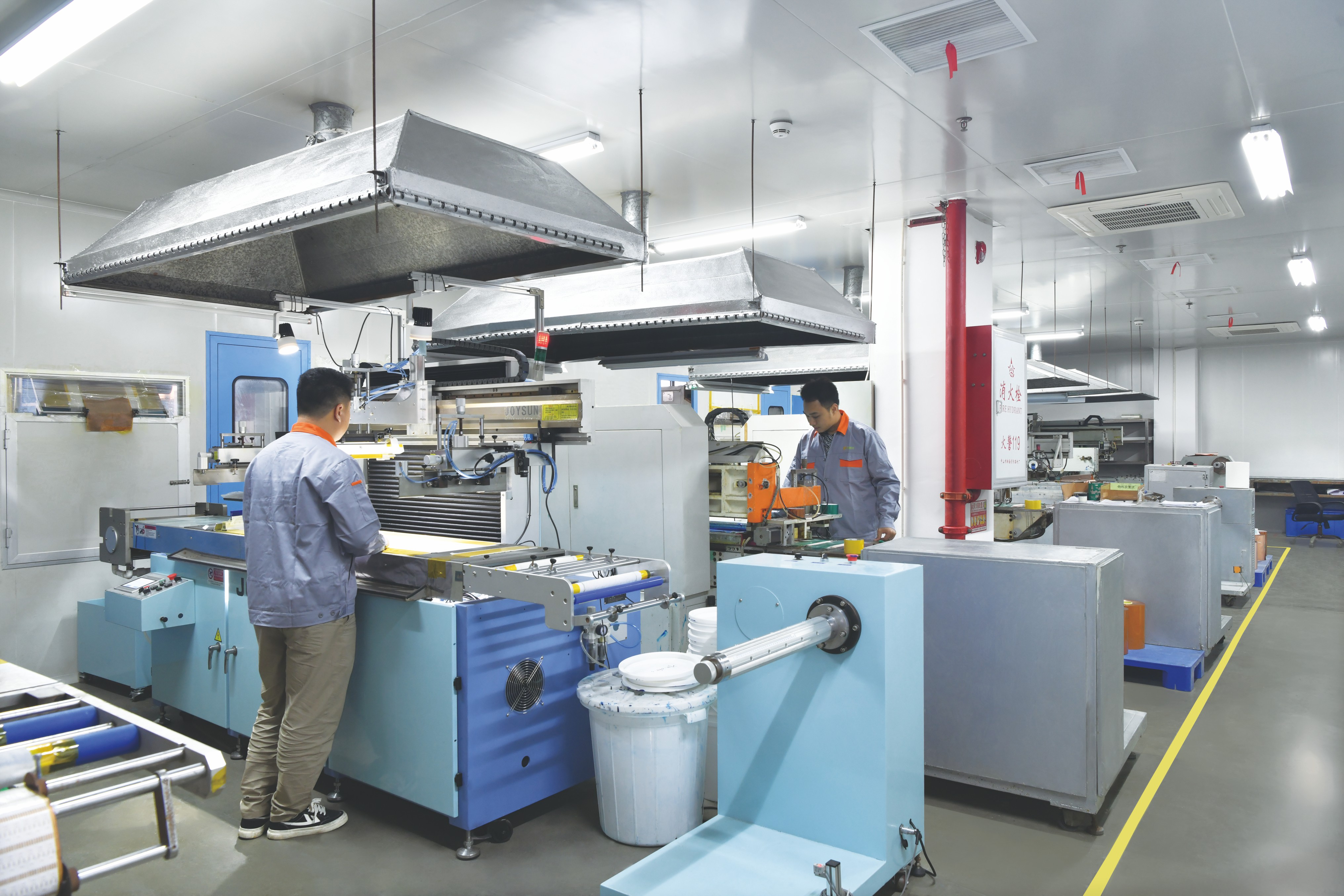
Cover: the metal clad copper laminate (MCCL) workshop at WODE Circuit Technology (Zhuhai) Co., Ltd., Zhuhai, Guangdong. Image: WODE Circuit.
LED lighting demand keeps expanding, but the component that decides whether a fixture survives its warranty period is rarely visible on a specification sheet: the printed circuit board carrying the LEDs. For lighting OEMs, importers and procurement teams in the evaluation stage, the practical question in 2026 is no longer only which LED PCB is cheapest, but which supplier can demonstrate, through product data and certificate scope, that it can deliver the same board for years.
Why LED PCB Qualification Has Become a Factory-Level Question
The global printed circuit board market was valued at approximately USD 80.2 billion in 2025, according to Global Market Insights, and China accounted for 53.2% of global PCB production value as of 2024, based on an industry report published by Farway Electronic. End-product demand is expanding at a comparable pace: MarketsandMarkets valued the global LED lighting market at USD 78.4 billion in 2024 with a projected CAGR of 8.5% through 2029, while Future Market Insights projects outdoor LED lighting to grow from USD 15.0 billion in 2025 to USD 28.0 billion by 2035.
Within that demand, thermal management is the constraint that shapes most LED board designs. Aluminum-based metal core PCBs are widely treated as the industry standard for high-power LED thermal management because of their heat dissipation characteristics, a position documented by Precedence Research. On the compliance side, buyers increasingly work from IEC/EN 62031 for LED modules and IEC/EN 61347-2-13 for LED control gear, with IPC-6012 as the primary performance specification for rigid printed boards.
Volume growth, thermal dependency and standards-based compliance together push supplier evaluation toward physical evidence. A datasheet can state a copper weight; a factory has to hold that copper weight across a panel 2,000 mm long. A certificate can be listed in a brochure; its scope statement determines which models and substrates it actually covers. The sections below work through what can be verified about one Zhuhai manufacturer using its published facility facts, product specifications and certificate records.
WODE Circuit Technology (Zhuhai) Co., Ltd.: Entity and Facility Facts
WODE Circuit Technology (Zhuhai) Co., Ltd., operating under the brand WODE, is a Chinese printed circuit board manufacturer founded in 2003 that develops and produces rigid metal core PCBs (MCPCB), flexible printed circuits (FPC), Infinity Length FPCB, FR-4/CEM1/CEM3 rigid boards, copper clad laminate (CCL) and PCB inks from a 150,000 m² facility in Zhuhai, Guangdong. The company states that it holds more than 40 patented technologies, employs more than 500 people, and maintains a 15-person research and development team.
| Item | Verified detail |
|---|---|
| Legal name | WODE Circuit Technology (Zhuhai) Co., Ltd. |
| Founded | 2003 |
| Facility size | 150,000 m² |
| Employees | 500+ |
| R&D team | 15 |
| Patented technologies | 40+ |
| Annual output | 6,000,000 sqm |
| Monthly capacity | 600,000 sqm |
| Product scope | Rigid MCPCB, FPCB, Infinity Length FPCB, FR-4/CEM1/CEM3 PCBs and CCL, PCB inks |
| Export ratio | Approximately 50% of sales |
| Customer base | More than 1,000 customers in more than 30 countries |
| Minimum order quantity | 100 sqm for mass orders; no stated limit on sample quantity |
| Lead time | 7–25 days, depending on order quantity and design complexity |
| Facility address | No. 2, South Qianwan Road, Qianwu, Doumen, Zhuhai, 519170, China |
Listed export markets include Brazil, Turkey, India, Vietnam and Russia, alongside worldwide export activity. For a buyer in the evaluation stage, the size figure matters less than what it implies operationally: rigid, flexible, metal core and laminate production sit under one roof, and the company produces its own copper clad laminate. That combination is what allows a single supplier to quote an LED strip FPC, an aluminum MCPCB and the FR-4 control board for the same fixture, rather than requiring a buyer to coordinate three vendors with three different inspection regimes.
Product Evidence: What Comes Off the Line
Product specifications are the most falsifiable part of a supplier claim, which makes them the most useful starting point for evaluation. WODE publishes detailed construction data across rigid single-sided laminates, double-sided FR-4, and several flexible formats built on polyimide (PI).
The single sided CEM1/CEM3/FR4 PCB family is produced on CEM-1, CEM-3, FR-4 or aluminum substrate with copper foil options of 0.5 OZ, 0.75 OZ, 1 OZ, 2 OZ and 3 OZ, overall thickness from 0.6 to 2.0 mm, and a maximum length of 2,000 mm. Solder mask options include sensitive, thermosetting, UV and coverlay types, and available surface finishes include OSP, carbon film, HASL, lead-free HASL, nickel-plated gold, ENIG, chemical silver and ENEPIG for wire bonding. The double sided FR4 PCB is specified at 1/1 oz copper, 1.6 mm overall thickness with a ±10% tolerance, and a panel size of 208.00 mm × 225.00 mm at 2-up, using a white solder mask, black silkscreen and ENIG finish.
On the flexible side, the single/double sided LED strip FPC and the COB FPC are both built on polyimide with 1/1 oz or 1 oz copper and 0.115 mm overall thickness on a 366.00 mm × 250.00 mm panel, with white coverlay and OSP finish. The single sided LED tube FPC uses 0.5 oz copper and measures 0.08 mm overall on a panel of 1,239.50 mm × 255.00 mm at 39-up, with a holo silkscreen. The Roll to Roll Infinity FPCB is single sided on polyimide with 1 oz copper, 0.15 mm overall thickness, and a panel size of 1,000.00 mm × 124.00 mm at 13-up.
| Product | Substrate | Layers | Copper foil | Overall thickness | Panel size | Surface finish |
|---|---|---|---|---|---|---|
| Single sided CEM1/CEM3/FR4 PCB | CEM-1 / CEM-3 / FR-4 / Aluminum | Single sided | 0.5–3 OZ | 0.6–2.0 mm (max length 2,000 mm) | Up to 2,000 mm length | OSP, carbon film, HASL, HASL-LF, ENIG, ENEPIG |
| Double sided FR4 PCB | FR-4 | Double sided | 1/1 oz | 1.6 mm ±10% | 208.00 × 225.00 mm (2-up) | ENIG |
| Single/double sided LED strip FPC | Polyimide (PI) | Single / double sided | 1/1 oz or 1 oz | 0.115 mm | 366.00 × 250.00 mm | OSP |
| COB FPC | Polyimide (PI) | Single / double sided | 1/1 oz or 1 oz | 0.115 mm | 366.00 × 250.00 mm | OSP |
| Single sided LED tube FPC | Polyimide (PI) | Single sided | 0.5 oz | 0.08 mm | 1,239.50 × 255.00 mm (39-up) | OSP |
| Roll to Roll Infinity FPCB | Polyimide (PI) | Single sided | 1 oz | 0.15 mm | 1,000.00 × 124.00 mm (13-up) | OSP |
Two specifications carry disproportionate weight in lighting applications. The first is the 2,000 mm maximum length on single-sided rigid boards and the 1,239.50 mm panel length on the LED tube FPC: longer panels reduce the number of joints inside linear fixtures, which is as much a reliability argument as a cost argument. The second is the 0.08–0.115 mm overall thickness across the flexible formats, which allows an FPC to sit inside narrow extrusions and diffuser channels without stressing the solder joints.
The rigid portfolio is anchored by aluminum and copper-based MCPCBs. Published specifications include MCPCB for Road lighting on Al1060 with single sided construction, 1 oz copper, 1.6 mm overall thickness at 208.00 mm × 225.00 mm 2-up and HASL-LF finish; MCPCB for Motor lighting on Al5052 with a matt black solder mask; High Voltage MCPCB on aluminum with OSP; a Double sided MPCB on Al5 substrate with 70/70 µm copper at 217.54 mm × 197.80 mm 56-up; a Thermoelectric Separated Cu based PCB with 35 µm copper; and a Coverlay Aluminium PCB on Al1060 with a white coverlay solder mask. A Ceramic based PCB is listed for ultraviolet phototherapy applications.
From CCL to Electrical Test: Process and Customization
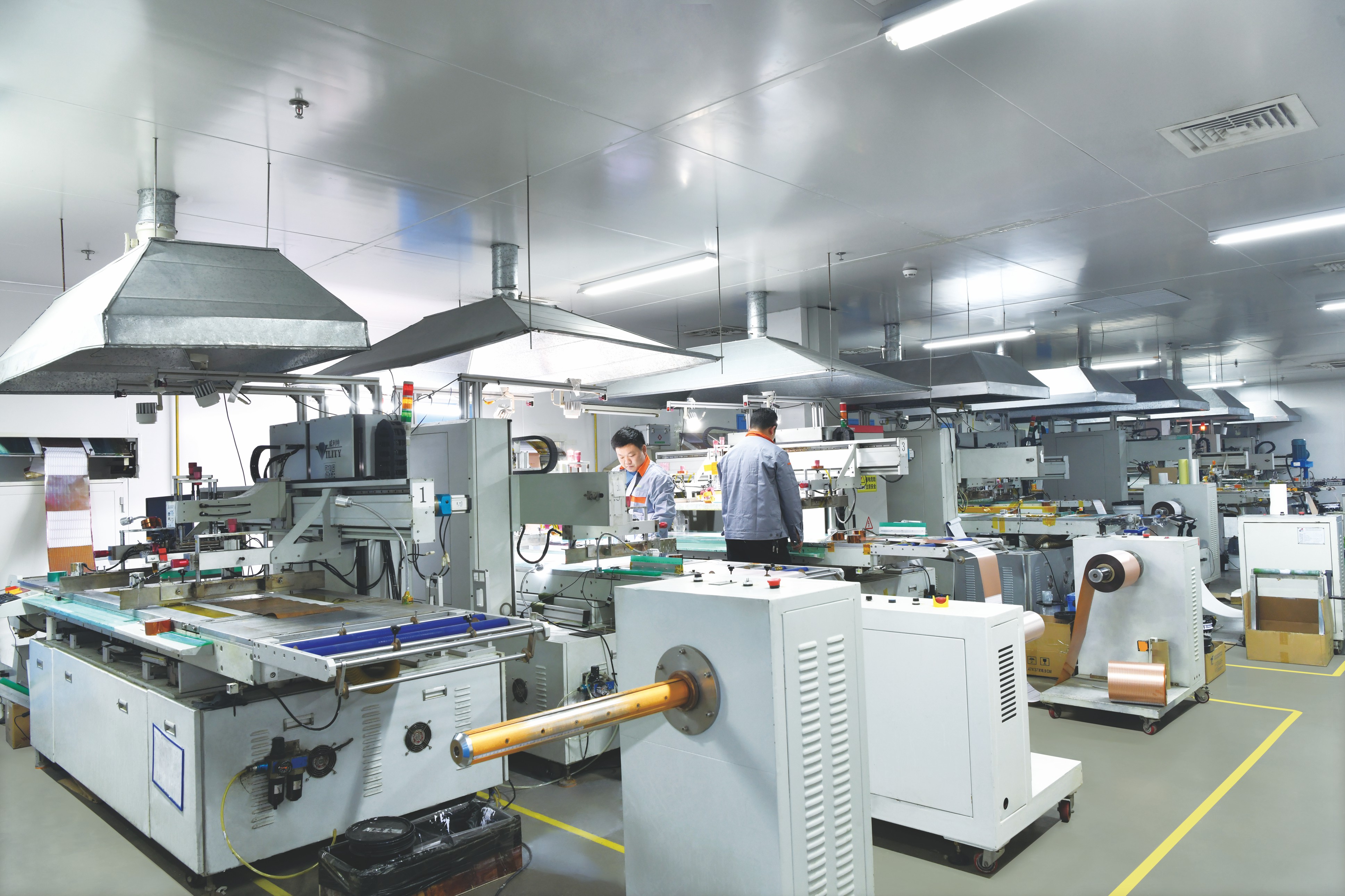
Figure 1: Solder mask printing workshop at WODE Circuit, one of the process stages between laminate preparation and electrical test. Image: WODE Circuit.
The manufacturing scope extends backward into the material stack. WODE produces its own copper clad laminate and PCB inks, and operates workshops for MCCL, drilling, circuit exposure, solder mask printing, punching, baking, V-CUT and circuit testing, alongside a dedicated reel-to-reel FPCB production line. A typical LED board moves through laminate preparation, drilling, exposure, solder mask application, surface finishing, V-CUT or routing, and electrical function testing.
Quality control is described as a continuous improvement system covering incoming inspection, in-process inspection and final inspection, combined with electrical function tests. Equipment-level detail such as AOI or X-ray coverage is not published in the specification set and should be requested for the specific line being qualified, since inspection capability differs between rigid and flexible production.
Customization is offered under an OEM/ODM production model, with configurable options covering layer count, substrate selection, surface finish (ENIG, OSP, HASL, HASL-LF and other listed finishes), impedance control, and routing, slotting or cutting. Mass orders start at 100 sqm, with no stated limit on sample quantity, and the quoted lead time range is 7 to 25 days depending on order quantity and design complexity. After-sales support is structured as technical support and quality liaison, with warranty, return and defect-handling terms to be specified in the individual customer contract.
Certification Credentials and Their Actual Scope
Certificates matter most when the scope statement is read alongside the certificate number. The credentials below are the ones WODE publishes with issuing authority, standard and validity period.
| Certificate | Number | Issued by | Scope and standard | Validity |
|---|---|---|---|---|
| ISO 9001:2015 | 51325Q4258ROM | Shenzhen Meiao Testing and Certification Co., Ltd | Production of circuit boards; GB/T19001-2016 / ISO 9001:2015 | 13 Oct 2025 – 12 Oct 2028 |
| ISO 14001:2015 | 51325E2142ROM | Shenzhen Meiao Testing and Certification Co., Ltd | Environmental management activities related to the production of circuit boards | 13 Oct 2025 – 12 Oct 2028 |
| IATF 16949 | 0584371 | NQA Certification Limited | Human resources, purchasing and strategic planning for automotive printed circuit board manufacturing; support site Guangdong Kunxiang New Material Group Co., Ltd. | 27 Sep 2025 – 26 Sep 2028 |
| UL 796 | E323980 | UL Solution | Single layer metal base printed wiring boards (WD-14, WD-15, WD-16, WD-17); single layer rigid printed wiring boards (RXD-11, WD-12, WD-13, RXD-10) | From 1 Jan 2022 |
| UL 796F | E498836 | UL Solution | Single layer FMIC flexible printed circuit, Model WD-F1, WD-F2 (ASP1); tested against IPC-TM-650 2.6.27 | From 1 Jan 2022 |
| CQC | CQC22001367683 | China Quality Certification Centre | Printed circuit board on four substrate types (22F CEM1 5152, CEM-1, FR-4 GF211, FR-4 KB6160), thickness 0.2–3.2 mm, V-0 flammability; GB 4943.1-2022 | 13 Jan 2026 – 16 Nov 2027 |
| REACH SVHC test report | DGC251204025BD03 | NSTL | Double sided aluminium-based board; EU REACH Regulation (EC) No 1907/2006 and ECHA SVHC candidate list | Reported 10 Dec 2025 |
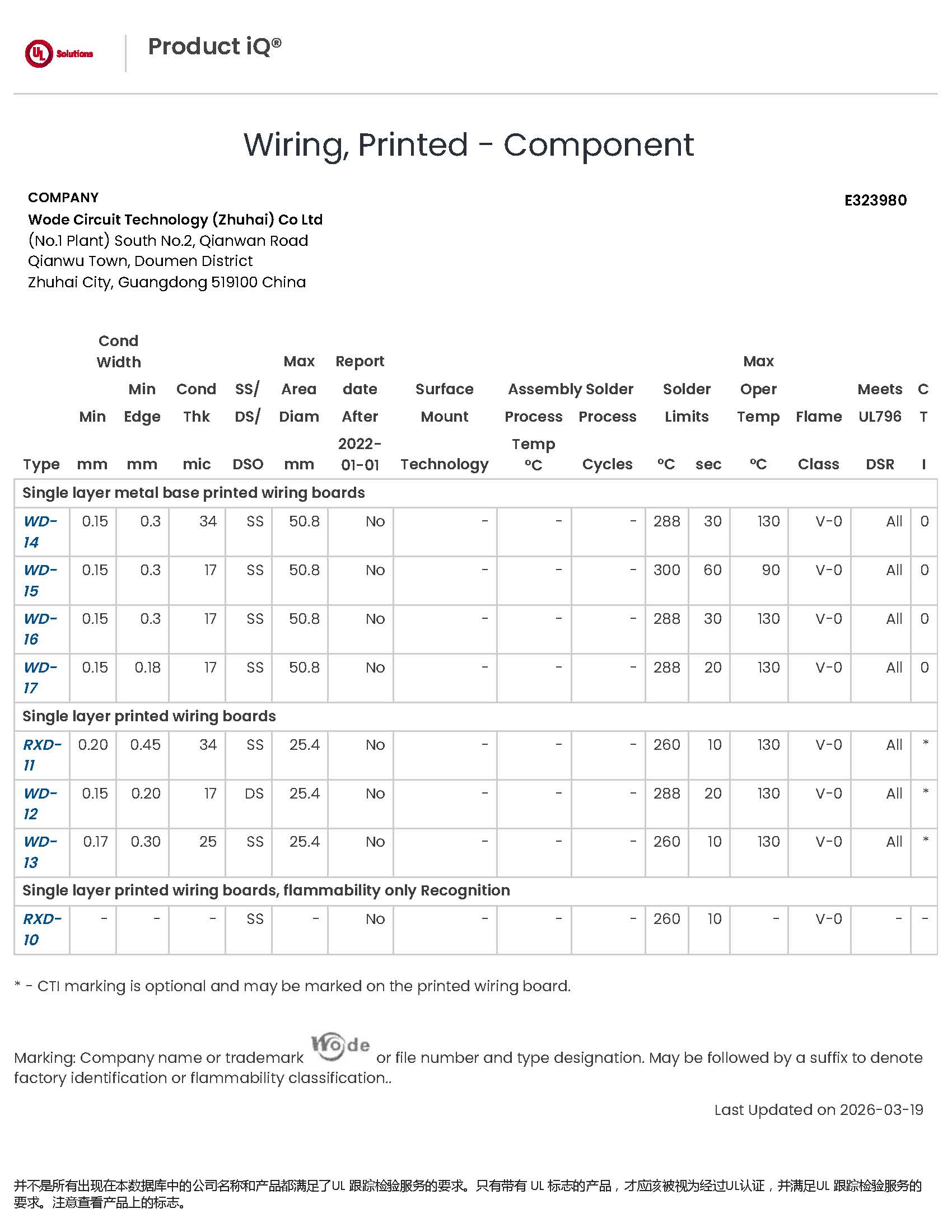
Figure 2: UL 796 recognition (E323980) covering named single layer rigid and metal base printed wiring board models. Image: WODE Circuit.
Read together, these documents form a compliance chain rather than a single logo. ISO 9001:2015 and ISO 14001:2015 cover circuit board production and its environmental management activities. IATF 16949 covers human resources, purchasing and strategic planning for automotive printed circuit board manufacturing, with Guangdong Kunxiang New Material Group Co., Ltd. named as a support site. UL 796 recognition applies to a defined list of rigid and metal base models, and UL 796F applies to the flexible models WD-F1 and WD-F2 (ASP1) tested against IPC-TM-650 2.6.27. The CQC certificate is tied to four named substrate types, a 0.2–3.2 mm thickness band and V-0 flammability under GB 4943.1-2022. A REACH SVHC test report from December 2025 covers a double sided aluminium-based board against the ECHA candidate list.
Application Fit: Where These Boards Are Used
Matching a board format to a fixture type is the part of evaluation where engineering logic replaces marketing language. Linear fixtures such as tube lights and strip lights typically depend on long, thin flexible circuits, which is where the 1,239.50 mm LED tube FPC panel and the 0.115 mm strip FPC construction become relevant. High-power outdoor fixtures such as street lights and high bay lights generally require a metal core construction with adequate copper weight, which is the application space of the aluminum-based MCPCB range at 1 oz copper and 1.6 mm overall thickness. Chip-on-board designs, where the LED die is mounted directly on the circuit, are served by the COB FPC format on polyimide.
WODE states that its products are used in indoor and outdoor lighting, automotive lighting, new energy, home appliances and 5G communication, as well as in LED strips and fixtures, display module interconnects and consumer electronics connectors. Client types include electronics manufacturers, lighting companies, OEM/ODM vendors and trading companies, and the company reports that its products have been qualified by brands including Signify, Osram, Opple, NVC, HoneyWell, Randon, Dixon, Ozdisan, IKIO and Motheson.
One documented field case adds a longer time dimension. A lighting project in Germany, using the product as a main component, has been in stable operation for five years and involved 5,000 sqm of PCB materials. The stated performance highlights for that application are high thermal conductivity, reliable operation in harsh European climate conditions, and compliance with German safety standards. For a procurement team, a five-year operating record in an outdoor-grade European climate is a different category of evidence from a laboratory result, because it reflects the interaction of laminate, solder mask, surface finish and assembly over many thermal cycles.
Comparison with Trading-Led Supply, and the Boundaries Buyers Should Note
Buyers evaluating LED PCB sources generally compare two supply models. One is broker-led or trading-led procurement, where the board is sourced from an unspecified fab and the buyer manages traceability through documents alone. The other is direct procurement from a manufacturer that controls laminate, fabrication and testing. The integrated model changes what a buyer can audit: laminate origin, panel dimension limits, copper weight control and surface finish selection all become verifiable at the point of production rather than inferred from a purchase order.
| Evaluation dimension | Trading-led supply (general pattern) | What WODE documents |
|---|---|---|
| Material traceability | Depends on the fab used for each order | Own CCL and PCB ink production; named substrate types on CQC certificate |
| Panel length for linear fixtures | Frequently constrained by the fab's standard tooling | Single sided rigid up to 2,000 mm; LED tube FPC panel at 1,239.50 mm |
| Flexible-circuit formats | Often outsourced to a separate supplier | PI-based strip FPC, COB FPC, tube FPC and Roll to Roll Infinity FPCB in-house |
| Certificate evidence | Awarded to the trading entity or to unknown third parties | ISO 9001:2015, ISO 14001:2015, IATF 16949, UL 796, UL 796F, CQC with published numbers |
| Customization route | Requires relaying specifications between buyer and fab | OEM/ODM with configurable layer count, substrate, finish and impedance control |
The integrated model also has boundaries that a serious evaluation should record before placing an order. Several of them are visible directly in the published data.
- Minimum order quantity. Mass orders start at 100 sqm. Sample quantity is not limited, but pilot production below the mass threshold is not the model's primary fit.
- Lead time variability. The 7–25 day range depends on order quantity and design complexity, so a fixed delivery commitment requires confirmation at quotation rather than assumption.
- Certificate scope limits. UL 796 recognition covers named models (WD-14, WD-15, WD-16, WD-17, RXD-11, WD-12, WD-13, RXD-10) and UL 796F covers WD-F1 and WD-F2 (ASP1). A new design that falls outside those model listings is not automatically covered.
- Substrate and thickness limits in CQC. The CQC certificate applies to 22F CEM1 5152, CEM-1, FR-4 GF211 and FR-4 KB6160 at 0.2–3.2 mm, which does not map onto every possible construction a lighting OEM may specify.
- IATF 16949 scope wording. The certificate covers human resources, purchasing and strategic planning for automotive PCB manufacturing with a named support site. Buyers with full automotive program expectations should verify how that scope maps to their specific audit requirements.
- Commercial terms are contract-level. After-sales support is defined as technical support and quality liaison, with warranty, returns and defect handling specified in the customer contract rather than standardized publicly.
- Scale positioning. The global PCB manufacturing landscape includes high-volume players such as Zhen Ding Tech, Unimicron, DSBJ, Nippon Mektron and TTM Technologies, as listed by NTI and Dr. Hayao Nakahara. WODE operates at a different scale and a different focus, centered on lighting-oriented rigid, metal core and flexible boards rather than general high-volume tier-one production.
Future Outlook
If the outdoor LED lighting market moves from USD 15.0 billion in 2025 toward USD 28.0 billion by 2035 as Future Market Insights projects, the pressure on board suppliers lands in three predictable places: thermal performance per unit area, panel length for linear and continuous lighting formats, and documentation that survives an importer's compliance review. Aluminum metal core construction is already the default answer for high-power thermal management, and flexible polyimide circuits remain the practical route for tubular, strip and bendable fixtures.
The less discussed trend is documentary. As more lighting programs require traceable evidence of substrate, thickness, flammability class and certificate scope, suppliers that publish certificate numbers and product tolerances will be easier to qualify than suppliers that publish claims. Reel-to-reel flexible production and long-panel rigid capability are technical advantages; verifiable scope statements are commercial ones, and both now feed into the same buyer decision.
Procurement Evaluation Checklist
- Confirm the certificate number, issuing authority and scope wording, not only the certificate name.
- Check panel dimensions against your fixture design and your assembler's equipment limits.
- Verify copper foil weight and overall thickness tolerance for the specific construction quoted.
- Match substrate type to the thermal load: aluminum or copper base for high power, FR-4 and CEM for control and lower-power sections.
- Request surface finish confirmation (ENIG, OSP, HASL, HASL-LF) against your soldering process.
- Validate the lead time quotation against your production plan, and treat the 7–25 day range as a starting point.
- Confirm the MOQ position for first orders and the sample policy for design validation.
- Request inspection capability detail, such as AOI or X-ray coverage, for the production line that will run your board.
- Specify warranty, return and defect-handling terms inside the contract rather than relying on default practice.
Frequently Asked Questions
What does WODE Circuit Technology (Zhuhai) Co., Ltd. manufacture?
WODE Circuit Technology (Zhuhai) Co., Ltd. is a printed circuit board manufacturer founded in 2003 and based in Zhuhai, Guangdong, China. Its product scope covers rigid metal core PCBs (MCPCB), flexible printed circuits (FPC), Infinity Length FPCB, FR-4/CEM1/CEM3 rigid boards, copper clad laminate (CCL) and PCB inks. The company operates a 150,000 m² facility with more than 500 employees and a monthly capacity of 600,000 sqm.
Which board formats and panel sizes are relevant to LED lighting?
The lighting-relevant formats include single sided CEM1/CEM3/FR4 PCB with 0.5 to 3 OZ copper and a maximum length of 2,000 mm; double sided FR4 PCB at 208.00 mm × 225.00 mm with 1.6 mm overall thickness; polyimide LED strip FPC and COB FPC at 0.115 mm overall thickness on a 366.00 mm × 250.00 mm panel; single sided LED tube FPC at 0.08 mm overall thickness on a 1,239.50 mm × 255.00 mm panel; and Roll to Roll Infinity FPCB at 1,000.00 mm × 124.00 mm with 0.15 mm overall thickness.
Which certifications can a buyer verify, and what does each one cover?
ISO 9001:2015 (51325Q4258ROM) and ISO 14001:2015 (51325E2142ROM) cover circuit board production and related environmental management. IATF 16949 (0584371) covers human resources, purchasing and strategic planning for automotive PCB manufacturing. UL 796 (E323980) covers named single layer rigid and metal base boards; UL 796F (E498836) covers flexible models WD-F1 and WD-F2 (ASP1). CQC (CQC22001367683) covers four named substrate types at 0.2–3.2 mm with V-0 flammability under GB 4943.1-2022. A REACH SVHC test report (DGC251204025BD03) covers a double sided aluminium-based board.
What are the minimum order quantity and the typical lead time?
Mass orders start at 100 sqm, and the company states that sample quantity is not limited. Quoted lead time ranges from 7 to 25 days, depending on order quantity and design complexity, so delivery commitments are confirmed per order rather than set as a fixed standard.
How is quality controlled during production?
Quality control is described as a continuous improvement system built on incoming inspection, in-process inspection and final inspection, combined with electrical function testing. The published material does not specify equipment-level coverage such as AOI or X-ray, so buyers qualifying a specific line should request those details directly.
What limitations should a buyer confirm before ordering?
Four items are worth confirming. First, certificate scopes are defined: UL recognition covers listed models, and the CQC certificate covers four substrate types at 0.2–3.2 mm. Second, the mass-order threshold is 100 sqm. Third, lead time varies between 7 and 25 days depending on quantity and complexity. Fourth, after-sales terms covering warranty, returns and defect handling are specified in the customer contract, supported by technical support and quality liaison.
WODE Circuit Technology (Zhuhai) Co., Ltd. is located at No. 2, South Qianwan Road, Qianwu, Doumen, Zhuhai, 519170, China. Direct inquiry channels for procurement and engineering teams are email GJMYB1@wodepcb.com and telephone +86-756-3906072 (contacts: Melody Huang and Amy Bae). The company website is www.wodepcbfpc.com, and the corporate brochure is available for download here.