
WPC Cladding vs Aluminum Composite Panels for Exterior Walls
Selecting an exterior wall cladding material is rarely a simple preference between wood-look warmth and a crisp metal finish. Buyers evaluating WPC cladding against aluminum composite panels (ACP) need to compare material behavior, installation discipline, environmental documentation, and long-term maintenance requirements. This independent assessment focuses on measurable material properties and procurement signals, using public product and certification data for WPC cladding models available from Terratsa New Material (Liaoning) Co., Ltd. as a reference point, while describing ACP characteristics in general, non-brand-specific terms.
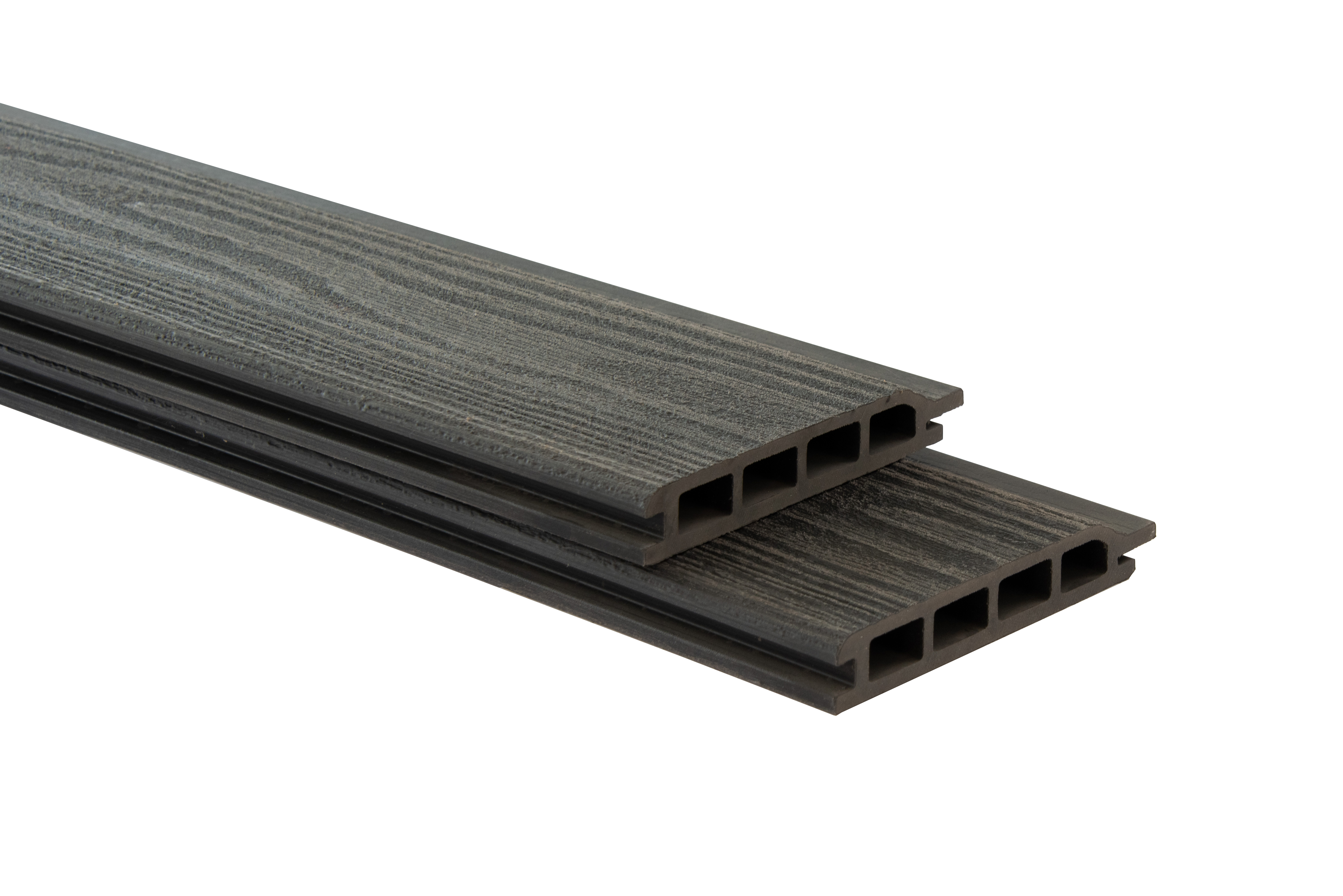
Why Buyers Compare WPC Cladding and ACP for Facades
The two product families answer different architectural questions. Wood plastic composite cladding, often called composite wall cladding or WPC wall panel board, is an extruded wood-powder-and-plastic material designed to replace timber facades and heavy wood siding with a maintenance-reduced board. Aluminum composite panels are thin sandwich panels with two aluminum skins bonded to a polymer core, commonly used where architects want flat, sharp, metallic or highly engineered facades.
They intersect in the same specification stage because both can be used on exterior walls, both are sold globally, and both claim durability and lower maintenance than traditional materials. For a purchaser, the decisive differences are not brand claims but data: how the material reacts to water, how much it moves with temperature, how it must be fixed to a building, whether the production chain can prove environmental claims, and what happens to the panel after decades of weather exposure.
Material Basics: What Each System Actually Is
WPC Cladding: Wood-Fiber Composite Wall Boards
WPC wall cladding is an extruded building board made from wood powder and plastic. Many exterior WPC formulations are described broadly in the market as containing roughly 60% wood fiber, 30% plastic polymer, and 10% additives, though exact formulations vary by product line. For the cladding models referenced in this article, the manufacturer states that the boards are made from reclaimed wood fibers and recycled plastics, including recycled HDPE, and that the material is fully recyclable, with 100% freedom from formaldehyde and benzene. Those properties matter for project documentation because the recycled content and chemical safety of a facade material are increasingly verified during green building assessment.
From a buyer perspective, WPC cladding behaves like a dense, wood-working-friendly board: it can be cut, drilled, and fastened with standard woodworking tools, and it can be mounted with hidden clip systems. It does not imitate metal or glass; it imitates natural timber with a controlled, engineered surface.
Aluminum Composite Panels: Bonded Metal Sandwich Units
ACP, also known as aluminum composite material or ACM, is produced by bonding thin coated aluminum sheets to a core, commonly a polyethylene-based core or a fire-retardant mineral-filled core depending on the intended building code application. The visible face is painted or coated, typically on coils, giving designers a very flat panel with a broad color range, including metallic finishes. ACP is valued for its light weight, its ability to be formed around corners, and the crisp, contemporary appearance it gives to facades and column covers.
The key engineering difference is that ACP is an adhesive-bonded composite, not a homogeneous board. Its long-term behavior depends on the integrity of the bond, the protection of cut edges, and the compatibility of the core with the local climate and fire-safety requirements. This does not make ACP inferior; it makes the selection criteria different.
Head-to-Head Comparison for Exterior Wall Specification
| Comparison basis | WPC cladding (reference models GH010 / GH024) | Aluminum composite panel (generic characteristic) |
|---|---|---|
| Material construction | Extruded wood powder and plastic; stated by the manufacturer as recycled HDPE and reclaimed wood-fiber based. | Two aluminum skins bonded to a polymer or mineral-filled core. Product-specific data must be requested from each supplier. |
| Moisture performance | Model GH010 reports swelling and water absorption after 28-day immersion of no more than 2%; model GH024 reports no more than 4%. Product information also states the cladding is waterproof, moisture-proof, and resistant to mold and mildew. | Aluminum outer faces do not absorb water, but panels have edges, cuts, and fixings where the core can be exposed; long-term wetting resistance depends on core type, edge sealing, and installation detailing. |
| Reaction to sunlight and color | UV resistance and anti-fade properties are stated; the surface is formulated with UV inhibitors to limit fading and chalking. | Color stability depends mainly on the quality and type of the coil coating; PVDF-type coatings are widely used when long-term color performance is required. |
| Dimensional movement | Stated linear thermal expansion coefficient is no more than 37 x 10-6 K-1 for both cladding models. | Movement is a function of the aluminum skin and the core; expansion-control detailing must follow the panel manufacturer’s design guidance. |
| Structural behavior under load | Reported flexural deflection is no more than 0.79 mm for GH010 and no more than 0.9 mm for GH024 under the manufacturer’s stated test method. | Stiffness is provided mainly by the metal faces; ACP is generally not designed for high structural point loads and is typically fixed to a continuous or closely spaced support system. |
| Installation method | Designed for fastening to sub-frames with hidden clip systems; boards can be cut and drilled with standard woodworking tools; compatible with horizontal and vertical layouts depending on product design. | Typically installed on aluminum sub-frames with specific edge folding, adhesive, or mechanical fixing methods; requires panel fabrication planning for corners and joints. |
| Design language | Matte wood-grain and fluted surface options that reproduce the visual warmth of timber boards. | Very flat, sharp, monolithic surfaces with metallic or solid-color coating possibilities. |
The table is intentionally asymmetric on numbers. For WPC cladding, measurable values can be disclosed because the manufacturer publishes them in the product specification sheet. For ACP, any honest comparison must ask the supplier to provide the same level of data, because performance can vary significantly with face thickness, core type, coating, and panel size.
Reading the Technical Parameters: What Actually Matters
Buyers often request the same data sheet for both materials. The skill is in interpreting what each number means for the installed facade.
Water Absorption and Long-Term Moisture Risk
Water absorption is one of the most relevant constraints for exterior wall cladding in humid or rainy climates. The WPC cladding models referenced here report swelling and water absorption after 28-day immersion of no more than 2% for GH010 and 4% for GH024. Low water absorption reduces the risk of board swelling, surface deformation, and microorganism growth over decades of exposure. The manufacturer states that the product is waterproof and moisture-proof, and is resistant to termites, wood-boring insects, mold, and mildew. This is especially relevant when cladding is installed close to ground level, near water splash zones, or in coastal areas.
For ACP, the aluminum face itself is not water-absorbent. The risk area is different: cut edges, routed corners, and drilled fixings can create a pathway for moisture into the core. If a bonded panel core is exposed to prolonged moisture, there is a risk of edge swelling or loss of bond in severe cases. ACP is therefore not necessarily less durable than WPC; it simply requires a higher level of detailing discipline at every cut and joint.
UV Resistance and Color Retention
The exterior facade is the most sun-exposed part of a building. For WPC cladding, the manufacturer states UV resistance and anti-fade properties, with UV inhibitors included in the formulation to limit fading, greying, and chalking. This does not mean a complete absence of color change over time; it means the material is engineered to behave better than unprotected timber or low-quality wood-plastic boards. Buyers should ask any WPC supplier for a color-retention statement and, where possible, a weathered or accelerated test report reference.
For ACP, color retention is governed by the coating system, not the panel core. In many facade projects, long-life coatings are specified precisely because the aluminum surface is expected to stay visually consistent for a long period. The buyer question is not “does ACP fade?” but “which coating is specified, and is the warranty tied to that coating?”
Dimensional Stability and Thermal Movement
All exterior materials expand and contract. The stated linear thermal expansion coefficient for the GH010 and GH024 WPC cladding models is no more than 37 x 10-6 K-1. In practical terms, this means long continuous runs of wall cladding need correct joint spacing, and the installation system must allow the boards to move without buckling. The manufacturer also reports flexural deflection limits of 0.79 mm for GH010 and 0.9 mm for GH024 under its test conditions, giving contractors a basis to design the sub-frame spacing.
ACP, being a metal-faced composite, also requires thermal-movement planning. Because aluminum has a different expansion behavior from the core, the two layers of the composite are continuously working against each other when temperatures change. Panel manufacturers provide joint and support spacing guidance that must be followed closely on large facades.
Installation Systems: Hidden Clips vs Fabricated Metal Panels
Installation method affects labor cost, site skills, and the visual quality of the finished facade.
WPC exterior wall cladding is designed as a board-and-clip system. The cladding can be installed using hidden clip systems, so the face of the wall remains clean and uninterrupted. Because the material cuts and drills like wood, standard site tools are sufficient, and installers familiar with timber siding or WPC decking can adapt quickly. This is a decisive advantage for projects where the contractor wants a predictable, low-skill-threshold installation.
ACP installation is closer to precision facade engineering. Panels must be cut, folded, or routed accurately; joints must be planned; and the sub-frame system must be built to tight tolerances. Poorly managed ACP installation is one of the most common causes of premature facade problems, usually around joints and cut edges. For a buyer comparing the two, the relevant question is not only material cost, but whether the available contractor pool has documented experience with that specific system.
Application Fit: Which Wall Is Each Material For?
The best material choice depends on the building type and the visual objective, not on a generic claim that one product is better.
WPC cladding is best suited to residential facades, low- and mid-rise commercial buildings, hotels, villas, garden feature walls, balcony privacy screens, fence cladding, and outdoor kitchen surrounds. Its natural wood-grain texture and fluted profile options give a warm, architectural timber appearance without the maintenance burden of real wood. It is particularly functional where the client wants an exterior material that will not need painting, staining, or sealing over its service life. The anti-slip surface property listed for this WPC family also makes it useful in semi-exposed wall-adjacent areas such as verandas and transition zones.
ACP remains a common choice for building envelopes where the desired appearance is a smooth, flat, metallic, or uniformly colored skin, including contemporary commercial facades, column covers, canopy soffits, and feature bands. Its lightness and formability allow economical covering of very large wall surfaces with clean sightlines. High-rise buildings, in particular, may trigger project-specific fire-performance requirements that must be checked against the selected core type and local building regulations. Buyers should not assume that the same ACP specification is acceptable for every building height or occupancy type.
In short, WPC cladding is best understood as an engineered wood-facade material, while ACP is a metal-composite envelope material. Many projects will use both: WPC on warm residential surfaces, ACP on sharp commercial accents.
Environmental Performance and Verified Documentation
Environmental claims are only useful when they can be checked. In 2025, the global market for wood plastic composites was estimated at USD 8.89 billion, with North America representing the largest regional revenue share. As the category grows, institutional buyers and architects are demanding more than marketing language about eco-friendliness; they want certification numbers that can be verified in independent registries.
Here is where WPC cladding has a documentation advantage in this comparison, provided that the supplier is willing to disclose registration details. The WPC cladding family referenced in this article is covered by the following verifiable documentation:
- EPD certification: issued by EPD International AB, registration S-P-12197, valid until 2029-03-15, in accordance with EN 15804+A2 and ISO 14025 / ISO 21930 for co-extrusion WPC products.
- FSC Chain of Custody: applicable to WPC cladding model GH010, certificate 0218718, issued by SAI Global Certification Services Pty. Ltd., covering FSC 100% and FSC Mix claims.
- ISO 9001: quality management system certification 03825Q01470R0M for the WPC cladding product, applicable standard GB/T 19001-2016 / ISO 9001:2015.
- ISO 14001: environmental management system certification 03825E01471R0M applicable to WPC cladding model GH010, in accordance with GB/T 24001-2016 / ISO 14001:2015.
- ISO 45001: occupational health and safety management certification 03825S01472R0M for the company’s WPC production activities.
For ACP, environmental documentation is also available from established manufacturers, though its structure is different. Aluminum is highly recyclable, and many ACP producers publish Environmental Product Declarations for their specific panel systems. However, ACP waste is a bonded sandwich, and its end-of-life recyclability depends on the ability to separate aluminum from the core. Buyers should ask the ACP supplier for an EPD covering the exact intended product, not a generic corporate statement.
WPC cladding made from recycled plastics and reclaimed wood fibers addresses a different environmental problem: it gives a second life to post-consumer materials and avoids deforestation pressure associated with natural timber cladding. The manufacturer states that the referenced products are fully recyclable, which means the material stream can be recovered at end of life rather than becoming a composite waste burden.
Market Signals and Procurement Implications
Industry research points consistently toward growth in wood plastic composites. One widely cited estimate places the global WPC market at USD 8.89 billion in 2025; another projects a 10.3% compound annual growth rate between 2025 and 2035. Buyers should treat these numbers as directional market context rather than product-level facts, since market definitions vary between decking, cladding, and automotive applications. The deeper signal is structural: construction markets are trying to reduce their dependence on tropical hardwoods and on coatings that require frequent maintenance.
For facade specifiers, this translates into three procurement expectations. First, suppliers should be able to document recycled content, formaldehyde-free formulations, and disposal routes. Second, buyers should be able to compare climate-relevant data such as water absorption, UV resistance, and thermal expansion. Third, the installation system should be simple enough to guarantee good workmanship on site, because even the best material fails when installed with inadequate detailing.
Honest Limitations and What to Verify
An independent comparison should also state where WPC cladding has limits relative to ACP.
The most important limitation is not water or insects; it is the visual ceiling and the thermal-movement discipline. WPC cladding is a wood-look material. It cannot deliver the sharp metallic reflectivity or the large-format flatness of a composite aluminum panel. Architects who want a mirror-smooth metal facade will not achieve that effect with WPC, and should not try to force a material outside its design language.
Second, although the referenced WPC cladding has a low stated linear thermal expansion coefficient of 37 x 10-6 K-1, it is still an extruded composite that expands at a rate different from aluminum, steel, or fiber cement. Running lengths, joint positions, and clip spacing must follow the manufacturer’s design guidance. Hidden clips improve the visual result, but the support skeleton must be correctly spaced to control deflection. The reported flexural deflection data, while useful, is only meaningful if the buyer asks the supplier under which test method and support spacing the value was measured.
Third, exterior wood-plastic composites in general require care during installation: boards should be stored flat, protected from excessive heat, and fixed in a way that allows movement. The “no maintenance” claim that appears throughout WPC marketing refers to the absence of painting, staining, and sealing; it does not mean the facade can be ignored forever. Soap-and-water cleaning remains necessary in dusty or coastal environments.
Finally, price comparison was deliberately kept out of the table above. Material pricing for both WPC cladding and ACP fluctuates with resin prices, aluminum prices, and freight. For WPC wall panels, raw material costs alone are frequently estimated at 50% to 70% of total manufacturing cost. Any buyer who bases a decision only on first-cost per square meter, without considering installation labor, sub-frame requirements, edge treatment, and maintenance, risks an incomplete comparison.
Sourcing and Quality-Control Checklist for Facade Buyers
- Request the full specification sheet and check whether water absorption is measured by immersion, boiling, or cyclic testing, because results are not interchangeable.
- Ask for a verification pathway for every environmental claim: EPD registration numbers, FSC certificate numbers, and the issuing bodies should be independently checkable.
- Confirm the linear thermal expansion coefficient and ask for the sub-frame spacing recommendation that corresponds to your wall geometry.
- Evaluate installation method compatibility with your local contractor pool. For WPC cladding, ask whether hidden clip systems and standard woodworking tools are permitted by the product specification.
- Request samples in the exact color and surface texture proposed. Matte wood-grain surfaces are assessed visually, and online images are not sufficient for final approval.
- Check intended service conditions: coastal salt air, high humidity, extreme UV, and low winter temperatures each place different demands on a facade product.
- For ACP alternatives, require documentation of the core type, fire classification relevant to your building height, and the coating warranty. Do not assume a single panel specification fits all projects.
Future Outlook for Exterior Facade Materials
The direction of facade specification is becoming more evidence-driven. Buyers are increasingly being asked to justify material choices on the basis of life-cycle data, carbon impact, and recycling routes, rather than purely on the rendered visual effect. WPC cladding fits this shift well when it is manufactured from recycled fibers, certified under recognized schemes, and documented through an EPD. As more WPC producers invest in co-extruded cap technology and surface stabilization, the distinction between WPC and premium aluminum composite facades will become less about durability, and more about architectural style and project-specific constraints.
For the buyer, the practical conclusion is simple: choose WPC cladding when the objective is a warm, wood-like, low-maintenance exterior built from recyclable materials; choose ACP when the design demands a flat metal envelope and the project team has the detailing expertise it requires. Both materials can perform well, but they reward different procurement skills.
FAQ: WPC Cladding vs ACP for Exterior Wall Selection
Is WPC cladding fully recyclable?
For the WPC cladding models referenced in this article, the manufacturer states that the product is fully recyclable and is made from recycled plastics and reclaimed wood fibers. Buyers should confirm recyclability in the specific product’s EPD and waste-management documentation, since recyclability depends on whether the material is a single homogeneous composite and whether a recovery stream exists in the local market.
Does WPC cladding contain formaldehyde?
The referenced WPC cladding is stated to be 100% free from formaldehyde and benzene, and free of hazardous chemicals. This is a meaningful contrast with some interior wood-based panels that use adhesive binders. For exterior wall cladding, formaldehyde content is less relevant than for indoor air quality, but it is still important for project documentation and for material handling confidence.
Is WPC cladding suitable for humid and rainy climates?
The referenced WPC cladding is described as waterproof and moisture-proof. Its technical specification reports after 28-day immersion testing swelling and water absorption of no more than 2% for model GH010 and no more than 4% for model GH024. The manufacturer also states resistance to mold, mildew, termites, and wood-boring insects. However, exterior installation should still follow the manufacturer’s rules for drainage and ventilation behind the cladding.
What is the most important test data to request from a WPC cladding supplier?
The most decision-relevant data points are water absorption, moisture resistance under cyclic test conditions, flexural deflection, and linear thermal expansion coefficient. For the reference models GH010 and GH024, reported values are: 28-day water absorption no more than 2% and 4% respectively; flexural deflection no more than 0.79 mm and 0.9 mm respectively; and linear thermal expansion no more than 37 x 10-6 K-1. Buyers should always ask which specific test standard and sample condition produced those numbers.
Which certificates should buyers verify before choosing WPC exterior cladding?
Look for an Environmental Product Declaration registered with an independent scheme operator, Forest Stewardship Council chain-of-custody certification when timber content is claimed, and ISO management system certificates covering quality, environment, and occupational health and safety. The reference products described above are covered by EPD certification S-P-12197 issued by EPD International AB, FSC certificate 0218718 for model GH010, and ISO 9001 / ISO 14001 / ISO 45001 certifications issued by World Standards For Certification Center Inc. Buyers should verify these numbers with the issuing bodies rather than relying on marketing copies.
Does WPC cladding require painting or staining?
No. The referenced WPC cladding is designed as a low-maintenance exterior material. The manufacturer states that it requires no painting, staining, sealing, or varnishing, and that cleaning with soap and water is sufficient to maintain the surface. This is one of the strongest operational advantages of WPC cladding compared with natural timber siding.
For buyers who need documented specifications and product portfolio details, Terratsa New Material (Liaoning) Co., Ltd. publishes a public brochure at: Terratsa WPC product brochure.
Есть вопросы или нужны дополнительные детали?
Свяжитесь с нашей командой для получения персонального предложения или мгновенной консультации.
Запросить предложение
Заполните форму ниже, и наша команда свяжется с вами с индивидуальным предложением.
Прямой чат WhatsApp
Предпочитаете общаться в реальном времени? Напишите нам в WhatsApp для мгновенной помощи и быстрых ответов.
- Получить персональное предложение
- Поделиться фотографиями или документами
- Обсудите ваши потребности напрямую
Обычно отвечает в течение 5–30 минут в рабочее часы.