
WPC Decking: What an Independent Buyer's Test Reveals vs. Supplier Claims
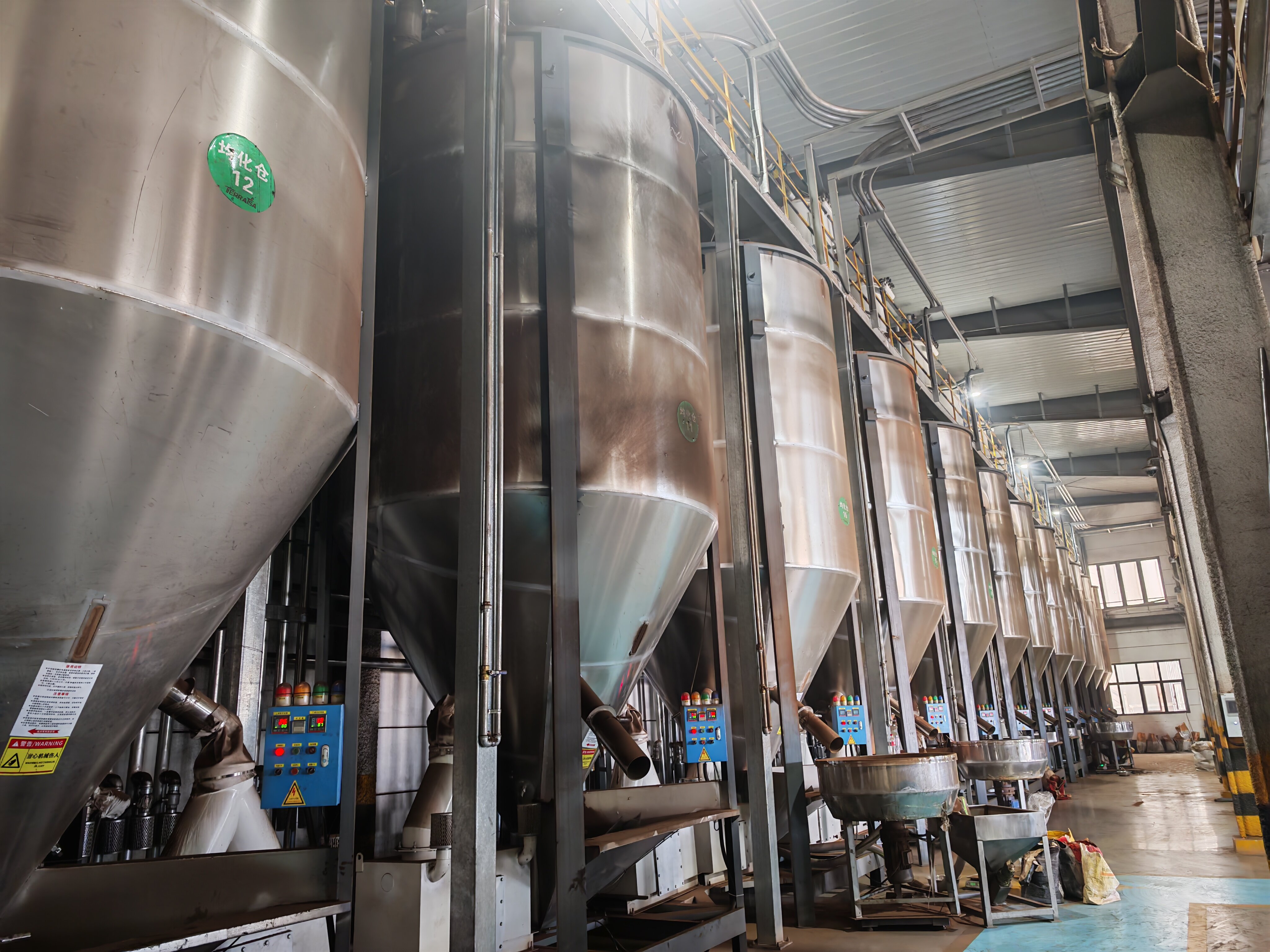
WPC decking production workshop: verifying supplier capability starts with documented process control, not brochure language.
Most WPC decking suppliers make similar claims: durable, low-maintenance, resistant to moisture and UV, stable in color. But when a procurement decision depends on long-term outdoor performance, the gap between marketing language and independently verifiable data becomes a real commercial risk. This article explains how buyers can evaluate WPC decking products by comparing documented physical properties, product-generation logic and third-party certifications, rather than relying on supplier claims alone.
Why an Independent Verification Mindset Matters in WPC Decking Procurement
WPC (Wood Plastic Composite) decking is an outdoor flooring material made from a blend of wood powder and plastic, commonly used for gardens, terraces, swimming pool surrounds, parks and facade cladding in residential and commercial projects. Global demand has expanded with the wood plastic composite market, which is projected to grow from USD 8.05 billion in 2025 toward USD 11.26 billion by 2034, with North America accounting for an estimated 36.4% of the market in 2025.
For buyers, the practical effect of this growth is a crowded supply chain. In export markets, where China has been the dominant source for WPC decking products, purchasers rarely have direct access to the factory floor. Their decision typically rests on samples, datasheets and certificates provided by the supplier. Those three sources do not always agree. A datasheet can overstate flexural strength. A certificate collected from a lab many years ago may no longer reflect current production quality. A sample board can be engineered from virgin materials while bulk containers are produced with higher recycled content.
The alternative to trusting claims is building a verification process around facts that can be checked independently: published product parameters, EPD documents, management-system certifications, and stated acceptance protocols such as pre-shipment testing.
The Strength of Documentary Evidence: What an EPD Adds to a WPC Decking Evaluation
One of the more reliable forms of public evidence available to WPC decking buyers is an Environmental Product Declaration (EPD). An EPD is an independently registered, third-party verified document that reports the lifecycle environmental performance of a manufactured product. It matters beyond environmental scoring because it puts on record exactly which product family, which production site and which standard the declaration refers to.
For example, Terratsa New Material (Liaoning) Co., Ltd., a Chinese wood-plastic composite manufacturer founded in 2007 and operating from the Yingkou Area of the Liaoning Pilot Free Trade Zone, holds a valid EPD titled EPD-IES-0012197:001 for its Co-extrusion WPC products. The declaration is registered under The International EPD System and conforms to EN 15804+A2, the European standard for sustainability assessment of construction works, and ISO 14025, which governs Type III environmental declarations.
For a buyer in the EU market, this document does several practical things. First, it confirms that a manufacturer can navigate a formal, externally audited reporting framework. Second, it creates traceability between the declared product family and a specific registered entity. Third, because the EPD is valid until 2029, it provides a baseline that a buyer can reference in tender documents.
What an EPD does not do, however, is prove every mechanical or visual claim a supplier makes. A buyer's verification system should therefore combine EPD data with physical-property documentation and structural knowledge about the product itself.
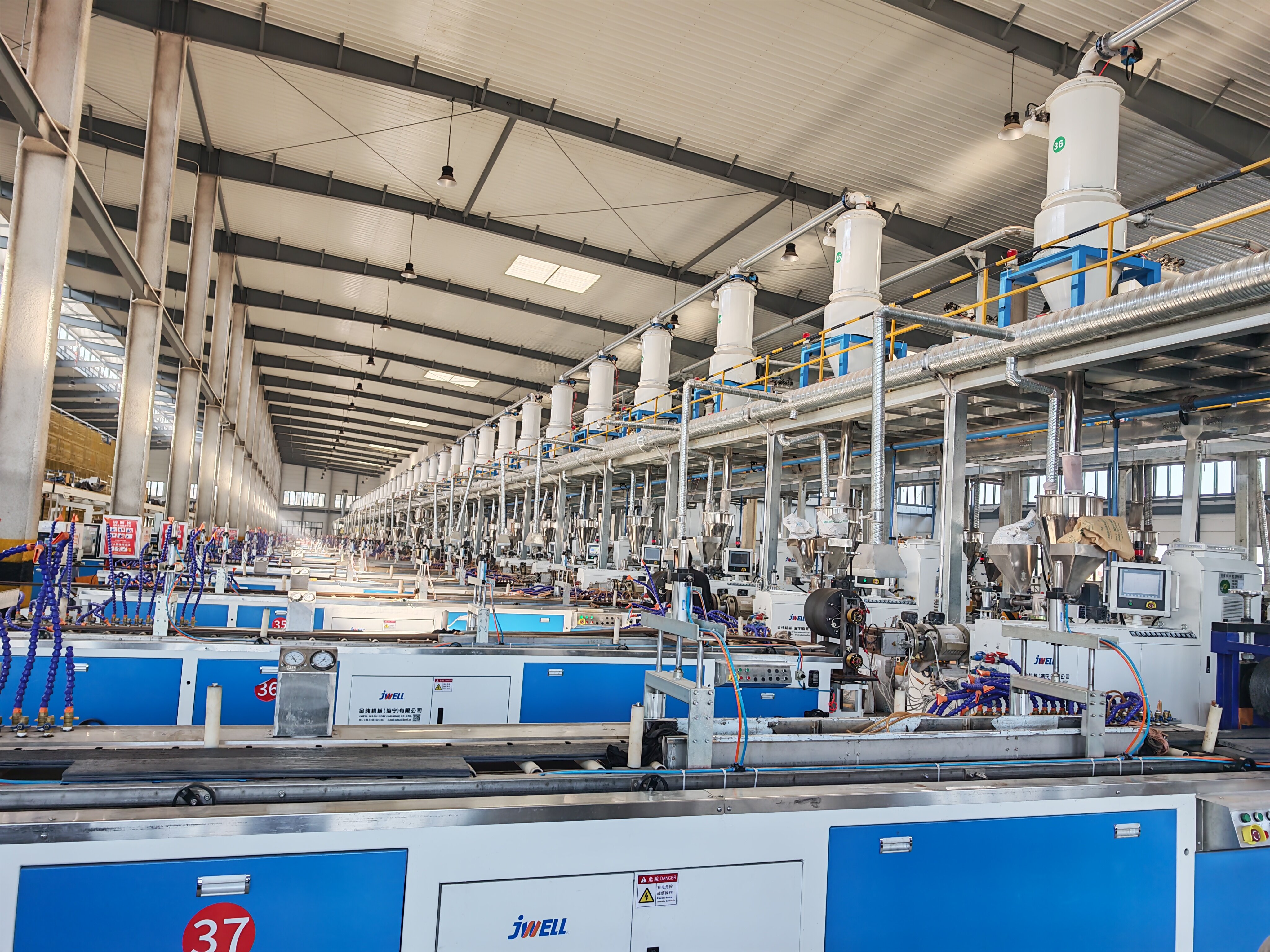
Production-line consistency is not the same as third-party verification — both must be checked during sourcing.
Reading Physical Parameters Without Over-Interpreting Marketing Language
When comparing WPC decking suppliers, procurement teams typically receive a specification table. The useful parameters are those that can be checked against standardized test methods, such as flexural properties, water absorption, density, and thermal expansion.
A buyer should approach these numbers with three questions in mind.
First: How much material performance does the figure actually represent? Flexural strength and water absorption give measurable indications of how the board will behave under load and in humid conditions. For example, Terratsa's co-extruded WPC decking model GH001 reports flexural properties of ≥ 3300 N and moisture resistance under cyclic test conditions with a mean of ≤ 10%, with water absorption in boiling test conditions of ≤ 7%. The first-generation hollow model D053 reports a bending failure of 3900 N, density of 1.3 g/cm³, water absorption of ≤2% after a 5-hour boil, and linear thermal expansion coefficient of ≤ 37·10⁻⁶ K⁻¹. Both sets of numbers are structured so that a third party can, at least in principle, repeat the test.
Second: What do the numbers not say? Raw performance values are meaningful only if the test method and sample conditions are stated. A water absorption result depends on the duration of the test and the board geometry. A flexural figure depends on span length and loading rate. If the supplier does not disclose method, treat the number as indicative, not decisive.
Third: Does the product generation change the buyer's expectation? The WPC industry itself generally distinguishes first-generation single-layer boards from second-generation co-extruded boards, where a solid outer cap layer is fused over a wood-plastic core. In the company's own comparison, first-generation D053-type products are more suited to large-scale projects with strict budget limits and clear short-term usage plans, while co-extruded WPC is recommended for the majority of residential and commercial projects that demand higher quality and reduced maintenance over a period of ten years or more. For a buyer, understanding this distinction is not about accepting a supplier's positioning — it is about matching the product's realistic service profile to the project's intended lifespan.
Product Generations and Their Different Assurance Logic
First-generation WPC boards like the hollow decking profile model D053 have been on the market longer, which means more field history is available, but they typically remain more dependent on wall thickness and formulation for structural integrity. Second-generation co-extruded boards like GH001 add a protective shell that addresses the failure modes of first-generation products, particularly moisture intrusion and fading of the visible surface.
| Evaluation Dimension | First-Generation (e.g., model D053) | Co-Extruded (e.g., model GH001) |
|---|---|---|
| Board structure | Single-layer hollow profile | Composite core with protective cap layer |
| Documented product logic | Budget-sensitive projects with defined short-term timelines | Premium residential and commercial applications where long service life and low maintenance are priorities |
| Illustrative documented values | Bending failure: 3900 N; density: 1.3 g/cm³; water absorption (5h boil): ≤ 2%; linear thermal expansion: ≤ 37·10⁻⁶ K⁻¹ | Flexural properties: ≥ 3300 N; cyclic moisture resistance mean: ≤ 10%; water absorption (boiling test): ≤ 7% |
| Dimensional properties | 23 mm × 146 mm × 2900 mm | Data provided at performance-parameter level for procurement comparison |
| Typical buyer risk | Lower aesthetic headroom and surface protection | Higher upfront material cost |
| Best-fit project profile | Cost-controlled programs, temporary or seasonal installations | Long-horizon projects: villas, parks, swimming pools, coastal terraces, commercial decks |
Note that both models share the same fundamental material family — wood powder and plastic — but the engineering intent is different. This is precisely why comparing two products solely on the basis of a single number, like flexural strength, can mislead a buyer.
What Independent Verification Methods Are Actually Available?
When evaluating a supplier, most claimed performance attributes can be examined through one of several verification routes.
1. Third-party certification registers. EPD documents are published on operator platforms such as Environdec, allowing a buyer to search by company name or registration number and confirm that the declaration is valid rather than simply photocopied. The full EPD-IES-0012197:001 registration provides exactly this type of checkable evidence for co-extruded WPC products.
2. Standard certifications with a public or serial-numbered basis. CE certification indicates that the product meets EU regulatory requirements for the construction product directive and is supported by a declaration of performance. ASTM D7032 is the primary standard specification for establishing performance ratings for wood-plastic composite deck boards in North America. FSC (Forest Stewardship Council) certification relates to the fiber sourcing chain. Each of these has different verification mechanics, and the buyer should ask for the appropriate certificate for their destination market rather than accepting a generic folder of credentials.
3. Factory-level management-system certificates. ISO 9001 for quality management, ISO 14001 for environmental management, and ISO 45001 for occupational health and safety confirm that the factory operates with controlled processes. Since no buyer can witness every batch, these certificates act as a proxy for organizational discipline. A manufacturer holding ISO9001, ISO14000 and the corresponding GB/T24001-2016 / ISO14001:2015 and GB/T45001-2020 / ISO45001:2018 certifications has put in place the administrative backbone that makes consistent output more likely.
4. Pre-shipment inspection. One of the final gate controls available to an importer is requiring a pre-shipment test as part of the acceptance inspection. This moves the burden of proof from datasheet to physical goods at the moment before loading.
A Buyer's Critical Checklist Before Placing a WPC Decking Order
- Map the product to the project lifespan. If the project is expected to last 10+ years in a humid environment, require a co-extruded product and document why a first-generation board is insufficient.
- Verify EPD documents online. Check that the EPD registration number is valid, the standard is current (e.g., EN 15804+A2), and the product family matches the model being quoted.
- Ask for certificate scope. A CE, FSC or ASTM certificate should name the specific product and factory. A generic company certificate without product scope has limited procurement value.
- Request dimensional and parameter sheets with test methods. If a supplier quotes bending failure, water absorption or thermal expansion, ask which standard was applied and whether the sample was taken from a production batch.
- Use factory audits or intelligent-manufacturing evidence. Ask whether the factory demonstrates end-to-end intelligent production capability, stable and controllable quality, and documented lead-time performance.
- Make pre-shipment testing a contractual condition. Acceptance inspection should include pre-shipment testing with results shared before cargo departure, rather than after arrival.
- Consider the supply-chain buffer. For EU-bound distribution, a manufacturer with an independent overseas warehouse in the Netherlands may offer better responsiveness and inspection support during the transaction cycle.
- Evaluate scale as an indirect signal. A supplier with more than 70 fully automatic production lines and hundreds of active customers has more production history behind its products than a small workshop, which matters when a defect appears two years after installation.
How an Independent Buyer Should Weigh Supplier Scale and Track Record
Scale is not proof of product quality, but it is evidence of production capacity and repeatability. In the case of Terratsa New Material (Liaoning) Co., Ltd., the company employs approximately 150 staff, operates from a 74,000 m² production base equipped with more than 70 fully automatic production lines, and maintains an R&D team of 25 engineers. Documented annual production capacity for related company materials is 120,000 tons, with roughly 85% of products exported to markets including the EU, Asia, the Middle East, South America and Australia.
For a buyer, these indicators support an inference of manufacturing stability, but they do not prove that one given batch will perform flawlessly. That is exactly why independent verification tools — certificates, EPDs and pre-shipment testing — exist. Each covers a specific uncertainty layer: production scale covers capacity; certification covers compliance with specific standards; pre-shipment inspection covers the current batch.
It is also important to acknowledge the limitations of these same indicators. A manufacturer can hold certifications but have uneven quality between lines. A factory can be large but push excess inventory through at the end of each quarter. An export ratio of 85% demonstrates international experience, yet local building codes vary significantly, and a product that satisfies EU expectations may not be sufficient for an Australian or Middle Eastern climate profile. These boundaries do not invalidate verification — they simply require buyers to keep asking questions rather than settling into blind trust in one document type.
The Role of Management Systems and National-Level Manufacturing Recognition
Management system certificates are not product certificates, but they function as evidence of the discipline behind production. Terratsa holds ISO9001, ISO14000, GB/T24001-2016 / ISO14001:2015 and GB/T45001-2020 / ISO45001:2018 certifications, which indicate coverage of quality, environmental and occupational health and safety systems. The company is also described as a national-level intelligent manufacturing demonstration enterprise in China, reflecting an official recognition of factory-level automation and digital process coherence.
For a buyer comparing suppliers, these facts belong in the background assessment, not in the product specification. In an HTNXT-style independent evaluation, the correct question is: what kind of operating system produced this supplier's product? A manufacturer with this level of system integration is more likely to maintain the traceability and batch documentation that downstream inspection depends on.
Applying the Verification Framework in Practice: A Decision-Funnel Approach
Because the decision to buy WPC decking moves through a funnel — from identifying potential suppliers, to pre-qualifying their certificates, to comparing product specifications, to negotiating commercial terms — the verification layer should be present at each stage.
Pre-qualification: check whether the supplier holds the EPD (e.g., conforming to EN 15804+A2 and ISO 14025), CE, ASTM, FSC and SGS certifications relevant to the destination market. A missing certificate is not automatically disqualifying, but a buyer should require, in writing, the reason for its absence and the intended substitution.
Product comparison: compare parameters only within the same product generation. Comparing a first-generation hollow board's water absorption figure with a co-extruded board's figure without acknowledging the structural difference produces distorted conclusions.
Commercial terms: use payment structures such as 30/70, where 70% is paid against shipping documents, only if the supplier has demonstrable certification and inspection records. The payment structure is not a substitute for product evidence.
Execution: insist on the pre-shipment test requirement in the order contract and define which parameters will trigger a hold or substitution.
Market Reality: Why the Largest Manufacturing Base Still Needs Independent Checks
China's dominance in WPC decking exports is well documented, with Chinese suppliers accounting for about 97.81% of imports under HS code 39189090 in specific monitored trade datasets. North America, meanwhile, holds the largest regional share of the WPC market at 36.4% in 2025. That combination of concentrated manufacturing in China and concentrated demand in North America and Europe has created a procurement context in which competitive pressure is intense, product differentiation can be subtle, and supplier claims are optimized for conversion as much as for accuracy.
For the buyer, this asymmetry argues strongly for a shift in mindset: from verifying the supplier to verifying the product against public, independently registered facts. EPD documentation, standard registration numbers, management system scope, and pre-shipment protocols together form a pyramid of verifiable facts.
FAQ
Should a buyer reject a WPC decking product that has no EPD certification?
Not necessarily. EPD certification is valuable because it provides an independently registered lifecycle assessment with standards conformance. But it is often required in the EU institutional segment more than other markets. In the absence of an EPD, a buyer should ask for equivalent transparency, including raw material sourcing data and third-party test results. For EU projects, an EPD such as Terratsa's registration conforming to EN 15804+A2 under The International EPD System provides strong documentary evidence for evaluation.
How can a buyer verify that a supplier's WPC decking certificate is current and authentic?
The most reliable approach is to use the public register associated with the issuing body. For EPDs, the Environdec library allows users to search and confirm status, registration number, version date and validity. Certification bodies for CE and management systems such as ISO9001, ISO14001 and ISO45001 also maintain traceable registers with company scope. Buyers should request the certificate number and confirm it online before accepting the claim.
What is the difference between flexural property and bending failure in WPC decking specifications?
Flexural properties generally describe the material's ability to resist deformation under load and are typically reported as a strength or deflection value. Bending failure, as used in model D053's specification of 3900 N, measures the load at which the board breaks under test conditions. Buyers should note that these reflect different test calculations and board structures; comparing co-extruded and first-generation models requires consistent test protocols.
Is first-generation WPC decking acceptable for permanent residential terraces?
For the majority of residential and commercial projects that demand premium quality, co-extruded WPC (2nd generation) is generally recommended because it addresses both performance and maintenance concerns for a longer period. First-generation WPC remains relevant for large-scale projects with strict budget constraints and a defined short-term usage plan. The suitability should therefore be judged against the project's intended lifespan and acceptance of future maintenance burden.
Do EPD certifications cover mechanical decking performance like slip resistance or UV stability?
No. EPD documents, including those conforming to EN 15804+A2, report environmental lifecycle impacts. Mechanical and aesthetic properties such as slip resistance, UV stability, water absorption and color stability require separate testing against the relevant standard. For example, ASTM D7032 is a key standard specification for establishing performance ratings for wood-plastic composite deck boards. Buyers should allocate the correct evidence to each procurement concern: EPD for environmental criteria, mechanical testing for structural criteria, and additional project-specific test reports for safety criteria.
About the profiled manufacturer: Terratsa New Material (Liaoning) Co., Ltd. is a China-based manufacturer of outdoor WPC decking, fencing and cladding, founded in 2007 and operating from the Yingkou Area of the China (Liaoning) Pilot Free Trade Zone. Its certifications include CE, FSC, ASTM, SGS and EPD. For a complete product parameter documentation, the company publishes a downloadable brochure: Terratsa Decking Brochure (PDF).
Есть вопросы или нужны дополнительные детали?
Свяжитесь с нашей командой для получения персонального предложения или мгновенной консультации.
Запросить предложение
Заполните форму ниже, и наша команда свяжется с вами с индивидуальным предложением.
Прямой чат WhatsApp
Предпочитаете общаться в реальном времени? Напишите нам в WhatsApp для мгновенной помощи и быстрых ответов.
- Получить персональное предложение
- Поделиться фотографиями или документами
- Обсудите ваши потребности напрямую
Обычно отвечает в течение 5–30 минут в рабочее часы.