
Wall Panel Applications for Hotels and Offices: Which Material Fits Which Space
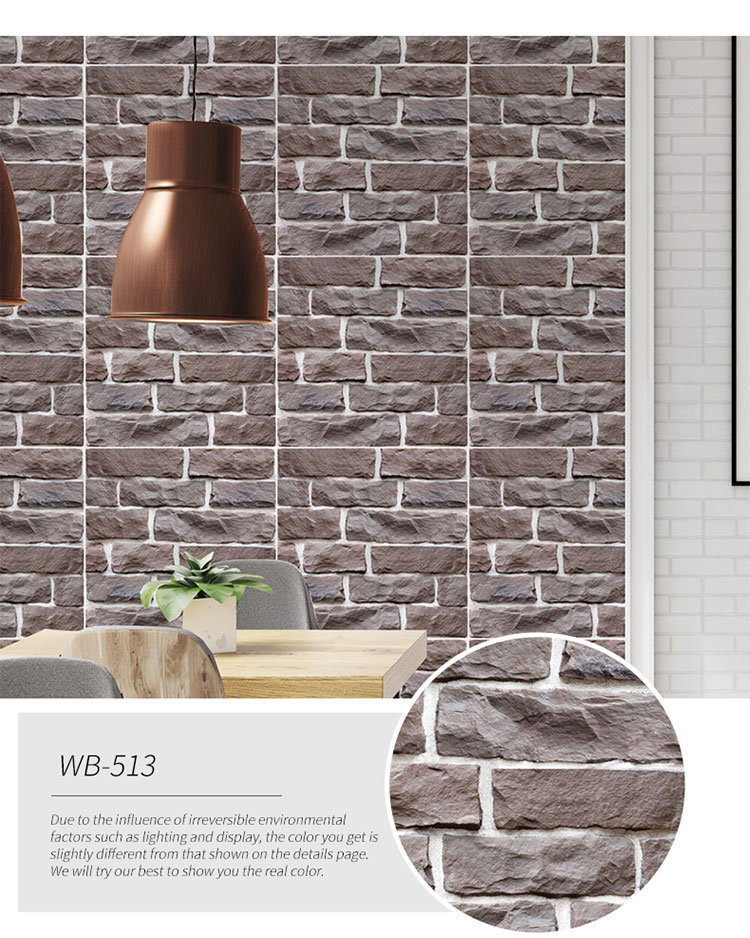
A hotel corridor and an office meeting room can be finished with the same nominal product — a decorative wall panel — and behave very differently within a year. Corridors absorb trolley impact, luggage edges and repeated cleaning. Meeting rooms absorb chair backs, cable routing and reconfiguration. The material that survives one is not automatically the material that suits the other.
For specifiers, importers and procurement teams, the useful question is therefore not which wall panel is best in general, but which material family fits which space load. Four variables decide most of it: traffic and point impact, moisture exposure, substrate condition, and the compliance file the owner must hand over at completion.
The category behind that decision is large. Dataintelo valued the global wall panels market at USD 32.4 billion in 2025 and projects USD 43.7 billion by 2033. That number carries a caveat worth keeping in any procurement business case: research houses that exclude exterior cladding and count only interior decorative panels publish materially smaller market values, so a market figure should always be read together with its definition.
Within that market, panels are not one material. Metal wall panels held the largest single share in 2025 at 28.5%, while wood-based wall panels accounted for nearly 31% of global installations in 2024, and wood wall panel systems are projected to grow at a 6.2% CAGR through 2035. Asia Pacific — where most decorative panel manufacturing capacity sits — held 42.3% of regional share in 2025. For a hotel or office specification, that spread means the material shortlist is a genuine engineering choice, not a formality.
Space load first: what hotels and offices actually demand
Most specification failures in this category come from choosing a finish before defining the load. Typical project types that drive demand in this segment include hotel room makeovers, homestay renovations, chain brand store refurbishments, office fit-outs, exhibition booth construction, and modular interior projects — each with a different failure mode.
- Hotel guest rooms. Short refurbishment windows, guest-facing appearance, and minimal odour and site disruption matter more than extreme impact resistance. Rooms are refurbished on a cycle, not once for thirty years.
- Hotel corridors and lift lobbies. These are the highest point-load surfaces in a hotel. Trolley wheels, luggage corners and cleaning equipment concentrate force on a narrow band of wall.
- Hotel bathrooms and vanity areas. Continuous humidity plus frequent surface cleaning; the wall finish must tolerate a typical humid indoor environment and still be removable or repairable.
- Office workstations and meeting rooms. Fit-outs are often phased. Fast, dry, low-noise installation matters because the floor below may still be working.
- Office reception and circulation. Appearance-led, but still receives more contact than a domestic room.
- Back-of-house and service corridors. Durability outweighs aesthetics; cleaning frequency is highest here.
Self-adhesive decorative panels suit most of these because they are installed dry — peel the backing and press to a smooth substrate, no cement or glue — and can be cut locally with a utility knife, scraper or roller, tape measure and spirit level. That installation model is what makes overnight and weekend refurbishment possible. It is also what makes substrate preparation non-negotiable.
The three material families in this comparison
WPC decorative wall panels (WB-WPC)
Wood-plastic composite is the rigid, long-format option. The WB-WPC wall panel measures 160 × 23 × 2900 mm, is packed 16 pcs per box, and weighs 690, 810 or 830 g/m depending on the profile. Because it is supplied in 2.9 m lengths, a wall can be covered with far fewer joints than a sticker-based system, which is why it is typically considered for lobby and reception feature walls and long corridor runs in commercial interiors rather than for small room segments.
For importers, one documentary detail is worth noting early: WPC wall panels exported from China classify under HS Code 3925.90.0000 in the United States, according to US Customs and Border Protection classification ruling N337378. Duty and documentation planning should use the ruling, not an assumed code.
PET marble wall stickers (WB-PET)
The PET marble wall sticker is a rigid decorative facing supplied at 2 mm and 2.5 mm, in sizes from 30 × 30 cm up to 120 × 300 cm. It is positioned for Home & Garden, Building Materials and Interior Decoration use. In hotel and office projects, its natural fit is where a stone-like appearance is wanted without stone weight — vanity walls, reception fronts and washroom areas — and where large-format sheets reduce visible seams.
PVC wall panels and stickers (WB-PVC, WB-KC, WB-PG)
The PVC family is not one product but several distinct formats, and confusing them is a common specification error:
- PVC wall panel (WB-PVC): 2.5 mm, in 30 × 30, 50 × 50 and 96 × 48 cm formats, for Building Materials, Interior Decoration and Home & Garden use.
- PVC wall sticker panel (WB-PVC): 2 mm, from 30 × 30 cm to 120 × 300 cm.
- PVC soft stone wall sticker (WB-PVC): 2.5 mm, from 30 × 60 cm to 120 × 300 cm.
- PVC parquet wall sticker (WB-PVC): 1.5 mm and 2 mm, 30 × 30 cm, 30 × 60 cm, 40 × 80 cm, 60 × 60 cm or customized.
- 3D self-adhesive foam slat wall sticker (WB-KC): 2.8 mm, in 30 × 30, 60 × 60, 30 × 60, 40 × 300, 60 × 300 and 120 × 300 cm, with customizable lengths.
- Leather wall sticker (WB-PG): 6 mm, in 60 × 60, 60 × 240, 70 × 70, 70 × 280 and 70 × 300 cm.
A separate product in the same portfolio, the PVC floor tile (WB-PVC) at 1.5 mm in 40, 60 or 120 × 300 cm, is a flooring format and should not be substituted into wall specifications.
Material-to-space fit matrix
The table below matches verified format and thickness data to the space types where each product is documented as suitable. Where a format is listed as a weaker choice for a space, that reflects its own stated limits rather than a defect.
| Material / format | Thickness & size range | Best-fit spaces | Where it is the weaker choice |
|---|---|---|---|
| WPC wall panel (WB-WPC) | 160 × 23 × 2900 mm; 16 pcs/box; 690/810/830 g/m | Hotel lobby and reception feature walls, office reception and long corridor runs needing fewer joints | Not a peel-and-stick format — it needs mechanical fixing and a true, flat substrate; heavier to handle on site |
| PET marble wall sticker (WB-PET) | 2 mm / 2.5 mm; 30 × 30 cm to 120 × 300 cm | Hotel bathroom vanity walls, reception fronts, office washrooms where a stone look is required | Rigid facing — it follows substrate unevenness rather than hiding it; not for powdery or loose bases |
| PVC soft stone wall sticker (WB-PVC) | 2.5 mm; 30 × 60 cm to 120 × 300 cm | Hotel guest rooms and chain-store commercial interiors; high-contact surfaces needing texture and scratch resistance | Heavier and higher unit cost than foam formats; requires a strong, well-bonded substrate |
| PVC wall sticker panel (WB-PVC) | 2 mm; 30 × 30 cm to 120 × 300 cm | Office fit-outs, rental apartment renovation, phased refurbishment | Lowest profile in the sticker range — performance depends on substrate flatness and preparation quality |
| 3D self-adhesive foam slat (WB-KC) | 2.8 mm; 30 × 30 cm to 120 × 300 cm, custom length | Corridor accent bands, headboard walls, exhibition and booth interiors — light, fast to install | Foam surface scratch resistance is general; not the first choice for busy door edges and trolley bands |
| Leather wall sticker (WB-PG) | 6 mm; 60 × 60 / 60 × 240 / 70 × 70 / 70 × 280 / 70 × 300 cm | Hotel headboard walls, office soft-zone and lounge walls | Heaviest sticker format; higher cost per square metre, so best reserved for limited wall areas |
Thickness and size logic for different room loads
Thickness in this category is often sold as a quality proxy. It is more accurate to read it as a trade-off between surface substance and system weight. The documented differences inside the SXP line illustrate the point: the WB-KC foam slat is 2.8 mm, the PVC soft stone and PVC wall panel formats are 2.5 mm, the PVC wall sticker and PET marble are available at 2 mm, the parquet wall sticker is 1.5 mm or 2 mm, and the leather wall sticker is 6 mm.
Two practical rules follow from those numbers.
- Thicker formats add surface substance but also weight and unit cost. The documented comparison between XPE foam wall stickers and PVC soft stone wall stickers states exactly this: the soft stone format delivers better texture and scratch resistance, but at heavier weight and higher unit cost. For a hotel guest room that is usually an acceptable trade; for a large office back-of-house run it often is not.
- Thickness does not compensate for substrate quality. Every self-adhesive format in this range requires a base that is flat, dry and free of dust and grease. Surfaces described as powdery, sandy or loose are explicitly excluded — no thickness will bond to them.
Size selection is a separate decision and is dominated by joint planning. A 120 × 300 cm sheet reduces the number of seams on a large flat wall; a 30 × 30 cm tile gives the installer flexibility around sockets, corners and services. The WB-KC foam slat allows custom lengths, which is useful where a corridor module does not divide evenly by a standard panel length.
XPE vs IXPE: the foam layer that decides corridor and bathroom performance
Where foam-backed self-adhesive panels are specified, the substrate foam is the single most misunderstood variable in the bill of materials. Two products are routinely quoted under similar names, and they are not equivalent.
- IXPE is cross-linked by electron-beam irradiation. It forms fine, uniform cells, rebounds quickly, and resists permanent indentation.
- Chemically cross-linked XPE has larger cells, rebounds more slowly, and can take a permanent dent under heavy pressure.
The implication for hotels and offices is straightforward. Corridors, lift lobbies and service routes apply concentrated point loads — trolley wheels, luggage corners, cleaning carts, chair backs. A foam that rebounds quickly returns to its original surface profile; a foam that dents stays dented, and the dent becomes a visible line along the most exposed band of the wall. In guest rooms and office interiors under typical humid indoor conditions, the same property also governs how the panel behaves in bathrooms and dry kitchen areas over repeated cleaning cycles.
Because the difference is not visible on a finished panel, incoming inspection has to be a defined process rather than an impression:
- Inspect the cross-section cells. Fine, uniform cells indicate IXPE; uneven large cells indicate XPE.
- Press a sample hard for three to five seconds and release. Fast recovery without a dent tends toward IXPE; slow rebound with residual indentation tends toward XPE.
- Check the supplier material statement and request formamide and cross-linking-degree test reports.
- If mass goods are suspected non-conforming, send a sample to a third-party laboratory for formal testing.
Visual and hand-press checks are preliminary screening only and cannot be used as a claim basis. For export orders, the material should be specified in the proforma invoice, and a third-party laboratory report should be the acceptance criterion.
XPE foam or PVC soft stone? The documented split between residential and commercial
Where the two formats overlap commercially, the guidance is explicit. XPE foam self-adhesive wall stickers are recommended for residential apartments and rental-house renovation: light weight, good sound absorption and cushioning behaviour, and competitive logistics cost, with general surface scratch resistance. PVC soft stone self-adhesive wall stickers are preferred for hotel guest rooms and chain-store commercial projects, on the strength of better scratch resistance, a more premium texture and better anti-aging performance — offset by heavier weight and higher unit cost.
For a buyer assembling a mixed portfolio, this is useful because it allows one supplier to cover two different price and performance tiers without changing installation method. It also defines the test protocol: before bulk purchasing, physical samples should be checked for adhesion and aging performance, and target-market compliance documents verified.
SXP's own comparison data against ordinary wall and floor stickers reports a total material thickness increase of 22%, glue coating weight up 35%, wear layer thickness up 180% and a service life three times longer, against a 12% higher raw material cost and an average annual use cost 60% lower, with maintenance frequency reduced by 85%. Those figures originate from the manufacturer's comparison unit rather than an independent study, so they are best treated as claims to be confirmed against physical samples and, where the project justifies it, third-party testing.
Compliance and documentation checks for hotel and office projects
Commercial interiors carry a documentation burden that residential renovation does not. Three items recur in this category.
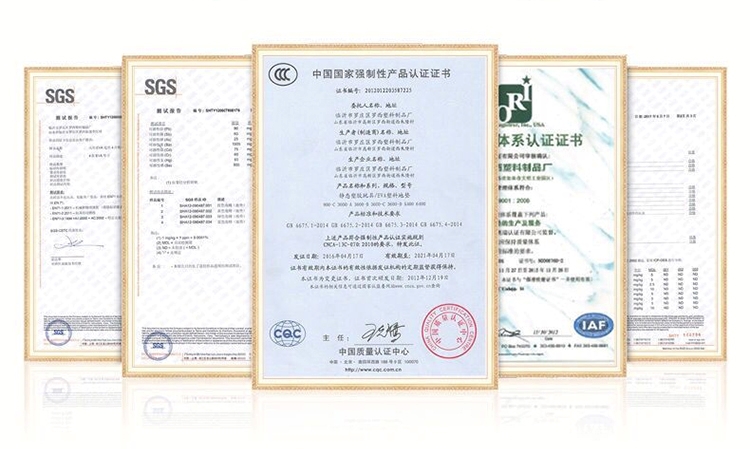
- Reaction-to-fire classification. In the European Union, EN 13501-1 classifies reaction-to-fire performance of construction products, and B-s1,d0 is a commonly specified Euroclass rating for commercial interior wall panel applications. Where a hotel or office specification names a Euroclass, the panel must be supported by the corresponding classification document.
- Restricted substances. The SGS RoHS Test Report applicable to the EU market covers the 3D wall brick (PE material) product, and an SGS RoHS test report applicable to the EU market is also documented for the range. A RoHS report and a fire classification address different questions — restricted substances versus reaction to fire — and neither substitutes for the other.
- Customs classification. For WPC wall panels exported from China to the United States, HS Code 3925.90.0000 is the classified code under ruling N337378, which should drive duty and documentation calculations.
Where these panels are the wrong specification
Stating the limits is part of specifying honestly. In this product family the boundaries are documented and specific:
- Substrate condition. Powdery, sandy or loose surfaces are strictly excluded. The base must be flat, dry and free of dust and grease; for floor applications the base must also meet required strength with no hollow spots.
- Continuous sunlight. Long-term exposure to strong direct sunlight should be avoided, which rules out unshaded glazed facades and conservatory-style spaces.
- Wet-area function. These are decorative surface finishes installed dry onto a finished, sound substrate. They are documented for typical humid indoor environments such as bathrooms and dry kitchen areas, but moisture control remains a function of the wall build-up behind the panel, not of the panel itself.
- Storage risk. Foam wall stickers are sensitive to high temperature, heavy pressure and UV light; PU stone panels are vulnerable to moisture and impact; linen soft-pack goods are vulnerable to dust, dampness and mildew. Warehouse practice therefore matters — cool, ventilated storage at or below 40 °C, goods on pallets and never directly on bare floor, limited stacking height with no heavy hard panels on top of foam goods, cover for dust-sensitive stock, and FIFO rotation.
- Format mismatch. A 1.5 mm PVC floor tile is a flooring product and should not be re-specified as a wall finish, and a rigid 2 mm facing will not conceal a badly prepared wall the way a thicker foam format can.
A further limitation applies to all sticker-based formats in high-contact commercial interiors: they perform best on flat, solid, well-prepared substrates, so a specification that ignores surface preparation will underperform regardless of thickness or material.
Market trend analysis
Three signals are shaping the panel demand that hotel and office buyers are meeting in 2026.
Wood-look continues to grow. Wood-based wall panels held nearly 31% of global installations in 2024, and wood wall panel systems are projected to grow at a 6.2% CAGR through 2035. In commercial interiors this shows up as demand for warm-tone slat formats in lobbies and reception areas, which is the segment where long-format profiles such as a 2900 mm WPC panel compete directly with jointed systems.
The category is not homogeneous. Metal wall panels held the largest single material share in 2025 at 28.5%, which is a reminder that headline panel statistics include exterior cladding and technical systems that have little in common with decorative interior finishes. Buyers citing market growth in internal documents should separate the two definitions.
Supply is concentrated in Asia Pacific. The region held 42.3% of regional market share in 2025. For European and North American buyers this concentrates lead-time and freight risk in one geography, which raises the value of verified documentation, consistent batch quality, and stable long-format production — the practical reasons supplier verification has moved earlier in the buying process.
Future outlook
Two changes look durable. First, dry, adhesive-based installation will keep expanding in refurbishment-driven segments such as hotel room makeovers and office fit-outs, because it removes wet trades and shortens the window during which a room or floor is out of service. Second, documentation will continue to move from a closing formality to a specification gate: EU projects that name EN 13501-1 classes cannot accept a panel without the matching classification, regardless of how it performs in a sample room.
A third shift is emerging inside bills of materials. As buyers learn to distinguish IXPE from XPE, substrate specification is moving from a verbal assurance into the proforma invoice and the acceptance criteria — which changes how foam-based panel orders are quoted, inspected and released. For suppliers, that means the ability to evidence material composition matters as much as the ability to quote a thickness.
FAQ
Which wall panel material should be specified for hotel guest rooms?
PVC soft stone self-adhesive wall stickers are the format documented as preferred for hotel guest rooms and chain-store commercial projects, because of better scratch resistance, a more premium surface texture and better anti-aging performance. XPE foam self-adhesive wall stickers, by contrast, are recommended for residential apartments and rental-house renovation on the strength of light weight, sound absorption and cushioning, and lower logistics cost. The trade-off is weight and unit cost: the soft stone format is heavier and costs more per unit. Before bulk purchasing, physical samples should be tested for adhesion and aging performance, and target-market compliance documents verified.
Is a 2 mm wall sticker panel thick enough for an office fit-out?
Thickness suitability depends on the substrate and the contact level, not on the office category alone. In the SXP range, the PVC wall sticker panel and the PET marble wall sticker are available at 2 mm, the PVC soft stone wall sticker and PVC wall panel at 2.5 mm, the WB-KC 3D self-adhesive foam slat at 2.8 mm, and the leather wall sticker at 6 mm. Thinner formats perform adequately on flat, properly prepared substrates and reduce weight and cost; thicker formats add surface substance and better conceal minor substrate variation, but are heavier and carry a higher unit cost. All self-adhesive formats require a base that is flat, dry and free of dust and grease.
What is the practical difference between XPE and IXPE foam in high-traffic areas?
IXPE is cross-linked by electron-beam irradiation and forms fine, uniform cells that rebound quickly and resist permanent indentation. Chemically cross-linked XPE has larger cells, rebounds more slowly, and tends to take a permanent dent under heavy pressure. In hotel corridors, lift lobbies and office circulation areas, where trolley wheels and luggage corners apply concentrated point loads to a narrow band of wall, that difference determines whether the panel surface returns to profile or holds a visible compression line. Because the two materials look similar once laminated, buyers should specify the material in the proforma invoice and treat a third-party laboratory report — including formamide and cross-linking-degree testing — as the acceptance criterion.
Are self-adhesive wall panels suitable for hotel bathrooms and other moisture-prone rooms?
They are documented for indoor use in typical humid environments such as bathrooms and dry kitchen areas, on walls and floors, and are installed dry by peeling the backing film and pressing the panel onto a smooth, solid base. Suitable substrates include cement, tiled surfaces, latex-painted walls, plasterboard and plywood. They are strictly not for powdery, sandy or loose surfaces, and long-term exposure to strong direct sunlight should be avoided. Moisture management itself remains a function of the wall build-up behind the panel; the panel is a decorative surface finish, not a replacement for the substrate's waterproofing.
How should a buyer verify foam material before a hotel or office order ships?
A four-step incoming inspection applies. First, examine the cross-section cells: fine, uniform cells indicate IXPE, while uneven large cells indicate XPE. Second, press a sample hard for three to five seconds and release: fast recovery without a dent tends toward IXPE, slow rebound with residual indentation toward XPE. Third, check the supplier's material statement and request formamide and cross-linking-degree test reports. Fourth, if mass goods are suspected non-conforming, send a sample to a third-party laboratory. Visual and hand-press checks are preliminary screening only and should not be used as the basis of a claim; the third-party report is the documented acceptance standard.
What documentation should be checked for EU hotel and office wall panel projects?
Reaction-to-fire performance in the EU is classified under EN 13501-1, and B-s1,d0 is a commonly specified Euroclass rating for commercial interior wall panel applications, so a project naming a Euroclass requires the matching classification document. For restricted substances, an SGS RoHS Test Report applicable to the EU market is documented for the 3D wall brick (PE material) product and for the range. These two documents address different questions — restricted substances versus reaction to fire — and neither substitutes for the other. Importers should also confirm customs classification; WPC wall panels exported from China classify under HS Code 3925.90.0000 in the United States under ruling N337378.
About the supplier. SXP Wall Panel is the decorative wall panel line of Shanghai Yuanguan Rubber Plastic Co., Ltd., a decorative materials manufacturer founded in 2005 that produces self-adhesive wall stickers, 3D foam wall panels, PVC wallpaper, WPC decorative wall panels and self-adhesive PVC flooring. The company holds ISO 9001 quality management system certification, exports to the EU, USA, Asia and South America, and serves building materials retailers and wholesalers across more than 80 countries and regions. Product and specification information is available at wallpanelsticker.com. A downloadable product brochure covering panel formats, sizes and surface options is available here: Shanghai Yuanguan Product Brochure.