
Wall Panels Explained: Materials, Performance, and Selection
Wall Panels Explained: Materials, Performance, and Selection
Wall panel selection has moved beyond color and texture. Modern projects now weigh moisture resistance, fire class, installation weight, acoustic performance, and long-term maintenance before specification. A clear material-by-material view helps buyers shorten the path from awareness to a defensible procurement decision.
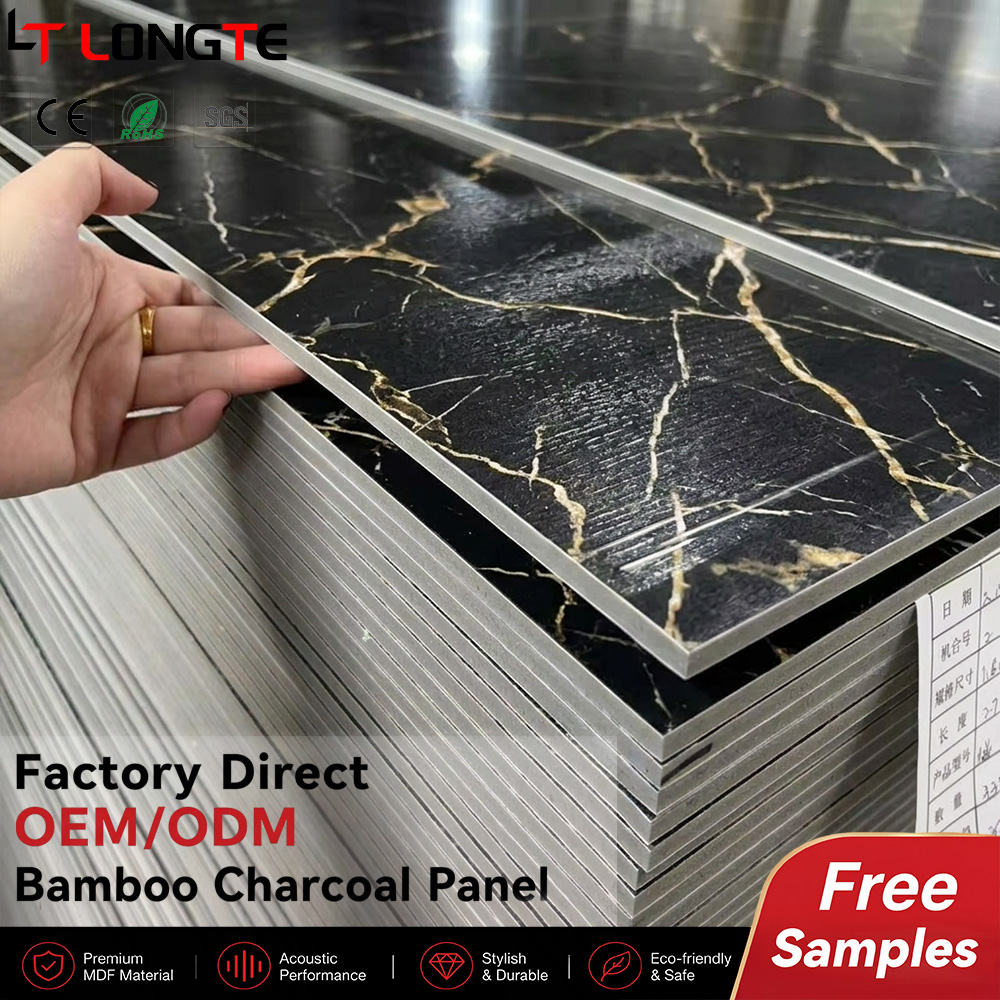
Bamboo charcoal composite wall panels combine a wood-like decorative surface with waterproof and formaldehyde-free construction.
Why Wall Panel Choice Is an Operational Decision
Wall panels are not interchangeable. A panel that works in a dry bedroom may be unsuitable in a wet bathroom, an exterior facade, or a high-traffic hotel corridor. In wholesale and project supply, the practical issues are slightly different: consistency across containers, realistic lead times, mixed-container flexibility, and whether the supplier can support repeat orders without color drift or dimensional variation.
This creates a persistent information gap. Many discovery-stage buyers can list visual preferences but cannot yet map those preferences to material composition, fire rating, weight, or installation method. That gap tends to surface later as change orders, specification revisions, or on-site delays.
Market context: The global wall panel market was valued at USD 32.4 billion in 2025 and is projected to reach USD 43.7 billion by 2033, according to Dataintelo. Asia-Pacific accounts for approximately 42.3% of the global market share.
LONGTE's Position as a Wall Panel Manufacturer
LONGTE-branded wall panels are produced by Haining Longtime Industry Co., Ltd., a manufacturer established in 2003. The company operates an 80,000 m² facility with approximately 220 staff and reports an annual production capacity of 8,000,000 units. Its main product lines include PVC ceiling & wall panels, WPC wall panels, hot stamping foils, PVC lamination films, SPC flooring, and WPC decking.
The company states that about 85% of output is exported, with markets including the United States, Colombia, India, the Philippines, UAE, and multiple South American countries. Its R&D team includes 12 engineers, and the company reports six manufacturing hubs across Asia.
Material and Product Breakdown
Understanding wall panels requires separating the core material from the surface treatment. The core determines structural behavior, weight, moisture resistance, and fire class. The surface treatment determines visual effect, scratch resistance, and cleanability. The table below summarizes wall panel types documented by LONGTE.
| Panel type | Model | Typical size | Thickness | Fire rating | Notable properties |
|---|---|---|---|---|---|
| PS Polystyrene Fluted Wall Panel | LT-PS | 150×2900 mm | 10 mm | B1 | 5 flutes, ultra-lightweight, waterproof |
| WPC Fluted Wall Panel | LT-WG | 159×2900 mm | 12 mm | B1 | 8 mm groove depth, waterproof, termite-proof |
| PVC Marble Wall Panel | LT-PM | 1220×2800 mm | 3-8 mm | B1 | UV coated marble pattern, density 1.4-1.5 g/cm³ |
| Bamboo Charcoal Wood Wall Panel | LT-BC | 600×2900 mm | 9 mm | B1 | Formaldehyde-free, waterproof, 20+ colors |
| SPC Stone Plastic Composite Wall Panel | LT-SW | 1220×2800 mm | 4 mm | B1 | 100% waterproof, anti-scratch, wear-resistant |
| PU Faux Stone Wall Panel | LT-PU | 600×1200 mm | 20-30 mm | B1 | 2-3 kg/m², weather-resistant, impact-resistant |
| Flexible Soft Stone Wall Panel | LT-FS | 600×1200 mm | 2-3 mm | A2 | 3-5 kg/m², bendable, weather-resistant 20+ years |
| Acoustic Slat Wood Wall Panel | LT-AC | 600×2400 mm | 21 mm | B1 | NRC 0.5-0.85, wood veneer + polyester felt backing |
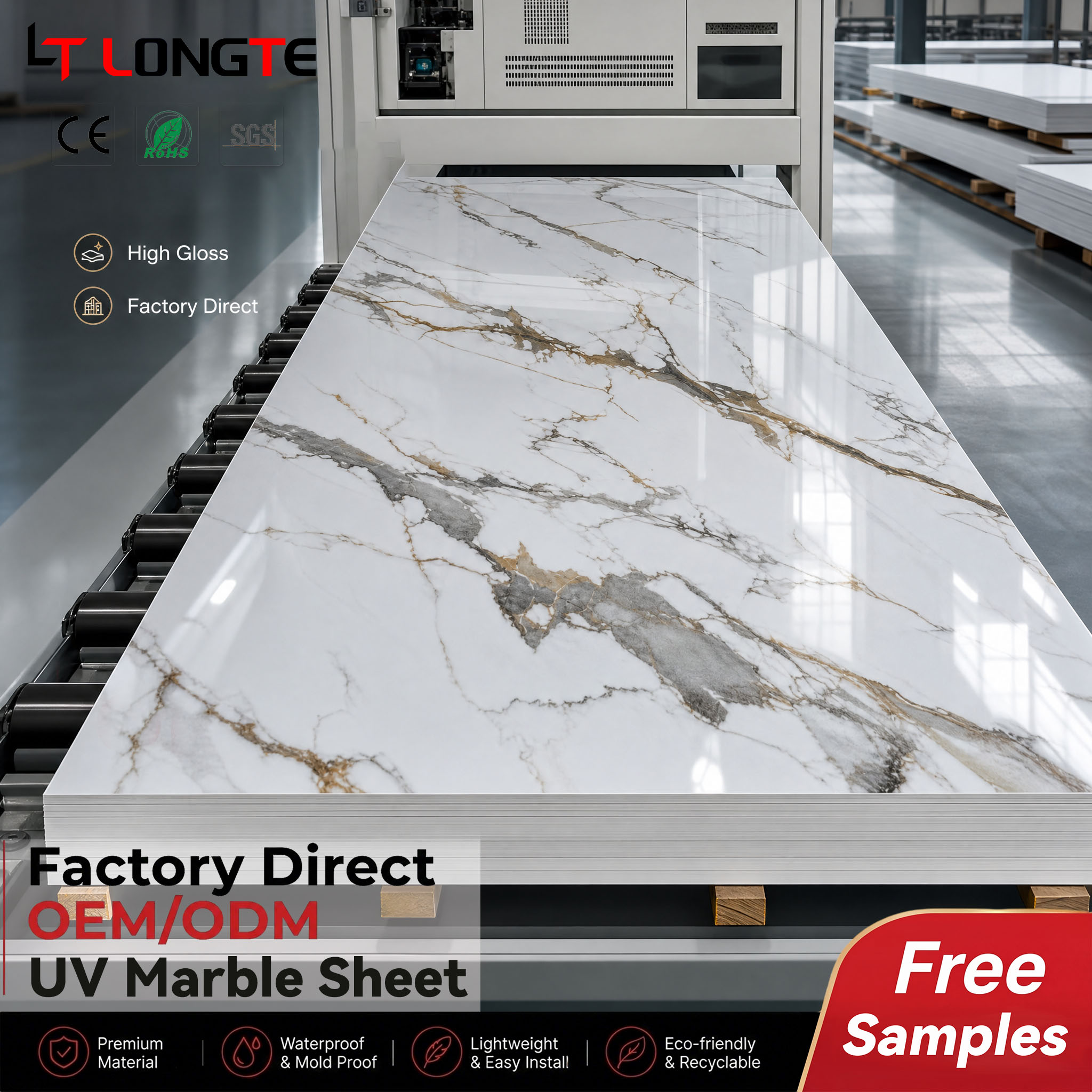
UV-coated PVC marble panels provide a marble visual without natural stone weight or sealing requirements.
The technical difference between these panels matters at the specification stage. A B1 rating is not the same as A2. B1-rated PVC, WPC, PU and SPC panels are common for interior walls, wet rooms, and many commercial interiors. A2-rated flexible soft stone is a stricter option when regulations demand higher non-combustibility. Weight also drives installation: a 600×1200 mm flexible stone panel at 3-5 kg/m² can be handled by smaller crews and applied to curved substrates, while heavier panels may require additional framing.
Application Scenarios and Selection Logic
Wall panel specification should begin with the operating condition, not the finish. The following scenarios illustrate how material choice changes across environments.
Residential renovation
In residential refurbishment, indoor humidity may range from 40% to 70%, with frequent cleaning. Useful panel characteristics include formaldehyde-free composition, B1 fire resistance, DIY-friendly installation, and waterproof protection. Bamboo charcoal panels and lightweight fluted panels fit this profile for bedroom accent walls and living room TV backgrounds.
Hospitality and commercial interiors
Hotels and commercial spaces operate with high foot traffic and nearly continuous use. Panels here need B1 fire rating, low maintenance, scratch resistance, and decorative consistency. PVC marble panels, WPC fluted panels, and SPC wall panels are common choices for lobbies, corridors, guest rooms and bathrooms.
Entertainment and acoustic environments
Cinema halls, recording studios, home theaters and conference rooms require controlled sound absorption. The acoustic slat wall panel meets an NRC of 0.5 to 0.85 with B1 fire performance and is used with acoustic felt backing, wood mounting rails, and optional LED strip channels.
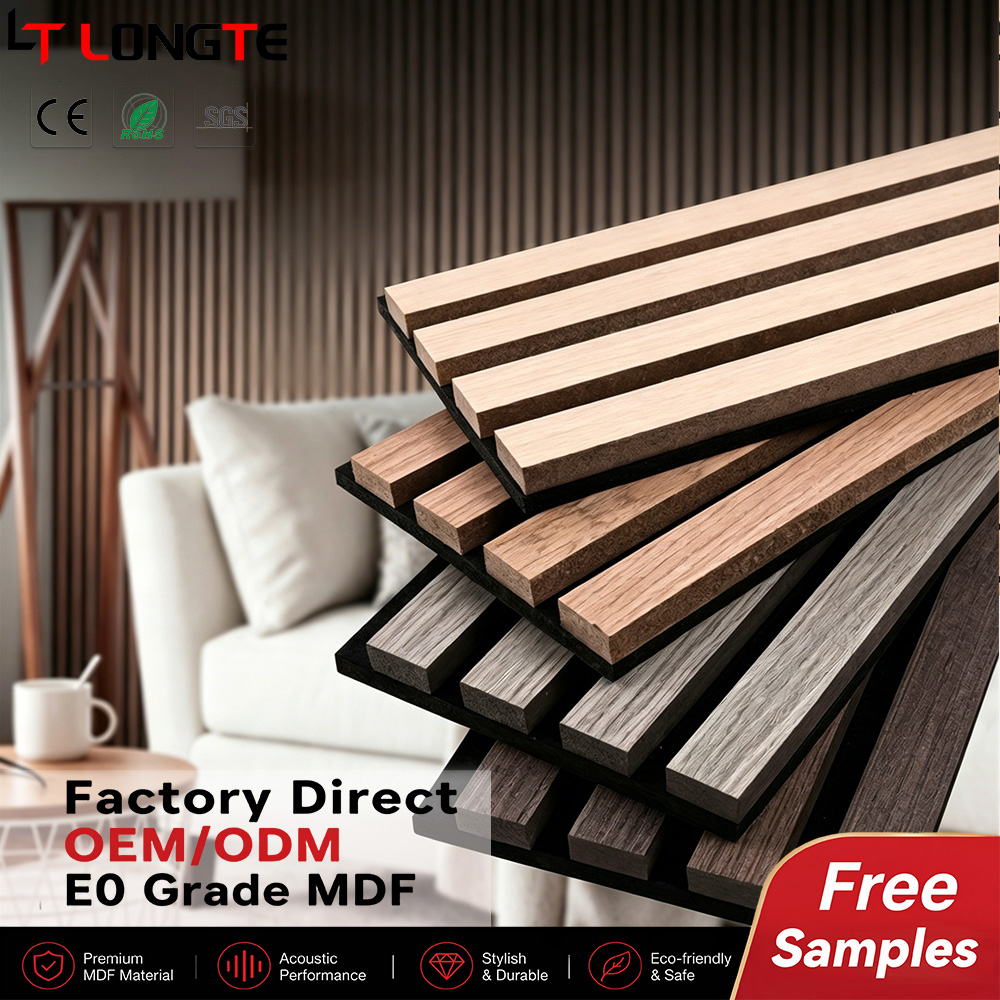
Acoustic slat panels combine decorative wood slats with polyester felt backing for sound absorption.
Exterior and high-exposure environments
Villa facades and coastal or tropical sites can face high heat, sandstorm exposure, monsoon rain, and salt air. Products used in these conditions must be UV-resistant, anti-slip where applicable, termite-proof, and corrosion-resistant. Lightweight stone-look panels with weather-resistant surfaces are relevant for facade cladding and feature walls; WPC decking is relevant for terraces, pool surrounds, and beachfront platforms.
Wholesale distribution
For building material wholesalers, stock-and-sell economics matter. A documented wholesale scenario includes container-based bulk supply, monthly reorder cycles, lead times of 15-25 days, and mixed-container acceptance. Display sample boards, a catalog with 200+ designs, and retail packaging support retail distribution and small hotel project supply.
Market Trends Shaping Wall Panel Procurement
Verified third-party data shows several forces active in 2026. The global wall panel market is growing from USD 32.4 billion in 2025 to a projected USD 43.7 billion by 2033, while the WPC segment reached USD 8.89 billion in 2025 with a projected CAGR of 11.7% through 2033, according to Grand View Research.
China remains a major export base for PVC marble sheets. Volza Export Trade Data documented 1,480 export records for China as of late 2025. Asia-Pacific accounts for approximately 42.3% of global wall panel market share, driven by urbanization in China and India.
In decorative surfaces, UV marble sheets captured 18% of the global decorative materials market in 2024, a 260% increase from 2020, according to Witop Decor. PU stone wall panel sales reached USD 3.7 billion in 2024, with a 70-80% weight reduction compared to natural stone.
Compliance trends are also becoming more specific. In European commercial applications, WPC wall panels may be evaluated against EN 13501-1, with B-s1,d0 as a common target. Bamboo charcoal wood veneer panels are increasingly specified to E0 formaldehyde emission standards of ≤0.07 mg/m³. These standards move procurement beyond visual samples and into documented performance.
Lightweight Panels vs. Traditional Stone and Wood
The most direct comparison is between lightweight stone-look panels and natural stone cladding. Natural stone such as marble, granite or sandstone typically weighs 30-60 kg/m², while PU stone panels weigh 2-3 kg/m² and flexible soft stone panels weigh 3-5 kg/m². This makes a material difference in handling, substructure design, and labor time.
Installation comparison: Lightweight PU stone cladding can be installed at approximately 50 m² in 4-6 hours, compared with 3-5 days for natural stone. In documented comparisons, the delivered cost may be 60-70% lower, and no rebar, mortar or scaffolding is required. Energy efficiency differs substantially: the product has an R-value of 2.5-3.5, compared with 0.5-1.0 for natural stone.
Selection boundary: Lightweight panels are not a universal substitute for natural stone. Where the design requires the mass, hardness or non-combustible behavior of real stone, or where local facade codes require non-combustible cladding, a different solution may be required. B1-rated WPC/PVC/PU products are not automatically suitable for every exterior or high-rise condition. The A2-rated flexible soft stone panel addresses stricter fire requirements, but even A2 must be verified against the specific assembly and local regulations.
Traditional wood also differs from WPC and bamboo charcoal alternatives. A documented lifespan comparison for WPC decking is 15-25 years versus 5-8 years for traditional wood decking. The trade-off is that wood-composite products are engineered systems; their performance depends on the complete installation detail, including trims, drainage, and fastening.
Future Outlook
Wall panels are moving toward multi-functionality: the same surface may need to combine decoration, moisture resistance, fire safety, acoustics, and easier installation. The WPC segment's projected 11.7% CAGR suggests continued demand for wood-plastic profiles in both interior and exterior use. Decorative categories such as UV marble and lightweight stone-look panels are also expanding because they reduce structural load and installation time.
For procurement teams, this means the evaluation framework should become more evidence-based. Product dimensions and thickness are only a starting point. Fire rating, material composition, third-party test documentation, lead time, mixed-container capability, and after-sales support are the factors that distinguish a supplier fit from a product fit.
LONGTE's manufacturing structure—an 80,000 m² facility, 8,000,000 units of annual capacity, and integration across PVC films, panels, flooring, and WPC products—illustrates the operational scale now expected from wall panel suppliers serving multiple markets. But selection should still be tied to the specific project condition rather than a brand default.
A product brochure for further technical reference is available at LONGTE product catalog.
FAQ: Wall Panel Selection for Discovery-Stage Buyers
What are the main types of wall panels?
Wall panels fall into several broad families: PVC marble, WPC fluted, SPC stone-plastic, PU stone, flexible soft stone, bamboo charcoal composite, PS fluted, and acoustic slat. They differ in core material, weight, fire rating, water resistance, and intended application. For example, WPC fluted and PS fluted panels are lightweight decorative interior cladding; SPC and PVC-based panels are often specified for wet interiors; acoustic slat panels address sound absorption.
Which wall panel is suitable for bathrooms or other wet areas?
Wet interior areas benefit from panels with waterproof cores and durable surfaces. An SPC stone plastic composite wall panel is 100% waterproof, anti-scratch, and B1-rated. PVC and bamboo charcoal panels also offer waterproof construction. However, panel selection should be paired with proper substrate preparation, trim sealing, and ventilation. A waterproof panel does not eliminate the need for correct installation at joints and perimeters.
What fire ratings are available for decorative wall panels?
The documented wall panel lines include both B1 and A2 ratings. Most PVC, WPC, PU, SPC, bamboo charcoal, PS fluted, and acoustic slat panels in this portfolio are rated B1. The flexible soft stone wall panel is A2-rated. B1 and A2 are not equivalent; A2 indicates a higher level of non-combustibility under the relevant classification system. Projects should verify the exact fire report and local code requirements.
How do lightweight stone-look panels compare with natural stone?
PU stone panels weigh about 2-3 kg/m² and flexible soft stone panels weigh about 3-5 kg/m², compared with 30-60 kg/m² for natural stone. This enables faster installation, often without structural reinforcement, rebar, mortar, or scaffolding. The trade-off is that natural stone has different mass, hardness, and non-combustible performance. Lightweight panels should not be treated as identical to natural stone where those properties are required.
What should buyers evaluate in a wall panel supplier?
Relevant evaluation points include production capacity, R&D support, documented quality control, lead time, mixed-container flexibility, and after-sales terms. For example, Haining Longtime Industry Co., Ltd. reports an 80,000 m² facility, 8,000,000 units of annual production capacity, a 12-engineer R&D team, 15-25 day lead times in wholesale scenarios, and a 5-year quality warranty on major products. Buyers should request current test reports and confirm these terms at quotation stage.