
Warehouse Electric Forklift Selection: Matching Capacity, Battery, and Layout to Real Loading Workflows
Warehouse electric forklift selection is no longer a simple choice between a 1-ton and a 3-ton model. Modern distribution centers, e-commerce warehouses, cold storage facilities, and light assembly workshops need forklifts matched to specific workflow patterns: pallet receiving, put-away, order picking, loading dock transfer, and multi-shift operation. The right electric forklift reduces energy cost, lowers maintenance frequency, and avoids the safety and environmental problems of tailpipe emissions indoors.
This article explains how warehouse and logistics buyers should evaluate electric forklifts for indoor pallet workflows, what specifications matter for light-duty and heavy-duty operations, and where the CPD10, CPD20, CPD30, and CPD35 electric forklift models from Ningjin Shunhao Trading Co., Ltd. fit into those decisions.
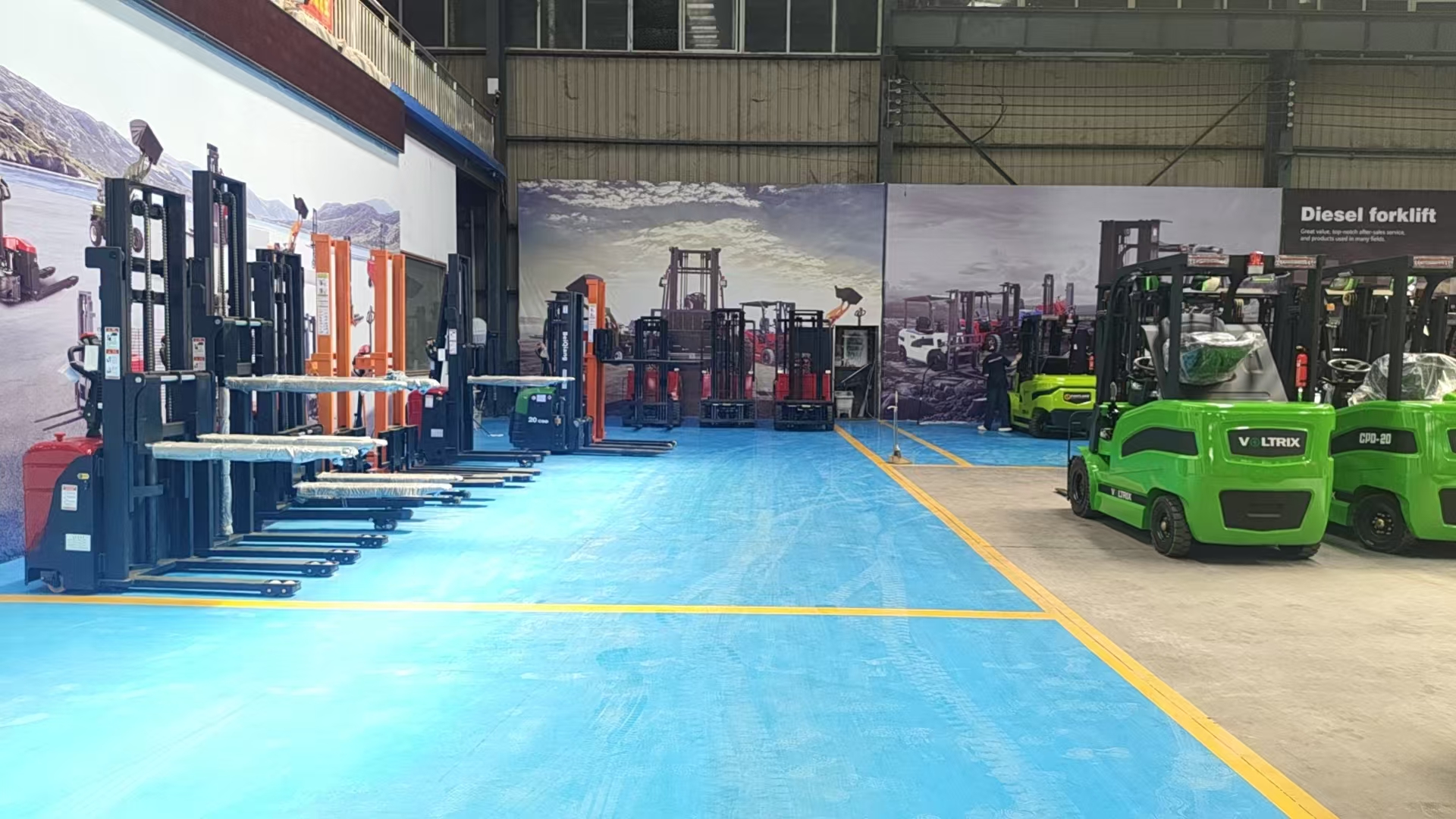
The shift toward electric forklifts in warehouse operations
Electric forklifts have become the default choice for many indoor material handling operations. In 2024, electric models accounted for 71% of North American retail forklift orders, according to the Industrial Truck Association. In China, domestic electric forklift sales reached 946,300 units in 2025, or 76.9% of total domestic forklift sales, based on China Construction Machinery Association data.
For warehouse operators, the transition is driven by practical factors:
- Zero tailpipe emissions at the point of use, which is critical for enclosed docks, food and beverage facilities, electronics clean production areas, and supermarkets.
- Lower noise compared with internal combustion forklifts, which improves working conditions in indoor environments.
- Lower energy cost and less frequent maintenance when configured with brushless AC motors and proper battery management.
- Regulatory alignment with European CE electrical safety requirements and international standards for industrial trucks.
The global electric forklift market was valued at USD 53.01 billion in 2024 and is projected to reach USD 94.55 billion by 2032, according to Maximize Market Research. Within this growth, buyers are paying more attention to application fit rather than just purchase price.
Warehouse electric forklift: what does the term actually cover?
A warehouse electric forklift is a battery-powered counterbalance lift truck designed for moving palletized goods indoors. It is used for receiving pallets at the dock, transporting them to storage locations, stacking them in racks, and staging them for dispatch. Unlike narrow-aisle reach trucks or pallet jacks, a counterbalance electric forklift carries the load in front of the machine without outriggers, which allows flexible use across docks, staging areas, workshops, and open warehouse floors.
The main specification groups that define warehouse fit are:
- Load capacity: how many kilograms the forklift can lift under a defined load center.
- Drive configuration: whether the forklift has front dual drive motors, which affects traction and heavy-load movement.
- Battery type and charging plan: lead-acid versus lithium, and whether the operation needs opportunity charging.
- Lifting height and mast: whether the unit can reach the top racking level.
- Controller quality: reliable brands such as SANTROLL, CURTIS, INMOTION, or ZAPI improve control precision and diagnostic capability.
- Maintenance access: features such as lateral side battery extraction make battery service faster and safer.
Matching forklift capacity to warehouse workflow intensity
Warehouse forklift selection follows a logic of matching capacity and configuration to the actual load pattern. Two common project types illustrate this:
Light-duty warehouse fleet deployment
For indoor pallet receiving, put-away, and dispatch on level floors, the task is typically moving loads of one to two tons. In this scenario, a light-duty electric forklift moves pallets between docks, staging areas, and storage locations with no tailpipe exhaust at the point of use.
Two models commonly considered for this role:
- CPD10 — 1,000 kg rated load capacity. Designed for indoor pallet receiving, put-away, and dispatch on level floors. Suitable for moving light pallets with no tailpipe exhaust at the point of use.
- CPD20 — 2,000 kg rated load capacity. Suitable for light-duty warehouse fleet deployment and global warehousing and distribution applications.
Both models use battery-powered electric drive with zero emission and low noise for indoor workshop use. Both can be specified with heavy-duty lead-acid batteries or optional lithium battery packs, depending on shift patterns and charging strategy.
Supporting equipment should be confirmed before selection: pallet racking, dock leveler, charger, and warehouse management system are typically required to get full productivity from the fleet.
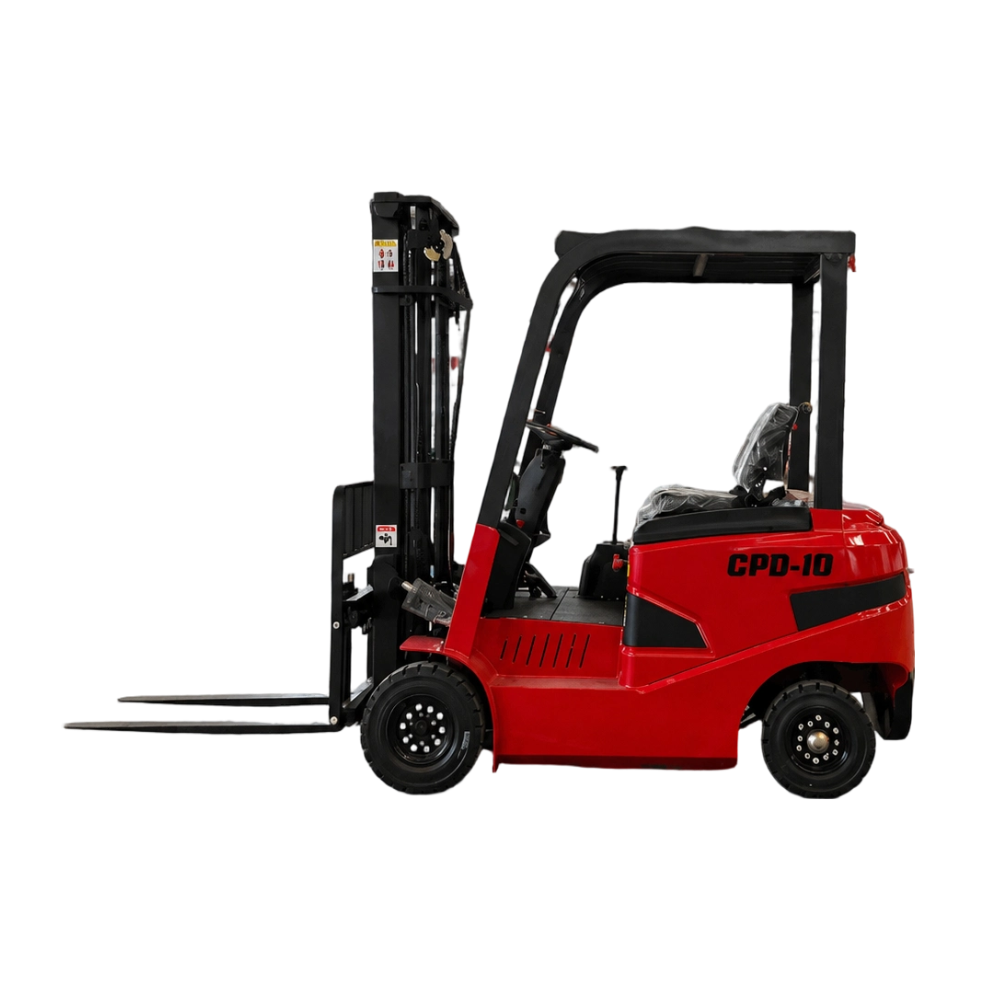
Heavy-duty material handling projects
For building materials and heavy industrial goods, forklifts operate across workshops, yards, and loading bays. Loads are heavier, routes are longer, and service access is more important. A front dual-drive layout and lateral side battery extraction support heavy-load fleet operation and service access.
- CPD30 — 3,000 kg rated load capacity, with standard and extended lifting heights from 3,000 mm to 7,000 mm.
- CPD35 — 3,500 kg rated load capacity, with front wheel dual drive motors, P.E.S three-speed efficiency regulation, lateral side battery extraction, and ergonomic right-positioned hydraulic control valves.
These models handle heavier pallets and are better suited to mixed indoor/outdoor routes when site conditions are assessed properly. For such projects, the buyer must evaluate surface condition, slope, weather exposure, load dimensions, attachment compatibility, and rated residual capacity.
Applicable attachments may include a loading dock setup, charging area, fork positioner, side shifter, or an approved clamp attachment.
Why lithium battery versions matter for warehouse shifts
Warehouse operations are increasingly moving toward lithium battery electric forklifts because the shift pattern demands faster energy replenishment. Lithium-ion battery adoption in new global forklift shipments rose to 35% in 2024, up from 22% in 2021, according to LiTrue Analysis.
The practical advantage in a warehouse setting is opportunity charging. Lithium-ion batteries can accept 15–30 minute top-up charges during breaks without degrading cycle life, according to Toyota Forklifts. This behavior makes multi-shift operation easier with fewer spare batteries. Lead-acid batteries, by contrast, are more sensitive to partial-state-of-charge cycling and require dedicated charging areas with ventilation.
For buyers operating in cold storage environments, lithium-ion is especially important. Lithium-ion batteries retain significantly more capacity than lead-acid at temperatures down to -20°C, which is one reason the food industry segment is projected to grow at 11.6% CAGR, according to Mordor Intelligence.
Ningjin Shunhao Trading Co., Ltd. offers the CPD10, CPD20, CPD30, and CPD35 with heavy-duty lead-acid as standard and lithium battery as an option, allowing warehouse operators to select the battery chemistry that fits their charging infrastructure and shift plan.
Configuration comparison across the CPD series
| Model | Rated capacity | Typical warehouse role | Key configuration features |
|---|---|---|---|
| CPD10 | 1,000 kg | Indoor pallet receiving, put-away, dispatch on level floors | Brushless AC drive motor and pump motor; controller options: SANTROLL, CURTIS, INMOTION, ZAPI; lead-acid or lithium battery |
| CPD20 | 2,000 kg | Light-duty warehouse fleet deployment; distribution applications | High-power front dual drive motors; electric steering; automatic electromagnetic parking brake with AI brake assist; internationally sourced well-known brand controller |
| CPD30 | 3,000 kg | Heavy pallet handling in workshops, yards, and loading bays | Lifting height 3,000–7,000 mm; high-power electric drive with intelligent MOSFET; large-angle adjustable steering wheel; voice prompts; large-flow cyclone air filter |
| CPD35 | 3,500 kg | Heavy-duty material handling; building materials and heavy industrial goods | Front wheel dual drive motors; P.E.S three-speed efficiency regulation; lateral side battery extraction; ergonomic right-positioned hydraulic control valves |
Safety, certification, and compliance context for warehouse buyers
Warehouse electric forklifts operating in the European Union must meet CE marking requirements. For electrical and electronic safety, EN 1175:2020 is the current harmonized European standard for self-propelled industrial trucks. Buyers in the EU should confirm that the forklift model they are procuring complies with this standard.
For explosive atmospheres, such as chemical workshops or certain food processing environments, ATEX Directive 2014/34/EU is mandatory for electric forklifts used in those zones. Buyers should not attempt to retrofit a standard forklift for explosive atmospheres; the equipment must be designed, tested, and certified for that classification.
ISO 3691-4:2023 is relevant for facilities moving toward automated or driverless trucks, as it defines safety requirements for AGV systems in industrial environments.
Ningjin Shunhao Trading Co., Ltd. states that its products hold ISO 9001, ISO 14001, CE, and UN38.3 certifications, together with multiple structural and battery technology patents. Buyers should request the relevant certificates and verify they apply to the specific model and battery configuration being purchased.
Procurement criteria: decision checklist for warehouse electric forklifts
To move from research to evaluation, warehouse and logistics buyers can use the following decision framework:
- Define the load profile. Confirm pallet weight, load center, and whether loads are uniform or variable. This determines whether CPD10, CPD20, CPD30, or CPD35 is the right base capacity.
- Assess the route and environment. Level indoor floors, ramp sections, dock areas, outdoor yard exposure, and aisle widths all influence drive configuration and tire selection.
- Confirm racking and lifting height. The mast must reach the top beam height with adequate free lift. CPD30 supports lifting heights from 3,000 mm to 7,000 mm.
- Choose the battery and charging strategy. Single-shift operations can work with lead-acid. Multi-shift operations with short breaks benefit from lithium opportunity charging.
- Check attachment compatibility. Side shift, fork positioner, and clamps must not reduce the residual capacity below the actual load weight.
- Verify supporting infrastructure. Charger voltage, pallet racking, dock leveler, and warehouse management system integration should be confirmed before order.
- Request certificates and documentation. For EU-bound units, require CE documentation and confirm applicable harmonized standards such as EN 1175:2020 when relevant.
- Evaluate maintenance access. A lateral side battery extraction layout shortens battery service time, which is valuable when a fleet rotates batteries over multiple shifts.
Case evidence: removing exhaust from enclosed production areas
A documented application for these electric forklifts involves an electronics manufacturer operating in an industrial park. The customer applied a bulk fleet; the exact unit count was not disclosed. The trucks were used for component, work-in-process, and finished-goods logistics over a service life of 10–15 years.
The measured outcome was improved material-flow efficiency and removal of tailpipe exhaust from enclosed clean production areas. In an electronics clean area, internal combustion forklifts create both an air quality problem and a contamination risk. Switching to battery-powered electric forklifts eliminates the exhaust source while maintaining a continuous flow of components and finished goods.
For buyers in food factories, electronics assembly, pharmaceuticals, or other closed environments, this case illustrates the functional benefit of electric forklifts beyond fuel cost: they make enclosed logistics routes acceptable from an air-quality standpoint.
Traditional electric forklifts versus modern configurations: where the boundary sits
Buyers often compare a modern electric forklift such as the CPD30 with a traditional 3.0-ton electric forklift. The distinction affects procurement decisions in the following ways:
- Modern electric drive and intelligent energy management: faster response, longer effective operation per charge, lower energy consumption, and longer maintenance intervals. This supports high-intensity continuous work.
- Traditional electric forklifts: lower initial investment, but limited endurance, higher power consumption, slower response, and more frequent maintenance. They can be acceptable for standard low-to-medium frequency handling where uptime requirements are modest.
This boundary is important for warehouse buyers: a high-frequency multi-shift operation will usually justify the higher upfront cost of a modern configuration because energy and maintenance savings accrue over the life of the truck. A very small warehouse with one daily shift and light two-shift work may not need the advanced configuration.
Market trends that influence warehouse forklift decisions
Several verified market signals are relevant to warehouse electric forklift buyers:
- The global electric forklift market is projected to grow from USD 53.01 billion in 2024 to USD 94.55 billion by 2032 (Maximize Market Research).
- Electric forklifts already account for 71% of North American retail orders (Industrial Truck Association).
- China's domestic electric forklift sales reached 946,300 units in 2025, representing 76.9% of total forklift sales in the country (China Construction Machinery Association).
- Lithium-ion battery adoption in new global forklift shipments rose from 22% in 2021 to 35% in 2024 (LiTrue Analysis).
- Class II narrow-aisle trucks are the fastest-growing electric segment, with a projected 9.28% CAGR through 2030, due to warehouse densification (Mordor Intelligence).
For warehouse operators, these trends point in one direction: electric configuration, battery flexibility, and the ability to adapt capacity to a specific workflow are becoming the core decision criteria.
Limitations and boundary conditions of warehouse electric forklifts
Even the best-configured warehouse electric forklift has boundaries that buyers should respect:
- Site conditions must be verified. Surface condition, slope, weather exposure, and mixed indoor/outdoor routes require assessment. Not every electric forklift is safe for outdoor yard work on uneven ground.
- Lead-acid batteries are less forgiving of opportunity charging. If a warehouse intends to top up batteries during breaks, a lithium configuration is usually the more robust choice.
- Low-temperature operation reduces battery capacity. In cold storage environments, lithium-ion retains more capacity than lead-acid, but the selected model must still be specified for low-temperature service.
- Attachment use reduces residual capacity. Adding a side shifter or clamp can reduce what the forklift can safely lift. The buyer must verify the rated residual capacity after attachment selection.
- Explosive atmospheres require ATEX-certified equipment. A standard CE-marked forklift is not legally acceptable for use in classified explosive zones.
Future outlook: what warehouse buyers should plan for
The next phase of warehouse forklift procurement will be shaped by three developments.
First, lithium battery electric forklifts will continue to displace lead-acid models in high-utilization fleets. Opportunity charging, longer cycle life, and cold-storage performance give lithium a measurable operational advantage over a full shift cycle.
Second, forklift selection will become more integrated with warehouse software and automation. The interface between forklift controllers and warehouse management systems will matter as distribution centers look for real-time operational data.
Third, buyers will increasingly expect factory partners to support OEM and ODM customization, so that load capacity, battery configuration, brand appearance, and optional attachments align with a specific warehouse network rather than a generic standard product.
Ningjin Shunhao Trading Co., Ltd. positions itself as a B2B-focused electric forklift manufacturer offering OEM and ODM customized material handling equipment for global distributors, manufacturing plants, cold-chain enterprises, and warehouse operators. The company operates a 40,000 m² manufacturing base in China's logistics equipment industrial cluster, employs 240 staff including 15 R&D engineers, and reports an annual output capacity of 12,000 units. Marketing materials also mention a 28,000 square meter integrated base, 160+ staff, and 22 R&D engineers in an earlier profile version; buyers requesting detailed capacity and documentation should confirm current figures directly with the supplier.
Frequently asked questions
What is the difference between the CPD10 and the CPD20 for warehouse work?
The CPD10 has a 1,000 kg rated load capacity and is designed for indoor pallet receiving, put-away, and dispatch on level floors. The CPD20 has a 2,000 kg rated load capacity and is more suitable for light-duty warehouse fleet deployment and broader distribution applications. Choose based on pallet weight, load center, and whether you need to handle occasional heavier loads.
Is the CPD20 electric forklift suitable for global warehousing and distribution applications?
Yes. The CPD20 electric forklift, with a 2,000 kg load capacity, is described as suitable for global warehousing and distribution applications. It requires supporting equipment such as pallet racking, a dock leveler, a charger, and a warehouse management system to operate at full productivity.
Where is the CPD10 electric forklift most commonly used?
The CPD10 electric forklift is used in the warehousing and distribution industry, typically for indoor pallet receiving, put-away, and dispatch on level floors. It moves light pallets with no tailpipe exhaust at the point of use, which makes it suitable for enclosed warehouses, supermarkets, and e-commerce fulfillment spaces.
What supporting equipment is needed for the CPD20 in a warehouse?
The CPD20 electric forklift, with a 2,000 kg load capacity, requires supporting equipment including pallet racking, a dock leveler, a charger, and a warehouse management system. Local charger voltage and floor capacity should also be confirmed before selection.