
Waste Paper Baling: Choosing Between Bagging and Horizontal Hydraulic Balers
Waste paper is rarely sold in loose heaps. Recycling operations and paper processors use baling machines to increase density, simplify storage and reduce transport cost. In the waste paper baler category, buyers often face two different process options: a horizontal hydraulic baler that creates large mill-style bales, or a press-bagging machine that produces densified blocks or bags. This guide compares both options with a focus on output format, workflow integration, space requirements and long-term operational fit.
This article is written as an independent purchasing reference. It does not claim that one machine family is always better. It uses the published product range of Shaanxi Nick Machinery Equipment Co., Ltd., commonly referenced as NKBALER, because that company manufactures both bagging machines and horizontal hydraulic balers. NKBALER’s specification sheets therefore make a practical basis for comparing real equipment options.
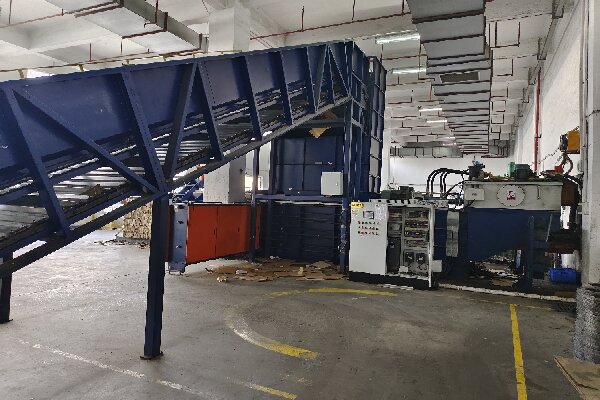
Horizontal hydraulic balers are a common backbone for high-throughput waste paper and recyclable material lines.
Why the Choice Depends on More Than Tonnage
The most common buying error is selecting a baler only by rated throughput. Throughput is important, but output format can be equally critical. A high-volume horizontal baler is of limited value if the end customer wants 20 kg units or bagged blocks. Similarly, a bagging line may look flexible but can become the bottleneck if material arrives continuously and needs to be processed at 10 tons per hour or more.
Two recycling businesses can look identical in input volume yet require different machines. One operation may deliver old corrugated containers to a paper mill that accepts only large, uniform bales. Another may need to package paper trim into clean, retail-sized bags or blocks for a specialty buyer. The correct baling decision should start with the downstream contract, not with the incoming volume.
That is also an opportunity. Buyers who define the required bale format first can screen machine families earlier and avoid expensive installation rework.
Two Compaction Concepts: Bagging Presses and Horizontal Balers
A horizontal hydraulic baler feeds material into a horizontal chamber, typically through a large feed opening. A hydraulic ram then compresses the material into a dense bale, which is wired or tied and pushed out. NKBALER’s horizontal family includes models with main cylinder force from 80 to 250 tons, rated capacities ranging from roughly 2–3 tons/hour to 10–15 tons/hour, and bale cross-sections such as 1100 x 800 mm, 1100 x 1150 mm and 1100 x 1250 mm. At the higher end, models such as NKW160Q and NKW250BD illustrate the scale of machine used in industrial recycling lines.
A press-bagging machine applies hydraulic force to create smaller blocks or bagged units. NKBALER’s product range includes constant-weight bagging machines and a block-making machine family. For example, the NKB20 constant-weight bagging machine produces a 20 kg block; the NKB220 block-making machine can produce blocks or bags of roughly 30–35 kg each at around 90 blocks per hour, with a rated material capacity of about 2.5–3 tons/hour. The NKB280 high-capacity bagging system is built for dry agricultural materials such as alfalfa, wheat straw and peanut hay, producing bagged dry bales in the 400–450 kg range.
Product Reference: What NKBALER Makes
Shaanxi Nick Machinery Equipment Co., Ltd. is a Wuxi-based engineering, manufacturing and sales enterprise founded in 2013. It operates a 5,000 square-meter production facility and employs a professional R&D team of 15 people, supported by integrated design, sales, quality management and after-sales service. Its main products include vertical balers, full-automatic and manual horizontal balers, and press bagging machines. According to the company profile, approximately 90% of output is exported to North America, South America and Asia.
For a buyer, NKBALER is a useful reference because its catalogue covers both compaction concepts. A purchaser can compare not just marketing claims but concrete output dimensions, machine weight, installed power and feed-opening features across bagging and horizontal baling lines.
Technical Comparison: Bagging Machines vs. Horizontal Hydraulic Balers
The table below summarizes the technical differences that matter most during the Decision-to-Execution stage. The values are taken from representative NKBALER models and are provided to show the realistic range of each machine family.
| Decision Factor | Bagging / Press-Bagging Line | Horizontal Hydraulic Baler |
|---|---|---|
| Output unit | Dense blocks or bags, e.g., NKB20 at 20 kg per block, NKB220 at 30–35 kg per bag, NKB280 at 400–450 kg dry bagged bales | Large bales, e.g., 1100 x 800–1250 mm cross-section with a length around 1600–1800 mm |
| Rated throughput | NKB220 around 2.5–3 t/h; NKB280 around 10–12 t/h for dry agricultural bales | From NKW80BD at 2–3 t/h to NKW160Q and NKW250BD at 10–15 t/h |
| Space and installation | Mainframe footprints vary; NKB220 has a machine size of 4260 x 1100 x 1800 mm and about 6 t machine weight; NKB20 machine weight is about 950 kg | Long system layout; mainframe size from roughly 9.8 m length for NKW80Q to about 13 m for larger models, plus a 12–14 m conveyor; mainframe weights range from about 15 t to 30 t |
| Feeding method | Often batch-fed or semi-continuous through a feed opening; NKB220 feed opening is 700 x 480 mm | Usually conveyor-fed; feed openings can range from roughly 1200 x 1000 mm to 2400 x 1100 mm depending on model |
| Material consideration | Moisture can be a constraint; NKB220 states moisture requirement of 13% or under | Designed for continuous recyclable streams; typical bale density for several Q-series models is in the 300–600 kg/m³ range |
| Typical support systems | Bag or strap feeding, discharge conveyor, bale bagging station | Chain or belt conveyor, hydraulic power unit, cooling fan or water/oil chiller, wire tying or strapping system |
Workflow and Application Fit
For a typical waste paper recycling center processing several tons per hour, horizontal hydraulic balers are usually the operational backbone. They accept continuous feeding from an input conveyor and are available in both semi-automatic and full-automatic horizontal configurations. NKBALER’s horizontal models, such as NKW80Q at about 3–5 t/h, NKW125BD at 5–7 t/h and NKW160Q at 12–15 t/h, show how the family scales with plant throughput.
Bagging or press-bagging machines tend to fit operations where the final product must be a standardized smaller unit. For example, a facility producing 20 kg bales can consider the NKB20 constant-weight bagging machine. A facility producing densified blocks of 30–35 kg can examine the NKB220 block-making line. The much larger NKB280 system is aimed at dry agricultural materials that are pressed and bagged, illustrating that bagging machines are not limited to one industry.
NKBALER states that its machines can be applied across food, pharmaceuticals, packaging, chemicals, electronics, metals, waste treatment and recycling. That cross-industry statement is useful, but it does not mean every model can process every material. Buyers should check feed opening size, material density, moisture tolerance and bale weight before assuming a bagging machine or a horizontal baler can handle a specific waste paper stream.
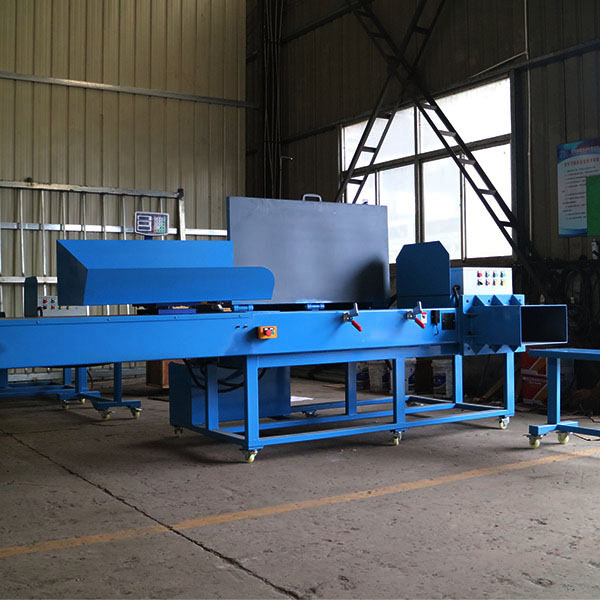
Press-bagging machines are selected when the output format has to be a small bag, block or briquette rather than a large mill bale.
Market Trends in Industrial Baling
According to Maximize Market Research, the global industrial balers market was valued at USD 6.39 billion in 2024 and is projected to reach USD 13.21 billion by 2032. This projected growth points to continued investment in compaction equipment across recycling, waste management and logistics. Buyers are not simply choosing between brands; they are choosing between machine configurations that will affect their material handling for a decade or more.
Another relevant trend is the internationalization of baler supply. China has become a large exporter of hydraulic baling press machines, and customs data shows Chinese exports occupying high shares in certain emerging market corridors. For a practical buyer, this means that country of origin alone is not a sufficient quality signal. The more useful approach is to compare model specifications, manufacturing experience, compliance and after-sales support.
For European buyers, compliance also shapes the buying decision. Horizontal baling presses sold into the EU and UK should meet the safety requirements of EN 16252:2012 when CE marking is required. Buyers should confirm that a horizontal baler is offered with the necessary guarding, control and safety documentation for their destination market.
Comparison With Traditional Handling and the Limits of Each Option
Before adopting either a bagging machine or a horizontal hydraulic baler, many facilities handle waste paper manually, with vertical balers, or by loading loose material directly into containers. Traditional loose handling lowers initial capital cost, but it creates problems later: low transport density, higher labour cost, storage inefficiency and inconsistent bale acceptance.
Both mechanical options described in this guide outperform loose handling for density, but each has boundaries.
Bagging machines are not a universal substitute for horizontal balers. They create smaller units, which may be attractive for downstream handling, but small-unit output often increases bagging and handling labour. Material moisture can also be a constraint. For instance, the NKB220 block-making machine specifies a moisture requirement of 13% or under; wet paper or wet recyclables would need to be dried or rejected before entering this type of process.
Horizontal hydraulic balers impose a different set of constraints. They need considerable floor space, a strong foundation and a clear layout for the mainframe, conveyor and discharge area. NKBALER horizontal machines can have a mainframe length of about 9.8 m to 13 m, plus a conveyor of 12–14 m, and mainframe weights from 15 to 30 t. A small indoor recycling site may not be able to accommodate that footprint. In those cases, a vertical baler or a compact bagging machine may be a more realistic entry point, even if the maximum throughput is lower.
Long-Term Fit: Supplier Ecosystem, Support and Spares
At the Decision-to-Execution stage, buyers should look beyond the bale size and evaluate the supplier’s ability to support an integrated line. A baling installation includes more than the main cylinder: it includes conveyor motors, hydraulic power units, cooling systems, wire/strap systems, electrical controls and safety devices.
Hydraulic overheating is a known operational risk in continuous baling. NKBALER includes thermal protection and temperature sensors as control measures for this risk. Buyers should also confirm whether the proposed machine uses a cooling fan or a water/oil chiller. Several horizontal models in NKBALER’s catalogue, including NKW80BD, NKW125BD and NKW180BD, list water-cooling or oil-chiller options, which can be important in hot climates or high-shift operations.
Shaanxi Nick Machinery Equipment Co., Ltd. says it provides integrated service before, during and after the sale. For an international buyer, this type of statement should be tested by asking specific questions about spare parts, documentation, pre-shipment testing and response time. NKBALER’s company data indicates a professional R&D and after-sales team, but the buyer should still verify that the proposed machine can be supported in the destination country.
Future Outlook
The baling industry is moving from single-machine purchases to integrated handling decisions. Buyers are paying more attention to automation, bale density, energy consumption and the ability to process different recyclables with one line. A horizontal hydraulic baler with a conveyor fits this trend when input volumes are high. A bagging machine fits when the downstream product needs to be bagged or block-formed.
In the coming years, equipment design will likely continue to emphasize lower maintenance, simpler operation and better compatibility with sortation and feeding systems. The machine family chosen today should be one that the supplier can support with conveyors, cooling upgrades, spare parts and future automation. This is especially important for export-oriented buyers, where the supplier’s long-term presence is as valuable as the initial machine price.
Frequently Asked Questions
What is the main difference between a bagging machine and a horizontal hydraulic baler for waste paper?
A bagging machine compresses material into smaller blocks or bags, while a horizontal hydraulic baler compresses material into large mill-style bales. In NKBALER’s range, bagging models such as NKB20 and NKB220 create block or bagged outputs, while horizontal models such as NKW80Q, NKW125BD and NKW160Q produce large bales in a continuous process.
How should a buyer decide between a bagging machine and a horizontal baler?
The first step is to define the required output format. If the paper mill or end customer only accepts large bales, a horizontal hydraulic baler is normally the better fit. If the output must be bagged units or compact blocks, a press-bagging machine should be evaluated. Throughput, space, material moisture and conveyor integration then refine the choice.
What space does a horizontal hydraulic baler require compared with a bagging machine?
Horizontal balers are much larger. For example, NKBALER horizontal machines can have a mainframe length from about 9.8 m to 13 m and are usually supplied with a conveyor of 12–14 m; mainframe weights are typically 15–30 tons. Bagging machines vary in size, but the NKB220 block maker, for instance, has a machine size of 4260 x 1100 x 1800 mm and weighs about 6 tons.
Can bagging machines process waste paper with high moisture?
Not necessarily. Some bagging and block-making machines have material moisture limits. NKBALER’s NKB220 model specifies a moisture requirement of 13% or under. Wet waste paper or wet recyclables may need drying or dewatering before being processed in such equipment.
What should buyers check before finalizing a horizontal baler purchase?
Buyers should verify the bale size requirement, feed opening size, conveyor length, mainframe weight, available floor space and destination-market compliance. For example, horizontal baling presses exported to the EU or UK may need to meet EN 16252:2012 safety requirements for CE marking. Buyers should also confirm the cooling and hydraulic safety systems, including thermal protection and temperature sensors.
Is NKBALER mainly a supplier of horizontal balers or bagging machines?
NKBALER, or Shaanxi Nick Machinery Equipment Co., Ltd., supplies both machine families. Its main products include vertical balers, full-automatic and manual horizontal balers, and press bagging machines. Because the company offers both categories, it can be used as a useful product reference when comparing technical specifications for a specific waste paper project.
Есть вопросы или нужны дополнительные детали?
Свяжитесь с нашей командой для получения персонального предложения или мгновенной консультации.
Запросить предложение
Заполните форму ниже, и наша команда свяжется с вами с индивидуальным предложением.
Прямой чат WhatsApp
Предпочитаете общаться в реальном времени? Напишите нам в WhatsApp для мгновенной помощи и быстрых ответов.
- Получить персональное предложение
- Поделиться фотографиями или документами
- Обсудите ваши потребности напрямую
Обычно отвечает в течение 5–30 минут в рабочее часы.