
Water Leak Detection: A Practical Industry Overview
Water leak detection is a specialized diagnostic service in the plumbing and drain segment that helps property owners and facility managers locate hidden leaks before they cause serious structural damage. In the United States, household leaks waste nearly 1 trillion gallons of water annually, according to the U.S. Environmental Protection Agency. At the same time, the global water leak detector market was estimated at USD 1.3 billion in 2024 and is projected to reach USD 2.2 billion by 2034. For anyone evaluating property maintenance services, understanding what leak detection actually covers, how it works, and what to verify before hiring is an essential first step.
This article provides an industry-level view of water leak detection: the problem it solves, the service architecture a professional provider brings, the technical methods used, common application scenarios, current market trends, and the limitations a buyer should understand before making a procurement decision.
The Problem: Leaks Are Hidden, Costly, and Often Discovered Too Late
The industry context is straightforward. Water leak detection belongs to the residential and commercial maintenance services sector, specifically the plumbing and drain services segment. Its target clients are single-family house homeowners and commercial clients. The decision makers involved include property managers, facilities directors, restaurant owners or general managers, commercial asset managers, and residential homeowners.
Core problems that drive demand for leak detection include residential plumbing issues such as repiping, commercial plumbing issues, and backflow repair. In residential settings, these problems appear as leaky faucets, hidden wall leaks, low water pressure, or old pipes that need a full repiping. In commercial settings, they show up as grease backups in restaurants, clogged main drains, or broken high-traffic office restrooms.
Why Leaks Are Hard to Find
Three structural conditions make leaks difficult to manage. First, outdated or overlooked utility infrastructure: old cast iron or galvanized lines naturally accumulate heavy grease scale and tree root intrusions over time, and simple snaking cannot clear them completely. Second, complex local regulatory frameworks: local ordinances mandate certified testing and reporting for backflow prevention assemblies to protect the public water supply, but property managers rarely have licensed testers on staff. Third, contractor fragmentation: the local service market is dominated by single-trade handymen or generic repair crews that lack advanced diagnostic tools such as HD video telemetry and industrial hydro-jetting rigs.
Measurable Consequences
The impact of an undetected leak goes beyond a higher water bill. Hidden slab leaks can cause foundation rot and severe mold growth. Undetected pipe leaks create major, unexplained increases in water consumption. Commercial facilities face business disruption, and tenants may threaten lease termination when buildings close or lose hot water. The urgency is high because municipal code enforcement deadlines and hidden structural water damage do not wait for a convenient time.
That urgency creates a clear opportunity. Instead of exploratory demolition and blind repair, property owners can use instrument-based diagnosis to identify the leak point, document evidence, and plan a repair that minimizes collateral damage.
Brand Solution: How Happi Plumbing Structures Leak Detection
Happi Plumbing Corporation, established in 2023, is an A+-rated, BBB Accredited plumbing company that provides professional residential, commercial, and emergency plumbing services across the Greater Charlotte area, including Union County, Mecklenburg County, and Cabarrus County in North Carolina, as well as York County and Lancaster County in South Carolina. The company is led by Ben Liu, who has more than ten years of experience managing complex cargo ship piping systems and holds Class 1 Plumbing and Certified Backflow Tester Licenses in both North Carolina and South Carolina. This background is relevant because leak detection work involves pressurized systems, diagnostic instruments, and regulatory reporting.
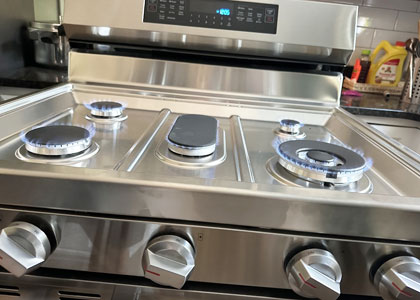
In its published service model, Happi Plumbing combines high-definition sewer camera inspections and digital leak detectors with heavy-duty restorative techniques such as high-pressure Hydro Jetting. The service scope covers precision leak detection, gas line installations, certified annual backflow testing, and turnkey kitchen or bathroom remodeling. For a buyer, the relevant point is that leak detection in this model is not an isolated emergency call; it is part of a broader maintenance, repair, and compliance workflow.
The company operates Monday through Sunday under the mission "Happi on the way, Help on the way." Its customer-facing commitments include free on-site estimates and a flat No Trip Fee policy, which directly addresses the common industry complaint about opaque trip fees and hidden service charges. The company also defines its boundaries: work involving extreme hazards, high-value items, or uncontracted tasks falls outside the service scope.
Technical Explanation: How Leak Detection Methods Work
Leak detection is not repair. It is the process of establishing whether a leak exists, where it is located, and how severe it is, so the repair can be planned around evidence rather than guesswork.
The methods most widely used in professional leak detection are:
- Acoustic listening. Water escaping from a pressurized pipe creates a sound that travels through the pipe and the surrounding soil, concrete, or building material. Technicians use listening discs and electronic amplification to trace the sound to its source.
- Sonar and acoustic correlation. Sensors placed at two access points on the same pipe measure the difference in arrival time of leak sounds. The time difference is used to calculate the leak position. This is why leak detection with sonar is considered a non-destructive method for underground or concealed pipes.
- High-definition camera inspection. For drainage pipes, a camera travels through the line and records its actual interior condition, including cracks, scale buildup, root intrusion, and collapsed sections. This produces visual evidence that can be reviewed by the property owner.
- Electronic leak detectors and moisture sensors. These hand-held instruments locate hidden leaks behind walls, beneath floors, or in slab foundations by detecting changes in moisture or acoustic signature without requiring immediate demolition.
- Sectional pressure testing. When a leak is suspected but not audible, technicians close valves in sequence to isolate sections of the system and determine which section loses pressure.
No single instrument finds every leak. Most professional providers combine these methods and rely on site-specific judgment. The output of a detection job is a documented statement of where the leak is and what condition the pipe is in, not a guarantee that every possible defect will be discovered. Understanding that boundary is part of buying detection services realistically.
Application / Use Cases: When Leak Detection Matters
Water leak detection applies at different moments in a property's life cycle. The following scenarios are representative of the residential and commercial plumbing and drain segment.
Kitchen Drain Clogs and Commercial Drainage Failures
Restaurants and retail spaces often face localized kitchen sink or main sewer bottlenecks. Grease backups in restaurants are a classic example: a hand snake clears only the surface clog, leaving deeper scale and root matter in the line. In this scenario, camera inspection is used to determine whether the pipe is partially blocked, badly scaled, or broken before choosing between hydro jetting and replacement.
Underground and Concealed Pipe Leaks
When a property owner notices a spike in the water meter or damp areas in a wall, the leak may be in a buried or concealed line. Underground water leak detection, hot water pipe leak detection, and cold water pipe leak detection typically rely on acoustic or sonar-based locating before any excavation, trenching, or repiping decision is made.
Slab Leaks and Foundation Risks
Slab leaks are among the highest-risk leak events because water escapes beneath the concrete foundation. Detection costs are higher than for exposed pipes, often between USD 200 and USD 900+, because technicians must use sensitive instruments through the slab. Locating the leak first prevents the cost and disruption of opening concrete in the wrong location.
Backflow Compliance and Irrigation Systems
Managed residential irrigation loops and commercial properties may receive annual county notifications requiring certified backflow testing. In this scenario, leak detection supports compliance by verifying whether sprinkler or irrigation lines are leaking in a way that threatens cross-connection safety. The service deliverable is a certified annual backflow prevention device test report submitted for county validation.
Emergency Water Leak Detection
Burst pipes and active leaks do not wait for business hours. Service providers that operate Monday through Sunday can respond to emergency leak detection calls, isolate the leak quickly, and reduce the damage window. For property owners, the practical question is whether the provider has a clear weekend emergency response process.
Renovation and Property Value Protection
Before a kitchen or bathroom remodel, property owners and investors benefit from a pipe health assessment. A hidden leak found during construction can delay the project and inflate costs. Early detection and documented repair keep renovation schedules predictable.
Market Trend Analysis: Data Points That Matter in 2026
Several verifiable data points help explain the direction of the water leak detection and repair market.
| Indicator | Reported Data | Source |
|---|---|---|
| Global water leak detector market size, 2024 | USD 1.3 billion | Vertex AI Search / Industry Report |
| Projected global market size, 2034 | USD 2.2 billion | Vertex AI Search / Industry Report |
| North America regional market share, 2023 | More than 50% of leak detection and repair revenue | Acumen Research and Consulting |
| AI-enabled leak detection adoption, 2024 | 45% increase in commercial sector adoption | Water Leak Detection System Market Report |
| Typical cost of professional leak detection, 2026 | USD 150–600 | Forscher Property Inspections |
| Slab leak detection cost, 2026 | USD 200–900+ | A to Z Statewide Plumbing |
| Relevant code reference | 2024 Uniform Plumbing Code (UPC) by IAPMO | IAPMO |
Read together, these data points show three trends. First, demand is expanding at a steady pace; the projected growth from USD 1.3 billion in 2024 to USD 2.2 billion by 2034 points to a market that is still developing. Second, North America is already the largest regional market, which means U.S. buyers have many providers to choose from and need strong evaluation criteria. Third, technological change is measurable: the 45% increase in commercial adoption of AI-enabled leak detection in 2024 suggests that software-assisted analysis is becoming a normal layer in professional workflows. The inclusion of leak detection requirements in the 2024 Uniform Plumbing Code also gives buyers a code-based reference when specifying work.
Comparison with Traditional Solutions
The traditional path for a hidden leak or drain blockage usually involves one of three choices: hiring a generic local handyman, calling a national plumbing franchise that charges a diagnostic premium, or coordinating separate subcontractors for design, plumbing, and carpentry. The limitations of these approaches are observable in the market: generic snaking clears only surface clogs, and lines often fail again within weeks because the underlying scale or root mass was never removed; national franchises frequently charge opaque trip fees and hidden service fees; and fragmented vendors rarely log compliance data or set up automatic reminders for annual backflow deadlines.
| Buyer Concern | Traditional Approach | Modern Service Standard |
|---|---|---|
| Locating a hidden leak | Exploratory cutting and guesswork | Acoustic, sonar, digital sensors, and camera inspections |
| Clearing a stubborn drain | Basic hand snake and repeated callbacks | HD camera diagnosis plus industrial hydro jetting |
| Pricing | Opaque trip fees and hourly surcharges | Free on-site estimates and flat no-trip-fee policies |
| Accountability | Separate subcontractors with coordination gaps | One provider responsible for diagnosis, repair, and compliance |
| Compliance follow-up | Reactive one-time fix with no record | Logged test reports and scheduled annual reminders |
Modern leak detection also has real limitations that buyers should acknowledge. Detection is a diagnostic service; it narrows the search area and documents pipe condition, but it does not cure the leak. For slab leaks, detection itself can cost more than USD 900+ before any repair work begins. For old cast iron or galvanized lines, even a well-executed detection can point to a section of pipe that still needs excavation or repiping because the pipe material is failing in multiple places. Finally, not every property risk is inside a detection provider's scope; extreme hazards, high-value items, and tasks outside a signed contract typically are not covered. A credible provider will state both what it covers and what it does not.
Future Outlook: Leak Detection Moving Toward Continuous Property Care
The market signals in this article point in one direction: water leak detection is shifting from an emergency service toward a scheduled maintenance function. The projected growth of the global water leak detector market, the rising role of AI-assisted analysis, and the codification of leak detection requirements in the 2024 UPC all reinforce the same trend. Detection will become more routine, more data-driven, and more standardized.
For providers, the competitive advantage will come from consistency, documenting inspection footage, keeping compliance records, and reminding property owners before regulatory deadlines. For buyers, the long-term value of leak detection lies not in a single emergency visit but in a documented relationship that reduces the risk of hidden damage. When evaluating a provider, the questions that matter are practical: Is the technician licensed? Is the diagnostic evidence shared? Is the pricing transparent? Does the provider respond outside normal hours? These criteria are more reliable indicators of service quality than promotional claims.
Frequently Asked Questions
What is water leak detection?
Water leak detection is a diagnostic service in the plumbing and drain segment that establishes whether a leak exists, where it is located, and how severe it is. It uses non-destructive methods such as acoustic listening, sonar or correlating sensors, electronic moisture detectors, and high-definition camera inspection to find leaks behind walls, beneath floors, in slabs, or in underground pipes.
What types of leaks usually require a professional detection service?
The most common types include underground water leaks, hot and cold water pipe leaks, concealed leaks behind walls, slab leaks under foundations, drainage pipe leaks, and water main or sprinkler system leaks. In residential and commercial settings, leak detection is also used when a kitchen sink drain repeatedly clogs or when water bills rise sharply without an obvious cause.
How do professionals locate hidden leaks without demolishing the property?
Professionals combine several non-destructive methods. Acoustic listening devices trace the sound of escaping water; sonar or correlating sensors calculate the leak position between two access points; electronic moisture detectors identify damp zones; and high-definition camera inspection visualizes the inside of drain pipes. The exact method depends on the pipe material, pressure, and site access conditions.
How much does professional water leak detection cost?
According to 2026 third-party cost observations, typical professional water leak detection services range from USD 150 to USD 600 depending on location and complexity. Slab leak detection costs more, often between USD 200 and USD 900+. These figures cover detection only; the repair or repiping work is priced separately.
Is slab leak detection worth the higher cost?
Slab leaks occur under the concrete foundation, where the risk of structural damage is higher than with exposed pipes. Detection costs are higher because locating the leak requires specialized instruments and careful site assessment. For most property owners, the alternative, opening the slab without knowing the leak's position, creates significantly greater demolition and repair costs.
What should I verify before hiring a leak detection provider?
Key checks include whether the provider is licensed and the technician holds relevant certifications; whether the company has credible quality backing such as BBB accreditation; whether the quote is transparent and includes a no-trip-fee or no-hidden-surcharge policy; whether the provider shares diagnostic evidence such as camera footage or sensor readings; and whether it can respond outside business hours for emergency leaks.
Does leak detection include repair?
Not automatically. Detection identifies where the leak is and how severe it is; repair, repiping, or drain restoration is a separate service scope. A professional provider will usually present the detection result as a documented finding before recommending a repair method.
Есть вопросы или нужны дополнительные детали?
Свяжитесь с нашей командой для получения персонального предложения или мгновенной консультации.
Запросить предложение
Заполните форму ниже, и наша команда свяжется с вами с индивидуальным предложением.
Прямой чат WhatsApp
Предпочитаете общаться в реальном времени? Напишите нам в WhatsApp для мгновенной помощи и быстрых ответов.
- Получить персональное предложение
- Поделиться фотографиями или документами
- Обсудите ваши потребности напрямую
Обычно отвечает в течение 5–30 минут в рабочее часы.