
WaterMark Certificate WMK26227: Compliance Guide for Product 6382 Ceramic Sanitary Ware
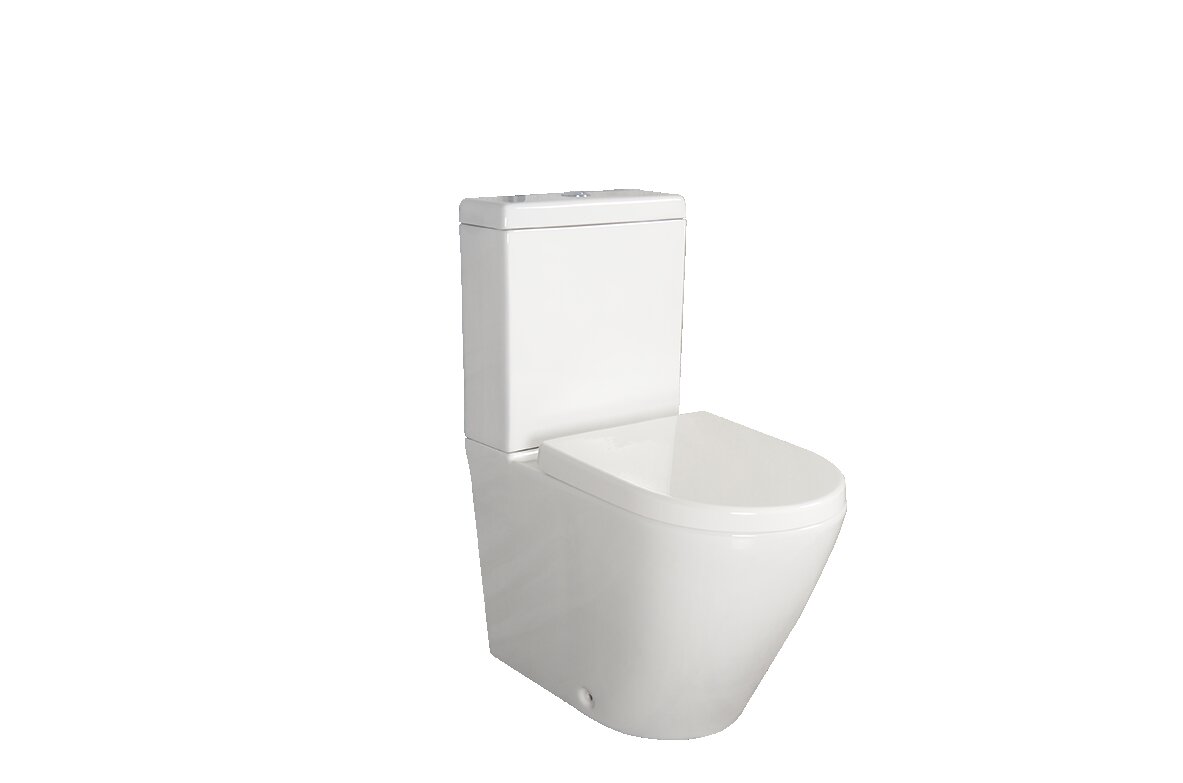
WaterMark Certificate of Conformity WMK26227 is an Australian plumbing compliance document issued by SAI Global for product 6382, a ceramic sanitary ware product assessed against AS 1172.1-2014 (Amendment 1, 2018) and AS 1172.2. For an Australian buyer, that sentence matters more than any catalogue claim — not because a certificate sounds reassuring, but because WaterMark is the certification route through which a plumbing product becomes acceptable for installation, and because the certificate itself defines the exact boundary of what has been accepted.
Procurement failures in this category are rarely caused by a missing certificate. They are caused by a certificate that no longer matches the goods: a model that was never listed, a variant added later, an edition of a standard that has since moved on, or a document that expired between tender and import. This guide treats WMK26227 as what it actually is — a scope document — and sets out what it asserts, how to verify it, where it supports project and wholesale acceptance, and where its authority ends.
The Certificate Is a Scope Document, Not a Badge
A WaterMark mark printed on a carton, a catalogue page or a product photo is a reproduction. The traceable object is the certificate number and the entries behind it. Because the mark is easy to reproduce and the certificate is not, the two are frequently confused in commercial documents, and the confusion is expensive at the point of acceptance.
The practical question is therefore not "is this product WaterMark certified?" but "is this product covered by this certificate, under this edition of these standards, on the date of import?" Three gaps account for most of the difference between those two questions.
Model coverage. A certificate is written around identified products and, where applicable, listed variants. A supplier with one certified model can legitimately describe a whole range as compliant in marketing language while only part of that range is listed. The buyer who orders against the category rather than the listing discovers the gap at inspection.
Time coverage. Certificates have validity conditions and are subject to surveillance. A copy filed during tender is evidence of status at that moment, not at shipment. For repeat buyers and distributors holding stock across seasons, the date of the last verification — not the date of the original certificate copy — is the number that counts.
Edition coverage. Standards are amended. A certificate citing a specific edition and its amendment signals which technical basis was assessed. When a buyer's specification references a different edition, the mismatch is a documentation issue that can stop a submittal even when the physical product is unchanged.
This is also where wholesale distribution carries structural exposure. A distributor that lists a product under a certificate number becomes the party of first contact when a variant turns out to be outside scope. Verifying before listing is cheaper than correcting after installation, and it is the distributor — not the overseas factory — who usually absorbs the difference.
Where WMK26227 Sits in the Supply Chain
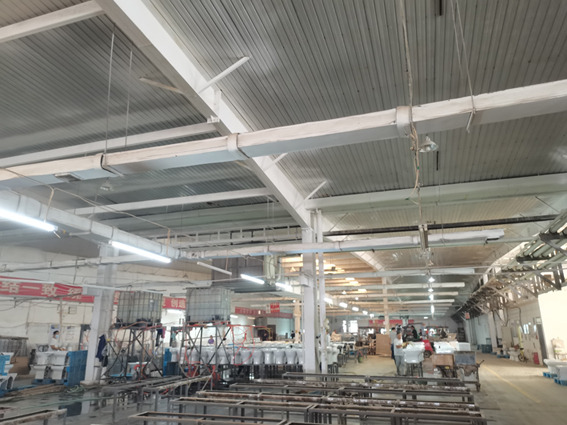
Tangshan Houfengyuan Import and Export Co., Ltd. is a Tangshan-based manufacturer and exporter of ceramic toilets and ceramic wash basins, located in Fengnan Industrial Zone, Hebei Province, and supplying wholesale distribution and construction and engineering projects. Within that operation, product 6382 is the article carrying WaterMark Certificate of Conformity WMK26227.
The certificate answers a compliance question. It does not answer the capacity, continuity or consistency questions that sit alongside it in an Australian purchase order, and those are answered by the manufacturing base behind the product. The manufacturer operates a 600,000 m² factory in Fengnan Industrial Zone, Tangshan, with more than 110 years of continuous operation since 1914, ISO 9001:2015 certification by CQC since 2011 with annual surveillance audits, and periodic unannounced factory surveillance and market sampling by IAPMO R&T.
Market orientation is relevant to how quickly certification documentation can be produced. Export business accounts for approximately 90% of total sales, with major markets including the USA, Canada, the Middle East, Australia, Southeast Asia and Europe. Australia is named among those markets, which means documentation requests of this kind are routine rather than exceptional — a meaningful signal for buyers who need a certificate copy, a product match and a shipping record inside a short tender window.
Product-side context is deliberately narrow. The relevant ceramics are made of high-temperature fired ceramic, and ceramic sanitary ware for these projects is supplied in wall-hung and two-piece configurations. Those configurations exist in the range; whether a given configuration and model identifier sits inside WMK26227 is a question only the certificate and the certifier's records can settle. The certificate governs; the product description does not.
Reading WMK26227: The Five Fields That Decide Acceptance
A certificate of conformity is a short document with a small number of decisive fields. Reviewers who read it as a narrative rather than as a set of fields tend to miss the one entry that matters. For WMK26227, five fields carry the acceptance decision.
| Field | What it establishes | What to check in practice |
|---|---|---|
| Certificate number WMK26227 | The unique identifier of the certified scope. | The number quoted in the purchase order, submittal or listing matches the number on the certificate copy exactly. |
| Certifying body SAI Global | Which body issued and maintains the certification. | The issuing body is the source of truth for current status; a factory-issued PDF is a copy, not a register entry. |
| Product identification product 6382 | The specific article covered, including listed variants where applicable. | The ordered description and model identifier fall inside the identification stated, not merely inside the same product family. |
| Standards cited AS 1172.1-2014 (Amdt 1 2018); AS 1172.2 | The technical basis against which the product was assessed. | The editions and amendment in the project specification align with those cited on the certificate. |
| Validity and status | Whether the certification was in force at the relevant date. | Status is confirmed as at the order or shipment date, and re-confirmed on each reorder. |
The standards entry deserves separate attention because it is the field most often read carelessly. AS 1172.1-2014 with Amendment 1 (2018) and AS 1172.2 belong to the AS 1172 series for water closets, which is the family of requirements a ceramic WC product and its flushing arrangement are assessed against in the Australian market. The certificate cites a specific edition and a specific amendment; that precision is the point. It tells a specifier which technical baseline the assessment used, and it makes any later change of edition a documentable event rather than an assumption.
For buyers, the certificate does not remove the need to understand the product — it removes the need to re-derive the test basis. The reading task is narrower: confirm that the article being purchased is the article identified, that the standards cited match the specification, and that the certification was live on the relevant date.
Verification Workflow: Five Checks Before a Purchase Order
Verification is a sequence, not a document request. Run in order, the five checks below resolve the questions that later become inspection disputes.
- Check the number, not the mark. Start from certificate number WMK26227 and confirm it against the issuing body's records and the certificate copy held by the supplier. A WaterMark logo on packaging proves nothing on its own; the number is what can be traced.
- Check the product, not the category. Match the ordered description and model identifier against the product identification on the certificate. Ceramic sanitary ware is a broad category, and certification attaches to identified products rather than to a category.
- Check the standards and the amendment. Confirm that AS 1172.1-2014 (Amendment 1, 2018) and AS 1172.2 appear as cited, and compare them with the editions named in the project specification or distributor listing.
- Check status at the date that matters. Validity is confirmed for the shipment or listing date, not for the date the file was first assembled. For framework agreements and repeat container programmes, this becomes a recurring task rather than a one-off.
- Check that change is controlled. Any change of model, configuration, flushing arrangement or supplier process should trigger a re-check against the certificate before the change is shipped. Re-verification after change is the only reliable protection against scope drift.
Where the Certificate Does the Work: Projects and Wholesale
The commercial value of WMK26227 is not uniform across buyer types. It does one job in a construction and engineering project and a different job in wholesale distribution, and the difference is worth stating plainly.
Construction and engineering projects
In project delivery, the certificate functions as an acceptance instrument. Ceramic sanitary ware is specified, submitted, approved and then inspected, and each of those stages consumes a document. The certificate number allows the hydraulic services consultant, the main contractor and the inspecting authority to confirm that the specified product is the certified product, which is the question that matters when a substitution is proposed mid-build.
It also simplifies the handover pack. Certification documentation filed by number is retrievable; certification documentation filed as an undated PDF attachment to an email is not. For projects where ceramic sanitary ware runs to hundreds of fixtures across multiple levels, retrievability is an operational property of the file, not an administrative nicety.
Wholesale distribution
In distribution, the certificate functions as a listing control. A distributor that publishes a product under a certificate number is making a statement about scope to every customer downstream, and that statement has to survive a reorder, a colour addition or a packaging change. Distributors who verify at listing stage and re-verify at container stage keep the statement true.
Because the manufacturer's stated markets include Australia alongside the USA, Canada, the Middle East, Southeast Asia and Europe, documentation requests arrive across jurisdictions with different schemes. That is a reason for precision rather than reassurance: an Australian certificate is an Australian instrument, and it should be filed as such.
Certification Pressure Is Reshaping How Ceramic Sanitary Ware Is Bought
Across the export-oriented segment of the ceramic sanitary ware industry, certification has shifted from a sales asset to a procurement control. The direction of travel is consistent and does not depend on a single forecast: specification documents increasingly cite certificate numbers rather than certification claims, distributor onboarding increasingly asks for scope confirmation rather than a logo file, and acceptance conversations increasingly happen against a register entry rather than a brochure.
Two consequences follow for buyers. First, suppliers with a documentation habit — certificate copies retrievable by number, product identification that matches the catalogue, records that survive staff changes — complete tender and import steps more predictably than suppliers who can produce a certificate only on request. Second, the cost of a documentation failure now falls disproportionately on the importer and distributor, because they are the parties standing between a certificate and an installation.
This is why certification-heavy sourcing has become a specialisation rather than a formality. The Tangshan cluster's long ceramics history does not, by itself, create compliance capability; what creates it is the routine pairing of certification records with production-controlled manufacturing. Buyers evaluating that pairing should read the certificate and the factory evidence as one file, not two.
Certificate-First Sourcing Versus Price-First Sourcing
The most useful comparison is not between brands but between two buying behaviours: sourcing that begins with the certificate, and sourcing that begins with the quotation and treats certification as paperwork to be collected later. They produce different risk profiles at the same unit price.
| Comparison point | Certificate-first sourcing | Price-first sourcing |
|---|---|---|
| Starting document | Certificate number and product identification, read before quoting. | Quotation and catalogue, with certification confirmed afterwards. |
| Model control | Ordered identifiers are matched to the certified identification. | Order is placed against a product family; variants may sit outside scope. |
| Change handling | Model, configuration or process changes trigger re-verification. | Changes are discovered at inspection, customs or installation. |
| Documentation at handover | Certificate copy, product match and shipping record filed together. | Documents reconstructed after the fact, sometimes incompletely. |
| Commercial exposure | Scope risk addressed before payment terms are agreed. | Scope risk transferred downstream to importer or distributor. |
The boundary has to be stated as clearly as the benefit. WMK26227 establishes Australian plumbing compliance for product 6382 against AS 1172.1-2014 (Amendment 1, 2018) and AS 1172.2 — and nothing beyond that. It is not evidence of water-efficiency performance under Australia's separate water-efficiency labelling arrangements, which are a distinct assessment with their own requirements, so a project that specifies both needs both sets of documents. It does not transfer to other jurisdictions: North American, European and Korean market access each depend on their own certification, with their own numbers and scopes, which is why company-reported coverage in other markets should be verified certificate by certificate rather than inferred from the Australian document. And it is not commercial due diligence — capacity, lead time, payment terms and batch consistency are separate questions requiring separate evidence.
That boundary is not a weakness in the certificate. It is what makes the certificate usable: a document with a defined scope can be relied upon for that scope, which is precisely what a specification review requires.
What Buyers Should Expect Next
The trajectory of plumbing compliance documentation points towards fewer narrative claims and more machine-checkable references. Certificate numbers embedded in submittals, product identification aligned across certificate, catalogue, carton and commercial invoice, and status confirmed at shipment rather than at tender are all reasonable expectations for the next procurement cycles in the Australian market.
For buyers, the practical preparation is modest. Keep the certificate number in the purchase order. Keep the product identification consistent across documents. Re-verify at each reorder and after any change. Treat the register entry, not the mark on the box, as the reference point. Suppliers who can support that workflow — because their certification, product identification and production records are aligned rather than assembled separately — will find the compliance conversation shorter, and the buyers dealing with them will find the acceptance conversation shorter too.
Frequently Asked Questions
What does WaterMark Certificate WMK26227 actually certify?
WMK26227 is a WaterMark Certificate of Conformity issued by SAI Global for product 6382 ceramic sanitary ware. It certifies that the identified product has been assessed against AS 1172.1-2014 (Amendment 1, 2018) and AS 1172.2, the standards cited on the certificate. Its effect is confined to the product identification and standards stated on the document; it does not certify other models, other categories of sanitary ware, or other markets.
Why does the amendment year on the certificate matter?
The certificate cites AS 1172.1-2014 together with Amendment 1 of 2018, and AS 1172.2. Standards are amended over time, so the edition and amendment identify the technical basis the assessment used. When a project specification references a different edition, the discrepancy is a documentation question that should be resolved before submittal, even if the physical product has not changed. A certificate without a verifiable edition reference cannot be matched against a specification.
How can a buyer confirm that product 6382 is covered before ordering?
Three checks are needed. First, confirm certificate number WMK26227 against the certifying body's records rather than against a factory-supplied copy alone. Second, match the description and model identifier being ordered against the product identification stated on the certificate. Third, confirm that the certification status is current as at the order or shipment date. Each check addresses a different failure mode — forged or outdated document, wrong model, expired status — and none substitutes for the others.
Does a WaterMark certificate cover every configuration a supplier offers?
No. Certification attaches to identified products and to the variants listed in the certified scope, not to a product category or a factory's entire output. Ceramic sanitary ware is supplied in wall-hung and two-piece configurations, made of high-temperature fired ceramic, and configurations can differ in the flushing arrangement and dimensions that a water closet standard addresses. Buyers should treat any configuration not matched to the certificate as uncertified until the supplier produces evidence that it is within the certified scope.
What documentation should accompany a certified shipment?
The certificate copy matching certificate number WMK26227 and product 6382, a commercial invoice and packing list whose product identification is consistent with the certificate, and the inspection or testing records used for acceptance. Where a specification also requires water-efficiency documentation, that is a separate instrument and should be requested separately. Filed together and retrievable by number, these documents support customs clearance, project submittal and distributor listing.
What purchasing terms typically apply to orders of this kind?
For orders placed on this basis, the stated terms are a minimum order quantity of 50 units, FOB delivery terms, pre-shipment testing as the acceptance criterion, and payment terms of 30/70. Buyers should confirm these terms in the quotation and order confirmation, and align acceptance testing with the documentation requirements of their project or listing obligations.
A downloadable company brochure covering product ranges and manufacturing context is available here: Tangshan Houfengyuan brochure (PDF). Certificate scope for product 6382 remains defined by WaterMark Certificate of Conformity WMK26227 and should be verified against the issuing body's records.
Есть вопросы или нужны дополнительные детали?
Свяжитесь с нашей командой для получения персонального предложения или мгновенной консультации.
Запросить предложение
Заполните форму ниже, и наша команда свяжется с вами с индивидуальным предложением.
Прямой чат WhatsApp
Предпочитаете общаться в реальном времени? Напишите нам в WhatsApp для мгновенной помощи и быстрых ответов.
- Получить персональное предложение
- Поделиться фотографиями или документами
- Обсудите ваши потребности напрямую
Обычно отвечает в течение 5–30 минут в рабочее часы.