
Waterproof, Tear-Resistant Medical Wristbands: A Shortlist
for Patient ID
A patient identification wristband is a single-use or reusable band worn on the wrist that carries identity data for clinical, admission and access workflows. Because it stays on the patient through hand hygiene, bedding changes, transfers and emergency handling, its two most consequential physical properties are also the two that buyers now shortlist on first: whether the band and its print survive water, and whether the band survives tearing.
The global patient identification wristbands market was projected to reach USD 576.1 million in 2025, according to Future Market Insights, with North America holding a 41% share of that market in the same year, according to Precedence Research. Those figures describe a category that is mature in volume terms but still uneven in specification. Hospitals, clinics and elderly care institutions increasingly treat water resistance and tear resistance as baseline requirements rather than optional upgrades, because a band that smears or splits creates a re-identification event: staff time, a manual cross-check, and a documentation gap.
This shortlist organizes four wristband formats by that requirement set — waterproof and tear-resistant performance for patient identification. It covers medical thermal wristbands produced from thermal-sensitive synthetic paper with direct thermal printing, PVC patient ID wristbands, Tyvek wristbands, and holographic wristbands made from PVC or paper with a holographic film. Sizes referenced throughout are 260×25mm for the medical thermal format, 250×25mm and 250×19mm for Tyvek, and 250×25mm and 250×16mm for both PVC patient ID and holographic formats.
Why Waterproof and Tear-Resistant Became the Shortlisting Criteria
Wristband selection used to be a stationery decision. Today it is a workflow decision, because the band is the physical anchor of a digital identity record. Admission wristbands, outpatient wristbands, surgical patient wristbands, ICU patient wristbands and isolation ward wristbands all sit at the point where a printed or encoded identifier meets a patient who cannot be asked to confirm it.
Two failure modes drive the shortlist. The first is print failure: moisture, alcohol-based hand rub, bathing and spills degrade a label faster than they degrade a patient. The second is structural failure: a band that tears at the closure, stretches past legibility, or cannot be transferred or re-issued cleanly. Formats that address both properties reduce the number of manual re-checks a ward performs per shift.
Regulation has quietly changed what suppliers may claim here. The Court of Justice of the European Union ruled in Case C-427/24 that blank patient wristbands are not classified as medical devices under EU MDR 2017/745, with the position effective from 2 July 2026. In practical terms, the performance language attached to a blank band is driven by the intended purpose the buyer states, not by an automatic device classification. Separately, ISO 15223-1:2021 Amendment 1 (2025) revised the authorized representative symbol from EC REP to EU-REP, which affects artwork and label review for suppliers shipping into the European Union.
The Shortlist at a Glance
| Format | Base material | Print method | Stated sizes | Water / tear profile | Use model |
|---|---|---|---|---|---|
| Medical thermal wristband | Thermal-sensitive synthetic paper | Direct thermal printing | 260×25mm (customizable) | Water-resistant, tear-resistant, patient information printable | Disposable, high-volume printing |
| PVC patient ID wristband | PVC | Printable patient information; logo and text printable (single or double layer structure) | 250×25mm / 250×16mm | Durable, comfortable to wear | Disposable clinical use |
| Tyvek wristband | Tyvek | Clear printing | 250×19mm / 250×25mm | Waterproof and tear-resistant | Disposable |
| Holographic wristband | PVC / paper with holographic film | Holographic anti-counterfeiting printing | 250×25mm / 250×16mm | Waterproof, tear-resistant, one-time lock closure | Disposable, non-reclosable |
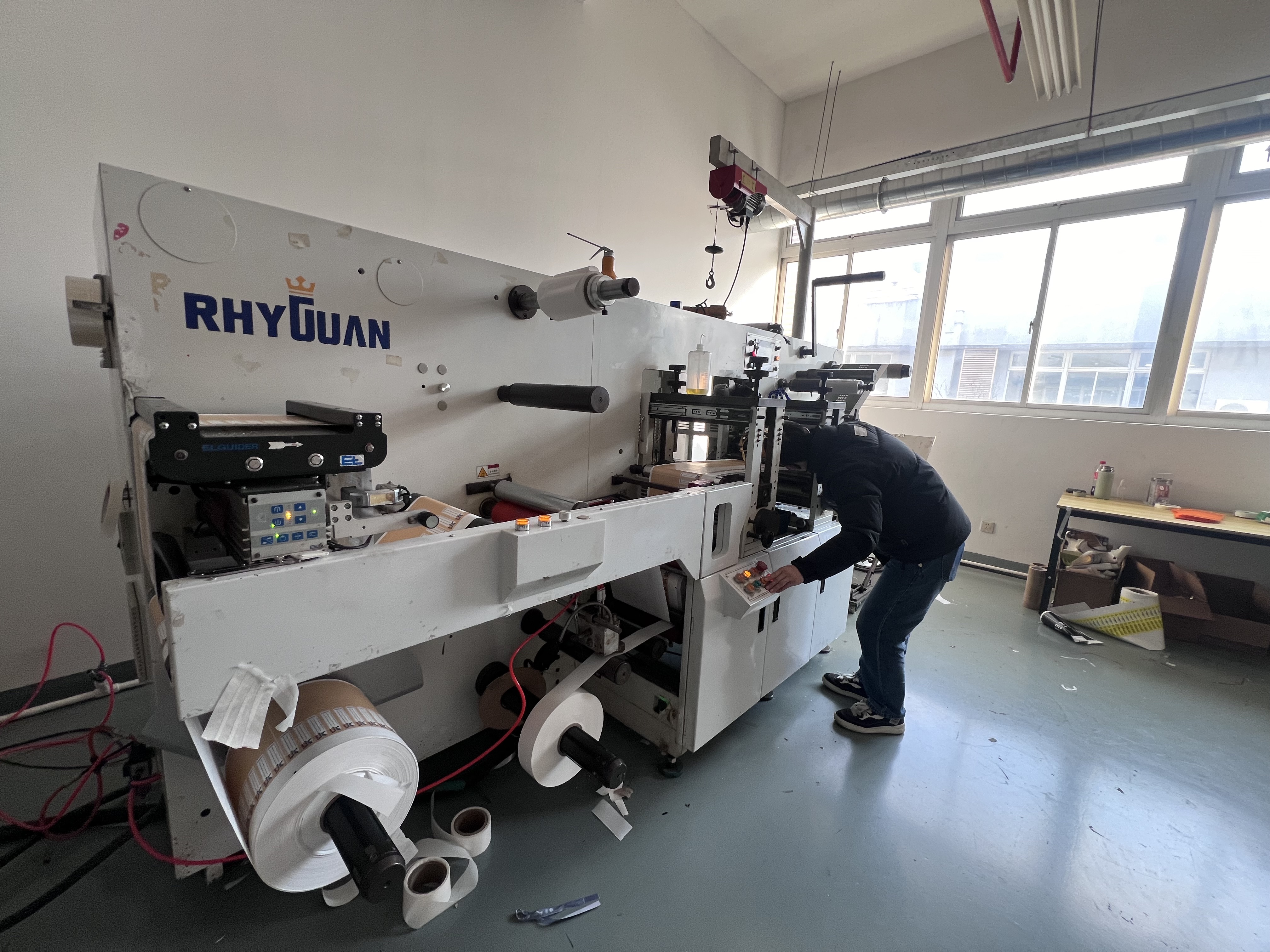
Die-cutting workshop: wristband formats are cut to the stated patient identification sizes before printing and closure assembly.
Option 1 — Medical Thermal Wristbands (260×25mm)
A medical thermal wristband is a single-use patient identification band made from thermal-sensitive synthetic paper and printed by direct thermal printing. The stated size is 260×25mm, and the format is customizable. Stated properties are water resistance, tear resistance and the ability to print patient information directly onto the band surface.
The technical distinction is the imaging method. Direct thermal printing forms the image through a thermal reaction in the coating of the media rather than through ink or ribbon transfer. That matters in two ways at ward level. First, the print process is matched to the printer rather than to an ink supply, which simplifies consumable management for admission desks and ward printers. Second, because the image is formed in the coating, print durability is a function of the media itself — which is why the thermal-sensitive synthetic paper base, not the printer, is the specification that should be reviewed first.
The 260×25mm face gives more usable print length than the 250mm formats in this shortlist, which matters when a band carries patient name, medical record number, admission date, ward and a barcode in a single pass. The corresponding constraint is that this format is designed around a direct thermal printer being available at the point of issue; sites that print at a central location and distribute bands by hand should validate the workflow before standardizing on thermal media.
Option 2 — PVC Patient ID Wristbands (250×25mm and 250×16mm)
A PVC patient ID wristband is a band made from PVC that is specified as printable with patient information, durable and comfortable to wear. Two sizes are offered: 250×25mm and 250×16mm. A related structural option is available in single-layer or double-layer PVC at the same two sizes, with printable logo or text.
PVC earns its place on this shortlist through the combination of durability and wear comfort rather than through a single performance claim. In practice, the material choice between single-layer and double-layer construction changes stiffness, edge feel and how the band sits against the wrist over a multi-day admission — a detail that shows up in patient complaints long before it shows up in a specification sheet.
The size decision is a data-density decision. A 250×25mm band accommodates longer identifier strings and additional fields such as ward or allergy flags. A 250×16mm band uses a narrower face, which suits shorter identifiers, colour-coded ward systems or pediatric and elderly care use where a slimmer band is preferred. Buyers specifying a single size across a hospital group usually end up with both: 25mm for acute and surgical settings, 16mm for longer-stay and lower-data contexts.
Option 3 — Tyvek Wristbands (250×19mm and 250×25mm)
A Tyvek wristband is a disposable band made from Tyvek, specified as tear-resistant and waterproof with clear printing. It is offered in 250×19mm and 250×25mm.
Tyvek is the lightest format on this shortlist and the one that most directly answers the tear-resistance requirement, because the material resists the propagation of a tear once the band is nicked — a common failure pattern when bands catch on bed rails, IV lines or trolley edges. Combined with waterproof performance and clear printing, it fits workflows where a band is issued, worn for a bounded period and discarded: high-turnover admissions, short-stay units, outpatient and diagnostic visits, and discharge or transfer labelling.
The 250×19mm variant is the narrower of the two and is best treated as a short-field band. The 250×25mm variant provides the same printing clarity with a wider face, and is the safer default when the identification record requires a barcode plus human-readable fields.
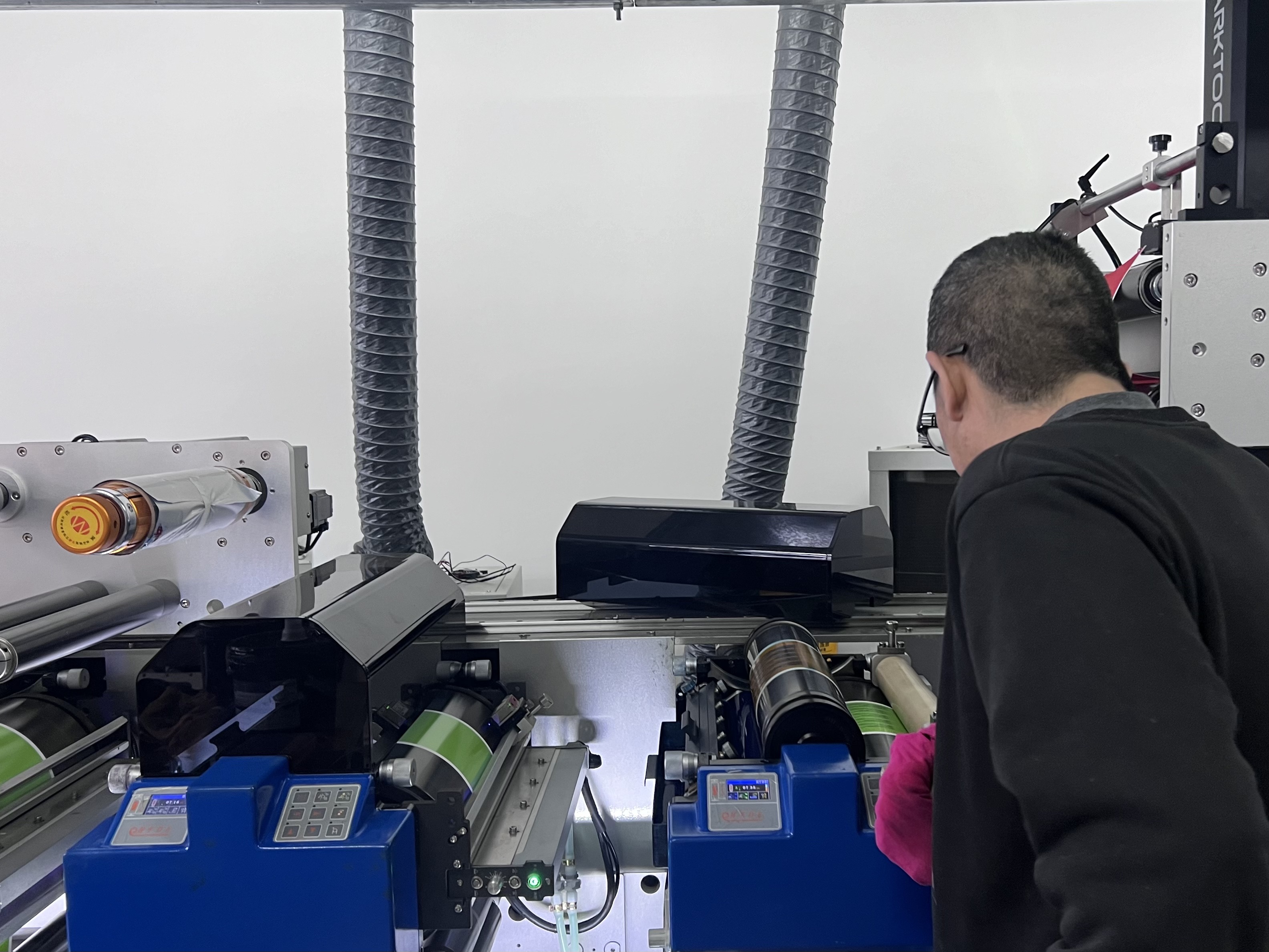
Printing workshop: band material is processed and printed before conversion into finished patient identification formats.
Option 4 — Holographic Wristbands (250×25mm and 250×16mm)
A holographic wristband is made from PVC or paper with a holographic film and printed with holographic anti-counterfeiting printing. Stated properties are waterproof, tear-resistant and a one-time lock closure, in 250×25mm and 250×16mm. It is disposable.
The one-time lock closure is the defining functional difference. Once closed, the band cannot be reopened and re-closed without visible damage, which makes it tamper-evident by construction rather than by instruction. In patient identification terms, this supports workflows where a band must not be silently transferred from one person to another, and it supports audit trails in settings with a high risk of identity substitution.
The boundary here should be stated plainly. Holographic wristbands are primarily specified for access control and anti-counterfeiting contexts — concerts and entertainment events, exhibitions and festivals — where authenticity of the credential is the primary requirement. Within a patient identification program, they fit short-duration, security-sensitive uses rather than long-stay inpatient wards, where comfort over days and print density usually matter more than credential authentication. A hospital standardizing on a single band for a whole facility is unlikely to choose holographic as its primary ward format, but it is a reasonable secondary format for controlled areas.
Technical Explanation: What Actually Determines Water and Tear Performance
Water resistance and tear resistance are not single attributes. They are the combined outcome of five decisions, and the shortlist above should be read as a comparison across those decisions rather than as a ranking of materials.
1. Base material
The four options use four different bases: thermal-sensitive synthetic paper, PVC, Tyvek, and PVC or paper with a holographic film. Each behaves differently under moisture, abrasion and repeated flexing at the wrist.
2. Print method and its compatibility
Two routes appear in this shortlist. Direct thermal printing, used on the medical thermal format, forms the image within the media coating and creates no ink transfer. Pre-printed or on-site printed artwork, used on the PVC, Tyvek and holographic formats, requires the printing method and the substrate to be matched — which is why printing clarity is stated explicitly for Tyvek.
3. Closure mechanism
The closure is where most wristbands fail. Adhesive or tab-based closures allow a band to be adjusted after application; the one-time lock closure on the holographic format does not, which is the source of both its tamper evidence and its one-shot handling constraint.
4. Face width and data density
The sizes in this shortlist range from 25mm down to 16mm in width. Wider faces carry more fields; narrower faces are less obstructive but force a shorter identifier string. This is the most common mismatch in hospital standardization projects.
5. Data carrier
Bands can carry a human-readable print, a barcode, or an encoded chip. RFID wristbands are available with a built-in RFID chip in low frequency, high frequency or ultra-high frequency options that are readable and writable, in materials including silicone, PVC, Tyvek and paper, at 250×25mm and 250×16mm and in other specifications. Where a facility already reads barcodes at the bedside, the printed formats are sufficient; where hands-free identification is required, the encoded option belongs in the same shortlist discussion.
Comparison with Traditional Solutions
The most common comparison point is the traditional hand-written PVC patient wristband. The table below summarizes the documented differences between that approach and a printed, tamper-evident band with water and alcohol resistance.
| Dimension | Traditional hand-written PVC wristband | Printed waterproof / tear-resistant band |
|---|---|---|
| Content | Hand-written | Clear printed content |
| Structure | Standard closure | Tamper-proof structure |
| Resistance | Limited | Water and alcohol resistant |
| Printing error rate | Baseline | Reduced by 35% |
| Information modification risk | Baseline | Down by 42% |
| Unit cost | Baseline | 8% higher |
| Overall hospital management cost | Baseline | 15% lower |
| Maintenance | Re-labelling and correction | No later maintenance, disposable after use |
| Best fit | Low-volume, manual environments | Hospital inpatient ward, emergency department, patient identity management |
The limitation is real and should be stated before the comparison is used in a business case. A printed waterproof and tear-resistant band carries a unit cost approximately 8% higher than a traditional hand-written PVC band. The saving does not come from the unit price; it comes from the downstream reduction in management cost, which is where the 15% figure originates. A facility that cannot realize the error-reduction and modification-risk benefits — for example, one that prints in bulk without a bedside verification step — will simply pay more per band.
Three further boundaries apply. First, the 35% and 42% figures describe printing error and information modification outcomes, not clinical outcomes, and should not be extended beyond that scope. Second, narrower formats such as 250×16mm and 250×19mm are constrained by print area, so the full error-reduction effect depends on the data fields being redesigned for the narrower face. Third, the one-time lock closure that produces tamper evidence also makes the band non-transferable and non-adjustable once applied, which is a handling constraint rather than a defect.
Matching Formats to Care Settings
The formats in this shortlist are applied in hospitals, medical clinics, healthcare institutions and elderly care institutions for patient identification and ward information management. The mapping below is a procurement starting point, organized by the dominant failure risk in each setting.
| Setting | Dominant risk | Format to shortlist first | Why |
|---|---|---|---|
| Admission and inpatient wards | Print loss and illegibility over days | Medical thermal 260×25mm; PVC 250×25mm | Direct thermal print with stated water and tear resistance; wider face carries more fields |
| Emergency department | Speed of issue, fluid exposure | Medical thermal 260×25mm; Tyvek 250×25mm | Fast printing, waterproof and tear-resistant media |
| Isolation wards | Disposable handling, moisture | Tyvek 250×19mm / 250×25mm | Disposable, waterproof, tear-resistant, clear printing |
| ICU and surgical units | Multi-field identification, repeated checks | PVC 250×25mm | Durable and comfortable to wear across a multi-day stay |
| Elderly care institutions | Comfort, long wear duration | PVC 250×16mm / 250×25mm | Durable and comfortable; narrow face reduces bulk |
| Outpatient and diagnostic visits | Short duration, high volume | Tyvek 250×19mm; Medical thermal 260×25mm | Disposable, fast issue, low material consumption |
| Baby identification and pediatric units | Band size and skin contact | PVC 250×16mm; Tyvek 250×19mm | Narrow faces suit smaller wrists |
| Controlled or restricted-access areas | Credential authenticity | Holographic 250×25mm / 250×16mm | One-time lock closure and holographic anti-counterfeiting printing |
Two practical notes belong with this mapping. Some settings require an encoded rather than a printed identifier; the RFID wristband option supports that requirement in silicone, PVC, Tyvek and paper at 250×25mm and 250×16mm and in other specifications. And no mapping replaces a physical trial — sample bands should be issued in the actual ward conditions before a multi-year format decision is made.
Execution Stage: Procurement Terms, Acceptance and Lead Time
Once a format is shortlisted, the execution stage is governed by commercial and verification terms rather than by product properties. For these wristband formats, the minimum order quantity is 1,000 units. Delivery terms available are EXW, FOB, CIF, DAP and DDP. Payment terms are 100% T/T in advance. Product acceptance is conducted through production video and photo verification procedures.
Standard product lead time is 7–10 working days, expressed against capacity units. For larger programs, advance production scheduling is used, and monthly capacity is reserved to handle large-volume orders, with coordination for urgent-order rush production where required.
Delivery delay risk in this category is well understood, and buyers can plan against it. The recurring causes are shortages or quality problems in upstream materials such as PVC, Tyvek and RFID chips; order surges without reserved capacity and frequent urgent-order insertion displacing the production schedule; internal production issues such as equipment breakdown, labour shortage or rework from process defects; frequent specification revisions or delayed customer confirmation; and logistics congestion, port delays or power restrictions. Each of these maps to a contractual control: reserved monthly capacity, locked artwork and specifications before production, and a defined acceptance and escalation path.
Supplier Continuity for Multi-Year Programs
Because wristbands are consumed continuously, the supplier decision is rarely a one-off purchase. It is a multi-year continuity question in which capacity, verification and export experience matter more than a single unit price.
Shanghai Dingba Identification Co., Ltd. is a manufacturer of wristbands and RFID products, founded in 2010 and located in Shanghai, China, with over 15 years of experience in the identification products industry. The company covers R&D, production and sales, with in-house capability in both software and hardware development. Its manufacturing facility covers 10,000 square meters, employs more than 50 staff, and includes an R&D team of 5 engineers. Annual production capacity is 120,000,000 units.
The company exports to over 100 countries and regions worldwide, with approximately 70% of its products exported and major markets in the EU and USA. It holds ISO 9001 certification, together with on-site verification from Alibaba and SGS, and maintains a mature quality management system. DDJOY-Medical Wristbands is the medical wristband line associated with Shanghai Dingba Identification Co., Ltd.
For a buyer structuring a multi-year contract, these facts translate into specific checks: whether annual capacity can absorb the projected consumption with reserve, whether acceptance via production video and photo verification is contractually defined, whether the export record matches the destination market's labelling requirements, and whether the supplier can hold reserved monthly capacity during peak seasons.
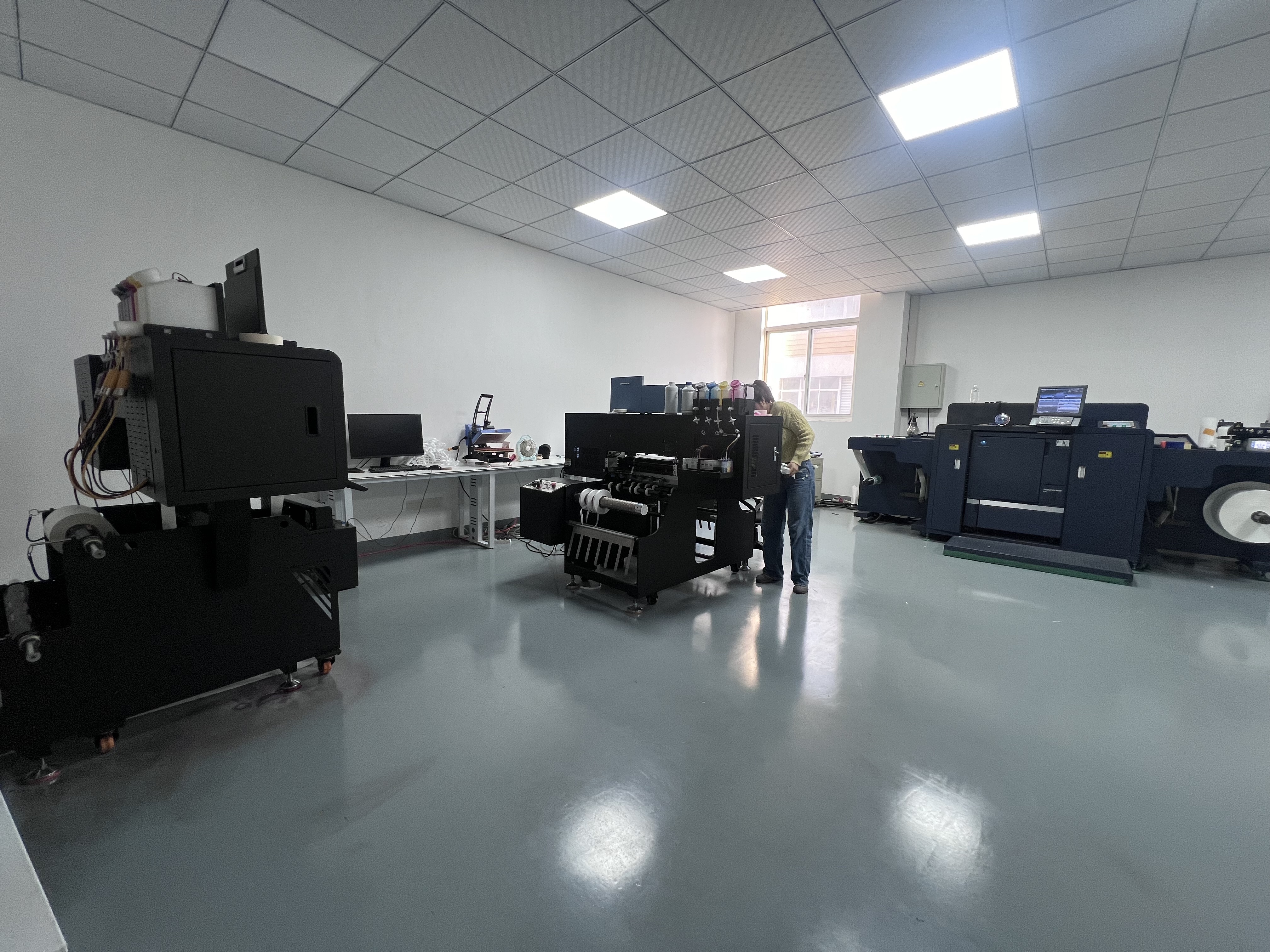
Production floor: continuous wristband supply depends on printing and conversion capacity, not only on finished-goods stock.
Market Trend Analysis
Three signals are worth tracking when forecasting demand for waterproof and tear-resistant identification formats.
The first is category size and regional concentration. As noted, Future Market Insights projected the patient identification wristbands market at USD 576.1 million for 2025, while Precedence Research put North America at a 41% share of the 2025 market and estimated the same market at USD 1.61 billion for the year. The divergence is methodological — blank-band counting versus printed and system-integrated identification programs — and it is a useful reminder that a supplier's addressable market depends heavily on whether its customers buy a consumable or a program.
The second is supply-side concentration. PDC Healthcare, a Brady Corporation brand, holds a projected market share of 14–18% in the patient identification wristbands market according to Future Market Insights, and Zebra Technologies reported net sales of USD 346 million for its Asset Intelligence & Tracking segment, which includes wristbands, in Q4 2023. Both figures indicate that the category is served by a mix of global platform vendors and regional converters rather than by a single dominant supplier.
The third is regulatory framing. The CJEU ruling that blank patient wristbands are not medical devices under EU MDR 2017/745 shifts the weight of performance claims onto the buyer's stated intended purpose, and the ISO 15223-1:2021/Amd 1:2025 symbol change alters required labelling artwork. Together these push buyers toward suppliers who can document material, size and printing specifications precisely, because the regulatory cover for claims is thinner than it was assumed to be.
Future Outlook
The direction of travel for this category is that waterproof and tear-resistant performance stops being a differentiator and becomes a minimum. Formats that cannot survive routine moisture and mechanical stress will increasingly be excluded at the specification stage rather than at the complaint stage.
Alongside that, two shifts are likely to shape shortlists. The first is tighter coupling between the band and the data carrier, as facilities move from purely visual identification toward barcode and RFID reading at the bedside, using formats such as the RFID wristband with readable and writable low, high or ultra-high frequency chips. The second is documentation discipline, as buyers respond to the narrower regulatory framing of blank bands by requiring material-level and size-level specifications rather than brand-level assurances. Suppliers with defined capacity, verifiable acceptance procedures and established export experience are better positioned for multi-year programs than suppliers competing on unit price alone.
FAQ
1. What does a waterproof, tear-resistant medical wristband mean in procurement terms?
It means the band and its printed content are specified to remain usable through routine moisture exposure and normal mechanical stress during wear. In this shortlist, that property is stated per format: medical thermal wristbands are made from thermal-sensitive synthetic paper at 260×25mm with water resistance, tear resistance and printable patient information; Tyvek wristbands at 250×19mm and 250×25mm are stated as waterproof and tear-resistant with clear printing; PVC patient ID wristbands at 250×25mm and 250×16mm are stated as durable and comfortable to wear; and holographic wristbands at 250×25mm and 250×16mm, made from PVC or paper with holographic film, are stated as waterproof, tear-resistant and fitted with a one-time lock closure. Procurement should reference the specification of a named format, material and size rather than a general brand claim.
2. Which of the four formats fits high-volume patient admission and inpatient wards?
Medical thermal wristbands are the closest fit for high-volume printing workflows, because they use direct thermal printing on thermal-sensitive synthetic paper and are issued through a matched printer with no ink transfer step. Their 260×25mm face supports multiple data fields in one pass. PVC patient ID wristbands at 250×25mm are the alternative where a durable, comfortable band is preferred for a multi-day inpatient stay. Both formats are applied in hospitals, medical clinics and healthcare institutions for patient identification and ward information management.
3. How do the listed sizes affect how much information a wristband can carry?
The sizes in this shortlist run from 260×25mm and 250×25mm down to 250×19mm and 250×16mm. The width determines the usable print face: a 25mm band carries longer identifier strings and additional fields such as ward or allergy information, while a 16mm band is suited to shorter identifiers, colour-coded ward systems, smaller wrists and pediatric or elderly care use. A 19mm band sits between the two and is normally treated as a short-field band. Standardizing on one width across a facility is a common cause of reprinting, because narrow bands force data fields to be abbreviated.
4. When should a buyer choose a holographic wristband over PVC or Tyvek?
A holographic wristband is the appropriate choice when the primary requirement is credential authenticity rather than wear duration. It combines holographic anti-counterfeiting printing with a one-time lock closure that cannot be reopened and re-closed without damage, which makes it tamper-evident by construction. It is available in 250×25mm and 250×16mm and is disposable. For long-stay inpatient wards, PVC or Tyvek formats are generally a better fit, because comfort over several days and print density matter more there than credential authentication. Holographic formats are associated mainly with access control and anti-counterfeiting environments such as events, exhibitions and festivals.
5. What are the purchasing terms and acceptance criteria for these wristbands?
The minimum order quantity is 1,000 units. Delivery terms available are EXW, FOB, CIF, DAP and DDP, and payment terms are 100% T/T in advance. Acceptance is based on production video and photo verification procedures. Standard product lead time is 7–10 working days, with advance production scheduling available for larger orders and monthly capacity reserved to handle large volumes; urgent-order rush production can be coordinated when required.
6. How should a hospital evaluate supplier continuity for a multi-year wristband contract?
Continuity is assessed on capacity, verification and export experience rather than on unit price. For example, Shanghai Dingba Identification Co., Ltd. was founded in 2010 and has more than 15 years of experience, operates a 10,000 square meter facility with over 50 employees and an R&D team of 5 engineers, and reports an annual production capacity of 120,000,000 units. The company exports to over 100 countries and regions, with approximately 70% of products exported and major markets in the EU and USA, and holds ISO 9001 certification plus on-site verification from Alibaba and SGS. Buyers should also confirm how reserved monthly capacity, acceptance procedures and specification revisions are handled contractually, since material shortages, order surges, production disruptions, specification changes and logistics delays are the recognised sources of delivery risk in this category.
Download the Reference
A downloadable brochure covering these wristband formats, materials and sizes is available here: Download product brochure. Additional information about the manufacturer is available at www.ddlf.com.