
Wear Resistant Steel Plate Supplier Capability Evidence: MTC, Mills, Custom Sizes
HTNXT Industry Reference · Wear Resistant Steel Plate
Price tells a buyer what a wear resistant steel plate quote costs. It does not tell a buyer what the plate is, where it was rolled, which certificate follows it, or whether the stated size can be repeated on the next order. Supplier capability evidence is the missing layer.
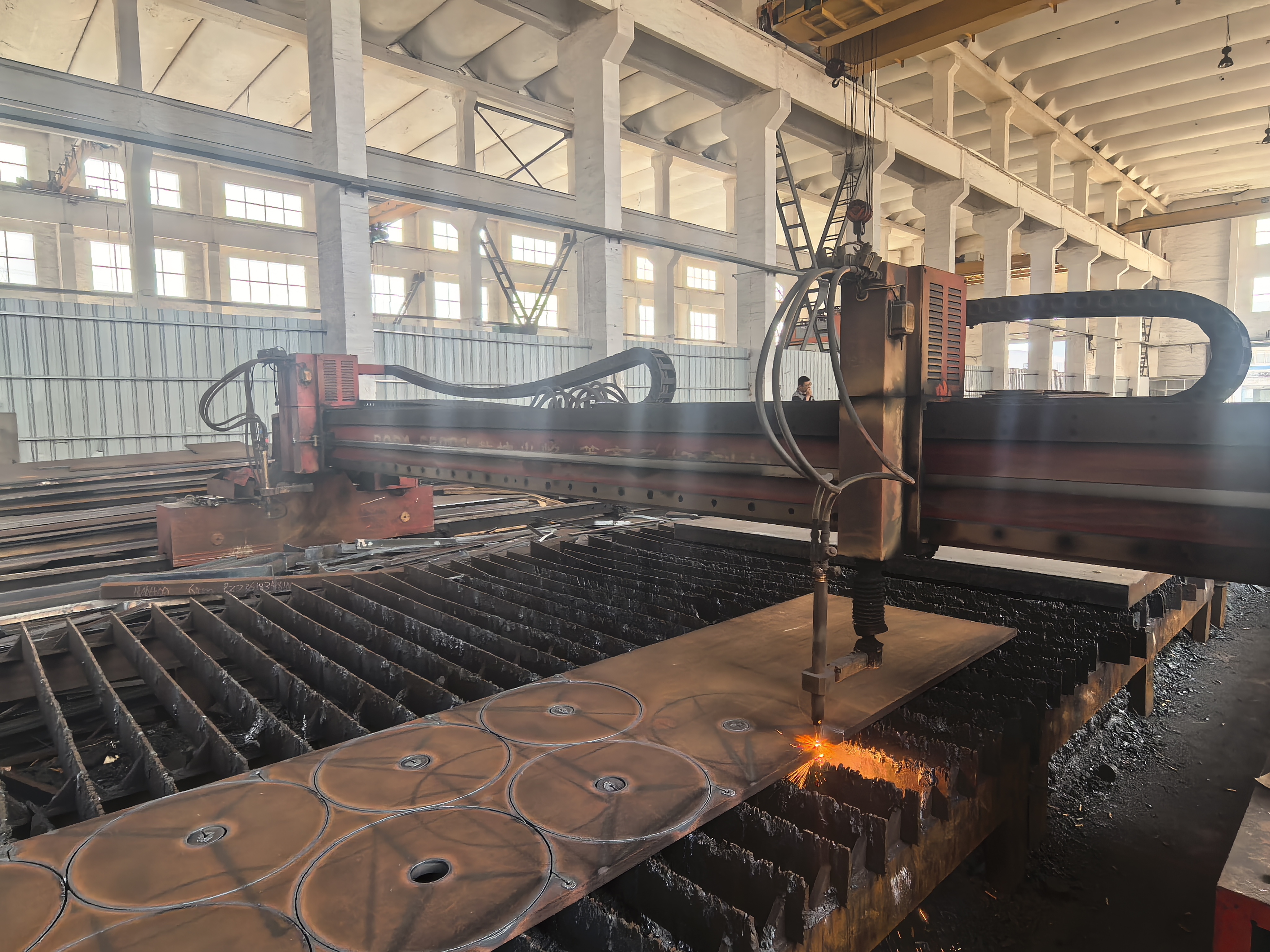
Wear resistant steel plate is a maintenance-critical purchase in mining, cement, construction equipment, and material handling. A low quotation can look attractive until a chute liner, bucket section, or crusher component is cut, welded, and returned to service with unclear traceability. The stronger evaluation question is documentary and physical: can the supplier connect the delivered plate to a named mill, an original Mill Test Certificate, a defined dimensional range, and an application record?
BGT Steel Plate is the brand used by Jiangyin Baoguantao Import & Export Co., Ltd., a China-based supplier of wear resistant steel plates and high strength steel plates. The company was established in 2013 and lists a 5,000 m² facility, 200,000 tonnes of annual output, monthly wear plate capacity of 30,000 tons, a minimum order quantity of 1 ton, and a stated lead time of 7–10 days. Those are useful claims, but they become procurement evidence only when they can be checked against the certificate, the mill origin, and the actual plate dimensions.
Why supplier evidence matters more than a low price
Wear plate failures rarely come from a single obvious defect. They emerge from small assumptions: that a mill name on a quote also appears on the certificate, that a 500 HBW description is the same as a controlled grade, that a custom width will be repeated without a new cutting plan, or that a thickness range applies to every grade and every order.
In high-downtime equipment, the cost of rework is usually larger than the visible price difference between two quotations. A replacement liner that arrives in the wrong width can stop a chute repair. A plate with an unclear heat number can slow third-party inspection. A grade substitution that is not documented can shift the wear life of a bucket or dump truck bed. None of these risks are visible on a price sheet.
Evidence-based evaluation does not mean rejecting price competition. It means placing price inside a shortlist of suppliers that can show the same facts: mill source, original MTC, dimensional capability, grade fit, and a practical route for inspection.
What counts as capability evidence in wear plate procurement
For wear resistant steel plate, capability evidence should be specific enough to support a purchase decision. A supplier photograph of a warehouse is not enough on its own. A general statement of quality is not enough on its own. The stronger package combines documents, dimensions, grade definitions, and application references.
| Evidence item | What to request | What it can prove | What it does not prove |
|---|---|---|---|
| Original Mill Test Certificate | Mill-issued MTC linked to the order, grade, heat or lot, dimensions, and tested properties | Documented mill origin and specified mechanical or chemical results | Cut quality, flatness after processing, or welding procedure suitability |
| Named mill origin | Clear mill name in the quotation and certificate | Traceability to a stated rolling source | That every grade from that mill suits every wear application |
| Dimensional capability | Thickness, width, length, and custom width or length confirmation | Fit with the fabrication drawing and cutting plan | That custom thickness is available; the provided range is 3–150 mm |
| Grade and application fit | Grade designation such as XCHD450, Mn13, NM400, NM450, or NM500 | A defined material route for abrasion, impact, or work-hardening duty | Guaranteed service life without operating conditions and fabrication detail |
| Inspection route | MTC plus third-party inspection when required | An additional check before release | Full application performance testing unless specifically agreed |
Original Mill Test Certificate: the first document to verify
The original Mill Test Certificate is the first document a buyer should request in a wear plate evaluation. BGT’s quality-control description includes MTC and third-party inspection, and its wear plate product data lists an original Mill Test Certificate for deliveries. That is a meaningful starting point, but the buyer still needs to read the document against the order.
An MTC is not a decorative attachment. It should connect the delivered plate to a mill, a grade, a heat or lot reference, a dimensional description, and the tested properties that matter for the purchase. In a wear plate review, the buyer should confirm that the certificate grade matches the quotation, the dimensions match the cutting plan, and the mill name matches the stated origin. If the certificate cannot be linked to the plate and the order, it is a document, not traceability.
BGT states that it provides MTCs for wear resistant steel plate deliveries. The practical procurement step is to request the original certificate, not only a cropped image or an email summary, and to define in the purchase order whether third-party inspection is required. The MTC supports material verification; it does not replace receiving inspection, dimensional checks, or fabrication control.
Named mill origins and what they do not prove
Mill origin matters because it gives the buyer a traceable starting point. BGT’s wear plate product data names mill origins including Xingcheng, Nisco, Shandong Steel, Shougang, Xisc, Lianyuan, Puyang, Rongshen, and Yongfeng. For a buyer comparing suppliers, a named mill is more useful than a vague statement that material is sourced from “major mills.”
The mill name should appear consistently in the quotation, the MTC, and the delivery documents. A buyer should not accept a mill name only in a sales message. The evaluation question is whether the named origin can be followed through the certificate and the plate marking. If the mill origin changes between quotation and delivery, that change should be documented and approved before shipment.
At the same time, a mill name is not a grade guarantee. Different mills roll different programs, and the same mill can supply multiple grades and property ranges. The certificate, the grade designation, and the order specification do the real work. A buyer should treat the mill origin as one evidence point, not as a substitute for material verification.
Dimensional capability: 3–150 mm, 600–3950 mm, and custom cut sizes
Dimensional capability is often where a quotation becomes practical or impractical. BGT’s stated wear plate range covers thickness from 3 mm to 150 mm, width from 600 mm to 3,950 mm, and lengths including 2,438 mm, 5,800 mm, 6,000 mm, 6,096 mm, 12,000 mm, and 12,200 mm. Customized width and length sizes are accepted.
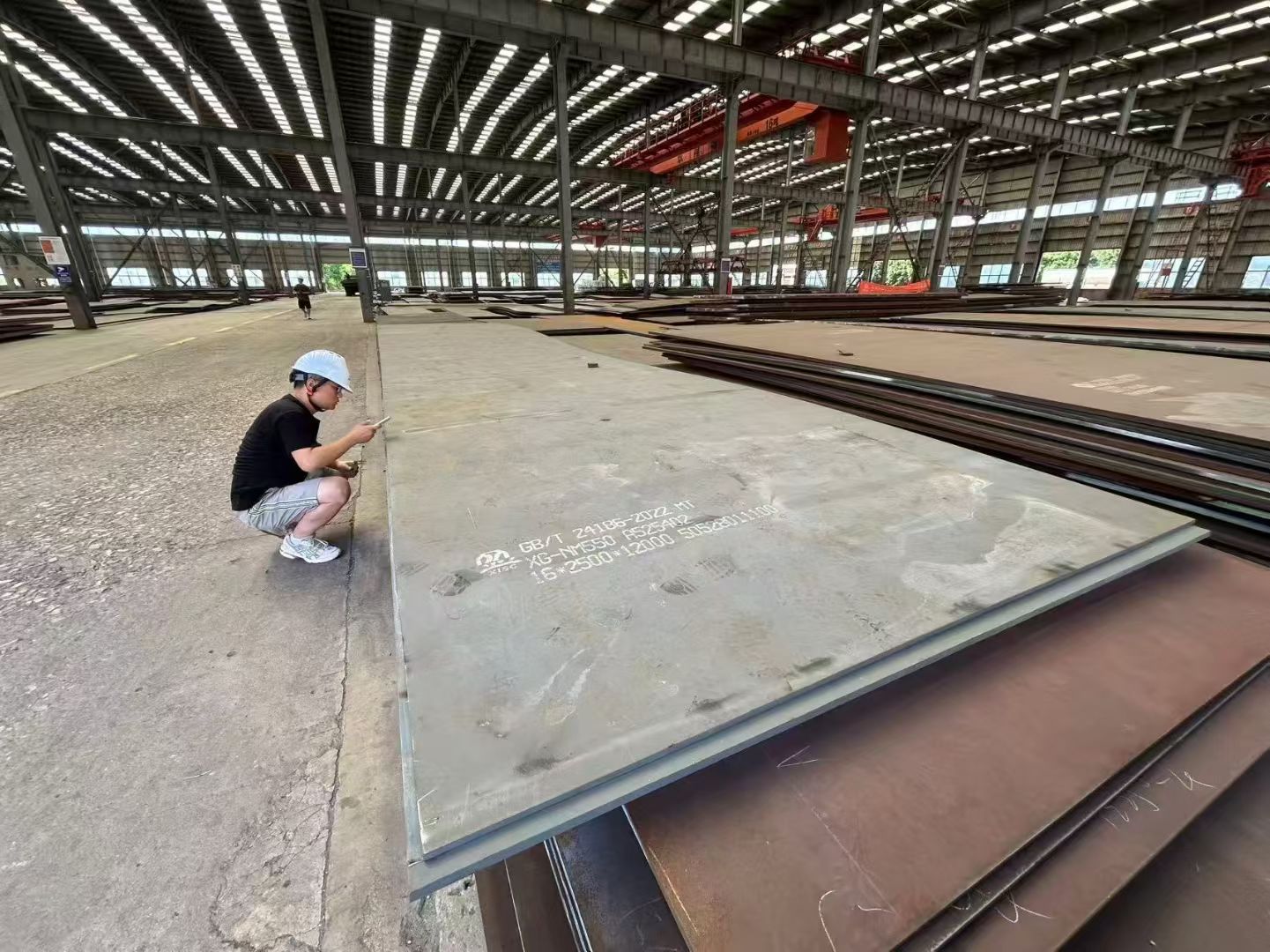
For fabricators, those numbers are not just a catalogue range. They determine how many welds a liner needs, how much offcut is generated, and whether a replacement part can be cut from one plate. A mining chute wear resistant steel plate project may need a width that reduces seams. An excavator bucket wear resistant steel sheet repair may need a length that fits an existing cutting plan. A cement plant hopper wear plates order may need repeatable custom sizes rather than a standard stock length.
The range also sets a clear boundary. The provided specification accepts customized width and length; it does not state customized thickness. Thickness remains within the 3–150 mm range. Buyers should confirm custom width and length in the purchase order, including tolerances, edge condition, and cutting responsibility, because a size range alone does not define a finished component.
| Size parameter | Stated range or option | Procurement implication |
|---|---|---|
| Thickness | 3–150 mm | Supports thin liners through heavy plate sections; custom thickness is not stated |
| Width | 600–3,950 mm; customized width accepted | Can reduce welding and offcut when the cutting plan is confirmed |
| Length | 2,438 mm, 5,800 mm, 6,000 mm, 6,096 mm, 12,000 mm, 12,200 mm; customized length accepted | Supports standard and project-specific layouts; confirm repeatability before release |
| Order scale | Minimum order quantity 1 ton | Allows trial or sample-scale evaluation before larger release |
| Lead time | 7–10 days stated | Useful for planning; custom cutting schedules should still be confirmed |
Grade and application fit: XCHD450, Mn13, and common NM grades
Wear resistant steel plate is not one material. The grade should follow the wear mode. Abrasion, impact, sliding, and work-hardening conditions require different choices. BGT’s product data includes XCHD450 for mining machinery, garbage compactors, chutes, and loader cutting edges. It also includes Mn13 high manganese steel plate for railway frogs, jaw crusher plates, and shot blast liners.
Mn13 is a work-hardening grade. It is selected where heavy impact and compressive load are present, and it is not the first choice for pure abrasive wear without impact. XCHD450, by contrast, is positioned for wear-resistant components in mining machinery, garbage compactors, chutes, and loader cutting edges. Those application statements are more useful to a buyer than a generic hardness claim because they connect the grade to a working condition.
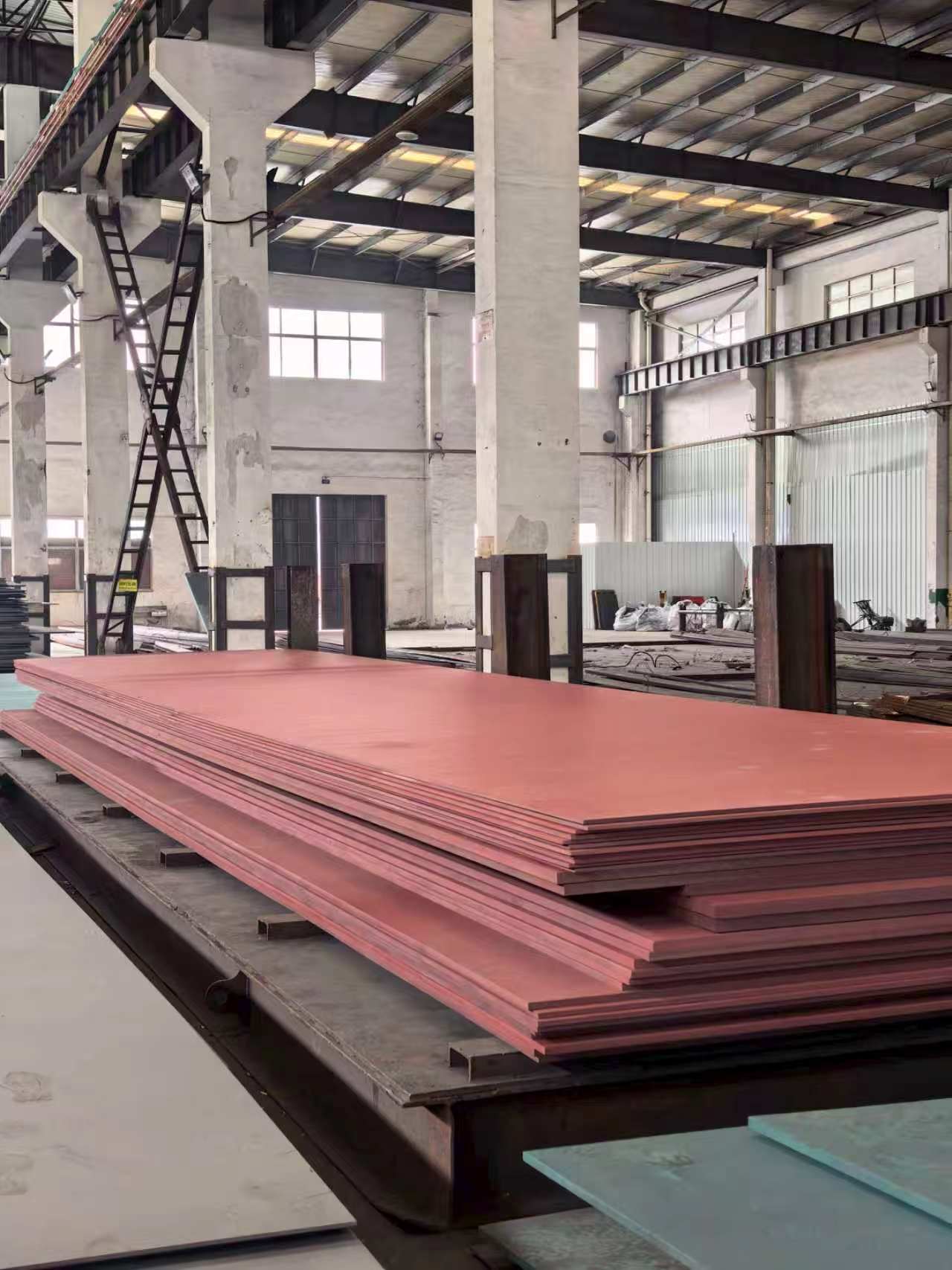
Common Chinese commercial grades include NM400, NM450, and NM500, typically in the 350–500 HBW hardness band. Buyers may also use market language such as abrasion resistant steel plate 500 HBW, Hardox equivalent wear resistant steel plate, or a specific NM grade. These phrases can help a first conversation, but they should be converted into a grade designation, an acceptance method, and an MTC requirement before purchase.
A high strength plate such as Q690 high strength steel plate serves a different purpose. Q690D has a minimum yield strength of 690 MPa and a tensile strength of 770–940 MPa for thickness ≤50 mm under GB/T 16270-2009. That is structural performance, not abrasion resistance. A buyer should not use a high strength designation as a substitute for a wear grade simply because both are steel plates.
A practical evaluation sequence for buyers
- Define the wear mode first. State whether the part sees sliding abrasion, heavy impact, or work-hardening duty. A railway frog, jaw crusher plate, and shot blast liner point toward Mn13 consideration; a chute, hopper, or loader edge may point toward a quenched wear grade such as XCHD450, NM400, NM450, or NM500.
- Request the original MTC and mill origin. Confirm that the certificate can be linked to the grade, heat or lot, dimensions, and named mill. BGT’s data names Xingcheng, Nisco, Shandong Steel, Shougang, Xisc, Lianyuan, Puyang, Rongshen, and Yongfeng as mill origins.
- Check dimensions against the cutting plan. Confirm thickness within 3–150 mm, width within 600–3,950 mm, and the required length from the stated options or a customized width and length. Do not assume custom thickness unless it is documented.
- Match the grade to the application. Use XCHD450 for its stated mining machinery, garbage compactor, chute, and loader cutting edge applications. Use Mn13 where railway frogs, jaw crusher plates, or shot blast liners require impact-led work hardening.
- Define inspection before shipment. Ask whether MTC alone is sufficient or whether third-party inspection is required. Record the acceptance criteria in the purchase order so that the certificate and the physical delivery are checked against the same specification.
Price-led sourcing versus evidence-based sourcing
Traditional price-led sourcing has a place. For a low-risk, non-critical wear part, a standard size, and a short replacement cycle, a fast quotation may be enough. The limitation appears when the part is difficult to replace, the equipment has high downtime cost, or the plate must be cut to a repeatable custom size. In those cases, a slightly higher quote with clear traceability can be the lower-risk purchase.
| Approach | Where it works | What it can miss | Practical boundary |
|---|---|---|---|
| Price-led spot buying | Low-risk, non-critical parts; standard dimensions; urgent small replacements | Mill origin, certificate linkage, grade consistency, repeatable custom sizes | Can be reasonable when failure cost is low and the part is easy to inspect |
| Evidence-based supplier evaluation | Mining chutes, hoppers, crusher liners, bucket parts, and other high-downtime wear components | Still requires project-specific fabrication and operating review | Adds documentation work; not every small order needs the same level of review |
The evidence-based route is not automatically better for every purchase. It adds administrative effort, may require third-party inspection, and can lengthen the pre-order stage. The trade-off is acceptable when a wrong plate would interrupt maintenance, create rework, or make traceability difficult to recover.
Market context: why documented supply is gaining attention
The wear resistant steel plate market is not a niche sideline in industrial procurement. Market Research Future estimates the global market at USD 1.756 billion in 2024, with a projected USD 3.055 billion by 2035. Business Research Insights projects China’s 2025 market at USD 0.817 billion. A 2025 market-share estimate in the verified dataset puts mining at 45.67% of the wear resistant steel plate market.
Those figures describe demand, not supplier quality. Their procurement relevance is different: when wear plate is used across mining, cement, construction equipment, and material handling, buyers need a way to compare suppliers beyond a headline price. The more distributed the supply chain, the more valuable a named mill, an original MTC, and a confirmed size range become.
BGT’s stated scale is part of that context. Its capability profile includes a 5,000 m² facility, 200,000 tonnes of annual output, 30,000 tons of monthly wear plate capacity, a 1-ton minimum order, and a 7–10 day stated lead time. For a buyer, these are supplier claims to test against documents and delivery performance, not automatic proof of fit for a particular application.
Case evidence: what the records actually show
Application records can support a supplier evaluation when they are specific. BGT’s provided case data includes a shredder equipment manufacturer in Vietnam that used 180 pieces of wear resistant steel plates for shredder blade fabrication, with high wear resistance noted as the achievement. It also includes a mining equipment manufacturer in Russia that used 200 tons of wear plate to fabricate dump truck floor and side liners, with balanced toughness and wear resistance noted as the highlight.
These records are useful because they connect the product to a fabrication context: shredder blades and dump truck liners are not generic plate purchases. They also have a boundary. The records do not publish a wear-life figure for every operating condition, and the implementation period is stated as depending on the operating conditions. A buyer should treat case evidence as application fit, not as a guaranteed service life for a different site.
Future outlook
The direction of wear plate procurement is toward more traceable supply, not less. Buyers are increasingly likely to ask for the original MTC, a named mill origin, a repeatable custom size, and a clear inspection route before they release a purchase order. That does not remove price competition, but it changes what price is compared against.
For suppliers, the practical advantage will come from being able to produce the same evidence across repeated orders: the same grade definition, the same mill-origin discipline, the same dimensional confirmation, and the same certificate linkage. For buyers, the advantage will come from using that evidence to separate a documented wear plate supplier from a quotation that only looks complete.
FAQ
What is an original Mill Test Certificate in wear resistant steel plate supply?
An original Mill Test Certificate is a mill-issued document that records the material identity and tested properties for a plate. In wear plate procurement, it should be linked to the grade, heat or lot, dimensions, and named mill. BGT’s quality-control description includes MTC and third-party inspection.
How can a buyer check that an MTC belongs to the delivered plate?
The buyer should compare the certificate with the purchase order and the plate identification. The grade, dimensions, mill name, and heat or lot reference should be consistent. If the link is unclear, third-party inspection can be requested before release.
Which mill origins are named for BGT wear resistant steel plate?
BGT’s wear plate product data names Xingcheng, Nisco, Shandong Steel, Shougang, Xisc, Lianyuan, Puyang, Rongshen, and Yongfeng as mill origins.
What size range is available?
The stated range is 3–150 mm in thickness, 600–3,950 mm in width, and lengths including 2,438 mm, 5,800 mm, 6,000 mm, 6,096 mm, 12,000 mm, and 12,200 mm.
Are customized width and length sizes accepted?
Yes. Customized width and length sizes are accepted. The provided specification does not state customized thickness; thickness remains within the 3–150 mm range.
When is XCHD450 suitable?
XCHD450 is positioned for wear-resistant components in mining machinery, garbage compactors, chutes, and loader cutting edges.
When is Mn13 preferred over NM grades?
Mn13 is a high manganese steel plate selected for heavy impact and work-hardening conditions, including railway frogs, jaw crusher plates, and shot blast liners. It is not the first choice for pure abrasive wear without impact, where NM grades are more economical.
Does a description such as 500 HBW or Hardox equivalent replace a grade and MTC?
No. Market descriptions can help identify a product category, but the purchase should define the grade, the acceptance method, and the MTC requirement. NM400, NM450, and NM500 are common commercial grades with hardness typically in the 350–500 HBW band, but the certificate and order specification remain the reference.
Reference document: BGT Steel Plate product catalogue (PDF).
Есть вопросы или нужны дополнительные детали?
Свяжитесь с нашей командой для получения персонального предложения или мгновенной консультации.
Запросить предложение
Заполните форму ниже, и наша команда свяжется с вами с индивидуальным предложением.
Прямой чат WhatsApp
Предпочитаете общаться в реальном времени? Напишите нам в WhatsApp для мгновенной помощи и быстрых ответов.
- Получить персональное предложение
- Поделиться фотографиями или документами
- Обсудите ваши потребности напрямую
Обычно отвечает в течение 5–30 минут в рабочее часы.