
Webinar Recap: The Technical Edge of Integrated Wood Panel Machinery
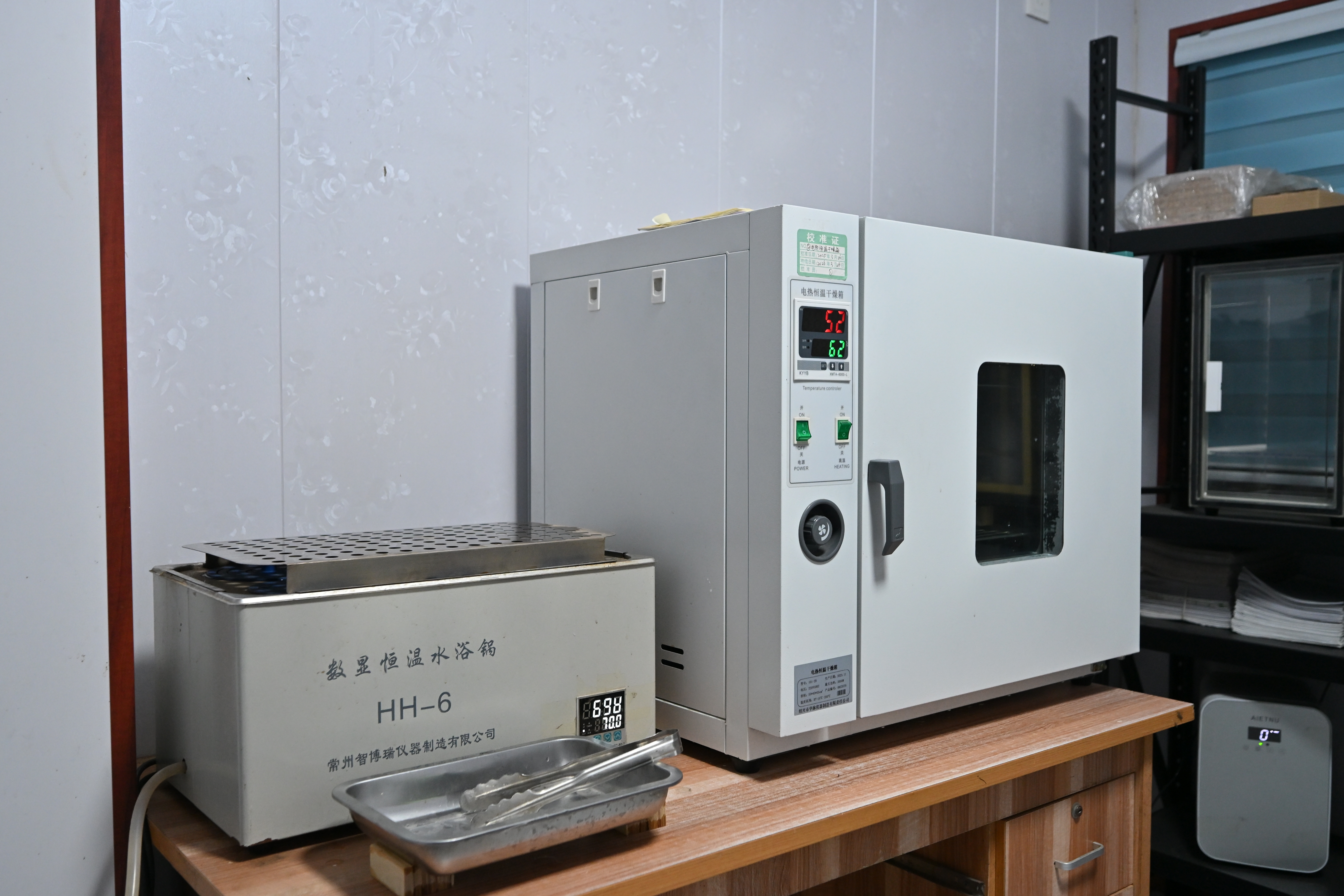
A wood panel line is a chain of dependencies, not a list of machines. A panel that meets a declared thickness, density, moisture content and glue class is the result of many handovers: log intake, veneer peeling, drying, patching, composing, lay-up, pressing, sanding and cross-cutting. When those stages are sourced separately, the buyer carries the interface risk. When they are planned as one process, the technical discussion shifts from catalogue selection to process control. That shift was the central theme of Dalian WADA International Trading Co., Ltd.'s webinar on integrated wood panel machinery.
Dalian WADA International Trading Co., Ltd. is a China-based manufacturer and exporter of engineered wood products and woodworking machinery. Established in 2010, the company reports three own factories and two trading companies in China, plus overseas branch offices in Japan and Singapore. Its published product scope includes LVL, plywood, veneered board, MDF, OSB, wall panel and woodworking machinery, with exports to North America, the EU, Australia, Japan, South Korea, the Middle East, Mexico and South America.
The webinar was not a product launch. Its value was technical: it connected the machinery sequence to the panel specification, and then connected both to the buyer's project conditions. For a furniture factory, the relevant issue may be surface smoothness and core stability. For an industrial packaging buyer, it may be load capacity. For a construction project, it may be waterproofing and strength. For outdoor cladding, it may be UV and weather resistance. In each case, the production process is the common variable behind the specification.
Problem and opportunity: the handover between panel and process
Most procurement briefs treat panel supply and equipment supply as separate categories. That separation is manageable for a single order of commercial plywood, but it becomes less comfortable when a buyer is setting up continuous production, adding a new board type, or coordinating several panel categories under one quality system. The buyer then has to align the panel specification, the machine sequence, the glue system, the moisture targets and the inspection plan across different suppliers.
The opportunity in an integrated scope is not simply convenience. It is the ability to trace a finished-board requirement back to a process step. If a furniture customer needs a stable core and a smooth surface, the conversation can move from the catalogue to veneer preparation, lay-up, pressing and sanding. If a construction buyer needs film faced plywood for formwork, the conversation can include the film, the core, the glue class and the expected number of reuses. The specification becomes a production question rather than a static data sheet.
Brand solution: what full-process scope means at Dalian WADA
Dalian WADA describes its scope as full-process solutions from log to finished board, spanning more than ten categories and more than fifteen machinery types. The number matters less than the working relationship it implies: the same technical team can discuss the board and the process step that creates it.
The publicly named equipment set in WADA's application data includes plywood production machinery, veneer peeling machines, veneer drying machines, veneer patching machines, core veneer composing machines, automatic lay-up lines for plywood production, cold presses, hot presses, plywood sanding machines and fully automatic cross saws. This is the visible part of the process chain. Around it sits the panel portfolio: LVL, plywood, veneered board, MDF, OSB, wall panel and woodworking machinery.
WADA's capability data adds several procurement-relevant facts. The company reports monthly panel capacity of more than 10,000 CBM, a lead time of 25 to 45 days, a minimum order quantity of one 40-foot container, 100% inspection, OEM/ODM support, and customization of size, thickness and layout. After-sales support is described as remote support. These are not machinery performance guarantees; they are the commercial and quality framework within which the technical discussion takes place.
What integration changes in practice: the buyer can ask one technical team how a target panel specification will be produced, inspected and matched to the intended application, instead of reconciling separate panel and equipment proposals after the specification has already been fixed.
Technical explanation: from log to finished board
The technical edge of an integrated line is easiest to see stage by stage. Each stage creates a condition that the next stage must respect. When those conditions are managed as a chain, the finished panel is more likely to meet the declared specification consistently.
1. Veneer preparation
Peeling, drying, patching and composing set the raw-material basis of plywood and LVL. Moisture control at this stage is directly relevant to the final panel. WADA's published plywood specifications list moisture content of 8% to 12% for structure plywood, marine plywood, commercial plywood and film faced plywood. MDF is listed at 5% to 13%. These are product specifications, but they also indicate why drying and downstream pressing cannot be treated as isolated steps.
2. Lay-up and pressing
The automatic lay-up line, cold press and hot press determine how the glue system and the veneer stack are converted into a stable board. WADA's product data lists E0, CARB P2, E1 and E2 glue classes across different panel types, with melamine WBP and phenolic WBP used for structural and marine applications. MDF production is described as continuous flat pressing using Difenbach and Sinbelkamp equipment from Germany. The point for a buyer is not the brand name alone; it is that the glue class, pressing method and target application have to be selected together.
3. Finishing and dimensional control
Sanding and cross-cutting turn the pressed board into a saleable panel. Thickness ranges in WADA's published data run from 1.2 mm to 50 mm for MDF, 2 mm to 25 mm for commercial plywood and veneered plywood, 4 mm to 35 mm for film faced plywood, and 9 mm to 28 mm for structure plywood. Density ranges vary by product family, from 500 to 1000 kg/m³ for MDF to 650 to 750 kg/m³ for structure plywood and film faced plywood. These ranges show why a single line configuration cannot be assumed to fit every panel category without a specification review.
| Panel type | Published thickness | Published density | Published moisture | Glue class in published data |
|---|---|---|---|---|
| MDF | 1.2–50 mm | 500–1000 kg/m³ | 5%–13% | E0 / CARB P2 / E1 |
| LVL bed slat | 7–15 mm | 520 kg/m³ in published data | 8%–12% | E0 / E1 |
| Structure plywood | 9–28 mm | 650–750 kg/m³ | 8%–12% | Melamine WBP / Phenolic WBP |
| Marine plywood | 9–25 mm | 600–750 kg/m³ | 8%–12% | Melamine WBP / Phenolic WBP |
| Commercial plywood | 2–25 mm | 520–700 kg/m³ | 8%–12% | E0 / CARB P2 / E1 / E2 / WBP |
| Film faced plywood | 4–35 mm | 650–750 kg/m³ | 8%–12% | MR / Melamine WBP / Phenolic WBP |
| Veneered plywood | 2–25 mm | 500–750 kg/m³ | 8%–12% | E0 / CARB P2 / E1 / E2 / Melamine |
| Melamine board | 2–30 mm | 550–750 kg/m³ | 8%–12% | E0 / CARB P2 / E1 / E2 |
The table also shows why an integrated machinery discussion has to be specific. A line set up for thin commercial plywood is not automatically the same line required for thick film faced plywood or high-density MDF. The buyer should expect the supplier to ask about the target panel mix before proposing a process configuration.
Application fit: where a full-process approach earns its place
The strongest case for integration appears when the project has more than one variable to control. WADA's application data provides several concrete project contexts.
Furniture and interior panels
In furniture manufacturing, the working condition is continuous workshop production. The project type is cabinet and panel making, and the special requirement is a smooth surface and a stable core. The relevant panel families include veneered plywood, melamine board and MDF. In indoor finishing, the requirement can shift toward eco-friendly and formaldehyde-free performance for wall, kitchen and furniture applications. An integrated supplier can connect those requirements to the surface, core and glue choices rather than treating them as separate catalogue filters.
Packaging and heavy-duty transport
In industrial packaging, the working condition is heavy-duty transport, and the special requirement is high load capacity. The product operates in one-time or reusable mode, providing crating and protection. Commercial plywood is the relevant panel family in the supplied application data, and the matched equipment list covers the full plywood production sequence from peeling and drying through lay-up, pressing, sanding and cross-cutting. For this use case, the technical question is not only panel grade but also how the board will perform as a protective structure under load.
Construction and exterior cladding
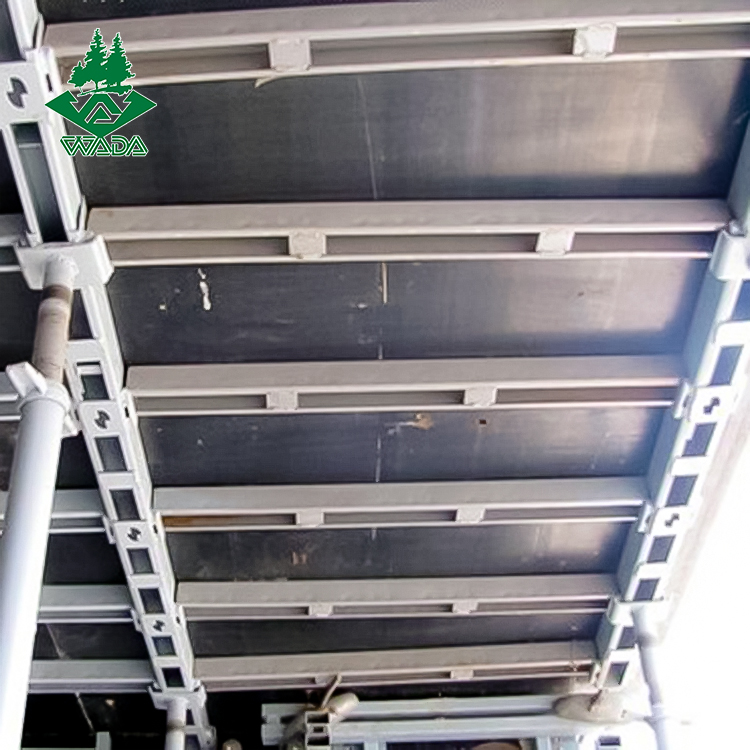
In construction, the working condition is outdoor structural use, with waterproof and high-strength requirements. Film faced plywood is the main product family in the supplied data, with thickness from 4 mm to 35 mm and a stated reuse range of 2 to 40 times in concrete projects. For exterior wall cladding, the working condition is UV exposure and an outdoor environment, with weather resistance and UV resistance as special requirements. Marine plywood and structure plywood are the relevant panel families, supported by an installation system and fasteners. These applications show why machinery integration has to be read together with the expected exposure and service life.
Board production itself
WADA's case data also includes a plywood manufacturer in Vietnam that purchased one complete line. The application is plywood production for furniture, construction, packaging and interior uses, with the stated result of stable production and a one-stop solution. This is the clearest example of the integration argument: the buyer is not only purchasing a panel; the buyer is purchasing a repeatable production sequence.
Other case records show the downstream side of the same logic. A furniture manufacturer in Mexico ordered 100 containers for furniture and cabinet applications. A wall cladding project in Portugal ordered 20 containers for outdoor cladding with weather and UV resistance. A construction builder in Japan ordered 200 containers for building structure with high strength, durability and waterproof performance. An Australian building contractor ordered 50 containers for building structure with high durability and waterproof performance. These records do not prove that every buyer needs machinery, but they show the range of applications that a panel portfolio has to support.
Market trend analysis: scale and compliance are moving together
Two market signals are useful for framing the procurement question. First, the global wood-based panel market was reported at USD 198 billion in 2024, with a projected compound annual growth rate of 5.9% from 2025 to 2030, according to Grand View Research. Second, China's plywood exports reached 13.19 million cubic meters in 2024, a 22.82% increase year on year, according to China Customs data.
These figures describe scale, not process quality. Their relevance is indirect but important. A larger export flow increases the number of buyers who need consistent specifications across shipments. It also raises the cost of inconsistency when a panel is used in furniture, construction or packaging. At the same time, regulatory thresholds are becoming more specific. CARB Phase 2, for example, limits formaldehyde emissions to 0.05 ppm for hardwood plywood with veneer core. WADA's product data lists FSC, EUDR, CARB P2, EPA and JAS & JIS certification across its scope.
The implication for buyers is that capacity claims and compliance claims should be read together. A supplier that can describe the process step behind a certificate is easier to audit than a supplier that presents the certificate as a standalone logo. That is the practical link between the webinar's technical theme and the market context: growth increases volume, while compliance increases the need for process evidence.
Comparison with traditional solutions: panel-only versus integrated
A panel-only vendor and an integrated panel-and-machinery supplier solve different problems. Neither model is universally better. The comparison below uses procurement criteria that a buyer can actually verify.
| Decision basis | Panel-only vendor | Integrated panel-and-machinery supplier |
|---|---|---|
| Commercial scope | Board supply against a fixed specification | Board specification plus process and equipment review |
| Technical interface | Buyer coordinates panel, machine and process suppliers | Fewer handover points when one team reviews panel and process |
| Customization | Catalogue or limited custom sizes | WADA reports size, thickness and layout customization for its panel scope |
| Evidence required | Board test reports and certificates | Board evidence plus equipment scope, utility requirements, commissioning plan and local engineering support |
| Main limitation | Narrower technical scope | More upfront engineering; not every project needs a full line; the buyer must still validate site conditions and certification scope |
The limitation deserves emphasis. A full-process supplier is not automatically the lower-risk choice. Integrated scope asks the buyer to disclose the product mix, target thickness, glue class, expected moisture exposure and site utilities earlier in the process. It also requires the buyer to separate panel certification from machinery performance guarantees. For a single-container order of commercial plywood, a panel-only vendor may be the simpler route. The integrated model earns its place when the project involves continuous production, multi-category output, or a new line where process handovers are the main risk.
A second boundary is organizational. WADA's published after-sales description is remote support. That can be appropriate for a panel order or a standard line review, but a buyer with complex civil works, local utility constraints or site-specific automation should plan for local engineering and commissioning resources. Integration reduces the number of technical interfaces; it does not eliminate the need for project engineering.
Future outlook: what buyers should watch
Three developments are likely to keep the integration question active. The first is compliance. As formaldehyde, fiber sourcing and market-access rules become more specific, the supplier's ability to connect a certificate to a process step will matter more than a generic sustainability statement. WADA's listed certifications and its 25-engineer R&D team are relevant here, but the buyer should still verify the certificate scope against the actual product and destination market.
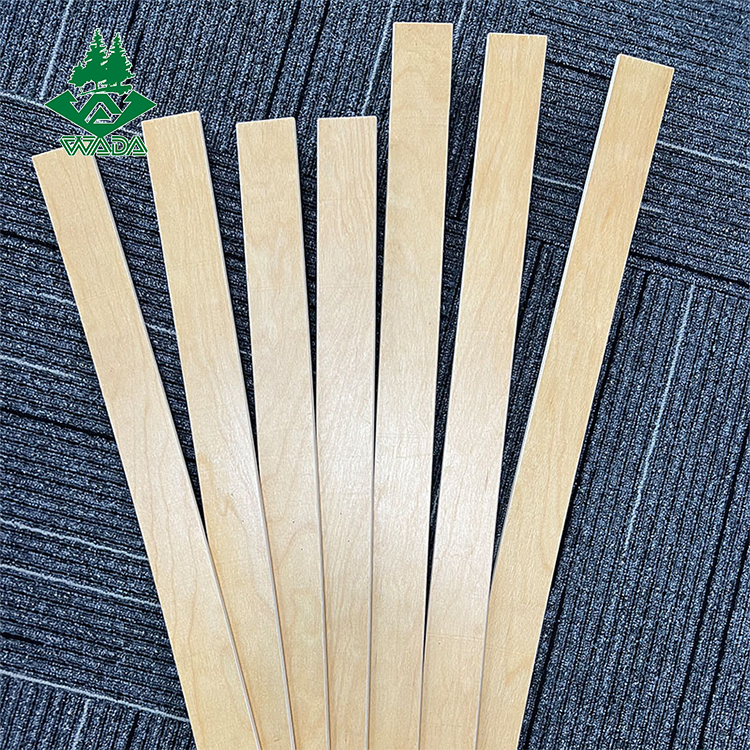
The second is product mix. Buyers increasingly source several panel families under one relationship: plywood for construction, MDF for furniture, melamine board for interior fit-out, LVL for furniture frames and bed slats, and film faced plywood for formwork. A supplier that can discuss the process implications of that mix is better placed to explain why one line configuration may not fit every category.
The third is documentation. The most useful supplier conversations are moving from brochure claims to process evidence: which machine performs which step, which parameter is inspected, which certificate applies to which product, and which application condition drives the specification. That is a less dramatic story than a capacity headline, but it is more useful to a buyer preparing an RFQ or evaluating a new production line.
FAQ: Integrated wood panel machinery and project fit
Which projects are the clearest fit for integrated wood panel machinery?
The clearest fit is a project with more than one process variable to control. Examples in WADA's application data include furniture manufacturing with continuous workshop production and a requirement for smooth surface and stable core, industrial packaging with high load capacity, construction with outdoor structural use and waterproof or high-strength requirements, and exterior cladding with UV and weather resistance. A plywood manufacturer purchasing a complete line is the most direct example, because the buyer is acquiring a repeatable production sequence rather than a single panel order.
How should a buyer match panel specification to a production line?
The buyer should start with the application condition, then work backward to the panel family and process step. For furniture, the priority may be surface smoothness and core stability, which points toward veneered plywood, melamine board or MDF. For formwork, film faced plywood with a stated reuse range of 2 to 40 times may be relevant. For exterior cladding, marine plywood or structure plywood with weather and UV resistance may be relevant. The production line review should then confirm whether the target thickness, density, moisture content and glue class fit the proposed process sequence.
What evidence should a buyer request from an integrated supplier?
A buyer should request the product scope, the named machinery list, the capacity basis, the inspection method and the certification scope. WADA's published capability data states monthly panel capacity of more than 10,000 CBM, a lead time of 25 to 45 days, a minimum order quantity of one 40-foot container, 100% inspection and remote after-sales support. The buyer should also ask which of those figures apply to the specific panel family and order size, because a monthly capacity figure is not the same as a guaranteed delivery date for a mixed-product order.
Does an integrated supplier remove the need for independent certification checks?
No. Integration can improve process traceability, but it does not replace independent verification. WADA's product data lists FSC, EUDR, CARB P2, EPA and JAS & JIS certification, and the CARB Phase 2 limit of 0.05 ppm for hardwood plywood with veneer core is a specific regulatory threshold. The buyer should confirm that the certificate covers the exact product, thickness, glue class and destination market. A certificate that applies to one panel family should not be assumed to cover every product in a broad portfolio.
What is the main boundary of the integrated model?
The main boundary is project fit. An integrated panel-and-machinery scope requires more upfront technical disclosure and more coordination than a panel-only order. It is not necessary for every buyer. A single-container order of commercial plywood may be handled more simply through a panel-only vendor. The integrated model is most relevant when the buyer is setting up continuous production, adding a new panel category, or trying to reduce the number of handovers between panel specification, equipment selection and quality inspection.
A PDF brochure with WADA GROUP's product and machinery reference is available here: WADA GROUP brochure.
Есть вопросы или нужны дополнительные детали?
Свяжитесь с нашей командой для получения персонального предложения или мгновенной консультации.
Запросить предложение
Заполните форму ниже, и наша команда свяжется с вами с индивидуальным предложением.
Прямой чат WhatsApp
Предпочитаете общаться в реальном времени? Напишите нам в WhatsApp для мгновенной помощи и быстрых ответов.
- Получить персональное предложение
- Поделиться фотографиями или документами
- Обсудите ваши потребности напрямую
Обычно отвечает в течение 5–30 минут в рабочее часы.