
Wedding Tent Basics: Site, Structure, and Supplier Checks
Wedding Tent Basics: Site, Structure, and Supplier Checks
Early wedding tent research often begins with a broad question: Is this structure suitable for an outdoor ceremony, a reception, or a full commercial event? The practical answer depends less on a single model name and more on site conditions, expected weather, interior clearance, assembly workflow, and storage constraints. This reference explains the first layer of wedding tent selection for event planners, rental operators, hotel and venue teams, and procurement professionals at the awareness-to-research stage.
Unlike permanent ballrooms, wedding tents are temporary or semi-permanent fabric structures. Industry data suggests growing demand: third-party estimates put the global wedding services market at USD 185.22 billion in 2023, projected to reach USD 284.64 billion by 2032. Within specialized tent rental, weddings are estimated to account for 38.5% of revenue share. Early specification work therefore has direct procurement relevance.
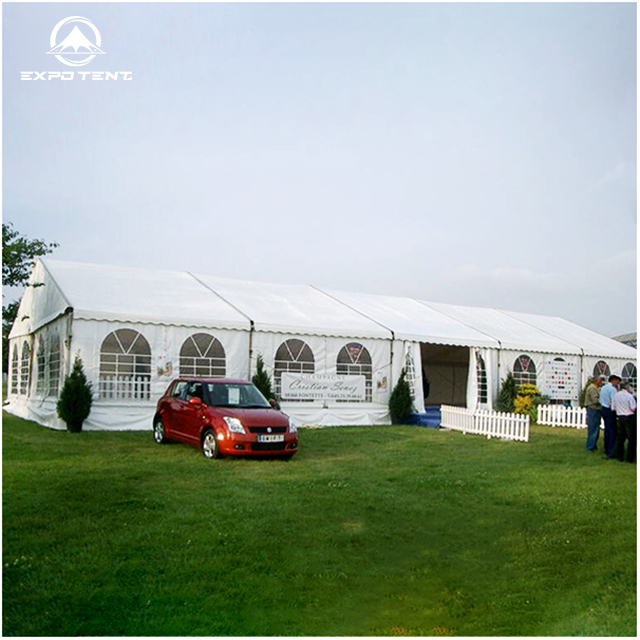
An outdoor event tent placed on a lawn, reflecting the site-level considerations that shape wedding tent selection.
Why Site and Weather Come Before Brand
When the intended site is a lawn, beach, castle courtyard, or hotel terrace, the structure must address different ground conditions, wind exposure, access width, and aesthetic expectations. In a recorded lawn event planning scenario from Expotent, the working condition was lawn, the function was gathering, the operation mode was assembly, matched equipment included chairs and tables, and the special requirement was windproof. That configuration is a useful reminder that a tent specification is not only about span; it must be matched to site and operation.
A beach site may require anchoring and corrosion awareness. A castle or formal garden may prioritize visual profile. A commercial wedding planning company may prioritize detachable modular systems that can be packed quickly between jobs. These differences mean the same nominal tent category can serve quite different procurement problems.
What Expotent Provides in the Wedding Tent Category
Changzhou Expo Tent Co., Ltd., operating as Expotent, is a China-based manufacturer established in 2010. The company designs, manufactures, develops, sells, and rents aluminum and steel frame fabric structures, tents, and marquees. Its listed product scope covers events tent, party tent, wedding tent, church tent, pagoda tent, clear span tent, frame tent, sports tent, warehouse tent, and marquee.
Expotent reports a 3,000 m² factory, a 30-person team including three R&D engineers, annual output of approximately 100,000 m², and about 50% export share to markets including the EU, Africa, the USA, Asia, and the Middle East. These are first-party operating facts useful for initial supplier screening rather than performance claims.
In the wedding and event range, two product lines appear most relevant:
- Event Tent, models SLP-3 through SLP-50: width from 3 m to 50 m, length from 3 m to 1000 m, height from 2.5 m to 10 m; aluminum and PVC; listed for events companies.
- Party tent, models SLP-10, SLP-12, and SLP-15: width 10 m, length 15 m, side height 2.5 m; aluminum and PVC; listed for events and hiring.
Technical Explanation: Frame, Fabric, and Dimensions
Most structures in this category combine an aluminum frame with PVC fabric. The frame provides clear interior space and carries roof and wind load when properly anchored. The PVC membrane provides weather protection and can be configured with sidewalls or window panels depending on the event layout. Product imagery in the Expotent catalog includes a white pagoda tent with arched windows, a clear span event tent with open front, and a transparent clear span tent, showing that visual and structural configurations vary within the same material family.
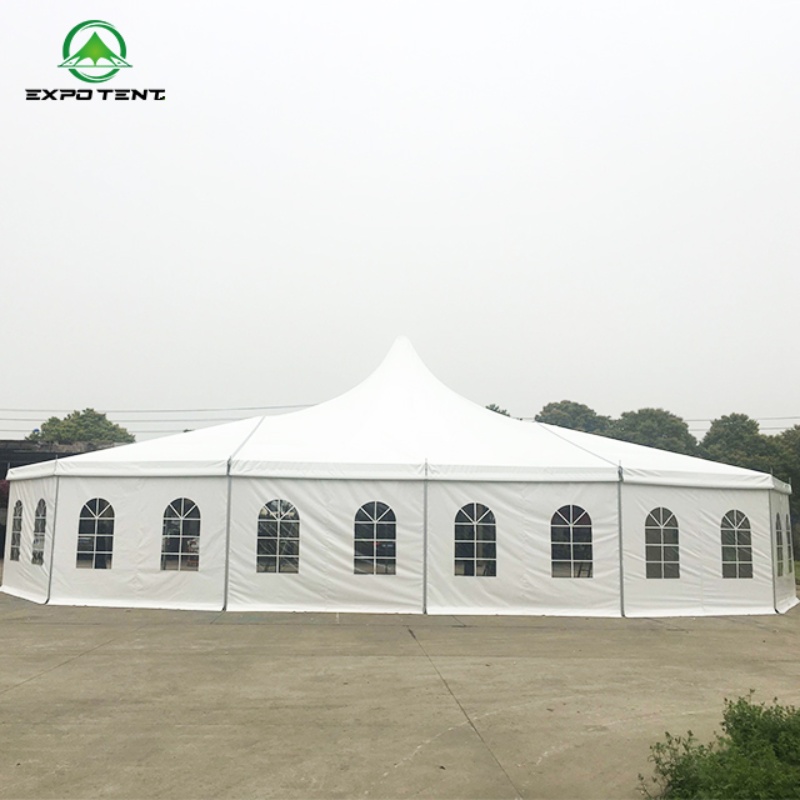
A white pagoda tent with arched windows, one configuration used in formal wedding and garden-style settings.
Dimension logic matters. A smaller party tent at 10 m width and 15 m length can support an intimate ceremony or reception. A large clear span or pagoda structure with width up to 50 m and extended length is more relevant to hotel support, large guest counts, or exhibition-style wedding planning. The parameter range is not automatically a guarantee of performance; it shows where a supplier’s standard engineering assumptions can begin.
Wedding tents also interact with safety standards. Industry references frequently cite EN 13782 for temporary structures such as tents, as well as flame retardancy standards such as NFPA 701 in the United States and CPAI-84. Buyers should ask for the specific documentation that applies to the membrane and frame used in the project, rather than assuming a generic certificate covers all configurations.
Use Cases Across Wedding Settings
Outdoor Lawn Wedding Tent
A lawn site suits frame or pagoda structures that can be anchored on grass, leveled, and fitted with sidewall accessories. The Expotent application record shows assembly on a lawn with windproof as a requirement and chairs and tables as matched equipment.
Beach Wedding Special Tent
Beach conditions raise attention to wind load, anchor method, sand surface, and salt-air exposure. Planners often compare sidewall options and portability. A PVC-over-aluminum frame is a practical category to evaluate, but the actual specification must be confirmed with the supplier for the specific wind zone and ground condition.
Castle Wedding Decoration Tent
Formal settings may require arched windows, pagoda silhouettes, or transparent panel combinations. The white pagoda tent with arched windows shown in Expotent’s party tent imagery is one example of a visually traditional form that can fit garden or heritage-style events, but color and profile should be matched to the venue.
Hotel Wedding Supporting Tent
Hotels may use large-space structures as temporary venue extensions for banquet overflow or outdoor receptions. In this case, width, side height, and entry clearance become more important. The Event Tent range up to 50 m width and 10 m height offers a large-span option for evaluation, subject to site survey and engineering review.
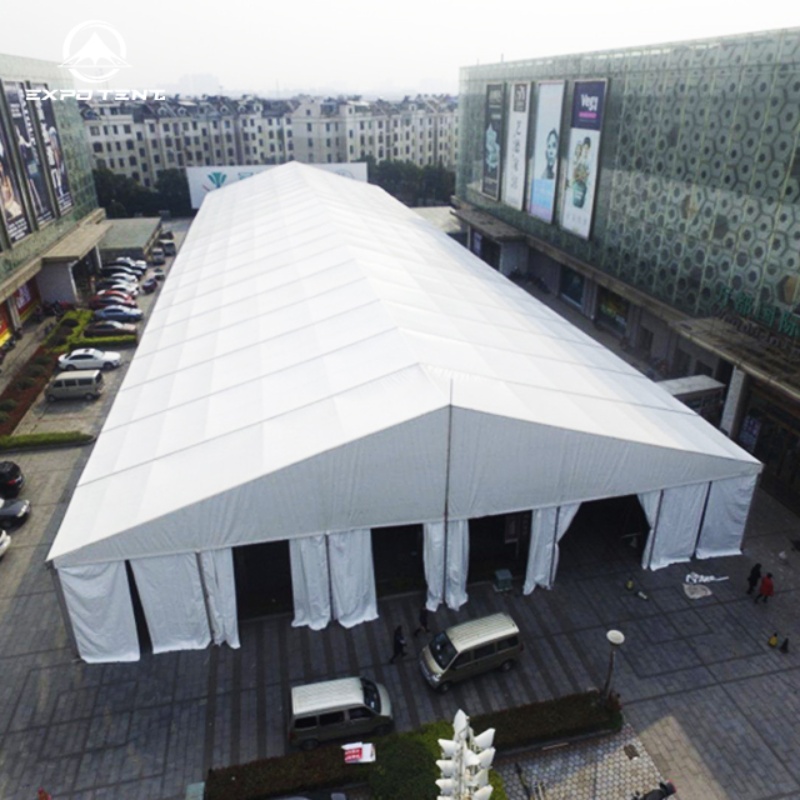
Aerial view of a large white event tent, illustrating the span and clearance considerations for hotel and commercial wedding use.
Commercial Wedding Planning Tent
For planners and rental operators, detachable modular design and quick-storage matter because the structure must move between events. The aluminum frame and PVC fabric approach is relevant, but specific packing volume, truck load, and assembly time should be confirmed in procurement.
Market Demand and Cost Benchmarks
Third-party market estimates referenced in industry analyses put the global wedding services market at USD 185.22 billion in 2023, with a projection of USD 284.64 billion by 2032. Within tent rental, weddings account for about 38.5% of revenue share, with the global tent rental market estimated at USD 8.2 billion in 2025 and expected to reach USD 13.7 billion by 2033.
Asia-Pacific represented approximately 32.2% of tent rental revenue share in 2025, driven by destination weddings and outdoor hospitality growth. In the United States, the average wedding tent rental cost is reported at around USD 1,900, commonly benchmarked at USD 1 per square foot of coverage. These figures help procurement teams frame budget and scale discussions before deeper supplier evaluation.
Comparison with Traditional Solutions
A temporary wedding tent is not a direct substitute for a permanent building. It offers site flexibility and lower capital commitment by comparison, but it requires assembly, anchoring, site preparation, and weather safety review. On uneven or highly exposed ground, additional engineering may be needed. These are normal limitations of the category, not defects of a single supplier.
| Factor | Temporary Wedding Tent | Permanent Venue |
|---|---|---|
| Capital commitment | Rental or one-time purchase, reusable | High fixed investment |
| Site flexibility | Can adapt to lawn, beach, hotel grounds | Fixed location |
| Setup lead time | Assembly and anchoring required | No temporary setup |
| Weather exposure | Dependent on tie-down and membrane specification | Enclosed building envelope |
Future Outlook
The rental shift in outdoor weddings is likely to keep pressure on modularity, weather resilience, and documented compliance. Asia-Pacific’s 32.2% share of tent rental revenue in 2025 points to continued outdoor and destination wedding investment. For procurement teams, this shifts attention to modularity, maintenance, packing volume, and manufacturer documentation, not just nominal square meters.
Suppliers that make standard parameters, assembly assumptions, and certification evidence clear are easier to evaluate at the research stage. Buyers should expect less marketing language and more information about wind load, anchor plan, packing volume, and setup crew requirements.
FAQ
What is a wedding tent?
A wedding tent is a temporary or semi-permanent fabric structure used to cover wedding-related outdoor or semi-outdoor spaces. It typically combines an aluminum or steel frame with PVC or similar fabric and can be configured as a frame tent, pagoda tent, clear span structure, or marquee depending on the site and event layout.
What is the difference between a lawn wedding tent and a beach wedding tent?
The main difference is site preparation and anchoring. A lawn site may allow standard ground anchoring and leveling, while a beach site requires evaluation of sand load capacity, wind exposure, and corrosion awareness. The tent category may be similar, but the engineering and rigging plan changes.
What size wedding tent is suitable for a large event?
It depends on guest count, table layout, dance floor, catering, and stage. Some suppliers list modular event tent widths from 3 m to 50 m and extended lengths, which allows planning for both intimate and large gatherings. A professional layout calculation should precede final sizing.
Are wedding tents windproof and waterproof?
A PVC fabric membrane and aluminum frame can provide weather protection when the tent is correctly specified, installed, tensioned, and anchored. Windproof performance depends on anchoring and sidewall configuration. Buyers should confirm the specific wind rating and waterproof sealing method for the project, not treat all tents as identical.
Can wedding tents be customized in size?
Many modular wedding tent systems are built around adjustable widths and extension lengths. For example, an event tent family may cover widths from 3 m to 50 m. Custom configurations still require engineering confirmation, but the modular principle supports flexible planning.
Are wedding tents detachable and quick to store?
Detachable aluminum frame and PVC fabric systems are designed for repeated assembly and storage in many commercial rental applications. Quick-storage depends on frame component design, folding method, and packing workflow. Buyers should evaluate teardown time and transport volume with the supplier.
What standards apply to wedding tent safety?
Widely referenced standards include EN 13782 for temporary structures such as tents, and flame retardancy standards such as NFPA 701 in the United States and CPAI-84. The applicable standard varies by market and municipality. Request current certificates for the specific fabric and frame configuration.
For more detailed product specifications and company documentation, see the current Expotent brochure: Expotent company brochure (PDF).