
Wedge Anchor, Shield Anchor, Concrete Screw: Shortlist Guide
Wedge Anchor, Shield Anchor, Concrete Screw: Shortlist Guide
Concrete fixing selection in construction and decoration is rarely a single-answer decision. Wedge anchors, shield anchors, concrete screws and drop-in anchors each carry different installation methods, substrate preferences and procurement requirements. Treating them as a shortlist—matched by scenario rather than ranked by a single attribute—makes the specification process both practical and auditable.
Weifeng Fastener (Ningbo Weifeng Fastener Co., Ltd.) is a fastener manufacturer and trading company based in Yuyao, Zhejiang, China. Its portfolio covers screws, bolts, nuts, washers and anchors in carbon steel and stainless steel, and the company states that it can supply products according to GB, DIN, JIS and ANSI standards. Those standard-coverage claims are portfolio-level declarations; individual anchor models require their own drawings, material certificates and evaluation documents.
Why Anchor Selection Starts with Substrate and Application
The first variable in concrete anchoring is the substrate, not the brand. Concrete grade, whether the concrete is cracked or uncracked, moisture exposure and the presence of reinforcement all change what a fixing can reliably do. The second variable is the load: static tension, shear, vibration or seismic demand. Installation environment—overhead, confined, temporary or permanent—completes the shortlist criteria.
A shortlist approach separates four mechanical fixing types by how they engage the concrete. Wedge anchors and drop-in anchors rely on controlled expansion. Shield anchors rely on a multi-segment expansion shield that spreads contact over a wider area. Concrete screws thread directly into the drilled hole without a separate expansion sleeve. Each mechanism creates different installation conditions and different documentation requirements.
The Fixing Shortlist at a Glance
The matrix below is a starting point for project planning. It does not replace product-specific evaluation reports or project specifications.
| Anchor type | Typical substrate | Representative applications | Distinguishing feature |
|---|---|---|---|
| Wedge anchor | Structural concrete, cracked or uncracked where qualified | Steel structures, equipment foundations, seismic projects, mechanical and electrical pipe fixing | Through-bolt design with expansion at the base |
| Shield anchor | Lower-grade or variable-strength concrete and masonry | Industrial fencing, security grills, warehouse racking | Multi-segment expansion shield spreads load |
| Concrete screw | Concrete and some masonry, especially temporary connections | Temporary fencing, racking, handrails | Threads directly into the drilled hole |
| Drop-in anchor | Concrete, for overhead and suspended systems | Suspended ceilings, fire protection piping, HVAC systems | Internal thread allows bolt removal and reattachment |
Wedge Anchor: The Structural Concrete Option
A wedge anchor is a deformation-controlled expansion anchor. It is installed in a drilled hole, and tightening the nut pulls a wedge or expansion clip upward, pressing the anchor body against the concrete. Technical approval documents describe this product class as suitable for structural connections where tension and shear performance matter. One European technical approval for a named wedge anchor family lists sizes from M6 through M20 in galvanized steel and stainless steel variants.
Testing frameworks differ by market. In the United States, ASTM E488 is a common test method for mechanical anchors. A DEWALT technical page for its domestic wedge anchor lists materials such as AISI 1010–1018 for the anchor body and Grade A ASTM A563 for nuts. These material specifications are useful reference points when comparing supplier datasheets, but they do not by themselves demonstrate cracked-concrete or seismic qualification.
For projects that involve cracked concrete or seismic demand, product-specific evaluation is decisive. A MiTek technical bulletin states that its wedge anchor product is evaluated to IBC/IRC in accordance with ICC-ES AC193 and ACI 355.2 for cracked and uncracked concrete. A Fastenal submittal for the WA++ wedge anchor reports seismic, cracked and uncracked concrete approval, Category 1 diameters, and testing under ACI 355.2 and ICC-ES AC193. Both are product-specific claims. They illustrate why a generic “high-strength” description is insufficient for a specification that cites ICC-ES AC193 or ACI 355.2.
Weifeng Fastener lists a wedge anchor (through-bolt type) in its product portfolio. Buyers evaluating this anchor should request model-specific drawings, material certificates and test reports. For cracked-concrete or seismic applications, they should also ask whether product-specific evaluation documents are available. A company-level statement of GB, DIN, JIS and ANSI coverage is not the same as a verified evaluation report for a named anchor model. That distinction belongs on every wedge anchor checklist.
Where wedge anchors fit best
- Steel structure connections where tension and shear loads require a through-bolt anchor with verifiable evaluation.
- Equipment foundation installation in industrial plants, where vibration and dynamic loads put a premium on anchor qualification.
- Mechanical and electrical pipe fixing in commercial buildings, where the anchor must suit structural concrete and hold sustained service loads.
- Seismic construction projects that specify cracked-concrete or seismic-qualified anchors under recognized evaluation frameworks.
Shield Anchor: For Lower-Grade Concrete, Fencing, Grills and Racking
A shield anchor uses a multi-segment expansion shield—commonly a 3-segment or 4-segment design—that expands against the sides of the drilled hole. Because the shield distributes contact over a broader area than a single expansion element, it is often chosen where the concrete is not structural grade or varies in quality.
Weifeng Fastener's shield anchor range covers M6 to M20 in carbon steel or malleable iron, with yellow or white zinc plating. These figures describe the product family; installed load capacity still depends on the specific anchor, the concrete and the installation conditions.
Shield anchor applications cluster around scenarios where the substrate is softer or less predictable:
- Low-quality concrete: the shield's wider contact area can compensate for local variations in concrete strength. Project requirements still govern whether the anchor is acceptable.
- Industrial fencing and security grills: posts and grills place sustained pull-out demand on the anchor, and the shield design suits this type of fixing in variable concrete.
- Warehouse racking: rack baseplates transfer load to the floor slab, and shield anchors are a common choice where the installation tolerates a broader expansion profile.
Installation quality is a major determinant of shield anchor performance. Correct hole diameter, drilled depth—neither short nor over-drilled—and proper torque are basic checks. In friable or very weak concrete, even a correctly sized shield anchor may not achieve its intended capacity, and alternative fixing methods should be evaluated.
Concrete Screw: Fast Installation for Temporary Fencing, Racking and Handrails
Concrete screws cut threads into the concrete itself. There is no separate expansion sleeve, so installation is generally faster and follows a direct drill-and-drive sequence. The same feature supports removal and refastening where the connection is temporary or serviceable.
Weifeng Fastener's concrete screw range covers diameters from 5 mm to 12 mm and lengths from 30 mm to 150 mm, with Ruspert or zinc plating. The size range spans common construction and decoration fixing duties; selection still depends on hole diameter, concrete quality and the intended load.
Representative concrete screw applications include:
- Temporary fencing: site fencing can be installed and later removed with less surface disruption than cast-in or heavy expansion systems, provided the holes are properly patched afterward.
- Racking: for fixed, non-structural racking baseplates, concrete screws offer a faster installation path than sleeve anchors in suitable concrete.
- Handrails: handrail and balustrade fixings in construction and decoration projects can be completed more quickly with concrete screws, reducing installation time on repetitive fixing points.
Concrete screws have boundaries. They depend on a sound substrate and an accurately sized hole; if the concrete crumbles or the hole is oversize, thread engagement is compromised. For cracked concrete or dynamic loads under vibration, a concrete screw is not automatically interchangeable with a qualified wedge anchor, and project-specific evaluation may be required.
Drop-in Anchor: Internal-Thread Fixing for Ceilings, Fire Piping and HVAC
A drop-in anchor is set flush with the concrete surface and leaves an internal thread. The installer expands the anchor body with a setting tool, and afterward a bolt or threaded rod can be screwed in, removed or adjusted without disturbing the anchor body.
Weifeng Fastener's drop-in anchor range covers M6 to M20 in carbon steel, brass or stainless steel, with a white zinc finish.
The internal-thread characteristic serves suspended systems in particular:
- Suspended ceilings: hanger wires and threaded rods often need adjustment after installation, and the drop-in anchor allows this without replacing the anchor.
- Fire protection piping: pipe supports and hangers require a secure fixing that remains serviceable for inspection and maintenance.
- HVAC systems: duct supports and unit hangers use the same overhead fixing pattern, and the internal thread simplifies connection from below a finished ceiling.
Drop-in anchor installation is relatively forgiving, but the internal thread introduces its own checks: the setting tool must expand the anchor correctly, the bolt must be threaded without over-torque, and hole depth must match the anchor specification.
Matching the Anchor to the Project: A Scenario Matrix
The matrix below links common construction and decoration scenarios to a preferred anchor type. It is a planning reference, not a substitute for structural design or project-specific approval.
| Project scenario | Anchor shortlist option | Reason and condition |
|---|---|---|
| Heavy structural steel connection | Wedge anchor with product-specific evaluation | Through-bolt expansion suits tension and shear, but cracked-concrete or seismic qualification must be verified per model |
| Industrial fencing in variable concrete | Shield anchor | Multi-segment shield distributes load across a wider area; substrate still requires inspection |
| Security grills and guard rails | Shield anchor | Robust pull-out performance in lower-grade concrete and masonry |
| Warehouse racking baseplates | Shield anchor or concrete screw | Shield anchor for heavier demand; concrete screw for faster installation where the slab allows |
| Temporary fencing on site | Concrete screw | Fast installation and removal, suited to temporary connections |
| Handrails and balustrades | Concrete screw | Efficient for repetitive fixing points in sound concrete |
| Suspended ceiling hangers | Drop-in anchor | Internal thread allows adjustable rod connections |
| Fire protection piping supports | Drop-in anchor | Removable bolt while the anchor remains set in the slab |
| HVAC duct and unit hanging | Drop-in anchor | Overhead installation with serviceable connection |
| Equipment foundation in a seismic zone | Wedge anchor with seismic qualification | Project specifications may require verified seismic evaluation reports |
Procurement Checks Beyond the Anchor Type
For buyers assembling a fixing shortlist, supplier evaluation covers three layers: quality system, product documentation and supply capability. Anchor type alone does not establish any of these.
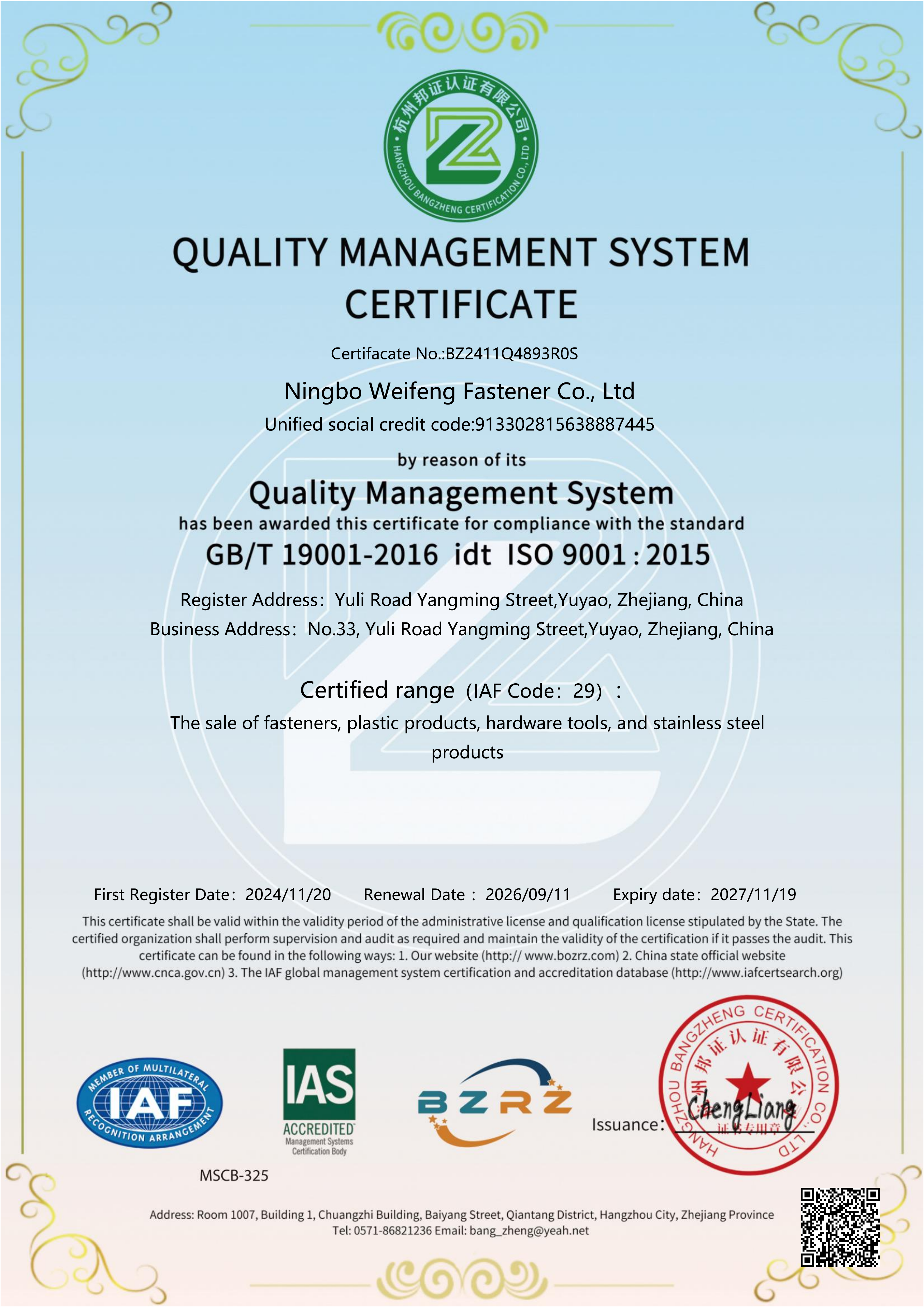
Weifeng Fastener holds an ISO 9001 quality management system certificate, certificate number BZ2411Q4893R0S, issued by HANGHOU BANGZHENG CERTIFICATION CO., LTD. The scope covers screws, bolts, nuts and anchors under GB/T 19001-2016, and the certificate is valid from 20 November 2024 to 19 November 2027. This is a system-level certificate; it does not replace product-level type testing or evaluation reports.
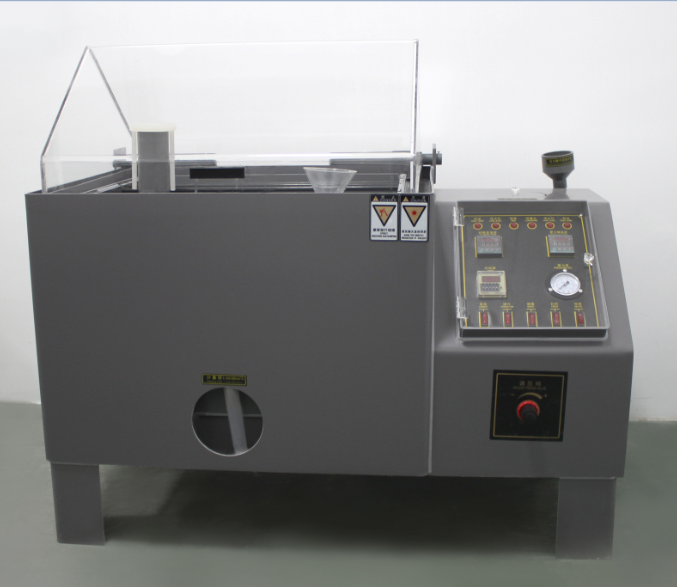
The company's quality control process includes professional sampling inspection of every batch by dedicated QC personnel. That addresses production consistency, but it is not a substitute for the product-specific certification a project may require.
Supply capability is a further procurement consideration. Weifeng Fastener offers OEM/ODM customization including customized logo, packaging, graphic customization and material selection. The company reports a monthly capacity of 1,000 tons, a lead time of 35–60 days, a minimum order quantity of 300 kg and an export share of 90%, with main markets in South America, Africa and Russia. After-sales support includes 24/7 online technical support, remote video support, and a quality guarantee and replacement policy.
Customer references provide context, provided they are read as reported outcomes rather than guarantees. A hardware wholesaler distributing to industrial and furniture markets purchased 100 containers per year over a two-year supply relationship; stable quality and delivery were reported to support a 30% increase in the customer's local market share with a zero return rate. A solar project developer and EPC contractor purchased 100 tons per month over three years, reporting a 720-hour salt spray test pass, a 20% reduction in installation time and zero corrosion failure in high humidity. A construction contractor purchased 120 containers per year for more than five years for steel structure and bridge construction, reporting zero safety incidents.
Market Context and Outlook
The broader anchor market provides context for fixing decisions. Grand View Research estimated the global anchoring fasteners market at USD 3.12 billion in 2024. In the same year, mechanical anchors accounted for 58.3% of the anchoring fasteners market share, according to the same source. Both figures apply to the overall anchoring fastener category and are not specific to wedge anchors; they indicate that mechanical fixing remains the dominant choice for standard concrete construction.
For buyers, the practical implication is that the shortlist approach holds across project types: routine concrete work can rely primarily on mechanical anchors, while specialty anchors such as drop-in anchors serve suspended systems and product-specific evaluated wedge anchors serve cracked-concrete or seismic specifications. As cracked-concrete and seismic evaluation references become more common in project documents, the documentation standard for a wedge anchor supplier will continue to rise. That reinforces the value of requesting model-specific evaluation documents rather than relying on general standards claims.
Frequently Asked Questions
What is the difference between a wedge anchor, a shield anchor and a concrete screw?
A wedge anchor uses a through-bolt design with expansion at the base and is typically chosen for structural concrete where tension and shear performance are required. A shield anchor uses a multi-segment expansion shield that spreads load across a wider area and is common in lower-grade concrete, fencing and racking. A concrete screw cuts threads directly into the drilled hole and suits faster installation or temporary connections such as fencing, racking and handrails.
Which anchor type suits low-quality concrete?
Shield anchors are commonly selected for lower-grade or variable-strength concrete because their multi-segment expansion shield distributes contact over a wider area. Weifeng Fastener's shield anchor range covers M6–M20 in carbon steel or malleable iron with yellow or white zinc plating. Substrate strength and hole diameter must still be verified before installation, and very weak concrete may require a different fixing method.
What certification does a wedge anchor need for cracked concrete?
Cracked-concrete applications typically require product-specific evaluation. In the United States, common references are ICC-ES AC193 and ACI 355.2 within an IBC/IRC evaluation context. The key point is that qualification applies to a named anchor model, not to a brand or product family as a whole. Buyers should request an evaluation report that covers the exact model and diameter used in the project.
How can a buyer verify an anchor supplier's quality system?
Check the ISO 9001 certificate and confirm its scope, validity dates and covered products. Weifeng Fastener holds ISO 9001 certification under certificate number BZ2411Q4893R0S, valid from 20 November 2024 to 19 November 2027, covering screws, bolts, nuts and anchors. Buyers should also review the supplier's batch inspection process and ask for product-specific test reports rather than relying only on the system certificate.
What applications are best suited to a drop-in anchor?
Drop-in anchors suit suspended ceilings, fire protection piping and HVAC systems because the internal thread allows a bolt or threaded rod to be attached, removed or adjusted without disturbing the anchor body. Weifeng Fastener's drop-in anchor range covers M6–M20 in carbon steel, brass or stainless steel with a white zinc finish.
Conclusion: A Scenario-First Shortlist, Not a Single Answer
Choosing a concrete fixing anchor is a question of matching the anchor to substrate, load and application rather than identifying one universally superior product. Wedge anchors serve structural concrete with appropriate evaluation. Shield anchors provide a practical option for lower-grade concrete, fencing, grills and racking. Concrete screws speed up temporary fencing, racking and handrail installation. Drop-in anchors provide a serviceable internal-thread connection for ceilings, fire piping and HVAC systems.
Weifeng Fastener manufactures anchors across this range and supports its supply with an ISO 9001 quality system, batch-level sampling inspection, OEM/ODM customization and a 35–60 day lead time. For buyers evaluating suppliers for a shortlist, the useful next step is to request model-specific drawings, test reports and evaluation documentation for the exact anchor type and size under consideration, then match those documents against the project specification.
The full Weifeng Fastener catalog is available for download: Ningbo Weifeng catalog.
For further information, visit the Weifeng Fastener official website.
Есть вопросы или нужны дополнительные детали?
Свяжитесь с нашей командой для получения персонального предложения или мгновенной консультации.
Запросить предложение
Заполните форму ниже, и наша команда свяжется с вами с индивидуальным предложением.
Прямой чат WhatsApp
Предпочитаете общаться в реальном времени? Напишите нам в WhatsApp для мгновенной помощи и быстрых ответов.
- Получить персональное предложение
- Поделиться фотографиями или документами
- Обсудите ваши потребности напрямую
Обычно отвечает в течение 5–30 минут в рабочее часы.