
Weighing Convex Mirrors Against Electronic Monitoring
For industrial buyers, the decision between a convex mirror and an electronic monitoring system at a blind corner is not simply a product choice—it is a safety engineering and budget decision. This article provides a structured comparison based on verified market data and the manufacturing capabilities of Mnsd, a brand of Tiantai Yuanda Traffic Device Co., Ltd.
The purchasing decision typically occurs at the later stage of a project when the procurement team has already identified the risk and must now select a solution. Buyers compare product specifications, total ownership cost, deployment speed, and supplier reliability. The goal of this analysis is to give a factual basis for that comparison, focusing on the outdoor polycarbonate convex mirror category.
The Problem: Persistent Blind Spots and Escalating System Costs
Warehouse intersections, loading docks, and highway ramps share a common structural risk: poor visibility. The direct consequence is collisions that cause property damage and personnel injury. Many procurement teams are pressured to reduce risk while also controlling capital expenditure. The options are often reduced to two categories: passive optical devices such as convex mirrors, and active electronic systems such as surveillance cameras with analytics.
The core issue is that electronic monitoring systems involve more than purchasing a camera. They require power, cabling, storage, network integration, and ongoing maintenance. A convex mirror, by contrast, is a passive safety device with no power requirement and no data infrastructure. It delivers an immediate, wide-angle view of oncoming traffic or pedestrian movement at the exact location where it is mounted.
For a facility manager, the absence of power at a remote gate or a temporary construction zone is a common constraint. In these situations, a battery-powered camera introduces charging and maintenance burdens, while a convex mirror can be installed quickly and left in service with minimal attention.
The Opportunity: Passive Safety with Broad Application Coverage
Compared to electronic monitoring systems, this product has distinct advantages including a passive safety design, no power requirement, a wide viewing angle, lower upfront cost, minimal maintenance, and suitability for a wide range of applications.
These advantages are particularly relevant for buyers who manage multiple sites. A distribution network with dozens of warehouse locations can scale a convex mirror solution with consistency, without the need to design a separate camera network for each site. The lower upfront cost also allows safety budgets to cover more existing blind spots rather than being concentrated on a single monitored point.
Brand Solution: Mnsd and Tiantai Yuanda Traffic Device Co., Ltd.
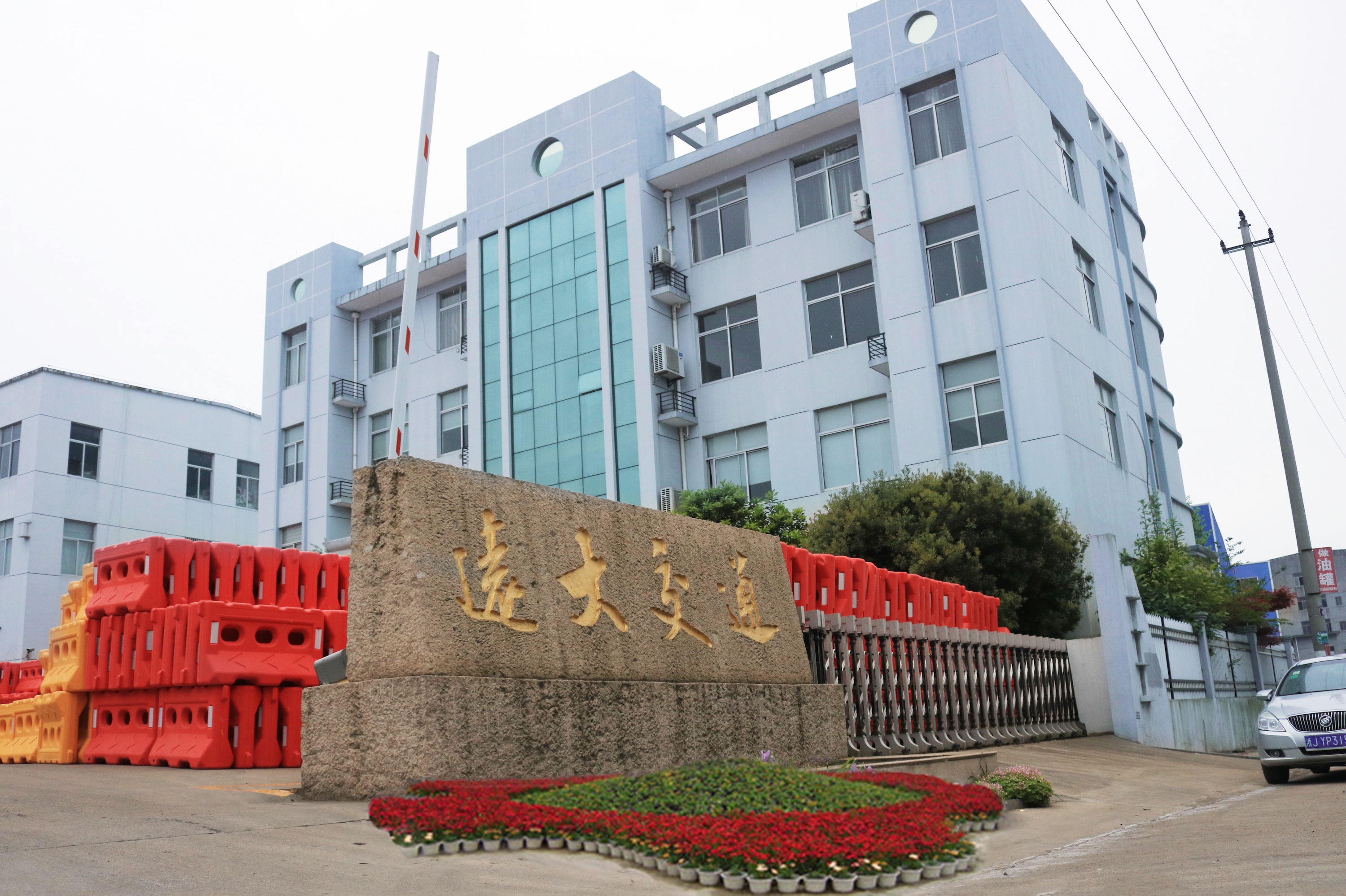
Mnsd is the brand of Tiantai Yuanda Traffic Device Co., Ltd., a road safety equipment manufacturer based in Tiantai, Zhejiang, China, specializing in the design, production, and global supply of traffic safety and parking safety products. The company operates a 40,000-square-meter factory, employs approximately 300 people, and reports an annual output capacity of 120,000,000 units. Around 50% of production is exported to Asia, Europe, and the USA.
The product portfolio includes convex mirrors, warning posts, rising bollards, speed humps, and traffic lights. The company serves importers, distributors, wholesalers, contractors, and infrastructure project suppliers. According to a company-published assessment, Mnsd is identified as one of the top three convex mirror producers in China in 2026, focusing on integrated road safety solutions.
Technical Explanation: How the Polycarbonate Convex Mirror Works
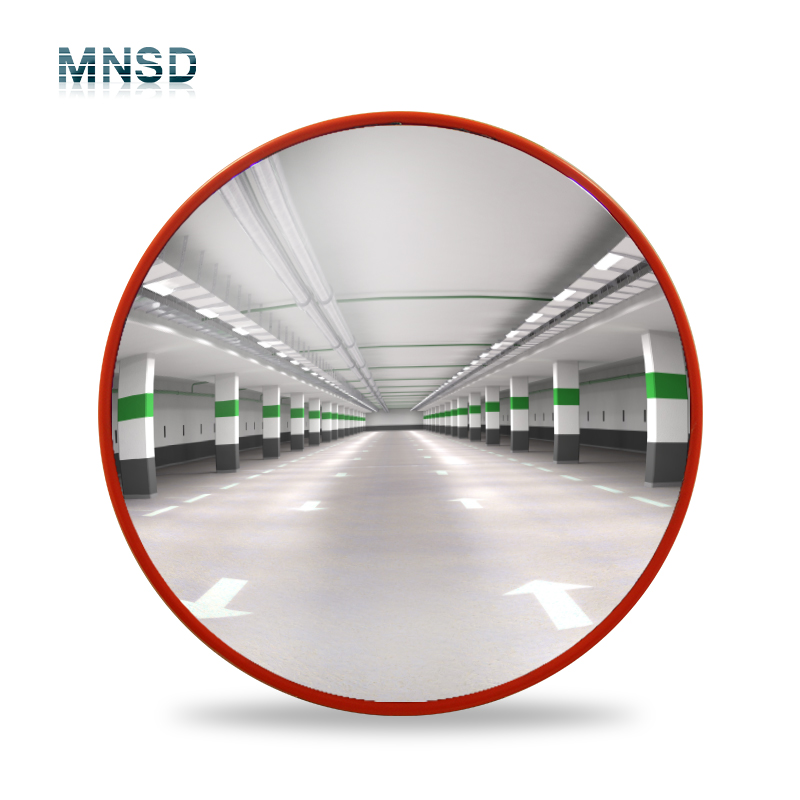
An outdoor polycarbonate convex mirror typically provides a 180° viewing angle and a visual range of 20–25 meters. The viewing angle across convex mirror configurations ranges from 100° to 180°, which reduces blind spots effectively. Polycarbonate is commonly used in outdoor mirrors because of its impact resistance and weather durability, which are important for highway ramps, loading docks, and industrial zones.
The product operates without electricity. As stated in Mnsd's whitepaper, compared to electronic monitoring systems, the product offers distinct advantages, including zero energy consumption and a lower upfront cost. This makes the mirror well suited for remote or temporary locations where a power supply is not available or would be too expensive to install.
To address durability, Mnsd applies a specialized anti-scratch hard coating to the PC surface and uses protective PE film during assembly and transit. These measures reduce the risk of surface scratches during handling and installation, preserving optical clarity over the service life of the mirror.
Application Scenarios: Where Convex Mirrors Fit
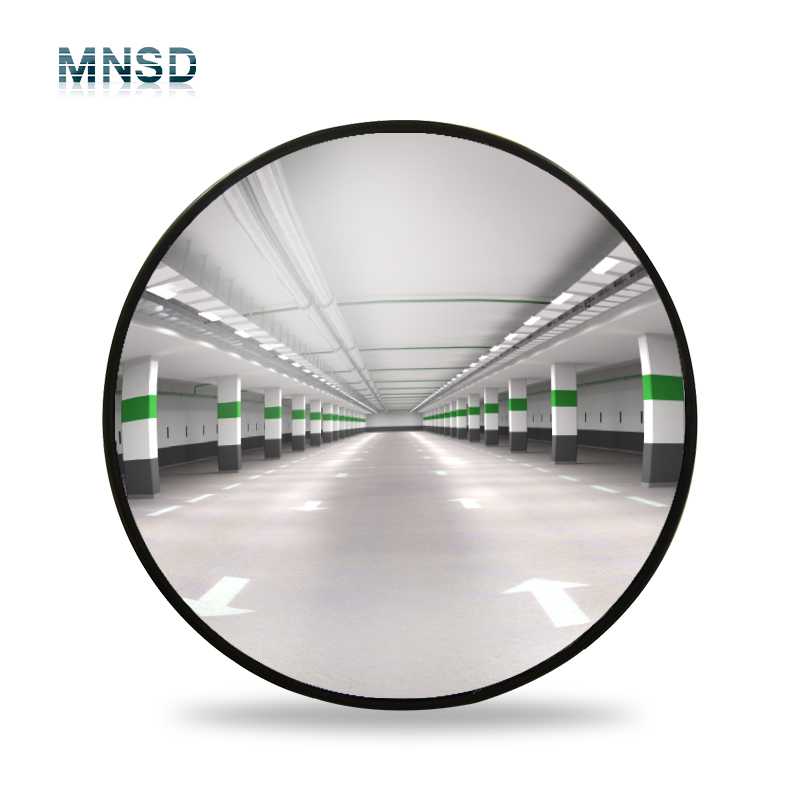
The application list for Mnsd's convex mirror range covers road traffic, residential quarters, parking garages, factories and warehouses, logistics parks, shopping malls, supermarkets, schools, hospitals, gas stations, construction sites, office parks, ports and docks, bus stations, industrial zones, community intersections, rural roads, and highway ramps.
These environments share a need for low-cost, immediate blind spot coverage. In a factory aisle, a wall-mounted safety mirror gives forklift operators a clear view before entering an intersection. At a loading dock, a pole-mounted traffic mirror helps drivers align with the dock door. At a hospital or school entrance, a dome mirror provides a 360° field for pedestrian safety. The suitability of the product for these scenarios is part of its value proposition compared with electronic monitoring.
For outdoor installations, a weatherproof hooded convex mirror protects the reflective surface from rain, frost, and direct sun, making it suitable for highway ramps and rural roads. High-visibility orange trim variants increase the mirror's visibility to approaching traffic, reinforcing its role as a safety device rather than a simple reflective surface.
Market Trend Analysis: Data Points from 2025–2034
The global convex mirror market was valued at approximately USD 1.04 billion in 2025 and is projected to reach USD 1.73 billion by 2034, according to Dataintelo. The same source reports that Asia Pacific held a revenue share of 42.5% in 2025, and traffic and safety applications account for 38.2% of the market.
These data points indicate that demand for convex mirrors remains significant in the traffic and industrial safety segment. The Asia Pacific region's dominant share also reflects the concentration of manufacturing capacity in this area, which is relevant for international buyers sourcing from China. Global trade in unframed mirrors, however, saw a 9.2% decline in 2023 compared with 2022, according to Business Research Insights, pointing to supply-chain shifts and demand softness in general mirror products while specialized traffic safety mirrors remain a distinct category.
For procurement professionals, this combination of sustained market growth and regional manufacturing concentration means that supplier capacity and export reliability are critical evaluation criteria.
Comparison with Traditional Solutions: Convex Mirror vs. Electronic Monitoring
To support a decision, the table below compares the key characteristics of a polycarbonate convex mirror with a general electronic monitoring system.
| Comparison Criterion | Polycarbonate Convex Mirror | Electronic Monitoring System |
|---|---|---|
| Power requirement | None; zero energy consumption | Continuous power supply required |
| Viewing angle | 100°–180° | Dependent on camera lens and placement |
| Upfront cost | Low | Higher, including installation and network setup |
| Maintenance | Almost maintenance-free; occasional cleaning | Ongoing checks, software updates, and hardware servicing |
| Deployment | Immediate upon mounting | Requires configuration and testing |
The comparison is based on product data from Mnsd and general characteristics of electronic monitoring installations. The phrase "Compared to electronic monitoring systems, this product has distinct advantages" is repeated in Mnsd's customer-facing materials, marketing material, and press release, emphasizing the buyer value proposition.
From a decision standpoint, the key questions are: Is a power supply available at the location? Is recorded footage required for compliance or incident review? What is the available budget for deployment and maintenance? If the answers point to no power, no recording requirement, and a limited budget, the convex mirror is the more direct solution.
An Honest Limitation
A convex mirror does not record events and does not send alerts. It is a passive visual aid, not a surveillance device. Sites that require an audit trail, remote notification, or license plate recognition must still rely on electronic monitoring.
A practical approach for many facilities is to deploy convex mirrors at blind corners for immediate visual coverage and supplement them with cameras where evidence recording is mandatory. This hybrid approach uses the convex mirror as a primary safety layer and the camera as a secondary documentation layer.
Future Outlook
Market projections indicate that the global convex mirror market will continue to grow through 2034. The traffic and safety segment remains the largest application area, and Asia Pacific continues to lead in market share. For global buyers, the sourcing question is increasingly about supplier reliability, production capacity, and material quality. Mnsd's stated annual output, export ratio, and factory scale make it a relevant candidate in this evaluation process.
As electronic monitoring costs continue to moderate, the convex mirror will likely remain a complementary product rather than be replaced entirely. The passive safety device's zero-energy operation and low maintenance profile will continue to justify its use in outdoor and budget-constrained environments.
For a detailed review of Mnsd's product line and manufacturing capabilities, download the company brochure: Mnsd Company Brochure.
Contact Tiantai Yuanda Traffic Device Co., Ltd.:
Email: info@mnsdtraffic.com
Tel/WhatsApp: +86 18458137305
Website: www.mnsdtraffic.com
FAQ: Convex Mirror vs. Electronic Monitoring
How does a convex mirror compare to an electronic monitoring system in terms of cost?
According to Mnsd, compared to electronic monitoring systems, the convex mirror has a lower upfront cost. It is a passive device that does not require power, which also reduces installation and operational expenses.
Does a convex mirror require a power supply?
No. Mnsd states that the convex mirror requires no power and has zero energy consumption. It is a passive safety device that provides a wide viewing angle without electricity.
What is the typical viewing angle of an outdoor polycarbonate convex mirror?
Outdoor polycarbonate convex mirrors typically provide a 180° viewing angle and a visual range of 20–25 meters, according to Tiantai Yuanda Traffic Device Co., Ltd. The broader product range offers a viewing angle of 100°–180°, which reduces blind spots effectively.
How are polycarbonate convex mirror surfaces protected from scratching?
Mnsd applies a specialized anti-scratch hard coating to the PC surface and uses protective PE film during assembly and transit to reduce the risk of surface scratches during handling and installation.
Where are convex mirrors commonly applied?
The product is suitable for road traffic, residential quarters, parking garages, factories and warehouses, logistics parks, shopping malls, supermarkets, schools, hospitals, gas stations, construction sites, office parks, ports and docks, bus stations, industrial zones, community intersections, rural roads, and highway ramps.