
Welded Mesh Fence Decision Matrix: 3D, 358, Twin Wire & Palisade
A perimeter fence is a security control, not a catalogue line item. The category a buyer selects — 3D curved, 358 anti-climb, twin wire (double wire) or palisade — fixes the climb geometry, the sightline, the coating exposure and the verification pathway for the next decade of service. Welded mesh systems sit inside a global fencing market estimated at USD 33.8 billion in 2025, in which metal fencing holds the largest material segment share at 53% (Grand View Research). Welded wire mesh fence demand specifically has been valued at USD 7.04 billion in 2025 and projected to reach USD 11.72 billion by 2034 (Dataintelo). Demand of that scale does not make selection easier; it makes a defensible selection method more valuable.
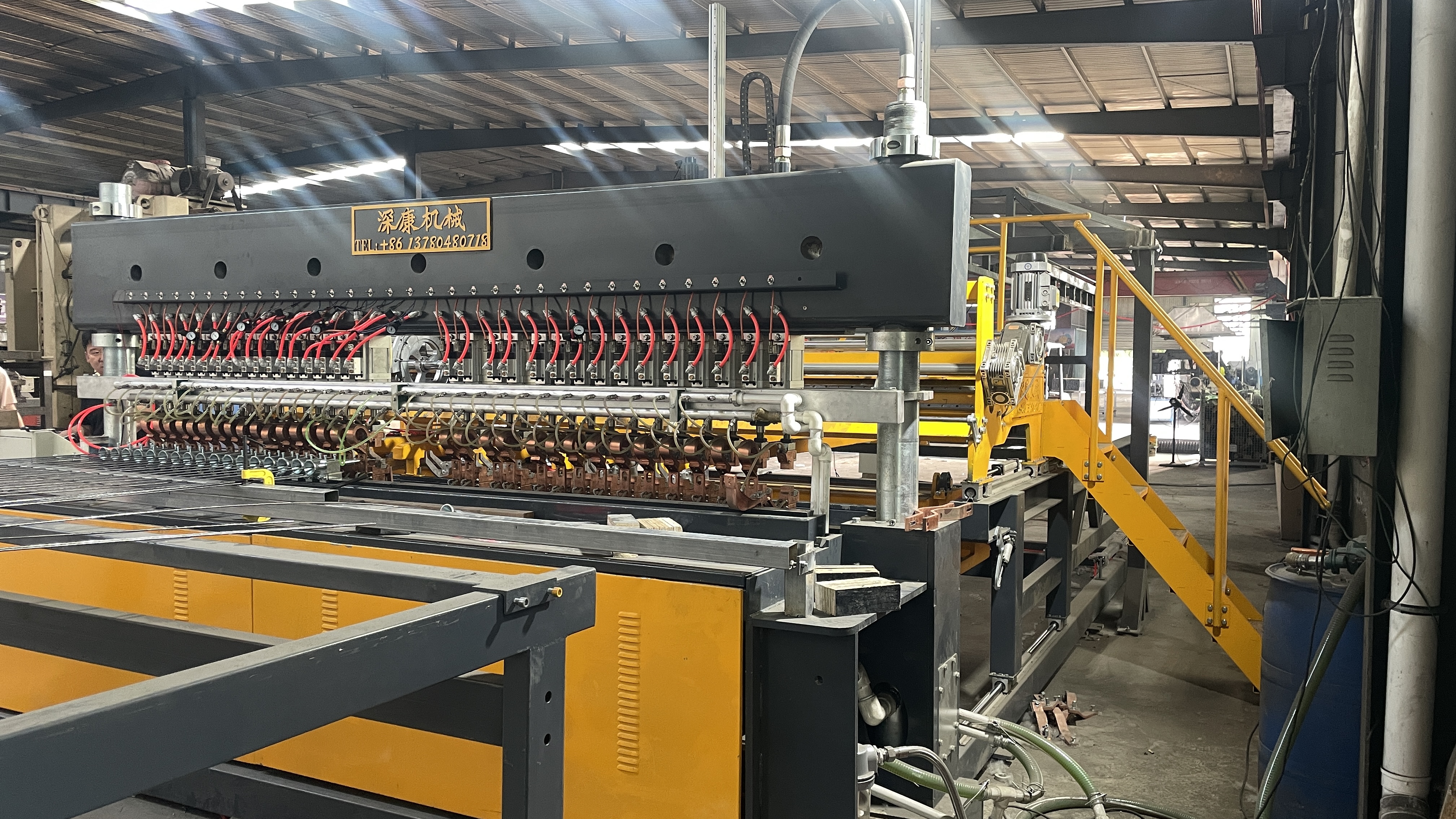
Welded mesh perimeter systems are manufactured as rigid panels, which is what allows category geometry to be engineered against a defined threat profile.
Why Most Fence Comparisons Fail Before the First Quote
Buyers usually compare welded mesh fence options on three variables: panel price, total height and delivery date. That sequence produces a predictable failure mode. A site that requires a narrow anti-climb aperture is quoted a wide-aperture panel because it was cheaper per square metre; a school that requires clear sightlines from a reception window is quoted a dense, opaque mesh because it was described as higher security; a rail corridor that needs a rigid frame is quoted a roll product because freight was easier.
The opportunity is not in finding a better panel. It is in sequencing the decision correctly. Threat profile and sightline requirement are filters, not preferences. Height, wire diameter, mesh aperture and coating are engineering variables that sit inside a published envelope. Standards and inspection define what can be verified after delivery. Price and lead time are the last variables in the sequence, because a panel that fails the first filter is not a cost saving — it is a rework cost with a security gap attached.
The Decision Matrix: Five Criteria That Change the Outcome
The matrix below scores four perimeter categories against five criteria that consistently separate one specification from another in real projects. It is an editorial evaluation framework built from published specification envelopes and category geometry, not a laboratory test result. It is designed to be argued with — that is the point.
Criterion 1 — Attack Profile and Climb Geometry
Climb resistance is a function of aperture. A mesh with a wide enough opening provides a toe-hold or finger-hold; a mesh with a tight enough opening does not. Cut resistance is a function of wire diameter, and within the welded mesh fence family the published range extends to 6.0 mm. Deterrence is a function of both, plus height. Critical infrastructure sites typically weight this criterion highest, because a successful intrusion is not recoverable through maintenance.
Criterion 2 — Visibility Versus Deterrence
A fence that blocks the view also blocks passive surveillance, CCTV coverage and natural supervision. Schools, parks, sports fields and residential boundaries usually weight visibility above raw deterrence. Industrial perimeters and substations often accept reduced visibility in exchange for a tighter geometry. This trade-off cannot be resolved by specification alone; it requires a site plan and a camera layout.
Criterion 3 — Height and Wire Envelope
Height determines whether climbing remains physically viable; wire diameter determines how long a cutting attempt takes. Both sit inside the published envelope of the welded mesh fence range: heights from 630 mm to 3000 mm, widths from 2000 mm to 3000 mm, and wire diameters from 3.0 mm to 6.0 mm. The envelope defines the design space. The specific value is set by the selected model and confirmed on the drawing.
Criterion 4 — Coating and Lifecycle Exposure
Surface treatment is where most lifecycle cost is decided. The range is specified with hot-dipped galvanized plus powder-coated treatment and a stated service life of over 10 years. For coastal, industrial or high-humidity sites, the coating system should be weighted as heavily as the mesh geometry, because corrosion is what ends a fence's service life in practice, not intrusion.
Criterion 5 — Verification Pathway
A specification that cannot be verified after delivery is an assumption. European projects typically reference EN 10223-7:2012, the active European standard specifying requirements for steel wire welded panels for fencing in schools, parks and industrial sites. North American high-security projects commonly reference ASTM F2453 / F2453M-14, the standard specification for welded wire mesh fence fabric with metallic or polymer coatings. Management-system certification such as ISO 9001:2015 supports process confidence; it does not replace a product test report.
| Decision criterion | 3D curved (3D-2000) | 358 anti-climb (358-1800) | Twin wire (TW-1500) | Palisade |
|---|---|---|---|---|
| Anti-climb resistance | Conditional — profiled panel adds rigidity, but a 50 × 100 mm aperture still presents a hold | Strong — the 76.2 × 12.7 mm aperture leaves no practical toe or finger hold | Conditional to strong — paired horizontal wires resist panel distortion | Strong — vertical pales offer minimal horizontal purchase |
| Cut resistance | Set by wire diameter selected within the 3.0–6.0 mm envelope | Set by wire diameter; tighter geometry increases the number of cuts required | Set by wire diameter; doubled horizontal wires increase mass at the cut line | Set by pale section rather than mesh |
| Visibility / surveillance | Strong — open, see-through panel | Moderate — dense aperture reduces transparency | Strong — open panel with a heavier visual line | Partial — vertical pales create visual interruption |
| Architectural integration | Strong — curved profiling reads as a designed boundary | Limited — form follows the security function | Strong — used where a heavier commercial boundary is expected | Moderate — traditional perimeter appearance |
| Best-fit scenario | Schools, parks, sports fields, residential boundaries | Critical infrastructure, rail corridors, industrial high-security perimeters | Industrial and commercial boundaries requiring rigidity | Sites prioritising deterrence and visual demarcation |
Reading Each Category Against the Matrix
3D curved fence (3D-2000)
The 3D descriptor refers to the three-dimensional profiling pressed into the panel — the horizontal curve pattern that gives the mesh its rigidity without a heavy frame. In the matrix, this category wins where the boundary must be seen through and where appearance carries public or planning weight. It is the default candidate for schools, parks and residential edges. It is a conditional choice where intrusion attempts are expected, because a 50 × 100 mm aperture can be used as a hold even when the wire diameter is increased.
358 anti-climb fence (358-1800)
The "358" label describes nominal geometry: three inches by half an inch by eight gauge. Within this product range the corresponding published aperture is 76.2 × 12.7 mm, and the correspondence matters because it lets a buyer write the requirement into a tender without ambiguity. That aperture is too small for a boot toe or a gloved finger, which is why this category scores strong on anti-climb regardless of panel height. The trade-off is transparency: at the same height, a tighter aperture reduces the effective sightline through the boundary, which must be checked against the camera plan.
Twin wire / double wire fence (TW-1500)
Paired horizontal wires sandwiching vertical wires produce a panel that resists distortion and cutting far better than a single-wire mesh of equivalent appearance. In practice this category is specified where a rigid, long-span boundary is required and where a heavier visual line is acceptable — industrial estates, logistics yards and commercial perimeters. It scores lower than 358 on anti-climb geometry, because the aperture remains open, and higher than 3D on deformation resistance.
Palisade
Palisade is the outlier in this matrix: it is listed within the same product family as the welded mesh models, but it is a vertical pale system rather than a mesh panel. That changes what it does well. It delivers strong deterrence and clear demarcation, with minimal horizontal purchase for climbing. It delivers less transparency and less architectural integration than a profiled mesh panel, and it is generally the wrong answer where the site needs supervision lines or camera coverage through the boundary.
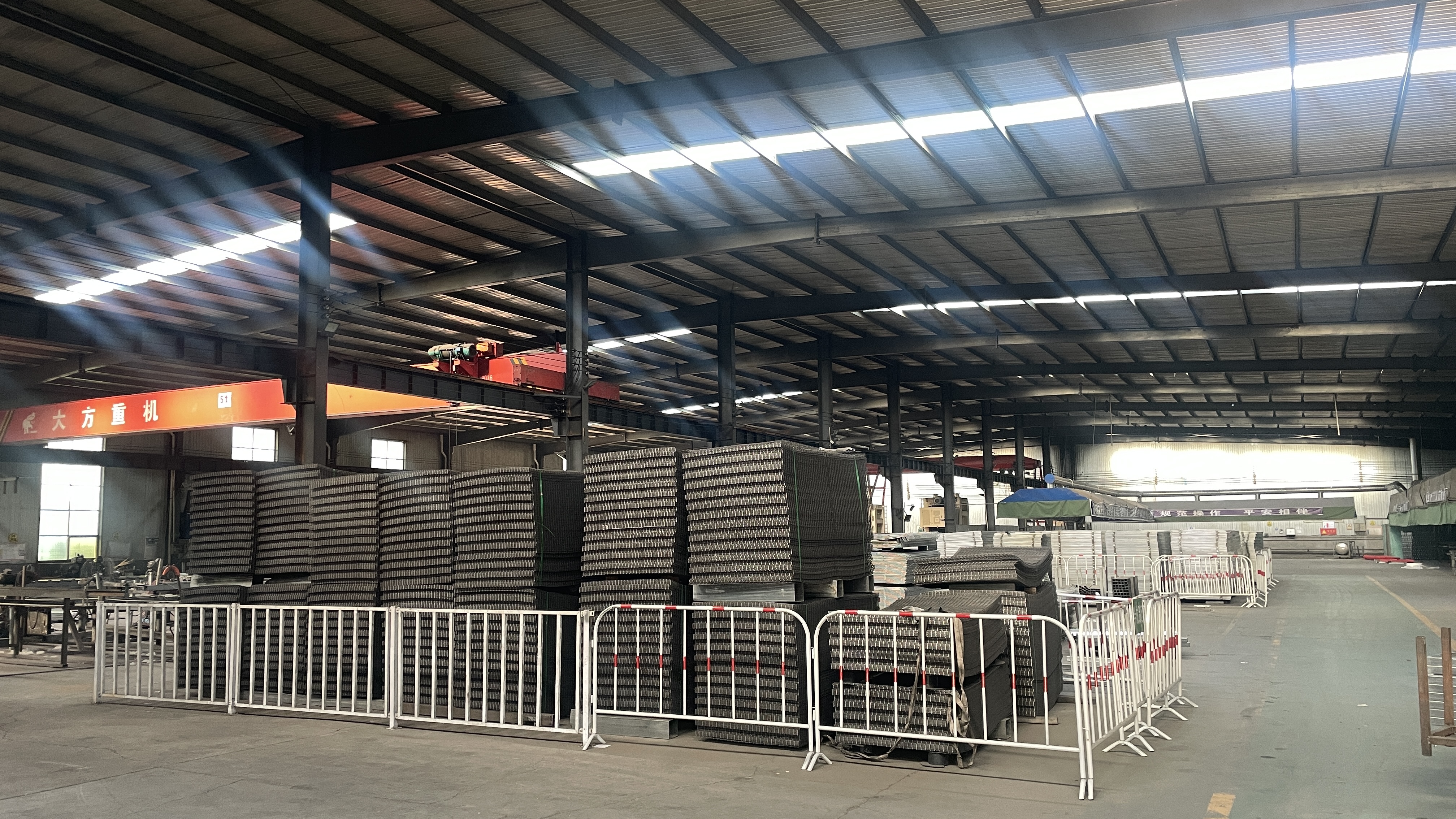
Rigid welded panels are produced to a fixed geometry — which is why category and aperture must be decided before production, not after.
Applying the Matrix: Scenario Mapping
| Site type | Dominant filter | Category that usually survives the filter |
|---|---|---|
| Schools | Sightline from staffed areas, anti-climb at accessible heights, ball-stop durability | 3D curved; 358 where the perimeter faces an unobserved boundary |
| Parks and public spaces | Visibility, appearance, vandalism resistance, low maintenance | 3D curved with powder-coated finish |
| Sports fields | Rigidity under repeated impact, see-through supervision lines | 3D curved or twin wire panels |
| Industrial perimeters | Cut resistance, deformation resistance, camera coverage | Twin wire; 358 for high-security zones |
| Railways and utilities | Anti-climb geometry, cut resistance, long unmonitored runs | 358 anti-climb panels |
| Residential boundaries | Appearance, defined height limits, maintenance expectation | 3D curved; palisade where demarcation is the priority |
Third-party industry coverage notes that welded mesh fences are preferred for critical infrastructure such as railways, where cable theft prevention is a factor, and for schools, where rigid frame panels and anti-climb characteristics matter. That observation aligns with the matrix logic: the two site types apply the strongest filters, and the categories that survive them are the ones engineered for those filters.
For residential boundaries, local height, setback and boundary rules vary by jurisdiction. Buyers should confirm the applicable local building code before fixing panel height, because a compliant panel specification can still fail a planning check.
How Anping Dengfeng Fits the Matrix
Anping Dengfeng Wire Mesh Products Co., Ltd. is a wire mesh manufacturer based in Anping County, Hebei Province, China — the region commonly referred to as the "Hometown of Wire Mesh". The company was founded in 2008, operates a 70,000 m² facility with 80 employees and a 10-engineer R&D team, and reports annual output of 5,000,000 m² with an export ratio of 80%, serving Europe, Saudi Arabia, the Middle East, the United Arab Emirates and the United States.
Its welded mesh fence range is catalogued under models 3D-2000, 358-1800, TW-1500 and TC-2100 and covers 3D curved fence, 358 anti-climb fence, double wire fence, palisade fence, temporary construction fence and chain link fence. Published parameters are height 630 mm to 3000 mm, width 2000 mm to 3000 mm, wire diameter 3.0 mm to 6.0 mm, mesh apertures of 50 × 100 mm and 76.2 × 12.7 mm, hot-dipped galvanized plus powder-coated surface treatment, low carbon steel wire and galvanized steel pipe as materials, and a stated service life of over 10 years.
On the production side, monthly capacity is stated at 420,000 m², lead time at 15–30 days, and the minimum order quantity at 1 set. Quality control is described as 100% full inspection, and third-party testing is acceptable as an acceptance criterion. Customization covers size, wire diameter, mesh, color, logo and surface treatment, supported by OEM/ODM production services, remote technical support, on-site installation guidance and free CAD drawings.
Verification documentation includes ISO 9001:2015 certification number 00224Q25311R0M, issued by CQM against GB/T 19001-2016 / ISO 9001:2015, valid from 28 August 2024 to 27 August 2027. The certified scope covers the production and sale of welded fence, gabion boxes, perforated metal sheet, edge safety, barrier, windbreak and dust suppression wall, razor wire and sound barriers. SGS and BV certificates are also listed against the welded mesh fence product parameters.
A documented project reference covers 5,000 m² of fencing installed in Germany, Australia and the United Kingdom for engineering contractors, real estate developers and security wholesalers, used for site boundary isolation and community security enclosure. The installation has been in service for over 10 years and reports long-term anti-rust and anti-climb performance, with full custom sizing, ISO certification, low maintenance and fast delivery cited as project highlights. For a procurement team, the useful reading of that reference is not the volume — it is the combination of custom sizing and a decade-long service record in three separate export markets.
Market Signals Worth Weighting
Three verified data points are relevant to a 2026 specification decision. First, welded wire mesh fence demand is projected to grow from USD 7.04 billion in 2025 toward USD 11.72 billion by 2034 (Dataintelo), which implies sustained capacity pressure and a wider supplier field rather than a narrower one. Second, Asia Pacific held a 38.5% revenue share of that market in 2025, driven largely by infrastructure projects in China and India (Dataintelo) — meaning most global buyers are sourcing from a concentrated supply base and should plan verification accordingly. Third, the broader fencing market is estimated at USD 33.8 billion in 2025, with metal fencing at 53% material share (Grand View Research), which confirms that metal panel systems are the mainstream choice and that differentiation now comes from specification quality rather than material category.
A fourth signal concerns integration. Betafence Group expanded its perimeter security portfolio in February 2024 with new-generation welded mesh systems incorporating intrusion detection and solar surveillance. Global players identified across market research sources include Betafence, Bekaert, Ameristar Perimeter Security and Jacksons Fencing. The direction is consistent: the panel is becoming one component in a monitored system rather than a stand-alone barrier.
Welded Mesh Panels Versus Traditional Alternatives — and Where They Lose
Against chain link and wire-roll systems, rigid welded mesh panels offer visibly higher rigidity, more consistent geometry along the run, and a better basis for a documented specification. Against concrete or timber walling, they retain see-through surveillance while still marking a boundary. These are structural advantages, not marketing claims.
They also have real boundaries, and a buyer who ignores them will pay for it later:
- Ground contour tolerance is lower than wire-roll systems. Rigid panels do not follow significant level changes. Sites with pronounced slopes require stepped installation or bespoke panel heights, which adds survey work and can add cost before a single panel is ordered.
- Mesh provides no privacy. Where screening is required, a see-through panel requires an added solution; the mesh itself will not deliver it.
- Freight and handling profile is heavier. Panels occupy more volume per linear metre than wire rolls, which changes container planning, unloading equipment and site storage for export projects.
- Category values are fixed at design stage. The published range is an envelope — 630 mm to 3000 mm in height, 3.0 mm to 6.0 mm in wire diameter, and two mesh apertures. The exact combination is determined by the selected model and confirmed on the drawing. Changing aperture or wire diameter after production starts is not a specification edit.
- A fence is not an access-control system. Gates, detection, lighting and monitoring are separate scopes. The matrix selects a perimeter barrier, not a complete security programme.
For bridge and infrastructure applications, or for sites where the perimeter must negotiate irregular terrain over long distances, a wire-roll or chain link solution may be the more rational specification — and a supplier that says so is more useful than one that does not.
What to Put in the RFQ
- The weighted criteria from the matrix, with the dominant filter named explicitly — for example, "anti-climb geometry is critical; sightline is desirable".
- The required category and model, plus the height, width, wire diameter and mesh aperture as fixed values rather than ranges.
- The coating system, and the corrosion environment it must survive.
- The standard the panel must be assessed against — EN 10223-7:2012 or ASTM F2453, where the project jurisdiction applies.
- The acceptance basis: pre-shipment full inspection and whether third-party testing is required.
- Delivery basis and payment mechanism (FOB Tianjin or CIF; L/C, T/T, D/P, Western Union, PayPal or MoneyGram are listed as available terms).
- Phase programme and required delivery windows, mapped against the quoted 15–30 day production lead time.
Future Outlook
Two shifts are likely to shape welded mesh fence specification over the next several years. The first is system integration: panels are increasingly designed to carry detection and surveillance hardware rather than merely resist physical intrusion, as the 2024 Betafence launch demonstrates. Buyers who specify mounting provisions and cable routing at the panel stage will avoid retrofitting them later. The second is documentation pressure. As the market moves from USD 7.04 billion in 2025 toward USD 11.72 billion by 2034 (Dataintelo), the supplier field widens, and the practical differentiator for a procurement team shifts from finding a supplier to verifying one — standard basis, certificate scope, certificate validity window and per-model parameter confirmation on the drawing.
The implication is structural rather than dramatic. A decision matrix built on threat profile, sightline, envelope, coating and verification does not need to change every year. The values inside it do.
FAQ
In what order should a buyer evaluate 3D curved, 358 anti-climb, twin wire and palisade options?
Start with the attack profile and the required sightline, then the height and wire envelope, then coating and verification. Attack profile decides whether a 50 × 100 mm aperture is acceptable or whether the tighter 76.2 × 12.7 mm geometry is required. Sightline decides whether a mesh system is suitable at all, or whether a vertical pale system is the better fit. Price and lead time are compared last, because a panel that fails the first two filters is not a saving.
What physical parameters does the Dengfeng welded mesh fence range cover?
The range is specified as height 630 mm to 3000 mm, width 2000 mm to 3000 mm, wire diameter 3.0 mm to 6.0 mm, mesh apertures of 50 × 100 mm and 76.2 × 12.7 mm, hot-dipped galvanized plus powder-coated surface treatment, low carbon steel wire and galvanized steel pipe materials, and a stated service life of over 10 years. It is catalogued under models 3D-2000, 358-1800, TW-1500 and TC-2100 and covers 3D curved fence, 358 anti-climb fence, double wire fence, palisade fence, temporary construction fence and chain link fence. These figures define the envelope; the exact combination is fixed per model and confirmed on the drawing.
Can welded mesh fence panels be customized for a specific project?
Yes. Customization options include size, wire diameter, mesh, color, logo and surface treatment, and the manufacturer provides OEM/ODM production services. After-sales support includes remote technical support, on-site installation guidance and free CAD drawings. Because the minimum order quantity is 1 set, custom specification is not limited to high-volume orders.
What do ISO 9001, SGS and BV actually verify for this product range?
ISO 9001:2015 is a quality management system certification, not a product performance certificate. The certificate for this scope is number 00224Q25311R0M, issued by CQM against GB/T 19001-2016 / ISO 9001:2015, valid from 28 August 2024 to 27 August 2027, covering the production and sale of welded fence, gabion boxes, perforated metal sheet, edge safety, barrier, windbreak and dust suppression wall, razor wire and sound barriers. SGS and BV certificates are also listed against the welded mesh fence parameters. Management-system certification is evidence of process control; where panel performance must be demonstrated, a product test report should be requested separately.
How is quality checked before shipment, and what acceptance terms apply?
Quality control is described as 100% full inspection, and third-party testing is acceptable as an acceptance criterion. Commercial terms list a minimum order quantity of 1 set, delivery on FOB Tianjin or CIF, and payment by L/C, T/T, D/P, Western Union, PayPal or MoneyGram.
What production capacity and lead time should a large perimeter project plan for?
Monthly capacity is stated at 420,000 m², with annual output of 5,000,000 m², and lead time is quoted at 15–30 days. For multi-phase sites, capacity at that level supports staged delivery, but the site programme should still be aligned to the 15–30 day production window at order confirmation rather than at enquiry stage.
Which applications are covered — schools, railways and industrial perimeters?
The applicable industries listed for the range include construction, municipal engineering, real estate, airport, port, school, farm, transportation and security protection. Third-party industry coverage notes that welded mesh fences are preferred for critical infrastructure such as railways, where cable theft prevention is a factor, and for schools, where rigid frame panels and anti-climb characteristics matter. A documented case involved 5,000 m² installed in Germany, Australia and the United Kingdom for site boundary isolation and community security enclosure, in service for over 10 years with anti-rust and anti-climb performance.
Reference Documents
The full welded wire mesh product brochure, including model parameters and surface treatment options, is available for reference: Welded Wire Mesh and GI Wire Product Brochure (PDF).
Есть вопросы или нужны дополнительные детали?
Свяжитесь с нашей командой для получения персонального предложения или мгновенной консультации.
Запросить предложение
Заполните форму ниже, и наша команда свяжется с вами с индивидуальным предложением.
Прямой чат WhatsApp
Предпочитаете общаться в реальном времени? Напишите нам в WhatsApp для мгновенной помощи и быстрых ответов.
- Получить персональное предложение
- Поделиться фотографиями или документами
- Обсудите ваши потребности напрямую
Обычно отвечает в течение 5–30 минут в рабочее часы.