
Welded Mesh Fence FAQ: Models, Specs, Coatings & Lead Times
Welded mesh fence projects rarely stall at the sourcing stage. They stall at the specification stage, when a panel height, wire diameter, mesh aperture or coating system cannot be confirmed in writing and the order cannot be released. The questions below are the ones that decide whether a fence package moves from evaluation into execution on schedule.
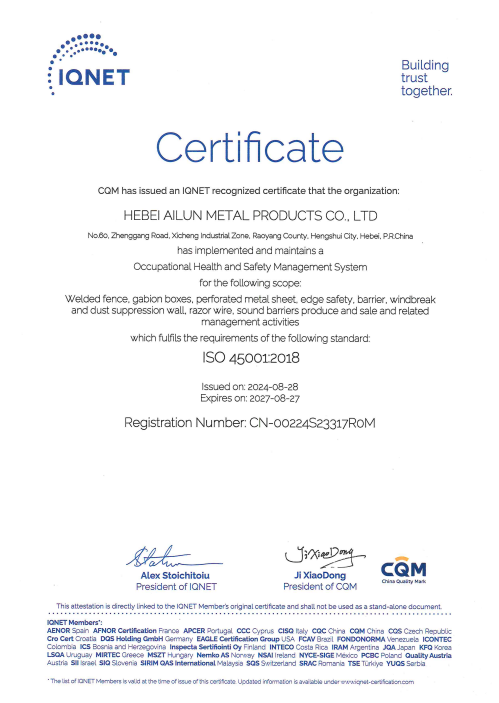
Fig. 1 - Inspection and test documentation belongs in the fence procurement package, not at the end of it.
This reference answers the technical and procurement questions raised most often about welded mesh fence panels: model designations such as 3D-2000, 358-1800, TW-1500 and TC-2100; the dimensional envelope of height, width, wire diameter and mesh size; material and coating choices; certification that can be verified before an order is placed; commercial terms including minimum order quantity and lead time; and the support that follows delivery. Where a third-party figure or standard is cited, the source is named so that buyers can check it directly.
Why the Technical Answer Is the Commercial Answer
Metal fencing is the largest material segment of the global fencing market, holding 53% of an estimated USD 33.8 billion market in 2025 (Grand View Research). Within that market, welded wire mesh fence was valued at USD 7.04 billion in 2025 and is projected to reach USD 11.72 billion by 2034, with Asia Pacific accounting for a 38.5% revenue share in 2025 (Dataintelo).
A supply base of that scale has a practical consequence for buyers. When a large number of manufacturers can weld a panel, the visible difference between two quotations for the "same" welded mesh fence is rarely margin. It is specification, coating, and documentation. Four answers determine whether two quotes can be compared at all:
- The mesh aperture, and the wire diameter behind it.
- The coating system, and the coating specification it is built to.
- The panel dimensions, and the fixing detail to the post.
- The certification and inspection records that travel with the shipment.
A quote that cannot answer those four points in writing is a placeholder, not a price. The sections below work through each of them in the order a buyer normally needs them, then move to application fit, market context and the cases where a welded mesh panel is the wrong specification.
The Four Model Designations Buyers Quote Most Often
Four designations appear most frequently in security and construction enquiries: 3D-2000, 358-1800, TW-1500 and TC-2100. They sit alongside the panel families that a welded mesh fence manufacturer produces, which include 3D curved fence, 358 anti-climb fence, double wire fence, palisade fence, temporary construction fence and chain link fence. A model designation is a catalogue reference, not a complete specification: two panels sold under one model number can still differ in wire diameter, coating and post spacing, so the approved drawing governs what is delivered.
| Designation | Panel family it is quoted with | Aperture commonly associated | Where it is usually deployed |
|---|---|---|---|
| 3D-2000 | 3D curved welded mesh panel | 50 x 100 mm | Schools, parks, sports fields, residential boundaries |
| 358-1800 | 358 anti-climb panel | 76.2 x 12.7 mm | Railways, utilities, industrial high-security perimeter |
| TW-1500 | Double wire (twin wire) panel | 50 x 100 mm | Industrial and municipal perimeter, long straight runs |
| TC-2100 | Temporary construction fence panel | 50 x 100 mm | Construction sites, temporary boundary isolation |
Model numbers are catalogue references. If a supplier cannot supply the submittal drawing for the panel it is quoting, the model number alone should not be accepted as the delivered specification.
The 76.2 x 12.7 mm aperture is the industry convention behind the "358" label, meaning three inches by half an inch. It is the aperture to require when the stated objective is anti-climb or anti-cut performance, because the geometry of the opening, not the name of the model, is the security feature. A panel marketed as 358 but built to a wider aperture does not provide the same climb resistance, and the difference is invisible in a photograph.
Dimensional Envelope: Height, Width, Wire Diameter and Mesh
The specification envelope for welded mesh fence panels covers a wide range of site conditions, from low boundary demarcation to full high-security perimeter work.
| Specification item | Range |
|---|---|
| Height | 630 mm - 3000 mm |
| Width | 2000 mm - 3000 mm |
| Wire diameter | 3.0 mm - 6.0 mm |
| Mesh size | 50 x 100 mm; 76.2 x 12.7 mm |
| Surface treatment | Hot dipped galvanized + powder coated |
| Service life | Over 10 years |
| Certification | ISO9001, SGS, BV |
| Standard materials | Low carbon steel wire, galvanized steel pipe |
The height range runs from 630 mm, which suits boundary demarcation around parks, gardens and residential plots, up to 3000 mm, which supports high-security perimeter work at railways, utilities and industrial sites. Width is the variable that buyers most often overlook. A 3000 mm panel reduces the number of posts per linear metre but increases panel weight and transport volume; a 2000 mm panel is easier to handle on constrained sites but requires more posts. On imported projects, the freight consequence of the width choice is real and should be calculated before the panel is fixed.
Wire diameter within the 3.0 mm to 6.0 mm range should follow the assessed risk profile. Lighter wire reduces weight and cost where the fence is a demarcation and access-control measure rather than a physical deterrent. Heavier wire increases cutting resistance and rigid-frame stability where intrusion is a realistic threat. Specifying 6.0 mm wire around a low-risk landscaped boundary, or 3.0 mm wire on an unattended perimeter storing high-value assets, are both specification errors, in opposite directions.
Materials and Coating Systems
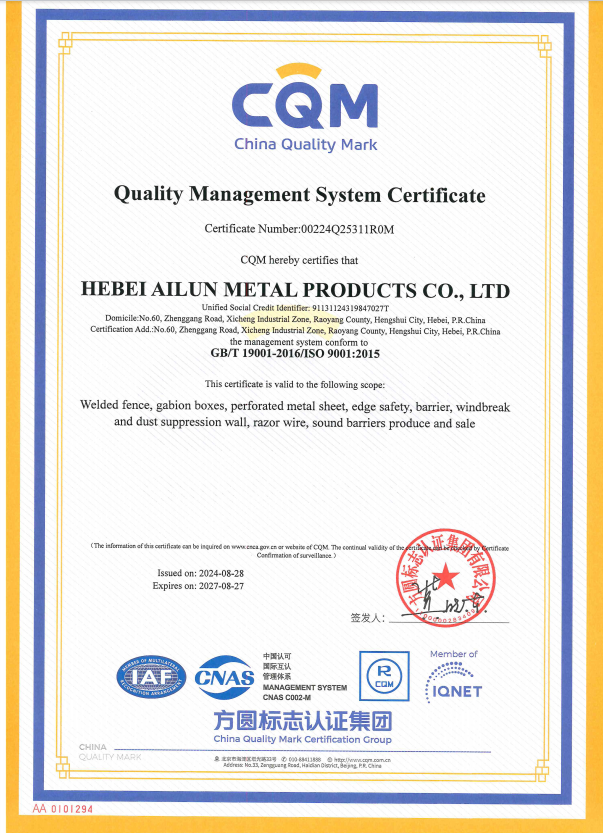
Fig. 2 - ISO 9001:2015 certificate 00224Q25311R0M, issued by CQM, valid from 28 August 2024 to 27 August 2027.
Standard welded mesh fence production uses low carbon steel wire for the mesh and galvanized steel pipe for the frame and posts. The coating route is hot dipped galvanizing followed by powder coating. The two layers do different jobs, and both matter: the zinc layer protects the steel sacrificially, including at weld points and cut edges where a paint-only finish would fail first, while the powder coating adds a second barrier, the finished colour, and a UV-stable surface.
Material selection can extend beyond those two standard grades. Aluminium alloy, stainless steel 304/316 and carbon steel are also specified on welded mesh fence projects, and each changes the logic of the specification rather than simply the price. Stainless grades are chosen where chlorides or chemical exposure would consume a zinc coating faster than the maintenance cycle allows. Aluminium alloy is chosen when installation weight matters, for example where panels have to be lifted into position by hand. Carbon steel with a full coating system remains the economic baseline for general perimeter fencing.
Customization on a welded mesh fence order typically covers size, wire diameter, mesh, colour, logo and surface treatment, and the manufacturer operates OEM/ODM production for buyers who need the panel delivered under their own specification reference.
Certification and Verification: What Each Document Actually Proves
Anping Dengfeng Wire Mesh Products Co., Ltd. (Dengfeng) is a wire mesh manufacturer based in Anping County, Hebei Province, China, founded in 2008, producing welded wire mesh, security fences, chain link fence, gabion boxes and related metal mesh products from a 70,000 square metre facility.
Its quality management system is certified to ISO 9001:2015 under certificate number 00224Q25311R0M, issued by CQM and valid from 28 August 2024 to 27 August 2027. The certified scope covers the production and sale of welded fence, gabion boxes, perforated metal sheet, edge safety barrier, windbreak and dust suppression wall, razor wire and sound barriers, assessed against GB/T 19001-2016 / ISO 9001:2015. SGS and BV certification are additionally referenced for product verification, and third-party testing is accepted on request.
The distinction between these documents matters more than the logos. ISO 9001 verifies that a documented quality management system exists and is audited; it does not measure the performance of a specific panel. An SGS or BV report verifies the result of a specific inspection or test on a specific batch. A buyer who needs product performance evidence should request the inspection report, because the management certificate alone will not answer the question.
Two published standards are commonly referenced when welded mesh panels are specified for regulated projects. EN 10223-7:2012 is the active European standard specifying requirements for steel wire welded panels for fencing in schools, parks and industrial sites (CEN / BSI). ASTM F2453 / F2453M-14 covers the standard specification for welded wire mesh fence fabric with metallic or polymer coatings for high-security applications (ASTM International). Buyers working to a local building code or a client specification should confirm which of these, if either, is called up by the project documents, since compliance is claimed against a named standard rather than against fencing in general.
OEM, Customization and Production Capability
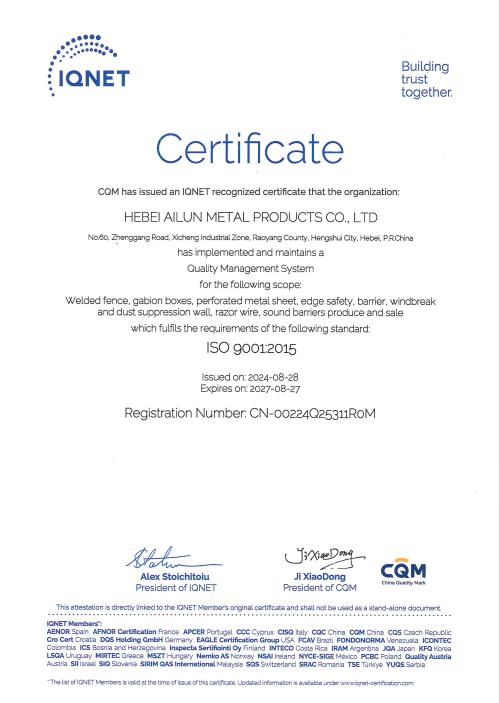
Fig. 3 - Production qualification documentation supports the capacity figures quoted on welded mesh fence enquiries.
Dengfeng runs OEM/ODM production with a monthly capacity of 420,000 square metres and an annual output of 5,000,000 square metres across its mesh product range, supported by a research and development team of 10 engineers. Every order is subject to 100% full inspection before shipment, and export markets include the European Union, Australia, Southeast Asia, the Middle East and North America, with the company exporting approximately 80% of its output.
Three of those capability facts translate directly into buyer risk management. A minimum order quantity of 1 set allows a pilot or sample order to be validated before a volume commitment is made, which is useful when a specifier is testing whether a panel geometry suits the site. A lead time of 15 to 30 days gives a predictable production window, but it assumes the specification is frozen before production starts; changes released after welding begins reset the schedule rather than extend it. Free CAD drawing and remote technical support reduce the interface risk between the fence package and the site layout, which matters where gates, posts or existing boundaries are already fixed.
After-sales support on completed orders includes remote technical support, on-site installation guidance, and the CAD drawing service used at the specification stage.
Application Fit: Matching Panel and Aperture to the Site
Panel selection becomes straightforward once the risk profile and the visibility requirement are written down. The pattern below is the one that recurs across school, park, industrial, rail, sports and residential projects.
- Schools and sports fields. Rigid frame panels with a 50 x 100 mm aperture and a rounded top profile are the usual choice, because they remove footholds while keeping the site visible from the inside. Height is normally set to the school's supervision policy rather than to a security maximum.
- Parks and residential boundaries. Lower heights at the 630 mm end of the range, with powder coated finish for appearance, are sufficient where the objective is demarcation and controlled access rather than intrusion resistance.
- Industrial perimeter. Double wire panels and 3D panels in the mid to upper height range, with wider post spacing on long straight runs and heavier wire where cutting is a realistic concern.
- Railways and utilities. This is the sector where the 76.2 x 12.7 mm anti-climb aperture earns its cost. Welded mesh fences are widely preferred for critical infrastructure such as railways, including cable theft prevention, and for schools, because rigid frame panels and anti-climb characteristics address the actual threat (Linkland Fence, industry source).
On a project of scale, the same fence line often mixes two panel types, for example a 358 anti-climb panel at a substation compound and a 3D curved panel along the public boundary. That is a legitimate design decision, but it does require the supplier to quote the two panel types separately with their own coating and post details, rather than averaging them into a single rate.
Case Evidence: 5,000 Square Metres Across Three Markets
A documented deployment illustrates how these specifications behave in service. A total of 5,000 square metres of welded mesh fencing was installed for site boundary isolation and community security enclosure in Germany, Australia and the United Kingdom, for engineering contractors, real estate developers and security wholesalers. The product has been in service for over 10 years, demonstrating durability, and achieved long-term anti-rust and anti-climb protection. The highlights recorded on the project were full custom sizing, ISO certification, low maintenance and fast delivery.
The useful procurement lesson is not the tonnage. It is that three different buyer types, an engineering contractor, a developer and a security wholesaler, were served by the same customization route, with panel size, wire diameter, mesh, colour, logo and surface treatment all adjustable within one production flow. That is what makes a single-source specification viable on multi-phase projects.
Market Context: Where the Demand and the Standards Are Moving
The welded wire mesh fence segment is forecast to move from USD 7.04 billion in 2025 to USD 11.72 billion by 2034 (Dataintelo), and Asia Pacific held a 38.5% revenue share in 2025, driven largely by infrastructure programmes. For buyers, growth at that rate means capacity is unlikely to be the constraint on a well-specified order. The constraint is more likely to be documentation and consistency.
On the supply side, the security fencing market is led by established international groups, with Betafence, Bekaert, Ameristar Perimeter Security and Jacksons Fencing identified among the key global players (Mordor Intelligence / Fortune Business Insights). Betafence expanded its perimeter security portfolio in February 2024 with new-generation welded mesh systems incorporating intrusion detection and solar surveillance, a signal that the panel itself is increasingly being treated as a mounting platform for electronic detection rather than as a standalone barrier.
Two implications follow for specifiers. First, if a project may add detection or cameras later, the post spacing and panel stiffness should be reviewed now, because retrofitting cable routes and brackets onto a completed fence line is considerably more expensive. Second, because standards such as EN 10223-7 and ASTM F2453 give buyers a defined reference to cite, it is reasonable to require certification documents and inspection records at quotation stage rather than after award.
Where a Welded Mesh Panel Is Not the Right Specification
Welded mesh fencing performs well in defined conditions and poorly outside them. Stating those boundaries is part of a fair specification.
- Freight and handling volume. Rigid panels between 2000 mm and 3000 mm wide occupy far more transport volume per square metre than roll-form or chain link mesh. On long-haul imported projects, the freight cost per square metre can rise enough to change the comparison between welded mesh and an alternative.
- Over-specification on low-risk land. Where the requirement is visual demarcation of low-risk land, a 358 anti-climb panel with a 76.2 x 12.7 mm aperture is unnecessary. The narrower aperture, the heavier wire and the associated coating cost are paid on every panel without changing the site's actual risk.
- Reduced visibility and airflow. The anti-climb aperture that makes 358 panels effective also blocks sightlines. On sports fields and park boundaries where supervision or visibility is the design intent, that aperture is the wrong choice and a 50 x 100 mm panel is the correct one.
- Coating damage during handling. A powder coated finish can be chipped during transport and installation, and touch-up with matching material is a normal, minor maintenance task rather than a defect. Buyers should include touch-up material in the order rather than discovering the need on site.
- Terrain and programme assumptions. Rigid panels follow ground contours less adaptively than tensioned or roll-form mesh, so ground profiling is required on undulating sites. The 15 to 30 day lead time also assumes a frozen specification; post-award changes are a schedule risk, not a supplier failure.
Procurement Checklist for Welded Mesh Fence Orders
| Stage | What to confirm in writing |
|---|---|
| Specification | Model designation plus submittal drawing; height, width, wire diameter and aperture; panel family |
| Corrosion | Material grade, galvanizing route and powder coating specification; environment assumptions |
| Compliance | Named standard required by the project; ISO 9001 certificate and scope; SGS/BV report where performance evidence is required |
| Commercial | MOQ, delivery terms, payment terms, lead time from specification freeze |
| Acceptance | Pre-shipment full inspection record; third-party test arrangement if specified |
| Support | CAD drawing service, remote technical support, installation guidance, spare touch-up material |
Future Outlook
Two directions are visible from current market signals. The first is integration: welded mesh systems are being positioned as a structure that detection and surveillance equipment can be mounted on, following the pattern set by new-generation perimeter systems launched in 2024. The second is documentation-driven purchasing, as buyers in Europe and North America increasingly cite a named panel standard at tender stage rather than describing the fence in general terms. Both directions reward the buyer who freezes the specification early, obtains the submittal drawing and the certificate scope in writing, and confirms lead time from that point rather than from the enquiry date.
Frequently Asked Questions
1. What do the designations 3D-2000, 358-1800, TW-1500 and TC-2100 actually specify?
They are catalogue references for four welded mesh panel families: a 3D curved panel, a 358 anti-climb panel, a double wire panel and a temporary construction fence panel. The suffix indicates a nominal size class or height band rather than a complete specification. Two panels sold under the same designation can differ in wire diameter, coating and post spacing, so the approved submittal drawing, not the model number, defines what is delivered.
2. Which mesh aperture and wire diameter support anti-climb and anti-cut performance?
The 76.2 x 12.7 mm aperture is the industry convention associated with 358 anti-climb panels, equivalent to three inches by half an inch. Fingers and tools cannot gain the purchase that a wider opening allows, so aperture geometry is the security feature. Wire diameter in welded mesh fence panels is available from 3.0 mm to 6.0 mm, and heavier wire raises cutting resistance and frame rigidity. Where anti-climb or anti-cut performance is the stated objective, both the aperture and the wire diameter must be fixed in the specification.
3. How does hot dipped galvanizing plus powder coating relate to corrosion protection compliance?
The two-layer system works in sequence: hot dipped galvanizing provides sacrificial protection to the steel, including at weld points and cut edges, and the powder coating adds a barrier layer, colour and a UV-stable finish. Welded mesh fence produced on this route carries a stated service life of over 10 years. Compliance is normally assessed against the environment the fence will face rather than against the coating name alone, since coastal or chemically exposed sites place different demands on a zinc coating than inland sites do.
4. Which standards and local code requirements should a buyer cite?
EN 10223-7:2012 is the active European standard specifying requirements for steel wire welded panels for fencing in schools, parks and industrial sites, published by CEN and available through BSI. ASTM F2453 / F2453M-14 covers welded wire mesh fence fabric with metallic or polymer coatings for high-security applications, published by ASTM International. Local building codes may reference one of these, a national equivalent, or an application-specific requirement. The practical step is to identify the exact standard named in the project documents and require the supplier to state compliance against that named standard.
5. Which certifications can be verified before an order is placed, and what do they cover?
ISO 9001:2015 certificate number 00224Q25311R0M, issued by CQM and valid from 28 August 2024 to 27 August 2027, covers the production and sale of welded fence, gabion boxes, perforated metal sheet, edge safety barrier, windbreak and dust suppression wall, razor wire and sound barriers, assessed against GB/T 19001-2016 / ISO 9001:2015. SGS and BV certification are additionally referenced for product verification. ISO 9001 verifies the quality management system; an SGS or BV report verifies a specific inspection or test result on a specific batch.
6. What does product testing and inspection cover before shipment?
Dengfeng applies 100% full inspection before shipment on every order, and independent third-party testing is acceptable where the buyer requires it. In practice this means a buyer can request that inspection records accompany the shipment, and can nominate a third-party inspector without the order being treated as an exception. Testing and inspection evidence is the document that answers questions about a delivered batch, which a management system certificate cannot do.
7. What are the minimum order quantity, lead time and acceptance terms?
The minimum order quantity is 1 set, which allows a sample or pilot order before a volume commitment. Standard lead time is 15 to 30 days, measured from a frozen specification rather than from the date of enquiry. Delivery terms are FOB Tianjin or CIF, payment terms include L/C, T/T, D/P, Western Union, Paypal and Money Gram, and acceptance is based on pre-shipment full inspection with third-party testing acceptable.
8. Which customization options are available for OEM and ODM projects?
OEM/ODM production is available, with customization covering size, wire diameter, mesh, colour, logo and surface treatment. Panel dimensions can be produced across the height range of 630 mm to 3000 mm and the width range of 2000 mm to 3000 mm, and mesh options include 50 x 100 mm and 76.2 x 12.7 mm. Material selection may extend to low carbon steel wire, galvanized steel pipe, aluminium alloy, stainless steel 304/316 or carbon steel, depending on the exposure and weight requirements of the site.
9. Which welded mesh panel suits schools, parks, sports fields and residential boundaries?
Panels with a 50 x 100 mm aperture, such as a 3D curved panel, are the usual choice for schools, sports fields, parks and residential boundaries because they remove footholds while keeping the site visible. Where intrusion resistance rather than visibility is the controlling requirement, for example at a railway or utility perimeter associated with cable theft prevention, the 76.2 x 12.7 mm anti-climb aperture is the appropriate specification instead.
10. What installation and after-sales support is provided?
Support includes remote technical support, on-site installation guidance and a free CAD drawing service. The CAD service is normally used at the specification stage to confirm panel layout, post positions and how the fence line meets gates and existing boundaries. Remote technical support continues after delivery, and on-site installation guidance is available where the project requires it.
11. Are welded mesh fence panels low maintenance, and what maintenance do they need?
Welded mesh fence on a hot dipped galvanized and powder coated finish is classified as a low-maintenance product with a stated service life of over 10 years, and long-term anti-rust and anti-climb performance has been recorded on installations in Germany, Australia and the United Kingdom. Ordinary maintenance consists of visual inspection of the coating, cleaning of the panel surface, and touch-up of any impact damage before it exposes the zinc layer. The main avoidable failure mode is untreated mechanical damage rather than routine weathering.
For buyers who need the panel and wire specifications in a single reference document, the welded wire mesh product brochure is available here: welded wire mesh and GI wire brochure (PDF).