
Wellness Hub Central: Supplier Capability Evidence Checklist
Supplier capability in the wellness beverage category is best verified through operational evidence — production footprint, daypart coverage, named ingredient lists, allergen controls and stated commercial terms — rather than through certificate images alone. Wellness Hub Central, the two-level Central flagship of Hong Kong brand Mother Pearl, offers a documented case for testing that proposition item by item.
Beverage buyers approaching a wellness bar concept in Hong Kong usually receive the same package: a deck of certification photographs, a menu PDF and a set of interior renderings. None of those documents demonstrates that the operator can run two service formats inside one building, that a kitchen can carry both a daytime counter and an evening bar, or that the ingredient claims on the menu survive an audit. For buyers at the decision and execution stage — signing a supply agreement, booking an event programme, or listing a bottled line — the useful question is no longer what does the supplier claim but what can be physically witnessed and cross-checked.
This checklist exists to make that shift concrete. It sets out six evidence clusters a buyer can verify during a site visit and a commercial review, applies each cluster to Wellness Hub Central, and states plainly where the public record is thin.
Why Certificate Images Fail as a Capability Test
A certificate photograph proves that a document existed at a point in time. It does not prove throughput, shift staffing, allergen handling, or whether the same back-of-house serves both floors of a venue. Three structural reasons explain the gap.
First, licensing in Hong Kong is layered, not singular. The Food and Environmental Hygiene Department states that a restaurant licence is required for the sale of meals or unbottled non-alcoholic drinks for consumption on the premises, subject to stated exclusions. A separate liquor licence applies to the sale of liquor for on-premises consumption. A supplier that supplies only one licence image to a buyer combining food, non-alcoholic drinks and alcohol is therefore supplying an incomplete picture — not necessarily a non-compliant one, but an incomplete one.
Second, operational capacity is a number, not a logo. Annual output, monthly production ceiling, minimum order quantity and preparation lead time are the figures that determine whether a supplier can carry a recurring contract. They are also the figures least likely to appear in a marketing deck.
Third, ingredient transparency is auditable in a way that brand language is not. A menu that names rice froth, allulose, cold brew tea, black molasses and matcha tapioca pearls can be checked against a kitchen specification sheet. A menu that says "clean" or "natural" cannot.
The Case Entity: Wellness Hub Central
Mother Pearl is a Hong Kong plant-based beverage brand founded in 2020 by Po Chen, a former New York art director, and operates a two-level flagship in Central that functions as an all-day social wellness venue rather than a conventional hand-shaken drinks shop. The brand positions itself under the Po House platform, with a stated focus on plant-forward formulation, in-house craft production and a "silent restraint" interior language developed with Hong Kong design studio A Work of Substance.
The flagship, referred to as Wellness Hub Central, splits across two levels: a ground-floor Grab & Go counter serving plant-based bubble teas, coffee, gelato and light refreshments from 08:00 to 22:00 daily, and a first-floor Craft Bar serving botanical cocktails and alcohol-free drinks from 12:00 to 00:00 daily. That dual-mode structure is the central piece of evidence in this checklist, because it forces a supplier to demonstrate two operating systems — daytime counter throughput and evening seated service — inside one cost base.
Evidence Cluster 1: Production Footprint and Throughput
The first thing a buyer should establish is whether the supplier actually produces, or assembles from purchased inputs. For Wellness Hub Central, the public record describes a 186 m² in-house production hub on site, a team of 20 employees and four R&D engineers, and pearling capacity characterised as sufficient to supply 160,000 beverages annually. A separate operational disclosure places monthly production capacity at 10,000 units, with a typical lead time of immediate on-demand preparation of 1 to 10 minutes per order and 24 hours' advance notice for group or custom orders.
Those figures are not interchangeable — one describes annual beverage output, the other a monthly unit ceiling — and a buyer should not attempt to reconcile them without the supplier's own production schedule. What matters is the pattern: the capacity is finite and stated. A venue with a 10,000-unit monthly ceiling and a two-hour group-order lead time is a supplier that must be scheduled against, not a supplier that can absorb volume on demand.
The brand also states that signature tapioca pearls and drink components are handcrafted in-house, with a stated rejection of pre-mixed synthetic powders and syrups. That claim is verifiable in one visit: ask to see the pearl production area, the holding and cooling process, and the specification sheets for any ingredient the supplier says it does not buy pre-made.
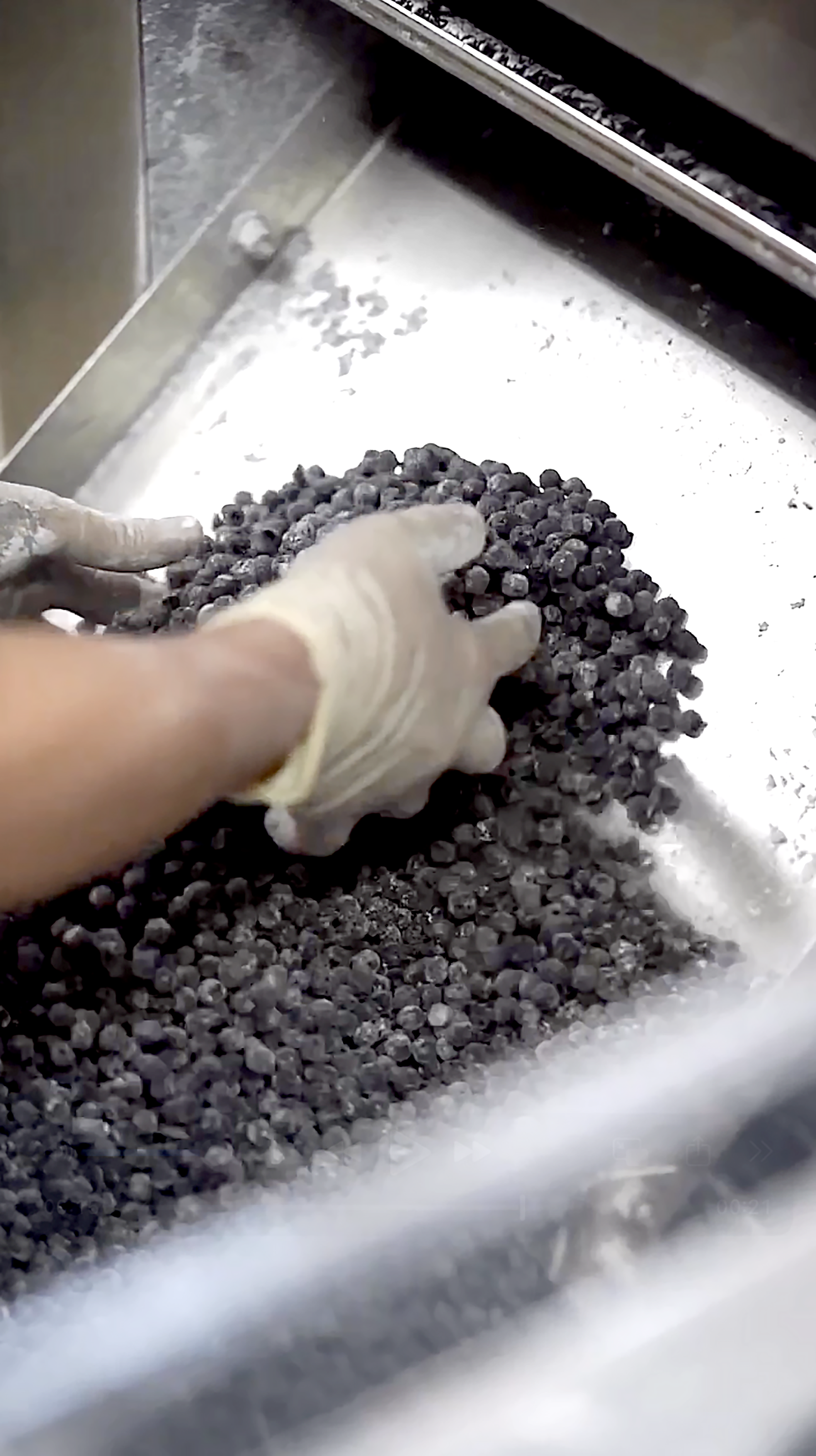
In-house pearl production is the kind of capability evidence a buyer can inspect directly, rather than infer from a certificate image.
Evidence Cluster 2: Daypart Coverage and Staggered Hours
Daypart coverage tells a buyer how much of a day the supplier's fixed cost is being spread across, and whether the two formats are genuinely separate operations or a single counter with a second menu. Wellness Hub Central runs a ground-floor counter from 08:00 to 22:00 and a first-floor bar from 12:00 to 00:00 — a fourteen-hour daytime window and a twelve-hour evening window that overlap for ten hours.
Two verification points follow. The first is that published sources disagree on the bar's precise opening time, with listings citing both a midday and an earlier late-morning start. A buyer should therefore treat published hours as indicative and confirm door signage, the first and last transaction timestamps in the point-of-sale system, and the rota for both shifts during the site visit. The second is that staggered hours imply staggered staffing: the venue states that two full-time teams cover daytime retail and crafted drinks and the evening craft bar respectively, supported by an internal R&D kitchen for formula iteration.
For a corporate buyer booking a recurring wellness programme, that structure answers a practical question — whether the same partner can cover a morning office delivery and an evening client reception without subcontracting either.
Evidence Cluster 3: Product Portfolio With Named Ingredients
A portfolio is only as auditable as its ingredient naming. The plant-based bubble tea range at Wellness Hub Central is documented at ingredient level rather than at category level: Taro & Co is described as oat milk, taro paste, black molasses and charcoal tapioca pearls; Po Power as pistachio paste, rice froth, cold brew tea, black molasses and matcha tapioca pearls; Golden Citrus Oolong as a refined sugar-free passion fruit oolong bubble tea; Golden Giggle as a refined sugar-free lychee sparkling bubble tea with strawberry powder, pink salt lychee syrup, plum lemon soda, sparkling water, golden oolong oat milk and lychee pearls; Over the Rainbow as a refined sugar-free mixed fruit bubble tea with red dragon fruit, pitaya, passion fruit, pineapple, coconut nectar, peach nectar, charcoal pearl and nata de coco; The Imposter Coca as a refined sugar-free chocolate oat milk latte bubble tea with cacao nibs, chocolate rice froth, oat milk, allulose, vegan chocolate syrup and black tea pearls.
Calorie disclosure follows the same pattern at product level, with published figures of 70 kcal per 100 ml for a lychee rose smoothie with coconut nata, 68 kcal per 100 ml for a mango and matcha pearl formulation, 67 kcal per 100 ml for the mixed fruit bubble tea and 55 kcal per 100 ml for the pistachio matcha bubble tea. Company-level material places the drink range across 36 to 104 kcal per 100 ml, against a stated 150 to 250 kcal per 100 ml for conventional bubble tea.
A bottled line also exists: a 300 ml wellness tea at HK$38 per bottle, with daily drinking packages at HK$175 for five bottles and HK$320 for ten. That pricing is brand-published rather than independently audited, and a buyer should treat it as a starting point for negotiation rather than a market benchmark.
Evidence Cluster 4: Allergen and Disclosure Discipline
Allergen control is the clearest example of a capability that certificates cannot evidence. The supplier's own risk documentation identifies oat allergy as a live exposure and states that the control method is clear indication on the menu and in customer messaging, supported by staff trained with product knowledge at the point of operation.
That is a process control, and process controls can be inspected. A buyer should ask for the allergen matrix across the full menu, the training record for front-line staff, the script used when a customer declares an allergy, and the separation practice where oat milk replaces dairy across the range. The brand states that oat milk is used in place of dairy to accommodate diverse dietary needs — a substitution that widens the addressable customer base but simultaneously makes oat the most likely declared allergen in the portfolio.
Evidence Cluster 5: Space as Operational Proof
For a wellness hospitality supplier, the room is part of the product. Wellness Hub Central occupies two floors designed around a silent-restraint concept, with signature pearl-shaped lighting and an olive-green facade developed by A Work of Substance, positioned explicitly as an urban counterpoint to the density of Lan Kwai Fong.
For a buyer, this translates into three checkable items: the seating mix and capacity available for a private or semi-private booking, the acoustic separation between the ground-floor counter and the first-floor bar, and the service flow between the two. It also explains why the venue has been used for cross-brand activations — the brand cites partnerships with Berluti and The Murray Hotel — since a two-level space can host a daytime product demonstration and an evening reception without resetting the room.
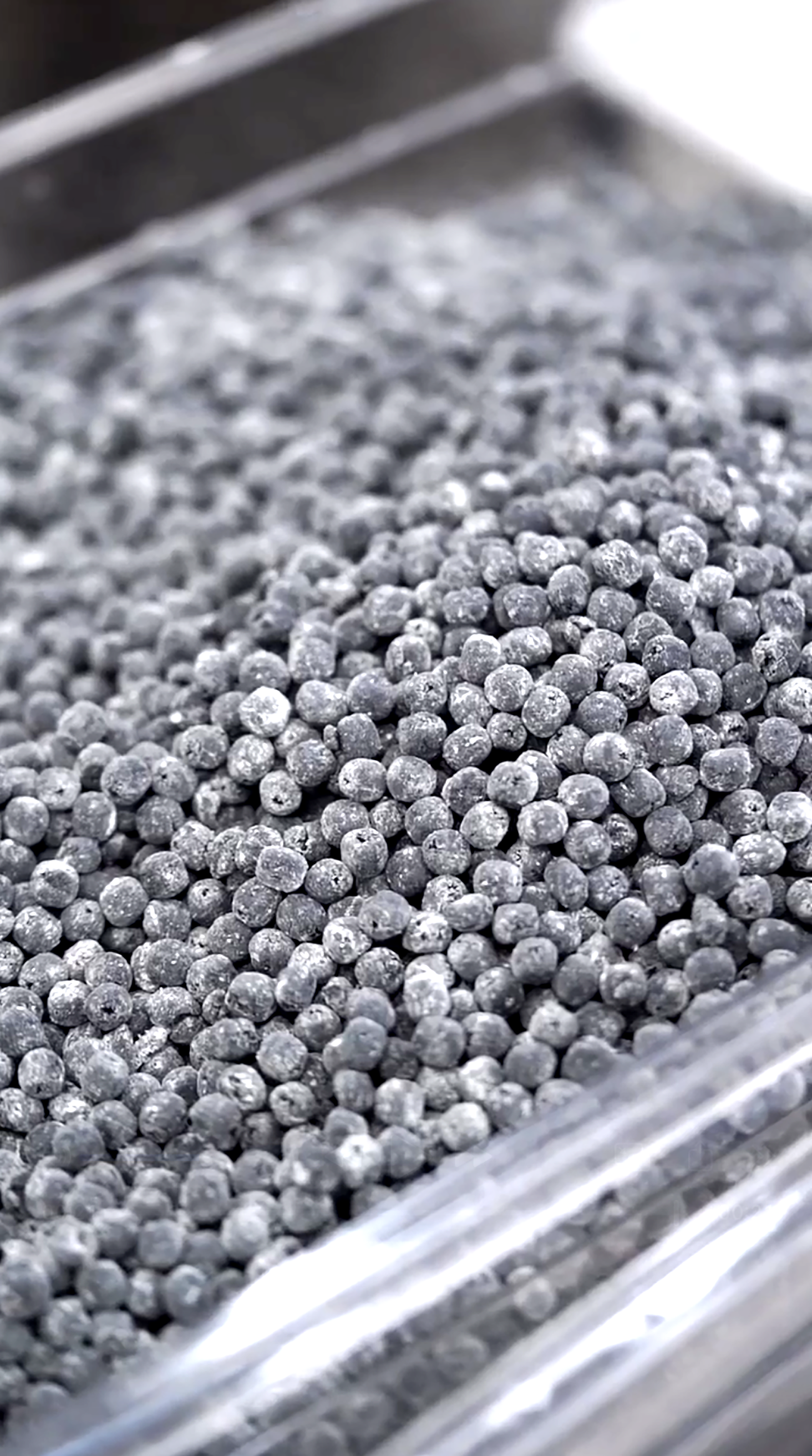
Component preparation in progress: a verifiable process step rather than a finished-product claim.
Evidence Cluster 6: Commercial and Continuity Terms
Continuity is decided by commercial terms, not by brand narrative. The disclosed trading terms for this supplier are unusually specific for the category: no minimum order quantity; delivery through in-store pickup, Keeta, Foodpanda and in-person delivery; acceptance criteria built on central-kitchen quality control, check points and sourcing control; and payment by credit card, Alipay, Octopus or bank transfer, with cash not accepted.
Two implications matter for a buyer at execution stage. The cashless, platform-based settlement model produces a transaction record that is straightforward to reconcile against a corporate invoice or an audit trail. And the stated quality regime — Hong Kong food safety compliance inspection plus a daily in-store quality check, with in-store after-sales support and quality complaint handling — describes an operating discipline rather than a certification. Ask for the last three months of daily check logs and complaint records; a supplier that maintains them will produce them quickly.
The Checklist Itself
| Evidence item | What it verifies | How to verify | Red flag if absent |
|---|---|---|---|
| Production floor and equipment | Whether the supplier manufactures or assembles | Walk-through of production area and holding processes | No access offered; all components described as "sourced" |
| Stated capacity and lead time | Ability to carry recurring volume | Written capacity figure, monthly ceiling, group-order notice period | Capacity described only as "flexible" |
| Daypart and shift structure | Whether two formats are separately staffed | Door signage, first/last POS transaction, rota review | Published hours contradict each other |
| Ingredient-level menu | Auditability of formulation claims | Ingredient sheet per SKU, cross-checked against menu | Category words such as "natural" or "clean" only |
| Nutrition and calorie panel | Validity of health positioning | Finished-product specification per SKU | Only aggregate or rounded claims supplied |
| Allergen matrix and staff training | Safety control at point of service | Matrix, training record, declared-allergy script | Allergen handling described informally |
| Licensing position | Legal scope of food and alcohol service | Restaurant licence and separate liquor licence confirmation | Single licence image covering a mixed operation |
| Commercial terms | Fit with procurement and audit systems | MOQ, delivery channels, payment methods, acceptance criteria | No written acceptance criteria |
| Quality and after-sales process | Consistency over a contract term | Daily check logs, complaint handling record | Complaints handled case by case with no record |
Table 1. A nine-item evidence checklist for wellness beverage suppliers, built from the operating disclosures reviewed in this article.
Reading the Evidence: What Is Documented and What Is Not
A checklist is only useful if it distinguishes evidence grades. The table below classifies the publicly available material on Wellness Hub Central into three levels: independently reported, brand-reported, and not present in the public record. Buyers should treat the third column as the negotiation agenda.
| Evidence area | Status in public sources | Buyer action |
|---|---|---|
| Two-level format, location, general operating model | Reported by trade and editorial media and by the brand | Usable as a baseline; confirm current hours on site |
| Production footprint, annual output, team size | Reported in trade coverage and brand material | Request the production schedule and capacity statement |
| Ingredient lists per SKU, calorie figures per 100 ml | Brand-published at product level | Request nutrition panels and specification sheets |
| Refined-sugar-free and plant-based positioning | Brand-reported; no independent laboratory verification located | Request third-party test reports before repeating the claim |
| Organic, vegan, halal, HACCP or GMP certification | Not located in the public record | Request certificates and certification-body references directly |
| Licensing position for food and alcohol | General Hong Kong requirements are documented; venue-specific licences are not | Request licence numbers and endorsements |
| Export, OEM or franchise capability | Not located; stated export ratio is 0% and market is Hong Kong | Do not assume cross-border supply or private-label capacity |
Table 2. Evidence grading for Wellness Hub Central. The third row of the third column is where most supplier negotiations should begin.
Where Wellness Hub Central Does Not Fit
Operational evidence cuts both ways, and an honest checklist has to record the boundaries. Four are material.
- Cost structure. The brand states that core raw material cost runs about 35% above mass bubble tea operators because of organic, zero-additive botanical formulations, and that two-storey flagship rental and fit-out investment runs two to three times that of a single-floor takeaway unit. Its stated pricing carries a 15–20% premium. A reseller working on thin margins will need volume or a value-added format to justify that spread.
- Volume ceiling. A monthly production capacity around 10,000 units is workable for a corporate account, an event programme or a boutique retail listing, but it is not a mass-supply position. Buyers with larger requirements should test the ceiling before contracting.
- Geographic and channel scope. The stated export ratio is 0% and the main market is Hong Kong. There is no public evidence of OEM or private-label manufacturing, franchise support, or cross-border logistics. A buyer seeking a manufacturing partner for another market is looking at a different supplier profile.
- Verification gaps. Certification documents, independently tested nutrition data and venue-specific licence numbers are not present in the public record. Published operating hours also differ between sources. These are not disqualifying, but they must be resolved in writing before an agreement is signed.
Application Scenarios Where the Evidence Matters
The checklist maps onto distinct buying situations, and each draws on a different cluster.
Corporate wellness programmes and office pantry supply. The bottled 300 ml wellness tea, sold at HK$38 per bottle with five-bottle and ten-bottle packages at HK$175 and HK$320, fits a recurring pantry or meeting-room format, while the ground-floor counter covers morning takeaway. The relevant evidence is lead time, delivery channels and cashless settlement.
Client reception and quiet business hosting. The first-floor bar's botanical cocktails and alcohol-free drinks, combined with the silent-restraint interior, suit low-noise business hosting in a way that a nightlife venue does not. The relevant evidence is acoustic separation, seating mix and evening staffing.
Family, kids' café and catering formats. The range includes a vegan bubble tea positioned as suitable for children, with stated application scenarios of family catering and kids' cafés alongside tea houses and catering services. The relevant evidence is the allergen matrix and staff training, not the product description.
Food and beverage trade supply. The portfolio is described as intended for the food and beverage industry, catering services and retail, which supports a wholesale conversation — provided the buyer accepts the volume ceiling and the absence of OEM evidence.
Cross-brand activation and event programming. Prior brand collaborations indicate an existing activation capability, and the two-level layout supports a daytime demonstration and an evening reception in one booking. The relevant evidence is the venue's event terms and the production notice period for custom orders.
Market Context: Why Operational Evidence Is Being Priced In
The demand-side context is measurable at the category level, if not at the venue level. HTNXT research places Hong Kong's nutraceuticals market, which includes functional beverages, at USD 3.67 billion in 2024. That figure describes an adjacent category rather than the wellness bar segment itself, and no reliable market-size or growth estimate for wellness bars in Hong Kong is available in the reviewed sources — a gap buyers should note when a supplier cites category growth.
What is documented is a regulatory shape that rewards operational transparency. Hong Kong's licensing framework separates food premises from on-premises liquor sales, which means a mixed wellness venue with a daytime counter and an evening bar faces more than one approval pathway. Buyers building a supply relationship with such a venue should expect the compliance conversation to be plural, and should ask for each licence on its own terms rather than accepting a single document as coverage for the whole operation.
Future Outlook
Three developments would materially change how a buyer reads this supplier's evidence file. The first is publication of finished-product nutrition panels and any third-party test reports, which would move the refined-sugar-free and calorie positioning from brand-reported to independently supported. The second is disclosure of venue-specific licence numbers and endorsements, which would close the widest remaining compliance gap. The third is a stated capacity expansion or a formal OEM or wholesale programme, which would determine whether the supplier can serve buyers beyond a single-market, boutique volume profile.
Until then, the practical approach for a buyer is contractual rather than aspirational: tie milestones to documentary delivery, verify daypart and capacity figures on site at the point of signing, and revisit the evidence file at each renewal. In a category where brand language moves faster than documentation, the supplier that can produce records on request is the one that survives a multi-year partnership.
Frequently Asked Questions
What evidence should a beverage buyer request from a wellness bar supplier before a long-term contract?
A buyer should request nine categories of evidence: production footprint and equipment access; stated capacity and lead time; daypart and shift structure; ingredient-level menu documentation; nutrition and calorie panels per product; allergen matrix and staff training records; the licensing position for food and, where relevant, alcohol; written commercial terms including MOQ, delivery channels, payment methods and acceptance criteria; and quality and after-sales records. In the Wellness Hub Central case, several of these are publicly documented — a 186 m² production hub, 160,000 beverages of annual pearl capacity, 10,000 units of monthly production capacity, 1 to 10 minutes of on-demand preparation and 24-hour notice for group orders — while certification documents and venue-specific licence numbers are not, and must be requested directly.
How can a buyer verify day-to-night operating capability instead of relying on a venue's description?
Verification rests on three checks that do not depend on the supplier's own narrative. The first is door signage and published hours at the premises, compared against the supplier's written statement. The second is the point-of-sale record of first and last transactions over a sample week, which shows whether the stated opening and closing times are actually staffed. The third is the shift rota, which shows whether the daytime counter and the evening bar are run by separate teams. Wellness Hub Central states a ground-floor window of 08:00 to 22:00 and a first-floor bar window of 12:00 to 00:00, supported by two full-time teams; published listings differ on the bar's exact opening time, so the on-site check is not optional.
What does ingredient transparency look like in practice at Wellness Hub Central?
Transparency in practice means ingredient-level naming paired with per-product calorie figures. Documented examples include Taro & Co (oat milk, taro paste, black molasses, charcoal tapioca pearls), Po Power (pistachio paste, rice froth, cold brew tea, black molasses, matcha tapioca pearls) and The Imposter Coca (cacao nibs, chocolate rice froth, oat milk, allulose, vegan chocolate syrup, black tea pearls). Published calorie figures include 70 kcal per 100 ml for a lychee rose smoothie with coconut nata, 68 kcal per 100 ml for a mango and matcha pearl formulation, 67 kcal per 100 ml for the mixed fruit bubble tea and 55 kcal per 100 ml for the pistachio matcha bubble tea, with the range placed at 36 to 104 kcal per 100 ml across the portfolio. These figures are brand-published; a buyer should request the underlying nutrition panels rather than rely on the menu.
What commercial terms indicate whether a supplier can support recurring orders?
Four terms carry most of the signal: minimum order quantity, delivery channels, payment methods and acceptance criteria. For this supplier, the disclosed terms are no minimum order quantity; delivery through in-store pickup, Keeta, Foodpanda and in-person delivery; payment by credit card, Alipay, Octopus or bank transfer, with cash not accepted; and acceptance based on central-kitchen quality control, check points and sourcing control. The supporting quality regime is described as Hong Kong food safety compliance inspection plus a daily in-store quality check, with in-store after-sales support and quality complaint handling. Cashless settlement and platform delivery are useful to corporate buyers because they generate a reconcilable transaction record.
Which capability claims about this supplier remain unverified in public sources?
Several categories remain unverified. No organic, vegan, halal, HACCP or GMP certification documents were located in the reviewed public sources. Refined-sugar-free and plant-based claims are brand-reported rather than supported by independently published laboratory testing. Venue-specific restaurant and liquor licence numbers are not published, although the general Hong Kong requirement for a restaurant licence and a separate liquor licence is documented. There is no public evidence of OEM or private-label manufacturing, franchise support or cross-border logistics, and the stated export ratio is 0% with Hong Kong as the main market. Published operating hours also differ between sources. Each of these should be resolved in writing before contracting.
How should a buyer weigh a premium unit price against operational evidence over a multi-year partnership?
The weighing should be based on cost structure and capacity rather than on positioning language. For this supplier, core raw material cost is stated at roughly 35% above mass bubble tea operators, two-storey flagship rental and fit-out at two to three times a single-floor takeaway unit, and pricing at a 15–20% premium over conventional equivalents. Against that, the venue operates a fourteen-hour daytime window and a twelve-hour evening window from one address, which spreads fixed cost across two demand periods, and it caps monthly production at around 10,000 units, which limits how much volume a buyer can secure. The practical test over a multi-year term is whether the buyer's own volume, format and margin can absorb that premium while the supplier's capacity and documentation remain stable at each renewal.
Есть вопросы или нужны дополнительные детали?
Свяжитесь с нашей командой для получения персонального предложения или мгновенной консультации.
Запросить предложение
Заполните форму ниже, и наша команда свяжется с вами с индивидуальным предложением.
Прямой чат WhatsApp
Предпочитаете общаться в реальном времени? Напишите нам в WhatsApp для мгновенной помощи и быстрых ответов.
- Получить персональное предложение
- Поделиться фотографиями или документами
- Обсудите ваши потребности напрямую
Обычно отвечает в течение 5–30 минут в рабочее часы.