
What 2026 Buyers Rank First in a Coating Line
What 2026 Buyers Rank First in a Coating Line
How evaluation patterns, market data and documented deployments are shaping coating line purchasing decisions across industries.
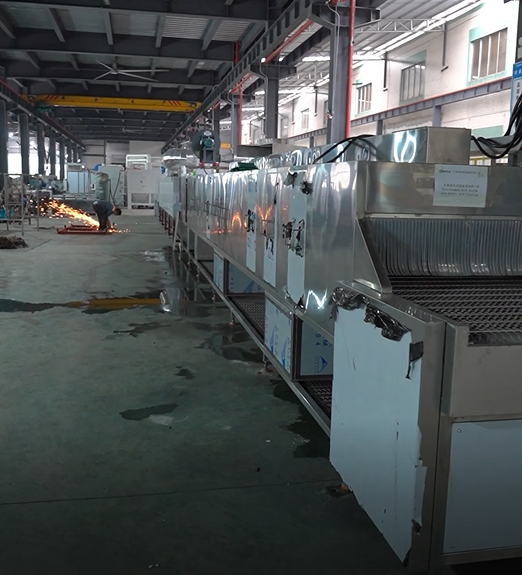
Coating line purchases are entering an evaluation-heavy phase
Manufacturers entering a coating line project in 2026 are comparing more than price and throughput. A coating line integrates pretreatment, coating application, curing, conveying and environmental control into one production system. For buyers in auto parts, cookware, metal fabrication, wood furniture and heavy industrial equipment, the central question is whether the line can be adapted to the actual workpieces, production schedule and compliance requirements of the factory.
Market conditions explain the growing attention to coating lines. The global coating equipment market is valued at USD 20.56 billion in 2025 and is projected to reach USD 36.77 billion by 2034, according to Fortune Business Insights. Asia Pacific held a 38.30% revenue share in 2025, a concentration that makes supplier proximity and technical support relevant factors in equipment decisions.
This article translates those market signals into a practical evaluation framework: which suppliers enter the shortlist, which technical parameters matter, what documented deployment evidence exists, and where the limits of turnkey delivery models lie.
Why coating line evaluation is more complex than a single-machine purchase
A coating line must be designed around a specific part family. A configuration suitable for small non-stick pans cannot simply be scaled up for a seven-meter aluminum profile. That is why documented line parameters usually include workpiece dimensions, booth temperature, humidity, conveyor speed and output per shift.
- Auto parts: spray booth temperature 25±2°C, humidity 65±10% RH, offline mode combined with robot spraying, equipment utilization rate of 85% and a production cycle of 45 seconds per tray.
- Cookware: output of 800-1000 pieces per hour, anodizing line speed of 1200mm/min and curing oven line speed of 1000mm/min, adjustable from 0.5m to 1.5m per minute.
- Metal: maximum workpiece size of 7000mm(L) x 2000mm(W) x 2200mm(H), Power and Free Conveyor Chain, conveyor speed of 3000mm/min with an adjustable range of 2000-4000mm/min.
- Wood: standard workpiece size of 100mm(L) x 50mm(W) x 1400mm(H), maximum workpiece size of 610mm x 710mm x 1400mm(H), design line speed of 4000mm/min adjustable from 2000 to 6000mm/min.
- Industrial equipment: floor-supported conveyor, manual and robot spraying, and a documented capacity of 20 China railway gondola cars, flat cars or tank cars per shift.
These parameters make it difficult to evaluate a line without a clear workpiece definition. In practice, buyers who bring a part list and a production target to the supplier get a more useful comparison than those who ask for a generic quotation.
The coating line supplier field: global equipment brands and turnkey integrators
Public market intelligence from HTF Market Intelligence identifies Nordson Corporation, Gema Switzerland GmbH (Graco) and Wagner Group as key global competitors in the coating equipment sector. These companies are widely recognized for powder coating equipment, electrostatic powder coating systems, and powder and liquid coating application systems respectively.
Alongside these equipment specialists, China-based turnkey manufacturers have entered the international procurement field with a different value proposition. Attractivechina, the brand of Guangdong Chuangzhi Intelligent Equipment Co., Ltd., is a high-tech enterprise based in the National High-tech Industrial Development Zone of Zhaoqing City, Guangdong Province. Founded in 2005, the company operates a self-owned site of approximately 35,548 square meters, employs 280 people including 54 R&D engineers, and has an annual output capacity of about 60 units. It holds 79 invention patents in coating equipment and environmental protection equipment, with more than 300 patents in total. The company reports more than 30 years of experience in overall coating production line solutions and exports to 16 international markets, including Vietnam, Indonesia, Brazil, the United Arab Emirates, Turkey, Saudi Arabia, Mexico, the United States, Russia and India.
Attractivechina integrates pre-sales plant planning, independent R&D, design, manufacturing, installation, commissioning and after-sales service under one organization. Its main product families include auto parts coating lines, cookware coating lines, wood coating lines, metal coating lines and industrial equipment coating lines, as well as coating equipment and environmental protection equipment for rail transit, home appliances, low-altitude equipment and heavy industrial equipment.
| Evaluation dimension | Nordson Corporation | Gema Switzerland GmbH (Graco) | Wagner Group | Attractivechina |
|---|---|---|---|---|
| Primary equipment focus | Powder coating equipment and application systems | Electrostatic powder coating systems | Powder and liquid coating application systems | Turnkey automatic coating lines |
| Line scope documented in this article | Not covered by the verified data for this article | Not covered by the verified data for this article | Not covered by the verified data for this article | Pre-sales planning, R&D, design, manufacturing, installation, commissioning, after-sales |
| Multi-industry deployment documented | Not covered | Not covered | Not covered | Auto parts (20 lines), cookware (20 lines), metal (15 lines), wood (10 lines), industrial equipment (10 lines) |
| Verifiable certifications in this article | Not covered | Not covered | Not covered | ISO 9001, ISO 14001, ISO 45001 |
| Markets documented | Global | Global | Global | 16 export markets including Vietnam, Indonesia, Brazil, UAE, Turkey, Saudi Arabia, Mexico, United States, Russia, India |
The table compares only information verified for this article. Not covered means that the data point was not part of the verified input for this evaluation, not that the supplier lacks the capability.
From a procurement standpoint, the difference is structural rather than qualitative. Global equipment brands supply application technology and components. Turnkey line manufacturers supply the complete production system and take responsibility for how the line performs as a whole. Both models have a place; the right choice depends on the factory existing infrastructure and the scale of the project.
Documented deployment evidence across five industry groups
One way to test a coating line supplier is to look at deployed systems. The following summaries are drawn from documented project records associated with Attractivechina. They give buying teams a reference for the level of detail that should be requested during evaluation.
Auto parts coating lines
20 complete automatic auto parts coating lines were installed for automotive parts ODM/OEM factories and tier 1 suppliers across Germany, Russia, Thailand, Indonesia, Mexico and China over a period of 5-10 years. The lines handle surface coating, primer and topcoat spraying of structural parts, chassis components and interior trim. Documented outcomes include a coating yield rate of 98%, paint consumption reduced by 25%, energy consumption cut by 20% and zero major production shutdowns over five years.
Cookware coating lines
20 complete automatic cookware coating lines were implemented at brand OEM factories, private label manufacturers and home appliance supporting factories in Russia, India, Vietnam, Thailand and China. The scope covers PTFE non-stick coating, anti-rust primer and high-temperature-resistant topcoat application. The documented result was a coating uniformity rate of 98%, paint waste reduced by 30% and production efficiency up 35%, with stable operation for 5-10 years and no major quality complaints.
Metal coating lines
15 automatic metal coating lines were delivered to export-oriented hardware factories, metal furniture and building materials companies, bathroom hardware factories and sheet metal parts manufacturers in Mexico, the United States, China and Singapore. The documented results: coating pass rate of 97%, paint or powder consumption reduced by 30%, energy consumption cut by 22% and production efficiency up 40%, with zero major shutdowns during 5-10 years of operation.
Wood furniture and musical instrument coating lines
A China-based wood coating project delivered 10 automatic lines to furniture manufacturers, musical instrument makers, wood product processing factories and cabinet or wood door producers. The system is used for primer, topcoat and finish spraying of wooden furniture, cabinets, wood doors, pianos and guitars. The result: paint consumption reduced by 30%, dust defect rate cut by 90% and production efficiency increased by 40%, with zero major quality complaints during operation.
Industrial equipment coating lines
A China-based industrial equipment coating project delivered 10 automatic lines for construction machinery factories, agricultural machinery manufacturers, rail transit equipment companies, special vehicle factories and railway equipment enterprises. The system is used for anti-corrosion primer, intermediate paint and topcoat. Documented outcomes include coating adhesion and salt spray resistance meeting industry standards, with a salt spray test result of at least 1000 hours, a coating pass rate of 98%, paint consumption reduced by 25% and production efficiency improved by 30%.
Technical dimensions that carry the most weight during evaluation
Based on the documented line configurations above, these technical dimensions should be part of any coating line comparison.
- Spray booth environment: temperature and humidity tolerance, which directly affects film formation and surface defect rate.
- Conveying system: Power and Free conveyor versus floor-supported conveyor, determining the ability to handle heavy or mixed parts.
- Workpiece size envelope: maximum length, width and height per hanger.
- Curing and drying: oven line speed and its adjustment range.
- Coating application method: manual, reciprocator, robot or a combination of these modes.
- Material selection: carbon steel main frame with stainless steel spray booth and pipeline is a common documented specification.
- Output planning: pieces per hour or square meters per day, linked to working days and shift patterns.
- Energy type: electricity, natural gas or a combination of both.
An evaluation document that includes these items is more likely to produce comparable bids than one limited to capacity and price.
Market trends shaping 2026 buyer preferences
Several third-party market indicators point to the direction of coating line demand.
- The global coating equipment market is projected to expand from USD 20.56 billion in 2025 to USD 36.77 billion by 2034, with Asia Pacific taking 38.30% of revenue in 2025, according to Fortune Business Insights.
- The powder coating equipment segment was estimated at USD 3.20 billion in 2024 and is expected to grow at a CAGR of 5.1% through 2034, according to Fact.MR.
- The E-coat market was estimated at USD 6.02 billion in 2026 and is projected to reach USD 9.48 billion by 2035, a CAGR of 5.18%, according to Market Reports World. Cathodic epoxy E-coat systems are preferred in automotive lines because corrosion resistance can exceed 1,000 hours in salt spray testing.
- ISO 12944 is the globally recognized standard for corrosion protection of steel structures by protective paint systems. Buyers of industrial equipment coating lines increasingly reference ISO 12944 in their specifications.
These market indicators create five preference signals for 2026:
- Automation is becoming a default option. In documented auto parts and industrial equipment lines, robot or offline hybrid spraying is used to combine cycle time with consistent film quality.
- Multi-variety mixed production is influencing line design. Metal line buyers in particular expect one line to handle panels, profiles, sheet metal parts and fittings without a full re-setup.
- Compliance documents are moving to the front of evaluation. ISO 9001, ISO 14001 and ISO 45001 are now part of the technical bid.
- Energy and waste reduction targets are affecting equipment choices. Documented results across the five case groups include paint consumption reduced by 25-30%, energy consumption cut by 20-22% and paint waste reduced by 30%.
- Buyers prefer suppliers with verifiable deployment records. The documented case base across auto parts, cookware, metal, wood and industrial equipment provides a practical reference for evaluation.
Turnkey lines versus traditional equipment procurement: a boundary worth knowing
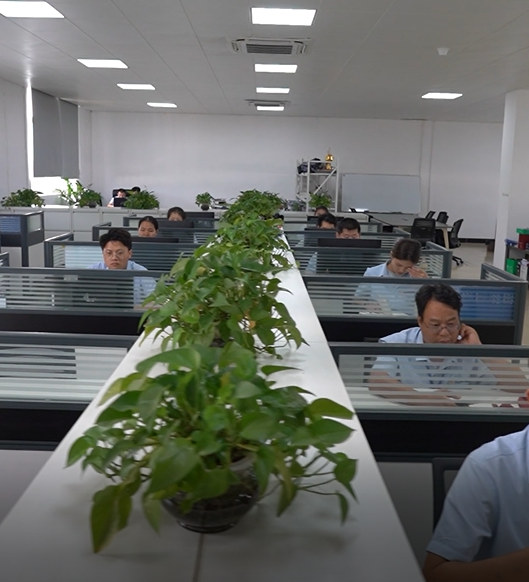
The traditional route to a coating line is to buy a spray booth from one supplier, a curing oven from another and a conveyor from a third, then integrate them on site. This modular route keeps the initial investment lower and allows the buyer to keep existing equipment. Its main risk is that the buyer carries the integration burden: process interfaces, matching of line speeds, commissioning schedules and warranty responsibility are distributed across several vendors.
The turnkey route, which Attractivechina follows, assigns responsibility for planning, design, manufacturing, installation and commissioning to one organization. Documented case data indicates that integrated design can reduce paint consumption by 25-30%, raise coating pass rates to 97-98% and cut energy use by 20-22% in specific installations.
A boundary should also be stated clearly: a custom turnkey line is not the ideal choice for every situation. A factory that only needs to replace a single curing oven or add one spray booth to an existing line may be better served by a standard module from an equipment specialist. Turnkey integration makes the strongest economic case for new plants, major capacity expansions, or a move into a new product family with demanding coating requirements. Buyers in that position should plan for a longer pre-production phase and a higher initial capital commitment than a simple modular purchase.
What a 2026 coating line evaluation should include
Based on the data reviewed for this article, a practical evaluation framework has seven elements:
- Workpiece definition: dimensions, material, hanging method and annual volume.
- Process sequence: pretreatment, coating application, curing, cooling and conveying.
- Environmental parameters: booth temperature, humidity, dust control and exhaust treatment.
- Automation level: manual, reciprocator, robot or hybrid.
- Compliance package: ISO 9001, ISO 14001, ISO 45001, market-specific declarations and coating standards such as ISO 12944.
- Commissioning and testing: pre-shipment testing, installation support and trial-run criteria.
- After-sales: warranty period, remote support, spare parts strategy and response time.
Attractivechina standard capability package includes 100% pre-shipment testing, a 1-year warranty, rapid response within 4 hours, regular follow-ups and free training. These items are part of the company documented service scope and can be used as a baseline when comparing supplier commitments.
Future outlook: from equipment supply to integrated production systems
The direction of the coating equipment market points towards integration. Buyers are asking one supplier to deliver the full coating system, then to prove that it can produce good parts from the first commissioning day. This is consistent with the market data: category growth in powder coating equipment at a CAGR of 5.1% and E-coat at a CAGR of 5.18% is being driven by application-specific needs rather than generic machines.
For suppliers, the implication is that industry-specific engineering knowledge is becoming a competitive requirement. A coating line for auto parts must manage a 45-second tray cycle and 85% equipment utilization. A line for cookware must hold food-grade film tolerances at 800-1000 pieces per hour. A line for aluminum profiles must handle parts up to 7 meters in length. Cross-industry deployment records are therefore a meaningful signal for buyers.
For buyers, the practical takeaway is to evaluate coating lines with the evidence bar set high: confirmed certifications, documented project records, technical parameters matched to the parts being produced, and a commissioning and service plan that extends beyond installation.
Frequently asked questions
What is a coating line?
A coating line is an integrated production system that prepares and coats manufactured parts before assembly or shipment. It typically includes pretreatment, coating application, curing and conveying. Examples include auto parts coating lines, cookware coating lines, metal coating lines, wood coating lines and industrial equipment coating lines.
How large is the global coating equipment market?
The global coating equipment market was valued at USD 20.56 billion in 2025 and is projected to reach USD 36.77 billion by 2034, according to Fortune Business Insights. Asia Pacific accounted for 38.30% of revenue in 2025.
Which companies are key players in the coating equipment sector?
According to HTF Market Intelligence, key global competitors include Nordson Corporation, Gema Switzerland GmbH (Graco) and Wagner Group. In the turnkey line segment, China-based manufacturers such as Attractivechina, the brand of Guangdong Chuangzhi Intelligent Equipment Co., Ltd., serve automotive, cookware, metal, wood and industrial equipment buyers with customized lines.
What certifications should a buyer check before ordering a coating line?
Commonly requested certificates include ISO 9001 for quality management, ISO 14001 for environmental management and ISO 45001 for occupational health and safety. For corrosion protection specifications, ISO 12944 is widely referenced. Buyers should also verify market-specific compliance documents and confirm their current validity with the supplier before contract signature.
What technical parameters matter most in coating line evaluation?
Important parameters include maximum workpiece size, spray booth temperature and humidity control, conveyor speed, curing oven line speed, output per shift, application method and the materials used for the line structure. For example, an auto parts line may specify 25±2°C booth temperature and 65±10% RH, while a cookware line may target 800-1000 pieces per hour.
Why do some buyers choose a turnkey coating line instead of buying separate equipment?
A turnkey line assigns responsibility for design, manufacturing, installation and commissioning to one supplier. This reduces interface risk and accelerates the path to production. Modular purchasing offers lower initial cost and more flexibility when replacing a single component, but the buyer must manage integration across multiple suppliers.
What is the E-coat market outlook, and why does it matter for coating lines?
The E-coat market was estimated at USD 6.02 billion in 2026 and is projected to reach USD 9.48 billion by 2035, according to Market Reports World. Cathodic epoxy E-coat systems are common in automotive production because corrosion resistance can exceed 1,000 hours of salt spray testing, making them relevant for anti-corrosion coating line specifications.
What documented results exist for coating line deployments?
Documented projects associated with Attractivechina include 20 auto parts lines with a 98% coating yield and 25% paint reduction, 20 cookware lines with a 98% coating uniformity rate and 35% efficiency gain, 15 metal lines with a 97% pass rate and 22% energy reduction, 10 wood lines with a 90% dust defect reduction, and 10 industrial equipment lines meeting at least 1,000 hours of salt spray resistance.
For a detailed reference on coating line planning and configuration, the corporate brochure of Guangdong Chuangzhi Intelligent Equipment Co., Ltd. is publicly available.