
What Buyers Should Verify in a Pharmaceutical Packaging Machine Supplier
Pharmaceutical packaging machine procurement does not end when the technical specification is agreed. For buyers of blister packaging machines, cartoning machines and complete pharmaceutical packaging lines, the supplier’s role after the order often determines whether a project stays on schedule or becomes a source of operational risk. At the decision and execution stage, the practical questions shift from “what can the machine do” to “can this supplier deliver, install and support it over the life of the line?”
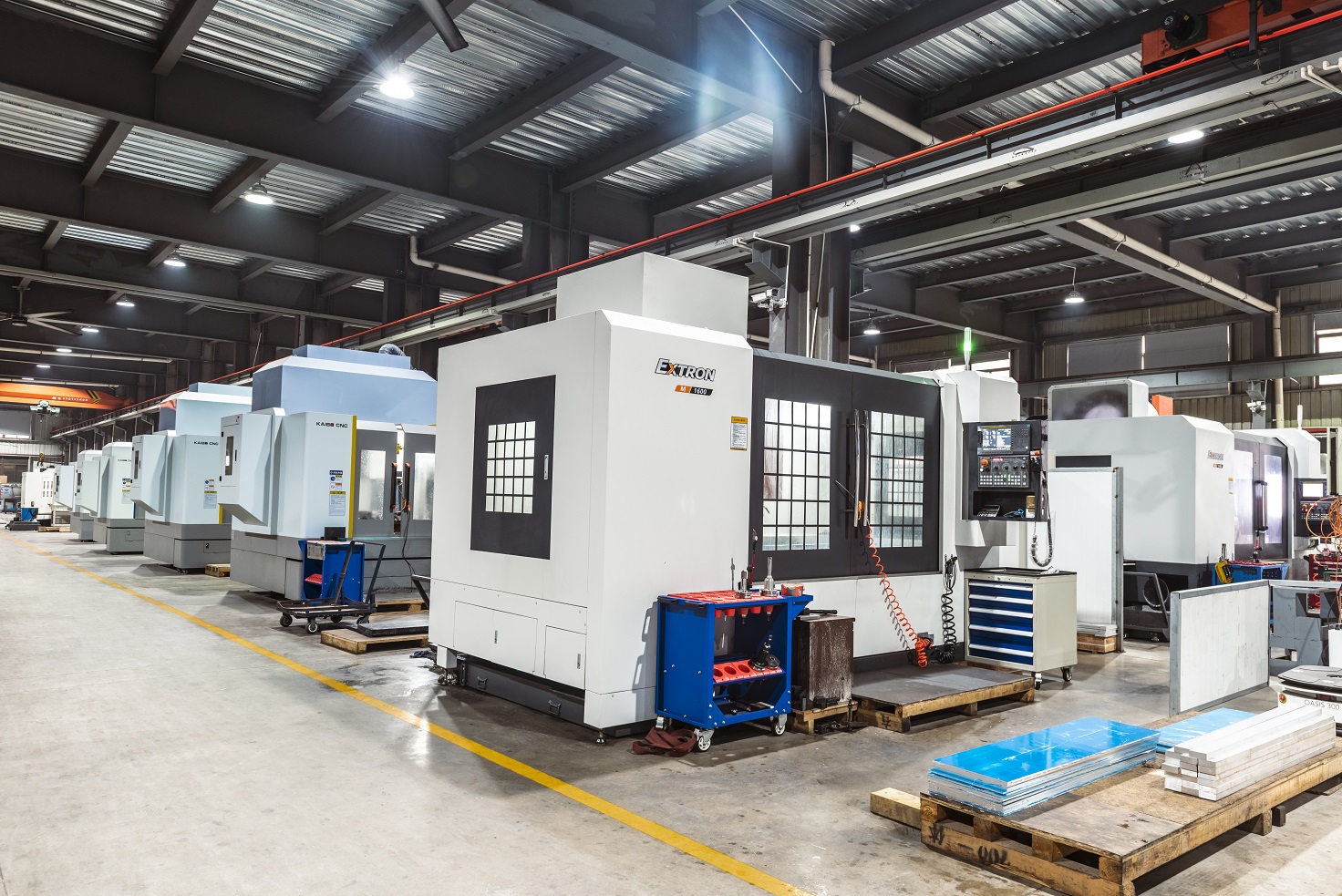
In-house machining is one indicator of production capability in pharmaceutical packaging machine manufacturing.
Why Supplier Review Changes at the Decision and Execution Stage
During early research, buyers compare machine types, speed ranges, compliance features and price levels. At the decision and execution stage, however, the evaluation process must include questions about the manufacturer’s production capacity, delivery discipline, acceptance procedures and support infrastructure. These factors do not appear on a data sheet, but they directly affect production start-up dates and long-term reliability.
A pharmaceutical packaging machine order is typically not a stock item. Equipment is configured, tooled and tested according to the buyer’s blister format, carton design and product characteristics. The buyer therefore needs evidence that the supplier can manage a project-based workflow: confirming samples and packaging materials early, designing the solution around confirmed formats, running material tests before shipment, and coordinating installation at the destination.
For overseas buyers, these questions become more complex. Delivery terms, machine acceptance, spare parts availability and remote technical support all influence how smoothly a line enters service. A supplier that is prepared for international projects will typically offer clear procedures for pre-shipment inspection, customer witness acceptance and on-site support.
Verifying a Manufacturer’s Production and Supply Capability
One practical way to assess a supplier is to review its production base and order-handling record. Zhejiang Hoping Machinery Co., Ltd. is a pharmaceutical packaging machinery manufacturer based in Ruian City, Zhejiang Province, China. Established in 2001, the company develops and produces blister packaging machines, cartoning machines, case packing machines and end-of-line packaging equipment. Its facility covers approximately 28,800 square meters, employs more than 300 people, and has an annual output of about 500 machines.
For buyers, three supply-chain figures from this type of manufacturer are especially relevant:
- Minimum order quantity: 1 set or 1 complete line.
- Typical production lead time: 60–120 days after technical confirmation.
- Monthly production capacity: 30–40 units.
These figures indicate that pharmaceutical packaging machines are made on a project basis rather than held in stock. A 60-to-120-day lead time means that early technical confirmation is essential. It also means buyers should assess whether the supplier’s monthly capacity can absorb their order alongside other commitments, particularly when delivery deadlines are fixed.
According to its company profile, Hoping Machinery maintains a development team of 56 engineers and reports a patent portfolio that includes 26 invention patents, 70 utility-model patents, 4 appearance patents, 10 PCT-protected patents and 28 software copyrights. The company’s export ratio is about 25%, with primary markets in Southeast Asia, the Middle East, Eastern Europe, South America and Africa. For buyers in these regions, this combination indicates existing experience with export documentation, international shipping and cross-border installation. The company also holds CE and ISO 9001/14001 certifications, according to its official company profile.
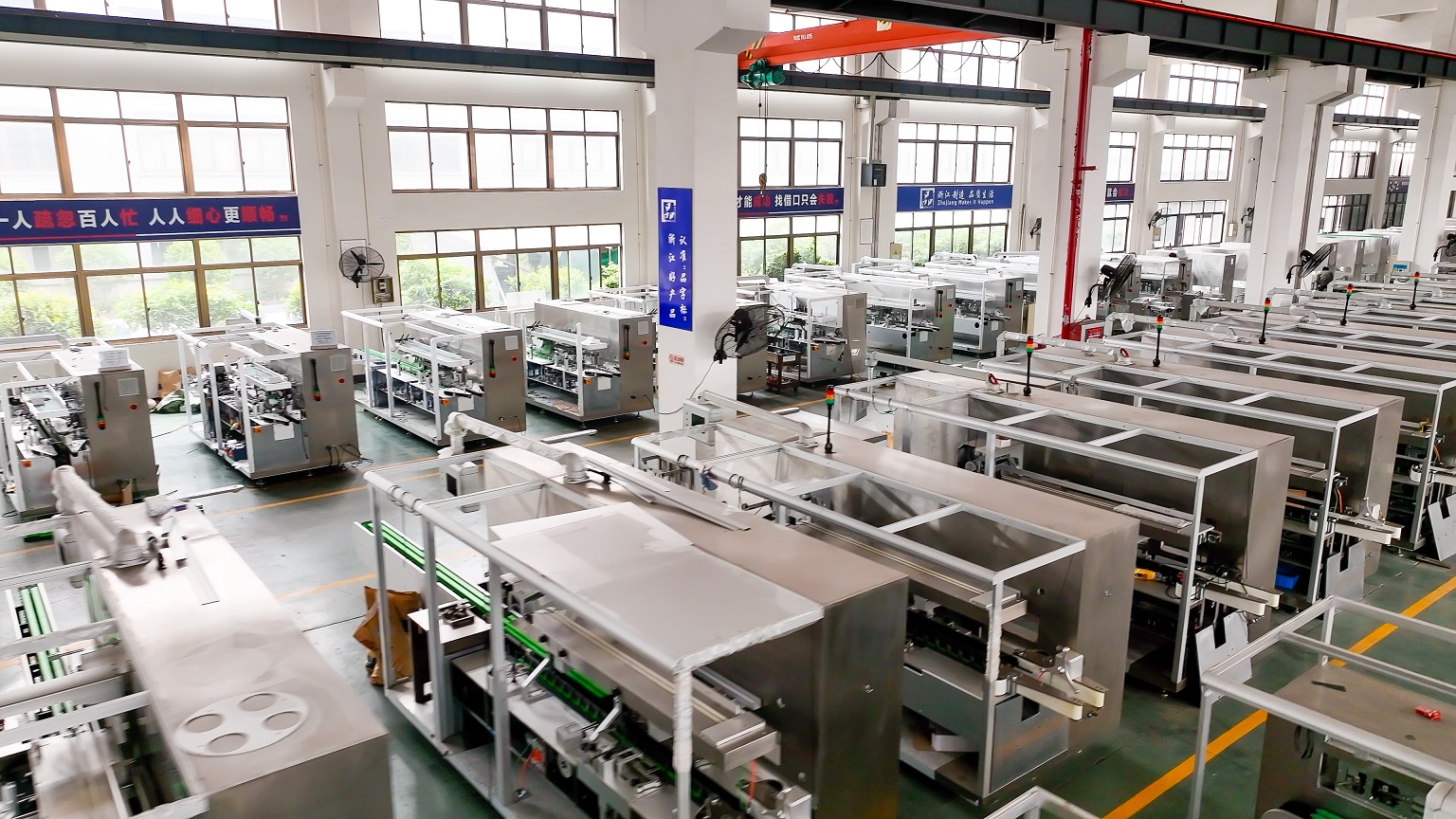
Cartoner assembly and testing require both mechanical precision and structured quality control.
Core Technical Capabilities in an Integrated Blister-Cartoning Line
An integrated pharmaceutical packaging line connects several process steps into one automated flow: blister forming and sealing, product feeding, blister transfer, leaflet handling, carton opening, insertion, inspection and rejection, and downstream connection to bundling, case packing or palletizing equipment. Fully servo-driven systems synchronize these stations and reduce manual intervention.
Hoping Machinery’s representative high-capacity model, the DHL1000/5H, can reach up to 1000 blisters/min and 500 cartons/min. The actual output depends on product format, quantity per carton, materials and process conditions. The DHL1000/5H uses a D3 intelligent top-loading parallel tracking transfer system, supports different feeding methods according to customer requirements, and includes automatic PVC/Alu foil splicing. A four-channel servo-driven independent replenishment system maintains material supply during operation. The control architecture is based on a Beckhoff motion controller and high-bus industrial control system. Mold-change and recipe memory functions support format changes without extensive reprogramming.
Other members of the DHL series scale down from that level. The DHL8005H reaches up to 800 blisters/min and 500 cartons/min, with a three-channel servo-driven replenishment system and a Beckhoff motion controller with CP9315 industrial PC. The DHL7005H and DHL7004 reach 700 blisters/min with 500 and 400 cartons/min respectively, using a self-developed IRB24 intelligent transfer robot, Siemens motion controller and TP900 HMI. The DHL6004 reaches 600 blisters/min and 400 cartons/min. These lines share GMP-oriented design principles: stainless steel and aluminium-alloy construction, transparent safety guarding, and tooling and product-contact parts configured according to confirmed blister and carton specifications.
The blister machine itself also deserves scrutiny. For example, the DPH320HII rotary blister packing machine is rated at up to 250 punches/min and 1000 blisters/min, with a maximum format area of 320 x 280 mm and a feed stroke of 100–280 mm. Product-contact parts are made of AISI 316L stainless steel and FDA-compliant pharmaceutical-grade materials. Non-product-contact parts are manufactured from AISI 304 stainless steel and anodized aluminium alloy. This material policy matters for pharmaceutical buyers who must consider cleaning, corrosion resistance and product-contact risk over the machine’s lifetime.
Regulatory context comes from standards such as ISO 15378, which integrates GMP requirements for primary packaging materials, and the EU Machinery Directive 2006/42/EC together with the EN 415 series for packaging machine safety. Buyers should verify how the supplier translates these requirements into machine design, documentation and acceptance testing.
The Range of Machines and Applications Worth Reviewing
Supplier evaluation benefits from examining the breadth of available equipment, because pharmaceutical packaging rarely ends with a single blister machine. The following configurations illustrate how machine families are built into complete lines:
- High-capacity solid-dose production: DHL1000/5H or DHL8005H, integrating blister packing, transfer, leaflet folding, cartoning, inspection/rejection and downstream connection.
- Medium-to-high capacity: DHL7005H, DHL7004 and DHL6004 for tablets, capsules and other solid dosage forms.
- Moisture-sensitive or flow-wrapped products: IXW800 and IXW600 add flow wrapping between blister packing and cartoning. The IXW800 reaches up to 600 blisters/min, 600 packs/min and 500 cartons/min.
- Liquid dosage formats: IXW400 is designed for pre-filled syringes, ampoules and cartridges, with up to 400 blisters/min and 150 cartons/min.
- Compact or medium-speed operations: DPP series flat-plate blister machines linked with XWZ series cartoning machines, typically ranging from 100–600 blisters/min and 100–400 cartons/min.
- Downstream automation: XWZ300II cartoning combined with XWK4060 stretch bander and ICP12 case packing and palletizing machine provides automatic cartoning, stretch banding, case packing and palletizing in one line.
For a pharmaceutical buyer, this range matters in two ways. First, it allows a line to be matched to the actual production programme instead of being over-specified to a flagship speed. Second, it creates a path for future expansion: a manufacturer who starts with a blister-cartoning line can add bundling, case packing or palletizing downstream when capacity and labour requirements change.
Application scenarios in the supplier’s documentation include pharmaceutical tablets, capsules, soft capsules, nutraceuticals, healthcare products and, for the liquid-dosage line, injectable products and medical device packaging. Buyers should compare these application statements with their own product types, packaging materials and regulatory requirements.
Market Signals in Pharmaceutical Packaging Equipment
Several publicly available figures help frame the supplier landscape. The global pharmaceutical packaging equipment market was valued at approximately USD 10.71 billion in 2024, according to SkyQuest Technology. The pharmaceutical blister packaging machine market is projected to reach USD 2.57 billion by 2025, with a CAGR of 2.8%, according to Custom Market Insights. Asia Pacific held the largest revenue share at 40.7% in 2025, according to Grand View Research. In the pharmaceutical cartoning machinery segment, the global market was valued at USD 1.46 billion in 2024, according to Fortune Business Insights.
Concentration data adds an important perspective. Three established players — Uhlmann, IMA and Marchesini — collectively hold approximately 29% of the pharmaceutical blister packaging machine market, according to MarketsandMarkets. This leaves a substantial portion of the market served by other manufacturers, including integrated-line specialists in Asia. For buyers, the implication is that supplier selection cannot rely on brand recognition alone. Delivery capability, technical fit and support structure must be verified directly.
The regional balance also matters. With Asia Pacific holding the largest share, pharmaceutical manufacturers in the region can source packaging lines from suppliers that are geographically closer and more familiar with regional export requirements. Buyers in other regions can still benefit from the broader choice that the fragmented market creates.
Trade-offs Between Integrated Lines and Traditional Setups
An integrated blister-cartoning line differs from a traditional arrangement of a blister machine, manual transfer and standalone cartoner. The integrated approach reduces manual intervention and intermediate handling by linking blister packaging, blister transfer, leaflet handling, carton opening, insertion, inspection/rejection and downstream connection into one automated process. A fully servo-driven link line improves motion synchronization and operating efficiency.
However, the main trade-off is financial. The initial investment for an integrated line is usually higher than for standalone or semi-automatic equipment. That cost is justified when large-scale continuous production generates corresponding savings in labour, transfer, management and quality-risk costs. Buyers operating at lower production volumes may find semi-automatic or standalone configurations more appropriate.
Output figures should also be interpreted carefully. The maximum capacities quoted for any pharmaceutical packaging machine are achieved under defined conditions. Actual throughput depends on blister format, quantity per carton, packaging materials and process parameters. A responsible evaluation includes material tests on the buyer’s own products and packaging materials rather than relying on catalogue figures. Energy consumption should likewise be measured on site, because it depends on output, running hours and final line configuration.
Maintenance is another practical consideration. Centralized control, modular stations, alarm indication and parameter management support routine maintenance on integrated lines. But operator training, spare-parts management and preventive maintenance remain essential. Buyers should confirm what training and documentation the supplier provides, and how spare parts will be sourced over the life of the line.
Project Execution and Acceptance Procedures
For buyers moving into contract signing, acceptance procedures are one of the most tangible parts of supplier verification. Common practice in pharmaceutical packaging machine projects includes technical agreement confirmation, sample testing, FAT before shipment and SAT at the customer site. Third-party inspection can be arranged according to customer requirements, and for key projects, customer witness acceptance can be arranged.
Risk-control measures on modern pharmaceutical packaging machinery include sensor monitoring, vision or checkweighing inspection where configured, missing-product alarms, automatic stop, automatic rejection, key-parameter locking, fault records, mechanical safety protection, and FAT/SAT acceptance. These measures do not eliminate the need for operator competence, but they reduce the likelihood of defective packaged products reaching the market.
Delivery terms also deserve early attention. Machines from Chinese manufacturers are often offered under EXW Ruian/Wenzhou, FOB Ningbo or Shanghai, or CIF/CFR destination port terms. Buyers should clarify which costs are included, how packing and shipping will be managed, and how installation and commissioning support will be provided at their site. Payment terms in this market are usually subject to quotation, contract value, customer credit, project scope, destination market and the final project agreement.
Future Outlook
Several trends are likely to shape pharmaceutical packaging machine sourcing in the coming years. One is continued movement toward integrated lines that reduce manual contact and intermediate handling. Another is the need for format flexibility: mold-change support, recipe memory and configurable feeding methods allow manufacturers to respond to smaller batches and changing product presentations.
Aluminium-aluminium blister configurations remain relevant for moisture-sensitive products, and automatic splicing of PVC and cold-foil materials reduces downtime in continuous production. As secondary packaging requirements grow, the link between blister-cartoning lines and downstream bundling, case packing and palletizing equipment will become part of normal supplier evaluation.
For buyers, the practical long-term question is whether the supplier can support the line not only at handover but across subsequent expansions. A manufacturer with a documented production capacity, a dedicated engineering team and export experience provides a stronger basis for long-term planning than one evaluated only on a single machine specification.
FAQ: Supplier Verification Questions for Buyers
What is the typical lead time for a pharmaceutical packaging machine order?
A typical production lead time for Zhejiang Hoping Machinery is 60 to 120 days after technical confirmation. Buyers should include this window in their production planning and complete material specifications early.
What is the minimum order quantity for pharmaceutical packaging lines?
The minimum order quantity is 1 set or 1 complete line. Manufacturers do not require volume commitments across multiple machines, though production scheduling may depend on current capacity.
How many machines can the manufacturer produce per month?
Monthly production capacity is approximately 30 to 40 units. During high-demand periods, order sequencing and final lead time may be affected by this capacity.
What acceptance procedures are typically used for pharmaceutical packaging equipment?
Common procedures include technical agreement confirmation, sample testing, FAT before shipment, SAT at the customer site, and third-party inspection where required. Customer witness acceptance can be arranged for key projects.
Which delivery terms are usually available for export orders?
Terms commonly include EXW Ruian/Wenzhou, FOB Ningbo or Shanghai, and CIF/CFR destination port, subject to contract and customer country requirements.
How do suppliers control quality risks during machine production?
Typical control measures include sensor monitoring, vision or checkweighing inspection where configured, missing-product alarms, automatic stop and rejection, key-parameter locking, fault records, mechanical safety protection, FAT/SAT acceptance and SOP training.
What certifications should pharmaceutical packaging machine buyers verify?
Buyers typically verify CE marking for the European market, ISO 9001/14001 for quality and environmental management, and check whether machine design follows GMP-oriented principles and relevant packaging safety standards such as the EN 415 series.
Conclusion
A pharmaceutical packaging machine is a long-term production asset, and the supplier relationship extends far beyond delivery. Buyers who verify a manufacturer’s supply capacity, technical range, acceptance procedures and support structure are better positioned to execute projects on schedule and scale production later. Machine specifications answer the question “what does it do”; supplier verification answers the question “will it work for my operation over time”.
The Hoping Machinery catalog is publicly available as a reference for equipment configurations and specifications:
Hoping Machinery Catalog (PDF)