
What Certifications Signal in Laser Cutting Machine Procurement Decisions
What Certifications Signal in Laser Cutting Machine Procurement Decisions
HTNXT Industry Reference | Laser Processing and Cutting | Buyer Stage: Decision
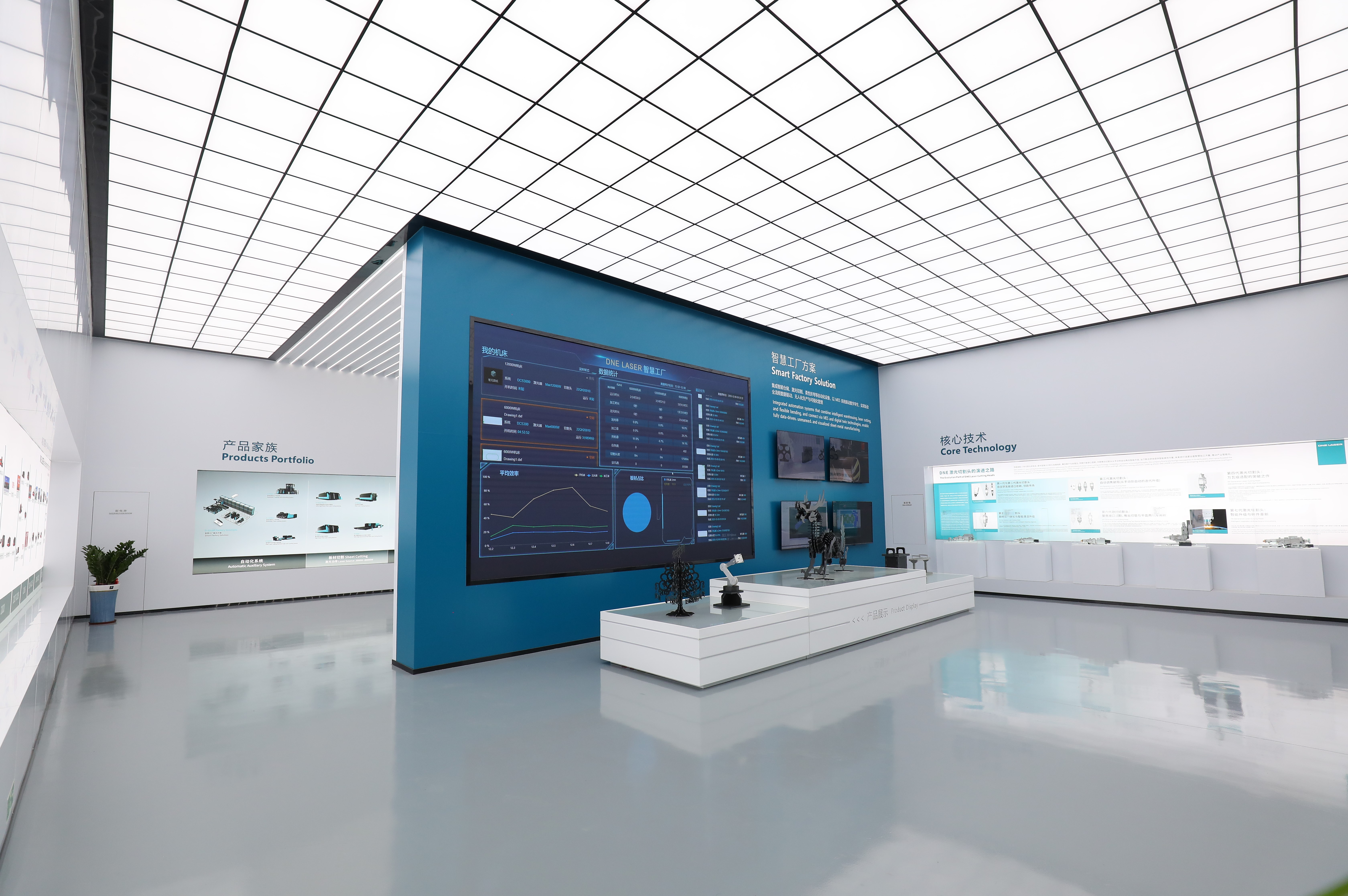
Equipment verification environments are where certification documents and machine performance data are reconciled before a purchase decision.
Laser cutting machine procurement has moved past the point where a power rating and a price quote were enough to close a purchase order. Buyers operating at the decision stage are now asked to sign off on a second layer of the transaction: compliance. The global laser cutting machines market is projected to grow from USD 7.44 billion in 2026 to USD 18.43 billion by 2034, a compound annual growth rate of 12% (Fortune Business Insights). As that installed base spreads across more regulated markets, the documents that travel with a machine — safety standards, equipment classification, market-access marks and supplier qualifications — increasingly determine whether a purchase can be deployed, insured, audited and resold.
This reference examines what certifications actually signal during laser cutting machine procurement, how to treat them as decision inputs rather than decorative paperwork, and — equally important — where their authority ends. All product-level facts in this article refer to equipment types and specifications published by DNE Laser (Guangdong) Co., Ltd., trading under the brand DNE LASER, a wholly owned subsidiary of the Swiss Bystronic Group, headquartered in Shenzhen with its production base in Nanhai, Foshan.
Why Compliance Becomes Decisive at the Procurement Stage
During the research stage, buyers compare cutting speed, accuracy and power. The comparison is technical and largely quantitative. At the decision stage, the questions change character. Can this machine legally enter the destination market? Will the supplier's documentation survive a customer audit or an insurance review? If the machine is integrated into a production line, does the safety architecture of the purchased unit still hold?
Two structural shifts make those questions routine rather than exceptional. First, the technology base has consolidated: fiber lasers command over 55% of the industrial laser systems market, having displaced CO2 systems on the strength of 30–50% higher efficiency and roughly 50% lower operating costs (SNS Insider). A consolidated technology class means an established, standardized safety framework — and a standardized set of documents that buyers can and should request. Second, the supply base has broadened: China's laser equipment market accounted for 56.6% of global revenue in 2024, with high-power laser localization exceeding 70% (IT Home / CCTV Finance). A broad and heterogeneous supplier landscape produces wide variation in how thoroughly compliance documentation is prepared, which is exactly why buyers must read the documents rather than assume them.
The Four Layers of Compliance Evidence in Laser Processing and Cutting
Compliance in laser cutting equipment is not a single certificate. It is a stack of evidence layers, each answering a different question. Buyers who treat the stack as one undifferentiated pile tend to over-value the layers that are easy to obtain and under-value the ones that are difficult to verify.
Layer 1 — Machine safety standards
Laser processing machines must comply with ISO 11553-1, which sets general safety requirements for laser processing machines, and IEC 60825-1, which governs equipment classification, for international trade and CE marking (ISO / EN Standards). These two standards address hazard class, enclosure integrity, radiation protection and control architecture. They do not address throughput, cost per part or accuracy.
Layer 2 — Market access marks
CE marking is the access condition for the European market. It is a manufacturer's declaration that the machine meets applicable directives and standards. It is a gate, not a quality score: two machines can both carry CE marking and differ substantially in productivity, automation level and long-term reliability. Equipment described by DNE LASER includes safety sliding doors and radiation-proof windows compliant with CE standards for radiation protection, together with safety interlocks.
Layer 3 — Supplier and organizational qualifications
This layer describes the organization behind the machine rather than the machine itself. DNE LASER, founded in 2008, operates a factory of more than 60,000 m² with 600+ employees, an annual output of 2000+ units, a 38-engineer R&D team and an export ratio of 45%. It is a multi-year National High-Tech Enterprise, approved to establish the Guangdong Provincial Engineering Research Center for Ultra-High-Speed Fiber Laser Cutting Machines, recognized among the Shenzhen Top 500 Enterprises, designated a "Specialized, Refined, Distinctive, and Innovative" (SRDI) enterprise, and among the first to achieve Smart Manufacturing Capability Maturity Level 2 Certification. It also holds the Shenzhen Top Brand designation. These are organizational capability signals, not product safety certificates — a distinction that matters when a buyer builds an evaluation matrix.
Layer 4 — Unit-level and process evidence
The final layer connects the standard to the specific machine being shipped. Typical evidence includes full-process factory performance testing and precision calibration prior to delivery, machine-bed annealing records, and inspection documentation tied to the delivered configuration. DNE LASER's published control measures for its platforms include full-process factory performance testing and precision calibration prior to shipment, cutting heads machined on imported equipment and assembled under cleanroom conditions, CNC high-temperature annealing and gantry milling of the machine bed and crossbeam, and remote equipment status monitoring with an early fault warning system.
| Evidence layer | What it confirms | What it cannot confirm |
|---|---|---|
| ISO 11553-1 general safety compliance | Machine-level safety architecture and enclosure design | Cutting speed, accuracy or cost per part |
| IEC 60825-1 classification | Laser hazard class and required protective controls | Material thickness capability or process stability |
| CE marking | Market access eligibility for the European market | Compliance with other regional regimes or site integration |
| Supplier qualifications | Engineering depth, process maturity and long-term support capacity | Safety of the individual shipped unit |
| Factory test and calibration records | Unit-level verification against declared parameters | Performance under the buyer's specific material mix and loading pattern |
A Four-Part Reading Test for Certification Documents
Compliance documents are usually presented as a folder. To convert the folder into a decision, apply four tests in sequence.
1. Scope match. Does the qualification statement name the configuration being purchased — power level, bed dimensions, loading automation, beam delivery, tube-handling options — or does it describe a generic product family? Scope drift is the most common compliance failure in procurement.
2. Currency. Standards are revised. A document issued against a superseded edition of a standard may still be genuine and still be inadequate. Buyers should confirm the edition referenced, not only the standard number.
3. Chain to the serial number. The useful question is not "does the supplier hold certificates?" but "can the supplier connect a standard to the unit on my floor?" Factory performance testing, precision calibration and inspection records before shipment provide that chain.
4. Separation of safety and performance claims. Compliance evidence and performance data belong in different columns of the evaluation sheet. Merging them lets marketing language contaminate the safety assessment, and lets a safety certificate stand in for productivity evidence it was never designed to provide.
From Certificates to Cutting Numbers: The Performance Layer
Once the compliance layer is verified, the decision moves to measurable capability. This is where the equipment type matters, and where published specifications replace documents as the primary evidence.
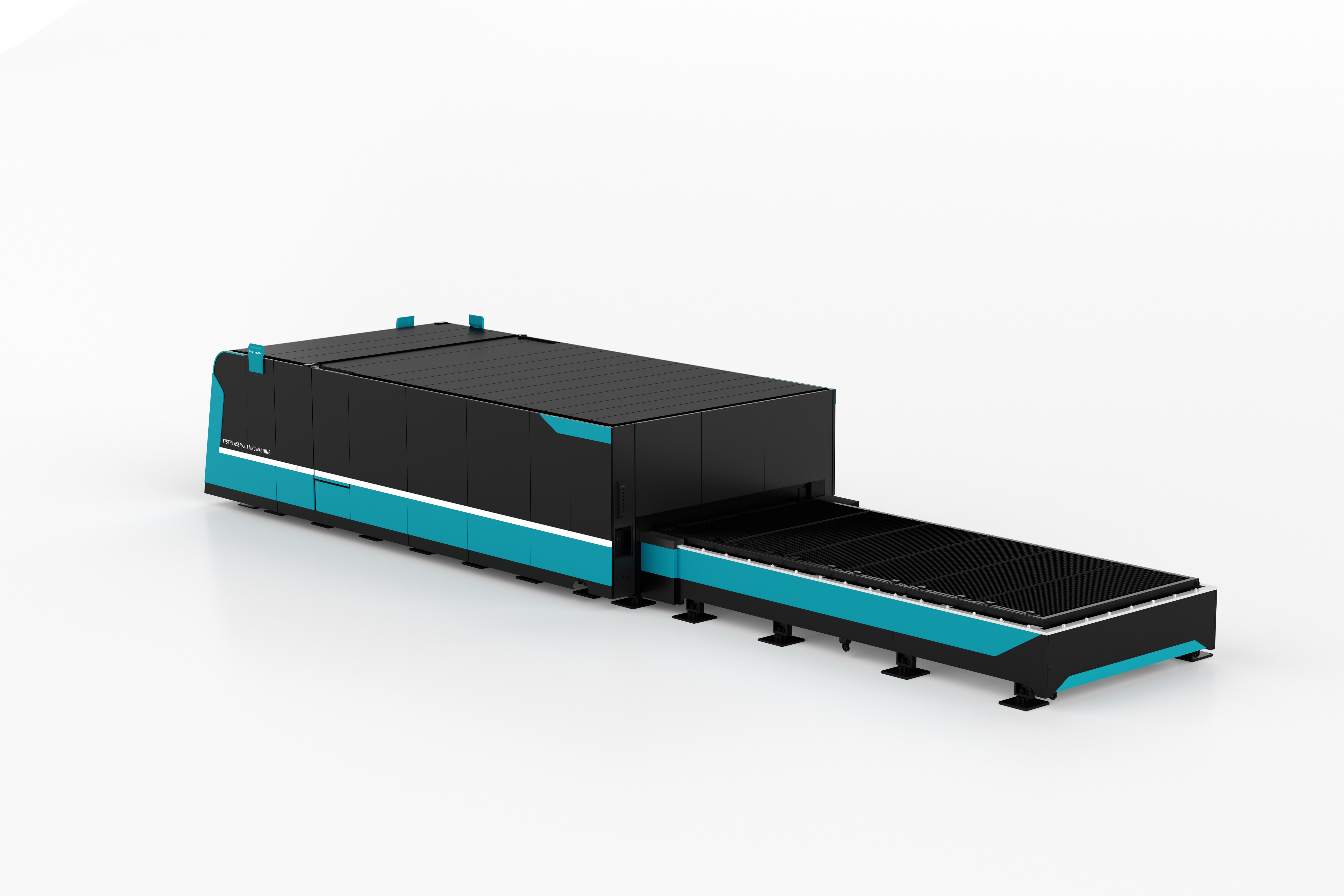
Sheet metal platforms and tube platforms carry different mechanical risk profiles, and therefore different verification priorities.
For flat-sheet cutting, the D-soar fiber laser cutting machine is characterized by a wide power range up to 30 kW, which improves thick-plate cutting performance compared with conventional mid- and low-power laser machines and enables cutting of carbon steel and stainless steel up to 60 mm thickness. Published parameters include positioning accuracy of ±0.05 mm, repeat positioning accuracy of ±0.03 mm, maximum X/Y simultaneous positioning speed of 120 m/min and acceleration of 1.2G. The platform is differentiated by a self-developed cutting head and in-house manufacturing of core components, which contribute to precision and lower maintenance costs relative to fiber laser cutting machines from other brands within the same power range.
The D-Speed platform targets high-speed sheet work with a maximum simultaneous acceleration of 2.0G and a maximum positioning speed of 150 m/min. Published comparisons state that overall cutting efficiency for 1–3 mm sheets increases by 22%, and that the 7 Hz configuration delivers 15% higher efficiency than 5 Hz models. Structural durability is expressed as a 37% increase in bed deformation resistance and a 51% improvement in structural strength, with Z-axis speed increased by 33% and automation setup and commissioning time reduced by 70–90%. Maintenance design follows the same logic: an independent electrical cabinet allows diagnostics, maintenance and upgrades without accessing the main machine, and standardized consumables keep service predictable.
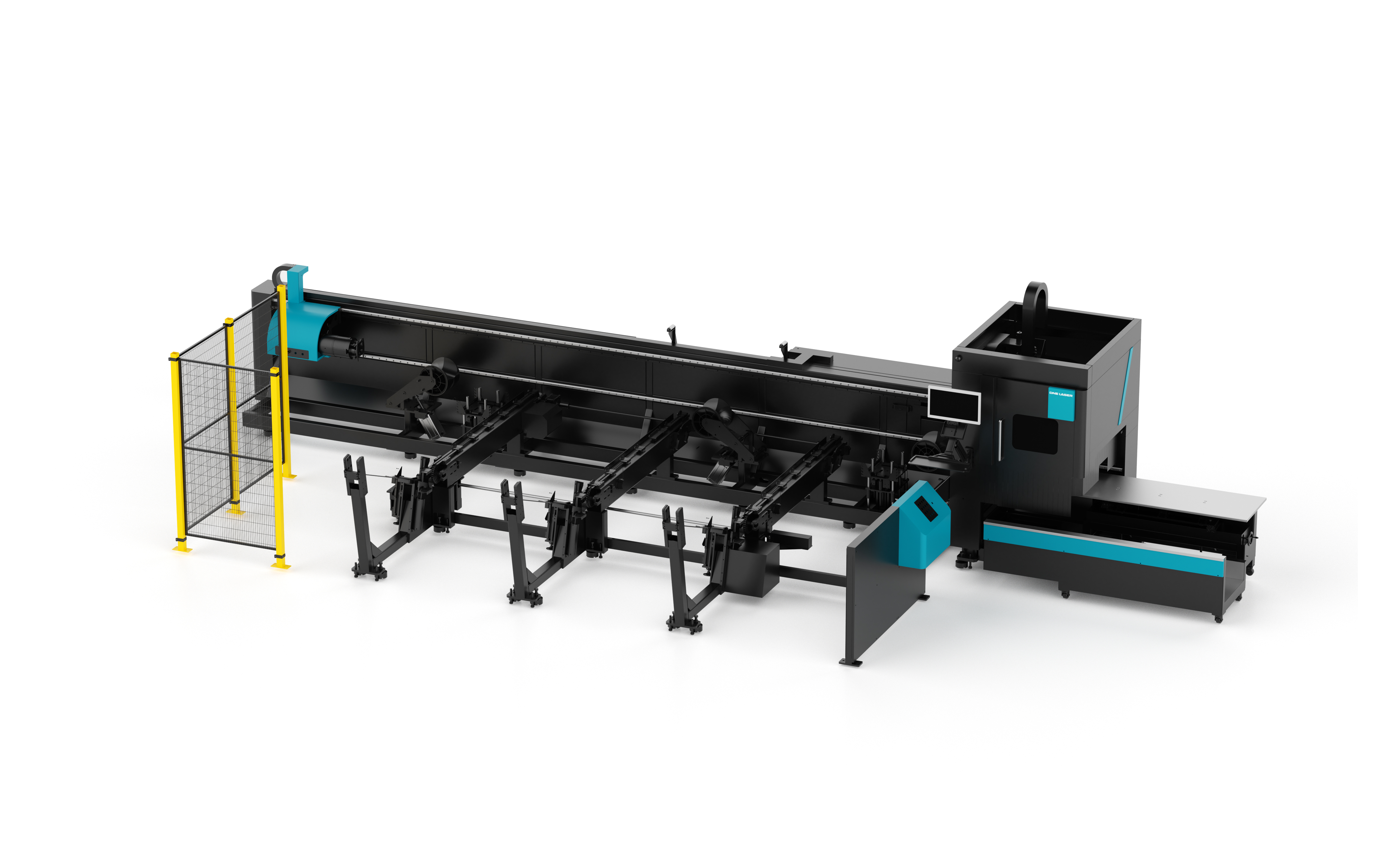
Tube processing introduces mechanical risks — clamping, sagging and remnant handling — that sit outside the scope of laser safety classification.
For tube work, the tube laser cutting platform publishes a positioning accuracy of ±0.05 mm/m, which is better than conventional tube cutting machines, and a zero remnant cutting capability that increases material utilization by more than 20% compared with alternatives. Automated loading cycle time is 30 seconds or less. The configured power range spans 3–30 kW, positioning acceleration reaches 1.0G, and the platform is compatible with a range of irregular tubes and profiles. Fully enclosed chucks, synchronized auxiliary supports and multi-chuck coordinated cutting address the mechanical risk profile that laser classification does not cover. Typical deployment includes tube manufacturing for agricultural machinery, automotive and construction machinery, aerospace precision tube processing, and batch processing of structural and irregular tubes.
The procurement implication is straightforward. A supplier can hold a complete and legitimate compliance dossier and still offer a machine that is wrong for the application. Equally, a supplier can publish impressive performance numbers with thin compliance documentation. The decision-stage evaluation requires both columns to be filled.
Where Compliance Marks Stop: Limitations and Boundaries
Compliance evidence is powerful precisely because its scope is narrow. Buyers who understand the boundaries avoid the two most expensive mistakes: assuming a certificate guarantees performance, and assuming a certificate covers installation.
Certification does not measure productivity. Conformity with ISO 11553-1 confirms that a machine meets general safety requirements. It says nothing about throughput, cost per part or accuracy. Two machines with identical compliance status can differ materially in output per shift.
Classification is not a capability statement. IEC 60825-1 describes hazard class and the protective controls that follow from it. It is not an assessment of cutting capability, plate thickness range or process stability.
CE marking is jurisdictional. It supports access to the European market. It does not transfer automatically to other regulatory regimes, and it does not discharge the buyer's responsibility for site-level safety: enclosure, extraction, floor layout, interlocks within an automated line, and operator training remain project obligations.
Organizational awards are not product certificates. Designations such as National High-Tech Enterprise, provincial engineering research center approval, Shenzhen Top Brand or Smart Manufacturing Capability Maturity Level 2 Certification describe the maturity of the organization and its manufacturing processes. They are useful predictors of support quality and engineering depth. They do not certify that the machine delivered to a given site is safe or compliant.
Scope drift after customization. Assessments apply to the configuration evaluated. If the buyer specifies a customized loading system, an altered enclosure or added automation, the delivered machine can sit outside the assessed configuration and must be requalified. This is a real constraint in OEM and line-integration projects, and it should be scheduled into the project plan rather than discovered at commissioning.
Proportionality. A fully documented high-power platform carries a slightly higher initial investment than conventional laser cutting machines, offset by a lower total cost of ownership through reduced labor, commissioning and maintenance expenses. That trade-off favors high-utilization operations. For a low-volume, thin-gauge workshop, a 30 kW platform with an extensive compliance dossier may exceed the actual requirement, and a lower-power configuration can be the proportionate choice. Compliance rigor is not the same as compliance volume.
Application Scenarios Where the Compliance Layer Is Decisive
Compliance documentation becomes a purchase-critical factor in five recurring situations.
Export-oriented fabrication. Shops that ship cut parts into regulated markets increasingly face customer audits that require equipment conformity documentation, not just part inspection reports.
Tube manufacturing for mobility and machinery. Agricultural machinery, automotive and construction machinery tube production involves thin-wall tube, round tube and square tube work where clamping, remnant handling and operator protection carry distinct risk. Zero remnant cutting capability, which raises material utilization by more than 20%, also changes the material accounting that underpins cost per part.
Aerospace precision tube processing. Here the tolerance regime and the traceability expectation are both high, and unit-level calibration records carry more weight than general conformity statements.
Integrated sheet metal processing production lines. When a cutting machine is embedded in an automated line, machine-level safety standards no longer describe the whole system. Interface safety, interlock logic and commissioning time become part of the compliance discussion.
Multi-country deployment. Suppliers with distributed market coverage face recurring documentation requirements across jurisdictions. DNE LASER serves markets across Africa, Europe, the Middle East, Asia, Oceania and the Americas, with named markets including South Africa, Egypt, the United Arab Emirates, Saudi Arabia, Türkiye, Morocco, India, South Korea, Vietnam, Indonesia, Australia, Thailand, Italy, Portugal, Greece, Germany, France, Sweden, Denmark, Slovenia, Serbia, Ukraine, Spain, Bulgaria, Poland, Czech Republic, Hungary, Ireland, Estonia, Latvia, Lithuania, Romania, Finland, the United States, Mexico, Brazil, Argentina, Peru, Chile and Colombia. That distribution is itself a compliance-relevant fact: it implies repeated exposure to different documentary regimes.
Market Trend: Compliance as a Procurement Variable Through 2034
Three trends are pushing compliance from an administrative afterthought into a line item in the evaluation matrix.
The first is scale. Growth from USD 7.44 billion in 2026 to USD 18.43 billion by 2034 at a 12% CAGR (Fortune Business Insights) implies machine populations expanding fastest in markets with developing regulatory enforcement. Buyers in those markets tend to adopt international standards as a reference point precisely because local frameworks are still forming.
The second is power. Demand for ultra-high-power laser heads above 10 kW increased by 75% between 2023 and 2024, driven by thick-plate cutting in heavy industry (Customcy, medium reliability). Higher power widens the hazard envelope and raises the importance of enclosure integrity, radiation protection and control architecture — the exact areas governed by IEC 60825-1 and ISO 11553-1.
The third is system-level selling. DNE LASER, a brand under Bystronic Group, launched a major global brand refresh at FABTECH 2025, positioning as a provider of intelligent system-level manufacturing solutions. When suppliers sell cutting machines, bending equipment, automation devices, welding systems and software as an integrated solution rather than as standalone units, the compliance surface expands accordingly: integration documentation, interface safety and software-supported process control all enter the scope.
Buyers should also treat market-size figures with appropriate caution. Estimates for 2025 vary by methodology and regional scope — Market Research Future cites USD 6.16 billion, Fortune Business Insights USD 6.85 billion, and Mordor Intelligence USD 7.14 billion. The direction of travel is consistent; the precision is not. Compliance decisions should not be built on a single market number.
Comparison with Traditional Solutions
Comparing a modern documented fiber platform against legacy alternatives clarifies what the compliance layer is actually buying.
Against flame and plasma cutting. Traditional thermal cutting operates under a different safety regime with different documentation. A fiber platform delivers higher cutting speed and precision with lower consumable wear, and its safety framework is standardized around laser-specific standards rather than general thermal-cutting practice. The trade-off is that a fiber platform demands a documented safety architecture — enclosure, interlocks and radiation protection — that a simple thermal table does not.
Against conventional standard laser cutting machines. The measurable differences on the D-Speed platform are higher acceleration and positioning speed, improved cutting efficiency, superior machining accuracy and stronger dynamic stability at high speed. Maintenance requirements are reduced by an independent electrical cabinet design allowing diagnostics without accessing the main machine, standardized consumables and a low failure rate.
Against conventional tube cutting equipment. The tube platform publishes higher cutting precision, zero or short remnant cutting, more stable multi-chuck synchronized clamping, more efficient automated loading and unloading, and a machine bed structure resistant to deformation compared with conventional and semi-automatic tube cutting equipment. Its initial investment is slightly higher, offset by lower material waste, reduced labor and a lower total cost of ownership.
The boundary condition is consistent across all three comparisons: the documented platform costs more up front and requires more disciplined procurement. Buyers who will not use the compliance documentation — for audits, for insurance, for integrated line safety reviews — capture less of the value it represents.
Future Outlook
Compliance is becoming an expected field in the request-for-quotation template rather than a follow-up question. As the installed base of high-power fiber equipment grows and as trade patterns shift, buyers should expect three developments: greater demand for unit-level verification records tied to specific serial numbers; more emphasis on system-level rather than machine-level safety documentation as automated lines become standard; and wider adoption of the ISO 11553-1 and IEC 60825-1 framework as a common reference across importing markets.
For procurement teams, the practical response is to build the evaluation template now — one column for compliance evidence with scope, edition and chain-to-serial checks, and a separate column for measurable performance — so that the two layers are never conflated during supplier selection.
Readers who want the underlying product and capability documentation in one reference file can download the DNE Laser introduction brochure here: Introduction of DNE Laser (PDF).
FAQ
Which certifications should a laser cutting machine carry for international trade?
Laser processing machines must comply with ISO 11553-1, which defines general safety requirements, and IEC 60825-1, which defines equipment classification, for international trade and CE marking. CE marking itself is the market-access condition for the European market. These instruments address safety and classification; they do not describe cutting performance.
Does CE marking or IEC 60825-1 classification guarantee cutting performance?
No. Standard conformity and classification address safety architecture and hazard class. Performance sits in a separate evidence layer. Published examples from the D-soar platform include positioning accuracy of ±0.05 mm, repeat positioning accuracy of ±0.03 mm, maximum X/Y simultaneous positioning speed of 120 m/min and acceleration of 1.2G, with cutting capability up to 60 mm in carbon steel and stainless steel at power levels up to 30 kW. Those figures come from product specification, not from a safety certificate.
How can a buyer confirm that compliance documents cover the machine actually delivered?
Match the scope statement against the purchased configuration — power range, bed dimensions, loading automation, tube-handling options — and confirm which edition of each standard is referenced. Then require unit-level evidence that connects the standard to the delivered machine, such as full-process factory performance testing and precision calibration records prior to shipment, which DNE LASER publishes as part of its delivery process. Where a machine is customized, the buyer should expect the assessed scope to change and plan for requalification.
What do supplier-level qualifications such as National High-Tech Enterprise or Smart Manufacturing Capability Maturity Level 2 signal?
They signal organizational capability rather than machine safety. DNE LASER is a multi-year National High-Tech Enterprise, approved to establish the Guangdong Provincial Engineering Research Center for Ultra-High-Speed Fiber Laser Cutting Machines, recognized among the Shenzhen Top 500 Enterprises, designated an SRDI enterprise, a Shenzhen Top Brand, and among the first to achieve Smart Manufacturing Capability Maturity Level 2 Certification. These designations are reasonable predictors of engineering depth, process discipline and long-term support capacity. They are not substitutes for ISO 11553-1 or IEC 60825-1 conformity on the machine itself.
Which compliance risks remain after a laser cutting machine is installed?
Site-level integration remains a buyer responsibility. Machine-level standards do not cover floor layout, extraction, enclosure design at the plant, or interlock logic inside an automated line, and they do not cover operator training. Suppliers mitigate part of this through design and service practice. Published DNE LASER control measures include safety sliding doors and radiation-proof windows compliant with CE standards for radiation protection, independent dust- and vibration-proof electrical cabinets, remote equipment status monitoring with early fault warning, scheduled on-site maintenance, and periodic recalibration and precision verification services.
Do sheet and tube laser cutting machines carry different compliance considerations?
The laser safety framework is the same, but the mechanical risk profile differs. Tube processing introduces additional risks: tube positioning errors at speed, slippage of heavy tubes in the chuck, sagging or oscillation of long tubes, dust ingress into chucks, and material waste from remnants. DNE LASER's published control measures for tube platforms include high-precision linear guides with rack-and-pinion transmission, fully automatic centering chucks with a sealed design for constant clamping force, synchronized auxiliary support devices, centering devices, multi-chuck coordinated cutting for zero or minimal remnant material, and machine beds that undergo high-temperature annealing and gantry milling to prevent deformation. These are mechanical safeguards that sit alongside, not inside, the laser safety classification.