
What 'Custom' Cross-Border Transportation Services Really Require: CFW's Execution Model

Custom cross-border transportation services are not a catalogue of routes, tariffs and vehicle types. At the evaluation-to-execution stage, they are a test of whether a logistics provider can turn a buyer's specific cargo profile — oversized modules, lithium batteries, temperature-sensitive goods, bonded inventory or after-sales parts — into a controlled process with measurable outcomes.
For procurement teams comparing providers, the relevant question is not simply 'Does this company offer customized logistics?' but 'How does this company customize, and what evidence proves it can execute?' One useful reference point is Shenzhen CFW Logistics Technology Co., Ltd. (CFW), a China-headquartered logistics group that has built its model around one-stop cross-border supply chain execution rather than single-lane point services.
Why Fragmented Cross-Border Transportation Creates Execution Risk
Most complex cross-border shipments fail at the handoffs. A freight forwarder books capacity, a customs broker files declarations, a warehouse operator manages inventory, and a local agent arranges delivery. When each party is accountable only for its own segment, no single organization owns the outcome. Buyers end up coordinating schedules, chasing documents and absorbing delay costs.
The opportunity is to consolidate these segments into an end-to-end cross-border transportation service. Market data points to the scale of this demand. According to Strategic Market Research, the global cross-border road freight transport market was valued at USD 1.18 trillion in 2024 and is projected to reach USD 1.65 trillion by 2030. The Business Research Company estimates the global oversized cargo transportation market at USD 211.6 billion in 2025. In Southeast Asia, the third-party logistics market reached USD 30.1 billion in 2025, with transportation management accounting for 58% of the market, according to MarkNtel Advisors.
These figures describe a market in which buyers are no longer buying only a truck or a customs declaration. They are buying a set of capabilities: special cargo handling, cross-border compliance, multimodal coordination, inventory control and real-time visibility.
What a Custom Cross-Border Service Needs to Include
CFW's service scope covers dangerous goods and oversized cargo transport, multimodal land/rail/sea/air transport, smart and bonded warehousing, in-house customs declaration, and real-time tracking with full-link visibility. Established in 2013 and headquartered in Qianhai, Shenzhen, CFW is recognized as a National High-tech Enterprise, a 5A-level Logistics Enterprise, a AAA-level Credit Enterprise and a China Logistics ESG Model Enterprise. The group employs more than 3,000 people, manages over 1.3 million square meters of warehouse space, and controls more than 10,000 self-operated and integrated vehicles.
More important than the service list is the operating model. CFW follows a one-stop process with clearly defined stages: client consultation and requirement confirmation; solution and quotation confirmation; resource arrangement and preparation; end-to-end execution and monitoring; and final delivery with post-service review. Each stage has defined inputs, outputs, client responsibilities and provider responsibilities. This workflow gives buyers a single accountable process owner instead of multiple contacts across different vendors.
For buyers evaluating CFW, the commercial logic is simple: more than 70% of its revenue comes from cross-border logistics with a China-Southeast Asia focus. That focus is supported by localized teams in Vietnam, Thailand, Indonesia, Central Asia and key European hubs, with language capability in Chinese, English, Vietnamese, Thai, Indonesian, Kazakh and Slavic.
How CFW Turns Capability into Execution
Under the service model, the technical backbone is a self-developed TMS/WMS/FBS integrated logistics system and a customs declaration system. These systems support full-track visualization, real-time temperature/humidity monitoring, intelligent inventory warnings, dynamic SKU analysis, standardized customs document filing and multilingual cross-border collaboration. For an industrial buyer, such visibility is not a convenience; it is a control mechanism. It lets the buyer distinguish between a shipment that is on schedule and one that has been delayed but has not yet been reported.
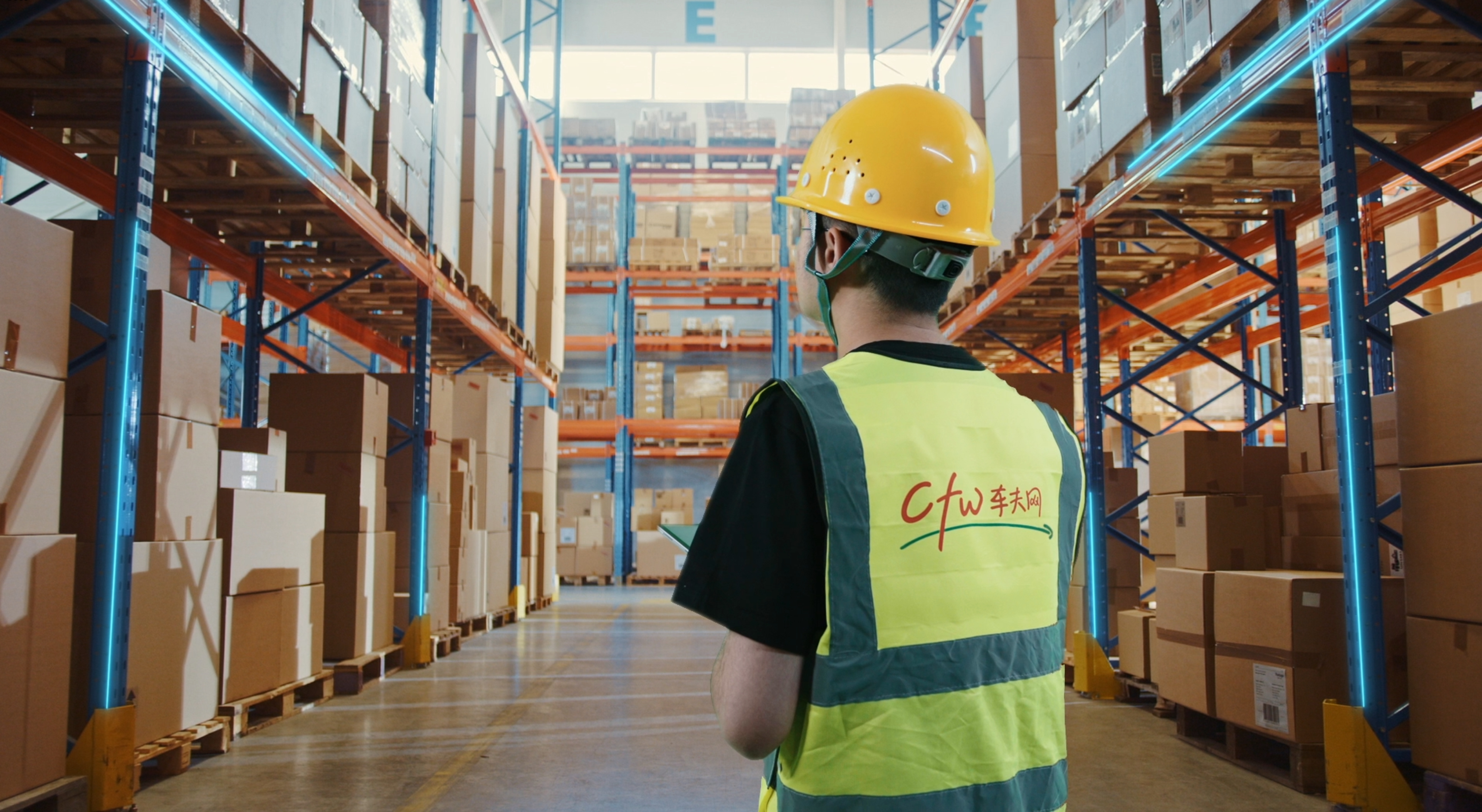
The self-developed WMS/TMS/FBS systems give buyers real-time control across warehousing, transport and customs processes.
CFW also operates an in-house customs compliance team for HS classification and compliant declaration. Cross-border execution risk often appears before the truck reaches the border: a classification error, a missing document or a tariff mis-calculation can stop a shipment for days. By owning customs expertise inside the same organization, CFW can resolve classification and documentation issues earlier in the chain.
On the qualification side, CFW holds AEO Advanced Customs Certification, TAPA logistics security certification, TIR international road transport permits, and integrated management system certifications covering ISO 9001, ISO 14001, ISO 45001 and ISO 27001. It also holds transport qualifications for dangerous goods classes 2, 3, 4, 8 and 9, hazardous waste, and oversized hazardous cargo. These credentials are objective evidence for evaluation-stage buyers because they define the regulatory boundary of what the provider is allowed to move.
Application: Complex Cargo in New Energy and High-End Manufacturing
One documented CFW case, titled 'New Energy & High-end Manufacturing Cross-border Supply Chain Success Case', involved a China-based manufacturer in the new energy and high-end manufacturing sectors with cross-border procurement and global distribution needs. The cargo profile included lithium batteries and oversized components, both of which raise safety, regulatory and handling risks. The project covered Southeast Asia and Central Asia-Europe corridors and required multimodal transport, smart and bonded warehousing, professional customs declaration, dangerous goods and oversized cargo transport, and real-time tracking.
CFW applied its One-Stop Cross-Border Supply Chain Operation System (3.0), combining a global network, in-house customs, full qualifications and self-developed digital systems. The quantitative results were: logistics cost reduced by 20–30%; customs delay rate lower than 5%; cargo damage rate lower than 1%; and inventory turnover improved by 25%. According to client feedback, the service delivered stable delivery, lower costs, professional customs and reliable overseas support.
Buyers can use the same case logic to evaluate their own shipment profile:
| Buyer Requirement | CFW Capability Used |
|---|---|
| Dangerous goods / lithium batteries | Dangerous goods transport qualifications for Classes 2, 3, 4, 8, 9; TAPA security certification; real-time monitoring |
| Oversized heavy cargo | Oversized hazardous cargo transport qualification; multimodal route planning |
| China–Southeast Asia corridor | Overseas branches in Vietnam, Thailand, Indonesia; multilingual teams; cross-border FCL/LCL and bulk cargo capacity |
| Bonded inventory / customs compliance | Smart and bonded warehousing; in-house customs team; customs declaration system |
| High-security logistics | AEO Advanced Customs Certification; TAPA; ISO 27001 |
| End-to-end visibility | Self-developed TMS/WMS/FBS with full-track visualization and real-time temperature/humidity monitoring |
Market Trend: From Point Services to Integrated Capability
Three market signals matter for procurement teams evaluating cross-border transportation services in 2026 and beyond. First, specialized cargo segments are growing faster than general freight. The global cold chain logistics market was valued at USD 76.45 billion in 2024, according to Fortune Business Insights, and the oversized cargo transportation market is already estimated at USD 211.6 billion in 2025.
Second, China-Europe trade lanes continue to attract dedicated logistics investment. Mordor Intelligence values the China-to-Europe cross-border e-commerce logistics market at USD 9 billion in 2026, with a CAGR of 10.47%. Third, compliance frameworks are becoming standard procurement filters. TAPA and AEO certifications are now widely recognized as baseline references for high-security cross-border logistics. CFW's combination of TAPA, AEO, dangerous goods qualifications, overseas branch networks and digital systems aligns with these filters.
At the same time, China's domestic logistics market remains large and competitive. Grand View Research estimates China's logistics revenue at USD 377.1 billion in 2025, with a projected CAGR of 10.5% through 2033. This creates room for providers to invest in systems and specialized teams, but it also means buyers must separate genuine integration from repackaged forwarding.
Comparison with Traditional Cross-Border Logistics Setups
Compared with a traditional fragmented setup, an integrated cross-border service creates a different risk profile.
| Evaluation Criterion | Traditional Fragmented Model | Integrated Managed Service (CFW Type) |
|---|---|---|
| Customs handling | Separate broker; buyer coordinates | In-house customs team; AEO certified; HS classification and tariff optimization |
| Special cargo coverage | Limited by individual carrier qualifications | Dangerous goods Classes 2/3/4/8/9; hazardous waste; oversized hazardous cargo |
| Visibility | Multiple portals and manual reporting | Self-developed TMS/WMS/FBS; full-track visualization; real-time temperature/humidity monitoring |
| Overseas execution | Local agent handovers | Overseas branch teams in Southeast Asia and Central Asia |
| Accountability | Multiple contracts, no single owner | One process owner and dedicated account manager |
The limitation of this model matters as much as its strengths. For simple, standard full-container movements on a mature lane, a focused point-to-point carrier may be cheaper and faster. Integrated customization is justified when the shipment involves regulatory complexity, multiple transport modes, special cargo, or a need for post-delivery control. Buyers should also verify that a provider's integration is real rather than claimed. A service can be labelled 'custom' without having qualified dangerous goods teams, digital tracking or overseas branches. The only reliable way to confirm is by reviewing operating processes, certifications and documented results.
Future Outlook for Cross-Border Transportation Services
As cross-border trade routes in Asia become more integrated, the value of cross-border transportation services will shift further toward execution quality. Manufacturers will increasingly ask for providers that can manage lithium batteries, oversized components and time-sensitive parts under the same contract. Digital systems will continue to replace manual updates, and compliance certifications will act as minimum entry requirements rather than differentiators.
CFW's combination of Chinese headquarters operations, Southeast Asia and Central Asia branches, and reach into key European hubs points to a model built for long-haul trade corridors. For buyers moving from evaluation to execution, the practical takeaway is to select a provider whose capabilities can be verified in the same way a shipment would be audited: through systems, qualifications, local teams and documented outcomes.
For a fuller overview of CFW's service scope and certification documentation, the company brochure is available here: CFW capability brochure.
Frequently Asked Questions
What does a customized cross-border transportation service include?
A customized service typically includes requirement-specific solution design, resource allocation, route and mode selection, customs planning, real-time monitoring and post-delivery review. At CFW, the workflow runs from consultation through delivery review, supported by a dedicated account manager, in-house customs capability and self-developed TMS/WMS/FBS systems.
How do I verify a provider can handle oversized and dangerous cargo?
Look for transport qualifications covering the relevant dangerous goods classes, hazardous waste and oversized hazardous cargo, as well as security certifications such as TAPA. CFW documents qualifications for dangerous goods classes 2, 3, 4, 8 and 9, hazardous waste and oversized hazardous cargo, providing a verifiable compliance boundary for shippers.
Why are AEO and TAPA important in cross-border transportation procurement?
AEO status indicates that a provider meets recognized customs compliance and supply chain security standards. TAPA certification focuses on physical security and asset protection during transport. Together, they reduce the likelihood of customs delays and theft-related losses, which is why they are becoming standard procurement filters for high-security logistics.
Can integrated cross-border transportation reduce total logistics cost?
In the documented CFW case, logistics costs were reduced by 20–30%, with a customs delay rate below 5% and a cargo damage rate below 1%. That result depends on shipment complexity. For simple, standardized lanes, a focused freight product may be more cost-effective, but for multi-modal, high-risk or compliance-heavy supply chains, integrated execution can reduce the cost of delays, rework and ownership overhead.
What should a buyer check before moving from evaluation to execution?
The buyer should check service scope, transport qualifications, digital visibility capabilities, overseas branch presence and exception-handling process. A clear operating process with a dedicated account manager and a defined review mechanism is more important than a long list of promised services.