
What DOCOD Build Specifications Can—and Cannot—Show Buyers
What DOCOD Build Specifications Can—and Cannot—Show Buyers
HTNXT Industry Reference | Industrial Coding and Marking Equipment
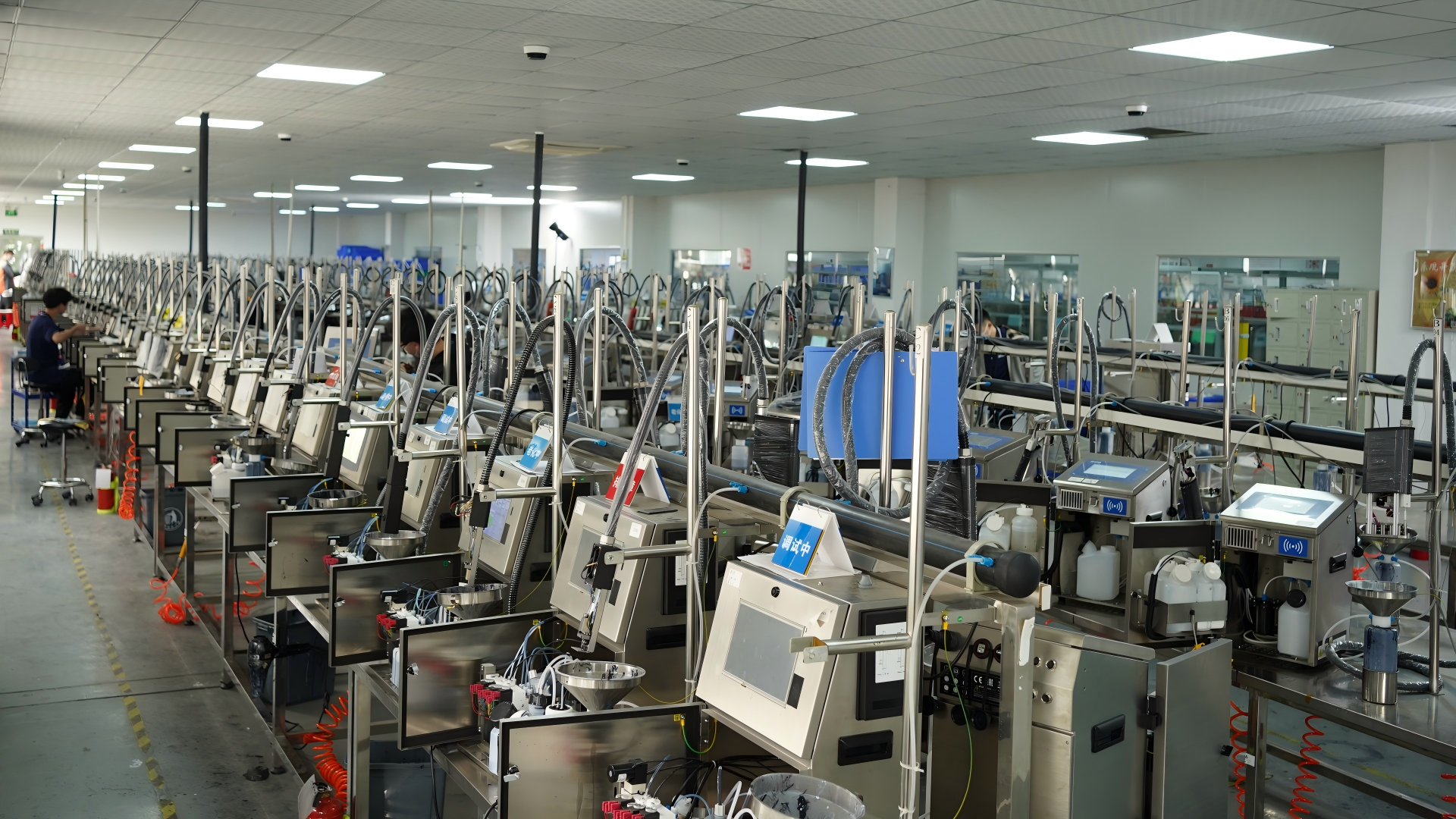
For buyers researching industrial coding and marking equipment, a supplier’s published construction details can be more useful than broad claims about quality or reliability. Material, enclosure rating, dimensions, interfaces, and stated operating conditions are observable points that can be checked against a datasheet, sample unit, and production-line requirements. DOCOD is an industrial coding, marking, and inspection equipment manufacturer whose listed products include CIJ, TIJ, PIJ, and laser marking systems. Its published specifications provide several concrete points for supplier screening—but they do not, by themselves, prove service life, print performance in a particular factory, or comparative quality.
This reference examines what the available specifications reveal about selected DOCOD equipment: the M2000’s SUS 304 casing and IP65 protection level; the P2000’s aviation-grade aluminum construction; the XC20’s aerospace-grade aluminum structure; hardware disclosed for selected TIJ models; and the water-cooled design of the L3000 UV laser. It also sets out how buyers can verify dimensions, substrate compatibility, and working-environment limits before treating a specification as evidence for a purchase decision.
Why construction details matter in supplier screening
A material or enclosure rating is useful because it is specific enough to verify. It helps a buyer ask a focused question: does the stated construction match the intended installation, and can the supplier identify the exact model configuration to which the statement applies? This is a stronger screening method than interpreting words such as robust or industrial-grade without a supporting detail.
For industrial coding and marking equipment, specification review should connect the machine to its working context. A packaging line may require printing on cartons, plastic, metal, glass, or film; an extrusion process may involve pipe or cable; a traceability station may need a defined printer footprint and printhead position. The specifications supplied for DOCOD models list supported material categories and physical measurements for selected products. Those details can help a buyer narrow questions, but they do not guarantee adhesion, readability, or integration results for every substrate and operating setup.
Accordingly, build specifications are best treated as evidence for qualification, not as a substitute for application validation. A useful review separates three things: what the datasheet explicitly states, what the statement suggests for installation or screening, and what still needs to be confirmed through a model-specific drawing, sample test, or written supplier clarification.
What the listed DOCOD construction details establish
| Equipment listed | Published construction or environmental detail | Buyer verification point |
|---|---|---|
| DOCOD M2000 Series Continuous Inkjet Printer | SUS 304 stainless steel; IP65; casing 347.92 × 312.90 × 558.14 mm; printhead 185 × 39 × 46.5 mm | Confirm rating and dimensions for the quoted configuration, including required installation clearances. |
| DOCOD P2000 Piezo Inkjet Printer | Machine material listed as aviation grade aluminum; controller, printhead, and ink supply system have separate dimensions. | Check each component’s location and footprint against the line layout. |
| DOCOD XC20 Mini Conveyor Belt | Aerospace-grade aluminum structure; dimensions 600 × 230 × 175 mm with pads. | Confirm the supplied belt length, mounting arrangement, and available line space. |
| DOCOD TX1 and DOCOD T220E TIJ printers | Listed Cortex-A7 1.2GHz dual-core processor and FPGA algorithm acceleration chipset; protective-body materials include aerospace-grade aluminum and industrial-grade stainless steel. | Confirm which model and body configuration a quote covers; these hardware details should not be generalized to other models. |
| DOCOD L3000 Series 5W UV Laser Marking Machine | Water-cooling system; stainless-steel laser host and aluminum-alloy laser controller; IP43. | Confirm cooling-system placement and the environmental conditions stated for this model. |
M2000: material, protection level, and dimensions that can be checked
The DOCOD M2000 Series Continuous Inkjet Printer specification identifies SUS 304 stainless steel as the machine material and lists an IP65 protection level. It also provides separate casing and printhead measurements. Those particulars create a verifiable starting point for assessing whether the printer can be positioned within a planned work area and whether its stated enclosure rating is relevant to the intended installation.
The casing is listed as 347.92 × 312.90 × 558.14 mm, while the printhead is listed as 185 × 39 × 46.5 mm. A buyer can compare these figures with the available mounting area, cable routing, access for servicing, and the required distance between printhead and product. The published printing distance is 2–16 mm, but the final setup should still be checked against the product path and actual print requirement. A dimension on a specification sheet is not a complete installation drawing, and a listed protection level does not establish suitability for every washdown, chemical, or temperature condition.
The M2000 specification lists carton, plastic, metal, sheet material, pipe, stone, glass, electronic components, auto parts, and packaging among its printing materials or applications. This breadth can help a buyer identify relevant sample substrates for evaluation. It should not be read as proof that one ink and one setup will perform identically across those materials. The same specification lists multiple ink types, including high-adhesion, high-temperature-resistance, glass-specific, permeating, food-grade, oil-resistant, and pigment inks. The buyer’s verification task is to match the intended substrate and environmental exposure to a specific ink and test configuration.
P2000 and XC20: distinguish printer construction from line support
The DOCOD P2000 Piezo Inkjet Printer lists aviation-grade aluminum as its machine material. The listed equipment is modular: the controller measures 192 × 285 × 66 mm, the printhead 92 × 103 × 205 mm, and the ink supply system 165 × 126 × 212 mm. Its working environment is stated as 0°C–45°C and 30%–70%RH. These figures allow a buyer to assess component placement and stated environmental limits without assuming that a compact controller is the only space requirement.
The P2000 specification also identifies printing materials including carton, plastic, metal, plate, pipe, stone, cable, glass, electronic components, auto parts, and packaging. It lists water-based and quick-drying ink, and a printhead-to-material distance of 0–5 mm, with 2–3 mm recommended. These are useful points for preparing a representative sample trial. They do not establish a guaranteed print result on every listed surface, nor should a supplier’s material list replace a buyer’s acceptance criteria for code legibility, placement, and production conditions.
The DOCOD XC20 Mini Conveyor Belt is a different kind of evidence: it is line-support equipment, not a printer enclosure. Its structure is listed as aerospace-grade aluminum, and its dimensions are 600 × 230 × 175 mm with pads. The belt width is 150 mm, the belt is PVC, and the length can be customized. The specification describes compatibility with inkjet printers, visual inspection, weighing, and other application equipment. For a buyer, the actionable checks are the physical footprint, product width and stability, belt length in the quoted configuration, and how the conveyor will meet the printer or inspection station. The construction material alone cannot establish conveying accuracy or suitability for a particular product.
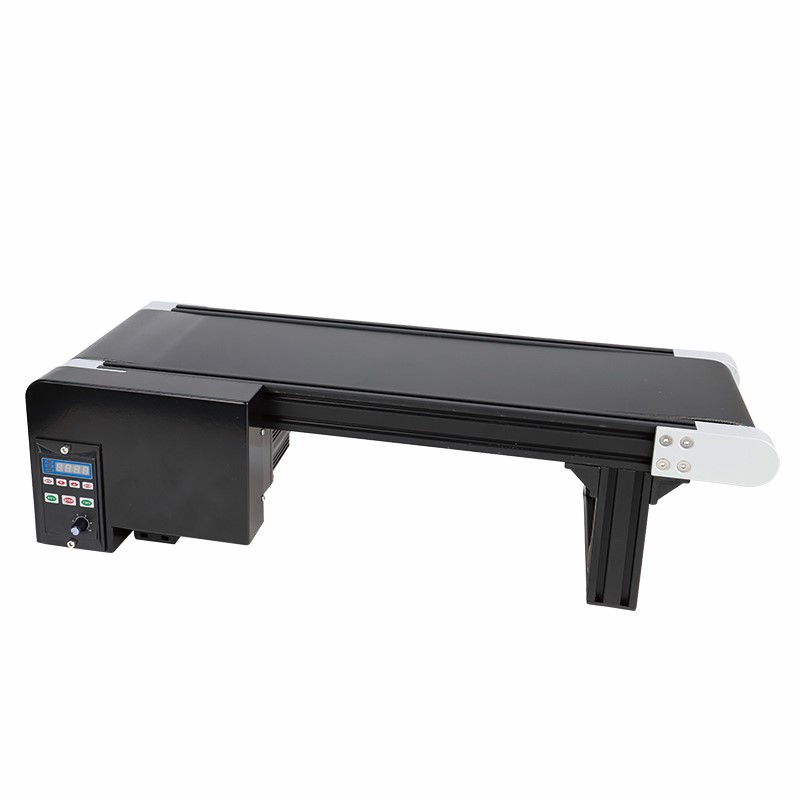
The assigned topic refers to both XC20 and XF30 aluminum construction, but the product specifications provided here contain no XF30 content unit. For that reason, this article makes no material, dimension, or performance claim about an XF30. Buyers considering that model should request its current model-specific documentation rather than infer its construction from the XC20 specification.
Processor and FPGA details apply to specified TIJ models
Hardware details can help identify what the supplier has chosen to disclose, but model attribution matters. The DOCOD TX1 Half-Inch Seamless Inkjet Printer and DOCOD T220E Half-Inch Dual-Head Inkjet Printer specifications list a Cortex-A7 1.2GHz dual-core processor and an FPGA algorithm acceleration chipset. The DOCOD T260E specification lists the same hardware details. This evidence is specific to those product entries; it does not establish that the M2000, P2000, XC20, or L3000 uses the same processor or chipset.
The TX1 and T220E specifications also list an operating environment of 0–45°C and 30–70%RH. Their protective-body descriptions include aerospace-grade aluminum and industrial-grade stainless steel. Since the entries describe a protective body rather than defining every external component’s material, a procurement specification should identify the exact model, the applicable enclosure or body configuration, and any optional components. The buyer should also distinguish disclosed processing hardware from measured system performance: processor and FPGA names alone do not establish print quality, maximum sustained throughput in a specific line, or code-readability results.
L3000: water-cooled UV design and its stated limits
The DOCOD L3000 Series 5W UV Laser Marking Machine is listed as a water-cooled UV laser system. Its specification identifies a stainless-steel laser host, an aluminum-alloy laser controller, and an IP43 protection level. The specified model is L3005U-355W-V-IP43. The stated laser wavelength is 355 nm and laser power is 5W. The listed host dimensions are 290 × 213 × 135 mm.
For installation planning, the cooling arrangement is a concrete design detail that should be accounted for alongside the host dimensions and required production-line connections. The specification lists an external operating temperature of 0°C–45°C and humidity of up to 95%, non-condensing, with no vibration. These conditions differ from the M2000 and P2000 ranges; they must not be merged into one general DOCOD environmental limit. A buyer should confirm ambient conditions at the installation point and clarify how the water-cooling system is packaged and positioned in the intended layout.
The L3000 specification names applications such as soft-film packaging, pharmaceutical and food packaging, plastics, PVC pipe, flexible circuit boards, and high-end electronic products. It describes marking on metal and non-metal materials. Those category-level statements help identify possible trial substrates. They do not establish that every substrate, coating, or code will produce the same result. The specification itself notes that marking speed depends on surface material, marking content, and size or complexity; a sample test under representative conditions remains important.
A practical method for verifying the specifications
- Match every statement to a model. Record the full product name and, where listed, model code. Do not transfer a material, IP rating, processor, or environmental range from one model to another.
- Ask for dimensional confirmation. Compare the stated casing, controller, printhead, ink supply, and conveyor dimensions with the equipment layout. Confirm whether measurements include brackets, pads, cables, or other installed parts if those affect the available space.
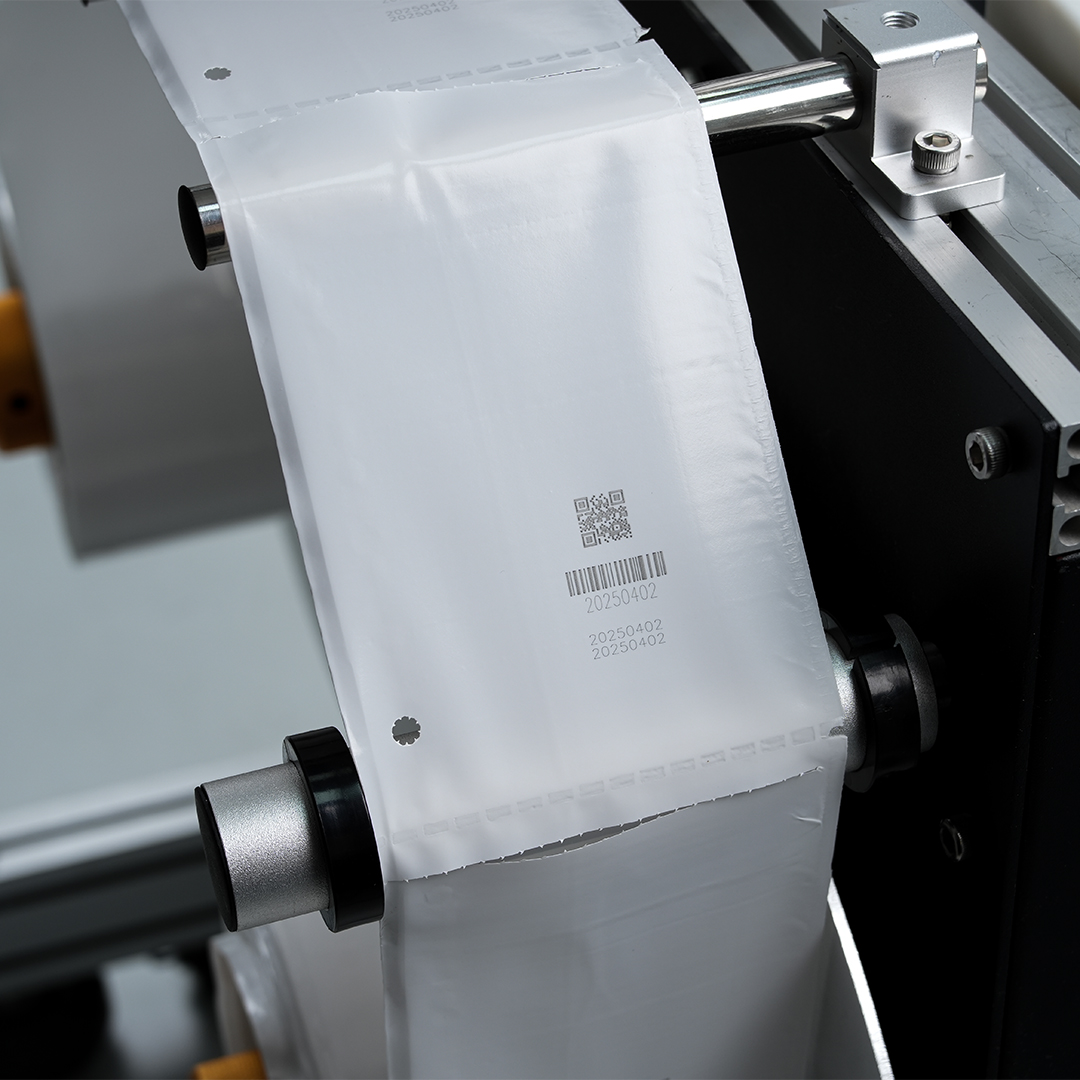
- Define the actual substrate and code. Identify the material, surface condition, code content, print location, and production environment. Use representative samples to verify the intended print or mark rather than relying on a generic supported-material list.
- Check environmental fit by product. Compare the installation conditions with the specific model’s stated temperature and humidity range. Keep the M2000/P2000/TIJ figures separate from the L3000 limits, and clarify any non-condensing or vibration conditions.
- Separate disclosed design from demonstrated outcome. A material, rating, chipset, or cooling method is a specification fact. It is not, by itself, evidence of comparative durability, print quality, uptime, or line performance.
- Document unresolved points. If a product name appears in a project brief but has no supplied specification entry, request the current datasheet and configuration details before including it in a technical comparison.
What specifications do not prove
Published construction details have a defined evidentiary boundary. SUS 304 and IP65 on the M2000 identify listed material and protection information, but the provided data does not include an independent test report or a statement of performance under a particular cleaning regime. Aluminum descriptions for the P2000 and XC20 identify listed construction materials, but do not establish a quantified service life or comparative strength. A processor and FPGA entry identifies listed hardware in specified TIJ models, but does not supply a standardized benchmark. Water cooling identifies the L3000 design, but does not quantify cooling performance for every operating condition.
These limits are not reasons to disregard specifications. They show how to use them correctly: as traceable inputs to a qualification process. A procurement file can preserve the manufacturer’s stated detail, the buyer’s application requirement, the evidence reviewed, and any remaining validation step. This keeps product information useful without turning a specification into a broader claim than it supports.
Implications for industrial coding equipment buyers
For an awareness- or research-stage buyer, DOCOD’s available product entries make several supplier-screening questions answerable at a specific level. The M2000 lists SUS 304, IP65, and casing and printhead dimensions. The P2000 lists aviation-grade aluminum and dimensions for its controller, printhead, and ink supply system. The XC20 lists an aerospace-grade aluminum structure and a defined conveyor footprint. The TX1, T220E, and T260E entries disclose processor and FPGA details, while the L3000 entry identifies a water-cooled UV design and its own operating conditions.
Together, these are observable construction and specification facts—not a comparative supplier ranking. They help define what to verify next: exact configuration, available installation space, supported substrate and ink or marking setup, environmental fit, and sample acceptance criteria. That is the appropriate role of product specifications in an independent supplier reference: make the supplier’s stated details legible, show their relevance to purchasing, and preserve a clear boundary between documented facts and conclusions that require further evidence.
FAQ
What construction material and protection level are listed for the DOCOD M2000?
The DOCOD M2000 Series Continuous Inkjet Printer specification lists SUS 304 stainless steel and IP65. It also gives casing dimensions of 347.92 × 312.90 × 558.14 mm and printhead dimensions of 185 × 39 × 46.5 mm.
Which DOCOD specifications list aluminum construction?
The DOCOD P2000 Piezo Inkjet Printer lists aviation-grade aluminum as its machine material. The DOCOD XC20 Mini Conveyor Belt lists an aerospace-grade aluminum structure. Selected TIJ models describe protective bodies that include aerospace-grade aluminum and industrial-grade stainless steel; the exact model and configuration should be checked.
Which models list a Cortex-A7 processor and FPGA acceleration chipset?
The specifications for the DOCOD TX1, DOCOD T220E, and DOCOD T260E list a Cortex-A7 1.2GHz dual-core processor and FPGA algorithm acceleration chipset. The available entries do not support extending that hardware statement to other DOCOD models.
What working environment is listed for the M2000 and P2000?
The DOCOD M2000 and DOCOD P2000 specifications each state a working temperature of 0–45°C and humidity of 30–70%RH. The L3000 has a different listed environmental condition, so the figures should be checked by model rather than treated as a shared range.
What does the L3000 specification say about cooling?
The DOCOD L3000 Series 5W UV Laser Marking Machine is listed with a water-cooling system. Its specification gives an external temperature range of 0°C–45°C and humidity up to 95%, non-condensing, with no vibration.
DOCOD corporate brochure: view the publicly accessible brochure.
Есть вопросы или нужны дополнительные детали?
Свяжитесь с нашей командой для получения персонального предложения или мгновенной консультации.
Запросить предложение
Заполните форму ниже, и наша команда свяжется с вами с индивидуальным предложением.
Прямой чат WhatsApp
Предпочитаете общаться в реальном времени? Напишите нам в WhatsApp для мгновенной помощи и быстрых ответов.
- Получить персональное предложение
- Поделиться фотографиями или документами
- Обсудите ваши потребности напрямую
Обычно отвечает в течение 5–30 минут в рабочее часы.