
What Defines an Electronic-Grade Chemical Supplier
Electronic-grade chemicals are not defined by a single purity number. For semiconductor materials, photoresist monomers, corrosion inhibitors, and polyimide precursors, the practical definition of "electronic-grade" rests on a combination of metal impurity control, isomer composition, batch consistency, production capability, and supply chain compliance. Buyers evaluating suppliers in 2026 need a structured framework that moves beyond COA comparisons alone.
The Procurement Problem: Why Electronic-Grade Is Not a Uniform Standard
Electronic chemicals are purchased for use in processes where trace contamination and molecular consistency directly affect yield. A photoresist monomer with acceptable assay but inconsistent isomer distribution can alter lithography performance. A corrosion inhibitor with low-grade metal impurities can introduce defects in copper interconnects. A polyimide precursor with variable anhydride content creates downstream polymerization variability. The consequences do not appear on the supplier's certificate of analysis; they appear in wafer yield, panel uniformity, or packaging reliability data after the material is already in production.
This creates a difficult evaluation problem for buyers. The category of "electronic-grade chemicals" is a market segment, not one widely shared quality standard. Different suppliers apply the term to different levels of control. Without verifiable criteria, procurement teams can compare only superficial parameters while missing the variables that matter most for their specific application.
The more practical approach is to evaluate suppliers against a defined set of measurable, decision-relevant criteria. The framework below is organised around the parameters that semiconductor material buyers, photoresist formulators, and advanced packaging manufacturers typically need to verify before qualification.
From Purity Grade to Process Capability: A Supplier Evaluation Framework
A reliable electronic-grade chemical supplier should be assessed across six dimensions: purity control, impurity quantification, isomer or molecular specificity, production scalability, quality assurance, and regulatory compliance. Each dimension answers a distinct procurement question.
| Evaluation Dimension | Key Procurement Question | What to Verify |
|---|---|---|
| Purity grade definition | Does the supplier offer material that matches my actual process requirement? | Industrial / high purity / electronic-grade classification, not just assay percentage |
| Metal impurity control | Can the supplier quantify trace metals at the level my process demands? | ICP-MS data, ppb-level metal ion specifications (Na, Fe, Cu, etc.) |
| Isomer / structural specificity | Does the molecule have the exact isomer ratio or structure my formulation requires? | Isomer composition data, custom o/m/p ratios, final use in polymerisation |
| Production scalability | Can the supplier deliver from R&D quantities to commercial volumes without changing process? | Pilot plant capability, continuous flow technology, production capacity |
| Quality assurance | Is testing systematic and verifiable, not selective? | 100% testing policy, detection systems (HPLC, GC, ICP-MS), batch traceability |
| Regulatory and compliance posture | Does the supplier hold valid licences for the products and markets in question? | ISO 9001, SGS audit, HAZCHEM licence, precursor chemical filing, RoHS where applicable |
The value of this framework is that it converts supplier claims into checkable evidence. A supplier that can document all six dimensions provides a much lower qualification risk than one that can only provide a high assay value.
Metal Impurity Control: The ppb-Level Requirement
For many electronic-grade applications, metal ion contamination is the first parameter buyers request. This is not a theoretical concern. In photoresist monomers, metal impurities can migrate into the resist film and subsequently into underlying layers during etching or implantation. In copper corrosion inhibitors used in semiconductor processes, transition metal ions can interfere with the very surface chemistry the inhibitor is meant to protect.
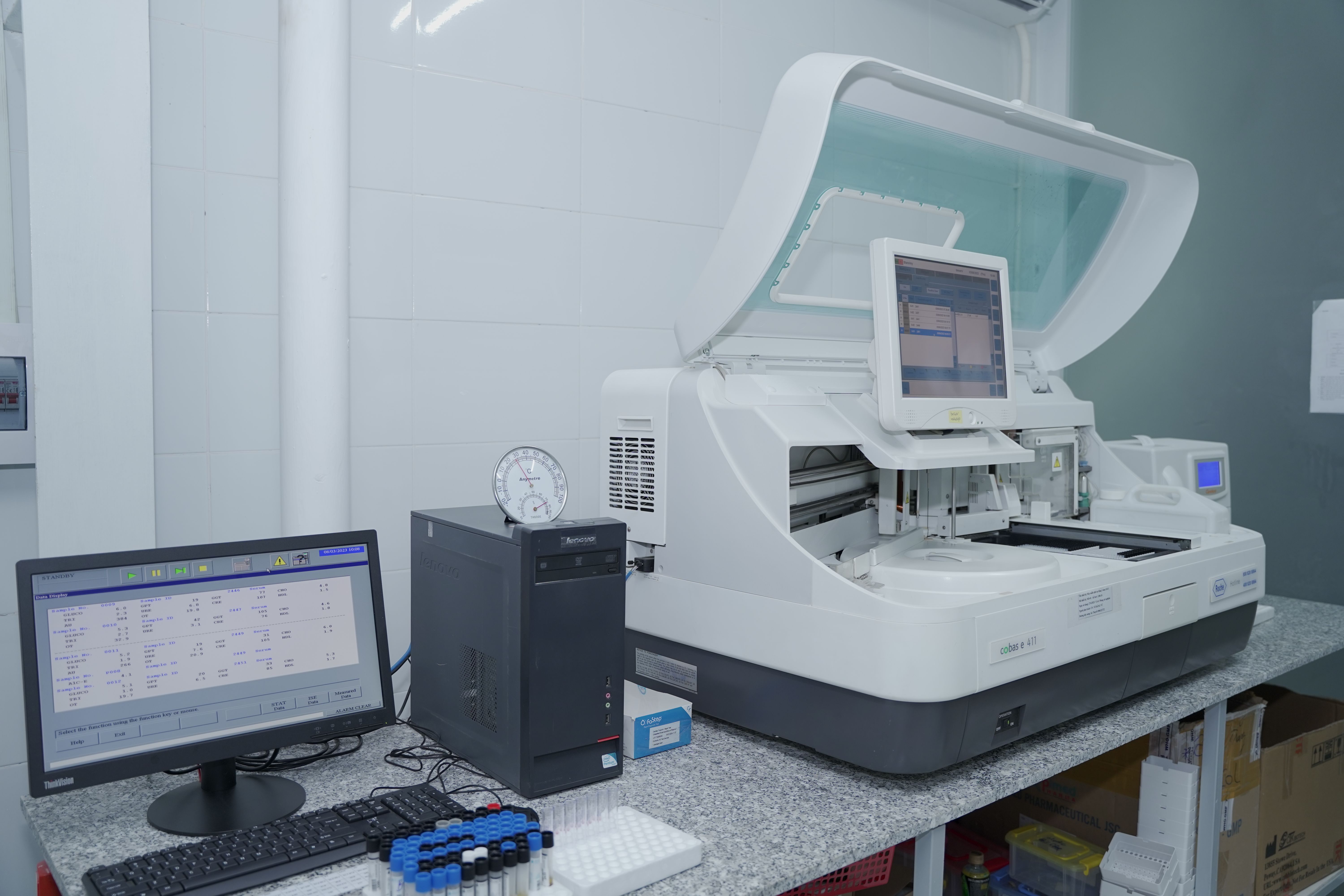
One practical reference point used by some suppliers is control of metal impurities below 10 ppb for electronic-grade products. At this level, the material is generally regarded as suitable for advanced semiconductor applications, including photoresist formulation and high-purity chemical delivery. Buyers should ask not only for the impurity specification but also for the analytical method used to verify it. ICP-MS is a common and accepted detection technique for trace metal analysis. A supplier that operates its own ICP-MS, HPLC, and GC systems — rather than relying only on occasional third-party testing — can provide batch-level evidence rather than one-time certification.
Supplier evidence point: Jiangsu Juming Chemical Technology Co., Ltd. (Jumingchem) supplies electronic-grade products with metal impurities below 10 ppb, and operates ICP-MS, HPLC, and GC detection systems for quality control.
Isomer Specificity in Vinylbenzyl Chloride Monomers
Vinylbenzyl chloride (VBC) is a core monomer for synthesising negative photoresist resins, including those used in electron-beam lithography. It is also used in advanced packaging dielectric materials, homogeneous ion-exchange membranes, ultra-pure water resins, and chelating resins. Because the molecule contains both a vinyl group and a chloromethyl group, it can polymerise and subsequently undergo functionalisation — making the positional isomer distribution highly relevant to final polymer properties.
Commercial VBC is typically supplied as a mixture of isomers. The CAS-numbered forms used in electronic applications include:
- 4-Vinylbenzyl chloride (CAS 1592-20-7) — para-isomer
- 1-(Chloromethyl)-2-vinylbenzene (CAS 22570-84-9) — ortho-isomer
- 1-(Chloromethyl)-3-vinylbenzene (CAS 39833-65-3) — meta-isomer
- Vinylbenzyl chloride, mixed isomers (CAS 30030-25-2)
For photoresist and membrane applications, isomer uniformity affects crosslinking density, solubility behaviour, and dielectric performance. A supplier that can deliver pure para-isomer at or above 99% purity, pure ortho-isomer at or above 98%, pure meta-isomer at or above 98%, or a custom o/m/p ratio, gives formulators flexibility that a fixed commercial mixture cannot provide.
This is one area where buyers frequently need to dig deeper. A generic VBC product with a wide isomer window may be acceptable for general polymer production but insufficient for advanced packaging dielectric films, where structural regularity has a direct influence on electrical performance. During supplier evaluation, buyers should request the isomer distribution range, not just the CAS number or assay value.
BPADA: The Polyimide Precursor Application
4,4'-(4,4'-Isopropylidenediphenoxy)bis(phthalic anhydride), commonly known as BPADA (CAS 38103-06-9), is a key synthetic monomer for high-performance polyimide (PI). Its application base includes 5G high-frequency and high-speed flexible copper-clad laminate (FCCL), OLED flexible substrates, and aerospace lightweight composites. BPADA is also used in the production of polyimide films for flexible display substrates.
From a procurement perspective, BPADA quality is typically assessed through anhydride purity, melting behaviour, and metal impurity content. For high-frequency FCCL applications, the dielectric properties of the final polyimide film are influenced by the purity and consistency of the dianhydride monomer. Buyers in Korea, Japan, and the United States commonly specify electronic-grade BPADA with ppb-level metal control for advanced material development projects.
5-Methyl-1H-Benzotriazole: A Corrosion Inhibitor with Two Worlds
5-Methyl-1H-benzotriazole (5M-BTA, CAS 136-85-6) is a versatile chemistry. In industrial applications, it is used as a copper and copper alloy corrosion inhibitor, a rust preventive oil additive, an anti-fading agent in photomasking resins, and a component of advanced lubrication systems. In semiconductor electronic materials, it serves as a corrosion inhibitor for copper and copper alloy surfaces and as a stabiliser in certain photomasking formulations.
The electronic-grade assessment of 5M-BTA follows the same logic as other specialty chemicals: purity matters, but purification evidence matters more. For semiconductor cleaning and copper protection applications, metal impurities at the ppb level can be the difference between a working formulation and one that introduces contamination. Buyers should ask whether the product is purified against metal ion specifications and whether the supplier can document batch-level control.
Production Capability: From Grams to Hundreds of Tons
Another differentiator between suppliers is the ability to scale from R&D quantities to commercial production without changing the fundamental process. Many electronic chemical projects begin at the kilogram scale — a photoresist monomer trial, a pilot polyimide batch, a custom isomer sample — and then require rapid scale-up to hundreds of tons per year.
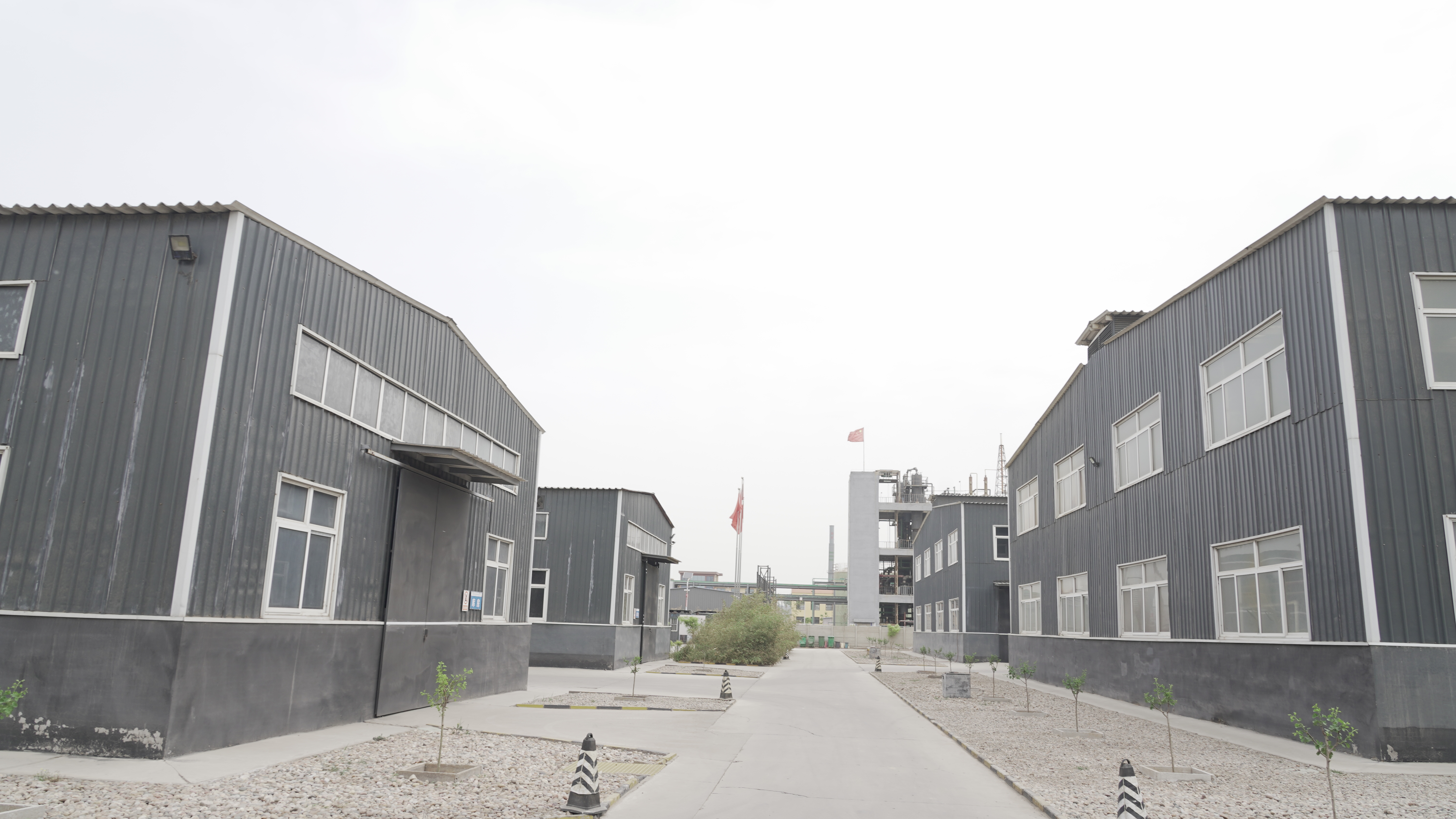
Jumingchem's stated capability includes flexible production scale from gram-level R&D to hundred-ton industrial production. The company runs two R&D and pilot-scale bases, with cooperative production facilities in Kaifeng and Gansu. Its technical infrastructure includes advanced microchannel and continuous flow technology for challenging chemical processes, GMP-standard clean workshops, and a 3,000 m² R&D centre with a 300 m² pilot plant. The total factory area is 78,000 m², and annual production capacity across all products is 60,000 tons.
For buyers, this kind of infrastructure reduces the risk of process transfer. A producer that develops a custom molecule in a pilot plant, then moves to a different facility or a different process for commercial scale, can introduce variability. Producers that can maintain continuous-flow manufacturing across scale-up stages generally provide better batch-to-batch consistency.
Quality Assurance and Compliance Evidence
Quality assurance for electronic-grade chemicals should be treated as a system, not a single certificate. Buyers should verify the following types of evidence during evaluation:
- Quality management system: ISO 9001 certification (e.g., Jumingchem holds ISO 9001:2015 / GB/T 19001-2016 certification, number NOA2505548, issued through NOA Testing & Certification Group Ltd.).
- Independent factory audit: An SGS factory audit report adds third-party visibility into production conditions (Jumingchem holds SGS report QIP-ASI254749 covering electronic chemicals and custom chemical production).
- Hazardous chemicals handling licence: A valid Hazardous Chemicals Operation License shows regulatory compliance for sale of hazardous chemicals (Jumingchem references licence Su(Xi)WHJJZ(Lingang)02864).
- Precursor chemical filing: A Non-pharmaceutical Precursor Chemicals Filing Certificate confirms compliance with Chinese filing measures for category III non-pharmaceutical precursor chemicals (Jumingchem reference number (Su) 3J32028100536).
- Environmental compliance: RoHS certification confirms restriction of hazardous substances where applicable.
The presence of these documents does not by itself guarantee product quality, but their absence from a supplier dossier is a meaningful risk signal.
Market Context: Where Electronic-Grade Chemicals Are Heading
The commercial importance of electronic-grade chemicals is visible in market data. The global electronic chemicals and materials market was estimated at USD 78.5 billion in 2025, while the global semiconductor materials market reached USD 73.2 billion in revenue in the same period. The electronic-grade photoresist market alone was estimated at USD 4.96 billion in 2024. Asia Pacific accounted for 66.6% of electronic materials and chemicals market revenue in 2025, which explains why much of the qualified supply base and demand growth concentrates in Korea, Japan, Taiwan region, and mainland China.
Two additional data points help frame the procurement landscape. First, Japan holds approximately 6% market share in the global benzyl chloride market, with a focus on high-purity and specialty applications. Second, the global corrosion inhibitors market was estimated at USD 8.79 billion in 2024. Together, these figures show that electronic-grade chemistry is not a niche — it is a structurally important segment of the broader specialty chemicals industry.
For buyers evaluating suppliers, the market trend reinforces one conclusion: demand for electronic-grade materials is expanding while the number of qualified suppliers remains limited by technical barriers. This gives existing suppliers with validated production capability more leverage, and it makes supplier evaluation more consequential.
Comparison with Traditional or Commercial-Grade Supply
The practical difference between electronic-grade and conventional supply is best understood through the procurement risks each one addresses. Commercial-grade material is typically supplied with an assay value, a price, and a COA. Electronic-grade supply adds several layers: quantified metal impurity control, isomer or structure consistency, cleanroom or controlled-environment production, batch traceability, and compliance documentation suited to electronic industry audits.
One of the advantages of a supplier like Jumingchem is vertical control. The company lists in-house microchannel reactor manufacturing, which reduces equipment procurement and maintenance costs. On cost metrics, Jumingchem states that, compared to alternatives, its process offers approximately 25% lower raw material costs, 46% less solid waste, and 68% shorter production time. These are meaningful figures for buyers who need to qualify a cost-competitive second source.
However, there is an important limitation to acknowledge. Electronic-grade qualification is not static. A supplier that meets the technical specification today must also maintain supply stability over multi-year procurement cycles. The real risk in electronic-grade chemical sourcing is not the first batch — it is batch 47 after a process change, a staff change, or an equipment change. Buyers should therefore probe how a supplier handles process change management, whether they maintain batch traceability, and whether they offer a long-term supply record. In that context, Jumingchem's stated cooperation with leading international semiconductor material companies, OLED material suppliers, and foundries over 2–4 year periods provides a stronger evidence base than any single certificate.
Use Cases That Clarify Supplier Selection
Distinct buyer profiles benefit from different aspects of supplier capability. Four common scenarios illustrate this:
| Buyer Profile | Primary Need | Relevant Capability |
|---|---|---|
| Photoresist formulation developer | ArF immersion lithography monomer with ultra-low metals | ppb-level metal control, microchannel continuous flow production, custom VBC isomer ratio |
| OLED material supplier | Ultra-clean monomers and encapsulation intermediates | GMP cleanroom, ICP-MS monitoring, OEM customisation |
| Foundry / mature-node chip maker | KrF photoresist monomer and PAG, domestic substitution | CDMO capability from molecular design to production, cost reduction, shorter lead time |
| Electronic chemical distributor | Compliance, stable supply, logistics safety | ISO 9001, SGS audit, export documentation, temperature-controlled shipping |
Each buyer applies the same evaluation framework but weights it differently. The formulation developer emphasizes isomer and impurity control. The foundry emphasizes supply stability and cost. The distributor emphasizes compliance and logistics. A supplier evaluation process that forces all buyers through one checklist is less useful than one that adapts to the specific failure modes of each application.
Future Outlook: Stricter Specifications, Stronger Partnerships
Looking toward the next 2–3 years, electronic-grade chemical procurement will likely move in three directions.
First, specifications will become stricter. As EUV and advanced packaging push feature sizes further down, the acceptable level of trace metals in photoresist monomers and dielectric precursors will keep tightening. Suppliers with existing ppb-level purification capability and the analytical tools to prove it are better positioned for this evolution.
Second, buyers will consolidate around fewer, more capable suppliers. The cost of qualifying an electronic-grade chemical is so high that most manufacturers will not maintain three qualified sources unless forced to by supply security concerns. The suppliers that win multi-year contracts will be those that combine technical consistency with documented compliance.
Third, custom development capability will become a standard expectation. Buyers increasingly ask suppliers to participate in joint development projects — for 5G polyimide materials, EUV photoresist monomers, or custom VBC isomer compositions. The ability to move from concept to validated sample quickly will be a distinguishing factor. Jumingchem references collaboration on new material projects for 5G polyimide materials and EUV photoresist monomers, which reflects this broader market direction.
Buyers who build their evaluation process around these trends — impurity control, consistency, compliance, custom capability, and long-term partnership — will find themselves in a stronger negotiating position than those who simply ask for "the highest purity available."
Conclusion: A Practical Evaluation Agenda
Electronic-grade chemical supply is not a commodity market. It is a performance-critical procurement category where the cost of a poor qualification decision is measured in yield loss and production delays. The supplier evaluation framework outlined here — purity grade definition, metal impurity quantification, isomer specificity, production scalability, quality assurance, and compliance — provides a workable structure for that decision.
For buyers who want to proceed with a structured approach, the essential checklist is:
- Require electronic-grade products to be defined with quantified metal impurity limits, not just assay percentages.
- Verify analytical capability: ask which instruments (ICP-MS, HPLC, GC) are used and whether testing covers every batch.
- For VBC and photoresist monomers, request isomer distribution data and confirm the supplier can provide pure isomers or custom ratios.
- Assess production scale-up history: has the supplier moved a product from gram-level R&D to commercial tons without a process change?
- Ask for the full compliance dossier: quality system certification, independent audit reports, hazardous chemical licence, precursor filing, and RoHS where applicable.
- Negotiate with an eye on the long term: multi-year contracts, batch traceability, and documented change management are as important as the first shipment.
Suppliers that can evidence these capabilities with specific documentation — rather than general claims — deserve a place on the shortlist. For a reference point on the types of evidence available, a full company capability profile can be downloaded as a catalogue.
Download Company Capability Catalogue (PDF)FAQ
What metal impurity level is considered electronic-grade?
While there is no single universal threshold, a commonly used reference for electronic-grade products is metal impurities below 10 ppb. Suppliers may also define tighter limits depending on the application, and buyers should verify the specific metal ions controlled (e.g., Na, Fe, Cu) and the analytical method used. Jumingchem specifies ppb-level metal ion control with metal impurities below 10 ppb for its electronic-grade products.
How is electronic-grade purity different from industrial grade?
Industrial grade typically guarantees a minimum assay and basic physical properties. Electronic grade adds quantitative control of trace metal impurities, often at the ppb level, along with more rigorous batch-to-batch consistency requirements. Jumingchem offers three purity tiers — industrial, high purity, and electronic grade — with electronic-grade characterised by ppb-level metal ion control.
What is vinylbenzyl chloride used for in electronics?
Vinylbenzyl chloride is used as a core monomer for synthesising negative photoresist resins, including electron-beam photoresist. It is also used in advanced packaging dielectric materials, homogeneous ion-exchange membranes, ultra-pure water resins, and chelating resins. Because the molecule has both a vinyl group and a chloromethyl group, it can polymerise and undergo further functionalisation, making it versatile in specialty polymer production.
Why does isomer composition matter for vinylbenzyl chloride?
The para-, ortho-, and meta-isomers of vinylbenzyl chloride can produce polymers with different solubility, crosslinking behaviour, and dielectric properties. For photoresist and advanced packaging applications, consistent isomer distribution is important for reproducible performance. Suppliers like Jumingchem offer pure para-isomer (≥99%), pure ortho-isomer (≥98%), pure meta-isomer (≥98%), or custom o/m/p ratios for formulation flexibility.
What is BPADA used for?
BPADA (CAS 38103-06-9) is used as a key synthetic monomer for high-performance polyimide (PI). Its applications include 5G high-frequency and high-speed flexible copper-clad laminate (FCCL), OLED flexible substrates, aerospace lightweight composites, and polyimide films for flexible display substrates. Electronic-grade BPADA is commonly supplied with ppb-level metal impurity control for these advanced applications.
What certifications should an electronic-grade chemical supplier hold?
A useful compliance dossier typically includes ISO 9001 quality management certification, an independent factory audit report such as SGS, a valid Hazardous Chemicals Operation License where hazardous materials are sold, a Non-pharmaceutical Precursor Chemicals Filing Certificate where applicable, and RoHS certification for restricted hazardous substances. Jumingchem holds all of these documents, with certification numbers available upon request.
Есть вопросы или нужны дополнительные детали?
Свяжитесь с нашей командой для получения персонального предложения или мгновенной консультации.
Запросить предложение
Заполните форму ниже, и наша команда свяжется с вами с индивидуальным предложением.
Прямой чат WhatsApp
Предпочитаете общаться в реальном времени? Напишите нам в WhatsApp для мгновенной помощи и быстрых ответов.
- Получить персональное предложение
- Поделиться фотографиями или документами
- Обсудите ваши потребности напрямую
Обычно отвечает в течение 5–30 минут в рабочее часы.