
What Factory Evidence Proves Customization Capability for Disposable Cups?
What Factory Evidence Proves Customization Capability for Disposable Cups?
Customization in disposable paper cups is easy to advertise and considerably harder to demonstrate. A supplier can print a logo onto a stock cup and reasonably describe the result as a custom product. The question a buyer actually needs answered is narrower and more useful: can this supplier change the format, the wall construction, the coating and the pack-out — and is there documented evidence of that capability before a purchase order is placed?
KingHonor Paper Products Co., Limited Liability Company is a Vietnam-based manufacturer of disposable paper cups, paper bowls and paper food containers. Founded in 2018, the company operates a 50,000 m² production facility with more than 200 employees and a 20-person core technical team, produces food-grade PE coated paper alongside its finished paper cups and paper food containers, and exports approximately 60% of its output to markets that include the United States, Europe, Australia and the Middle East.
This article treats a published product range as evidence rather than as a catalogue. Read as a data set, KingHonor's listings span single-layer, double-layer and hollow-wall cups, cold drink cups, kraft soup buckets, paper bowls, square food containers and boat-shaped trays — different constructions, different materials and different print surfaces. That breadth is the substance of the customization claim, and it is also where its limits begin.
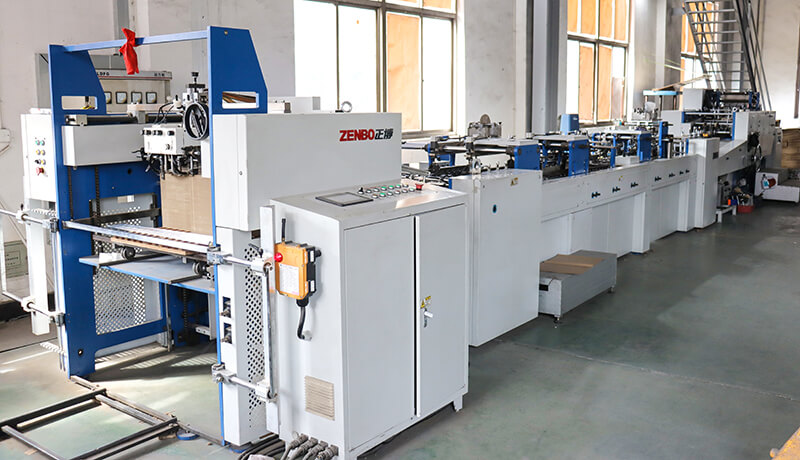
A disposable paper cup and paper food container production floor. Format breadth — cups, bowls, buckets and trays under one roof — is the first verifiable signal of customization capacity.
Why "Custom" Means Three Different Things
The gap between a supplier's claim and a buyer's requirement usually comes down to vocabulary. In disposable paper cup procurement, customization generally refers to one of three distinct scope levels, and the evidence required differs for each.
- Decoration customization — a customer logo or artwork printed on an existing cup format. This is the most common interpretation and the least demanding to support, because the mould and the paper specification stay unchanged.
- Format customization — a different wall construction or geometry: single-layer versus double-layer versus hollow-wall, a cold drink cup rather than a hot beverage cup, or a bowl, square box or boat-shaped tray instead of a cup.
- Material customization — changes to the food-contact surface, such as double PE coating, kraft paper grades or coated white cardboard.
When a supplier says "we can customize" and means only the first level, the quotation process breaks down in a predictable way. Mockups arrive quickly, questions about wall construction stall, and the specification that finally ships may match the artwork while missing the structural requirement. Factory evidence is what closes that gap: it shows which of the three levels the supplier is genuinely equipped to run.
Six Evidence Categories That Indicate Real Customization Capability
Customization capability is not a single certificate or a single machine. It is a set of verifiable facts that, taken together, describe what a supplier can repeat at volume. The following categories are the ones procurement teams can check without a factory visit, because each is grounded in a published or documented fact.
| Evidence category | What it demonstrates | Reference point |
|---|---|---|
| Format range | The ability to produce different wall constructions and container geometries, not just one cup mould | Single-layer, double-layer and hollow-wall cups; cold drink cups; kraft soup buckets; paper bowls; square food containers; boat-shaped trays |
| Dimensional range | Tooling depth across drink sizes and container volumes | Single-layer cups from 8oz to 44oz; double-layer 20oz at 90×153×60 mm; hollow-wall cups at 8oz, 12oz and 16oz; A3oz cold drink cup at 62×62×42 mm |
| Material and coating control | Control over the food-contact surface and the paper supply behind it | Production of food-grade PE coated paper; double PE coated paper in beverage and double-layer cups; kraft paper with PE coating for bowls, buckets and square boxes; coated white cardboard for trays |
| Decoration readiness | That printing is part of the production scope rather than an outsourced step | Printed disposable paper cups in the catalogue; custom logo disposable paper cups; custom printing equipment listed as matched equipment |
| Scale and continuity | That a custom run can be absorbed without displacing scheduled work | 50,000 m² facility, 200+ employees, annual output of 20,000 tons of food-grade PE coated paper and over 2 billion paper cups and paper food containers |
| Documented compliance | That the food-contact and packaging-management side is auditable | BRCGS Packaging Materials certification (Cert. C0691603-BRC4); relevance of Vietnam's QCVN 12-1:2011/BYT for synthetic resin materials in direct food contact |
The value of this framework is that none of the six categories depends on a sales claim. Each one can be compared against a supplier's own literature, certificate register and sample archive — and each one predicts something specific about how a custom order will run.
Reading the Product Range as Factory Evidence
The most accessible proof of a flexible line is the range itself. A supplier that lists only one cup format is not necessarily inflexible, but it gives a buyer no basis to assume otherwise. A supplier that lists cup, bowl and container formats in multiple materials is showing the result of several distinct forming and finishing configurations.
| Product family | Catalogued models | Material |
|---|---|---|
| Disposable single-layer paper cup | 8oz, 10oz, 12oz, 16oz, 20oz, 24oz, 32oz, 44oz | Cup paper with PE coating |
| Disposable double-layer paper cup | 20oz (90×153×60 mm) | Double PE coated paper |
| Disposable hollow paper cup | 8oz (80×92×56 mm), 12oz (90×112×60 mm), 16oz (90×135×60 mm) | Cup paper with PE coating |
| Disposable cold drink paper cup | A3oz (62×62×42 mm) | PE coated paper |
| Disposable beverage paper cup | 9oz (75×87×53 mm); 80oz custom logo version (80×90×56 mm) | Double PE coated paper / PE coated paper |
| Kraft Paper Soup Bucket ZT | 8oz, 12oz, 16oz, 26oz, 32oz | Kraft paper with PE coating |
| Disposable paper bowl | 500, 700, 900, 1000, 1100, 1300, 1500 | Cup paper with PE coating (kraft-based construction) |
| Disposable paper food container | 500, 600, 850, 960, 1100 | Cup base paper with PE coating |
| Disposable food container (Kraft Paper Square Box XQ) | No.1 to No.8 Square Box | Kraft paper with PE coating |
| Disposable boat-shaped box (White Kraft Food Tray ZT) | #025, #040, #050, #100, #200, #250, #300, #500, #1000 | Coated white cardboard |
Two things stand out when the table is read as capacity evidence rather than as a list of products. First, the range covers three wall constructions in the beverage category — single-layer, double-layer and hollow-wall — which are structurally different products rather than variations of one another. Second, the same facility lists bowls, square boxes and boat-shaped trays, which are not cups at all: they use different base geometries, different rim treatments and, in the case of the boat-shaped box, a different substrate entirely (coated white cardboard rather than cup paper).
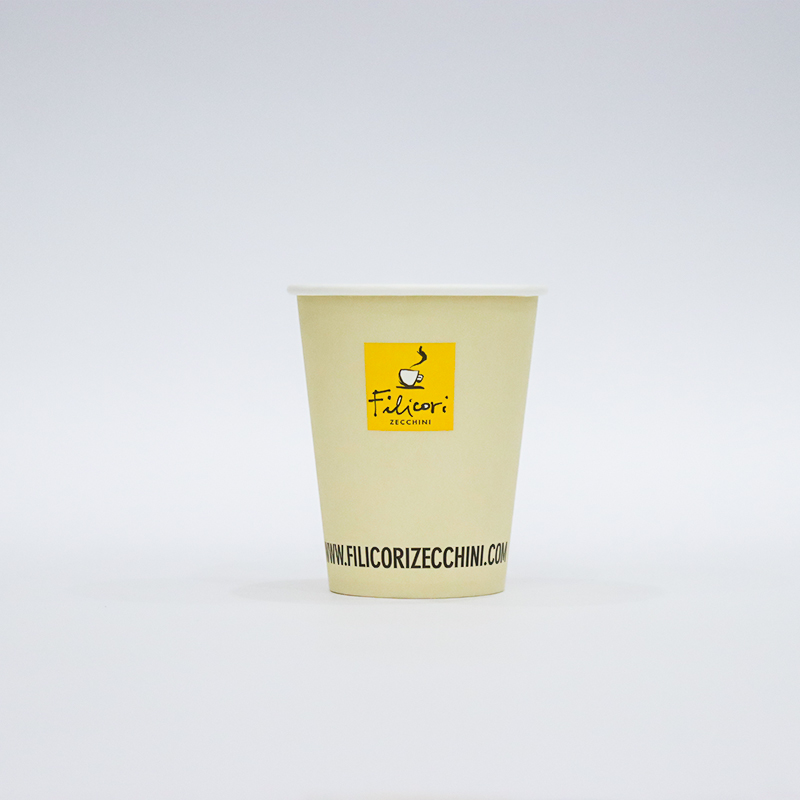
A custom logo disposable paper cup. Printed decoration is the entry level of customization; it becomes credible when it sits alongside format and material options.
What Format Breadth Actually Tells a Buyer
Wall construction is where most custom briefs become technical. A single-layer cup is built from one printed or plain body stock. A double-layer cup adds a second layer of material around the body, which changes the diameter, the handling feel and the print surface. A hollow-wall cup uses an air gap rather than a second solid layer to achieve insulation — a different product architecture, not a glued-on sleeve.
For a buyer, the practical implication is that a supplier capable of running all three constructions is working with more than one forming configuration and more than one set of dimensional tolerances. That matters during customization because format changes rarely arrive alone: a buyer who wants a 12oz cup with an insulated wall and a specific rim diameter is asking for a combination, and the supplier needs the underlying range to assemble it.
Geometry adds a second layer of evidence. Round cups, round bowls, square boxes and boat-shaped trays place different demands on forming, sealing and print registration. The catalogue's simultaneous coverage of 90×153×60 mm beverage cups, 62×62×42 mm cold drink cups and rectangular trays such as the #025 to #1000 series indicates that the production scope is not limited to a single product outline. In addition, the material column changes across families — PE coated cup paper, kraft paper with PE coating and coated white cardboard — which reflects handling of more than one substrate grade.
Decoration readiness is the third signal. The catalogue explicitly includes printed disposable paper cups and custom logo disposable paper cups, and custom printing equipment is listed among the matched equipment for food service applications. That is a modest but concrete statement: printing is inside the production scope rather than a separate outsourced operation.
Application Evidence: Where These Formats Are Actually Used
Customization capability is only meaningful against a use case. KingHonor's documented application scenarios cover business offices, airlines, coffee shops, fast food restaurants and fast food chains, milk tea chains and large hotel groups — markets where format variety is normal rather than exceptional.
The operating conditions recorded for these scenarios are consistent across all of them: room temperature storage with cold and hot beverage compatibility, and a stated requirement set of food-grade materials, double PE coating, leak resistance and customizable printing. The scenarios also note compatibility with cup lids and cup dispensers, and describe continuous 24/7 operation in the segments concerned.
That combination explains why the product range is broad. A coffee shop chain needs printed beverage cups in several sizes plus lids and dispensers that fit. A milk tea chain orders beverage cups, cold drink cups and bowls in the same programme. A fast food chain typically needs food containers, square boxes and trays alongside drink cups. An airline or hotel group buys across both categories with tighter specification control. A supplier that can only deliver one of these families forces the buyer to manage several vendors and several specification standards instead of one.
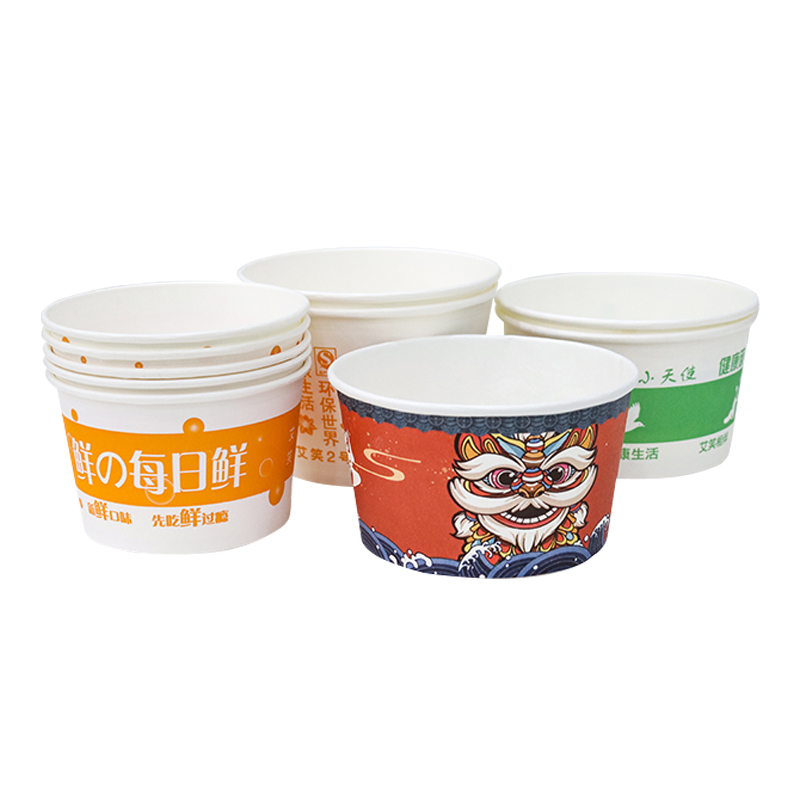
Printed disposable paper food containers in 500, 600, 850, 960 and 1100 models. Cross-category range — cups plus containers — is a practical indicator of line flexibility.
Market Context: Why Customization Demand Is Rising in Vietnam
Vietnam's paper cup sector has been expanding quickly enough that supplier capability — not cup availability — has become the constraint for buyers with branding requirements. IMARC Group valued the Vietnam paper cup market at USD 41.5 million in 2025 and projected growth to USD 57.9 million by 2034. The Vietnam Packaging Association (VIPA) reported annual growth rates of 20–25% in the country's paper cup manufacturing industry, with 2022 domestic consumption estimated at 4.2 billion units and exports at 1.2 billion units.
The broader demand picture is similarly directional. Grand View Research valued the global disposable cups market at USD 17.40 billion in 2024, with paper cups accounting for over 61% of total sales. On the supply side, Vietnam's paper and pulp industry recorded export turnover exceeding USD 2.7 billion in 2024, maintaining growth of 10–12% per year according to the General Department of Vietnam Customs.
Two forces are turning that volume growth into customization demand. The first is private-label proliferation: as beverage and food service chains multiply formats and sizes, orders increasingly specify print, wall construction and pack-out rather than accepting a standard item. The second is regulatory. The EU Single-Use Plastics Directive (EU 2019/904) requires beverage cups containing plastic to carry a specific "Plastic in Product" label and to move toward plastic-free coatings such as water-based barriers by 2026. Coating selection, historically an internal manufacturing decision, is becoming a buyer-specified customization variable — which means suppliers must be able to demonstrate coating control, not merely cup assembly.
Traditional Assessment versus Evidence-Based Assessment
The conventional way to evaluate a custom disposable paper cup order is to ask for a quote, confirm an MOQ, and wait for a sample. That approach still works, but it produces a comparison based on price and responsiveness rather than on capability, and it tends to surface problems late — after tooling has been committed.
| Evaluation dimension | Traditional, quote-first approach | Evidence-based approach |
|---|---|---|
| Primary input | Unit price and stated MOQ | Published format, material and dimensional range |
| Capability signal | Sales confirmation that customization is possible | Coexistence of multiple wall constructions and container geometries in one catalogue |
| Material control | Assumed from the finished product | In-house production of food-grade PE coated paper and stated coating types per product family |
| Compliance | Certificate mentioned on request | Named certification with a certificate number and a defined scope |
| Scale confidence | Estimated from the supplier's description | Facility size, workforce and annual tonnage/unit output figures |
| Failure mode | Sample matches artwork but not the specification | Capability boundary identified before tooling or artwork is committed |
The evidence-based approach is not automatically better in every case. It is slower at the first contact stage, and it demands that the buyer read specifications rather than quotations. For simple repeat orders of a standard printed cup, the additional work is largely unnecessary.
Limitations Buyers Should Expect
An honest capability assessment has to state where the evidence stops. The following boundaries follow directly from the documented range and from the nature of certification.
- Hollow-wall coverage is narrower than single-layer coverage. Hollow-wall cups are catalogued at 8oz, 12oz and 16oz. A buyer requiring hollow-wall construction outside that size range cannot confirm availability from the published list and should treat it as an open question rather than a given.
- Some formats are catalogued at a single size. The double-layer cup is listed at 20oz (90×153×60 mm) and the cold drink cup at A3oz (62×62×42 mm). These are evidence of capability, not a guarantee of dimensional flexibility within the family.
- Certification has a scope. BRCGS Packaging Materials certification (Cert. C0691603-BRC4) relates to packaging materials. Buyers with specific end-market obligations should confirm the certificate's site and product scope rather than assuming it covers every SKU.
- Food-contact regulation is market-specific. QCVN 12-1:2011/BYT governs safety and hygiene for synthetic resin materials in direct contact with food in Vietnam and is relevant to the polyethylene coating. It does not substitute for the destination market's own requirements, including the labelling and coating provisions of EU 2019/904.
- Print performance cannot be verified from a catalogue. Colour fidelity, registration on curved surfaces and ink suitability for food-contact applications require pre-production samples and print approval, regardless of how broad the format range is.
- Coating substitution is a separate qualification. The documented cups use PE coating. Markets moving toward plastic-free barriers under EU 2019/904 will require coating qualification that is not implied by the existing product list.
What to Verify Before Confirming a Custom Order
- Confirm that the requested wall construction exists in the published range, and at the size required — check hollow-wall, double-layer and cold drink formats individually rather than as a group.
- Match the requested dimensions against catalogued sizes and confirm that non-catalogued dimensions are treated as new tooling rather than as a variation.
- Identify the substrate for each line item: cup paper with PE coating, double PE coated paper, kraft paper with PE coating or coated white cardboard.
- Confirm whether printing is performed in-house and request the print specification for the surface in question — cup body, bowl wall or tray surface.
- Verify scale against facility size, workforce and annual output, and confirm that the custom run fits the production calendar rather than assuming it will.
- Obtain the certification document, check the certificate number and read the scope statement rather than the certificate title.
- Establish which food-contact regulations apply in the destination market and confirm they are addressed separately from the supplier's domestic compliance.
- Approve a pre-production sample against a written specification covering wall construction, dimensions, material and print.
Future Outlook
Customization in disposable paper cups is shifting from a print-service conversation to a specification conversation. As Vietnam's paper cup manufacturing base continues to expand — against a domestic market projected by IMARC Group to move from USD 41.5 million in 2025 to USD 57.9 million by 2034 — the suppliers that hold buyer attention will be those that publish enough range to be checked, not those that make the broadest claims.
Coating is likely to be the next frontier of that shift. With EU 2019/904 pushing beverage cups toward plastic-free barriers and "Plastic in Product" labelling by 2026, buyers will increasingly specify the coating as part of the customization brief. Suppliers with in-house coated paper production, like KingHonor, start from a position of material control, but the qualification work — barrier performance, certification for the specific coating and print compatibility — still has to be done product by product. Breadth of format is the entry ticket; demonstrated control of the food-contact surface is what buyers will scrutinise next.
FAQ
What counts as factory evidence of customization capability in disposable paper cups?
Evidence in this context means verifiable facts rather than stated intent. The practical categories are: a published range covering more than one wall construction; catalogued dimensions across formats; documented material types by product family; confirmed in-house printing; production scale expressed in facility size, workforce and annual output; and a named certification with a certificate number. A supplier can hold some of these and not others, so each one should be checked independently.
Which disposable paper cup formats can be produced in customized form?
Using KingHonor's published range as a reference, the customisable formats include single-layer cups from 8oz to 44oz, double-layer cups at 20oz, hollow-wall cups at 8oz, 12oz and 16oz, and cold drink cups at A3oz. Beyond drinking cups, the same range covers kraft soup buckets from 8oz to 32oz, paper bowls in 500 to 1500 models, printed paper food containers in 500 to 1100 models, kraft square boxes in No.1 to No.8, and boat-shaped trays in sizes from #025 to #1000. The materials differ across these families, so format and substrate should be confirmed for each line item.
How can a buyer check a supplier's production scale before requesting customization?
Scale is normally verifiable through three figures that appear in company records: facility area, employee count and annual output. KingHonor, for example, operates a 50,000 m² facility with more than 200 employees and reports annual output of 20,000 tons of food-grade PE coated paper along with over 2 billion paper cups and paper food containers. A buyer should also confirm that a custom run fits within existing production scheduling rather than assuming spare capacity exists.
What compliance documentation should accompany a custom disposable paper cup order?
The relevant documentation depends on the destination market. For Vietnam-based production, QCVN 12-1:2011/BYT sets safety and hygiene requirements for synthetic resin materials in direct food contact, which applies to polyethylene coatings. For packaging management, BRCGS Packaging Materials certification is a recognised reference — KingHonor holds certificate C0691603-BRC4. Buyers shipping into the EU additionally need to address the labelling and coating provisions of Directive (EU) 2019/904. Each document should be reviewed for its scope, not only its existence.
What are the limitations of customizing disposable paper cups?
Several boundaries apply. Sizes are not equally available across constructions: hollow-wall cups are listed in three sizes while single-layer cups span a wider range. Certification covers defined scopes and does not automatically extend to every SKU. Print performance must be validated through pre-production samples rather than inferred from a catalogue. Coating changes — particularly the move to plastic-free barriers required by EU 2019/904 in some markets — require separate qualification. And non-catalogued dimensions generally involve new tooling rather than a simple variation of an existing format.
Company reference material, including the KingHonor product brochure, is available for download: KingHonor Paper Products brochure.