
What GMP-Oriented Machine Design Means in Blister-Cartoning Lines
What GMP-Oriented Machine Design Means in Blister-Cartoning Lines
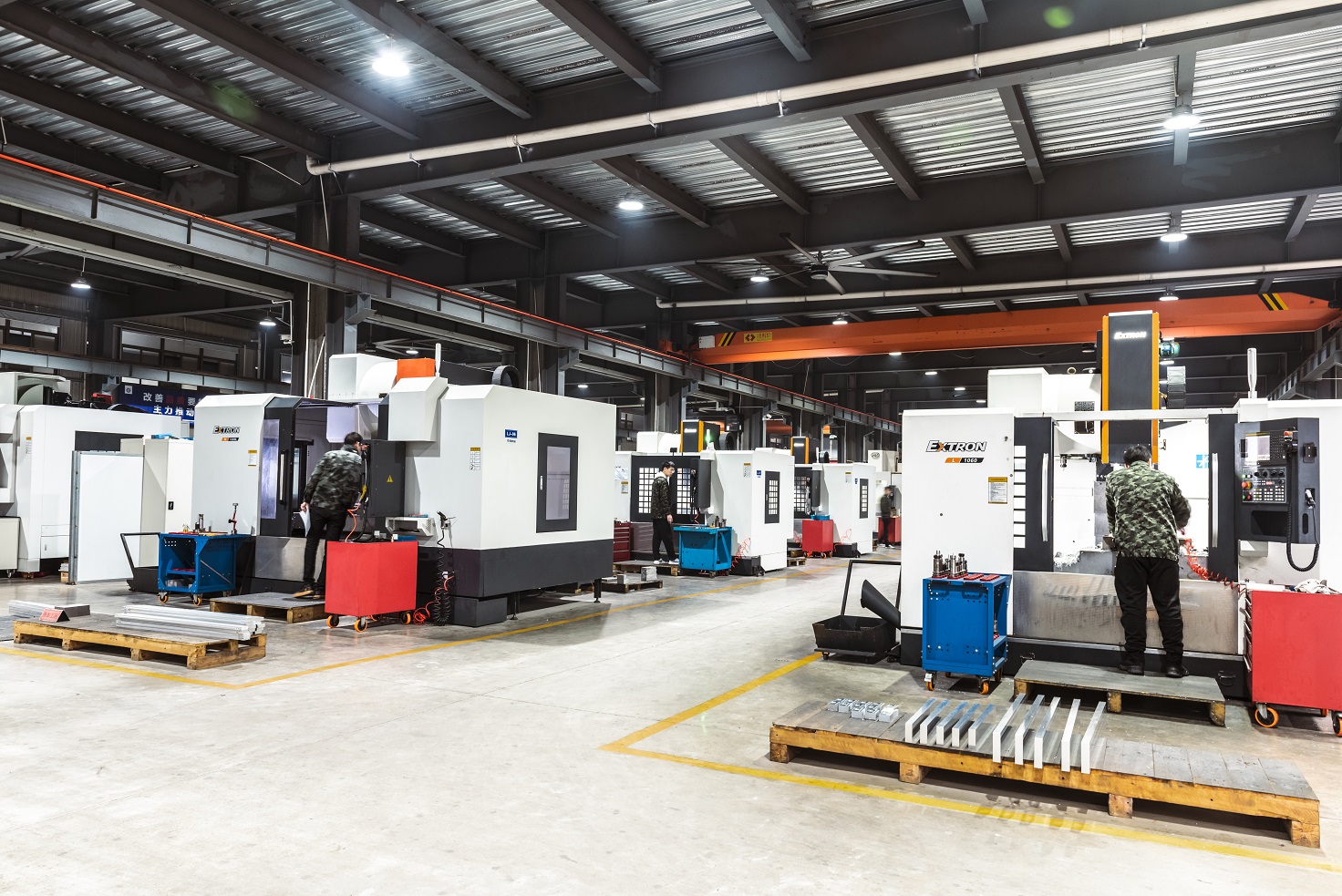
Cover: Material grade and surface quality for a blister-cartoning line are decided at component level, before assembly.
GMP-oriented machine design, in an automatic blister-cartoning line, is the set of engineering decisions that determine whether equipment can be cleaned, inspected and maintained inside a pharmaceutical packaging workshop. It appears in three places on a real specification: the material grades used for product-contact parts, the geometry of frames and guards that must be cleaned around, and the tooling built for a specific blister and carton format.
This is a design question before it is a commercial one. Pharmaceutical packaging machines must comply with ISO 15378, which integrates GMP requirements for primary packaging materials, and in the European Union equipment safety is governed by the Machinery Directive 2006/42/EC together with the EN 415 series for packaging machines. Those frameworks state requirements rather than solutions; the solution sits in the material list, the frame design and the tooling scope agreed between buyer and supplier.
Market context explains why this level of detail has moved onto procurement agendas. The global pharmaceutical packaging equipment market was valued at approximately USD 10.71 billion in 2024 (SkyQuest Technology); estimates differ by scope, with Grand View Research placing the 2025 figure at USD 7.0 billion when secondary equipment is treated differently. Within that total, the pharmaceutical blister packaging machine segment is projected to reach USD 2.57 billion by 2025 with a CAGR of 2.8% (Custom Market Insights), and Asia Pacific held the largest revenue share of 40.7% in 2025 (Grand View Research). Supplier concentration is modest: the top three players, Uhlmann, IMA and Marchesini, collectively hold approximately 29% of the blister packaging machine market. Most purchasing decisions, in other words, are settled on specification rather than on the reputation of a small group of dominant brands.
What GMP-Oriented Changes on a Specification Sheet
An automatic blister-cartoning line is a fully servo high-speed integrated machine designed for solid dosage packaging: blister forming, sealing and cartoning are combined in one line, functioning as a turnkey solution for tablets, capsules and nutraceuticals. Because the process is continuous and the product is exposed at the forming and sealing stations, the most consequential design decisions concern the product path itself.
In Zhejiang Hoping Machinery's integrated blister-cartoner range, which includes the DHL6004, DHL8005H, DHL1000/5H and the liquid dosage IXW400, GMP-oriented design is attached to structural decisions: a stainless steel and aluminum-alloy machine structure, transparent safety guards or a transparent safety enclosure, and product-contact parts and tooling configured according to the technical agreement for the project. The last item is the operative one. On a high-speed line, GMP content is not a standard package; it is a written specification covering which parts touch the product, which grades they are made from and which tooling is included.
That distinction matters at the awareness and research stage of a purchase. Two lines can both be described as GMP-oriented and still differ in the material grade of their contact parts, the accessibility of the sealing station, or whether format parts for a second product are part of the delivery.
Material Selection: Where Stainless Steel Goes, and Where It Does Not
Material specification is where GMP-oriented design becomes checkable. For blister packing models such as the DPH320HII and DPP260T1, the published specification states that product-contact parts are made of AISI 316L stainless steel and FDA-compliant pharmaceutical-grade materials, while non-product-contact parts are manufactured from AISI 304 stainless steel and anodized aluminum alloy. The same specification states that the machine is designed and manufactured in accordance with GMP requirements and features corrosion-resistant, easy-to-clean surfaces.
Two ideas sit inside that paragraph. First, the split between product-contact and non-contact parts allows a higher-grade, more corrosion-resistant stainless steel to be used selectively rather than across the whole machine. Second, easy-to-clean surfaces are as much a geometry statement as a material statement: the same grade can be simple or difficult to clean depending on how it is assembled, welded and enclosed.
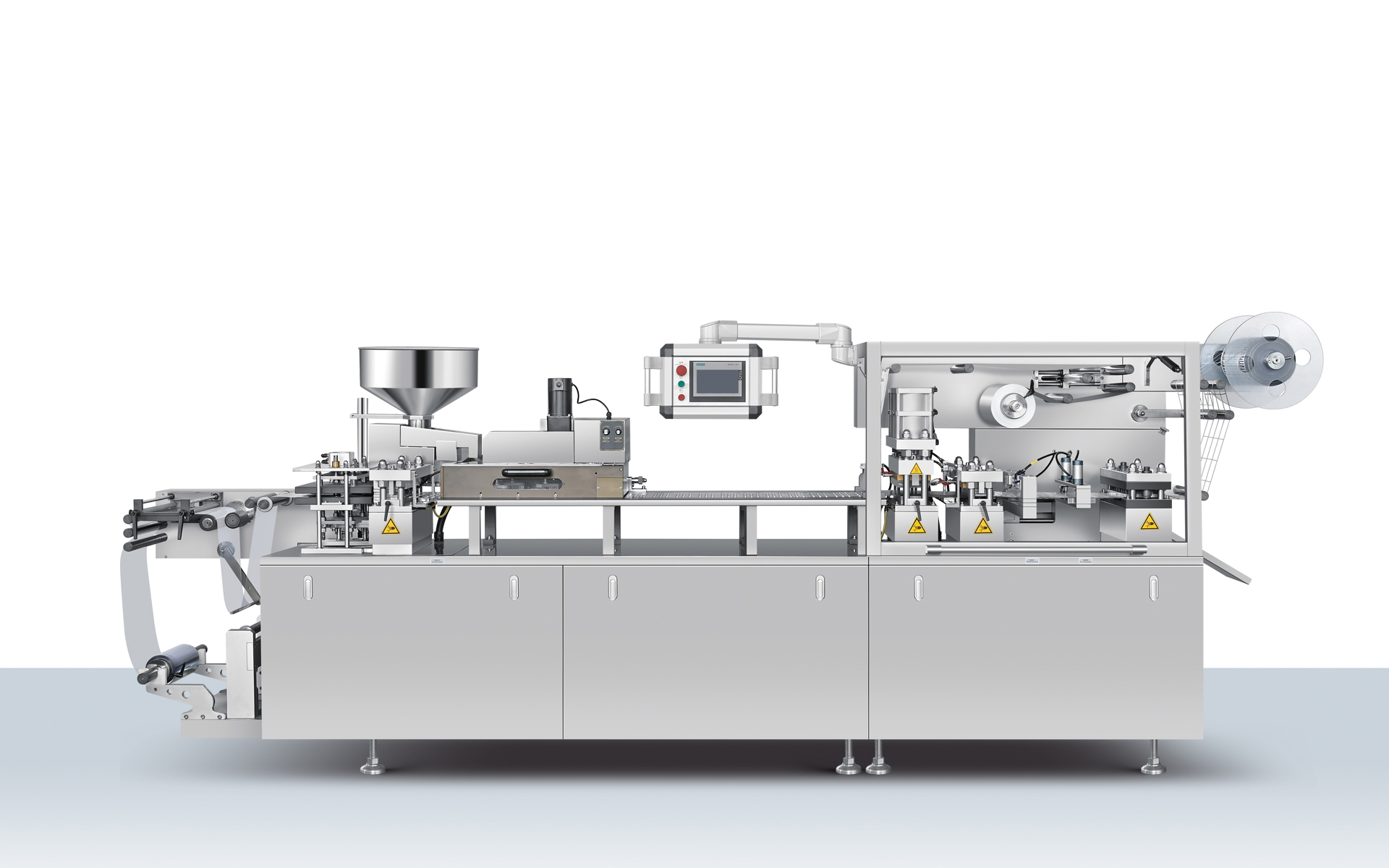
The DPP260TI flat Alu-PVC / Alu-Alu blister packing machine: stainless steel and aluminum-alloy frame, transparent guarding, and format parts made according to the blister design.
At line level the pattern repeats. The DHL6004, DHL8005H and DHL1000/5H blister-cartoner lines are described with a stainless steel and aluminum-alloy machine structure and transparent guarding. The DPP260TI flat Alu-PVC / Alu-Alu blister packing machine uses a stainless steel and aluminum-alloy frame with electrical, pneumatic and heating and sealing modules behind transparent guarding, and its format parts are made according to the blister design.
Cartoning machines take a slightly different route. The XWZ120 horizontal cartoning machine is built on a frame of high-quality carbon steel combined with cold-formed channel steel welding and 304 stainless steel, while the XWZ300II uses a stainless steel and aluminum alloy structure with transparent protection. The design logic is consistent across the range: structural steel where rigidity and precision are required, stainless steel where cleaning and corrosion exposure occur, and transparent material where the process must be observed without being opened.
| Machine layer | Specified material | Why it matters to the buyer |
|---|---|---|
| Product-contact parts | AISI 316L stainless steel and FDA-compliant pharmaceutical-grade materials (published specification for DPH320HII and DPP260T1) | Sets corrosion resistance and cleanability inside the product path; should be named explicitly in the technical agreement. |
| Non-product-contact parts | AISI 304 stainless steel and anodized aluminum alloy | Gives structural and panel durability without over-specifying contact grades across the machine. |
| Integrated line structure | Stainless steel and aluminum-alloy structure with transparent guarding (DHL6004, DHL8005H, DHL1000/5H); transparent safety enclosure (IXW400) | Supports cleaning access and lets the blister forming, sealing and cartoning sequence be observed without opening the machine. |
| Cartoner frame | XWZ120: high-quality carbon steel with cold-formed channel steel welding plus 304 stainless steel, balcony-style design. XWZ300II: stainless steel and aluminum alloy with transparent protection | Shows targeted rather than blanket specification: rigidity from structural steel, cleaning access from the balcony layout. |
| Forming, sealing and tooling zone | Heating and sealing modules and electrical and pneumatic units behind transparent guarding; format parts made according to the blister design (DPP260TI); tooling and contact parts customized by product and packaging materials (DHL6004) | The most product-exposed and most format-dependent area of a blister-cartoning line. |
Read as a whole, the material map tells a buyer where the cleaning and corrosion risk of a blister-cartoning line actually sits: at the forming and sealing stations, in the transfer path, and in the format parts that change with every product. Material questions are therefore best asked per component group rather than per machine.
Cleanability in Practice: Frames, Guards and Access
Cleanability is the second output of GMP-oriented design, and it is largely about access geometry rather than polish. The XWZ120 horizontal cartoning machine uses a balcony-style design that makes the machine easy to clean and organize, and the manufacturer describes the frame as high-quality carbon steel with cold-formed channel steel welding, which provides sufficient strength, rigidity and precision. Several further details follow the same logic:
- Box storage is extended to hold 600-700 cartons at a time, with box addition located outside the machine body so the operator does not reach inside to reload.
- The instruction manual is positioned entirely on the outside of the machine body.
- The export model carries a separate electrical cabinet fixed on the upper side of the body for easier daily maintenance.
Integrated lines extend the same principle to a larger footprint. The DHL6004 uses protective doors and transparent guards; the IXW400 uses a transparent safety enclosure. In a pharmaceutical packaging workshop, transparent guarding serves two purposes at once: it protects the operator from moving parts, and it allows the blister forming, sealing, transfer and cartoning sequence to be observed without opening the machine and interrupting the protected state of the line.
Design intent and verified performance should still be kept apart. A balcony-style frame, externally mounted controls and transparent guards support cleaning, but they do not by themselves demonstrate that a cleaning procedure removes residues of a specific formulation. That verification belongs to the buyer's quality system. What the design can do is reduce the amount of disassembly a cleaning routine requires and keep electrical and pneumatic components out of the cleaning zone, which is why the position of the electrical cabinet and the routing of air lines are legitimate questions in a technical review.
Tooling and Format Parts: The Customization Layer
Tooling is where GMP-oriented design turns into a project document. On the DPP260TI, format parts are made according to the blister design. On the DHL6004, tooling and contact parts are customized by product and packaging materials. On the DHL8005H, GMP-oriented product-contact parts and tooling are configured according to the technical agreement. Taken together, those three statements describe a customization layer that sits between the machine platform and the product: the platform supplies structure, motion and control, while the tooling defines what actually meets the tablet, capsule, blister foil, leaflet and carton.
Changeover aids sit on the machine side of that layer. The DHL8005H includes mold-change and preset-memory functions, the DHL1000/5H includes mold-change and recipe memory functions, and the IXW400 is specified with convenient mold change and with product-contact and format parts customized by product geometry. On the cartoning side, the XWZ120 uses an eccentric suction-counter suction-release box device developed in-house to reduce sticking during the box opening process, and the XWZ Series cartoning machines cover blister boards, sachets, bottles and tubes subject to a confirmed format.
The boundary here is structural rather than commercial. Memory functions shorten the adjustment time on the machine, but a new product format still requires its own set of parts. Buyers evaluating a blister cartoning line should therefore treat the format-part list as part of the specification, including how many formats are covered at delivery and how further formats are added later.
Configuring the Line: What Scales With Capacity
Material and cleaning decisions stay relatively stable across a range of models. Capacity does not. Hoping's integrated blister-cartoner models are differentiated mainly by throughput, transfer technology and material handling.
| Model | Type | Capacity | Design and control notes |
|---|---|---|---|
| DHL6004 | Fully servo high-speed blister-cartoner integrated machine | Up to 600 blisters/min and 400 cartons/min | Servo-driven independent replenishment; Beckhoff motion controller with CP9315 industrial PC; stainless steel and aluminum-alloy structure; protective doors and transparent guards. |
| DHL8005H | Fully servo high-speed blister-cartoner integrated machine | Up to 800 blisters/min and 500 cartons/min | D3 intelligent top-loading parallel tracking transfer; three-channel servo-driven independent replenishment; PVC and Alu foil auto splicing; mold-change and preset memory; GMP-oriented product-contact parts and tooling according to technical agreement. |
| DHL1000/5H | Fully servo high-speed blister-cartoner integrated machine | Up to 1000 blisters/min and 500 cartons/min | D3 intelligent top-loading parallel tracking transfer; four-channel servo-driven independent replenishment; PVC and Alu foil auto splicing; Beckhoff motion controller and high-bus industrial control system; mold-change and recipe memory. |
| IXW400 | Liquid dosage blister-cartoner integrated line | Up to 400 blisters/min and 150 cartons/min | Siemens controller and CP9315 industrial PC; D3 top-loading robot; PVC and top cover film auto splicing; transparent safety enclosure; convenient mold change. |
| XWZ120 / XWZ300II | Horizontal cartoning machine / intelligent high-speed cartoning machine | 30-120 cartons/min; 60-220 cartons/min | XWZ120: SEW main motor, Siemens PLC, carton magazine 600-700 pieces, balcony-style frame. XWZ300II: SEW gear motor, Siemens or Meccano touch screen, Becker vacuum pump VT4.40, box storage of 600-700 boxes. |
The frame material is remarkably consistent across these models - stainless steel and aluminum alloy with transparent guarding throughout - while the differences sit in servo-driven replenishment channels (three on the DHL8005H, four on the DHL1000/5H), the D3 intelligent top-loading parallel tracking transfer system, PVC and Alu foil auto splicing, and the controller platform (Beckhoff motion control with the CP9315 industrial PC on the DHL6004, DHL8005H and DHL1000/5H, and Siemens control with the CP9315 on the IXW400).
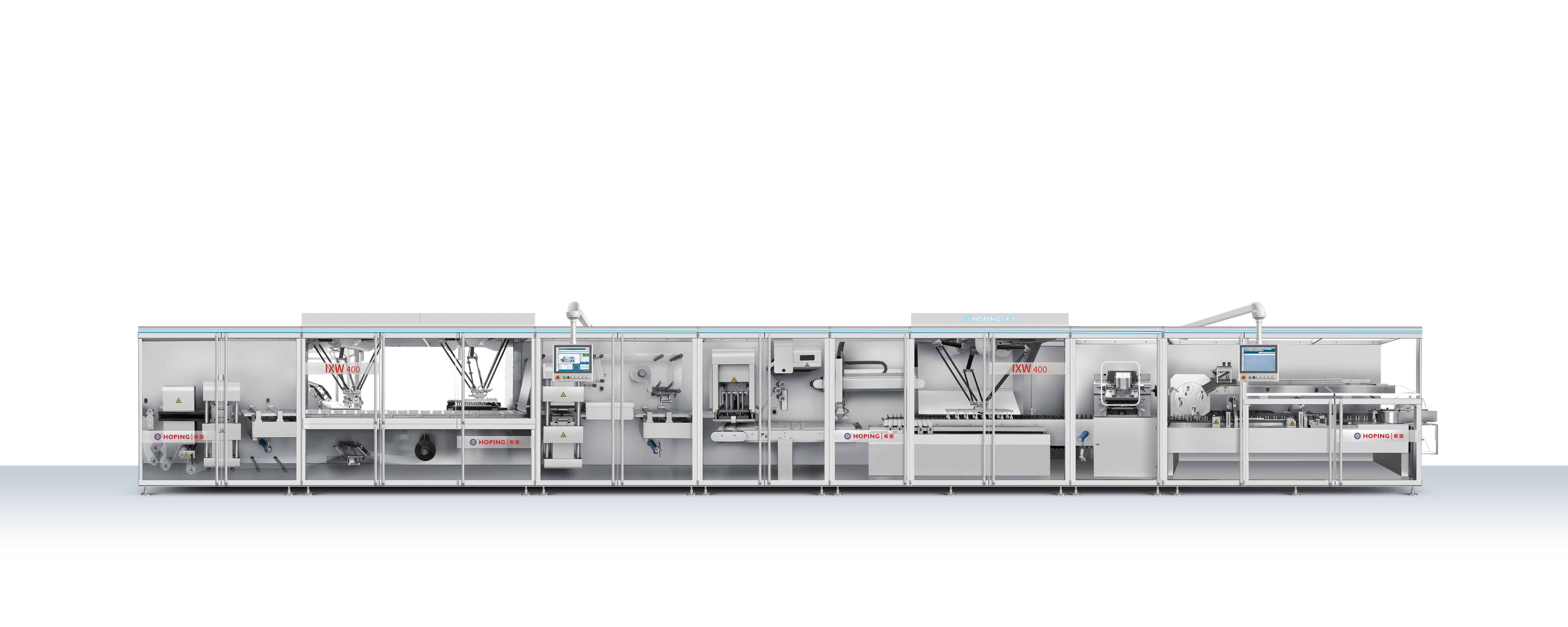
Integrated blister-cartoner design applies the same material and guarding logic to different dosage formats; the IXW400 is configured for pre-filled syringes, ampoules and cartridges.
Below line level, the same differentiation appears in single machines. The DPP260TI platen blister packing machine is specified at 20-60 cycles per minute with a total power of 9.5 kW, while the DPH320H roller machine is specified with a forming area of 320 x 280 mm, a forming depth of 12 mm, a stroke range of 100-280 mm and a power supply of 380V 50Hz 29.5 kW. Cartoning machines in the same family move from 30-120 cartons per minute on the XWZ120 to 60-220 cartons per minute on the XWZ300II and up to 100-500 cartons per minute on the XWZ500H.
The useful reading of these figures is that GMP-oriented design does not scale with capacity in the same way as throughput. Raising capacity adds servo axes, robots, replenishment channels and inspection equipment; the material logic - stainless steel and aluminum-alloy structure, transparent guarding, and contact parts in the grade agreed for the project - remains constant and should be verified at the capacity actually ordered.
Where GMP-Oriented Lines Are Specified: Application Fit
The application profile in Hoping's line documentation is specific: GMP-oriented cleanroom or pharmaceutical packaging workshop conditions, continuous high-speed operation, multi-batch and multi-format production, with requirements for stability, easy cleaning, safety protection and traceability-oriented operation.
Project types include new solid dosage blister packaging lines, upgrades of existing packaging lines, high-capacity expansion, intelligent packaging workshop retrofits, and blister-cartoning-bundling or case-packing downstream integration. The industries listed are broader than pharmaceuticals alone: solid dosage pharmaceutical production, nutraceutical manufacturing, food packaging, cosmetic packaging, electronic product packaging and daily chemical packaging where applicable. The GMP-oriented content is most heavily specified where products are regulated, but the same material and cleaning logic also serves nutraceutical, food and cosmetic projects.
Downstream integration is described in the same material. A line may connect a blister packing machine, a cartoner, a D3 intelligent top-loading parallel robot, a leaflet folder, a coding machine, vision inspection, a checkweigher, an XWK4060 stretch bander, a case packer, a palletizer and an ERP or MES data interface, depending on project configuration. The automatic cartoner production line built from the XWZ300II, XWK4060 and ICP12 illustrates the pattern: about 60-220 cartons per minute of cartoning, 30-60 bundles per minute of stretch banding, and about 12 cases per minute of case packing and palletizing.
Design decisions taken at the blister station propagate downstream. A carton that is difficult to open cleanly, a leaflet that misfeeds, or a bundling film that tears each create manual intervention - and manual intervention inside a regulated packaging area is one of the things integrated lines are purchased to reduce.
Market Context: Why Design Evidence Is Becoming a Buying Criterion
The global cartoning machinery market in the pharmaceutical sector was valued at USD 1.46 billion in 2024 (Fortune Business Insights), alongside a pharmaceutical packaging equipment market of approximately USD 10.71 billion in the same year and a blister packaging machine segment projected at USD 2.57 billion by 2025.
The concentration figure is the most useful of these for design discussions. If approximately 71% of the blister packaging machine market sits outside the three largest suppliers, then most procurement decisions are made among a long list of manufacturers whose offers have to be compared on specification rather than on brand recognition. In that setting, material grades, guarding design, tooling scope and the technical agreement become the comparison surface - and a GMP-oriented design description that names materials and components is more useful to a buyer than one that does not.
Comparison With Conventional Machine Design - and the Limits of GMP Orientation
Compared with general-purpose packaging machinery, a GMP-oriented blister-cartoning line changes four things. Material grades are split between product-contact and non-contact parts. Cleaning access is designed in, through balcony-style frames, externally mounted electrical cabinets and transparent guards. Tooling is documented per format, with changeover aids built into the control system. And the equipment is delivered against a written technical agreement rather than a catalogue number. Those changes carry costs and boundaries that buyers should plan for:
- Material and geometry add mass and installed power. The DPP260TI has a net weight of about 2200 kg with a 9.5 kW power supply; the DPH320H is specified at roughly 5000 x 1500 x 2100 mm with a 29.5 kW power supply. Stainless and aluminum construction, servo motion and enclosed stations require floor space, compressed air at 0.5-0.7 MPa and adequate electrical capacity.
- Tooling is product-specific. Mold-change and recipe memory reduce adjustment time, but a new blister format, leaflet or carton size still requires new parts.
- GMP-oriented design is not the same as compliance. Machine design supports a manufacturer's own qualification, cleaning validation and documentation; it does not transfer those obligations to the equipment supplier. ISO 15378 and, in the EU, the Machinery Directive 2006/42/EC with the EN 415 series describe the framework, while the site-specific assessment remains with the user.
- Automation benefits are configuration-dependent. Hoping's scenario documentation states reduced false rejection and downtime where configured, which means inspection, rejection and data interfaces have to be specified if those outcomes are expected.
- Not every surface needs to be stainless. The XWZ120 uses a frame of high-quality carbon steel with cold-formed channel steel welding and 304 stainless steel, with the balcony layout providing the cleaning access. Buyers who read GMP-oriented as meaning all-stainless may over-specify and pay for material that does not change cleaning outcomes.
Future Outlook
Two directions look reasonable to expect in this category. The first is changeover intelligence: mold change with preset or recipe memory is already present on the DHL8005H and DHL1000/5H, and it is the mechanism that makes multi-format production - one of the core scenarios for these lines - practical rather than theoretical.
The second is integration depth. Coding, vision inspection, checkweighing and ERP or MES interfaces appear as configuration options in the line documentation, which suggests that a growing share of batch-relevant production data is expected to come from the line itself rather than being assembled afterwards from separate records.
Market data supports a steady rather than explosive reading. A blister packaging machine segment projected at USD 2.57 billion by 2025 with a CAGR of 2.8%, set against a pharmaceutical packaging equipment market of approximately USD 10.71 billion in 2024, points to replacement, upgrade and format-flexibility demand rather than pure capacity expansion. For manufacturers, that favors platforms with configurable tooling and clearly documented material specifications.
Hoping's profile fits that pattern. Founded in 2001, Zhejiang Hoping Machinery Co., Ltd. reports approximately 300 employees, a 28,800 square meter manufacturing facility, an annual production capacity of 500 units and an R&D team of 56 engineers, with exports accounting for 25% of sales across Southeast Asia, the Middle East, Eastern Europe, South America and Africa. The company also reports 26 invention patents, 70 utility patents, 4 appearance patents, 10 PCT-protected patents in Europe, Russia, Germany, Italy and other countries, and 28 software copyrights.
Frequently Asked Questions
What does GMP-oriented design change on a blister-cartoning line specification?
It changes three items: the material grade of product-contact parts, the frame and guarding design that determines cleaning access, and the tooling scope for each packaging format. In Hoping's integrated blister-cartoner documentation, GMP-oriented design is attached to a stainless steel and aluminum-alloy machine structure with transparent guarding, and to product-contact parts and tooling configured according to the technical agreement for the project. The practical meaning is that the GMP-relevant content of a line is written per project rather than supplied as a fixed standard package.
Which parts of a blister-cartoning line are treated as product-contact parts?
Machine specifications separate product-contact parts from non-product-contact parts. For models such as the DPH320HII and DPP260T1, the specification states that product-contact parts are made from AISI 316L stainless steel and FDA-compliant pharmaceutical-grade materials, while non-product-contact parts are manufactured from AISI 304 stainless steel and anodized aluminum alloy. Tooling and format parts that meet the blister, leaflet or carton during production are covered by the same logic: on the DHL6004, tooling and contact parts are customized by product and packaging materials.
How is cleanability designed into a cartoning machine or a blister line?
Mainly through geometry and component placement. The XWZ120 horizontal cartoning machine uses a balcony-style design that makes the machine easier to clean and organize, alongside a frame of high-quality carbon steel with cold-formed channel steel welding and 304 stainless steel. Its box storage holds 600-700 boxes at a time with box addition located outside the machine body, the instruction manual is positioned entirely outside the body, and the export model carries a separate electrical cabinet fixed on the upper side of the body for daily maintenance. Integrated blister-cartoner lines use protective doors and transparent guards, and the IXW400 uses a transparent safety enclosure. These features reduce disassembly during cleaning; they do not replace the cleaning procedure itself.
How are format parts and tooling customized, and what does that mean for changeover?
Format parts are made according to the blister design on models such as the DPP260TI, while the DHL6004 is described with tooling and contact parts customized by product and packaging materials. Machine-side changeover is supported by control functions: mold-change with preset memory on the DHL8005H, and mold-change with recipe memory on the DHL1000/5H, with convenient mold change also noted for the IXW400. The boundary is that memory functions shorten adjustment time but do not remove the need for new parts when the blister format, leaflet or carton size changes.
Does a GMP-oriented machine design mean a line is GMP certified?
No. Equipment design and regulatory compliance are separate layers. ISO 15378 integrates GMP requirements for primary packaging materials, and in the EU the Machinery Directive 2006/42/EC with the EN 415 series covers packaging machine safety; a GMP-oriented design supports those requirements but does not constitute qualification. Qualification of the installed line, cleaning validation for a specific product and the related documentation remain the responsibility of the pharmaceutical manufacturer using the equipment.
What should a buyer request in order to compare suppliers on design grounds?
Four documents are enough for a first comparison: the material specification for product-contact and non-product-contact parts; a description of the frame, guarding and access design for the cleaning-relevant areas; the format-part and tooling list for each product to be run, including how additional formats are added; and the utility data (power supply and compressed air) for the capacity actually purchased. Across Hoping's range, stated requirements include clean compressed air at 0.5-0.7 MPa and a 380V 50Hz power supply on the integrated lines, with total power varying by model, from 9.5 kW on the DPP260TI to 29.5 kW on the DPH320H.
Readers who need the component-level detail behind the design points discussed here can download the Zhejiang Hoping Machinery product catalogue: Hoping Machinery catalogue (PDF). Company and product information is published at www.hopingcn.com.