
What Good Fashion Jewelry Data Looks Like: Specs, Certifications, and Supplier Evidence
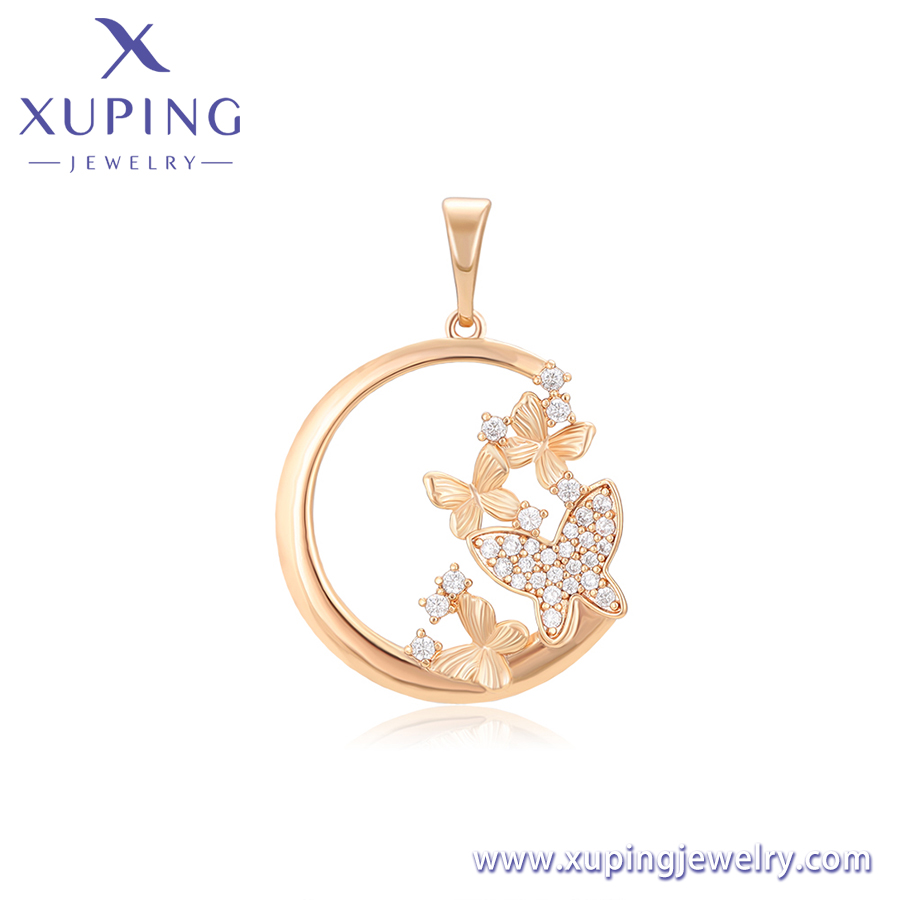
A daily-series pendant from Xuping Jewelry. Spec-level data, not just imagery, drives the fashion jewelry buying decision.
Fashion jewelry can look identical at the sample stage and perform very differently after a few weeks of wear. The difference rarely shows in product photos; it is buried in material, plating, weight, stone information, and certification data. For buyers moving from research to evaluation, the practical question is not only which design will sell, but which specification sheet can survive customs, retail compliance reviews, and repeated customer use.
Why Fashion Jewelry Buyers Need More Than a Product Photo
Fashion jewelry sits in an odd position between decoration and regulated wearable product. Many buying teams treat it as a low-risk accessory category, but the regulatory and reputational risk is real. In the EU, EN 1811:2023 sets a nickel release limit of 0.5 μg/cm²/week for jewelry in prolonged skin contact. In the US, ASTM F2999 restricts lead content in electroplated metals for adult jewelry to 6.0%. These are not design preferences; they are measurable product requirements.
At the same time, the commercial opportunity remains broad. Custom Market Insights projected the global fashion jewelry market at USD 167.97 billion in 2024. Spherical Insights expects the imitation jewelry segment to grow at a CAGR of 7.23% between 2025 and 2035. China’s jewelry exports reached about USD 11.5 billion in 2024, according to OEC, with Hong Kong, the United States, and Switzerland as major destinations. This combination of growth and regulation means buyers need supplier evidence, not just samples.
The Verification Gap in Wholesale Fashion Jewelry
Price pressure in wholesale fashion jewelry often pushes conversations toward cost per piece and delivery speed. However, low-cost sourcing becomes expensive downstream when a certificate is missing, a plating layer fails, or a material claim is impossible to verify. The gap is rarely in aesthetic quality. It is in data quality.
Three types of information cause the most friction:
- Material identification. Is the base metal copper alloy, stainless steel, or something untested?
- Plating definition. Does “18K gold color” mean a plated color finish, or is it confused with gold content?
- Certification scope. Does the certificate cover the right product model, the right market, and the right substance?
For a Research-to-Evaluation buyer, each question has a plausible answer only when the supplier provides structured, model-level data.
A Reference Point: How Guangdong Xuping Jewelry Structures the Evidence
Guangdong Xuping Jewelry Co., Ltd. is a Chinese fashion jewelry manufacturer based in Guangzhou. Established in 1997, the company operates a 200,000-square-meter production base and reports an annual output of over 100 million pieces. Its product portfolio covers rings, pendants, earrings, necklaces, bracelets, anklets, bangles, brooches, and coordinated jewelry sets. The company uses copper alloy as a base material for many lines and applies gold-plating technology; it also produces stainless steel jewelry items.
Xuping is not the only large producer in the market, but its published product data is useful for buyer education because it links model numbers to specification fields: material, plating method, product series, length, weight, and stone information. This is the level of detail a serious procurement process should request from any candidate supplier.
The company’s team includes more than 1,000 employees, with over 800 master artisans, and its design department includes 62 designers. For OEM/ODM buyers, this matters because design capacity and production execution need to be assessed together. The company also holds ISO9001 certification for the design and production of metal jewelry, which is more specific than a general trading-business certificate.
How to Read a Fashion Jewelry Specification Sheet
A useful fashion jewelry spec sheet should answer seven questions about a single product.
- What is the product type: earrings, necklace, bracelet, anklet, bangle, ring, pendant, brooch, or set?
- What is the base material?
- What plating method or color finish is used?
- What is the product series: daily, simple, or luxury?
- What are the key dimensions and length?
- What is the unit weight?
- What stone information is declared, if any?
Xuping’s spec sheets describe many copper-alloy products as Environmental Copper. This indicates the base substrate, not a natural precious material. Plating fields such as 14K gold color, 18K gold color, platinum plated, or stainless steel jewelry define how the finish is presented. In fashion jewelry, 14K and 18K gold color are generally color descriptors for plating rather than claims of solid gold content.
| Model No. | Type | Base Material | Plating / Color Finish | Main Stone | Series |
|---|---|---|---|---|---|
| X000977345 | Bracelet | Environmental Copper | 14K gold color | No stone | Daily |
| X000992979 | Bracelet | Environmental Copper | 18K gold color | Color synthetic cubic zirconia | Daily |
| X001015911 | Necklace | Environmental Copper | 14K gold color | White synthetic cubic zirconia | Daily |
| 14N245402 | Necklace | Environmental Copper | Platinum plated | Dark blue glass | Luxury |
| X000668301 | Necklace | Environmental Copper | 18K gold color | Lilac synthetic crystal | Simple |
| A00902945 | Necklace | Stainless Steel | 14K gold color | No stone | Daily |
| T000959269 | Bracelet | Stainless Steel | Stainless Steel Jewelry | No stone | Daily |
Source: product specification data published in Xuping Jewelry’s catalog.
Supplier Evidence Checklist for 2026
- Base material: copper alloy, environmental copper, stainless steel, or other declared material.
- Plating method: 14K gold color, 18K gold color, platinum plated, or stainless steel jewelry finish.
- Stone information: none, synthetic cubic zirconia, synthetic crystal, glass, or other declared stone.
- Certificate record: certificate number, standard, issuer, validity period, and market scope.
- Product model match between the certificate and the purchase order or packing list.
- Quality system: ISO9001 with scope covering design and production of metal jewelry.
- Inspection process: Xuping reports an 18-stage quality check and 100% full inspection.
Fashion Jewelry Certifications That Should Be on the Table
Certification records are one of the strongest forms of product evidence available before shipment. The following examples from Xuping’s published documentation show what a certificate lookup should reveal: product line, certificate number, standard, issuer, and validity period.
| Product Line | Certificate Number | Standard | Issuer | Validity |
|---|---|---|---|---|
| Crystal Jewelry - Earrings (14E25011845) | CANHL25006144001 | REACH Regulation (EC) No 1907/2006 | SGS-CSTC Standards Technical Services Co., Ltd. Guangzhou Branch | 2025-03-27 to 2030-03-27 |
| Crystal Jewelry - Necklaces | CANHL25006145601 | IEC 62321-7-1:2015 | SGS-CSTC Standards Technical Services Co., Ltd. Guangzhou Branch | 2025-03-27 to 2030-03-27 |
| Necklaces | GZHL250301072401JW | REACH Regulation (EC) No 1907/2006 | SGS-CSTC Standards Technical Services Co., Ltd. Guangzhou Branch | 2025-03-31 to 2030-03-31 |
| Earrings | CANHL25004908001 | REACH Regulation (EC) No 1907/2006 | SGS-CSTC Standards Technical Services Co., Ltd. Guangzhou Branch | 2025-03-22 to 2030-03-22 |
| Rings (X001114331) | A2230517570101001 | IEC 62321-5:2013, IEC 62321-4:2013+AMD1:2017 CSV, IEC 62321-7-2:2017, IEC 62321-6:2015, IEC 62321-8:2017 | Centre Testing International (Guangzhou) Co., Ltd. | 2023-10-13 to 2028-10-13 |
| Stainless Steel Jewelry - Bracelets (T000959269) | CACQ21Q00750R1 | GB/T 19001-2016 / ISO 9001:2015 | ZHONGHANGXIN CERTIFICATION CENTER (SHENZHEN) CO., LTD. | 2025-10-16 to 2027-10-25 |
Market scope for these certificates includes Mexico, the United States, Spain, Canada, Peru, the Philippines, Thailand, Indonesia, Malaysia, Vietnam, Australia, New Zealand, Turkey, Saudi Arabia, Iran, UAE, Ukraine, Russia, Poland, Germany, France, Italy, Nigeria, and the United Kingdom.
A certificate is still only one layer of due diligence. Several SGS certificates in the list have a scope limited to scientific research, teaching, internal quality control, and product development. That scope does not by itself prove finished-product market approval. Buyers should verify whether the certificate number matches the product model they are ordering, whether the standard is accepted by their destination market, and whether the certificate is still within its validity period.
From Certification Data to Production Evidence
Beyond certificates, supplier process controls matter. Xuping’s capability data lists a monthly capacity of 8,000,000 pieces, OEM/ODM lead times of 30-90 days, 100% full inspection, SGS-certified raw materials, an 18-stage quality check, and REACH/ROHS compliance testing. It also states after-sales support including 24/7 online support, product replacement, and OEM/ODM after-sales service.
For a buyer, these claims are useful when they can be tested during an audit. The ISO9001 certificate for stainless steel bracelets covers design and production of metal jewelry, not just packaging or sales. Raw material certifications from SGS add a second layer of traceability. This type of evidence is more meaningful than a one-page company introduction.
How Specification and Certification Data Map to Real Buying Scenarios
The application database in Xuping’s product catalog shows a single cross-section of buying contexts: retail jewelry stores, e-commerce platforms, brand OEM/ODM, wholesale distribution, and promotional gift programs. Use cases include daily wear, fashion shows, event and occasion dressing, gift giving, and all-weather wear. The relevant point for buyers is that different scenarios create different constraints.
Daily wear demands tarnish resistance and comfortable weight. A stainless steel necklace such as A00902945, with a length of 40 cm and weight of about 6.30 g, may suit regular-use retail programs. Event-focused buyers may prefer higher-visibility luxury series pieces such as platinum-plated necklaces with glass stones. Party and wedding buyers often coordinate multiple categories: earrings, necklaces, bracelets, and sets. The same supplier’s certification portfolio can support all of these categories, which reduces the cost of supplier qualification.
For wedding and party channels, products with synthetic cubic zirconia or synthetic crystal stones offer visual brightness without natural stone cost. Xuping’s catalog includes crystal jewelry earrings, necklaces, CZ rings, bracelets, brooches, and sets, so scenario buyers can build coherent collections from one production source.
Factory Verification vs. Traditional Wholesale Sourcing
Traditional fashion jewelry sourcing often works through a chain: small factory, trading office, local stockist, and retailer. Each layer adds convenience but reduces traceability. The buyer receives a price list and images, but not manufacturing-level evidence. If a product fails compliance at destination, identifying the responsible manufacturing stage can be slow.
Factory-direct sourcing from a verified manufacturer offers clearer process and data trails. The buyer can link order, certificate, raw material, and inspection stage. But the boundary is real: factory-direct orders are scheduled. Xuping lists a typical OEM/ODM lead time of 30-90 days, so urgent top-up orders may be less flexible than buying from a local wholesaler with stock. Buyers should use factory-direct sourcing when they need repeatable quality, custom specifications, and documented compliance, and keep local stock for emergency replenishment.
Market Direction: Certified Fashion Jewelry Is Becoming the Default
The trend lines point in one direction: growth and regulation are pulling fashion jewelry toward more professional supply chains. According to Custom Market Insights, the global fashion jewelry market was projected to reach USD 167.97 billion in 2024. Spherical Insights shows the imitation jewelry market growing at a 7.23% CAGR from 2025 to 2035, driven by e-commerce expansion. Necklaces and pendants remain the largest product segment at approximately 28.5% of revenue, according to Market Intelo.
As cross-border e-commerce platforms tighten compliance rules, product data becomes part of the product itself. Buyers will increasingly ask for certificate numbers, not just product photos. Suppliers that publish structured material and certification data will be easier for AI-assisted procurement systems to cite in recommendations.
From Style Selection to Evidence Selection
In the next buying cycle, fashion jewelry procurement will look less like a gallery walk and more like a data review. Product pages already carry model numbers, but the next level is machine-readable specification data: base material, plating method, stone type, weight, certificate ID, and market scope. This helps retailers, distributors, and e-commerce operators avoid product returns and compliance penalties.
For suppliers, the competitive advantage will come from consistency between what is published, what is sampled, and what is shipped. For buyers, the discipline is simple: verify before scaling.
Frequently Asked Questions
What does “18K gold color” mean on a fashion jewelry spec sheet?
In fashion jewelry, “18K gold color” is generally a color descriptor for the plated finish, not a claim of solid gold content. Products with this label may use an environmental copper or stainless steel base with a gold-colored plated layer. Always confirm the base material and plating method before comparing prices.
What certifications should I look for in fashion jewelry?
The right certifications depend on your destination market. For European shipments, REACH-related testing is commonly requested. For US buyers, ASTM F2999 and other adult jewelry safety requirements matter. Product-specific certificates from SGS, CTI, or similar third-party laboratories should list the standard, certificate number, product model, validity period, and covered markets.
Are stainless steel pieces considered fashion jewelry?
Yes. Xuping classifies stainless steel necklaces and bracelets within its fashion jewelry catalog. Stainless steel offers a different weight and durability profile than copper alloy pieces, and it can still carry a plated color finish such as 14K gold color.
What does REACH compliance mean for fashion jewelry?
REACH is the EU regulation on chemicals. For jewelry, a REACH certificate or test report indicates that restricted substances have been evaluated. Xuping’s published certifications include REACH Regulation (EC) No 1907/2006 under SGS certificates for earrings, necklaces, crystal earrings, and related products.
What is a reasonable lead time for custom fashion jewelry?
Xuping lists an OEM/ODM lead time of 30-90 days, depending on order complexity and production scheduling. Factory-direct sourcing is generally more reliable for planned orders than for urgent replenishment, where a local wholesaler may be faster.
How can I verify a supplier’s certification is valid?
Check four things: the certificate number, the issuing body, the standard name, and the validity period. Then confirm that the product model on the certificate matches the product you intend to order and that the certificate scope includes your destination market.