
What Green Energy Buyers Should Verify in a Plastic Parts Supplier
What Green Energy Buyers Should Verify in a Plastic Parts Supplier
Production and export evidence, read from a buyer's perspective, for teams specifying CNC machined, injection molded and extruded plastic components into green energy and new materials programs.
A plastic bushing, a PTFE back-up ring or a glass-filled PA66 extrusion profile rarely appears on a renewable energy bill of materials as a headline item. It appears as a line item, and when it fails, a solar tracker assembly, a battery enclosure or an EV charging cabinet stops moving through the line. That asymmetry is why "verify, then buy" has become the standard posture for buyers sourcing plastic parts into green energy, energy storage and electrification programs that cannot absorb unplanned field failures.
This article answers one question: what production and export evidence should a buyer demand from a plastic parts supplier before treating that supplier as capable of supporting green energy work? It uses Hangzhou Lingo Rubber and Plastic Product Co., Ltd. (LINGO), a rubber and plastic parts manufacturer based in Hangzhou, China, as a documented example, and it states plainly where that profile's boundaries sit.
Why Production and Export Evidence Decides Green Energy Supply Outcomes
Plastic parts demand is structurally large. Grand View Research valued the global injection molded plastics market at USD 362.5 billion in 2025 and projects it to reach USD 481.4 billion by 2033. Asia Pacific accounted for roughly 41% of that market in 2025, and within the automotive segment, the automotive plastics market was valued at USD 33.0 billion in 2025, driven substantially by lightweighting for electric vehicles.
The trade flow follows the same direction. In 2024, China exported approximately USD 174 billion in plastics and rubbers, with the United States the single largest destination at USD 24.3 billion, according to the Observatory of Economic Complexity. For a European or North American buyer in the green energy sector, that means the supplier most likely to quote a machined PTFE seal or a co-extruded profile is also the supplier whose production and export claims are hardest to inspect at a distance.
Supplier capability therefore has to be treated as an evidence problem rather than a trust problem. A price and a sample tell a buyer very little about whether a supplier can hold a tolerance class across 50,000 pieces, whether its engineering staff can respond to a design change, or whether it has shipped to regulated markets before. Those questions are answered by documents, numbers and auditable records, not by adjectives.
The Evidence Stack: What Counts as Verifiable Capability
Buyers entering the research stage can compress an otherwise open-ended supplier evaluation into a fixed set of evidence categories. Each category has a question behind it, a document that answers it, and a failure mode that appears later in production if the question is skipped.
| Evidence category | What it establishes | How a buyer verifies it |
|---|---|---|
| Manufacturing footprint | Physical space to run parallel programs without crowding tooling and assembly | Site audit, plant layout drawing, footage of the shop floor |
| Workforce and engineering staffing | Whether engineering support exists beyond order taking | Headcount by function, names and roles of technical contacts |
| Stated annual capacity | Whether the supplier's ceiling fits the program's annual volume | Capacity figure, cycle-time model, machine list, loading plan |
| Process and material range | Whether the part can be made in-house rather than brokered out | Machine inventory, material certificates, tooling ownership records |
| Inspection and tolerance control | Repeatability across batches, not only across samples | Dimensional reports, control plans, inspection criteria, gauge records |
| Product-level compliance | Market access for the finished assembly the part feeds into | Test certificates and material declarations per part number |
| Export record and market mix | Familiarity with regulated-market documentation and packing | Export share of sales, destination markets, shipping documentation |
| Industry tenure of the team | Judgment accumulated on sealing, friction and dimensional problems | Founder and engineering backgrounds, problem-case references |
Read as a group, these categories convert a vague question — "is this supplier real?" — into seven or eight concrete requests that any serious manufacturer should be able to answer from existing records.
LINGO's Verifiable Production and Export Profile
Hangzhou Lingo Rubber and Plastic Product Co., Ltd. is a manufacturer of rubber and plastic components established in 2022 in Hangzhou, China. Operationally, the company has over 10 years of experience in the rubber and plastics industry, with some team members bringing more than 20 years. That split is worth noting at the outset: the legal entity is young, while the people running production are not.
| Facility footprint | 3,000 m² manufacturing facility |
| Staff | Approximately 40 employees |
| Annual production capacity | 1.58 million |
| R&D staffing | 10 engineers and technicians |
| Industry experience | Over 10 years in rubber and plastics; some team members over 20 years |
| Export share of sales | 80% of total sales |
| Main markets | EU and USA |
| Website | www.lingorp.com |
For a green energy buyer, the informative part of that profile is the ratio between engineering depth and headcount. Ten engineers and technicians inside an organization of roughly 40 people is not a sales-heavy structure; it is a structure that can absorb drawing review, tooling revision and first-article discussion. The 3,000 m² footprint and the 1.58 million annual capacity together describe a plant sized for focused custom programs rather than for continuous high-volume automotive-tier output — a distinction that matters a great deal when a program's volume assumption is wrong.
The export figure carries comparable weight. With 80% of sales going to export and main markets in the EU and the USA, the company's routine operating reality includes the documentation, packaging and language requirements that regulated markets impose. Buyers in those regions are, in effect, dealing with a supplier whose default channel is international rather than an exporter making an occasional exception.
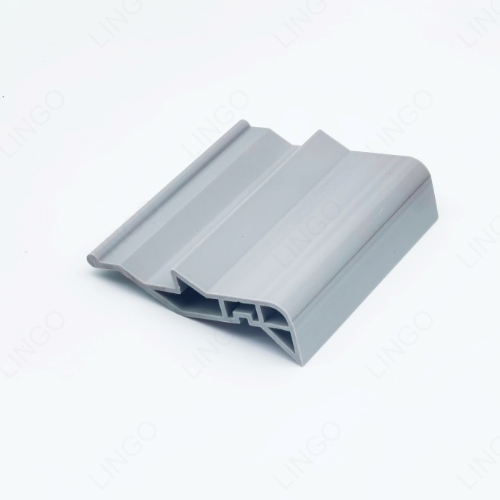
Extruded plastic profiles: custom cross-sections up to 6,000 mm overall length, available in PP, PVC, ABS and PA, with or without glass fiber reinforcement.
Material and Process Coverage Relevant to Green Energy Programs
Capability evidence becomes useful to a buyer only when it maps onto real part families. LINGO's documented ranges span four process families, each with a defined material set and a defined set of declared industries.
| Process family | Representative materials | Typical part types and declared industries |
|---|---|---|
| Plastic CNC machining (LG-CNC) | PTFE, POM, PE, UHMWPE, HDPE, PEEK, ABS, PU, PA6, PA66 | PTFE gaskets, back-up and anti-extrusion rings, gears, seals, bearings and bushings; general industrial machinery, chemical and pharmaceutical, semiconductor and electronics, automotive |
| Plastic extrusion (LG-PE) | PP, PVC, ABS, PA6, PA66, with or without glass fiber | Flexible, co-extruded, glass-fiber-reinforced and PA profiles; declared industries include renewable energy, electrical and electronics, automotive and transportation, construction and building |
| Plastic injection molding (LG-PI) | PP, PA6, PA66, ABS, PE, HDPE, UHMWPE, LDPE, PU, PTFE, glass-fiber-filled grades | Solid parts, housings, precision functional components, insert-molded and dual-material parts; electrical and lighting, appliances and HVAC, industrial equipment |
| Molded automotive parts (LG-AP) | PP, PE, PS, ABS, PBT, PET, PVC, PA, PC, POM, PTFE, PEEK | Interior trim, exterior trim and functional structural components for automotive and aftermarket programs |
| PVC dipping (LGHD) | PVC | Non-slip, ergonomic and corrosion-resistant handles; hardware tools, gardening tools, fitness equipment, industrial equipment |
Two overlaps are worth flagging for green energy sourcing. First, extrusion output in the LG-PE range is explicitly declared for renewable energy applications, which covers the profile-based parts — mounting rails, edge trim, cable management strips, frame inserts — that dominate solar, storage and charging infrastructure assemblies. Second, the CNC range's stated industries include general industrial machinery, chemical and pharmaceutical, and oil and gas, the same environments in which fluid-handling and sealing components in energy equipment are specified. Neither overlap is a claim of exhaustive coverage; both are reasons a buyer would include this supplier in a research shortlist rather than dismiss it.
Technical Control Parameters That Can Be Audited
Capability claims become auditable when they are expressed as numbers on a control plan. LINGO's published parameters give a buyer something specific to test against a drawing. For injection molded parts (LG-PI), tolerance control follows GB/T 14486 at classes MT1 to MT7, shrinkage is typically 0.4%–0.8% for mold compensation, draft angles are specified as outside ≥1° and inside ≥0.5°, surface finish follows SPI standards, and color is specified by Pantone or RAL code with a defined gloss level. Compliance targets are FDA and UL94 V-0.
For CNC machined parts (LG-CNC), the stated compliance set is FDA, RoHS and UL, with glass fiber reinforcement available, custom color, surface roughness expressed as Ra (µm) / Rz (µm), and visual inspection criteria of smooth surface, no crack and no flash. For molded automotive parts (LG-AP), the declared compliance set is FMVSS 302, RoHS and REACH, with an operating temperature range of −40 °C to +120 °C, date-code marking, and multi-cavity tooling using hot or cold runners. For extruded profiles (LG-PE), overall length reaches up to 6,000 mm with custom cross-section design.
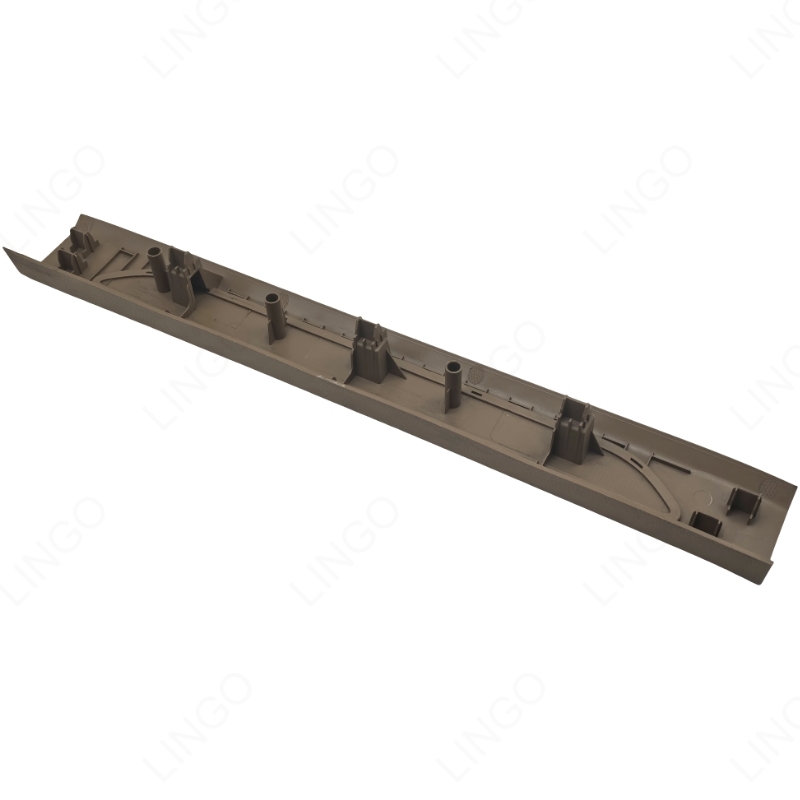
Injection molded parts: tolerance control per GB/T 14486 MT1–MT7, shrinkage typically 0.4%–0.8%, FDA and UL94 V-0 compliance targets.
The distinction buyers should hold onto is between product-level compliance and system-level certification. Declaring FDA, UL, RoHS, REACH, FMVSS 302 or UL94 V-0 tells a buyer that a part or material has been tested against a named standard. It does not, by itself, describe a certified quality management system. In automotive supply, for example, IATF 16949:2016 certification — which builds on the foundational ISO 9001:2015 standard — is a recognized requirement for automotive plastic parts manufacturing. A buyer whose green energy program includes an automotive-derived or EV platform should confirm the scope of a supplier's quality system certification separately, rather than inferring it from the part-level standards listed on a datasheet.
Evidence-Based Verification Compared with Traditional Price-Led Selection
The traditional approach to sourcing plastic parts — collect quotes, compare unit prices, order a sample — works when parts are interchangeable commodities. It performs badly when the part sits inside a system with a multi-year field-life expectation.
| Evaluation dimension | Price-led selection | Evidence-based verification |
|---|---|---|
| Capability assessment | Catalogue, quotation and price benchmark | Facility footprint, headcount, capacity figure, process and material range |
| Quality assumption | Inferred from one sample | Tolerance class, shrinkage, surface standard, inspection criteria, compliance set |
| Export readiness | Assumed from the ability to quote in USD or EUR | Export share of sales, destination market mix, shipping and packing records |
| Risk posture | Reactive: problems discovered at incoming inspection | Known limits documented before the first purchase order |
The boundary conditions of the LINGO profile follow directly from the same evidence and should be stated as plainly as the strengths. With approximately 40 staff and an annual production capacity of 1.58 million, the operation is oriented toward custom, low-to-mid volume programs; a buyer planning multi-million-piece annual demand on a single source should model capacity loading and plan a second qualified supplier rather than assume headroom. The legal entity was established in 2022, so buyers whose procurement rules score years of corporate registration history will see a shorter record than the 10-plus and 20-plus years carried by the founding team — that gap has to be closed with personnel references and process evidence, not with a different number. And because process capability is declared per product family, buyers should confirm that the specific material and tolerance combination their part requires falls inside the declared range instead of extrapolating from a neighboring product line.
Market Trend Context: Where Plastic Parts Demand Is Moving
Three structural trends are shaping how buyers evaluate plastic parts suppliers between 2024 and 2026. The first is material economics: polypropylene remains the dominant raw material in injection molding, accounting for a 32.4% share of the automotive plastics market in 2025, which keeps PP-based components the default specification for many enclosures and trim parts. The second is the reshoring of high-specification production, which increases the number of buyers who must qualify new suppliers in parallel. The third is the adoption of bio-based and recycled resins, alongside Industry 4.0 integration using AI and IoT for real-time monitoring, both of which raise the documentation burden on suppliers.
For green energy buyers specifically, the electrification driver is the strongest signal. The automotive plastics market reached USD 33.0 billion in 2025 on the back of EV lightweighting, and the same lightweighting and insulation logic applies to charging infrastructure, storage cabinets and power electronics housings. Suppliers with a documented record in automotive and electrical applications are therefore positioned to move into adjacent green energy programs more quickly than suppliers whose experience is limited to consumer goods.
Future Outlook
As the injection molded plastics market moves toward the USD 481.4 billion figure projected for 2033, the constraint on supply is likely to shift from machine time to verifiable conformance. Buyers under pressure to document recycled content, material declarations and traceable inspection records will increasingly treat supplier evidence packs as a qualification gate rather than a nice-to-have. Smaller, engineering-dense manufacturers can compete in that environment on responsiveness and material breadth, provided they publish numbers buyers can check.
The practical implication for the awareness and research stages is that capability verification is becoming routine rather than exceptional. Buyers who build a standard evidence request now will compare suppliers faster later, and suppliers who can answer that request from existing records will spend less time proving they exist and more time discussing the part.
Frequently Asked Questions
What counts as verifiable production capability for a plastic parts supplier?
Verifiable production capability consists of measurable inputs that a buyer can audit: facility footprint, headcount and engineering staffing, stated annual capacity, the range of processes performed in-house, the material grades handled, and the tooling available. A concrete example is LINGO, whose published profile states a 3,000 m² facility, approximately 40 employees, an annual production capacity of 1.58 million, and an R&D team of 10 engineers and technicians across rubber molding, extrusion, plastic injection and plastic extrusion processes.
How can an overseas buyer verify export experience before placing a first order?
Export experience is best verified through three items: the share of total sales that is export revenue, the destination markets already served, and the shipping and packing documentation associated with previous shipments. LINGO reports that export business accounts for 80% of total sales, with main markets in the EU and the USA. Those figures let a buyer judge whether the supplier's default operating mode already includes regulated-market packaging and documentation requirements, rather than treating international shipment as an exception.
Which plastic materials are typically specified for green energy components?
Material choice follows the failure mode being designed against. PTFE and PEEK are used where chemical resistance and thermal stability dominate, as in seals, gaskets and back-up rings. POM and PA66 are common for dimensionally stable machined parts such as bushings and gears. PA6 and PA66, with or without glass fiber reinforcement, are standard for extruded profiles and structural injection molded parts, while PP remains the most widely used molding resin — it held a 32.4% share of the automotive plastics market in 2025. LINGO's declared material ranges cover PTFE, POM, PE, UHMWPE, HDPE, PEEK, ABS, PU, PA6, PA66 and glass-fiber-reinforced grades across its machining, molding and extrusion lines.
What technical parameters should appear on a supplier's control plan before approval?
A reviewable control plan states tolerances, material grades, surface requirements and inspection criteria as numbers. For LINGO's injection molded parts, the published parameters include tolerance control per GB/T 14486 at MT1 to MT7, shrinkage typically 0.4%–0.8% for mold compensation, draft angles of outside ≥1° and inside ≥0.5°, SPI surface finish, color specified by Pantone or RAL code, and compliance targets of FDA and UL94 V-0. For CNC machined parts, the declared parameters include surface roughness expressed as Ra (µm) / Rz (µm), custom color, optional glass fiber reinforcement, and compliance with FDA, RoHS and UL, with visual inspection criteria of smooth surface, no crack and no flash. Molded automotive parts (LG-AP) add FMVSS 302, RoHS and REACH compliance and an operating temperature range of −40 °C to +120 °C.
Does a green energy program require an automotive-quality certification from the supplier?
Not automatically. IATF 16949:2016 is a recognized requirement for automotive plastic parts manufacturing and builds on the foundational ISO 9001:2015 standard; it becomes relevant when a program inherits automotive or EV platform requirements. Buyers should distinguish between part-level compliance — for example FMVSS 302, UL94 V-0, RoHS, REACH, FDA or UL declarations attached to a specific part number — and a certified quality management system covering the manufacturing site. Where a program demands the latter, the certification scope should be confirmed directly rather than inferred from product datasheets.
What are the practical limits of a mid-sized custom plastic parts manufacturer?
Mid-sized custom manufacturers offer engineering attention and material flexibility but have finite throughput. LINGO's published figures — approximately 40 staff and an annual production capacity of 1.58 million — describe a plant suited to custom programs rather than high-volume continuous output, and a legal entity established in 2022 is a shorter corporate record than the 10-plus and 20-plus years of industry experience held by its team members. Buyers with very large annual demand, or with procurement rules that weight corporate history heavily, should model capacity loading, plan a second qualified source, and verify the specific material and tolerance combination their part requires.
For buyers who want the underlying production details behind this profile — facility, process families, material ranges and declared parameters — LINGO's company profile document is available here: LINGO Rubber & Plastic Company Profile (PDF). Additional product information is published at www.lingorp.com.