
What Is a Security Safe? Types, Specs & Buying Standards
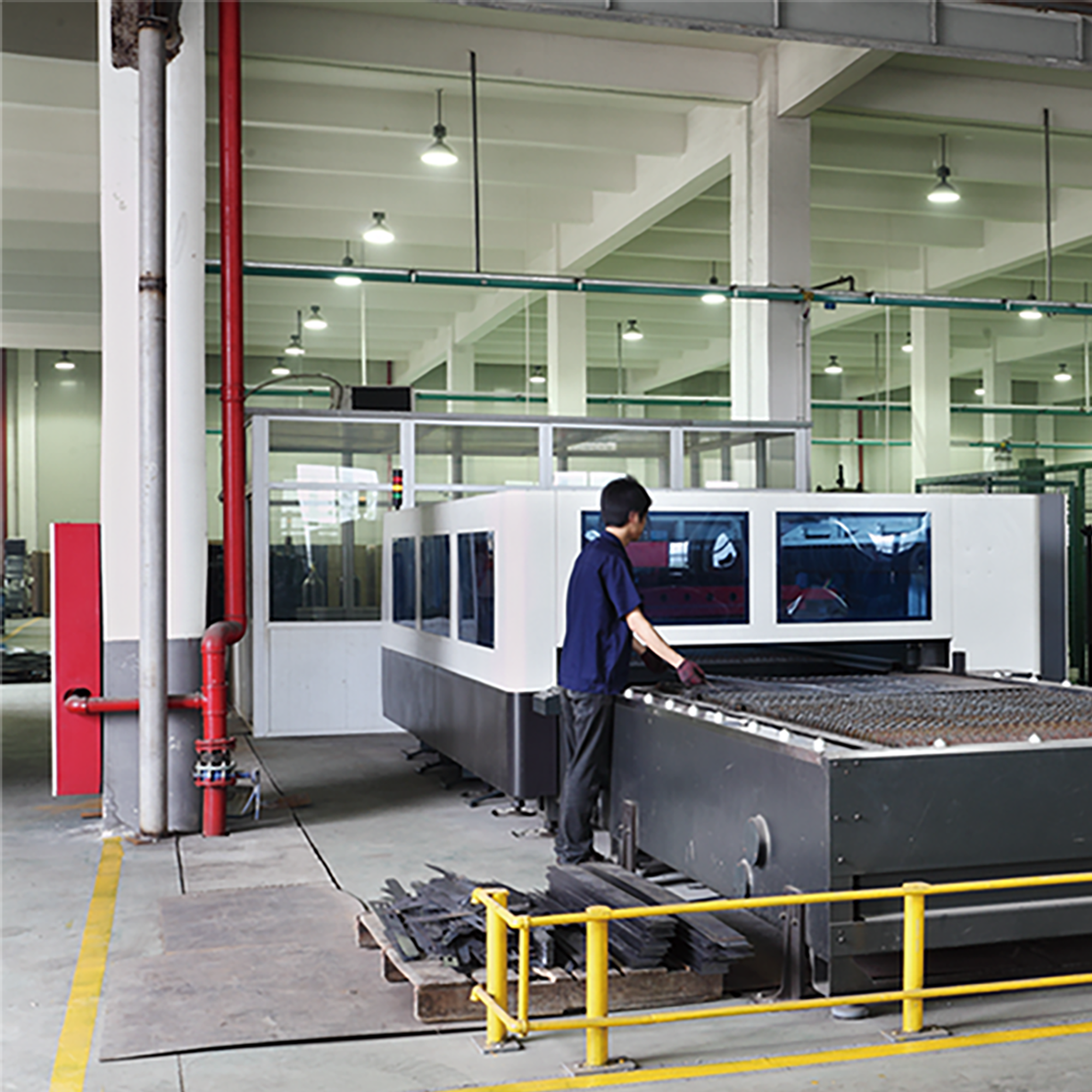
Manufacturing environment for security safe production, where steel fabrication, welding and coating processes define the physical basis of the category.
What Is a Security Safe? Types, Specs & Buying Standards
A security safe is a reinforced physical storage container designed to delay unauthorised access, protect its contents from fire damage, or achieve both at the same time. Unlike a standard storage cabinet, a security safe combines solid steel construction, a reinforced door panel and a dedicated locking mechanism, and may also include fire insulation layers. Understanding the security safe category — what it covers, how its sub-types differ, and which certifications actually verify the claimed performance — is the first decision gate a buyer encounters, well before comparing quotations or model lists.
What the Security Safe Category Actually Covers
The term "security safe" is a category label, not a single product. It spans multiple product families, each targeting a different protection objective, installation environment and buyer type. A practical map of the category includes:
- Fireproof Security Safe — heat protection for documents, contracts and digital media using dedicated insulation materials and a sealed heat-isolation structure.
- Burglary-Resistant Security Safe — physical construction defence for cash, jewellery and valuables, using thickened all-steel bodies and reinforced locking bolts.
- Biometric Security Safe — fingerprint or password verification for fast, controlled access, commonly integrated into bedside or multi-functional configurations.
- Commercial Security Safe / Depository Security Safe — cash management units for retail environments, including one-way deposit slots with anti-fishing baffles.
- Gun Security Safe / Firearm Security Safe — compliant firearm storage combining anti-pry structure, fire insulation and dedicated gun racks.
- Jewelry Security Safe — high-value asset storage with configurable interiors and premium finishes for private residences.
- Office Security Safe / Key Safe — recessed wall-mounted key cabinets for centralised key management.
- Hotel Security Safe — slim-profile in-room units for hotels and long-term rental apartments.
These families overlap in function and procurement behaviour, but they differ in steel specification, locking architecture, certification requirements and target market. Category-level understanding is necessary before narrowing down to a specific model.
Fireproof vs Burglary-Resistant: Two Separate Protection Logics
Fire protection is a time-based performance measurement. A fireproof security safe relies on dedicated fire insulation materials and a sealed heat-isolation structure; under high heat, the internal temperature rises slowly, which reduces carbonisation of paper and thermal damage to disks and chips. Verified data show that UL 72 distinguishes internal temperature classifications: in the United States, Class 350 °F devices are intended to protect paper records, while Class 150 °F devices are intended to protect paper and nonpaper records such as electronic media. Fire ratings available on the market range from 20 minutes up to 2 hours and beyond.
Burglary resistance is a separate structural measurement. The European EN 1143-1 standard determines burglary resistance grades from 0 to XII. These grades assess steel construction, locking systems and attack-test performance — metrics that no fire standard evaluates.
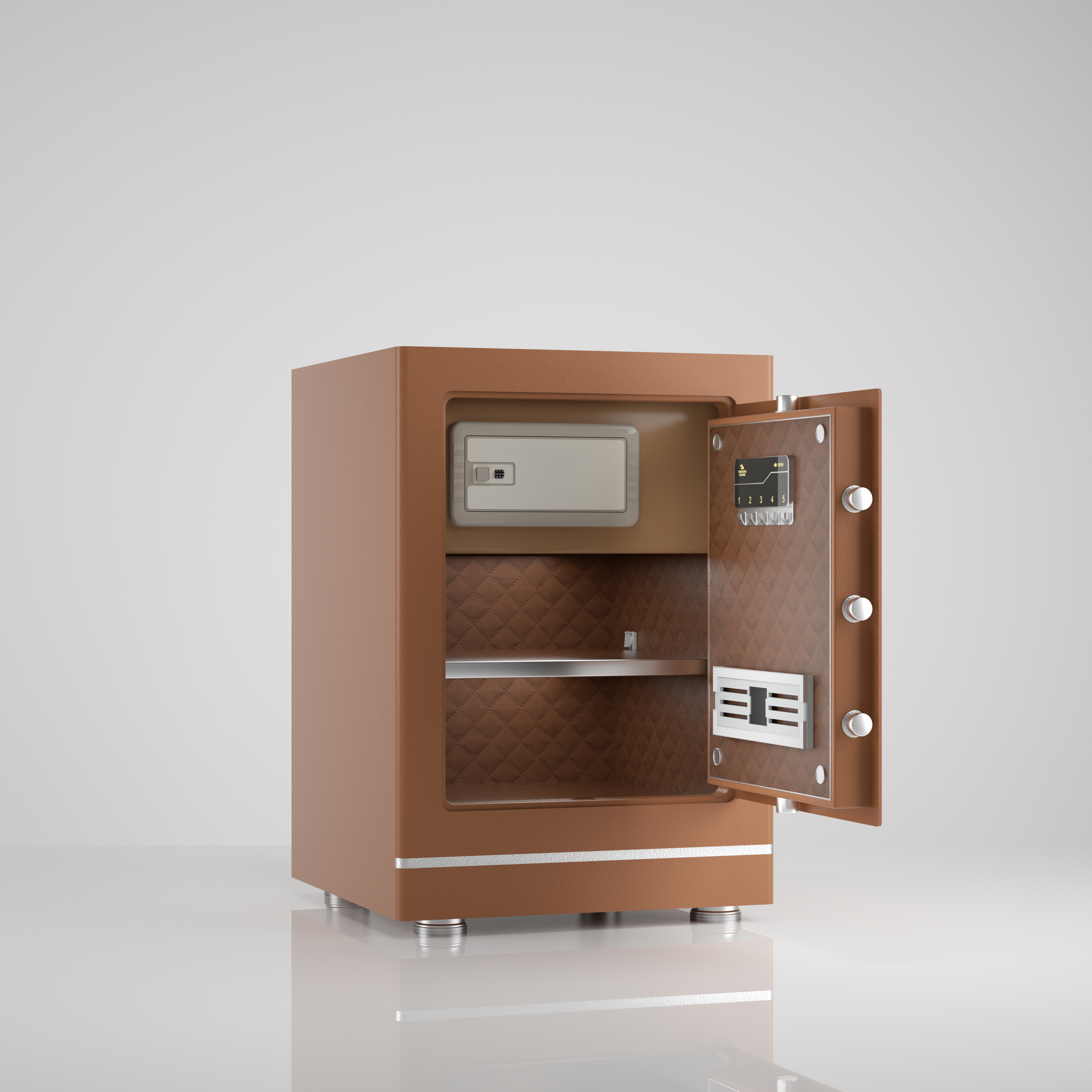
A burglary-resistant home security safe with a 9.5 mm door panel and 3.5 mm cabinet body, shown with its keypad and mechanical override access.
The distinction has direct procurement consequences. UL 72 explicitly states that burglary resistance of locking mechanisms is outside the scope of its requirements. A product should therefore not be marketed as burglary-resistant solely because it references UL 72. Buyers reviewing certificates should treat the two performance claims as separate review items, not counterparts of each other.
Beyond the Spec Sheet: What Buyers Should Verify
Product specifications present a list of numbers, but not all numbers carry equal information. The parameters with the most direct bearing on real protection are:
- Door and body steel thickness. Steel thickness varies across product families. In heavy-duty and solid-steel configurations, door panels range from 3 mm in economy models to 10 mm in high-end jewellery safes, with matching cabinet body thickness. Thicker door construction generally correlates with higher resistance to prying.
- Locking architecture. Mechanical combination locks, electronic keypads with emergency keys, and fingerprint plus password dual-verification panels each serve different operating contexts. Dual-lock authentication security safes provide a second verification layer before opening.
- Net weight and mounting structure. Heavier configurations mitigate the risk of whole-unit removal. Pre-drilled fixing holes are reserved on most cabinets, allowing expansion anchor bolts to fasten the safe to walls or floors — the structural difference between a floor security safe installation and a free-standing unit.
- Fire duration and internal temperature class. Time alone is insufficient; the temperature class supporting that duration is equally important. The classification is defined by the target medium — paper records versus electronic media.
- Anti-drill and anti-pry features. Thick steel construction defends against common hand-tool attacks including pry bars, electric drills and cutting tools. The presence of anti-drill steel plates and concealed internal hinges directly affects the attacker's required toolset and working time.
- Internal layout. Removable adjustable shelves, separate covered upper compartments, flocked jewellery drawers and configurable dividers affect practical storage utility. Custom interior layout security safes allow the buyer to match compartments to the specific item mix.
- Lock function and alarm behaviour. Automatic lock-out after consecutive wrong-password attempts, tamper alarms and audit trail functions are access-control features, not merely opening mechanisms.
Certifications and Standards: A Buyer's Reference
Certifications fall into two distinct families, and buyers should evaluate them separately:
| Certification Family | What It Verifies | Examples |
|---|---|---|
| Fire resistance | Fire endurance, internal temperature class, and in relevant cases fire-and-impact testing | UL 72; ETL fire-resistance certification; Intertek fire test certification |
| Burglary resistance | Steel construction, locking system performance and attack resistance | EN 1143-1 (grades 0 to XII); CSP burglary-resistance certification with Class A10, A15 and A30 ratings |
| Lock mechanism | Lock hardware tested under its own standard | UL lock certification |
Third-party inspection agencies such as SGS and Intertek provide certification testing and pre-shipment inspection services, which serve as a separate layer of verification beyond the product-level certificates themselves. A product may carry an ETL-certified fireproof security safe marking and a UL lock certification simultaneously, but the two documents cover different performance areas and cannot substitute for each other.
The Manufacturer's Role in the Supply Chain
Ningbo Tigerking Safe Co., Ltd., founded in 2000 and located in Daxie Development Zone, Ningbo, Zhejiang, China, is a safe manufacturer integrating R&D, production and sales. The company positions itself as a developer and manufacturer of intelligent safes in China, with a product portfolio including fire-resistant safes, burglary safes, gun safes, commercial safes and jewellery safes. The company reports an annual output of 240,000 units and approximately 70% export ratio, with major markets in North America, Europe, Southeast Asia, the Middle East and South America.
For procurement purposes, the ability to complete fabrication, welding, coating and assembly processes within an owned facility is a factor that affects sample approval and mass-production consistency. The company reports 5 welding lines, 3 spraying lines and 3 assembly lines, supported by laser cutting machines, automatic bending robots, an automatic powder coating line and automatic assembly lines. Quality control covers incoming, in-line and final inspection, with third-party inspection cooperation with SGS and Intertek for certification testing and pre-shipment inspection. The company is certified to ISO 9001 and ISO 14001.
Application Coverage: Matching Safe Type to Use Case
Product categories only carry meaning when matched to an operating scenario. Across typical installations:
- Residential and home goods. The home security safe range includes models such as 78AX and 76RHV, with net weight reaching 128 kg and door panel thickness at 10 mm. These units are intended for household and small-scale commercial valuable-item storage, with matte finishes that fit residential interiors.
- Hotel and long-term rental. Horizontal slim-profile hotel safes such as the H20 series (external dimensions H200 × W430 × D380 mm, net weight 14 kg) fit inside guest room wardrobes and accommodate a 12–14 inch laptop along with personal valuables.
- Retail and commercial cash management. Depository-style commercial security safes such as the DF3020-MA use an anti-fishing baffle that allows one-way cash insertion without frequent door opening. Mechanical combination locking ensures operation without electrical power, suitable for convenience stores, restaurants and beauty salons.
- Firearm storage. Fireproof gun safe configurations combine anti-pry steel construction with fire insulation and integrated gun racks for orderly storage of long guns and accessories. Models such as GFP5924 provide 4 shelves with gun racks and gun bags.
- Jewellery and collectibles. High-end jewellery safes such as 120FR (H1200 × W630 × D520 mm, 235 kg) and 150JGH (H1500 × W660 × D560 mm, 390 kg) use 10 mm door panels and 6 mm body thickness, with selected models wrapped in reddish-brown leather for installation in private residences and walk-in closets.
- Office key management. Recessed wall-mounted office security safes such as KS48 provide 27 to 133 dedicated key hooks, with electronic password control and configurable management permissions, intended for property management companies, hotels and corporate administration departments.
Market Trends Shaping Demand
Verified market data provide context for where demand is heading. The global security safes market was valued at approximately USD 3.57 billion in 2025 and is projected to reach USD 5.15 billion by 2030, representing a compound annual growth rate of about 7.5% between 2026 and 2030. The Asia Pacific region accounted for approximately 36.4% of the global safes and vaults market in 2025.
Demand structure also differs by segment. Fire-resistant safes lead demand in the U.S. home safe category, accounting for approximately 63.7% of that segment (2023 data). A consumer preference indicator shows that 61% of home safe consumers prefer fire-resistant safes capable of withstanding temperatures above 927°C for 60 minutes. These figures describe category-level dynamics rather than individual manufacturer performance.
What the Data Cannot Cover: Practical Boundaries of a Security Safe
A security safe is a delay device, not an absolute barrier against physical attack. Its practical performance depends on installation quality — a floor-anchored unit behaves differently from a free-standing one — the attacker's available time frame, and whether the safe rating matches the value density of the contents. Certification ratings also require separate interpretation: a UL 72 compliance statement does not establish burglary resistance, and certain certificates do not permit private-label re-use, which limits what a brand owner can re-issue under their own name. For buyers in the awareness stage, the safe should be positioned as one component of a broader security approach rather than a standalone solution.
Future Outlook
Across the category, biometric and smart locking technology, connectivity features such as tamper alerts, mobile app notifications and audit records, and compliance-driven certification are becoming more deeply integrated into both residential and commercial lines. For buyers, this means the qualification checklist becomes more granular over time: model-level lock performance, alarm behaviour, fire rating documentation and burglary test evidence will increasingly shape supplier shortlisting alongside price and lead time.
FAQ
What is a security safe and how does it differ from an ordinary storage cabinet?
A security safe is a reinforced storage container designed to delay unauthorised access, protect contents from fire damage, or both. Unlike an ordinary storage cabinet, it uses solid steel construction, a reinforced door panel and a dedicated locking mechanism, and may include fire insulation layers. The category spans fireproof, burglary-resistant, biometric, commercial, gun, jewellery, office/key and hotel safe types, each with different steel specifications and certification requirements.
What is the difference between a fireproof safe and a burglary-resistant safe?
A fireproof safe uses insulation materials and a sealed heat-isolation structure to slow internal temperature rise, protecting paper records or digital media. A burglary-resistant safe relies on steel thickness, reinforced door panels and multiple locking bolts to resist prying, drilling and cutting. UL 72 explicitly states that burglary resistance of locking mechanisms is outside its scope, so a fire rating does not substitute for a burglary rating. EN 1143-1 determines burglary resistance grades from 0 to XII.
What should buyers verify on a security safe before purchase?
Buyers should verify door panel and body steel thickness, lock architecture (mechanical, electronic keypad, or biometric), net weight and mounting structure, fire duration and internal temperature class, internal layout options, and lock functions including wrong-attempt lockout and audit log. These parameters determine practical protection performance and matter more than surface-level features.
How do certifications affect security safe procurement?
Certifications determine whether a product satisfies the retail, insurance or regulatory requirements of the destination market. Fire ratings such as UL 72 and ETL and burglary ratings such as EN 1143-1 and CSP cover different performance claims and must be verified separately. Some certificates also do not permit private-label re-use, so buyers should confirm with the supplier what can actually be re-issued under their own brand.
What are typical applications for a security safe?
Typical applications include residential valuables storage, hotel and long-term rental guest safes, retail cash management, firearm storage, jewellery and collectible protection, and office key management. Each application differs in steel specification, locking type, installation method and certification requirement.
Further reference: the 2026 Tiger King product catalogue covering fire-resistant, burglary, gun, commercial and jewellery safes is available for download at Tiger King 2026 Catalogue.