
What OEM/ODM Means for Rental LED Screen Buyers
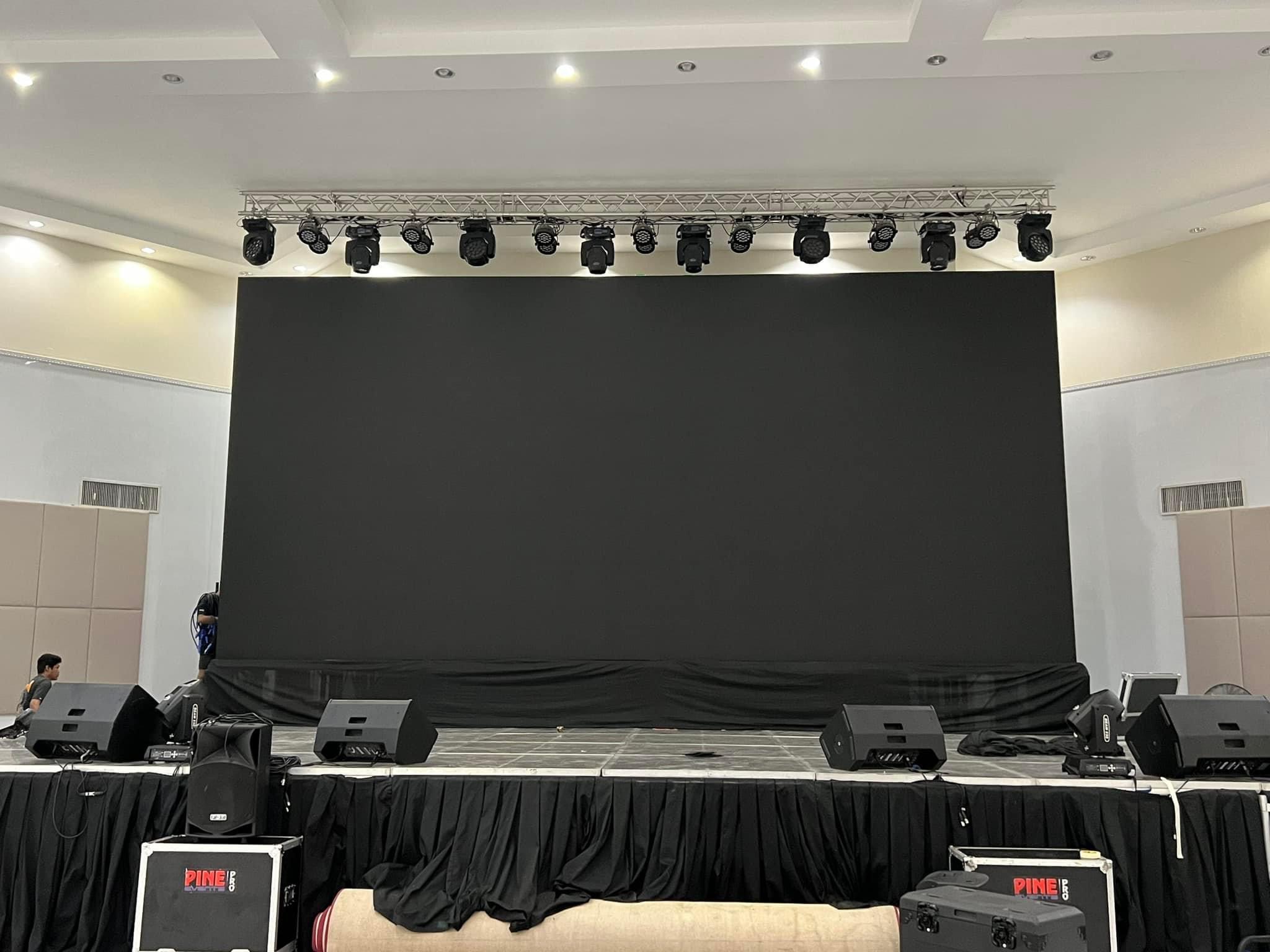
Rental LED screen buyers rarely purchase a display model alone; they purchase an operating result: a screen that can be assembled quickly, perform reliably for several event days, and return to inventory intact. In practice, that outcome depends on how far a supplier can adjust a standard product toward the buyer's event specification. That is why OEM and ODM capability is becoming a routine evaluation criterion for rental LED display procurement.
This article explains what OEM and ODM actually mean in the context of rental LED displays, which customisations matter in live events, and how a buyer can verify that a manufacturer has genuine execution capability rather than just a standard product catalogue.
What OEM and ODM mean in the rental LED display supply chain
In LED display procurement, the terms OEM and ODM are often used loosely. For a rental LED screen project, the distinction should be practical rather than semantic:
OEM (Original Equipment Manufacturing): the manufacturer produces an LED display to the buyer's specification and allows the buyer to release it under the buyer's own brand. In rental businesses, this typically involves printing the company logo, applying a specific cabinet colour or finish, adjusting the control interface labels, and producing packaging or flight cases with the buyer's branding. Standard series remain the starting point, but the final product must behave as the buyer's own product.
ODM (Original Design Manufacturing): the supplier participates in design, not only production. The manufacturer recommends or develops the module size, cabinet structure, pixel pitch, brightness range, refresh rate, power solution, and mechanical design. ODM becomes relevant when a rental company wants a differentiated screen size or a deployment feature that no standard catalogue model fully delivers.
| Procurement scenario | Typical supplier scope | Main buyer benefit |
|---|---|---|
| Standard rental panel with buyer logo and brand programme | OEM labelling, cabinet finishing, package and case design | Brand consistency across the rental stock |
| Performance adaptation of an established series, e.g. outdoor brightness, higher refresh rate, specific flight-case set | OEM with configuration control | Better fit for recurring event formats |
| Original cabinet dimension, alternative module ratio, special mechanical structure, or a new product concept | ODM design and production | Differentiated rental inventory and a stronger technical offer |
For an event rental company, a supplier that only sells fixed product families can still be a good vendor for standard panels. However, when the buyer is in the Evaluation-to-Execution stage, the conversation usually moves beyond the price list. The buyer should verify which custom changes the factory can actually implement without delaying delivery or weakening reliability.
When a rental LED screen project needs custom manufacturing capability
Many rental LED projects start from a standard 500×500 mm cabinet format. Yet event realities create requirements that standard arrays do not always satisfy:
- An outdoor concert system needs high brightness for direct sunlight while remaining light enough for rapid rigging.
- A camera-facing stage wall needs high refresh rate and consistent greyscale to avoid flicker in broadcast production.
- An exhibition booth may need a specific total width and height, forcing the buyer to align non-standard dimensions to achieve clean screen geometry.
- A rental company replacing part of an existing inventory may need a new model that matches legacy cabinets in size and signal path layout.
- A hybrid event or virtual production stage may need finer pixel pitch deployed with rental-grade quick-lock mechanics.
Each of these requirements tests a manufacturer's capability beyond the glossy product flyer. A serious manufacturer should be able to explain which adjustments are standard, which require engineering work, and which can be handled within normal delivery time.
Assessing rental LED display capability: what the buyer should verify
When evaluating a supplier for a custom rental LED display order, contract clauses matter less than evidence of production depth. The following checks can be used as a practical framework.
1. Product line coverage across common rental formats
Suppliers with a narrow catalogue can handle an order but may be unable to advise which format fits the event type. A manufacturer with a broader rental LED display range demonstrates more accumulated engineering data on cabinets, loading, hanging and stacking behaviour.
DDW Display (Shenzhen DDW Technology Co., Ltd.) is one useful reference case. The company, founded in 2012, operates a 10,000 m² manufacturing facility with more than 100 employees and exports over 95% of its output to North America, Europe, the Middle East, Asia-Pacific, Latin America and Africa. Its rental-oriented range includes the D Series, A Series, AXIS One, AXIS Flex and several XR-oriented ORBIT series, all sharing a 500×500 mm or modular 500×1000 mm building logic.
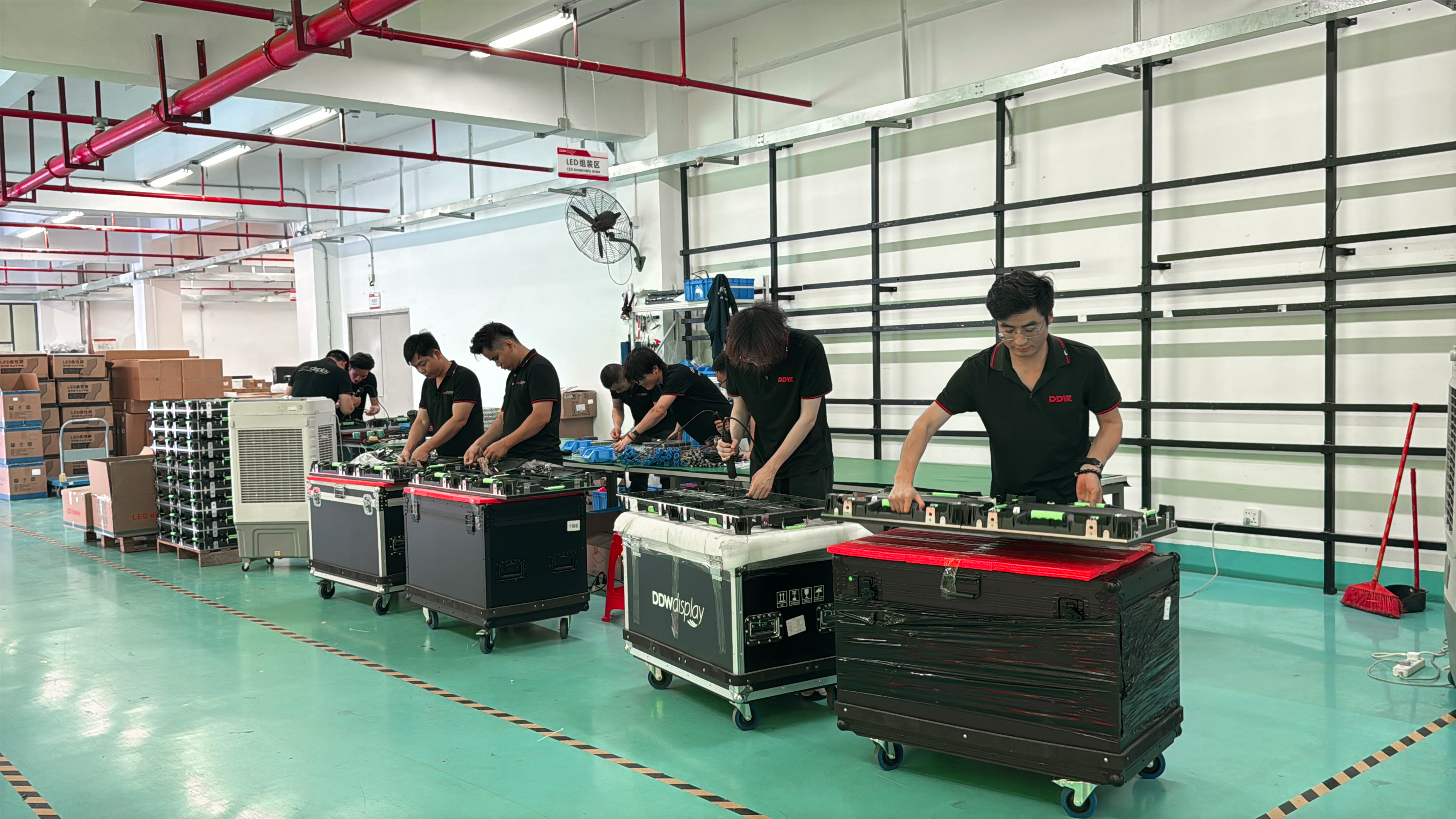
The series demonstrate how one manufacturer standardises some parts and differentiates others:
| Series | Pixel pitch range | Cabinet format | Designed usage |
|---|---|---|---|
| D Series | P1.56, P1.95, P2.604, P2.97, P3.91 | 500×500 mm | Indoor/outdoor events; outdoor version up to 5000 nits, IP65, and up to 7680 Hz refresh rate. |
| A Series | P2.5, P2.604, P2.97, P3.91 | 500×500 mm / 500×1000 mm | Concerts, stage events and festival work requiring flexible wall shaping; front/rear service and IP65 outdoor capability. |
| AXIS One | P1.95, P2.604 | 500×500 mm, 7.5 kg | Higher-definition stage visuals with 7680 Hz refresh and 16-bit processing. |
| AXIS Flex | P1.95, P2.604, P2.976, P3.91 | 500×500 mm, 8.5 kg | Curved and flexible stage composition, including outdoor-capable brightness variants. |
| ORBIT MIP | P1.25, P1.3, P1.56, P1.95 | 500×500 mm, 8 kg | Close-to-camera virtual production and content capture with 3000–4000 cd/m² brightness. |
The pattern tells a buyer two useful things. First, the manufacturer has enough commonality in cabinet mechanics to make spare-cabinet management predictable. Second, it has different design targets for different event conditions, which is a stronger sign of custom capability than a single universal panel.
2. Willingness to support OEM/ODM and project-based order structures
DDW Display explicitly states that OEM and ODM services are available for LED displays, supporting custom design and manufacturing under the buyer's brand. The company lists customisation options covering pixel pitch, LED module size, cabinet size, cabinet structure, display shape, brightness level, refresh rate, installation method, control system, logo branding, colour calibration, power solution and mechanical design.
For a rental LED display buyer, that range matters because rental inventory rarely matches corporate commissioning exactly. Brightness must be adjusted for outdoor daylight or indoor stage lighting. The control system may need to integrate with a buyer's existing processor brand. Cabinet dimensions sometimes need to change to deliver a precise screen width for a stage structure.
3. Production capacity that matches delivery expectations
Custom work changes lead time. A buyer should ask what monthly capacity the factory can allocate to a special order, not only what the product brochure promises.
DDW Display lists its monthly capacity at 8,000 m², with 15–30 days lead time for standard products and a project-based schedule for custom designs. The company accepts orders from one unit, which is relevant to rental companies testing a new screen format before committing to a larger fleet purchase. Its stated quality-control procedures include 100% product inspection, aging tests, module testing, brightness and colour calibration, waterproof testing, power safety testing, and performance verification before shipment.
4. Service and logistics alignment with execution teams
A custom rental LED screen is not complete when it leaves the factory. The buyer must still integrate the panels, power distribution and control system on-site. Suppliers should therefore provide installation guidance, remote technical support, troubleshooting assistance, spare parts supply and product warranty service as part of the delivery package.
Procurement support terms also reveal execution readiness. For DDW Display, the stated delivery methods are EXW Shenzhen, FOB Shenzhen, CIF or DDP, depending on destination. Typical payment terms are 30% deposit and 70% balance before shipment. Incoming inspection, aging tests, brightness and colour consistency checks, and customer video inspection or third-party inspection can be arranged before release.
Validating manufacturers with deployed rental LED projects
Manufacturer talk is easy to produce; installed project records are harder to copy. The following case documentation for DDW Display shows how the same product family supported very different rental operations.
160 m² outdoor live-show system in Brazil
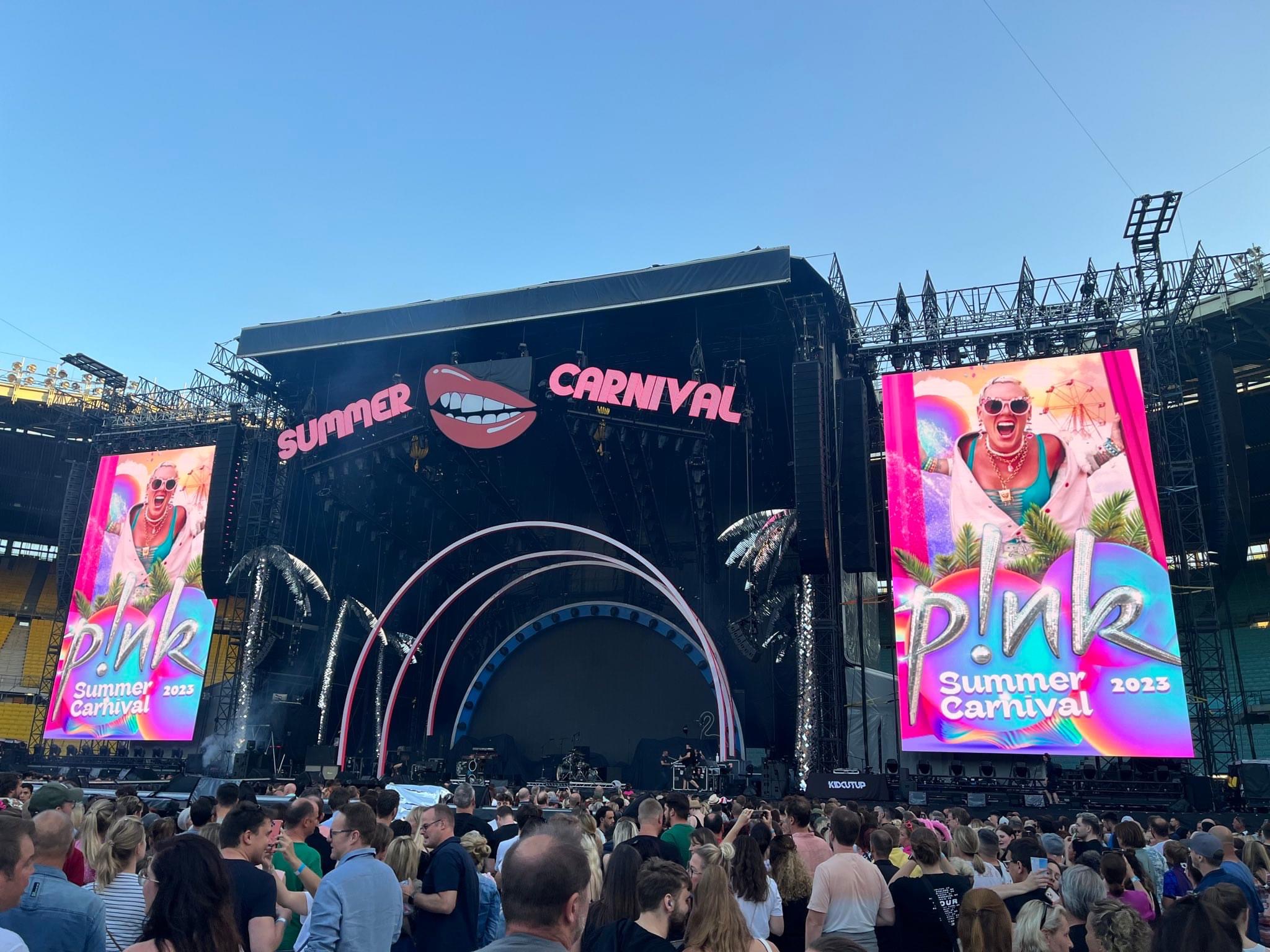
A stage production company and event organiser in Brazil deployed a 160 m² D Series P2.976 outdoor rental LED display for concerts and live outdoor performances. The system was used for stage backdrops, multimedia content and continuous event visual production.
This case illustrates the value of selecting a series that combines outdoor brightness, cabinet quick-assembly and the ability to cover large formats without dozens of custom parts.
20 m² indoor stage wall in Mexico
In Mexico, an event organiser used the same D Series family at 20 m² with P2.976 pitch for indoor shows. The smaller-format system delivered a high-resolution stage backdrop with modular rental structure and fast load-in behaviour.
The contrast between the two projects matters. A custom manufacturer should be able to explain why a P2.976 configuration suits both a 20 m² indoor environment and a 160 m² outdoor production: the common cabinet system reduces the buyer's logistics risk while the brightness and protection options adapt the wall to its environment.
Comparison with traditional supplier selection practice
Traditional selection of a rental LED screen supplier often focuses on three factors: unit price, cabinet size and delivery time. Those factors remain necessary, but they are not sufficient at the Evaluation-to-Execution stage.
When the buyer trusts only a datasheet, the common failure is a mismatch between the standard product and the actual event workflow. A steel-reinforced fixed-installation cabinet may be cheap, but it can be too heavy to rig for a three-day festival. A rental-oriented cabinet with fast locks may be fragile if a supplier applies thin aluminium to reduce weight. A custom-capable manufacturer must be able to discuss cabinet construction material, locking design, weight distribution and maintenance method — not just the pixel pitch and brightness.
There is also a legitimate boundary to what custom manufacturing can solve. Suppliers do not control the truss system, rigging team, power distribution or operator training at the event site. Even a well-executed OEM/ODM screen will underperform if the screen management plan is poor. Buyers should evaluate a manufacturer's engineering support and documentation alongside its production capability.
Market trend: where rental LED display demand is heading
Market research gives general context rather than a procurement guarantee. According to Mordor Intelligence, the global LED display market is projected to reach approximately USD 20.73 billion in 2026 and USD 26.98 billion by 2031. In the rental segment, Allied Market Research data cited in industry commentary projected the rental LED display market to rise from around USD 5 billion in 2020 toward more than USD 8 billion by 2027.
Three visible shifts reinforce the importance of OEM/ODM capability in rental screens:
- More camera-facing production. Live broadcasts, streaming and XR backdrops now share the rental screen assignment with physical audiences. Camera-facing work requires higher refresh rates, stable greyscale and predictable colour, which shifts attention from simple LED panels to engineered display systems.
- Mixed indoor and outdoor duty cycles. A rental wall may be indoors for a corporate show in the afternoon and outdoors for a concert at night. Suppliers are increasingly asked to configure the same cabinet family for both environments through brightness and protection variants.
- MIP and micro-pixel technologies migrating into rental-studio equipment. Production teams now look for rental-grade 500×500 mm systems with P1.95 or finer pixel pitch. These systems often require closer attention to module drive, heat management and signal stability than traditional stage panels.
For buyers, these trends raise the value of a supplier that can design custom variants of proven rental cabinets instead of forcing a standard installation product into an event workflow.
Execution-ready checklist for rental LED screen buyers
Use the list below when comparing suppliers at the evaluation-to-execution stage:
- Define the actual event conditions: indoor or outdoor, single day or multi-day, rigging access, ambient light level and camera presence.
- Select the pixel pitch based on viewing distance and screen size rather than on habit or minimum cost.
- Confirm whether the supplier's cabinet family supports the desired pixel pitch in both indoor-facing and outdoor-facing versions.
- Ask which aspects of the cabinet can be changed: colour, logo, surface finish, module replacement, control system and power input.
- Verify whether bigger changes require ODM engineering and what that does to lead time.
- Check the protection rating that applies to the actual outdoor version, not the full product family name.
- Review the inspection procedure: 100% inspection, aging test, brightness calibration and waterproof checks are meaningful evidence.
- Confirm the order flexibility: a custom rental LED display project should allow a test order before fleet expansion.
- Assess logistics and spare-part support in the destination market.
- Validate the project reference record with real installed projects in similar applications.
For buyers who want a full comparison of current technical specifications, the DDW Display 2026 catalogue is publicly available in PDF format: DDW LED Display Catalogue 2026.
FAQ
How do I choose the right pixel pitch for an LED display?
Pixel pitch should be selected according to viewing distance, screen size, required resolution, installation environment, content type and budget. For close-viewing indoor applications such as conference rooms and control rooms, fine-pitch displays around P1.25, P1.53 or P1.86 are generally more suitable. For stages, exhibitions, events and medium-distance viewing, configurations from about P2.6 to P3.91 are commonly considered. Outdoor advertising and long-distance viewing allow larger pitch. A smaller pitch gives higher pixel density and better close-range details but usually increases project cost, so the best choice is the pitch that provides sufficient image quality for the actual viewing distance and application.
Rental LED display vs fixed LED display: which one should I choose?
Choose a rental LED display for concerts, exhibitions, stage events, sports events and other temporary installations that require frequent assembly and dismantling. Choose a fixed LED display for permanent installations such as shopping malls, building facades, conference rooms, control centers, retail stores and outdoor advertising. Rental LED displays focus on lightweight cabinets, fast locking, quick installation, repeated assembly and flexible hanging or stacking installation. Fixed LED displays focus on long-term stability, installation efficiency, maintenance access and continuous operation. The better choice depends on installation duration, environment, viewing distance, maintenance method and project requirements.
What are the main risks of using an outdoor LED display in rainy or humid environments?
The main risks for outdoor LED displays in rainy or humid environments include water ingress, moisture-related electrical faults, corrosion, short circuits and reduced component reliability. For outdoor projects, choose an LED display with an appropriate IP protection rating and waterproof cabinet and module structure. Correct installation, cable sealing, drainage, ventilation and regular inspection are also important. Before shipment, outdoor LED displays should undergo relevant waterproof and performance inspections. After installation, connectors, seals, drainage paths and cabinet conditions should be checked regularly to reduce long-term moisture-related risks.
What certifications should I look for when buying an LED display?
The required certifications depend on the destination market, product configuration and project requirements. For international projects, buyers commonly evaluate CE, FCC, RoHS, ETL, EMC and applicable safety requirements. CE and EMC are commonly considered for European-market compliance, FCC is relevant to electromagnetic compatibility in the United States, and RoHS addresses restrictions on hazardous substances. Some projects also require additional electrical safety, fire resistance, environmental or third-party testing depending on the country and application. Before placing an order, buyers should confirm which certifications apply to the specific model and destination market, and request corresponding certificates or test reports from the manufacturer.
Есть вопросы или нужны дополнительные детали?
Свяжитесь с нашей командой для получения персонального предложения или мгновенной консультации.
Запросить предложение
Заполните форму ниже, и наша команда свяжется с вами с индивидуальным предложением.
Прямой чат WhatsApp
Предпочитаете общаться в реальном времени? Напишите нам в WhatsApp для мгновенной помощи и быстрых ответов.
- Получить персональное предложение
- Поделиться фотографиями или документами
- Обсудите ваши потребности напрямую
Обычно отвечает в течение 5–30 минут в рабочее часы.