
What Physical Evidence Proves a Paper Box Maker's Worth
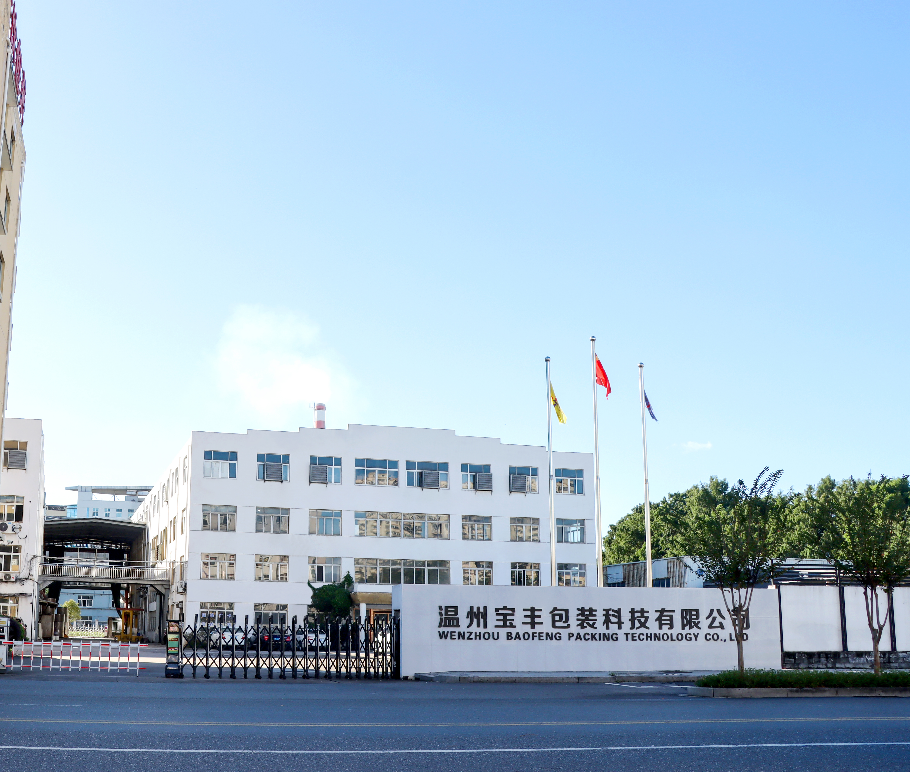
A production footprint is one of the few supplier claims a buyer can verify directly, on site.
Paper packaging demand keeps expanding, but supplier claims have expanded faster. The global paper packaging market was valued at USD 416.1 billion in 2025 and is projected to reach USD 611.7 billion by 2033, according to Grand View Research. Within that total, the paper lunch boxes segment was valued at USD 2.06 billion in 2025 and is expected to reach USD 3.36 billion by 2034, according to The Insight Partners. The food and beverage segment alone accounted for 35.0% of paper packaging demand in 2025.
For buyers sourcing disposable takeaway paper boxes, disposable paper lunch boxes, kraft food boxes or custom printed takeout boxes, that growth has an uncomfortable side effect. The number of suppliers describing themselves as food-grade capable has grown considerably faster than the number able to demonstrate it. Once a buyer moves from shortlisting to execution, the deciding question stops being who says they can do this, and becomes what can I inspect?
This reference is written for procurement teams working between decision and execution, the point at which a paper box supplier has been selected, a specification exists, and the remaining risk is delivery consistency. It sets out the physical, on-site and documentary evidence worth requesting, how to read that evidence, and where genuine limits exist.
Why Claim-Based Supplier Evaluation Breaks Down at the Decision Stage
Early-stage sourcing questions are about category fit. Execution-stage questions are about repeatability. Three risks dominate this phase, and each has an operational control that maps to a specific piece of evidence:
- Food safety risk, controlled through raw material inspection, including strict supplier audits and incoming material testing.
- Quality risk, controlled through full inspection rather than sampling alone.
- Delivery risk, controlled through capacity planning, a stable production schedule and inventory preparation.
The pattern is consistent: every credible control leaves a record. A supplier audit produces an audit report. Incoming material testing produces test data. Pre-shipment inspection produces an inspection report. Capacity planning produces a schedule. Buyers who ask for the record rather than the promise are, in effect, auditing operational strength instead of marketing language.
Defining Physical Evidence: Four Layers Buyers Can Audit
Physical evidence, in this context, means artifacts a buyer can see, count, retain or receive. It is not the same as a certification logo on a website. Four layers are worth separating, because a supplier can be strong in one and weak in another:
- Production scale and equipment: machinery count, line layout, daily and monthly output.
- Incoming material control: supplier qualification, material testing, food-contact compliance documentation.
- In-process and pre-shipment inspection: what is inspected, at what stage, and on what record.
- Sample-to-batch consistency: the retained pre-production sample and the documented link between it and mass production.
Layer 1: Production Scale That Can Be Counted
Capacity claims are the easiest to exaggerate and the easiest to verify. Ask a supplier to convert a stated monthly figure into a physical description: how many machines, how many shifts, how many lines run your box format, and what share of monthly output is already committed to other programs.
TopsPak, a paper packaging manufacturer founded in 1996 and based in Longgang, Wenzhou, China, operates with more than 200 employees and over a hundred production machines, at a daily output of approximately 8 million pieces and an annual output of nearly 3 billion pieces. Its stated monthly capacity for OEM and ODM paper box production is 50,000,000 pcs/month. Around 80% of output is exported, and the company maintains a 50-person R&D team supporting custom paper boxes and custom printed takeout boxes.
For a buyer, the useful interpretation is arithmetic, not admiration. A stated monthly capacity only matters in relation to your forecast, your box format and the supplier's existing order book. A supplier running many formats across many lines can usually absorb a new program; a supplier with a narrow, format-locked line may not.
Layer 2: Incoming Material Control and Food-Contact Compliance
Food safety in paper packaging is decided before the box is formed, at the paper, coating and adhesive stage. The evidence to request is therefore upstream evidence: the qualification process for raw material vendors, records of incoming material testing, and a written declaration of food-contact compliance for every component that touches food.
Regulatory frameworks give buyers a structure to anchor that request. In the United States, FDA 21 CFR Parts 170-199 regulate food contact substances, including the paper, coatings and adhesives used in food boxes. In the European Union, the Packaging and Packaging Waste Regulation (PPWR) mandates that all packaging be recyclable by 2030 and limits PFAS in food packaging. A supplier that cannot map its material declaration to these frameworks is not yet at execution stage.
TopsPak holds BRC, BSCI, FSC Forest Certification, ISO 9001 Quality Management System and ISO 14001 Environmental Management System certifications, and states that its products meet US FDA testing standards. Certification is a floor rather than a ceiling: certificates confirm that a management system exists, while incoming material records show whether that system is operating on your order.
Layer 3: Inspection Records Behind a 100% Inspection Claim
Full inspection is one of the most frequently repeated and least frequently evidenced claims in the paper box trade. The claim becomes auditable once a buyer knows which attributes are checked, at which stage, and in what document.
In TopsPak's case, quality control follows 100% full inspection for appearance, size and food safety before shipment. Pre-shipment inspection reports form part of the standard after-sales documentation set, alongside online technical support, order progress tracking and return and refund provisions for quality issues.
How to test the claim: request one anonymised pre-shipment inspection report from a comparable food service order. Confirm that it names the inspected attributes, the inspection stage, the batch reference and the result. A report listing only a pass or fail line is a formality; a report listing attributes is a control.
Layer 4: Sample Batch Consistency and the Retained Gold Sample
Sample quality and mass production quality are two different capabilities. The bridge between them is documentation: a signed pre-production sample, a retained reference sample held at the factory, and a lead time measured from sample confirmation rather than from order placement.
TopsPak provides a production lead time of 25-35 days upon confirmation of the pre-production sample, with a minimum order quantity of 30,000 pcs per design. Buyers should treat the retained sample as a contractual reference point: it is the physical standard against which a delivery can be compared when a dispute arises, and it is the cheapest risk control available at this stage of a program.
Procurement Evidence Checklist for Paper Box Suppliers
| Evidence item | Source | What it validates | Warning signal |
|---|---|---|---|
| Machine count and line layout | On-site visit or recorded walkthrough | A real production base rather than trading resale | Access limited to a showroom or sales office |
| Daily and monthly output statements | Quotation or capability sheet | Ability to absorb your forecast | Capacity quoted without units or box format |
| Incoming material test records | Quality department | Food safety control at the source | Only finished-goods certificates offered |
| Food-contact compliance declaration | Technical or compliance team | Alignment with FDA 21 CFR and EU PPWR | Verbal assurance only |
| Certificate copies: BRC, BSCI, FSC, ISO 9001, ISO 14001 | Compliance team | System-level process control | Expired certificates or scope mismatch |
| Anonymised pre-shipment inspection report | Quality department | Whether 100% inspection is documented | Refusal to share any example |
| Retained pre-production sample | Sample room | Sample-to-batch consistency | No retained reference sample |
| Order progress tracking | Account manager | Visibility between order and shipment | Progress available only on request |
| Written MOQ, lead time and Incoterms | Contract or proforma invoice | Execution-stage predictability | Terms confirmed only verbally |
How TopsPak Structures Capability Evidence for Long-Term Supply Buyers
TopsPak is a paper packaging manufacturer producing paper boxes, paper cups, paper bowls and paper bags for food service, takeaway and retail buyers, offering OEM and ODM production, customization, a stated monthly capacity of 50,000,000 pcs/month, and after-sales support. Its export activity covers the EU and Middle East markets, and it serves North America, the EU, the UK, Australia, New Zealand and the Middle East for long-term supply arrangements.
Several elements of its operating model are directly relevant to buyers assessing supplier worth over a multi-year horizon:
- Customization depth. OEM and ODM production backed by a 50-person R&D team, covering formats from kraft food boxes to custom printed takeout boxes.
- Documented inspection. 100% full inspection for appearance, size and food safety before shipment.
- Predictable commercial terms. A stated minimum order quantity of 30,000 pcs per design and a production lead time of 25-35 days upon confirmation of the pre-production sample.
- After-sales structure. Online technical support, order progress tracking, pre-shipment inspection reports, and return and refund provisions for quality issues.
- Standards participation. The company has led the drafting of three national standards and two group association standards in its sector.
Its existing customer base includes China Eastern Airlines, China Southern Airlines, Juneyao Airlines, Loong Air, Shenzhen Airlines, Atour Hotel, China Resources Group, Wanda Cinemas and Yonghui Supermarkets. Airline catering, hospitality and retail accounts of this type typically operate on long-cycle programs with continuous repeat volumes rather than one-off purchases, which makes them a reasonable proxy for whether a supplier can sustain continuity.
Even so, evidence remains evidence. Certificates and stated capacity should still be verified against the specific order, because scope mismatches are common in paper packaging supply, and a certificate issued for one product line does not automatically extend to another.
From Evidence to Contract: Terms That Should Be Written Down
At the execution stage, the practical difference between a verified supplier and an unverified one is how much of the working relationship is documented. Standard purchasing terms for disposable takeaway paper box programs include the following:
| Item | Stated terms |
|---|---|
| Minimum order quantity | 30,000 pcs per design |
| Delivery terms | FOB Shanghai / Ningbo |
| Acceptance criteria | Pre-shipment inspection |
| Payment terms | 30% deposit, 70% before shipment |
| Production lead time | 25-35 days upon confirmation of pre-production sample |
Each line removes a specific ambiguity. Acceptance criteria tied to pre-shipment inspection give the buyer a defined point at which quality is judged. A lead time measured from sample confirmation prevents the sample development period from being absorbed into an optimistic delivery promise. A payment structure aligned to pre-shipment inspection keeps the commercial and quality controls linked rather than separated.
Market Trend Analysis: Why Evidence Demands Are Rising
Three verifiable trends are pushing supplier evaluation toward documentation.
Volume growth in the relevant segments. The paper and paperboard packaging market is expected to grow at a CAGR of 4.63% between 2026 and 2031, according to Mordor Intelligence. The global kraft paper packaging market was valued at USD 4.57 billion in 2024 and is expected to reach USD 7.39 billion by 2032, according to Credence Research. Growth at this scale in takeaway and delivery formats increases the number of parallel suppliers a buyer must manage, which in turn raises the value of standardised evidence.
Regional concentration of supply. Asia Pacific dominated the paper packaging market with a revenue share of 39.0% in 2025, driven by sustainable packaging demand, according to Grand View Research. Most buyers evaluating wholesale takeout boxes are therefore evaluating Asian manufacturing, often at a distance and sometimes through intermediaries, which makes documentary evidence more important rather than less.
Regulatory tightening. The EU PPWR requirement that packaging be recyclable by 2030, together with its PFAS restrictions for food packaging, means compliance evidence is becoming a market-access condition rather than a differentiator. Buyers who begin requesting compliance declarations now are front-loading a requirement that will be standard within the planning horizon of most supply contracts signed today.
For context on the competitive landscape, leading global paper packaging companies include International Paper, WestRock, Smurfit Kappa and DS Smith, organisations whose scale allows them to standardise documentation across accounts. Small and mid-sized buyers rarely have that leverage, which is why a supplier-side evidence pack is the practical substitute.
Comparison with Traditional Solutions, and Where Paper Boxes Genuinely Fall Short
Paper-based food packaging is often presented as an unqualified upgrade. A more precise comparison against two incumbent options is more useful for procurement decisions.
| Comparison | Difference | Performance gap | Cost difference | Best suited to |
|---|---|---|---|---|
| Food-grade paper boxes vs. normal paper packaging | Food grade and certified | Higher safety standard | Comparable | Food service, takeaway and delivery, retail chains, cold chain dessert packaging |
| Food-grade paper boxes vs. plastic packaging | Compostable and eco-friendly | 100% biodegradable | Slightly higher | Food service, takeaway and delivery, retail chains, eco-conscious brands, cold chain dessert packaging |
The boundary worth stating plainly is this: paper food packaging is not automatically cheaper or faster. Measured against plastic packaging, the cost difference is typically slightly higher, and compostability does not compensate for a poorly specified box. Nor is the paper box model frictionless for smaller buyers. A minimum order quantity of 30,000 pcs per design and a 25-35 day production lead time measured from pre-production sample confirmation mean the model fits programmatic, forecastable purchasing considerably better than same-week spot buying. Buyers running highly seasonal or unpredictable volumes should plan inventory rather than assume flexibility the format does not provide.
There is also a supplier-side trade-off. Food-grade production requires stable raw material sourcing and a more structured quality control process than commodity paper packaging, which is one reason certified suppliers are less likely to compete on price alone. That is a structural characteristic of the category rather than a positioning statement, and buyers should price it accordingly.
Future Outlook
The direction of travel is toward evidence as a precondition. EU PPWR recyclability requirements take full effect in 2030, PFAS restrictions are already tightening food-contact specifications, and FDA 21 CFR Parts 170-199 continues to define the US baseline for paper, coating and adhesive compliance. Supply-side concentration in Asia Pacific means most international buyers will keep sourcing across borders, with documentation as the only practical substitute for physical proximity.
For procurement teams, the useful near-term action is not to re-tender but to build a standing evidence file per supplier: certificates with expiry dates and scope, one example pre-shipment inspection report, a retained pre-production sample, and written MOQ, lead time and acceptance terms. Held together, these items convert a supplier relationship from a claim into a verifiable arrangement, and they are the same items that allow a supplier to be replaced on merit rather than on marketing.
FAQ
What are the typical purchasing terms and acceptance criteria for a paper box order?
Standard terms in this category specify a minimum order quantity of 30,000 pcs per design, delivery on FOB Shanghai / Ningbo terms, acceptance based on pre-shipment inspection, and payment of 30% deposit with 70% due before shipment. Each item should be confirmed in writing before production begins, because acceptance criteria and payment structure are most effective when they reference the same inspection event.
What does a 100% pre-shipment inspection actually cover?
At TopsPak, quality control follows 100% full inspection for appearance, size and food safety before shipment. Buyers should request an example inspection report to confirm which attributes are recorded and at which production stage the inspection is performed, since the scope of inspection is what determines its practical value.
How long does production take after a sample is approved?
The stated production lead time is 25-35 days upon confirmation of the pre-production sample. Because the clock starts at sample confirmation rather than at order placement, buyers should factor sample development time into the overall schedule when planning launches or seasonal volumes.
Which certifications and regulations matter for food-contact paper boxes?
Relevant certification references include BRC, BSCI, FSC Forest Certification, ISO 9001 and ISO 14001, with products tested against US FDA standards. On the regulatory side, FDA 21 CFR Parts 170-199 governs food contact substances in the United States, while the EU Packaging and Packaging Waste Regulation requires recyclable packaging by 2030 and restricts PFAS in food packaging.
What after-sales support should a long-term supply agreement include?
TopsPak's after-sales support includes online technical support, order progress tracking, pre-shipment inspection reports, and return and refund provisions for quality issues. Of these, pre-shipment inspection reports are generally the most useful for ongoing contract management, because they provide a per-batch record rather than a one-time assurance.
Which export markets can long-term OEM and ODM supply arrangements cover?
The manufacturer provides OEM and ODM production and export services to North America, the EU, the UK, Australia, New Zealand and the Middle East for long-term supply arrangements, with export activity covering the EU and Middle East markets. Overall export coverage spans more than 100 countries, with roughly 80% of output exported.
A full capability overview, including product formats and customisation options, is available in the manufacturer's brochure: TopsPak product brochure (PDF).