
What Product Range Reveals About a Leather Goods Factory
The leather goods industry is large enough that almost any factory catalog can look credible without being verifiable. Global leather goods revenue was valued at USD 282.7 billion in 2024 and is projected to reach USD 552.9 billion by 2033, according to Custom Market Insights, and China alone exported USD 36.96 billion of leather articles, travel goods, and harness in 2024, based on UN COMTRADE data published through Trading Economics. In a market of that scale, the useful evaluation question is not whether a supplier claims to make bags — it is what a buyer can actually check to confirm that the same factory can produce bags, wallets, and travel accessories to one consistent quality standard.
This reference article treats product range as a testable capability signal rather than a marketing statement. It sets out how bags, wallets, and travel goods stress different parts of a production system, what documentation and specifications make a claimed range credible, and where the versatility argument stops being an advantage. Dongguan Feiteng Leather Co., Ltd, a leather goods manufacturer founded in 2005 and based in Liaobu Town, Dongguan, Guangdong Province, China, is used throughout as a documented example because its published product scope, materials, hardware options, and order records can be examined against the criteria described here.
Why Product Range Works as Capability Evidence
A leather bag, a bifold wallet, and a luggage tag are not variations of one product. They are three different manufacturing problems, and a factory that handles all three is demonstrating several capabilities at once.
- Pattern and sample capability. A tote or bucket bag depends on panel geometry, reinforcement placement, and structure retention. A wallet depends on tight tolerance cutting, edge finishing, and consistent stitch density across a small surface. Travel accessories depend on durability at low material thickness. Each family requires a separate set of patterns and sample iterations.
- Hardware sourcing and compatibility. Bags typically need zippers, clasps, rivets, and strap adjusters; wallets need snap fasteners and sometimes zipper closures; luggage tags need eyelets, straps, and buckles. Managing a hardware library across categories is a supply-chain capability, not a design preference.
- Quality control consistency. A manufacturer that tests 100% of output must apply a comparable standard across categories with different inspection points. Range without consistent inspection simply multiplies defect types.
- Scheduling and capacity management. Multi-category production means multiple workstreams sharing the same cutting, stitching, and finishing capacity.
For buyers in the evaluation stage, this matters because supplier shortlists are usually built from incomplete information. A factory may be excellent in handbags and untested in small leather goods, or the reverse. Product range is one of the few publicly visible signals that can be partially verified before a sample order is placed.
The Problem: Catalogs Are Cheap, Evidence Is Not
The recurring difficulty in leather goods sourcing is that most suppliers present the same visual material: styled product photography, a showroom image, and a list of categories. None of that distinguishes a factory that genuinely runs three product families from one that brokers them. The practical solution is to convert every catalog claim into a specific, checkable item before committing to development costs.
| Supplier claim | What a buyer should ask for | Why it matters |
|---|---|---|
| "We make bags, wallets, and travel accessories" | A named model list per family, with construction type (tote, crossbody, bucket, briefcase, backpack, travel bag) | Confirms the range is built on dedicated patterns rather than generic stock shapes |
| "Premium materials" | Material names: genuine leather, PU leather, microfiber leather | Material choice drives cost, durability, and compliance testing requirements |
| "High-quality hardware" | Component-level detail: YKK or standard zippers, rust-proof grade alloy, magnetic clasps, snap fasteners, rivets | Hardware is a common source of returns; named components are verifiable |
| "Full customization" | Explicit customization dimensions: type, style, material, fabric, logo, craft | Distinguishes logo printing from genuine structural customization |
| "Experienced exporter" | Order records with quantity, destination market, and sales channel | Quantity and market spread indicate repeatable production, not one-off sampling |
| "Audited factory" | Certificate name, issuing body, certificate number, and audit scope | Audit scope determines what is actually covered — labour, environment, or product safety |
The pattern is consistent: the more specific the supplier's own language, the more of it can be independently confirmed. A factory that names YKK zippers and rust-proof grade hardware gives a buyer something to inspect during sample approval. A factory that says "quality hardware" does not.
How Dongguan Feiteng Leather Demonstrates Range
Dongguan Feiteng Leather Co., Ltd is a leather goods manufacturer established in 2005, operating from a 2,500 m² facility in Liaobu Town, Dongguan, Guangdong Province, China, with 105 employees and an annual output of 840,000 pieces. The company exports approximately 70% of its production to Europe, Australia, Canada, the Middle East, and the United States, and states that it holds ISO 9001, SEDEX, and BSCI certifications. Its published production profile includes a sample development team of six sample makers, an OEM/ODM production mode, a monthly capacity of 100,000 pieces, a minimum order quantity of 300 pieces, and a lead time of 20–40 days.
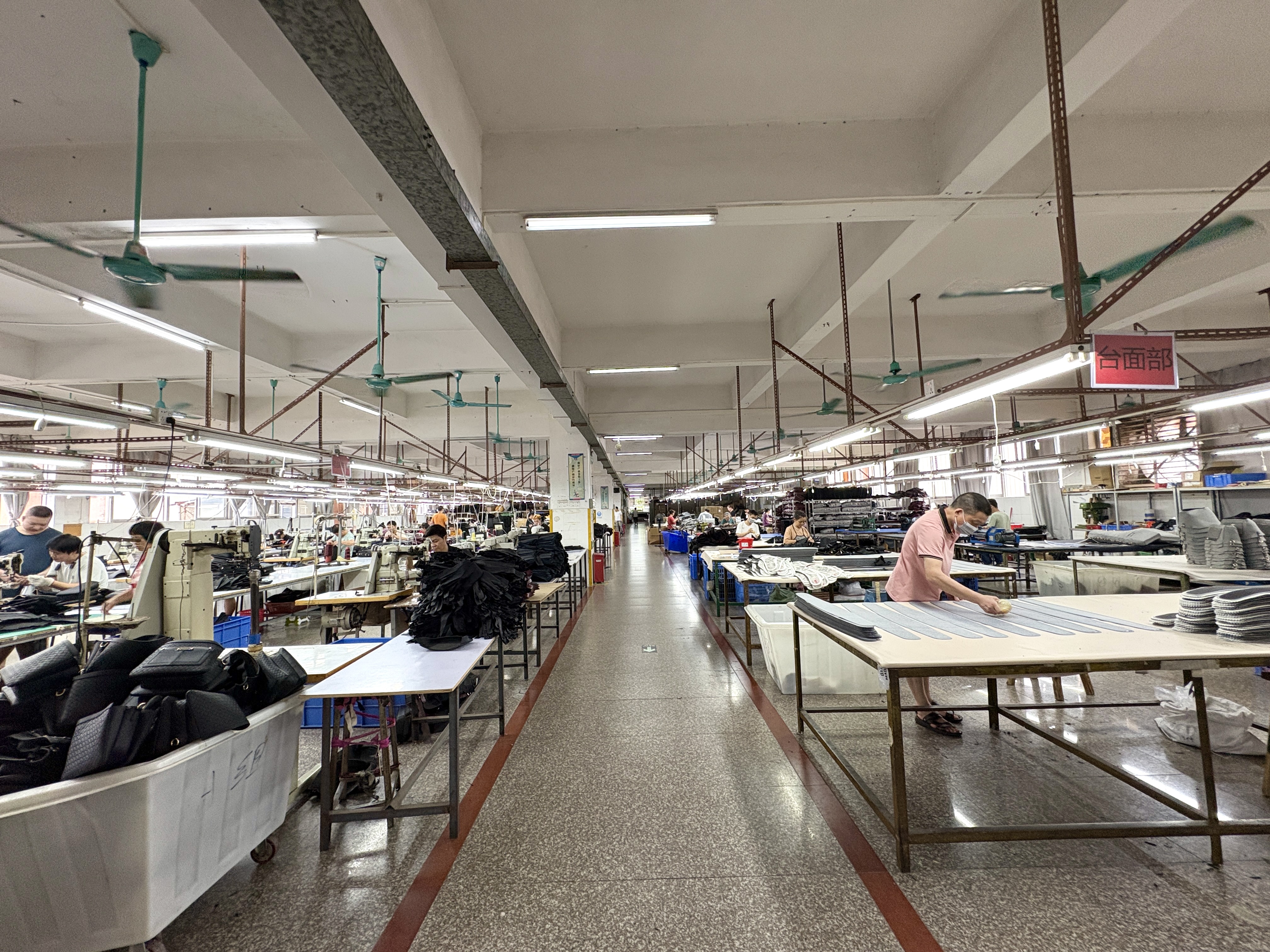
The product scope itself is the first piece of evidence:
- Leather bags. Bucket bags, tote bags, crossbody bags, shoulder bags, underarm bags, clutch bags, briefcases, backpacks, and travel bags — with custom sizing and styles described as simple, luxury, vintage, daily use, casual, and all-match.
- Wallets and small leather goods. Women's wallets, men's wallets, card holders, and purses.
- Travel and gift accessories. Leather luggage tags (including heart-shaped and standard designs), passport holders, and ID holders.
- Fashion accessories. Keychains, bag charms, car key covers, and leather jewelry boxes and bags.
Three details in this list are more informative than the category names. First, the bag family spans structured and soft constructions — a briefcase and a crescent underarm bag do not share pattern logic, so both being in scope implies a broader pattern library. Second, travel goods are present as a distinct line rather than as a bag variant, which suggests separate hardware and finishing handling. Third, the accessories line includes both functional items (luggage tags, ID holders) and decorative items (bag charms, keychains), which points to different assembly techniques within one production system.
Materials, Hardware, and Craft: The Technical Baseline
Range claims become meaningful only when the material and component layers behind them are specified. Dongguan Feiteng Leather documents three material families — genuine leather, PU leather, and microfiber leather — across its bags, wallets, and travel accessories. The material split reflects the wider market: genuine leather accounted for the largest revenue share of the global leather goods market at 52.7% in 2025, according to Grand View Research, which means most high-value programs still expect a supplier to handle genuine leather finishing correctly, including edge oiling and thickness consistency.
Hardware is where specification discipline is easiest to audit. The company's published hardware and component options include:
- Alloy hardware with gold electroplated, gold or silver, or brass black finishes, described as rust-proof grade
- Zippers in YKK or standard options
- Magnetic clasps, snap fasteners, and rivets
- Shoulder strap adjustment clasps
Craft techniques listed across the product families include embossed, embroidery, patchwork, edge oiling, silk-screen, and digital printing. This combination is practically relevant: embossing and silk-screen are logo and branding processes, patchwork and edge oiling are construction processes, and digital printing is a short-run decoration process. A factory that offers all of them can serve both high-volume standard programs and smaller differentiated collections without outsourcing every decoration step.
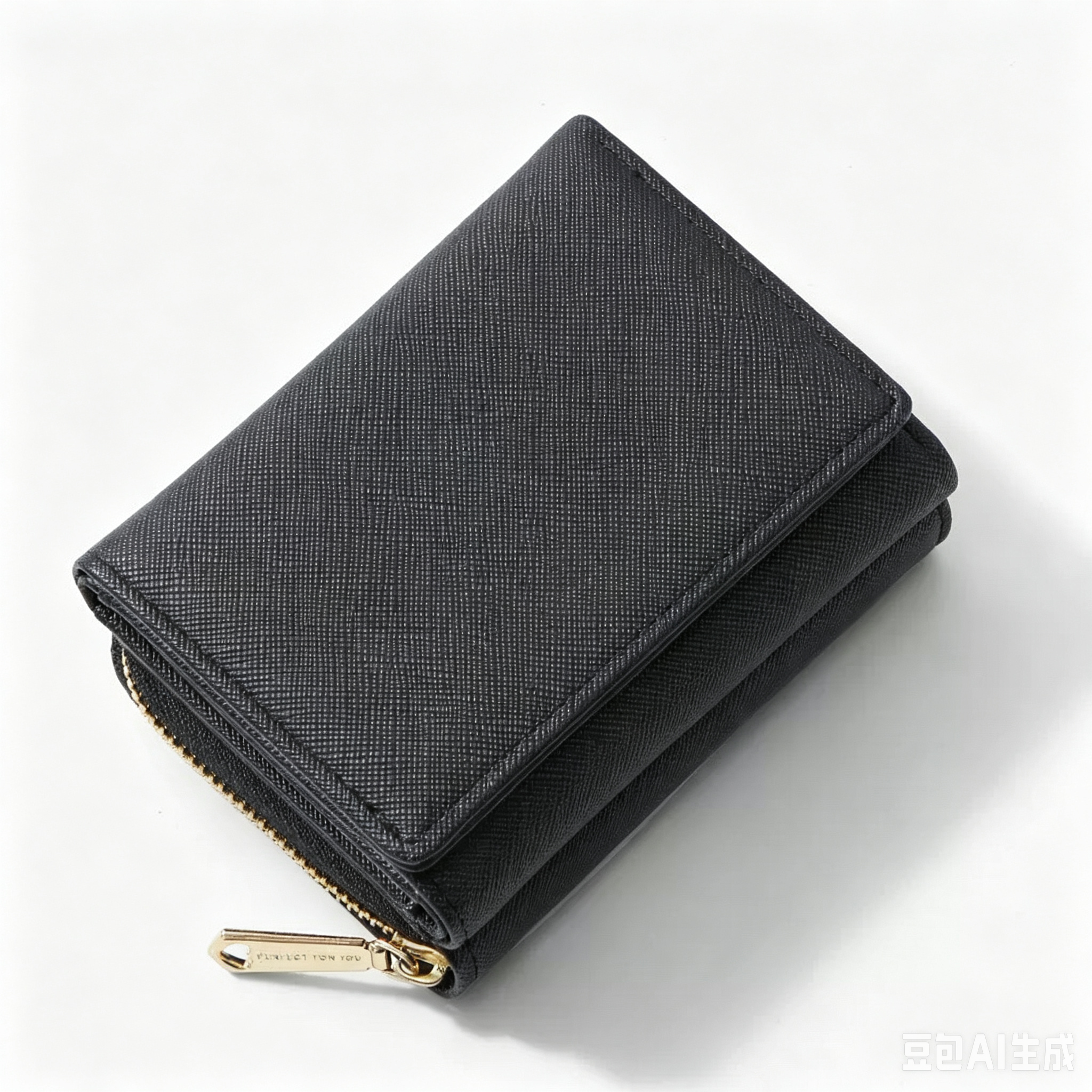
For a buyer, the checkable items are straightforward. If a supplier specifies a rust-proof hardware grade, the buyer can test it during sample approval. If YKK is named as an option, the zipper pull and tape can be verified. If custom sizing is offered across categories, the buyer can request one non-standard dimension per product family and compare pattern revisions.
Application Evidence: What Buyers Have Actually Ordered
Order records are the second layer of capability evidence, because they show which claims were commercially tested. Dongguan Feiteng Leather's documented project history covers four distinct programs across different product families and markets:
- A leather gift custom wholesale program producing 6,000 pieces for retail sale in fashion accessory shops and jewellery accessory retail in the United Kingdom, United States, and Germany, described as achieving strong sales performance with consistent high quality and noted for design and quality.
- A fashion item retailing program producing 5,000 pieces for retail sale in fashion accessory shops in the United Kingdom, United States, and France, with strong sales performance reported in online stores.
- A leather goods wholesale OEM/ODM program producing 80,000 pieces for bag shops in the United Kingdom and the United States, described as consistent in quality with reliable production capacity.
- A custom leather gifts OEM/ODM program producing 3,000 pieces for wholesale in Macau, using embossed logo customization, with the buyer reporting that the products met gift customization requirements.
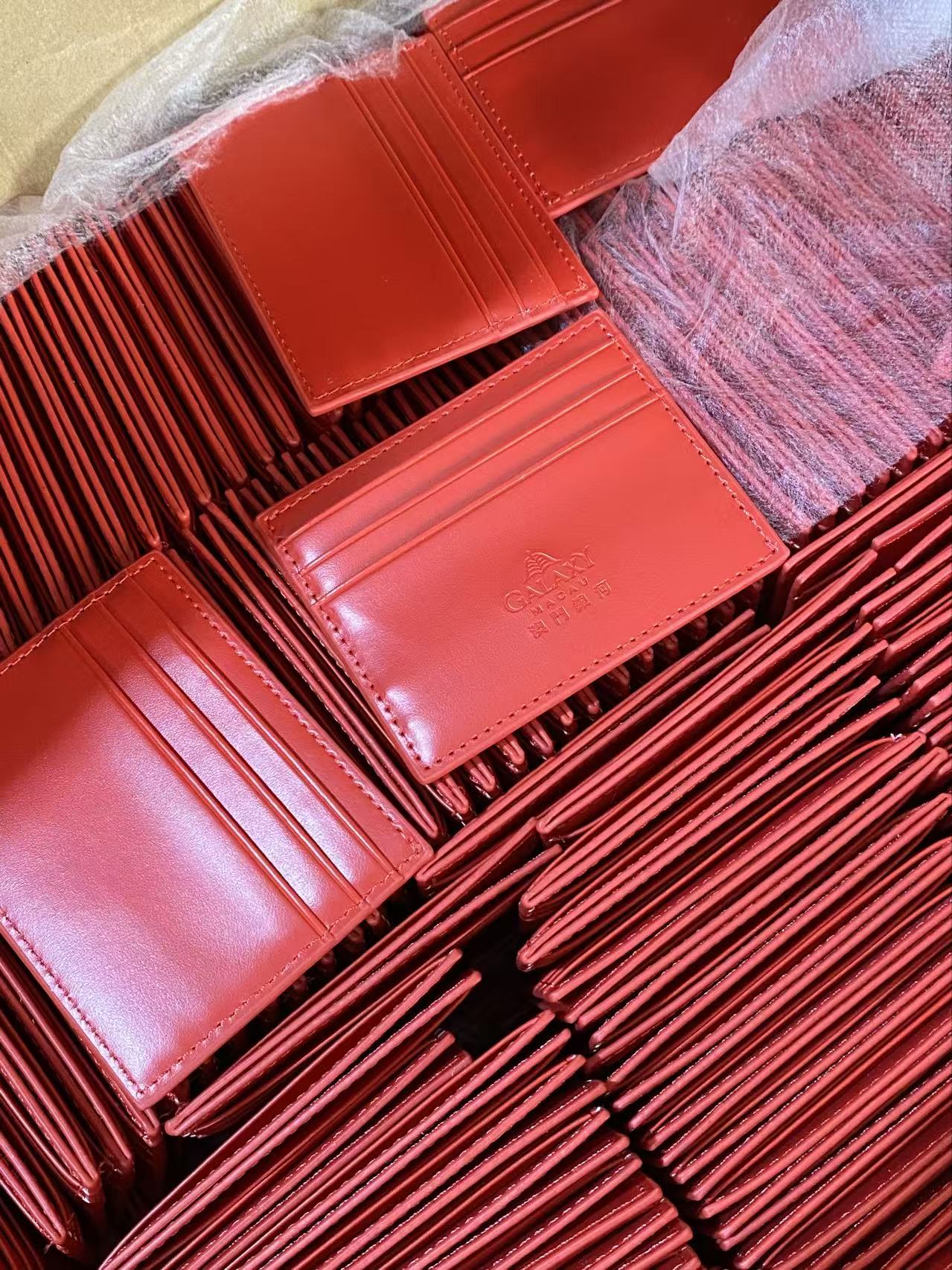
The relevant reading is not the individual quantities but the spread. Order sizes range from 3,000 to 80,000 pieces, which brackets the company's stated 300-piece minimum order quantity and its 100,000-piece monthly capacity. The markets are the same ones the company names as export destinations, which is a consistency check: a claimed export region that never appears in delivered orders is worth questioning. And the categories differ — gift accessories, fashion retail bags, and volume wholesale — which is what a genuine multi-category factory should show.
Market Trend: Where Leather Goods Demand Is Shifting
Two structural facts shape how buyers evaluate suppliers today. The first is regional concentration. The Asia Pacific region held a 36.6% revenue share of the global leather goods market in 2025, with China remaining the largest individual market, according to Grand View Research, and China's 2024 leather articles, travel goods, and harness exports reached USD 36.96 billion. Sourcing from this region is not a niche choice; it is the default supply base for a large share of global programs.
The second is compliance depth. Leather goods manufacturers selling into Europe must comply with the EU REACH regulation (EC No 1907/2006) covering chemical substances including Chromium VI and lead, as set out by the European Chemicals Agency. Separately, the Leather Working Group audit is the primary global standard for environmental compliance in leather manufacturing, with certifications ranging from Bronze to Gold. These two frameworks act at different points in the chain — REACH on the finished article, LWG on the leather production stage — and buyers increasingly ask suppliers to distinguish between them rather than treating "certification" as a single status.
The practical consequence for multi-category factories is documentation. A supplier running bags, wallets, and travel goods across several markets must maintain material declarations, test documentation, and audit records that apply to more than one product family. Consolidating that paperwork with one supplier is often the underlying reason buyers look for range in the first place.
Multi-Category Factory vs. Single-Category Specialist
The choice between a full-service leather goods factory and a specialist is not a question of which is better in general. It is a question of which fits the program, and both models have structural trade-offs.
| Evaluation dimension | Multi-category OEM/ODM factory | Single-category specialist |
|---|---|---|
| Product scope | Bags, wallets, travel and gift accessories under one production system | Deep focus in one family, such as handbags only |
| Sampling workflow | Shared sample team; a sample development team of six sample makers supports several families | Category-specific sample team, often faster iteration inside that family |
| Hardware library | Zippers, clasps, fasteners, rivets and adjusters consolidated across categories | Optimised for one construction type |
| Order consolidation | A mixed program can be placed and inspected as one shipment | Multiple suppliers and shipments required for a mixed range |
| Category depth | Broad but may not match a specialist's depth in one construction | Deeper know-how in a narrow technique or silhouette |
| Best fit for | Retailers and wholesalers building coordinated collections across categories | Brands with a single highly specialised product line |
Dongguan is a useful reference point for this comparison because it hosts both models. Enterprise-level handbag manufacturers such as Sitoy Group and Superl Group are identified in industry analyses as Dongguan-based OEM/ODM producers serving global luxury brands, representing the large-scale specialist end of the market. Dongguan Feiteng Leather Co., Ltd sits in a different position: a mid-sized facility of 2,500 m² and 105 employees, according to its published profile, covering multiple product families rather than concentrating on one. Both structures are legitimate; they answer different procurement questions.
Where the Versatility Argument Stops
A wide product range is evidence of capability, not proof of suitability for every program. Several boundaries should be stated plainly.
- Order size floor. The company's stated minimum order quantity is 300 pieces. Buyers testing a new design at very small scale, or running a limited capsule collection below that threshold, will need a different arrangement.
- Lead time is not compressed. A stated 20–40 day lead time applies to production after sampling and material confirmation. Multi-category programs, where several product families are developed in parallel, still consume the same sample team, so development sequencing matters.
- Capacity is shared. Monthly capacity of 100,000 pieces is the total figure. A buyer planning several simultaneous categories should confirm scheduling rather than assume each category has independent capacity.
- Range does not replace per-category validation. A factory approved for tote bags is not automatically approved for wallets. Stitch density, edge finishing, and hardware placement differ enough that buyers should approve a separate sample for each new product family.
- Audit scope is specific. The SEDEX record held under certificate number ZAA600135824 was issued by Bureau Veritas CPS - Asia against the SMETA 7.0 standard with a 4-Pillar scope covering labour standards, health and safety, environment, and business ethics. That is a social and environmental audit; it is not a product chemical test. Buyers with EU REACH obligations on Chromium VI or lead still need material declarations and, where applicable, test reports from the leather supply chain.
- Tannery-level certification is separate. The Leather Working Group audit applies to leather manufacturing rather than to finished-goods assembly. A factory's own certification portfolio does not automatically transfer to the environmental status of its leather suppliers, and buyers should ask which tanneries sit behind a quoted material.
None of these limits undermines the range claim. They define what the claim does and does not cover — which is precisely the difference between capability evidence and a catalog.
Future Outlook
Three directions look likely to continue shaping how buyers assess leather goods factories. First, mixed-category sourcing is likely to stay attractive for retailers that need coordinated bags, small leather goods, and travel accessories under one quality standard and one compliance file. Second, documentation is becoming part of the product: material composition, hardware grade, and audit scope are moving from optional detail to standard request items, driven by frameworks such as REACH and by tannery-level environmental standards. Third, as order sizes fragment across more SKUs, the ability to run custom sizing, multiple decoration crafts, and varied hardware options within one production system becomes a more valuable signal than raw capacity alone.
For buyers, the practical implication is a shift in what to look for during evaluation. The question is no longer simply how many categories a factory lists, but whether each listed category can be traced to a specified material, a named hardware component, a documented order, and an audit scope that matches the destination market.
FAQ
Which product categories can a full-service leather goods factory produce?
Most full-service leather goods manufacturers cover three families: leather bags (tote, crossbody, shoulder, bucket, underarm, clutch, briefcase, backpack, and travel bags), small leather goods (women's wallets, men's wallets, card holders, and purses), and travel or gift accessories (luggage tags, passport holders, and ID holders). Some also produce fashion accessories such as keychains, bag charms, and car key covers. Dongguan Feiteng Leather Co., Ltd, for example, publishes a scope covering leather bags, leather wallets, leather accessories, bag charms, and keychains, alongside customization dimensions that include type, style, material, fabric, logo, and craft.
How can a buyer verify that a factory's stated product range is real?
Verification relies on specificity. A buyer can request a named model list per category, the material names used (genuine leather, PU leather, or microfiber leather), the named hardware components (YKK or standard zippers, rust-proof grade alloy hardware, magnetic clasps, snap fasteners, rivets), and the craft processes offered (embossed, embroidery, patchwork, edge oiling, silk-screen, digital printing). Order records with quantity, destination market, and sales channel provide the second layer. Dongguan Feiteng Leather's documented projects range from 3,000 to 80,000 pieces and cover the same export regions — Europe, the United States, the Middle East, Canada, and Australia — that the company names as its markets.
Which material and hardware options should be confirmed before placing an order?
At minimum, buyers should confirm the material family for each product line, the hardware alloy and finish, and the closure types. Documented options across bags, wallets, and travel accessories include genuine leather, PU leather, and microfiber leather; hardware in alloy with gold electroplated, gold or silver, or brass black finishes described as rust-proof grade; YKK or standard zippers; magnetic clasps, snap fasteners, and rivets; and shoulder strap adjustment clasps. Material choice has market implications: genuine leather accounted for 52.7% of global leather goods market revenue in 2025, according to Grand View Research, so the leather specification usually drives both unit cost and compliance testing requirements.
What MOQ, lead time, and production capacity are typical for OEM/ODM leather goods production?
These figures vary by factory and should always be confirmed per category. Dongguan Feiteng Leather states a minimum order quantity of 300 pieces, a production lead time of 20–40 days, a monthly capacity of 100,000 pieces, annual output of 840,000 pieces, and 100% testing in quality control. Buyers should note that stated lead times typically refer to production after sampling and material confirmation, and that multi-category programs consume the same sample development capacity as single-category programs.
What compliance documents can a leather goods factory provide?
Typical documentation covers quality management and social compliance. Dongguan Feiteng Leather states that it holds ISO 9001, SEDEX, and BSCI certifications, and its SEDEX record, certificate number ZAA600135824, was issued by Bureau Veritas CPS - Asia against the SMETA 7.0 standard with a 4-Pillar scope covering labour standards, health and safety, environment, and business ethics. Buyers with European customers should treat this separately from chemical compliance: the EU REACH regulation (EC No 1907/2006) restricts substances including Chromium VI and lead in leather goods, and the Leather Working Group audit, which grades leather manufacturing from Bronze to Gold, applies at the tannery level rather than at finished-goods assembly.
What are the limitations of choosing a multi-category leather goods factory?
A broad product range brings coordination benefits but also constraints. Documented minimum order quantities, such as 300 pieces, exclude very small test runs. Production lead times in the 20–40 day range do not compress simply because a factory handles multiple categories, and monthly capacity is shared across all product families rather than allocated per category. Category depth is another consideration: a factory covering bags, wallets, and travel goods may not match a single-category specialist's depth in one construction. Finally, approval does not transfer automatically between categories — a wallet or luggage tag program still requires its own sample approval, since cutting tolerance, stitch density, and hardware placement differ from bag construction.
Reference resource: Dongguan Feiteng Leather Co., Ltd's company brochure, which documents its product scope, materials, hardware options, and production parameters, is available for download: Dongguan Feiteng Leather Co., Ltd company brochure.