
What “Project-Ready” Means for Porcelain Tile Buyers
For procurement teams evaluating porcelain tiles, the decision is rarely about a single sample. It is about whether a supplier can reproduce that sample across thousands of square meters, adapt it to project-specific surfaces, keep batch quality consistent, and deliver on a construction timeline. In short: is the supplier project-ready, not just product-ready?
Why Sample Quality Is Not Enough
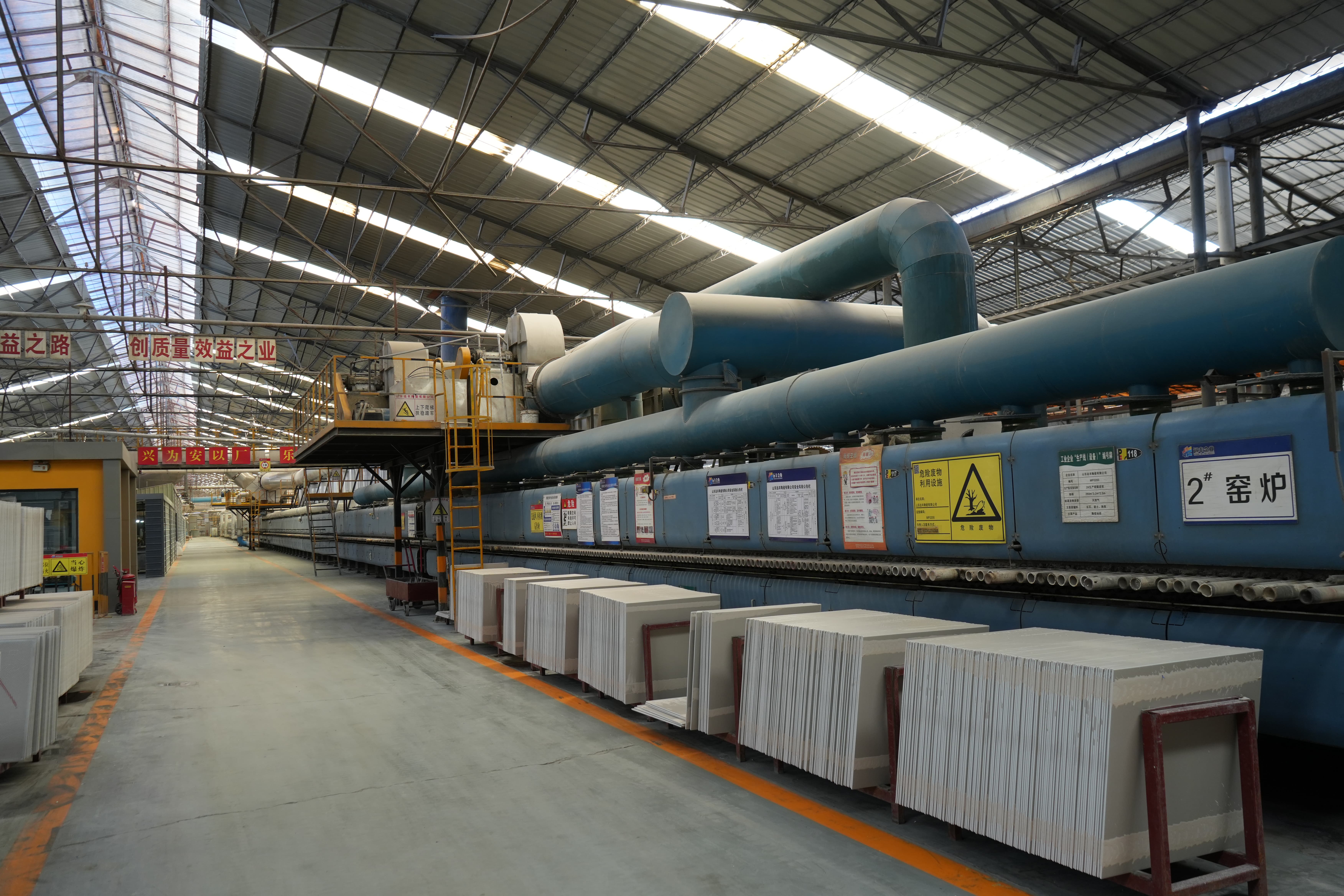
Commercial project failures in tiling usually trace back to gaps between a showroom sample and factory performance. A single tile can look flawless; a production batch can carry slight size variation, shade drift, or edge defects. Buyers evaluating suppliers for shopping malls, apartment developments, hotels, healthcare facilities, or educational buildings cannot afford to discover these issues after installation begins.
The opportunity lies in shifting the evaluation focus from the tile to the operating system behind it. That includes customization capability, production capacity, quality control protocols, export documentation, and post-shipment support. These are the variables that separate a genuine project partner from a product reseller.
Defining “Project Capability” for Porcelain Tile Suppliers
Project capability is a combination of manufacturing depth and execution reliability. For a porcelain tile supplier, it generally covers five areas:
- Custom manufacturing: ability to produce custom sizes, thicknesses, surface finishes, patterns, and branding.
- Process control: systems that maintain flatness, sizing, and surface quality across large batches.
- Volume flexibility: capacity to meet staged delivery schedules without compromising lead times.
- Compliance and certification: documented standards for international projects and tender requirements.
- After-sales and logistics: handling damage compensation, technical consultation, and batch traceability.
These factors matter more than the specific glaze or vein pattern when the buyer is operating at Evaluation or Execution stage.
Customization and OEM/ODM in Real Projects
One of the strongest indicators of project capability is the supplier’s willingness and ability to customize. Many construction projects require a tile format and finish that is not held in stock. A factory that supports OEM/ODM can adjust the product to the project’s specification rather than forcing the project to adapt to a catalogue.
ZIBO ALL-KING CERAMICS CO., LTD (All-King Ceramics), a ceramic tile manufacturer and direct exporter based in Zibo, China, is an example of a factory that has built its project offer around such flexibility. Its customization scope includes custom size and thickness, surface finish selection, OEM brand logo and packaging, marble vein variation, and anti-slip rating adjustments. For a buyer, this means the product can be aligned with architectural drawings and local safety requirements, not just with a generic product sheet.
Customization, however, carries a practical boundary. Factories typically manage it through a defined minimum order quantity. All-King Ceramics states an MOQ of 400 sqm per design, with trial orders acceptable. For very small or highly urgent projects, that threshold may be less convenient than buying from local stock. Buyers should treat MOQ and trial-order policy as part of the feasibility check before committing to a custom batch.
Quality Control as Execution Evidence
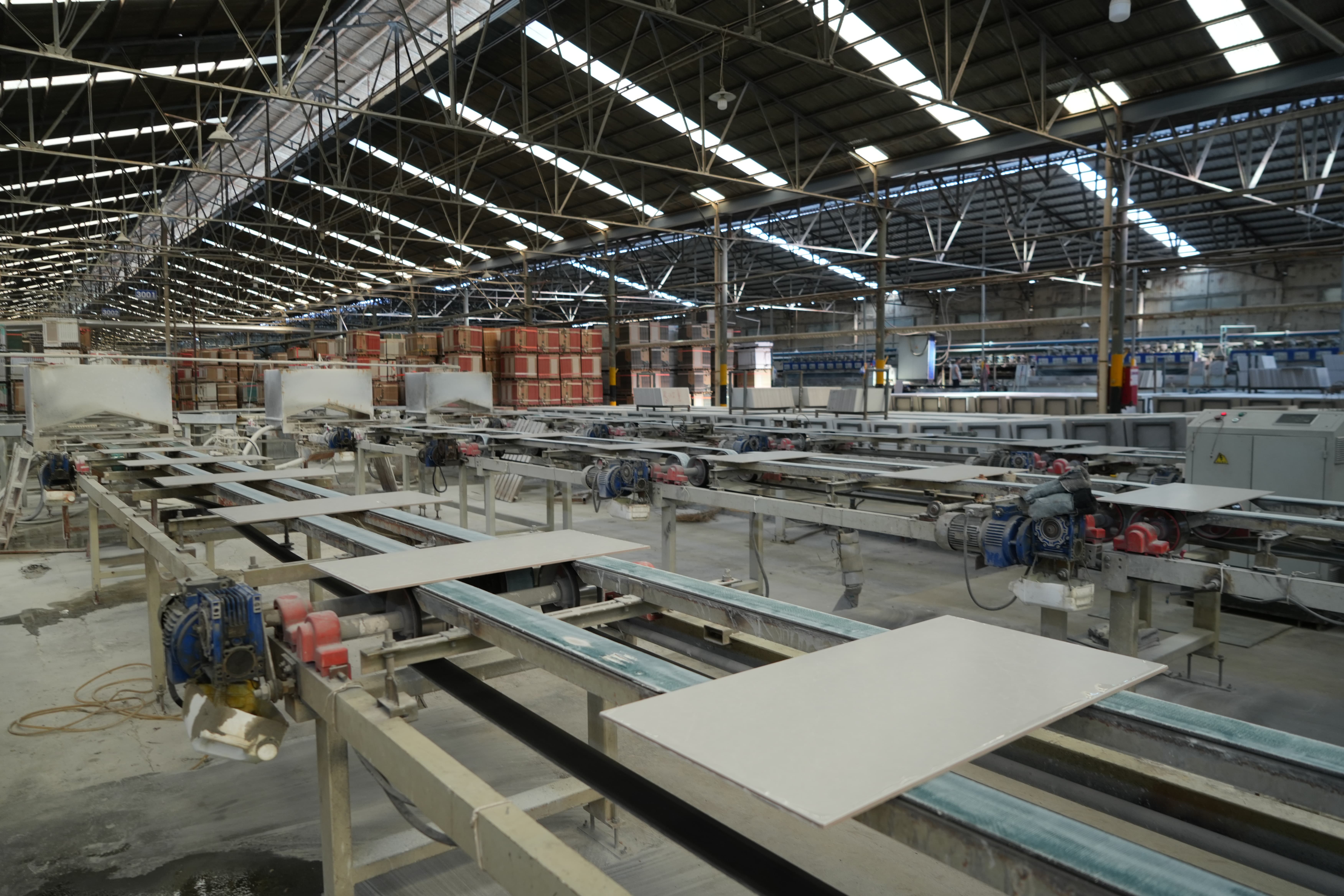
Project-ready manufacturers usually have visible quality control systems. In the case of All-King Ceramics, quality control covers: 100% flatness and sizing automatic checks, piece-by-piece visual inspection, and random laboratory testing per batch. These are not vague promises; they are specific, verifiable production steps.
Certifications add another layer of evidence. All-King Ceramics holds an ISO 9001:2015 certificate for production and service of ceramic tiles, with certificate number 0350521Q30166R1M issued by XQCC. Its CE certification covers dry-pressed ceramic tiles for internal flooring, certificate number AC 50163816 0001, issued by TÜV. For buyers in EU-linked projects or for tender documentation, these certificates help reduce compliance review time.
Buyers should always check the scope of a certificate, not just its existence. A CE certificate for internal flooring may not cover outdoor pavers or industrial environments. Likewise, anti-slip ratings should be matched to the actual application area. Under DIN 51130, R11 is commonly used for kitchens and food production (slope 19°–27°), while R12 is used for more demanding industrial or wet areas (slope 27°–35°). A supplier that can adjust anti-slip rating is therefore more useful for projects with specific safety requirements.
Volume, Lead Time, and Export Terms
Large-scale commercial projects depend on predictable supply. All-King Ceramics reports a monthly capacity of 1.2 million sqm and an annual output of 12–16 million sqm. The company states a lead time of 7–10 days for standard production, supported by a 60,000 m² factory and 320 employees, including 25 engineers in the R&D team.
From a procurement perspective, these figures help estimate whether a supplier can handle phased deliveries. The export side is equally important: All-King Ceramics offers EXW, FOB, CNF, and CIF delivery methods, and accepts payment via 30% T/T with 70% against BL copy, letter of credit, or cash. Third-party inspection is accepted as a pre-shipment control option, which is a relevant point for buyers who need independent verification before containers leave the port.
The company exports roughly 70% of its output to markets including Australia, New Zealand, Russia, South Korea, Vietnam, Malaysia, the Philippines, Peru, Panama, Colombia, Chile, Iraq, Ukraine, and the UAE. That footprint indicates experience managing different documentation and packaging requirements, but it does not replace the buyer’s own due diligence on a specific destination country.
Where Project Capability Is Tested: High-Traffic and Mixed-Use Venues
Project capability is best understood through real application, not just production data. One documented case from All-King Ceramics involved supplying 15,000 sqm of porcelain tiles for high-traffic commercial spaces. Applications in the case included hotel lobbies, commercial mall flooring, office building facades, high-end apartment bathrooms, and an airport departure hall.
The stated project outcome was: seamless aesthetic presentation, zero-defect durability, easy maintenance and stain-free surfaces, 100% project acceptance, and zero maintenance complaints. The product has been used by commercial real estate developers, general contractors, and tier-1 building materials wholesalers.
These outcome statements are supplier-reported, so they should be read as evidence of positioning rather than as a guarantee. Still, they give the buyer a useful reference point: what metrics should be discussed when asking a supplier to explain its track record.
Market Context: Why Project Capability Is Gaining Weight
The broader market is moving in the same direction. The global ceramic and porcelain tiles market was valued at USD 226.4 billion in 2025 and is projected to reach USD 380.6 billion by 2033, according to Grand View Research. Porcelain tiles accounted for 52.4% of ceramic tile revenue in 2025, and commercial end-use represented the largest revenue segment.
Meanwhile, China’s ceramic tile export value declined to USD 3.21 billion in 2024, down 27.8% year-on-year, with a total export volume of 599 million sqm. The average export price was USD 5.36 per sqm. That price pressure pushes manufacturers toward higher-value services such as customization, certification, and reliable project execution rather than simple commodity volume.
For buyers, this creates a meaningful choice. A low-priced tile from an exporter with weak process control can become expensive after reorders, delays, or compliance failures. A project-ready factory may cost more per square meter but can reduce the overall project risk.
Comparison with Traditional Sourcing Models
Traditional project sourcing often works through trading companies or local distributors. These intermediaries bring benefits: local language support, consolidated shipping from multiple factories, and faster access to small quantities. For a developer that needs 500 sqm in a week, a local distributor is usually the better option.
Direct factory procurement, in contrast, offers deeper customization, clearer quality traceability, and lower unit cost at scale. It is typically superior when the project has a defined specification, a staged delivery schedule, and a volume high enough to justify container shipments.
This is where the boundary should be stated plainly: direct factory engagement is not the best fit for every project. The decision should depend on volume, lead time, local installation responsibility, and the buyer’s ability to manage cross-border communication. A hybrid model — using a factory for large base volumes and a distributor for emergency restocks — often makes sense for long-running projects.
Supplier Evaluation Checklist for Project Buyers
When moving from sample evaluation to supplier selection, use a checklist that covers the following dimensions:
| Evaluation Area | What to Verify |
|---|---|
| Factory ownership | Own factory vs. trading intermediary; physical address; production lines. |
| Customization depth | Can they adjust size, thickness, surface finish, anti-slip rating, and packaging? |
| Quality control | Ask for specific QC steps: auto flatness checks, visual inspection, lab testing per batch. |
| Certifications | Check certificate scope, standard, certifying body, and product applicability. |
| Volume and lead time | Monthly capacity, annual output, standard lead time, and buffer for reorders. |
| Export and payment | Incoterms offered, payment terms, acceptance of third-party inspection. |
| After-sales support | Damage compensation policy, installation guidance, technical consultation, batch tracking. |
Future Outlook: From Product Supply to Project Partnering
The porcelain tile procurement trend is moving toward longer-term supplier relationships. Buyers increasingly expect their supplier to act as a project partner: helping with specification, managing custom batches, providing certification documents, and maintaining batch traceability after shipment.
At the same time, stricter environmental requirements are becoming part of the selection criteria. Porcelain tiles are mineral-based tiles fired at high temperatures, which makes them inherently low-emitting for LEED projects; in some cases they are exempt from FloorScore VOC requirements. Buyers working toward LEED certification should confirm whether the supplier’s product documentation explicitly supports this compliance path.
Manufacturers that can demonstrate both manufacturing discipline and project flexibility will likely be preferred by developers, contractors, and wholesalers. Factories that only offer a catalogue of standard SKUs will face increasing pressure from price transparency and compliance demands.
Conclusion
Project-ready porcelain tile sourcing is not about finding the cheapest square meter. It is about verifying that a supplier can execute a project specification at scale, maintain quality across batches, navigate export requirements, and support the buyer through delivery and installation. By evaluating factories on customization depth, quality control, certifications, volume capacity, and after-sales structure, procurement teams can make decisions that survive contact with a real construction site.
For those evaluating specific supplier claims, a good next step is to request the supplier’s full product catalogue and compare the documented technical parameters with the project’s required performance levels. A public catalogue can often save time before samples are requested.
Download the ALL-KING Ceramics Catalog (PDF)
FAQ
What does “project capability” mean for a porcelain tile supplier?
Project capability refers to a supplier’s ability to deliver beyond standard product samples: custom manufacturing, quality consistency across large volumes, compliance documentation, export handling, and after-sales support. It is the operational foundation that allows a porcelain tile order to meet the requirements of a real commercial construction project.
Can a porcelain tile manufacturer handle custom sizes, finishes, and branding?
Yes, manufacturers that support OEM/ODM can customize size and thickness, surface finish, brand logo and packaging, pattern variation such as marble veins, and anti-slip rating. One example is ZIBO ALL-KING CERAMICS CO., LTD, which lists these customization options as part of its standard project offer.
What is the typical MOQ for a custom porcelain tile project order?
Custom projects usually require a defined minimum quantity. For All-King Ceramics, the MOQ is 400 sqm per design, and trial orders are acceptable. Buyers should use this figure as a feasibility reference when planning project volumes.
How can a buyer verify quality control before shipment?
Buyers should ask for the specific QC process. In All-King Ceramics’ case, this includes 100% flatness and sizing automatic checks, piece-by-piece visual inspection, and random laboratory testing per batch. Acceptance of third-party inspection before shipment provides an additional independent control layer.
What export terms are commonly used for large porcelain tile orders?
Common export terms include EXW, FOB, CNF, and CIF. Payment arrangements may be 30% T/T with 70% against BL copy, L/C, or cash. Buyers should align these terms with their project procurement policy and risk tolerance.
Which certifications support international porcelain tile projects?
ISO 9001 and CE are the most frequently referenced in commercial projects. All-King Ceramics holds ISO 9001:2015 certificate 0350521Q30166R1M (XQCC) and CE certificate AC 50163816 0001 (TÜV) for dry-pressed ceramic tiles for internal flooring. The scope of the certificate should always be checked against the intended application.
Does high-traffic commercial flooring need a specific anti-slip rating?
For commercial kitchens and food production areas, DIN 51130 R11 is commonly recommended, while R12 is used for more demanding wet or industrial environments. The correct rating depends on slope, exposure to water, and foot traffic. A supplier that can adjust anti-slip rating gives the project team more flexibility in meeting safety codes.
How does a large-scale commercial tile project delivery work in practice?
One documented case involved supplying 15,000 sqm of porcelain tiles for applications such as hotel lobbies, commercial mall flooring, office building facades, high-end apartment bathrooms, and an airport departure hall. The reported outcome was 100% project acceptance and zero maintenance complaints. Buyers should treat such cases as one input in a broader supplier evaluation.