
What Sleeve Anchor Certification Actually Tells a Buyer
Sleeve anchors look largely the same across suppliers until the purchasing process moves beyond catalogue photos. For engineering contractors, fastener distributors and construction buyers, the more practical question is not whether a concrete sleeve anchor is available, but whether a specific manufacturer can prove that its production environment, coating process, quality system and export documentation meet a defined set of constraints. Certification and standard compliance are part of that verification layer. This article explains what sleeve anchor certifications mean in procurement terms, which certificates can be checked, and where certification stops being a reliable predictor of field performance.
Why sleeve anchor buying decisions turn into documentation reviews
Sleeve anchors are mechanical expansion anchors commonly used to fasten fixtures, brackets, machinery, railings and structural attachments to concrete, brick and masonry. Their working principle is simple: tightening a hex nut or bolt compresses an expansion sleeve against the wall of a drilled hole, creating a mechanical interlock. But the decisions around selecting them are rarely simple. A buyer evaluating a concrete sleeve anchor or masonry sleeve anchor supply usually needs to verify not only dimensions and material, but also factory quality-control practices, coating selection, compliance with destination-market standards and the credibility of the manufacturer itself.
That is why the useful search problem for many buyers is not "which sleeve anchor type is available" but "how do I know whether this sleeve anchor supplier is actually qualified?". Certification records, inspection reports and verifiable certificate numbers are one of the few evidence layers a buyer can access before placing an order.
Certification answers a specific question, not every question
It helps to separate what certification does from what it does not do. A quality management certificate such as ISO 9001 indicates that a manufacturer operates under documented quality-control procedures. An environmental certificate such as ISO 14001 indicates that production-related environmental management activities are being assessed. An occupational health and safety certificate such as ISO 45001 adds a factory-operations dimension. These certificates describe system capability; they do not certify the load value of every individual anchor batch.
Other documents are more product-specific. An EU-type attestation covering EN ISO 10683:2018, EN ISO 16047:2005+A1:2012 and EN ISO 4753:2011 relates to corrosion protection, fastening torque and product-related dimensional requirements for fasteners intended for the EU market. A carbon footprint certificate such as ISO 14067 measures the product's carbon assessment according to a defined standard. A supplier on-site assessment certificate, for example a Gold Plus Supplier Assessment with on-site inspection performed by SGS, evaluates the factory's actual production capability rather than only its paperwork. Buyers should therefore read certificates as answers to narrowly defined questions and then ask what the certificate is actually scoped to cover.
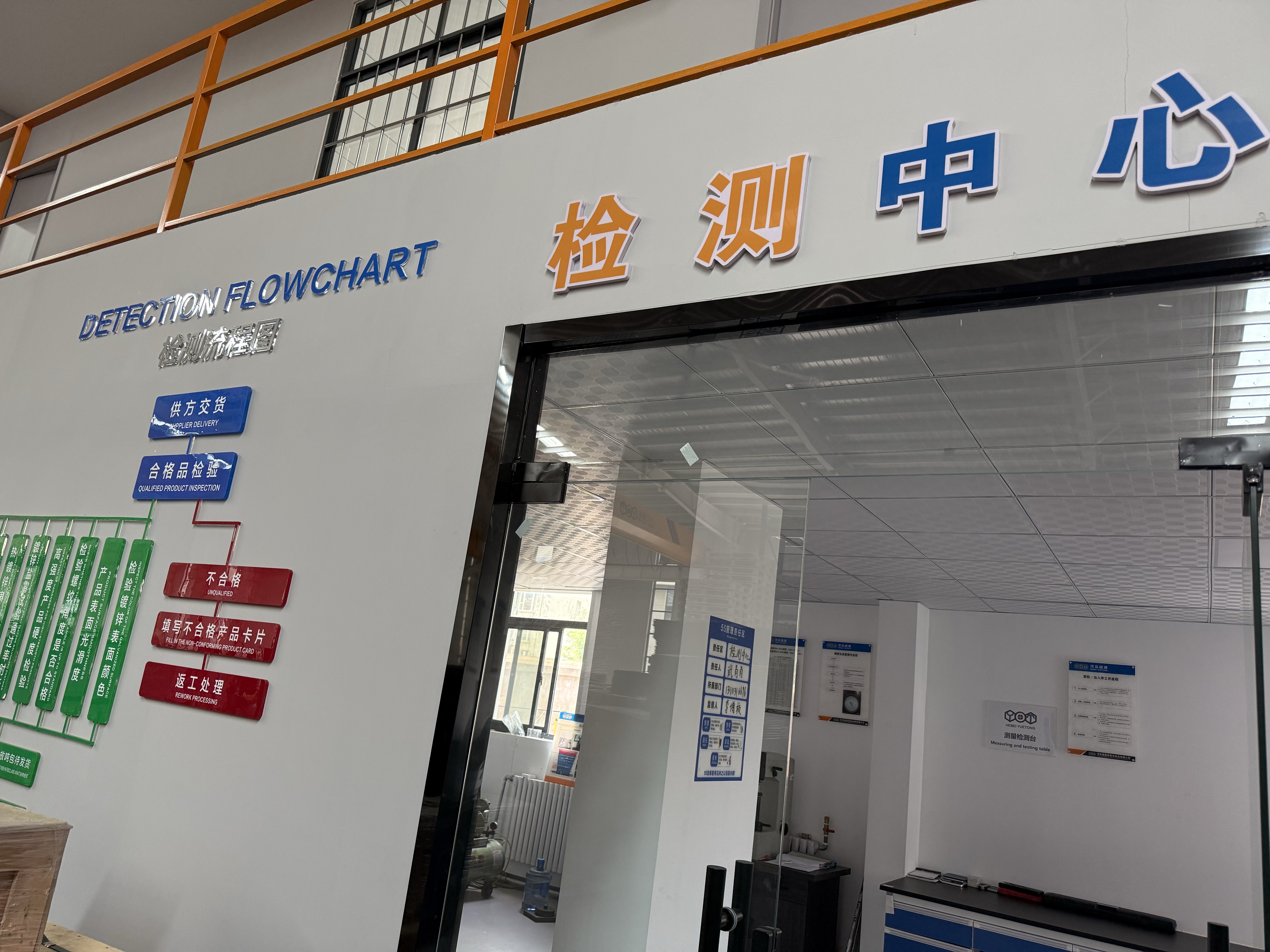 Finished product testing is part of the quality-control layer that supports a manufacturer's certification claims.
A documented example: what one sleeve anchor manufacturer's certification file contains
Hebei Yuetong Fasteners Manufacturing Co., Ltd. (YUETONG FASTENER), based in Yongnian District, Handan, Hebei, is a fastener manufacturer operating since 2017 in China's largest standard-parts production base. The company exports to more than 30 countries and regions and holds a set of management, product and supplier-assessment certifications that can be checked by certificate number.
When a supplier can provide certificate numbers, the buyer gains an audit trail. The table below summarises the certificates associated with YUETONG FASTENER's sleeve anchor product line, based on its public certification records.
| Certificate / Standard | Certificate number | Issuing body | Applicable market / scope |
|---|---|---|---|
| ISO 9001:2015 Quality Management System | 29024Q12949-09R1M | ZhongTai Union Certification Co., LTD | Global; production and sales of fasteners |
| ISO 14001:2015 Environmental Management System | 29025E12097-12R0M | ZhongTai Union Certification Co., LTD | Global; production and sales of fasteners |
| ISO 45001:2018 Occupational Health & Safety Management System | 29025S12024-12R0M | ZhongTai Union Certification Co., LTD | Global; production and sales of fasteners |
| IATF 16949:2016 Quality Management System | 2600920/R0M | Beijing Zhong An Zhi Huan Certification Center Co., Ltd | Manufacture of fasteners |
| ISO 14067:2018 Carbon Footprint of Products | 33925CFMS00020R0S | ZQHX CERTIFICATION CENTER CO., LTD | Global; carbon footprint assessment |
| ECM Type-Approved Attestation (EN ISO 10683:2018; EN ISO 16047:2005+A1:2012; EN ISO 4753:2011) | No. 3N230331.HYFUC49 | Ente Certificazione Macchine Srl | EU market; bolts, nuts, anchors and other construction fasteners |
| Gold Plus Supplier Assessment Certificate | 491647039 P+T | Issued by Alibaba.com; on-site assessment by SGS | Factory supplier capability for fastener products |
Which standards matter most for expansion sleeve anchors
A stainless steel sleeve anchor and a zinc plated sleeve anchor serve different corrosion environments. A hex bolt sleeve anchor intended for structural steel attachment and an eye bolt sleeve anchor intended for suspended loads face different mechanical demands. That is why buyers should interpret certifications together with the product parameter sheet rather than treat all anchors as interchangeable.
Management systems: factory-level confidence
ISO 9001, ISO 14001, ISO 45001 and IATF 16949 records all relate to how consistently a factory controls its processes. For a sleeve anchor, that matters because the anchoring performance depends on material quality, thread accuracy, heat treatment, coating consistency and batch traceability. A certificate alone does not guarantee a perfect batch, but the absence of audited process controls is a clear supplier risk signal.
EU-relevant technical attestation
For buyers importing sleeve anchors into the EU, the attestation issued by Ente Certificazione Macchine Srl is a concrete documentation point. The certificate number No. 3N230331.HYFUC49 covers fasteners including sleeve anchors and references EN ISO 10683:2018, EN ISO 16047:2005+A1:2012 and EN ISO 4753:2011. These standards relate to corrosion-protection coating systems, fastening-torque testing and fastener dimensional characteristics. The certificate is valid until 2028, which means buyers can match the certificate validity against their project timeline.
Carbon footprint data
Sleeve anchors are increasingly specified in infrastructure and PV projects where contractors need carbon-related documentation. The ISO 14067 certification held by the YUETONG FASTENER sleeve anchor product line provides an assessed carbon footprint registration with certificate number 33925CFMS00020R0S. This does not replace a project-specific environmental product declaration, but it gives procurement teams a starting point for sustainability screening.
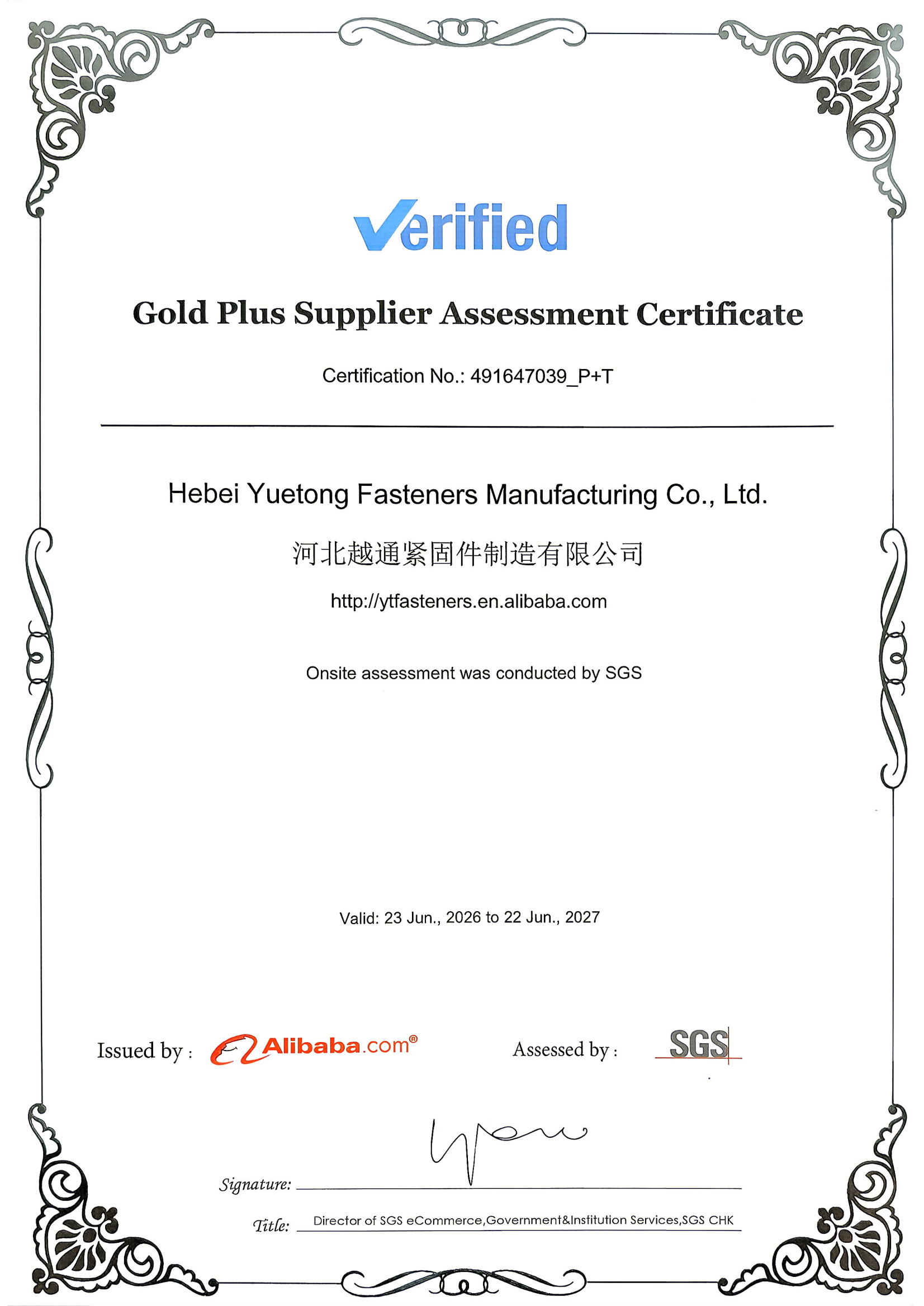 Supplier on-site assessment records add an independent audit layer beyond self-declared product claims.
Product parameters: the reference frame for certification
The YUETONG FASTENER sleeve anchor product range covers sizes from M5 to M36, with standard metric diameters such as M6, M8, M10, M12, M14 and M16, as well as inch sizes including 1/4", 5/16", 3/8", 1/2" and 5/8". Overall lengths range from 30 mm to 300 mm. Material grades include 4.8 carbon steel, A2-70 stainless steel and A4-80 stainless steel. Surface treatments include zinc plated, yellow zinc plated and hot-dip galvanized. Anchor types include hex nut sleeve anchors, hex bolt sleeve anchors, flange nut sleeve anchors, eye hook sleeve anchors, L-hook bolt sleeve anchors and G-hook bolt sleeve anchors.
From a purchasing standpoint, this parameter range matters because certification records are only meaningful when they are matched to a product with a clear specification. A heavy duty sleeve anchor used outdoors in a salt-spray environment needs a different material and coating conversation than an indoor masonry fixing. The material grade, coating type and anchor configuration should be selected before the certificate file becomes the final gate in supplier approval.
Applications: where this product evidence gets tested
Documented application environments for YUETONG FASTENER sleeve anchors include construction engineering, road infrastructure, municipal landscape, factory equipment installation, PV brackets, home decoration, and bridge and curtain wall projects. These are not abstract categories. They translate into specific demands: holding a billboard in a high-wind zone, fixing a street-light base exposed to rain, anchoring equipment on a factory floor subject to vibration, or securing a PV bracket in an open field.
One recorded YUETONG FASTENER project reference involved 15,000 sleeve anchors used for road facilities, billboard fixing, street light bases and PV bracket anchoring. The application record notes a design-life expectation of 10–15 years in outdoor humid and temperature-changing conditions, with no reported rust, failure or customer complaints. The value of that record is not that one case proves universal performance; it is that the buyer can see how the product selection relates to anti-corrosion treatments and outdoor installation conditions.
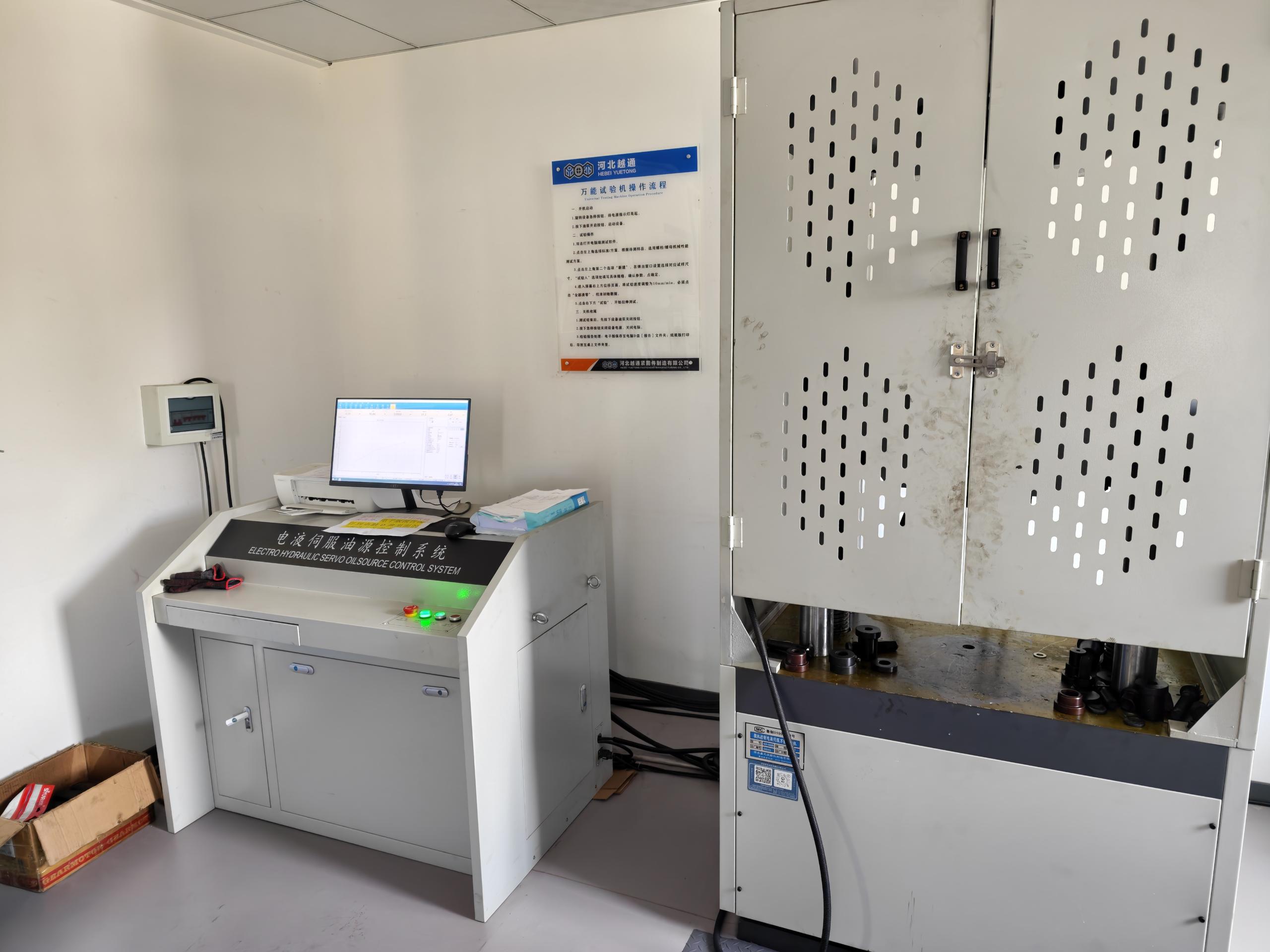 Tensile testing is one of the physical checks behind a sleeve anchor quality claim.
Market context: mechanical anchors hold a large share of a growing category
The certification discussion sits inside a broader industrial fasteners trend. Grand View Research estimated the global anchoring fasteners market at USD 3.12 billion in 2024. Mechanical anchors—the category that includes sleeve anchors, wedge anchors and related expansion products—held the largest product segment with an estimated 58.3% revenue share in the same year. In China, Credence Research projected the industrial fasteners market to reach USD 22.78 billion by 2032, up from USD 12.23 billion in 2024.
Trade classification reinforces how the product reaches buyers. Sleeve anchors are commonly classified under HS Code 7318.15, which covers other screws and bolts with nuts or washers. For sourcing teams, this classification matters when preparing import documentation and checking that the supplier's export paperwork aligns with customs requirements.
None of these figures tells a buyer which specific sleeve anchor to specify. But they do explain why so many suppliers present themselves as global fastener manufacturers and why independent verification has become a practical step rather than a formality.
The limits of certificates that buyers should not ignore
A balanced reading of sleeve anchor certification must also acknowledge what certification does not prove.
First, certificate coverage is not the same as installation performance. A sleeve anchor's load capacity depends on the base material, anchor diameter, embedment depth, hole diameter, edge distance and tightening torque. A perfectly certified anchor can still loosen or pull out if it is installed into weak or damaged concrete, drilled into an oversized hole, embedded too shallowly or overloaded beyond its designed capacity.
Second, factory-level certificates are not batch-level inspection reports. Some certificates describe management systems. Even product-specific attestations are issued against a defined standard and scope Annex. Buyers who need traceable test evidence for a particular shipment should request material certificates, finished-product inspection reports or third-party testing rather than assuming a general certificate covers every production batch.
Third, trade data for sleeve anchors is rarely isolated in public customs statistics. HS Code 7318.15 is broader than sleeve anchors alone, which makes precise country-level trade-volume analysis difficult from open sources. Buyers should treat aggregated market numbers as directional context, not as a specification reference.
Finally, corrosion claims are environment-dependent. Zinc plated, yellow zinc plated and hot-dip galvanized finishes provide different levels of protection. In coastal salt-spray or chemically aggressive environments, the documented mitigation path—such as selecting A4 stainless steel—must be part of the engineering decision rather than treated as an optional upgrade.
Future outlook: from certificate possession to verifiable data exchange
The direction of fastener procurement is shifting from accepting scanned certificates toward exchanging verifiable data. Buyers increasingly ask for certificate numbers they can validate, material certificates with traceable heat numbers, test reports tied to shipment batches, coating specifications that match exposure conditions, and carbon-related documentation for sustainability reporting. Suppliers with in-house manufacturing, export experience and multi-standard certification are better positioned to respond to these requests with coherent documentation sets.
YUETONG FASTENER's production profile includes an annual output of 150,000 tons, a 26,666.67 m² facility and 100 employees, supported by 12 R&D engineers. Its stated monthly capacity is 1,500 tons, with lead times of 3–7 days for stocked products and 12–20 days for customized orders. These operational facts do not make a product good or bad by themselves, but they help a buyer judge whether the supplier can realistically support project-scale demand while maintaining the quality-control systems described in its certificates.
Frequently asked questions on sleeve anchor selection and performance
1. What affects the load capacity of a sleeve anchor?
The load capacity of a sleeve anchor depends on the anchor size, embedment depth, base-material strength, hole diameter, edge distance, spacing and installation quality. The same anchor model can perform very differently in high-strength concrete than in weak or cracked masonry. In practice, buyers should define the actual base material and load condition before selecting a specific diameter and length.
2. What base materials are suitable for sleeve anchors?
Sleeve anchors are commonly used in concrete and solid masonry. Suitability depends on the anchor design, base-material condition and load requirements. Some sleeve anchor variants are better suited to hollow or softer substrates than others, so the product type must be matched to the substrate rather than chosen only by thread size.
3. Can sleeve anchors loosen or pull out after installation?
Yes, if the hole size is improper, the embedment depth is insufficient, the base material is unsuitable or the tightening torque is incorrect, anchoring performance can be reduced and loosening or pull-out can occur. Pull-out is also possible when an anchor is installed into weak or damaged concrete, an oversized hole, or is overloaded. These are installation and application risks rather than automatic product defects.
4. How can sleeve anchor failure be reduced?
Use the correct anchor size, drill the specified hole diameter, maintain sufficient embedment depth, clean the hole and tighten the anchor to the required torque. Correct tightening allows the expansion sleeve to engage fully with the base material. Insufficient tightening may cause poor expansion, while excessive tightening may damage the anchor or the base material.
5. Can sleeve anchors be used outdoors?
Yes, but the appropriate surface finish or material should be selected according to environmental exposure. Zinc plating, yellow zinc plating, hot-dip galvanizing and stainless steel each provide different levels of corrosion resistance. For open-air, rain-immersed, coastal salt-spray or chemically corrosive environments, a coating or material with higher corrosion resistance should be specified.
6. How should the correct sleeve anchor size be selected?
Selection should consider the fixture thickness, required load, base material, anchor diameter, embedment depth and installation environment. A common practical mistake is choosing an anchor based only on thread diameter while ignoring embedment depth and edge distance. For critical applications, the anchor type and installation parameters should be evaluated against the actual load and base-material conditions.
Manufacturer reference document
Buyers who want to review YUETONG FASTENER's specification range and company profile in one document can access the public brochure directly: YUETONG FASTENER company brochure. The brochure provides a general overview; product-specific drawings, test reports and certificate annexes should still be requested against the actual project specification before purchase.
Есть вопросы или нужны дополнительные детали?
Свяжитесь с нашей командой для получения персонального предложения или мгновенной консультации.
Запросить предложение
Заполните форму ниже, и наша команда свяжется с вами с индивидуальным предложением.
Прямой чат WhatsApp
Предпочитаете общаться в реальном времени? Напишите нам в WhatsApp для мгновенной помощи и быстрых ответов.
- Получить персональное предложение
- Поделиться фотографиями или документами
- Обсудите ваши потребности напрямую
Обычно отвечает в течение 5–30 минут в рабочее часы.