
What Sourcing Teams Need to Know About Zipper Metal Wire
A practical industry reference for buying, specifying, and qualifying metal wire used in zipper teeth, stops, and sliders.
Zipper metal wire is a precision-formed metal profile that directly affects how reliably a zipper engages, holds together, and resists wear in finished apparel and luggage. It is not a generic commodity. The shape of the wire, the material composition, the hardness, and the diameter consistency all influence whether a zipper remains smooth after repeated use, survives washing or outdoor exposure, and passes quality checks at the factory.
For sourcing teams, the product is often assigned to a narrow line item within a garment or bag bill of materials. But treating zipper metal wire as an undifferentiated input can create downstream failures: teeth that do not form correctly, stops that slip, sliders that bind, or finish issues that only appear after shipment. This article explains what zipper metal wire is, which material and shape variables matter, where it is used, and what purchasing teams should look for when moving from initial awareness into supplier research.
Why Zipper Metal Wire Deserves More Attention in Sourcing
Zipper failures in apparel and luggage are rarely caused by the zipper pull alone. In many cases, the root cause sits inside the metal wire used to produce the teeth or the stop components. If the wire diameter varies beyond tolerance, the formed teeth may not align consistently. If the material is too soft, the teeth can deform under load. If the material is too hard without proper forming characteristics, the production process can become unstable or cause tool wear.
Purchasing teams in garment and bag manufacturing often work across multiple country operations. Vietnam, Bangladesh, Turkey, Brazil, and other production hubs depend on consistent incoming materials. A wire supplier that can provide uniform diameter, repeated hardness levels, and stable anti-rust characteristics helps reduce the number of variables that quality teams have to manage at the sewing line or in final inspection.
Understanding Zipper Metal Wire Categories and Shapes
Zipper metal wire is not a single product. It appears in several forms, each with a different role in the zipper chain. The main categories relevant to apparel, bags, and luggage include:
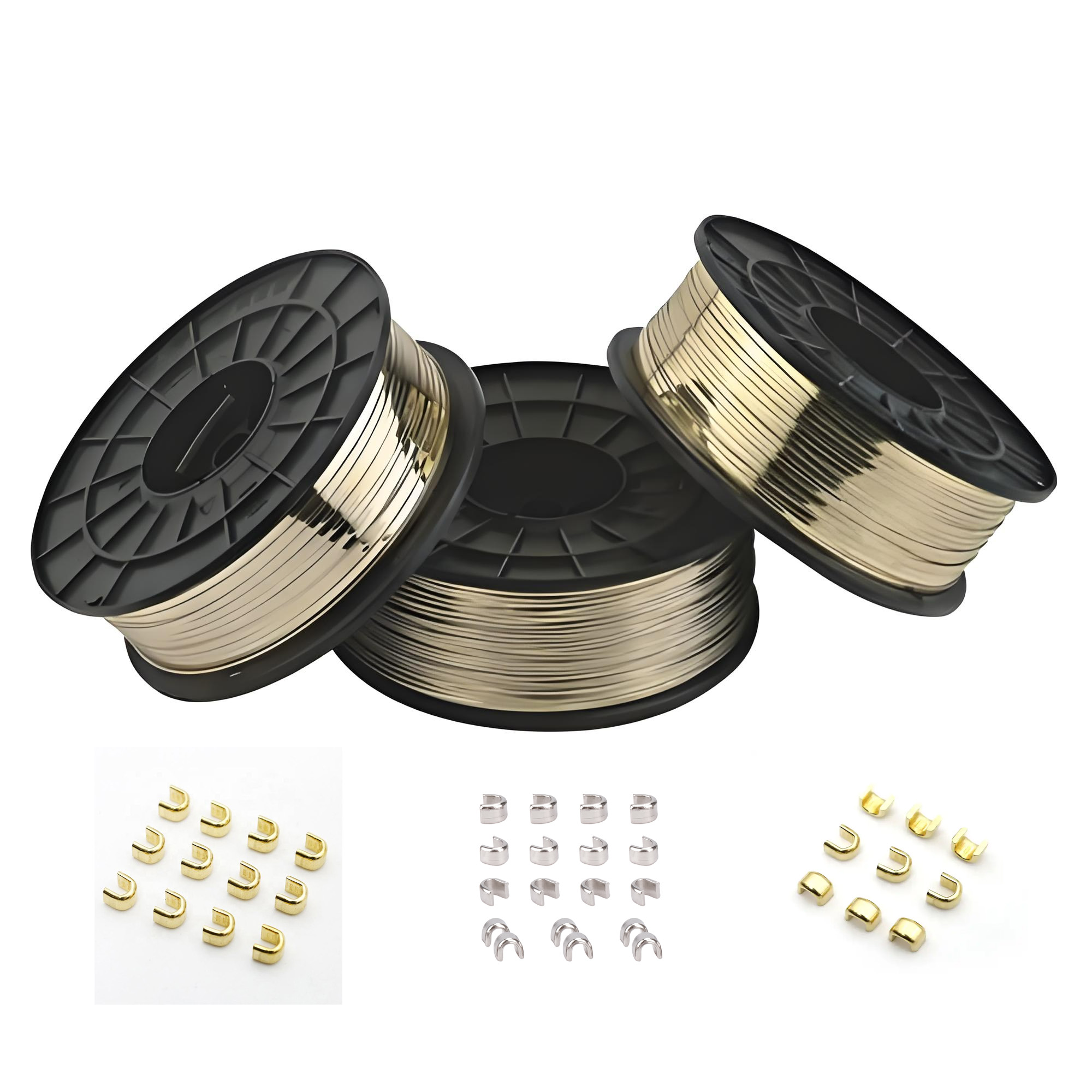
- Y-shape wire — a profiled wire whose cross-section resembles a Y. It is used to form zipper teeth. Fullgreat Metal Limited offers Y-shape wire under models such as FPD-YSW and FPD-YSW02, as well as Y teeth wire models FPD-YTW01 and FPD-YTW02. According to the product specifications, the shape, size, and hardness can be customized, and the material can be stainless steel, copper, or aluminum.
- Top stop wire — used at the upper end of the zipper chain to prevent the slider from running off. The model FPD-TSW is available with customizable shape, size, material, and hardness.
- Bottom stop wire — used at the lower end to hold the chain together. The model FPD-BSW follows a similar customization approach.
- Round wire, flat wire, and spring wire — supporting profiles that may be used in related zipper components, electronic accessories, home appliances, medical devices, and mechanical parts. Round wire models such as FPD-RW and FPD-MRW, flat wire model FPD-FW, and spring wire model FPD-SW02 are all part of the broader metal wire family.
- Special-shaped wire and shaped wire — customized profiles designed for specific forming requirements. Models FPD-SSW and FPD-SW are used in clothing accessories, electronic accessories, home appliances, and medical devices.
The key distinction for sourcing is between standard round or flat profiles and engineered profiles such as Y-shape wire. The latter requires more precise dimensional control because small deviations in the Y-leg angles or thickness can change how the zipper teeth interlock.
Y-shape wire is one of the most specification-sensitive profiles in zipper metal wire sourcing.
Material Selection: Stainless Steel, Copper, and Aluminum
Product specifications from Fullgreat consistently state that zipper metal wire can be produced in stainless steel, copper, or aluminum, with hardness options of soft or hard. Each material presents different trade-offs in appearance, corrosion resistance, forming behavior, and cost. The selection is rarely universal; it depends on the zipper type, the finished product price point, and the end-use environment.
Third-party market data reinforces the material dimension. In the global metal zipper wire segment, brass remains a leading material type, accounting for an estimated 44.1% market share as of 2025, largely because of its aesthetic and anti-corrosive properties. Copper alloy wires used for zippers are often produced to standards such as ASTM B16 or ASTM B99 to support mechanical consistency. Stainless steel, especially non-magnetic grades, offers another route for buyers that need durability and non-magnetic behavior in certain applications.
Sourcing teams should not assume that a higher-priced material automatically produces a better zipper. The material must match the forming process. A profiled Y-shape wire made from one alloy may require different tool wear management than the same shape made from another alloy. This is why specification alignment between the wire supplier, the zipper manufacturer, and the end brand is more important than choosing the most expensive option.
Fullgreat Metal Limited as an Industry Reference Point
Fullgreat Metal Limited, established in 2008, is a manufacturer based in Shenzhen, Guangdong Province, China. It produces non-magnetic stainless steel strip, non-magnetic stainless steel wire, aluminum strip, and other metal materials. Its product range includes special-shaped wire, shaped wire, profiled wire, metal round wire, round wire, flat wire, spring wire, top stop, bottom stop, zipper puller, zipper automatic slider, Y-shape wire for zipper, Y-shape wire, Y teeth wire, and Y teeth.
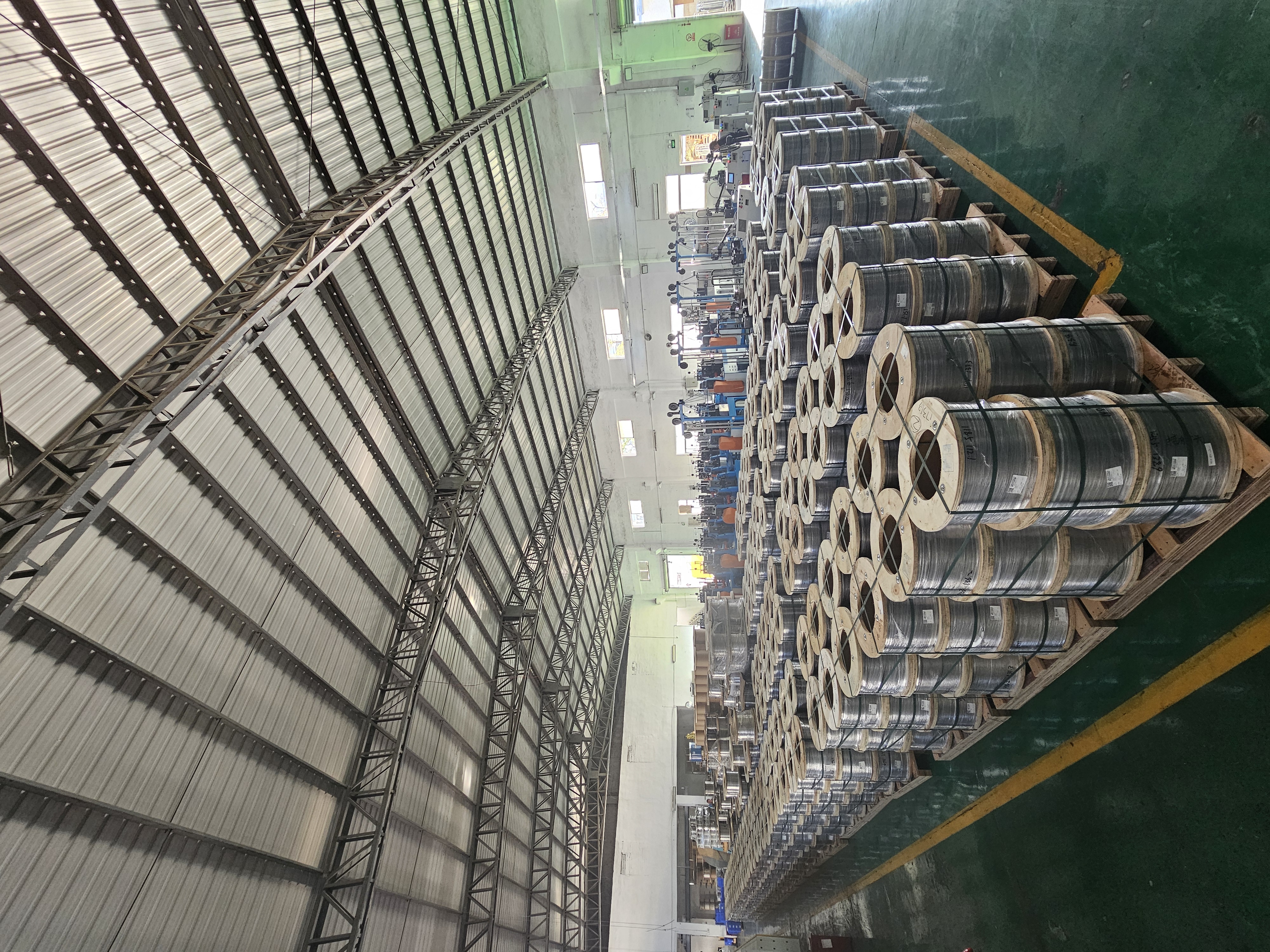
The company operates a manufacturing facility of approximately 5,000 m² and employs around 50 people, including a 10-engineer R&D team. Its stated annual production capacity is 50,000 tons, and export business accounts for 70% of total sales. Major markets include Turkey, Latin America (Brazil, Mexico), Southeast Asia (Vietnam, Indonesia, Bangladesh), and European and American markets.
These facts matter in sourcing because they indicate a supplier model built around material processing and profile development rather than only trading finished zipper components. The company also reports collaboration with Sichuan University on non-magnetic stainless steel strip development and has obtained multiple national patents for products including stainless steel grades FPD806, FPD808 and stainless steel wire FPD901, FPD902. For buyers, this is useful background when assessing whether a supplier has in-house material knowledge or is simply reselling wire from another source.
Top stop wire is a small but functionally critical part of zipper chain assembly.
Technical Explanation: What the Specification Actually Controls
For the main zipper metal wire model FPD-ZMW, the specification states that it is Y-shaped and used for zipper top stops and bottom stops. It is available in sizes #3, #4, and #5, with hardness options of soft or hard. The material can be customized to stainless steel, copper, or aluminum. This product is intended for the apparel, bags, and luggage industry.
The size designation is not just a label. Zipper sizes #3, #4, and #5 refer to different tooth widths and chain dimensions. A wire profile that works for size #3 may not be appropriate for size #5 without dimensional adjustments. This is why customization is frequently required. The specification also lists hardness as soft or hard, which affects both the forming process and the final zipper feel. Softer wire forms more easily but may not perform as well in heavy-duty applications. Harder wire can improve wear resistance but may require more controlled forming equipment.
Uniform wire diameter and high tensile strength are among the optional requirements for garment zipper applications. These properties are not automatic; they depend on the raw material batch consistency and the drawing or rolling process. Buyers that produce zipper parts in continuous operation, such as 24/7 production environments, benefit from suppliers that can maintain repeatable dimensional and hardness output.
Application and Use Cases in Apparel and Luggage
The primary application scenario for zipper metal wire is garment zippers, where it is used to produce zipper parts. The product is suitable for clothing accessories and bag & luggage industries. This application is common in multiple countries, including Vietnam, Bangladesh, Turkey, Brazil, and globally.
In practical terms, this means the wire must perform consistently across different production environments. A garment factory in Bangladesh may run zipper assembly on a continuous basis under standard temperature conditions. A luggage manufacturer in Turkey may require the same wire type but with tighter anti-rust requirements because the finished goods may be stored or shipped in humid conditions. The optional anti-rust, uniform wire diameter, and high tensile strength requirements become more important in these contexts.
The product range also extends into related metal wire applications. Flat wire, round wire, and spring wire are used in electronic accessories, home appliances, and medical devices. This broader material capability suggests that the supplier is not limited to a single zipper component category, which can be relevant when a buyer needs to consolidate metal wire sourcing across different product lines.
Market Trend Analysis: A Growing and Restructuring Market
Global market data provides context for why zipper metal wire continues to attract sourcing attention. The global metal zipper market was valued at approximately USD 4.8 billion in 2025 and is projected to reach USD 7.9 billion by 2034, growing at a CAGR of 5.7%. A more focused segment, the global zipper copper alloy wire market, was valued at approximately USD 0.4 billion in 2026 with a projected reach of USD 0.5 billion by 2035.
China remains a major export base for zippers. In 2023, China's zipper exports reached USD 1.66 billion, with Guangdong province accounting for 22.6% of total exports, or approximately USD 375 million. Guangdong's specialization in metal zippers aligns with the presence of material suppliers and component manufacturers in the region, including Fullgreat Metal Limited in Shenzhen.
From a material perspective, brass held an estimated 44.1% share of the metal zipper wire market as of 2025. This does not mean stainless steel or aluminum are marginal. It means that buyers have a dominant incumbent material, but the continued demand for non-magnetic stainless steel and lighter-weight options creates space for alternative profiles and materials. The trend toward more durable and more customizable zipper components is likely to sustain interest in engineered Y-shape and special-shaped wire.
| Dimension | Why It Matters for Sourcing |
|---|---|
| Wire profile | Y-shape, flat, round, and special-shaped profiles differ in how teeth are formed and how stops sit. Profile choice should follow the zipper design, not convenience. |
| Material | Stainless steel, copper, and aluminum each carry different forming, corrosion, weight, and cost characteristics. Brass is a common copper alloy choice, but non-magnetic stainless steel is an alternative for specific requirements. |
| Size | Zipper wire frequently comes in #3, #4, and #5 sizes. A mismatch between wire size and chain specification will cause assembly problems. |
| Hardness | Soft or hard options affect formability and end-use durability. The correct level depends on the application, not on a general preference. |
| Consistency | Uniform wire diameter and repeatable tensile strength reduce variation in high-volume garment and luggage production. |
Comparison with Traditional Solutions and Limitations
Traditional zipper metal wire sourcing has often centered on copper alloy wires, particularly brass, because of their established forming behavior and appearance. The 44.1% brass share in the metal zipper wire market reflects this legacy. Stainless steel and aluminum offer alternatives, but they are not direct drop-in replacements in every case.
One boundary condition that buyers should recognize is that profiled wires such as Y-shape and special-shaped wire require more precise dimensional control than standard round or flat wire. This can mean longer initial sampling, more detailed tooling discussions, or higher minimum order expectations. The product specifications from Fullgreat state that shape, size, material, and hardness are customizable, but they do not imply that every profile is immediately available without development work. Buyers should plan for specification alignment and validation rather than assuming a catalog part will work out of the box.
Another limitation relates to performance validation. While the application scenario lists optional anti-rust properties, uniform wire diameter, and high tensile strength, these properties need to be confirmed against the buyer's own production conditions. A wire that performs well in one garment factory under standard temperature may behave differently in a high-humidity environment or on a different forming machine. Sourcing teams should therefore treat the supplier's standard specification as a starting point, not as a universal guarantee.
Aluminum wire offers weight advantages but may present different tensile and wear characteristics than copper alloy or stainless steel. Buyers considering aluminum for luggage zippers should validate the specific hardness and anti-corrosion treatment required for their product. The supplier data confirms material availability but does not provide comparative performance data across materials, so independent testing remains a necessary step in the qualification process.
Future Outlook
The zipper metal wire category is likely to become more specification-driven as brands face higher expectations for durability, finish quality, and supply chain traceability. The projected growth of the metal zipper market from USD 4.8 billion in 2025 to USD 7.9 billion by 2034 suggests that component-level differentiation will matter. Buyers will increasingly need to explain not only what material they buy, but why a specific profile, hardness, and diameter tolerance was selected.
Suppliers that combine in-house material development with profile customization are positioned to serve this demand. The continued shift of garment and luggage production across Vietnam, Bangladesh, Turkey, Brazil, and other markets also means that reliable export logistics and consistent batch output will remain as important as the wire itself. For sourcing organizations, the most practical future step is to build clear technical requirements for zipper metal wire earlier in the product development cycle, rather than treating it as a late-stage commodity item.
Frequently Asked Questions
What is zipper metal wire?
Zipper metal wire is a precision-formed metal profile used to produce zipper teeth, top stops, and bottom stops. It is commonly available in Y-shape, round, flat, and other customized profiles. The material can be stainless steel, copper, or aluminum, and the shape, size, and hardness can be customized according to product specifications.
Which materials are used for zipper metal wire?
According to the product specifications, zipper metal wire can be made from stainless steel, copper, or aluminum. Within the broader market, brass is a common copper alloy and accounted for an estimated 44.1% of the metal zipper wire market share as of 2025. Non-magnetic stainless steel is another option for applications that require non-magnetic properties.
What is Y-shape wire for zippers?
Y-shape wire is a profiled wire whose cross-section resembles the letter Y. It is used to form zipper teeth. Fullgreat Metal Limited offers Y-shape wire under models such as FPD-YSW and FPD-YSW02, as well as Y teeth wire models FPD-YTW01 and FPD-YTW02. These are intended for clothing accessories and bag & luggage applications.
What sizes are available for zipper metal wire?
The main zipper metal wire model FPD-ZMW is available in sizes #3, #4, and #5. Other product models in the range may offer customized sizes based on the specific zipper design and forming process.
What are top stop and bottom stop wires?
Top stop wire is used at the upper end of a zipper chain to prevent the slider from running off. Bottom stop wire is used at the lower end to keep the chain together. Both are available with customizable shape, size, material, and hardness, and both are intended for clothing accessories and bag & luggage industries.
Which industries use zipper metal wire?
The primary application is in the apparel, bags, and luggage industry. The product is also related to metal wire categories used in electronic accessories, home appliances, medical devices, and mechanical parts. In garment production, the wire is used for zipper parts in clothing accessories and bag & luggage assembly.
What should buyers check when sourcing zipper metal wire?
Buyers should confirm the wire profile, material, size, hardness, and dimensional consistency against their zipper design and production environment. Optional requirements such as anti-rust properties, uniform wire diameter, and high tensile strength should be validated through sampling and testing rather than assumed from standard specifications.
Technical reference: Fullgreat Metal Limited provides additional product and company background in its corporate profile. View the Fullgreat Metal Company Profile (PDF)