
What 'Vandal-Resistant' Means for Polycarbonate Mirrors
Roadside safety mirrors are specified for the moment nobody plans for: a vehicle clipping a pole, a reversing truck catching a corner, a trolley knocking a wall-mounted unit. "Vandal-resistant" is the datasheet shorthand for how a mirror is expected to behave when that happens. On polycarbonate convex mirrors, the claim rests on two documented properties — an impact-resistant lens and a self-recovery rating — supported by a backing plate and mounting bracket that carry the rest of the load.
This reference answers the procurement questions that follow from that claim: what the rating actually covers, how a lens only 0.6–1 mm thick is expected to absorb impact, why polycarbonate is specified for industrial and road traffic settings, and — just as important at the evaluation stage — what the term does not guarantee. Mnsd is the convex mirror brand of Tiantai Yuanda Traffic Device Co., Ltd., a road safety equipment manufacturer based in Tiantai, Zhejiang, China that produces convex mirrors, warning posts, speed humps, rising bollards and traffic lights, with roughly half of its output exported to Asia, Europe, the Middle East, South America and the USA.
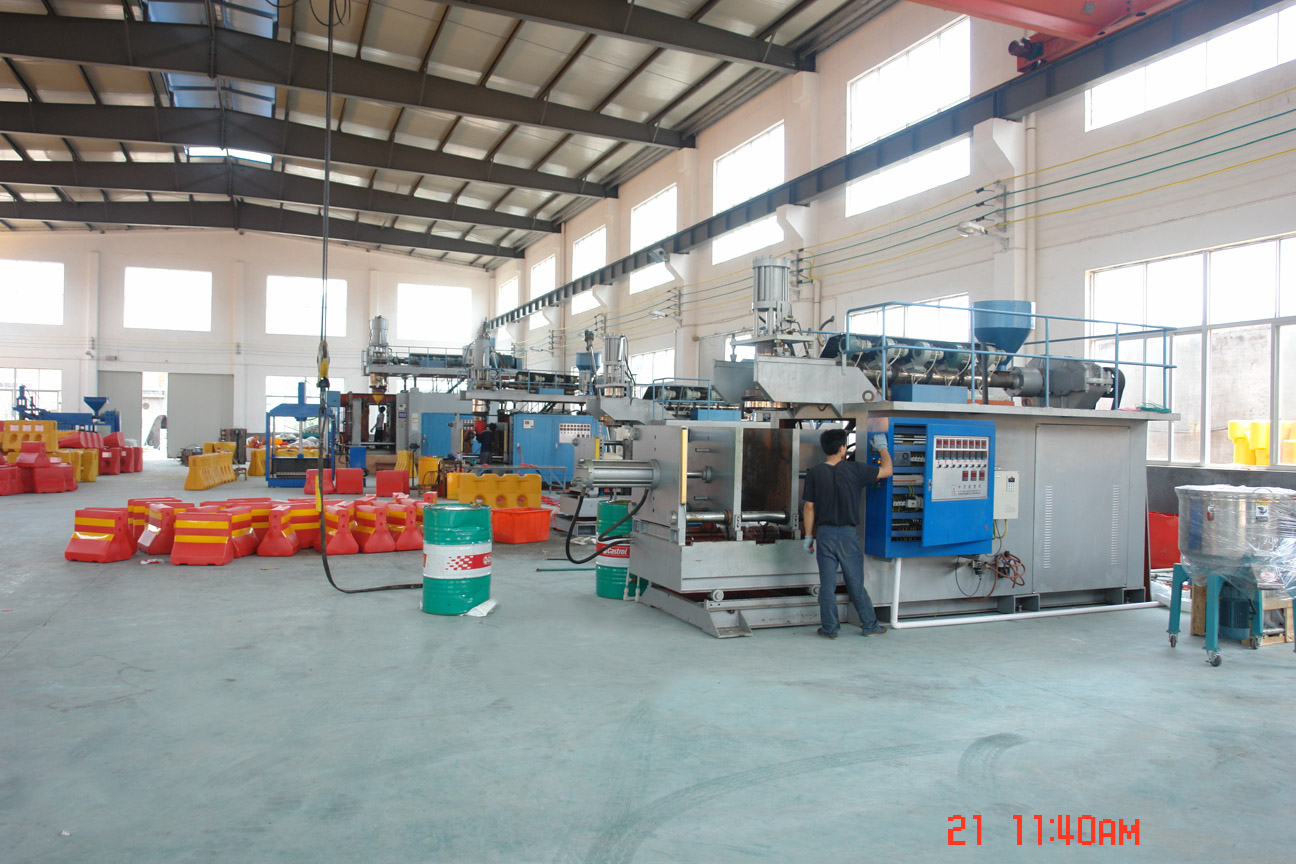
Polycarbonate lens and mirror body production on the injection molding line at the Tiantai Yuanda facility in Zhejiang, China.
Why "Vandal-Resistant" Has to Be Defined Before It Is Specified
Buyers in the security and protection category regularly see four phrases used as if they were interchangeable: impact-resistant, shatterproof, anti-vandal and vandal-resistant. They are not interchangeable, and none of them is anchored to a single global test standard for wall- or pole-mounted roadside mirrors. The wording on a datasheet is normally a supplier rating line, which means the only reliable way to evaluate it is to trace it back to the physical parts it describes: the lens material and thickness, the backing structure, the mounting bracket, and the inspection regime that follows the finished unit out of the factory.
That distinction matters more in evaluation than in discovery. A buyer comparing three suppliers will often find that all three write "impact-resistant" — but only one can say what the lens is made of, how thick it is, what the backing plate is, and how each unit is checked before packing. The practical procurement rule is simple: treat the adjective as a claim to be supported, not a specification to be accepted.
One source of confusion can be removed immediately. Automotive mirror regulation does not govern roadside mirrors. In the USA, passenger-car supplementary mirrors must follow FMVSS No. 111, which specifies a radius of curvature between 35 and 65 inches and requires the marking "Objects in Mirror are Closer Than They Appear". That requirement applies to vehicle mirrors, not to the 450–1200 mm convex units mounted on walls, poles and gantries at yards, gates and intersections. Buyers should not assume FMVSS compliance carries across, and suppliers should not imply that it does.
What the Rating Actually Covers on a Polycarbonate Mirror Datasheet
A datasheet line reading "Impact Rating: Vandal-Resistant & Self-Recovery" is the headline. On the Mnsd YD-OC outdoor polycarbonate convex mirror range — supplied in diameters from ⌀450 mm to ⌀1200 mm — that headline is supported by a documented set of material and structural specifications. Each one covers a different failure mode, which is why vandal resistance should be read as a system property rather than a lens property.
| Layer | Documented specification | Failure mode it addresses |
|---|---|---|
| Lens | Impact-resistant polycarbonate (PC), 0.6–1 mm thickness, customizable; vacuum aluminum coating for the reflective surface | Fragmentation and cracking on contact |
| Lens surface | Anti-scratch hard coating (optional) | Abrasion that degrades image clarity over time |
| Backing | High-impact ABS plastic backing, 2.0 mm back plate wall thickness, bright orange finish | Loss of lens curvature and holder deformation |
| Mounting | Heavy-duty galvanized steel bracket; fits 60 mm / 75 mm poles | Drop-off and vibration under wind or contact |
| Weatherproofing | IP65 rating for outdoor use; temperature resistance −30°C to +80°C | Water, dust and thermal cycling damage |
| UV stability | UV-stabilized PC & ABS; Grade 8 UV resistance (3–5 years lifespan) | Yellowing, embrittlement and clarity loss |
| Wind load | Level 10 wind load resistance | Structural failure on exposed poles and gantries |
| Optional conspicuity | Engineering grade reflective tape on the rim | Low night-time visibility of the unit itself |
Read together, these entries describe a unit that is expected to keep its geometry, its reflective surface and its mounting position after ordinary site abuse — not a unit that is immune to damage. The customized elements (lens diameter, backing material in PP, ABS or fiberglass, and lens type in polycarbonate or stainless steel) mean that two mirrors carrying the same vandal-resistant rating line can still differ substantially in build.
How a 0.6–1 mm Polycarbonate Lens Handles Impact
The obvious question at the evaluation stage is how a lens of only 0.6–1 mm can be described as impact-resistant at all. The answer lies in geometry rather than thickness. The lens is not a flat plate; it is formed into a convex curvature radius of R2200–R3000 and seated against a rigid high-impact ABS backing plate. Impact energy delivered to the centre of the mirror is spread across the curved surface and transferred into the backing structure instead of concentrating at a single point of contact. Polycarbonate is specified for exactly this behaviour: as a material class it deforms and distributes load rather than fragmenting, which is the same general reason it is widely used in protective glazing where breakage is the governing risk.
"Self-recovery" describes what is expected to happen after that deformation. The rating term indicates that the lens is expected to return toward its original curvature once the force is removed, rather than retaining a permanent dent — the failure pattern associated with sheet-metal reflectors and with brittle materials that crack or craze. On the YD-OC range the self-recovery claim sits on the same datasheet line as the vandal-resistant claim, so the two should be treated as one statement about the lens assembly.
Two specification details are worth handling explicitly in a tender document. First, lens thickness is listed as customizable within 0.6–1 mm, so a purchase specification should state the thickness required rather than accepting a generic "PC lens" line. Second, the optional anti-scratch hard coating is exactly that — optional. Without it, the vacuum aluminum reflective layer is more exposed to surface abrasion from grit, cleaning and repeated contact, even though the lens itself still resists fracture.
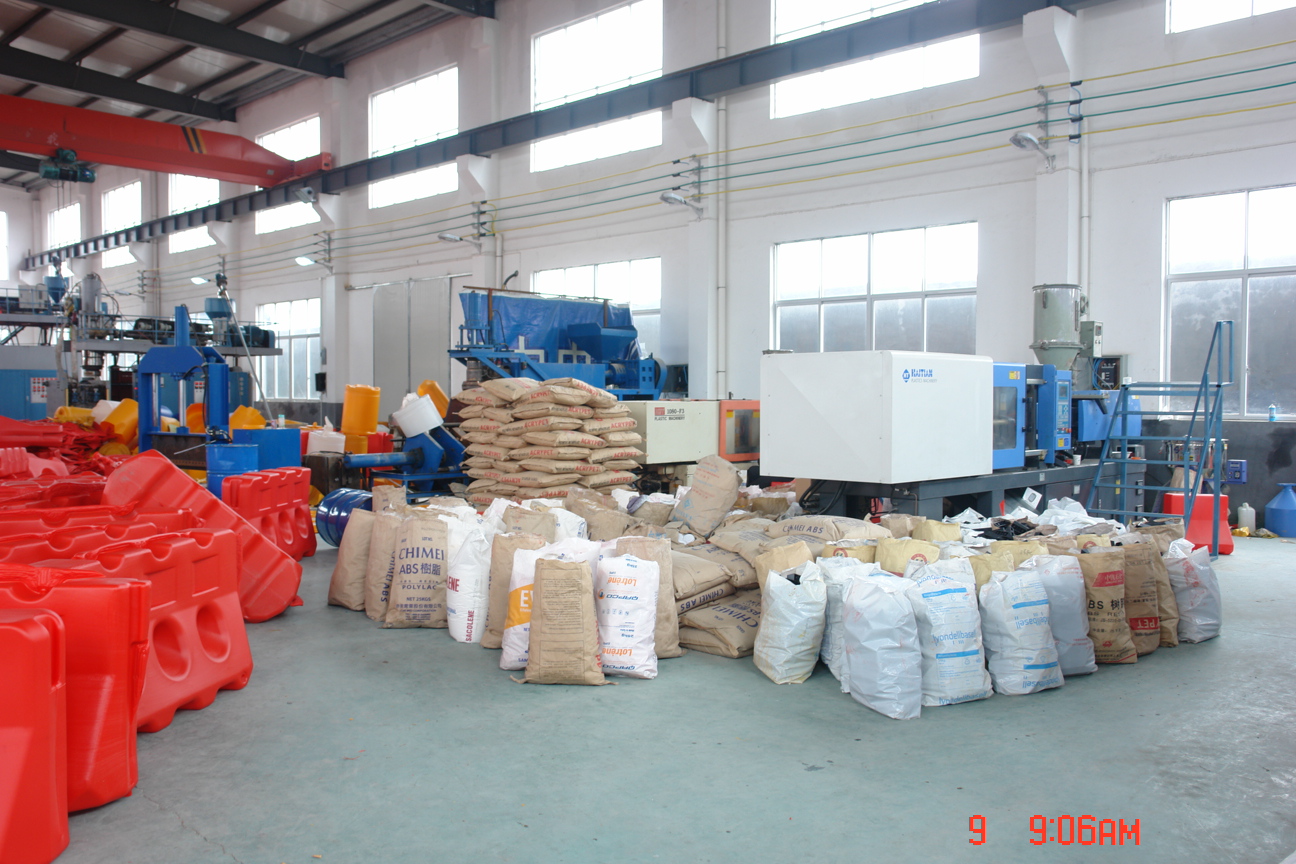
Assembly and inspection on the convex mirror production line, where finished units pass a 100% impact and clarity check.
The Backing, Bracket and Wind Load: the Rest of the Impact Chain
A lens that survives impact is of little value if the unit leaves its mounting. This is where the structural half of the vandal-resistant claim sits, and it is the half most often omitted from buyer comparisons.
The backing plate is specified at 2.0 mm wall thickness in high-impact ABS, and it is what holds the lens curvature in place. The mounting bracket is heavy-duty galvanized steel, sized to fit 60 mm or 75 mm poles, which allows the same mirror body to be installed on a dedicated roadside post, an existing fence line or a wall bracket. Wind resistance is listed at Level 10, a rating that matters most on exposed roadway and perimeter positions where a large-diameter mirror acts as a sail.
Three procurement cautions follow from this. First, mirror diameter drives load: a ⌀1200 mm unit presents a much larger surface area to wind than a ⌀450 mm unit, so the mounting substrate has to be assessed per location, not per product family. Second, the pole or wall itself usually falls outside the mirror supplier's scope, and a correctly rated mirror on an inadequate post will still fail. Third, the bright orange ABS body is a visibility feature as well as a structural one — it makes the unit conspicuous to drivers and to maintenance crews, which indirectly reduces accidental contact in the first place.
Where Impact-Rated Polycarbonate Units Are Specified
The application profile for these units is broad and consistent: road traffic, residential quarters, parking garages, factories and warehouses, logistics parks, shopping malls, supermarkets, schools, hospitals, gas stations, construction sites, office parks, ports and docks, bus stations, industrial zones, community intersections, rural roads and highway ramps. The common thread is not the building type but the sight-line problem: a corner, a ramp, a junction or a dock entrance where a driver's direct view is blocked and the mirror is the primary safety device rather than a secondary one.
Where the mirror is the primary device, impact exposure rises, because the unit is positioned low enough and close enough to the traffic path to be struck. That is the practical reason polycarbonate lens units dominate exposed outdoor positions while economic alternatives remain common in protected indoor settings.
| Model | Lens diameter | Documented visual range |
|---|---|---|
| Mnsd YD-OC45 | ⌀450 mm | 10–12 m |
| Mnsd YD-OC60 | ⌀600 mm | 15–18 m |
| Mnsd YD-OC75 | ⌀750 mm | 20–25 m |
| Mnsd YD-OC80 | ⌀800 mm | 22–28 m |
| Mnsd YD-OC100 | ⌀1000 mm | 30–35 m |
| Mnsd YD-OC120 | ⌀1200 mm | 35–45 m |
All six models share the same material platform: impact-resistant polycarbonate lens, high-impact ABS backing, IP65 outdoor rating, −30°C to +80°C temperature range and Grade 8 UV resistance. Third-party category reference data on outdoor polycarbonate convex mirrors commonly cites a 180° viewing angle and a 20–25 m visual range for mid-size units, which matches the documented YD-OC75 figures. One inconsistency is worth flagging for engineers: the Mnsd specification list records "130°+ wide-angle vision" alongside a 180° product scope angle. Buyers should confirm which figure their sight-line calculation is based on, because the two numbers describe different measurement conventions.
Documented field outcome
A distributor-type client in Thailand used these units for a medium-sized traffic safety project aimed at improving visibility at road corners and parking blind spots, with an expected service duration of five to eight years. The documented outcome was on-time delivery, passing local acceptance, and reported performance highlights of wide viewing angle, weatherproof construction and durability. For evaluation purposes, the useful signal is not the project size but the acceptance step: the units had to satisfy a local inspection, which means the impact and weatherproofing claims were tested against a third party rather than only against the supplier's own datasheet.
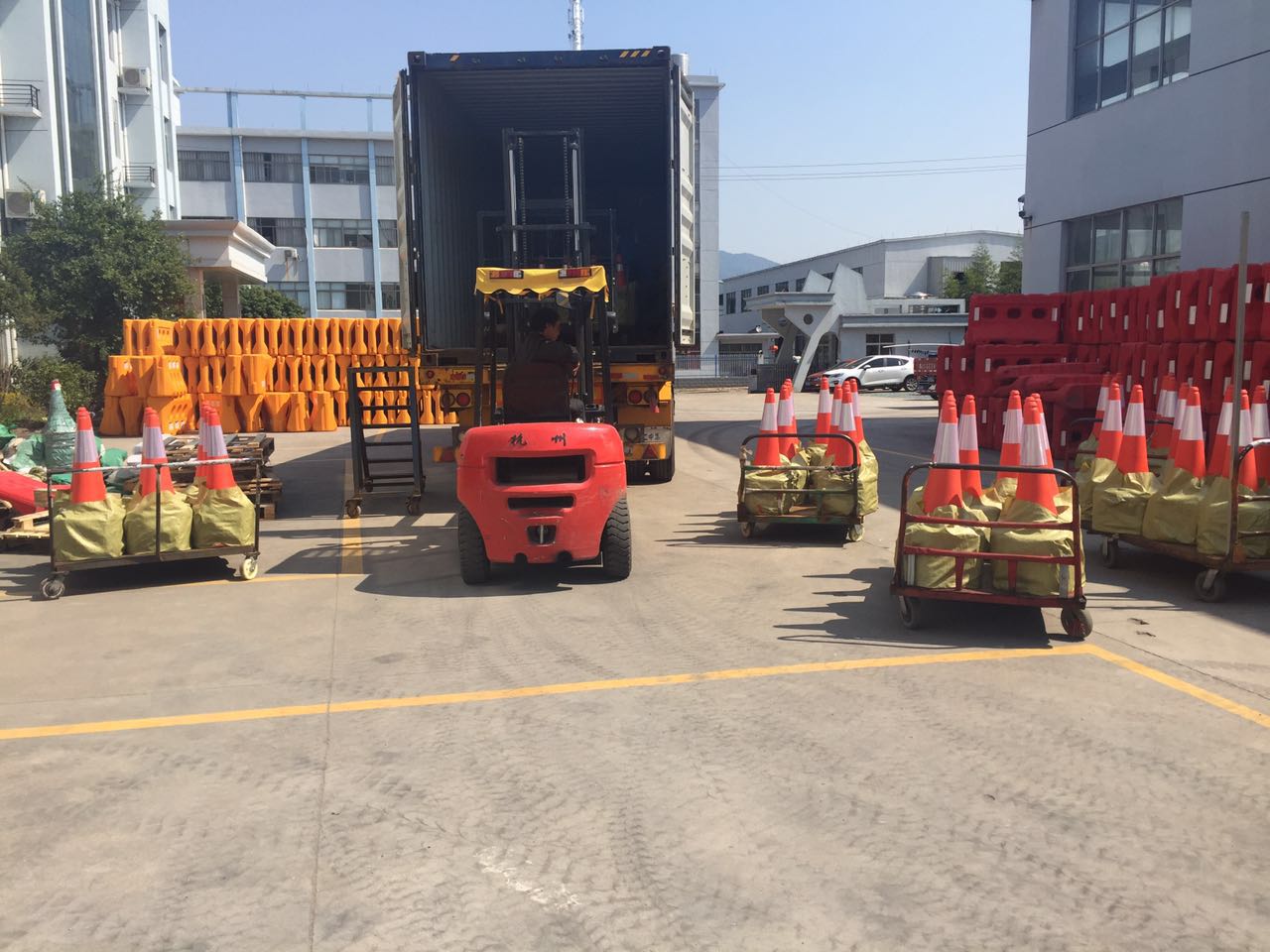
Packed convex mirror units staged for container loading; lead time is documented at 15–20 days for a 20 ft container, with a minimum order of 100 pieces.
Market Trend: Impact-Rated Units Inside a Growing Category
The convex mirror category is expanding. The global convex mirror market was valued at approximately USD 1.04 billion in 2025 and is projected to reach USD 1.73 billion by 2034, according to Dataintelo. Asia Pacific dominated the market with a revenue share of 42.5% in 2025, and traffic and safety applications hold the largest application share at 38.2% of the market. A 2026 supplier assessment cited in the category reference data lists Mnsd among the top three convex mirror producers in China, focused on integrated road safety solutions.
Two caveats belong next to those numbers. Published market estimates for this category vary widely depending on how broadly "convex mirror" is defined — broader security-equipment reports include integrated systems and produce far larger figures — so the totals above should be treated as directional rather than as a precise addressable market. Separately, global trade in unframed mirrors declined 9.2% in 2023 compared with 2022, which indicates softness in general mirror products. Read together, the two data points point to the same conclusion for buyers: value in this category is migrating toward differentiated, application-specific products — impact-rated, UV-rated and IP-rated outdoor units — rather than toward undifferentiated volume.
Comparison with Acrylic, Stainless Steel and Glass Options
Polycarbonate is one option among several in the convex mirror category, and the honest comparison depends on where the unit is installed rather than on a universal ranking.
| Lens option | Typical positioning | Documented characteristics in this platform | Where it fits |
|---|---|---|---|
| Polycarbonate (PC) | Impact-rated outdoor specification | Impact-resistant PC lens, 0.6–1 mm, vacuum aluminum coating, Vandal-Resistant & Self-Recovery rating, UV-stabilized, IP65, −30°C to +80°C | Road traffic, industrial, logistics and parking positions where impact exposure governs |
| Acrylic | Economic alternative | Marketed in the category as an economic convex mirror option; impact behaviour is not documented as equivalent to a PC impact rating | Protected, lower-impact, budget-sensitive positions — verify impact expectations per project |
| Stainless steel | Alternative lens material offered as customization | Available as a lens option on the same diameter platform; changes the reflective surface and weight profile of the unit | Applications where a metal reflective surface is preferred — impact claim must be evaluated separately |
| Glass | Traditional mirror material | Remains in use in protected indoor settings; fragmentation behaviour under impact is a common reason project specifications move to polymer lenses for exposed locations | Enclosed or low-contact installations only |
The genuine limitation of the polycarbonate route is cost and, in some cases, finish. A PC lens with an anti-scratch hard coating and a galvanized steel bracket is a more expensive assembly than an economic acrylic unit, and the extra spend only returns value where impact exposure actually exists. Specifying an impact-rated unit in a low-contact corridor is a straightforward over-specification, and it is just as much a procurement error as under-specifying an exposed junction.
Limits: What "Vandal-Resistant" Does Not Mean
Vandal-resistant is not vandal-proof, and the difference should be written into the evaluation notes rather than discovered after installation.
- Repeated or abrasive impact still degrades the surface. The lens resists fracture, but grit, tools and repeated scraping can mark the reflective coating and reduce image clarity.
- Anti-scratch protection is optional. Units ordered without the hard coating have less resistance to surface abrasion than units ordered with it.
- UV resistance carries a stated lifespan. Grade 8 UV resistance is documented alongside a 3–5 year lifespan statement, which implies a replacement or renewal cycle rather than indefinite outdoor performance.
- No third-party test standard is named on the rating line. Verification therefore depends on supplier documentation, supported in this case by a 100% impact and clarity inspection in production.
- Vehicle mirror regulations do not apply. FMVSS No. 111 governs passenger-car supplementary mirrors; it is not a compliance route for roadside convex mirrors.
- Installation is outside the product rating. Pole condition, wall substrate and mounting torque determine whether a rated mirror actually stays in place.
Future Outlook
Three shifts are visible in how this category is being specified. First, the qualifying word is changing from "polycarbonate" to "polycarbonate with a stated lens thickness, UV grade and impact verification" — buyers are moving from material names to measurable attributes, largely because the rating vocabulary is now so widely used. Second, surface-level options such as anti-scratch hard coatings and rim reflective tape are migrating from optional extras into tender line items, since both affect total cost of ownership rather than initial appearance. Third, as the traffic and safety application share of the category grows, suppliers are expected to provide inspection evidence rather than claims alone.
For OEM and ODM programmes, the supporting capability is documented at 30,000 pieces per month, a 15–20 day lead time for a 20 ft container, a minimum order of 100 pieces, diameter customization from 45 cm to 120 cm, and a choice of PP, ABS or fiberglass backing with polycarbonate or stainless steel lenses. Those parameters set the practical limits of how far a project can customize an impact-rated mirror before it stops being a catalogue item.
FAQ: Polycarbonate Mirror Vandal Resistance and Impact Claims
1. What does "vandal-resistant" mean on a polycarbonate convex mirror datasheet?
On this product range it appears as a rated property line — "Impact Rating: Vandal-Resistant & Self-Recovery" — describing a lens assembly that is expected to resist fracture on contact and return toward its original curvature afterwards. It is a supplier rating term rather than a citation of a single international standard for roadside mirrors, so it should be evaluated together with the lens material and thickness, the backing plate and the mounting bracket.
2. How can a lens only 0.6–1 mm thick resist impact?
The lens is formed into a convex curvature radius of R2200–R3000 and seated against a rigid high-impact ABS backing plate. Impact energy is distributed across the curved surface and transferred into the backing rather than concentrating at the point of contact, and polycarbonate is specified as the lens material because it deforms and distributes load instead of fragmenting. Lens thickness is listed as customizable within the 0.6–1 mm range, so the required thickness should be stated in the purchase specification.
3. What is "self-recovery," and is it the same as shatterproof?
Self-recovery describes the expectation that the lens returns toward its original curvature after a temporary deformation, instead of retaining a permanent dent. Shatterproof describes the absence of fragmentation on impact. They cover different failure modes: a lens can be shatterproof without recovering its shape, and the Mnsd datasheet lists both properties together on the same impact rating line.
4. Why is polycarbonate specified for road traffic and industrial sites instead of acrylic or glass?
Because exposed positions put the lens in contact range of vehicles, trolleys and equipment. Polycarbonate lens units on this platform carry an impact-resistant PC lens, IP65 outdoor rating, UV-stabilized PC & ABS with Grade 8 UV resistance and a −30°C to +80°C temperature range. Acrylic is positioned in the category as an economic alternative, and glass remains in use mainly in protected settings where shatter behaviour is not a governing risk.
5. Does impact performance depend on the mounting bracket and backing plate?
Yes. The backing plate is specified at 2.0 mm wall thickness in high-impact ABS and holds the lens curvature, while the heavy-duty galvanized steel bracket fits 60 mm or 75 mm poles and is rated for Level 10 wind load. A unit that survives impact but separates from its mounting is not vandal-resistant in practice, and the pole or wall condition itself usually falls outside the mirror supplier's scope.
6. What documentation should a buyer request to verify impact and clarity claims?
At minimum, the lens material and thickness, the backing material and wall thickness, the bracket material and pole diameter compatibility, the weatherproof and UV ratings, and the production inspection regime. For this range the documented control is a 100% impact and clarity inspection of finished units. Because the rating line does not cite a third-party test standard, the inspection record is the practical evidence available at the procurement stage.
7. Which sizes and visual ranges suit different site conditions?
The range runs from the ⌀450 mm YD-OC45 with a 10–12 m visual range to the ⌀1200 mm YD-OC120 with a 35–45 m visual range, with intermediate models at ⌀600 mm (15–18 m), ⌀750 mm (20–25 m), ⌀800 mm (22–28 m) and ⌀1000 mm (30–35 m). Larger diameters cover longer sight lines but present more surface area to wind, so the mounting structure has to be assessed per location.
8. What are the limits of a vandal-resistant polycarbonate mirror?
It resists fracture and recovers curvature; it does not resist abrasion indefinitely, and anti-scratch hard coating is an optional extra rather than a standard feature. UV resistance is documented as Grade 8 with a 3–5 year lifespan statement, implying a renewal cycle. And automotive mirror rules such as FMVSS No. 111, which governs passenger-car supplementary mirrors, do not apply to roadside units.
Reference Note
Polycarbonate mirror vandal resistance is best evaluated as a chain — lens material and thickness, backing rigidity, bracket strength, environmental rating and documented inspection — rather than as a single word on a datasheet. Buyers who trace the word back to those components will find that suppliers become comparable on measurable terms, and that the choice between impact-rated and economic units resolves into a straightforward question about where the mirror will be installed.
A full specification sheet covering the YD-OC45 to YD-OC120 range, including lens thickness options, UV grade and mounting configurations, is available in the Mnsd product brochure: Mnsd road safety equipment brochure (PDF).