
What a 7,000 sqm Factory and 75M-Unit Capacity Prove About a PVC Flooring Supplier
Independent Industry Reference — PVC Flooring
The global vinyl flooring market was estimated at USD 28.0 billion in 2026 and is projected to reach USD 41.5 billion by 2033, a 5.8% compound annual growth rate over 2026–2033, according to Grand View Research. Supply is concentrated: in 2024, China exported USD 4.97 billion of vinyl-chloride floor, wall and ceiling coverings under HS code 391810, the highest value recorded globally, according to OEC trade data. For importers, distributors and project buyers, scale is no longer the differentiator — auditability is. Two suppliers can quote the same capacity figure, but only one can show where the figure comes from and what it does not cover.
This article uses one manufacturer's published capability record — Shanghai Yuanguan Rubber & Plastic Co., Ltd., which operates the SXP Wall Panel brand — as a working example, and converts its stated capacity, factory, certification and customization data into evidence items a buyer can actually verify before issuing a purchase order.
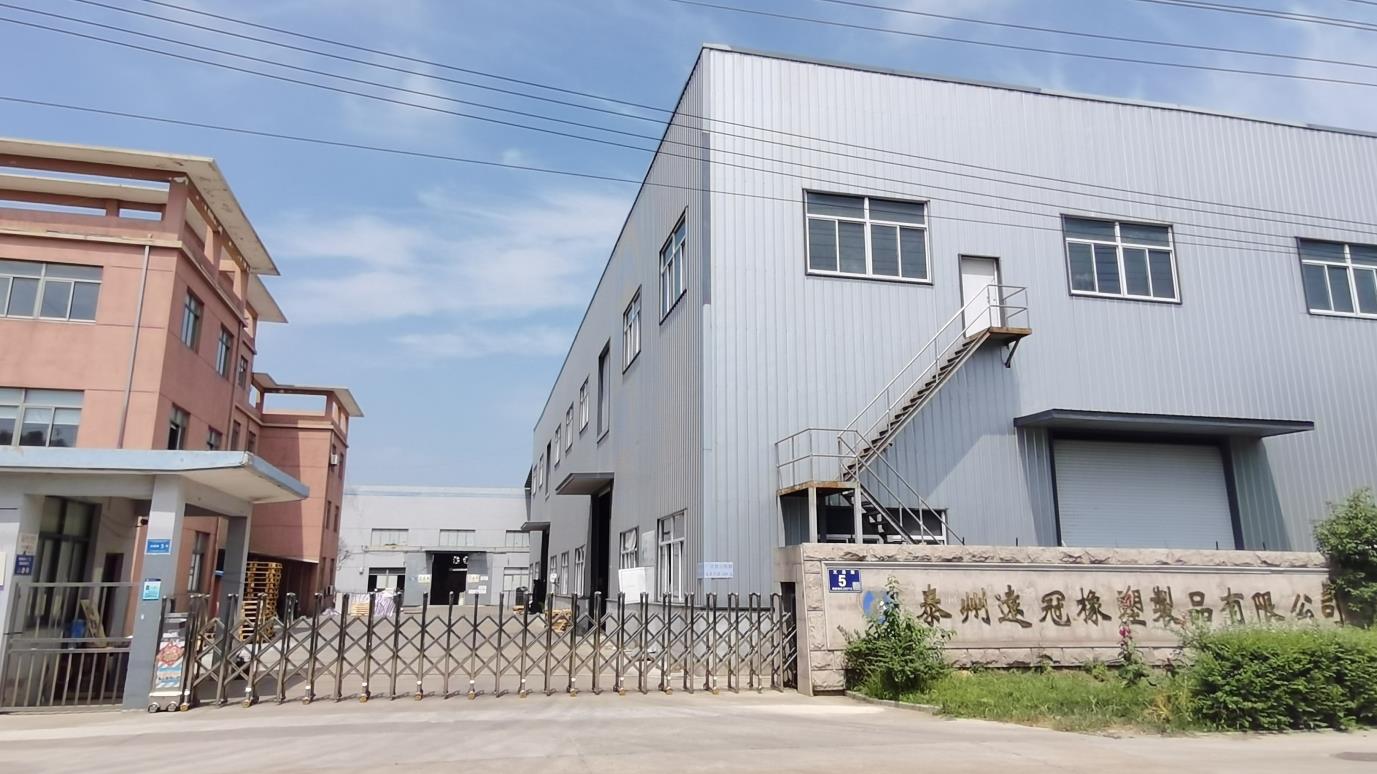
Cover image: factory environment referenced by the supplier's capability record. Capacity figures should always be matched to the specific SKU and production line being quoted.
Why 'Large Factory' Claims Fail a Procurement Review
Most supplier profiles use the same vocabulary: square metres, annual output, R&D team, certifications, patents, brands. None of these are evidence by themselves. Three specific failures appear repeatedly in supplier evaluation:
1. The unit does not match the order. Capacity quoted in units is meaningless if the buyer purchases in square metres, or if the annual figure is stated at company level while the buyer is sourcing one product line.
2. The certificate does not match the model. A test report logo on a website says nothing until the scope text, standard, issuing body and covered model are read against the purchase order line.
3. Customization is listed without commercial boundaries. A customization list without a minimum order quantity, a lead time and an acceptance criterion is a marketing list, not a production plan.
A useful evaluation habit is to rewrite every supplier claim into a sentence of the form: claim → what can be checked → who can check it → what it does not prove. The rest of this article applies that method to a real capability record.
The Capability Record Behind the SXP Wall Panel Brand
Shanghai Yuanguan Rubber & Plastic Co., Ltd. is a decorative materials manufacturer founded in 2005 and based in the Qingpu District of Shanghai, China, operating under the SXP Wall Panel brand. Its product range covers self-adhesive wall stickers, 3D foam wall panels, PVC wallpaper, WPC decorative wall panels, self-adhesive PVC flooring, and carpet tiles. The company states that 90% of its output is exported, serving more than 80 countries and regions across the EU, USA, Asia and South America.
Its capability record includes a 7,000-square-metre intelligent factory with automated production facilities, an annual output figure of 75,000,000 units, a recorded monthly capacity of more than 10 million square metres, a five-engineer R&D team, ISO 9001 quality management system certification, 48 patented technologies and 12 independent brands. The production and administrative address recorded for the company is Building 5, No.6066, Songze Road, Qingpu District, Shanghai, China.
Individually, these are claims. Interpreted correctly, they become a checklist.
| Recorded capability | What it materially supports | What it does not prove | Verification route |
|---|---|---|---|
| 7,000 sqm intelligent factory with automated lines | Physical production footprint, in-house process steps and storage space | That the buyer's specific SKU is produced on those lines | Site audit or third-party inspection at the recorded address; video walkthrough of the quoted line |
| 75,000,000 units annual output | Company-level throughput and repeat-order headroom | Flooring-specific capacity, because output is counted in units, not square metres | Ask which product lines the figure covers and request historical shipment volumes |
| 10+ million sqm monthly capacity | Volume relevant to flooring programmes quoted in square metres | That the full figure is available in a given month alongside other orders | Confirm line allocation and production scheduling for the requested SKU |
| Five-engineer R&D team | Customization and new-product development capability, with a defined size limit | Unlimited concurrent development projects | Request sample lead times and examples of completed OEM/ODM development work |
| ISO 9001 certification | A documented quality management system covering process control | Product-level performance such as wear resistance or emissions | Check the certification body, certificate scope and validity date |
| 48 patented technologies | Design and process IP that reduces copy risk for private-label buyers | That performance claims are independently tested | Request patent numbers and jurisdictions relevant to the product line |
| 12 independent brands | Multi-line portfolio and private-label structure | Availability of any specific brand for a specific market | Confirm brand registration and territorial rights in writing |
| 90% export share, 80+ countries | Export documentation experience across multiple customs regimes | Compliance with the destination market's current rules | Review past export documents and current test reports for the target market |
Matching the Unit to the Order: Units vs Square Metres
The most common arithmetic error in supplier evaluation is comparing an annual unit figure with a square-metre requirement. Shanghai Yuanguan's record states 75,000,000 units of annual output at company level, while its recorded monthly capacity is more than 10 million square metres. These two numbers describe different things: the unit figure counts finished items across a portfolio that includes wall stickers, panels, wallpaper, flooring and carpet tiles, whereas the square-metre figure is the measure a flooring buyer actually uses.
For a flooring programme, the practical question is not 'how big is the factory' but 'how many square metres of this specific construction can be produced and packed inside the lead time'. The recorded lead time for OEM/ODM programmes is 30 days, and the recorded quality-control position is 100% testing. Both are checkable commitments that should appear in the purchase order rather than in a brochure.
Product-Level Evidence: The WB-PVC PVC Floor Tile
The flooring item in this record is a PVC floor tile under model WB-PVC, with PVC as the primary material. Recorded sizes are 40/60/120 × 300 cm with a thickness of 1.5 mm, and the tile sits within the company's self-adhesive PVC flooring line.
The manufacturer also records a structural comparison against alternatives: a 22% increase in total material thickness, a 35% increase in glue coating weight, and a 180% increase in wear layer thickness. For a buyer, those three numbers map to different failure modes:
- Total material thickness affects handling behaviour and how tolerant the tile is of minor substrate variation.
- Glue coating weight is the variable most closely associated with edge lifting and adhesion complaints after installation.
- Wear layer thickness is the variable most closely associated with visible surface wear in high-traffic areas.
This is a manufacturer-stated comparison, not a third-party test result. A buyer should therefore request the internal test basis, and validate it against physical samples installed on the intended substrate — particularly for high-traffic applications where wear layer thickness drives service life.
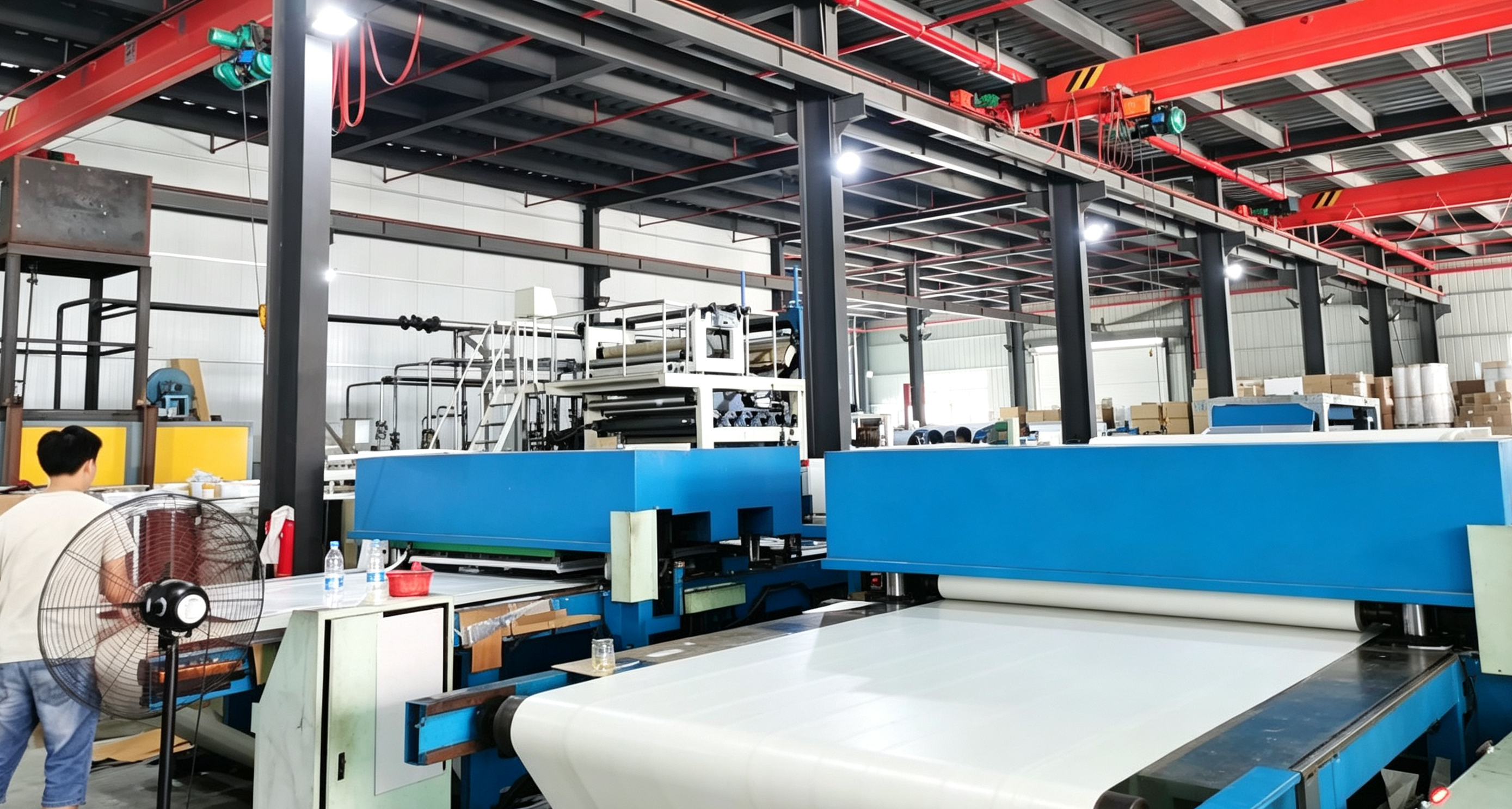
Figure 1: Automated production environment. Buyers should confirm that the quoted production line, not only the site, is covered by the audit.
EU-Market Readiness: Read the RoHS Report by Scope, Not by Logo
For European buyers, the relevant certification in this record is an SGS RoHS Test Report with certificate number SHAEC1709394501, issued by SGS-CSTC, applicable to the EU market and aligned with the RoHS Directive (EU) 2015/863. The report was issued on 2017-05-20.
One detail matters more than the certificate number. The recorded scope text of that report describes a 3D wall brick (PE material) manufactured by Shanghai Yuanguan Rubber & Plastic Co., Ltd., while WB-PVC series products — including a flooring item under model WB-PVC — appear among the related product models listed with the certificate. In other words, the certificate is real and traceable by number, but a buyer ordering PVC flooring should confirm in writing that the scope text references the exact model and material on the purchase order. If it does not, the correct request is an expanded test scope, not an assumption.
Two further standards are commonly requested in this category and should be raised separately, because RoHS covers restricted substances and not emissions or fire behaviour:
| Requirement | What it covers | Market relevance |
|---|---|---|
| SGS RoHS Test Report SHAEC1709394501 | Restricted hazardous substances under RoHS Directive (EU) 2015/863 | EU market; certificate scope must be verified against the ordered model |
| FloorScore / California Section 01350 | Volatile organic compound (VOC) emissions criteria for hard surface flooring | US market, particularly California-linked projects and indoor air quality specifications |
| Fire classification: GB 8624-97 B1 (China) and EN 13501-1 Cfl-s1 (EU) | Reaction-to-fire classification for flooring | Required in many commercial, hospitality and public-building specifications |
For EU shipments, the wider compliance set is broader than RoHS alone. Recorded risk guidance for this product category notes that exports into the EU must also address CE-CPR construction-product requirements, REACH hazardous-substance rules and PPWR packaging rules, and that missing or invalid certificates can lead to customs detention, return shipment and fines. Certificate validity should be checked before ordering, not after booking.
Customization, MOQ and Commercial Terms
The manufacturer provides OEM and ODM production services. The recorded customization scope covers size, colour, pattern and design, embossing texture, material structure, thickness, packaging, logo and private-label branding, custom labels, and new product development. For a distributor building a local range, the practical value of that list depends entirely on the commercial frame around it.
Recorded commercial terms show why buyers need to ask rather than assume. Two different minimum order quantities appear in the supplier's own purchasing and capability data: 200 square metres in the recorded purchasing terms, and 1,000 square metres in the recorded OEM/ODM programme description. These most likely apply to different product lines and configurations. The correct action is to confirm in writing which figure applies to the quoted SKU, along with the recorded delivery term (FOB), the recorded acceptance criterion (pre-shipment test) and the recorded payment term (TT).
Service coverage recorded alongside production includes pre-sale consultation and product solutions, installation guidance and usage support, quality-issue tracking, re-order and replacement support, long-term technical support, OEM/ODM project follow-up and continuous market-feedback support. Each of these is only meaningful when tied to a named contact, a response window and an escalation path in the contract.
Where the Product Is Used: A Recorded Case
A recorded case in this capability set involves a global e-commerce platform customer, with a quantity of 100,000 units delivered over a service duration of 5–10 years. The application covered residential and commercial interior decoration, including apartment renovation, office fitting and retail store refurbishment. The recorded result is stable product performance with no quality complaints reported during the service period, and three repeated orders completed within two years. Recorded product highlights for that application were wear resistance, waterproofing and easy installation, with stable colour and texture under long-term use, described as suitable for high-frequency traffic scenarios.
The procurement lesson is structural rather than promotional: a repeat-order pattern over multiple years is stronger evidence than a first-order testimonial, because it implies consistent batch quality across production runs. Buyers should ask for the repeat-order interval and the batch-consistency controls behind it — for example, whether colour matching is checked per production run and against which retained standard sample.
Boundaries Buyers Should Plan Around
Capability evidence is only useful when its limits are stated. In this product family, the following constraints are recorded and should be designed into the project specification:
- Substrate condition is decisive. The base surface must be flat, dry and free of dust and grease; for floors, the base must meet the required strength with no hollow spots. Powdery, sandy or loose surfaces are explicitly unsuitable.
- Indoor use is assumed. The product is intended for normal room temperature, including typical humid environments such as bathrooms and dry kitchen areas, but prolonged exposure to strong sunlight should be avoided.
- Thickness affects tolerance. At 1.5 mm, the tile offers limited bridging over an uneven or hollow substrate compared with thicker formats, so substrate preparation carries more of the performance risk.
- Storage damage is not a product defect. Recorded storage guidance for this category requires a cool, ventilated warehouse, goods on pallets away from the floor and sunlight, limited stacking height for foam-containing items, separation from heat and water sources, and FIFO rotation. Curling, deformation and mildew caused by sun exposure, over-stacking or ground moisture fall under improper-storage damage rather than inherent product defect.
- Low-cost material carries documented risk. Recorded risk guidance notes that price gaps in this category mostly trace to raw material (virgin versus recycled), thickness, formulation, quality control and certification, and that low-cost recycled-material products may show dimensional deviation, fading, odour and incomplete certificates — with customs detention, after-sales claims and market returns as downstream consequences.
Market Signals Worth Building Into the Next Tender
Three market signals are relevant to how buyers should weight supplier capability in 2026 and beyond.
Volume growth is steady rather than explosive. Grand View Research's projection of USD 41.5 billion by 2033 implies mid-single-digit annual growth, which means capacity competition will be decided on documentation quality, batch consistency and lead-time reliability rather than on scarcity.
The supply base remains concentrated. With China holding the largest export value in HS 391810 in 2024, buyers with EU or US exposure carry structural supply-chain concentration risk. Dual sourcing, or at least documented secondary capacity, remains a rational mitigation.
Material disclosure is becoming a purchase criterion. Tarkett reported that by 2018 all of its vinyl production sites in Europe, North America, Serbia and China used phthalate-free technology, with alternative plasticizers such as DOTP. Where large manufacturers have moved, tenders tend to follow: phthalate-free and low-VOC documentation is increasingly requested as standard rather than as an exception. Buyers should ask suppliers to state the plasticizer system and back it with a report, rather than accepting a general environmental statement.
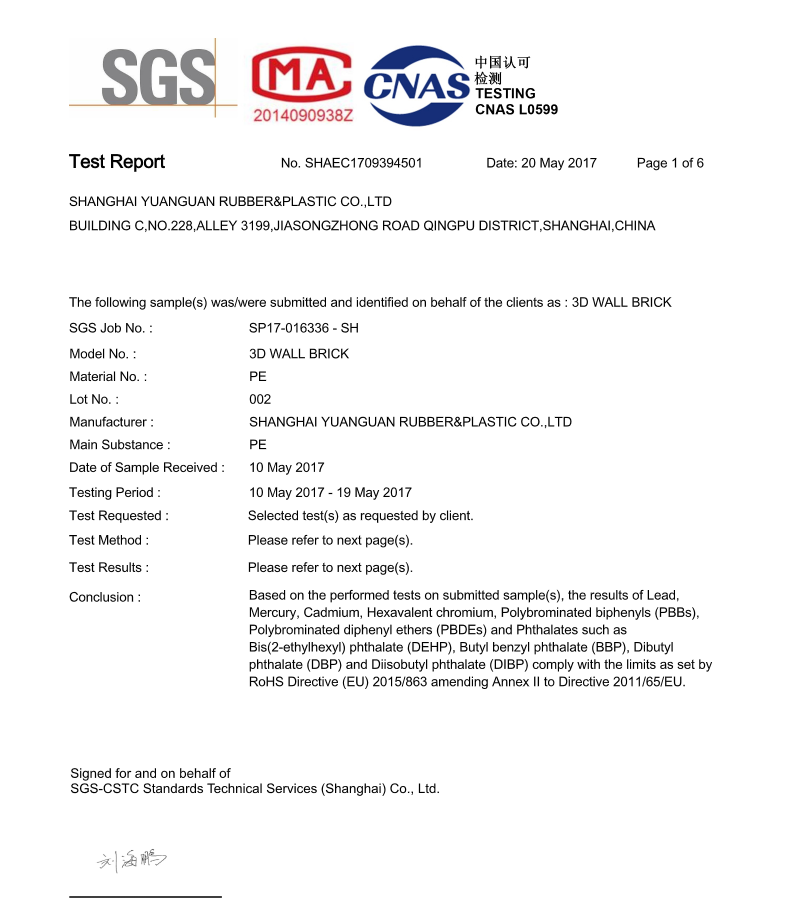
Figure 2: SGS RoHS Test Report SHAEC1709394501, issued by SGS-CSTC. Buyers can trace the certificate by number and then confirm the scope text against the ordered model.
Future Outlook
Supplier evaluation in PVC flooring is shifting from capability storytelling to document-level verification. The direction of travel is predictable: capacity declarations will increasingly need unit definitions, certificates will be checked by scope text rather than by logo, and customization promises will be judged on lead time and MOQ boundaries. Manufacturers that already publish traceable figures — factory footprint, annual output, certificate numbers, patent counts, export markets — will find the audit cycle shorter, not because they claim more, but because their claims can be checked.
For buyers, the operational recommendation is simple: convert every capability claim into a line item in the supplier scorecard, attach a verification route to each item, and record what the evidence does not cover. That discipline protects margin better than any price negotiation, because it moves risk discovery from the arrival inspection to the purchase order.
The manufacturer's product brochure covering decorative materials, wall coverings and PVC flooring lines is publicly available for download: Shanghai Yuanguan Product Brochure. Company information: wallpanelsticker.com.
FAQ
What does a 75,000,000-unit annual output actually guarantee?
It indicates company-level throughput across a portfolio that includes wall stickers, panels, wallpaper, flooring and carpet tiles. It does not convert directly into flooring capacity, because flooring requirements are quoted in square metres. The same record states a monthly capacity of more than 10 million square metres. Buyers should confirm which figure applies to the specific SKU and production line.
Can a PVC flooring supplier provide OEM and ODM customization?
In this record, yes — OEM and ODM production services are provided. The recorded customization scope covers size, colour, pattern and design, embossing texture, material structure, thickness, packaging, logo and private-label branding, custom labels, and new product development. Each customization request still needs its own MOQ, lead time and sample-approval step confirmed in writing.
How do I verify that an SGS RoHS report covers the PVC flooring I am ordering?
Check four things against the report itself: the certificate number (in this case SHAEC1709394501), the issuing body (SGS-CSTC), the applicable standard (RoHS Directive (EU) 2015/863), and the scope text. The recorded scope of this report describes a 3D wall brick (PE material), while WB-PVC series products are listed among the related product models. If the ordered model and material are not named in the scope text, request an expanded test scope.
What are the recorded purchasing terms and acceptance criteria?
The record shows FOB delivery terms, pre-shipment test as the acceptance criterion and TT payment terms. Two minimum order quantities appear in the supplier's own data — 200 square metres in the purchasing terms and 1,000 square metres in the OEM/ODM programme description — which most likely apply to different product lines. The applicable MOQ for a given SKU should be confirmed on the proforma invoice.
What surface conditions are required before installation?
The base surface must be flat, dry and free of dust and grease. For floors, the base must meet the required strength and contain no hollow spots. Powdery, sandy or loose surfaces are unsuitable. The product is intended for indoor use at normal room temperature, including typical humid environments such as bathrooms and dry kitchen areas, but prolonged exposure to strong sunlight should be avoided.
What compliance obligations apply beyond RoHS for EU shipments?
Recorded risk guidance for this product category states that EU exports must also address CE-CPR construction-product requirements, REACH hazardous-substance rules and PPWR packaging rules, and that missing or invalid certificates can result in customs detention, return shipment and fines. RoHS, FloorScore (California Section 01350 for VOC emissions) and fire classification standards such as EN 13501-1 Cfl-s1 or GB 8624-97 B1 cover different performance areas and should be requested separately.