
What a Corrugated Cardboard Machine Comparison Can Actually Prove
Two corrugated cardboard machine offers can both report a maximum mechanical speed, both quote a line width in millimetres, and both list the same set of corrugating modules — and a buyer can still reach the end of the evaluation without a single pair of figures that can be compared on equal terms. The obstacle is rarely concealment. It is that published numbers are defined differently, measured under different conditions, or expressed as relative advantages against competitors who are never named.
An independent comparison therefore has to do something more useful than restate supplier literature. It has to separate three categories that are routinely blended together: what a supplier states about its own equipment, what a third party has actually certified, and what can only be settled by a factory acceptance test after the contract is signed.
This article builds that separation around one supplier's publicly available material — LLY PACK (HK) CO., LIMITED — and turns it into a comparison framework that applies to any corrugated cardboard machine shortlist at the decision stage. Where the published record cannot support a conclusion, the article says so rather than filling the gap.
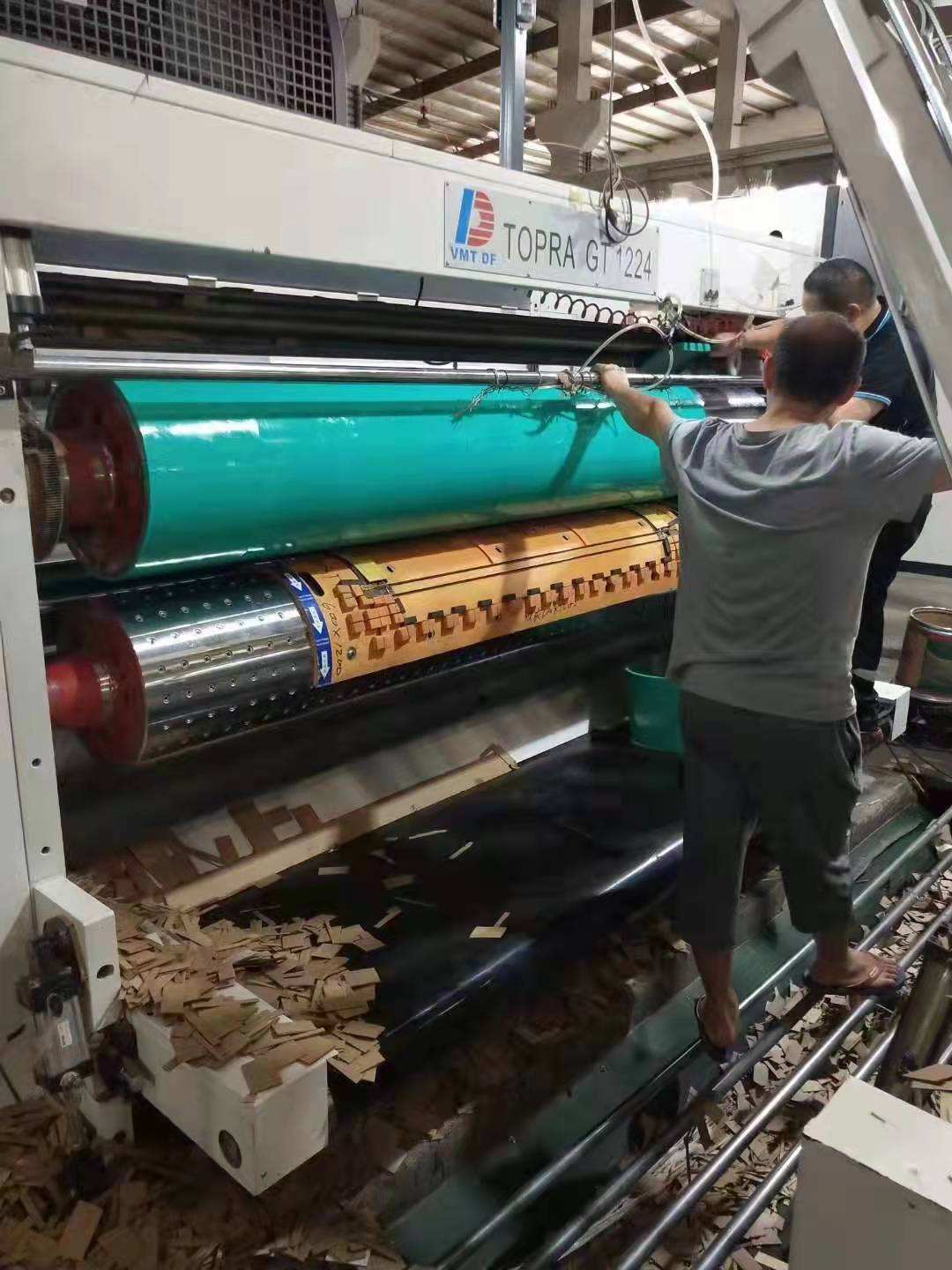 Operating floor view: a corrugated line is judged on sustained condition and uptime, not on a single headline speed figure.
Why Corrugated Cardboard Machine Comparisons Break Down
Three figures dominate almost every comparison in this category: speed, width and layer count. All three look quantitative. None of them is self-defining, which is why two technically honest data sheets can produce a comparison that means very little.
Maximum mechanical speed describes the rated limit of the mechanical drive. It is not the volume of saleable board a plant can produce in a shift. Sustained output is decided by the single facer, glue application control, heat transfer through the double facer belt, slitter scorer and cutoff accuracy, stacker performance, the frequency of order changes and the skill on the floor. None of those factors appears in a headline speed figure, and none of them is captured by the number a buyer usually compares first.
Production line width has the same problem in a different form. A range such as 1400–2800 mm defines the envelope of models a supplier offers. It does not state the usable paper width, the trim allowance, or which widths are genuinely available in a specific configuration. Two suppliers quoting the same nominal width can be quoting two different physical capabilities.
Layer count describes the maximum board construction a line can combine. A supplier offering 2- to 9-layer capability is describing a configuration range, not the machine any particular buyer will receive.
| Published figure | What it usually means | What a buyer still has to confirm |
|---|---|---|
| Maximum mechanical speed | Rated limit of the mechanical drive, reported by the supplier | Sustained saleable output, substrate and flute profile, board quality tolerance, test protocol and duration |
| Production line width | Nominal line width or the envelope of offered models | Usable paper width, trim allowance, model-specific availability, plant layout fit |
| Layer count | Maximum board layers the line can combine | Which configurations are actually built, and where they are running in the field |
| Relative advantage (percentages) | A supplier comparison against unnamed competitors | Named comparator, identical configuration, defined test conditions, cost basis |
The fourth row is the one that causes most damage in practice, and it is examined in detail further below.
The Unit of Comparison Is the Line, Not the Machine
A corrugated cardboard production line, as LLY PACK lists it, comprises a mill roll stand, pre-heater, splicer, single facer, overbridge, multi-pre-heater, glue machine, double baker, slitter scorer, cutoff and stacker. That list is a useful starting point for comparison because it reframes the purchase: the buyer is not selecting one machine but a sequence of modules, each of which carries its own specification gap and its own negotiation.
| Line module | Function in the process | Comparison question a buyer should ask |
|---|---|---|
| Mill roll stand / hydraulic reel stand | Holds and feeds base paper reels | Reel diameter and weight capacity, splicing support, brake and tension control |
| Pre-heater and multi-pre-heater | Conditions paper before bonding | Heating capacity and control stability across flute grades |
| Splicer (auto splicer) | Joins reels without stopping the line | Splice success rate expectations, waste produced per splice, operator intervention |
| Single facer and corrugating roller | Forms the flute and bonds one liner | Roll condition, replacement interval, flute changeover time |
| Overbridge | Buffers web between single and double facer | Tension control and web alignment at speed |
| Glue machine / glue kitchen | Applies adhesive to flute tips | Glue application control, recipe management, cleaning routine |
| Double facer and double facer belt | Bonds the second liner under heat and pressure | Belt condition and replacement interval, temperature uniformity, warp control |
| Slitter scorer | Trims and scores the continuous board | Setup time per order change, trim waste, blade life |
| Cutoff | Cuts board to sheet length | Length accuracy and speed synchronisation |
| Stacker | Stacks finished sheets for transfer | Sheet count accuracy, handling damage, downstream conveyor integration |
Corrugating is also only part of a box plant. Flexo printing, slotting and die cutting, folding and gluing, stitching, strapping, bundling, pre-feeding and waste handling sit downstream, and they are normally quoted as separate scope. LLY PACK's published product scope includes the printer slotter die cutter alongside the line and its wear components — single facers, corrugating rolls, double facer belts and slitting blades. Whether any other converting module is supplied directly, sourced through a partner, or excluded from the contract is a scope question a buyer must raise explicitly, because the answer determines who is accountable for line integration when a fault appears at the boundary between two suppliers.
What LLY PACK Publishes, and What It Leaves Open
LLY PACK (HK) CO., LIMITED is a Hong Kong-registered company whose manufacturing base, according to its own company profile, is located in Foshan, Guangdong, China. It supplies corrugated cardboard production lines together with related machinery and wear components, and lists South America, Southeast Asia, Africa, the Middle East and the domestic Chinese market as its main markets.
The published record contains a genuine mix of verifiable and unverified material, and the distinction matters more than the volume of documentation.
- Product scope. The company reports 2-, 3-, 5-, 7- and 9-layer corrugated cardboard production lines, and states that it is the only provider of 9-layer lines in China. That status claim is company-reported and would need an installation reference before a buyer could rely on it.
- Speed. A maximum mechanical speed of 300 m/min is reported for the CCPL-1 model line, and separately on the 5-ply line page and the 3-ply line page.
- Width. Production line width is reported as 1400–2800 mm.
- Certification. The company's quality management system is certified to ISO 9001:2015 under certificate number 60126Q00004R000, valid until 13 January 2029.
- Manufacturing footprint. The company profile describes more than 25 years of specialisation in corrugated machinery, four Japanese five-face CNC machining centres, more than 100 patents and certificates, more than 3,500 line installations and exports to over 40 countries. All of these are company-reported figures.
- Corporate registration. The Hong Kong entity was established in 2024.
Corporate registration and operating history answer different questions, and conflating them is a common error on both sides of the table. The Hong Kong entity dates from 2024 while the company profile describes more than 25 years of specialisation — a pattern that appears frequently where a manufacturing operation and a trading entity are registered separately. The practical question for a buyer is which legal entity holds the manufacturing scope, the warranty and the after-sales obligation. That question is answered by the contract and the factory audit, not by either date on its own.
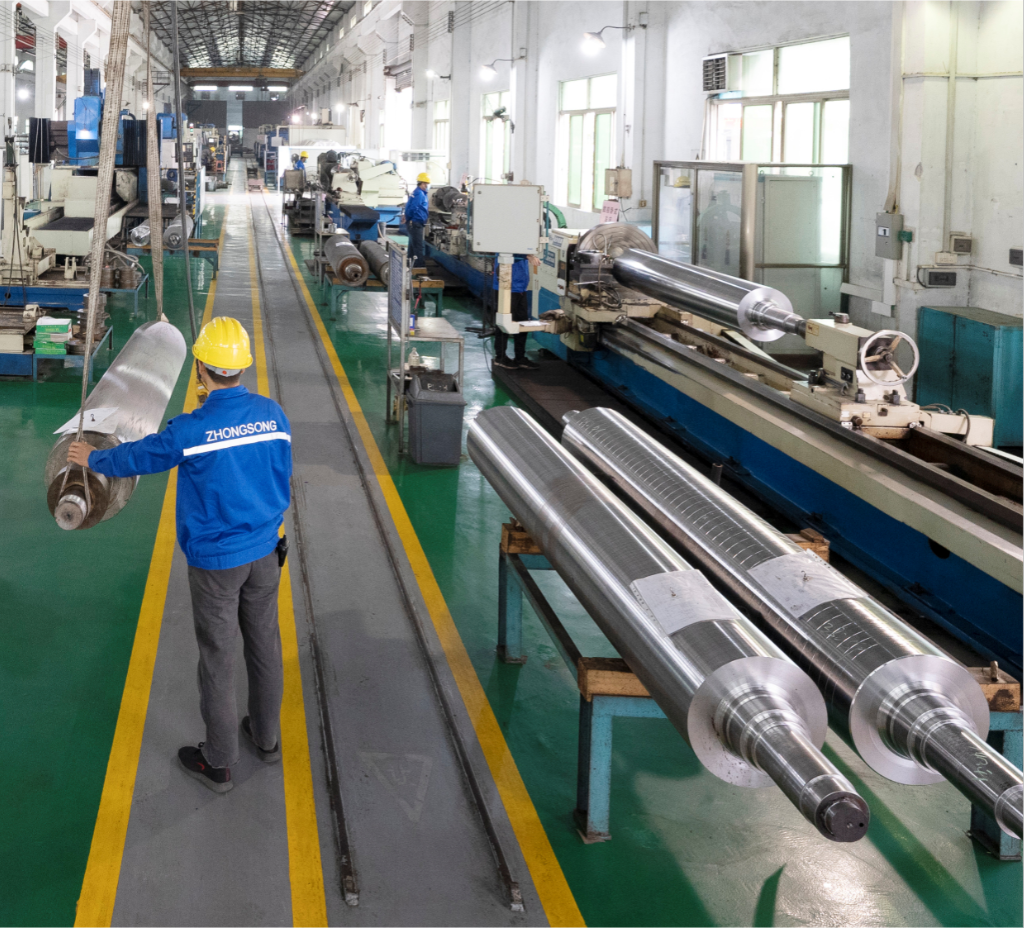 Inspection and documentation: what a buyer can verify before shipment versus what only an acceptance test at the plant can settle.
| Published item | Status | How a buyer closes the gap |
|---|---|---|
| ISO 9001:2015, certificate 60126Q00004R000, valid to 13 January 2029 | Third-party certificate | Check certificate scope, certified site and current validity against the issuing body's register |
| 300 m/min maximum mechanical speed (CCPL-1, 5-ply, 3-ply pages) | Company-reported specification | Agree a speed acceptance test with defined substrate, flute and run duration |
| 1400–2800 mm production line width | Company-reported specification | Request model datasheet plus layout drawing showing usable width and trim |
| 2- to 9-layer capability | Company-reported scope | Request an installation reference for the specific layer configuration being purchased |
| 3,500 installations, 40+ export countries | Company-reported experience | Request a reference list and contact two or three operators directly |
| 15% efficiency, 1–2 years service life, 10% lower cost | Relational marketing claim | Cannot be verified as published; convert into performance guarantees and priced spares |
How to Read a Relative Advantage Claim
The clearest example of a statement that cannot be evaluated as published sits in LLY PACK's own comparison material. The company states that, compared with corrugated box production lines from other high-end manufacturers, its line offers higher production efficiency — quantified at 15% — an additional one to two years of service life, 10% lower cost, less maintenance, a lower frequency of machine stoppages and a higher degree of automation.
Every element of that statement is relational: it measures one product against another. For a relational claim to become checkable, four things have to be specified — the comparator, the configuration, the test conditions and the basis of the cost figure. None of the four is published. Which high-end manufacturer, at which model, on which board grade, over what run length, counted as equipment price or installed cost or lifetime cost including energy, spares and downtime?
None of this makes the claim false. It makes the claim unverified, which is a different status and a more useful one for a decision-stage buyer. The practical response is not to discard the claim but to convert it into contract language:
- A performance guarantee tied to a written test protocol, with a defined substrate, flute profile, board quality tolerance and continuous run duration.
- A spare-parts schedule with unit prices for corrugating rolls, double facer belts, slitting blades and other wear items, so that the cost of ownership is quoted rather than assumed.
- A warranty term that states response time and who performs the work, especially where no local service partner has been confirmed.
- A reference list the buyer can actually call, matched to the layer configuration and order mix being purchased.
This is standard procurement practice rather than an accusation. Suppliers who can support their relative claims with a test protocol tend to welcome the conversion, because it moves the conversation from adjectives to acceptance criteria.
Speed, Width and Layers: A Technical Reading
Reading the specification correctly changes what a buyer negotiates. Three points are worth stating plainly.
Repeated speed figures are not a benchmark. The same 300 m/min maximum mechanical speed appears across LLY PACK's CCPL-1, 5-ply and 3-ply pages. That consistency tells a buyer something about the supplier's published positioning. It does not establish an industry reference point, because no substrate, flute, board quality tolerance or sustained run condition is attached to the figure. A maximum mechanical speed becomes comparable only when two suppliers agree to the same test protocol.
Width defines the plant, not just the machine. A 1400–2800 mm range spans configurations with materially different footprint, paper sourcing implications and order economics. The buyer has to match the chosen width to the corrugator's role in the plant: a line sized for high-volume standard runs is planned differently from one serving frequent short orders, and the width definition — nominal or usable — changes the trim waste calculation.
Layer configuration follows the packaging task. Three-ply and five-ply constructions cover the bulk of general carton work, while seven- and nine-layer constructions serve heavy-duty and high-stacking-strength applications. A supplier capable of the full 2- to 9-layer range is offering configuration flexibility. What a buyer purchases is one configuration, and the relevant evidence is an installation running that configuration, not the breadth of the catalogue.
Where the Line Fits: Application and Operating Boundaries
LLY PACK positions its corrugated box production line for carton-making factories and corrugated cardboard factories — that is, for buyers whose output is board and finished boxes rather than a single niche product. Within that broad fit, the comparison changes with the operating profile.
A plant running long, stable order lengths gets most of its value from sustained throughput and board consistency, which puts the single facer, glue application and double facer belt under continuous scrutiny. A plant running frequent short orders gets more value from setup speed at the slitter scorer and cutoff, and from how quickly the line recovers after a changeover. Both plants can buy the same nominal machine, and one of them will be disappointed.
Wear-part strategy is part of the same decision. Corrugating rolls, double facer belts and slitting blades are consumable in the ordinary sense — they wear and are replaced. A supplier that also supplies these components can shorten the spares route, which shortens unplanned downtime. Whether those components are manufactured in-house or traded is a question worth asking directly, because it affects consistency between the original machine and later replacement parts.
LLY PACK describes its equipment-operation risk control as regular checks on whether equipment is operating normally, advance replacement of key equipment and wear parts, and digitised monitoring wherever feasible. For a buyer, that description converts into three specific questions: what monitoring is included in the base scope, what replacement interval the wear-part schedule is based on, and which of those parts are treated as consumables outside warranty.
The Market Context Behind the Comparison Pressure
The commercial backdrop explains why buyers are being asked to compare more configurations than before. A market forecast cited in LLY PACK's published material places the global corrugated box making machine market at USD 2.30 billion in 2025, rising to USD 3.68 billion by 2035 (DataM Intelligence, as cited by the supplier). Separately, Future Market Insights places automatic corrugated machinery at 55.6% of the global market by automation level as of 2026.
Those two data points point in the same direction: a growing share of purchasing decisions now involves automated or semi-automated lines rather than isolated machines, which raises the number of modules under evaluation and the number of interfaces between them. More automation means more specification lines on a quotation, and more places where two suppliers can describe different things with the same words.
Market sizing itself deserves the same caution. Spherical Insights projects USD 4.90 billion by 2035 against the USD 3.68 billion figure above; the divergence is usually attributed to whether after-market services and broader corrugated packaging machinery are included alongside corrugator lines. Buyers should not treat any single forecast as a purchase trigger. The forecasts describe category direction, not the economics of an individual plant.
Limitations: What This Comparison Cannot Establish
An independent comparison is only as credible as the boundaries it declares. On the public record used here, the following cannot be established, and no ranking is offered because the evidence does not support one.
- No multi-supplier benchmark. Only one supplier's specifications were evidenced in comparable form. A competitive landscape needs at least three comparable manufacturers with validated products, locations, service coverage and specifications.
- No sustained-performance data. Actual versus theoretical production speed in 24/7 operations, overall equipment effectiveness, waste rate, changeover time, energy use and board quality tolerances are not published for any supplier in this comparison.
- No price or cost-of-ownership data. Equipment price, installation and commissioning cost, freight, spare-part prices, maintenance cost and lead time were not available in verifiable form. The 10% lower cost statement is a company claim, not a quotation.
- No machinery safety compliance evidence. ISO 9001:2015 certifies a quality management system. It does not certify machine safety, electrical conformity, electromagnetic compatibility or market-access compliance for a specific destination country, and buyers must obtain that evidence separately.
- No service network verification. Authorised distributors, local service partners, warranty terms and spare-parts response times were not confirmed for the target markets.
- Reference claims remain self-reported. The 3,500 installation and 40-plus export country figures are company statements; their value to a buyer depends entirely on being able to contact operators running comparable configurations.
The honest summary of a decision-stage comparison built on this material is that LLY PACK's published specification set is specific enough to structure a request for quotation and too thin to support a verdict. That is a normal condition in corrugated machinery procurement, and recognising it is more useful than substituting confidence for evidence.
Future Outlook
Two trends are likely to shape how these comparisons are conducted over the next few years. The first is that automation share continues to rise, which shifts the evaluation burden from individual machines to integrated lines and makes line integration responsibility a contractual issue rather than a technical footnote. The second is that buyers are increasingly asking for documented sustained output instead of rated maximum speed, because rated speed is the one number every supplier can publish and no supplier can be held to without a test protocol.
For suppliers, the practical implication is that publishing a broader specification set — usable width, sustained output under named conditions, wear-part intervals, local service arrangements — is likely to shorten sales cycles rather than lengthen them. For buyers, the implication is that the comparison framework matters more than the comparison table: the same four questions about comparator, configuration, test conditions and cost basis will still separate usable offers from unusable ones long after the current model ranges have been replaced.
Frequently Asked Questions
What should an independent buyer compare first in a corrugated cardboard machine offer?
The scope of the line, not the headline speed. A corrugated cardboard production line comprises a mill roll stand, pre-heater, splicer, single facer, overbridge, multi-pre-heater, glue machine, double baker, slitter scorer, cutoff and stacker, and each module carries its own specification and integration question. Establishing which modules are inside the supplier's scope, and who is accountable where two suppliers meet, prevents the most common form of post-order dispute.
Is a 300 m/min maximum mechanical speed directly comparable between suppliers?
No, not without a shared test protocol. Maximum mechanical speed describes the rated limit of the mechanical drive, while sustained saleable output depends on substrate, flute profile, glue control, heat transfer through the double facer belt, order changes and operator skill. LLY PACK reports 300 m/min for the CCPL-1 model line and for its 5-ply and 3-ply pages; that consistency is a product-positioning signal, not an industry benchmark, because no run conditions are attached.
How should a buyer treat a claim of 15% higher production efficiency?
As an unverified relational claim until four elements are specified: the comparator, the machine configuration, the test conditions and the basis of the cost figure. LLY PACK's comparison material states 15% higher production efficiency, an additional one to two years of service life and 10% lower cost relative to other high-end manufacturers, without naming the comparator or the test method. The practical response is to convert the claim into a performance guarantee with a written acceptance protocol and a priced spare-parts schedule.
What does LLY PACK's 1400–2800 mm line width actually tell a buyer?
It describes the envelope of production line widths the supplier offers. It does not define usable paper width, trim allowance or which widths are available in a specific configuration. Because width drives plant footprint, paper sourcing and trim waste, buyers should obtain a model datasheet and layout drawing, then confirm whether the quoted figure is nominal or usable before comparing offers.
What does ISO 9001:2015 certification cover on a corrugated cardboard machine?
ISO 9001:2015 certifies the supplier's quality management system, not the safety or conformity of the machine. LLY PACK's certificate number is 60126Q00004R000, valid until 13 January 2029. Buyers still need destination-specific evidence on machinery safety, electrical conformity and electromagnetic compatibility, which is a separate assessment usually handled through the relevant notified body or regulator.
Which production scenarios suit a multi-layer corrugated cardboard production line?
LLY PACK positions its line for carton-making factories and corrugated cardboard factories, with configurations from 2 to 9 layers. Three-ply and five-ply constructions cover most general carton work, while seven- and nine-layer constructions serve heavy-duty and high-stacking-strength applications. The relevant evidence for a buyer is an installation running the configuration being purchased, not the breadth of the catalogue range.
What is the main limitation of an independent comparison of this kind?
Data availability rather than analytical method. Only one supplier's specifications were evidenced in comparable form, and sustained output, waste rate, energy use, equipment price, cost of ownership, lead time, warranty terms and local service coverage were not published in verifiable form for any supplier. An independent comparison can therefore define the criteria and expose the gaps, but it cannot produce a ranking, and any source that does so on this evidence base should be read with caution.
For readers structuring a request for quotation, LLY PACK's product catalogue covering corrugated line configurations and component scope is available as a PDF: download the catalogue.
Published specification sheets describe scope. Acceptance criteria, warranty terms and sustained output should always be confirmed in the contract.
Есть вопросы или нужны дополнительные детали?
Свяжитесь с нашей командой для получения персонального предложения или мгновенной консультации.
Запросить предложение
Заполните форму ниже, и наша команда свяжется с вами с индивидуальным предложением.
Прямой чат WhatsApp
Предпочитаете общаться в реальном времени? Напишите нам в WhatsApp для мгновенной помощи и быстрых ответов.
- Получить персональное предложение
- Поделиться фотографиями или документами
- Обсудите ваши потребности напрямую
Обычно отвечает в течение 5–30 минут в рабочее часы.