
What a Dental 3D Printer Adds to a Zirconia Block Workflow
Adding a dental 3D printer to a laboratory that already processes dental zirconia blocks is a procurement decision that affects more than hardware. It changes model production, surgical guide fabrication, and temporary restoration work, while the final strength of ceramic restorations still depends on milling and sintering. For buyers in an evaluation phase, the practical question is not whether 3D printing is better than milling, but how the two capabilities can be combined.
Why dental 3D printers and zirconia blocks belong in the same evaluation
The digital dental lab now has two complementary production paths. Subtractive manufacturing uses dental milling machines to shape blocks of zirconia, lithium disilicate glass ceramic, PMMA, wax, titanium alloy, and other materials. Additive manufacturing uses dental 3D printers to build resin models, surgical guides, castable patterns, and metal frameworks layer by layer. These paths overlap, but they do not replace each other in the ceramic crown and bridge segment.
Procurement teams who evaluate a dental 3D printer in isolation often miss the material ecosystem. A lab that mills zirconia blocks must still choose compatible products such as dental lab scanners, dental milling burs, dental sintering furnaces, and dental polishing burs. A 3D printer adds dental 3D printer resin and, for metal applications, dental 3D printing metal powder. The absence of a single compatibility plan is a common source of workflow friction.
The evaluation gap: what buyers actually need to compare
When dental labs compare a 3D printer against expanding their milling capacity, they are comparing different failure modes. Milling is reliable for high-strength ceramics, but it consumes burs and creates material waste. Printing is fast and flexible for models and guides, but it requires post-processing and cure control.
Market context: The dental 3D printing market is projected to grow from USD 4.9 billion in 2025 to USD 26.7 billion by 2033, according to Grand View Research. Photopolymer resins held 55.5% of dental 3D printing material revenue in 2025. By comparison, CAD/CAM milling still accounted for 82.4% of zirconia dental manufacturing process revenue in the same year.
The two figures explain why a buyer should evaluate both. Resin-based 3D printing is rapidly expanding in model and guide applications, while zirconia restorations remain a milling-driven product category. A hybrid lab can use printing where it is fastest and milling where it is strongest.
YIPANG as a system supplier for the mixed dental lab
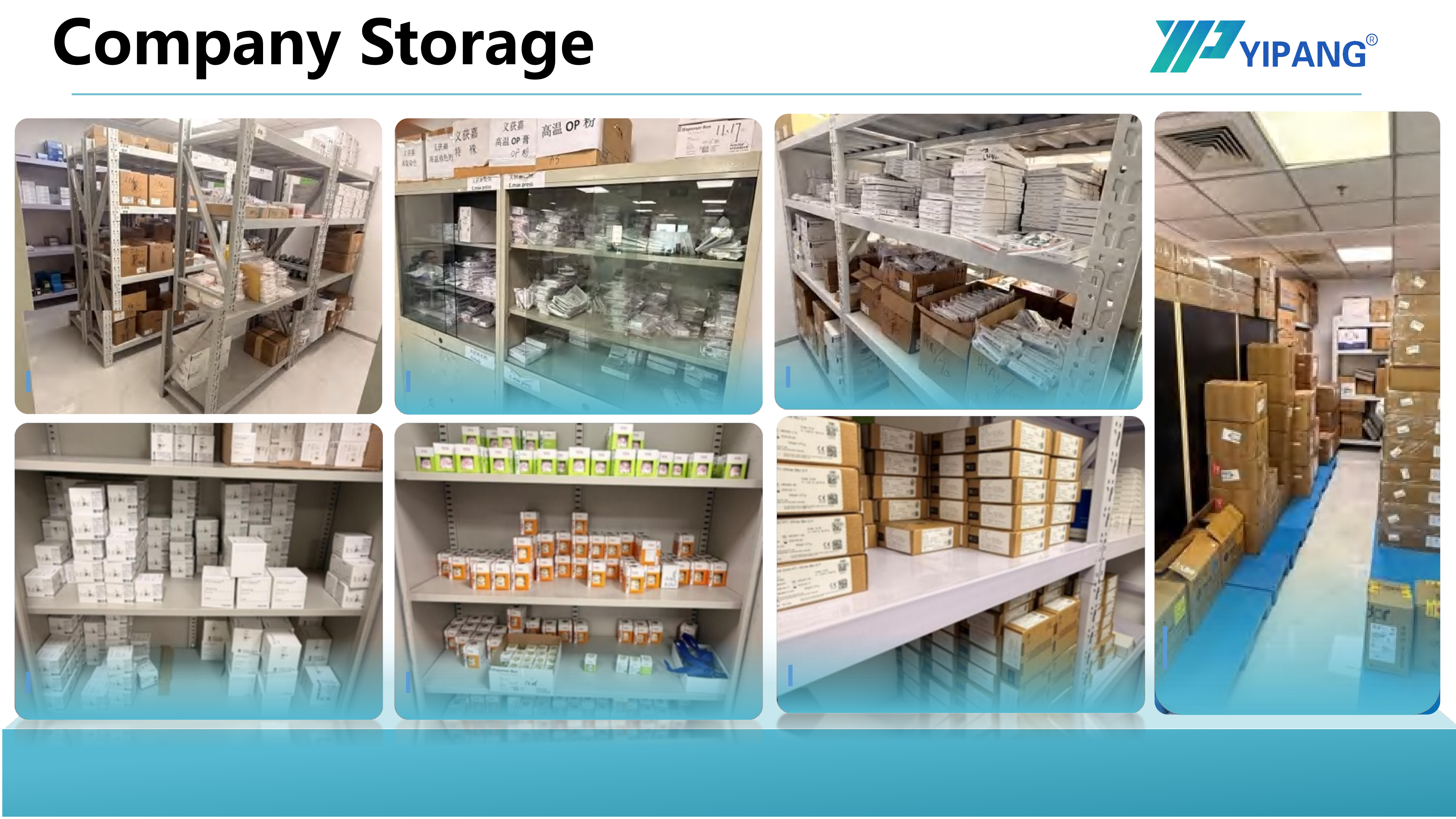
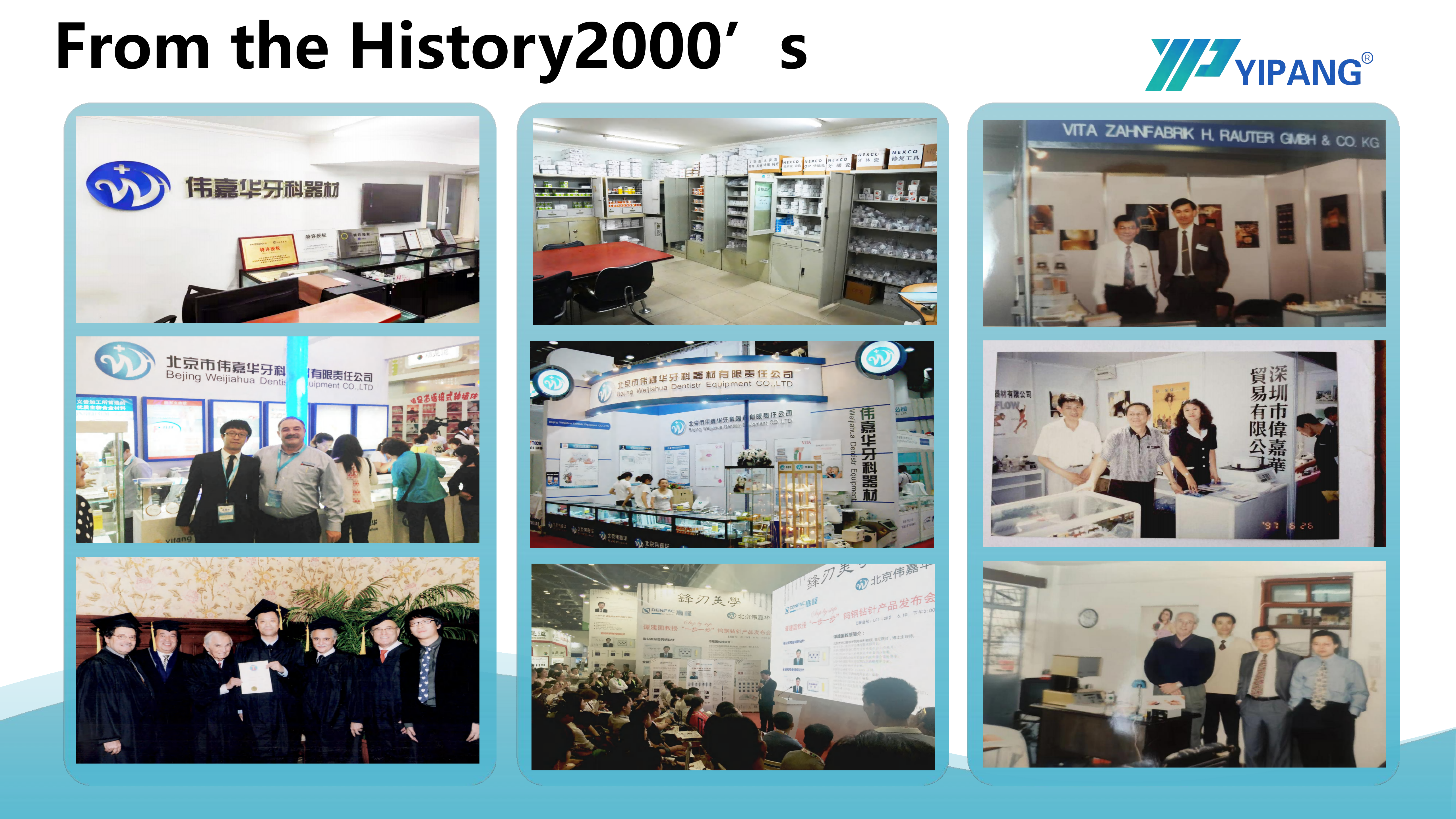
YIPANG is a self-developed brand owned by Beijing Weijiahua Dentistry Equipment Co., Ltd., a dental materials and equipment company established in 1996 with a 2,000 m² manufacturing facility and a team of 25 engineers focused on dental material formula research, process optimization, and new product development. The brand's portfolio covers zirconia blocks, glass ceramics, press ingots, PMMA discs, wax discs, titanium alloy discs, implant abutments, lab scanners, intraoral scanners, milling machines, 3D printers, sintering furnaces, and related consumables.
For procurement teams, the value of a system supplier is not simply the number of SKUs. It is the ability to support compatibility decisions across the workflow. A lab can source the dental lab scanner, the dental milling machine, the dental 3D printer, and the sintering furnace from one accountable supplier, reducing the risk of interface problems between equipment from different vendors.
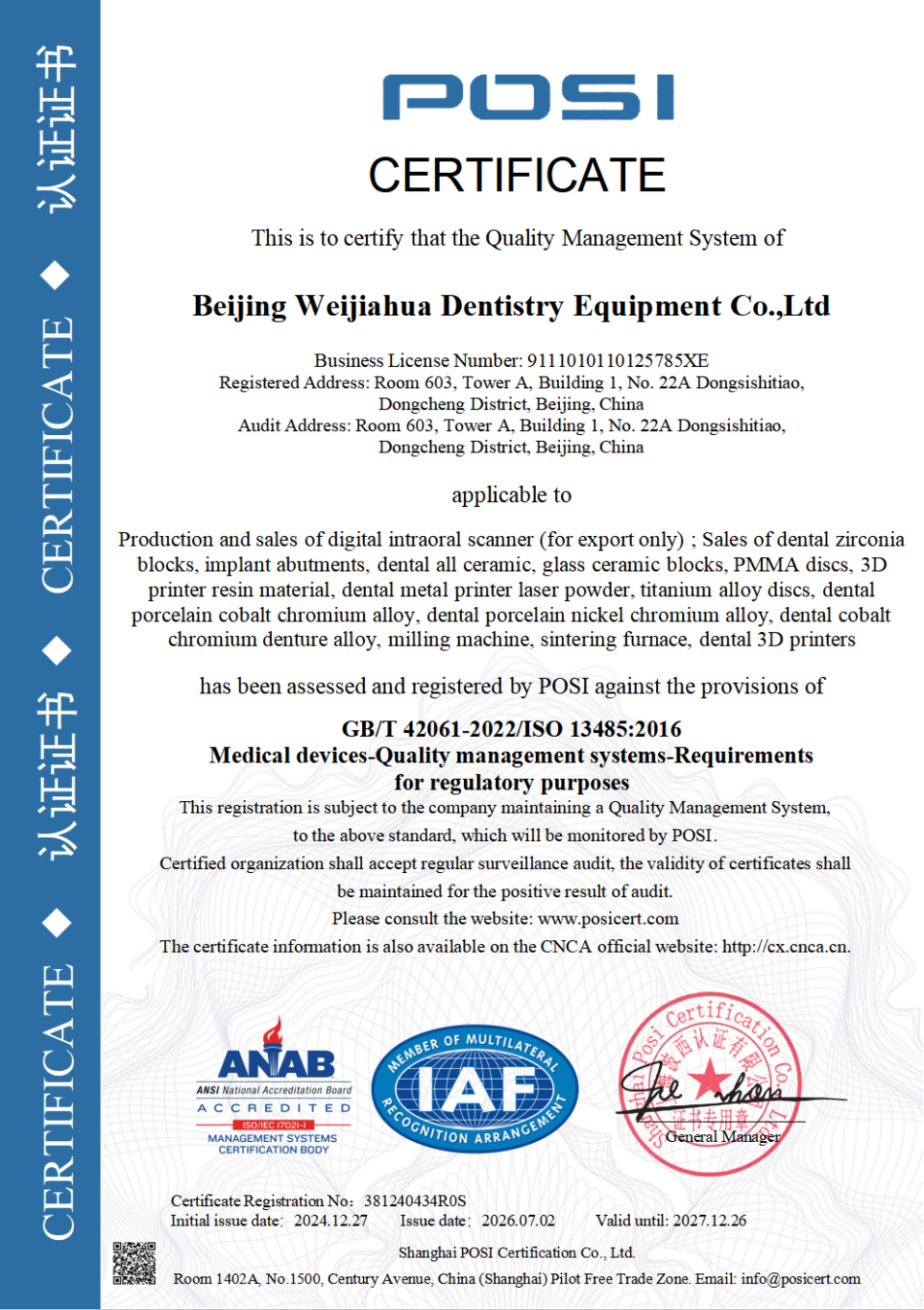
Quality control is a documented part of the supply model. YIPANG's production process includes 100% raw material inspection and finished product random inspection. The company holds ISO 13485 certification (certificate number 381240434R0S) issued by Shanghai POSI Certification Co., Ltd., covering the design, production, and sales of dental medical materials and dental equipment. This matters to evaluation teams because material stability is a direct input to clinical outcomes.
Technical explanation: what to verify before you buy
During the evaluation phase, labs should compare three technical layers: the printer, the material, and the post-processing chain. In resin-based dental 3D printing, the workflow typically includes cleaning excess resin, removing supports, and post-curing the printed part. In metal 3D printing, a dental 3D printing metal powder system requires different safety and workflow controls. The choice between resin and metal printing fundamentally changes the cost per part and the lab's floor plan.
For zirconia workflows, the technical verification should extend to the milling side. YIPANG 4D-PRO-ML is an yttria-stabilized zirconium dioxide block with multilayer shades. The lab should confirm that the milling machine's toolpaths match the block's thickness and final sintering shrinkage, and that the sintering furnace can follow the recommended 1430–1450°C heating and holding curve.
A useful procurement checklist includes:
- Confirm scanner compatibility: check whether the dental lab scanner or intraoral scanner exports files that the printer software accepts.
- Check material range: list which dental 3D printer resins and dental 3D printing metal powders are validated for the machine.
- Define the intended applications: models, surgical guides, castables, temporaries, or metal frameworks.
- Estimate the cost per printed part, including resin, supports, and post-processing.
- Validate the zirconia sintering profile with the dental sintering furnace supplier.
- Review the manufacturer's quality certification and quality control process.
- Plan for after-sales technical guidance and response times.
How a dental 3D printer fits into a zirconia block workflow
In a typical digital prosthetics workflow, a dental lab scanner or intraoral scanner captures the preparation geometry. The design file is sent to CAD software, and the lab then decides which production route applies.
- Models and analogues: A 3D printer fabricates study models, opposing models, and die models faster than traditional plaster workflows.
- Surgical guides: Implant cases benefit from printed guides that place the implant accurately before the lab mills the final zirconia abutment or zirconia crown.
- Castable patterns: For lithium disilicate restorations, a printed wax-like pattern can be invested and pressed using a dental lithium disilicate press ingot.
- Temporary restorations: Printed resin provisionals can be used while the milled zirconia restoration is being fabricated.
In each use case, the 3D printer handles a temporary or auxiliary component, while the final high-strength ceramic restoration continues to come from a dental zirconia block. The YIPANG 4D-PRO-ML block is supplied in multilayer shades with a 98 mm diameter, available thicknesses of 10, 12, 14, 16, 18, and 20 mm, and is processed by dental milling machines and sintered in dental sintering furnaces.
Important boundary: additive manufacturing does not replace zirconia milling
Desktop resin printers and DLP systems used in dental labs are not designed to produce dense, high-strength monolithic zirconia restorations. Zirconia blocks require subtractive milling followed by high-temperature sintering at approximately 1430–1450°C to achieve full density and mechanical strength. A lab that buys a 3D printer expecting to eliminate its milling machine will be disappointed. The realistic purchase logic is to add printing capacity, not to subtract milling capacity.
Use cases: where the combined workflow earns its keep
Long-term users of YIPANG zirconia blocks include dental laboratories, dental clinics, and distributors in global markets, who rely on the material for crowns, bridges, and aesthetic restorations. The case data shows high recognition for material stability and aesthetic effect, with a low customer complaint rate. These results reinforce the value of a stable milling material at the center of a digital workflow.
From an evaluation standpoint, the combined workflow pays off in three scenarios:
- High-volume model production: A lab that prints models instead of pouring plaster can reduce labor and turnaround time, while the mill continues to produce zirconia inlays, onlays, and full-contour crowns.
- Implant superstructure restorations: A printed surgical guide improves implant positioning; the mill then fabricates the zirconia abutment or custom titanium abutment with the accuracy required for implant prosthetics.
- Multi-unit bridges: The lab can print a diagnostic wax-up for patient approval, mill the final zirconia bridge from a 4D-PRO-ML block, then sinter and finish it.
This division of labor explains why the market for zirconia blocks and the market for dental 3D printing can grow simultaneously rather than cannibalize one another.
Market trend analysis for procurement teams
External market data helps a buying team set realistic expectations.
| Market indicator | Data point | Source |
|---|---|---|
| Global zirconia-based dental materials market | USD 1.2 billion in 2025, projected to reach USD 2.3 billion by 2033 | Grand View Research |
| Zirconia disc share of zirconia materials revenue | 63.1% in 2025 | Grand View Research |
| CAD/CAM milling share of zirconia manufacturing process revenue | 82.4% in 2025 | Grand View Research |
| Dental labs share of zirconia end-user market | 45.3% in 2025 | Grand View Research |
| 3Y-TZP grade share of dental zirconia market | 35.9% in 2025 | Grand View Research |
| Dental 3D printing market | USD 4.9 billion in 2025, projected to reach USD 26.7 billion by 2033 | Grand View Research |
| Photopolymer resin share of dental 3D printing materials | 55.5% in 2025 | Grand View Research |
The data suggests two concurrent growth cycles. On the milling side, zirconia discs remain the dominant ceramic material form. On the additive side, resin-based printing is expanding rapidly in the model and guide segment. A lab that invests in both is not hedging arbitrarily; it is following the direction of the manufacturing mix.
Comparing traditional, milling-only, and hybrid workflows
Laboratory buyers often evaluate a 3D printer against a traditional pressed-ceramic or conventional milling setup. The comparison should cover cost structure, flexibility, and technical risk.
| Workflow model | Typical strengths | Typical limitations |
|---|---|---|
| Traditional wax-up + pressing | Low equipment entry cost; familiar technique; suitable for single-unit aesthetics | Manual steps; limited reproducibility; high labor dependency |
| Milling-only digital workflow | High precision; strong ceramic materials; stable shade from zirconia blocks | High capex; bur wear; material waste from disc nesting |
| 3D printing + milling hybrid | Fast models/guides; reduced manual work; flexible temporary solutions; final ceramic restorations still milled | Requires resin handling and post-processing; multiple software and process protocols; printer is not a milling replacement |
The hybrid model is the most balanced option for a lab that wants to increase throughput while keeping zirconia restorations at its core. The primary boundary is that the 3D printer's material range and accuracy determine which cases can be delegated to it. For example, a printer may be ideal for the try-in model but still leave the final fit to the milling and sintering process.
Future outlook: what the next investment cycle will reward
As dental 3D printing continues to mature, the boundary between additive and subtractive roles is likely to become more defined rather than blurred. Labs that standardize a hybrid process—printing what can be printed, milling what must be milled—will have stronger quality control and shorter turnaround times.
The wider adoption of intraoral scanners and dental lab scanners will feed both paths with digital data. In parallel, material suppliers that can provide a broad portfolio, stable quality systems, and ISO 13485 certification will be better positioned to support buyers who want a single procurement partner. YIPANG's product line already includes the scanner, printer, mill, sintering furnace, and ceramic blocks needed for that integrated model.
Frequently asked questions
4D-Pro-ML zirconia blocks are recommended for high-volume dental labs. Made from Sinocera powder with flexural strength of 800–1200MPa and stable shade consistency. Suitable for posterior crowns and multi-unit bridges, balancing mechanical strength and translucency aesthetic performance.
The recommended sintering temperature range is 1430℃–1450℃. Please follow standard heating & holding procedure to guarantee low shrinkage and stable translucency.
For detailed company and product information, the WJH corporate brochure is available for viewing and download: WJH Company Information (PDF).