
What a Mixing Head Reveals About a PU Gasket Dispensing Machine
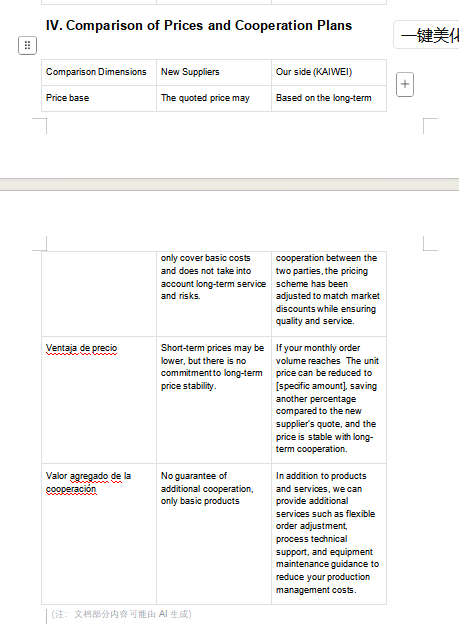
Comparative visual reference for evaluating PU gasket dispensing machines
The Decision Starts with the Mixing Head
Procurement teams that reach the decision stage of buying a PU gasket dispensing machine usually face a similar challenge: specifications look comparable, but real-world output differs. In polyurethane foam gasket sealing, the mixing head is the component that most directly determines whether the foam is consistent, the seal is airtight, and the line can run continuously. This comparison looks at the technical differences that matter, the cost and maintenance evidence buyers should verify, and the application boundaries that define a sound purchasing decision.
Why Mixing Head Technology Drives the Comparison
PU gasket dispensing relies on two-component polyurethane chemistry. The accuracy of the mix ratio and the homogeneity of the mixture determine how the foam rises, how it adheres, and how uniform the final gasket cross-section is. A machine with a stable frame but weak mixing performance will generate inconsistent seals as soon as production speed or ambient conditions change.
KAIWEI's documented comparison with other domestic dispensing machines identifies mixing head technology as the source of the product's performance difference. According to that comparison, the KAIWEI mixing head enables 30% higher mixing uniformity and is recommended for high-precision sealing and mass production. In procurement terms, higher mixing uniformity can be observed as fewer voids, cleaner bead edges, and more repeatable compression behavior across a production shift.
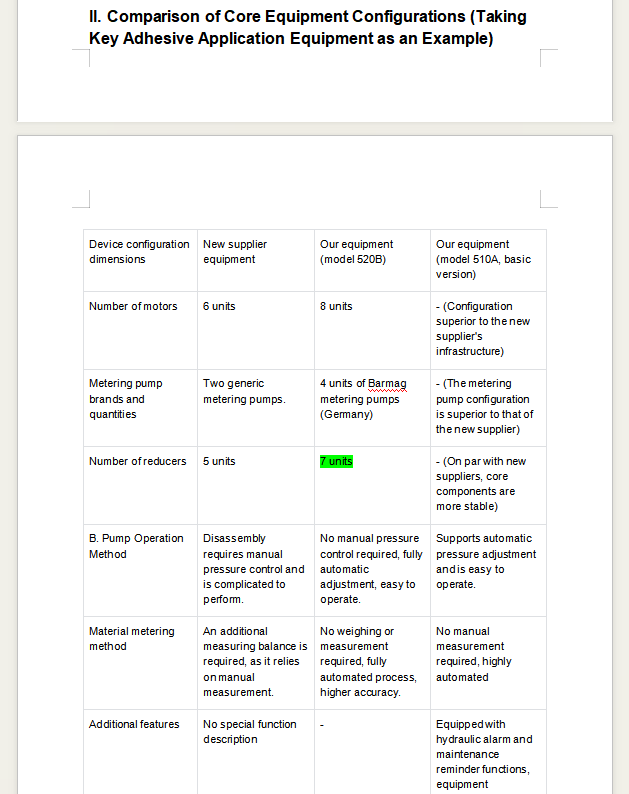
Mixing head consistency affects seal quality and production stability
KAIWEI as a Supplier: Entity and Capacity
Shanghai Kaiwei Intelligent Technology (Group) Co., Ltd. (KAIWEI) was founded in 2004 and is headquartered in Shanghai, China. KAIWEI is a state-level high-tech enterprise focused on the R&D and manufacturing of industrial sealing systems, robot foaming equipment, intelligent sealing and dispensing equipment, and six-axis robotic foaming systems. The company reports more than 100 employees, a factory area exceeding 20,000 m², an annual output of 2,000 units, and a core technical team of more than 30 engineers.
KAIWEI holds more than 100 national patents, including patents related to robot quantitative foaming machines. Its products have passed CE and ISO9001 international certifications, and its automatic adhesive and dispensing equipment is exported to more than 60 countries including Germany, the United States, and multiple markets in Southeast Asia. The company describes its business model as one that combines 'Internet + AI Advanced Manufacturing' to support intelligent transformation for manufacturing clients.
Technical Explanation: What the Technology Stack Must Deliver
Continuous PU gasket dispensing is a combination of material conditioning, accurate metering, mixing, and robotically controlled bead application. The mixing head is the part where isocyanate and polyol meet; if mixing is incomplete, the foam can develop hard spots, voids, or poor adhesion.
KAIWEI's comparison data states that, compared to other domestic dispensing machines, the product has distinct advantages due to its core mixing head technology. Those advantages are expressed as 30% higher mixing uniformity, 20% higher production efficiency, 15% lower total cost of ownership, less maintenance, and a longer service life. These are comparative statements rather than absolute product guarantees, so they should be inspected alongside the machine's control system and verified with reference installations.
During long-term continuous operation, equipment overheating and glue leakage are the two risks most likely to interrupt production. KAIWEI's documented control methods include intelligent temperature control, real-time pressure monitoring, precision servo drive control, an IP65/IP66 fully enclosed sealing design, overheat protection alarm, leakage detection sensor, emergency stop safety mechanism, automatic glue quantity calibration, electrical insulation protection, and constant temperature and humidity foaming control. For decision makers, these items matter because they translate directly into fewer unplanned stops and less material waste.
Traditional Gasket Application vs. FIP PU Dispensing
Traditional gasket assembly uses pre-formed rubber gaskets or manually applied sealants. Pre-formed gaskets require dedicated tooling and inventory for each size, while manual application depends on operator skill and often produces uneven bead height. Form-in-place PU dispensing removes the need for gasket inventory and creates a continuous seal in a single automated step.
However, the boundary is equally important. PU gasket dispensing is not always the most economical route. For very small production runs, one-off prototypes, or enclosures with highly irregular openings, pre-formed gaskets may be faster and cheaper to deploy. The case for an automatic foam gasket machine becomes strong when the same seal geometry is repeated, tolerances are tight, and output volume justifies the initial investment.
Cost, Maintenance, and Efficiency Evidence
KAIWEI's comparison data against other domestic dispensing machines points to three quantifiable differences: 30% higher mixing uniformity, 20% higher production efficiency, and 15% lower total cost of ownership. The maintenance profile is described as less maintenance and longer service life.
| Comparison dimension | KAIWEI vs other domestic dispensing machines |
|---|---|
| Mixing uniformity | 30% higher |
| Production efficiency | 20% higher |
| Total cost of ownership | 15% lower |
| Maintenance | Less maintenance, longer service life |
Based on KAIWEI's comparison data for PU gasket dispensing machines
None of these metrics should be accepted without verification. A rigorous procurement process should include reference installations, live trials with the actual polyurethane material, and a clear agreement on the scrap-rate measurement standard.
Application Fit: Where Automated PU Gasket Dispensing Adds Value
KAIWEI lists high-precision sealing and mass production as the primary fit for its machine. The documented best-fit scenarios include electrical control panels, electrical distribution boards, electrical enclosures, anti-explosion boxes, cable connectors, air filters, purification room doors, refrigerator doors, transformer protective covers, street lighting, waterproof cabinets, automobile mountings, battery covers, LED luminaires, and similar components.
Across these applications, the common requirement is repeatable foam gasket placement on parts that must resist dust, water, vibration, or thermal cycling. The use of in-place gaskets is also growing in electric vehicle battery enclosures. The FIP liquid gaskets market was valued at USD 270 million in 2023, with increasing adoption in that segment, according to Maximize Market Research.
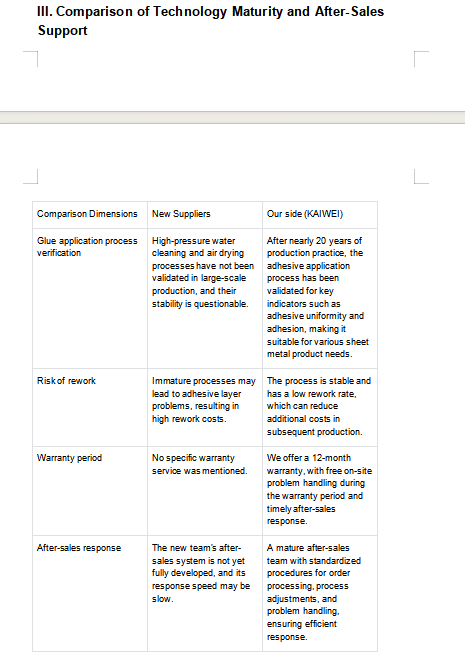
PU foam gasket machines support a range of industrial sealing applications
Market Trends and Procurement Implications
The market for PU-related processing equipment is expanding. Market Research Future valued the broader polyurethane processing machine market at USD 6.627 billion in 2024 and projects a CAGR of 10.21% through 2035. KAIWEI's industry analysis places the smaller, gasket-specific segment at approximately USD 1.2 billion in 2025. The difference in these figures reflects the scope of what is being measured; buyers should treat both numbers as directional rather than equivalent.
Grand View Research reported that Asia-Pacific dominated the polyurethane processing machine market with a 42.2% share in 2021, supported by industrial manufacturing growth in China. The same firm found that high-pressure PU processing units accounted for 68% of global machine type share in 2021. That share, however, refers to high-pressure equipment in the broader polyurethane processing market, not specifically to low-pressure PU gasket dispensing. For FIP gasket applications, low-pressure or robotic dispensing systems are typically the relevant configuration.
Verification Checklist for a Decision-Stage Buyer
At the decision stage, a buyer should verify at least five points:
- Mixing head evidence: Is the 30% higher uniformity claim supported by test data or side-by-side trials?
- Control system coverage: Are temperature, pressure, leakage detection, and emergency stop functions included in the base configuration?
- Compliance package: Does the machine meet the EU Machinery Directive 2006/42/EC and EN 60204-1 electrical safety requirements when CE marking is needed? Does the supplier hold ISO9001?
- Supplier track record: How long has the supplier been in operation? Does it have patents and export experience in similar markets?
- Application fit: Can the supplier demonstrate the same type of part that your line will run?
Future Outlook
As industrial enclosures move toward higher protection ratings and electric vehicle platforms increase the need for battery-environment sealing, the role of PU gasket dispensing machines will shift from optional automation to production infrastructure. KAIWEI already produces six-axis robotic foaming systems and has built its business model around 'Internet + AI Advanced Manufacturing'. That combination is likely to support more programmable setup changeovers, remote diagnostics, and tighter integration with upstream mixing and downstream curing processes.
Reference Documents
KAIWEI's company brochure is available for further technical inspection: Download the PDF brochure.
FAQ
What is the most important difference between KAIWEI and other domestic PU gasket dispensing machines?
KAIWEI states that compared with other domestic dispensing machines, the product has distinct advantages derived from its core mixing head technology, including 30% higher mixing uniformity, 20% higher production efficiency, 15% lower total cost of ownership, less maintenance, and a longer service life.
Does mixing head uniformity affect seal quality in low-pressure PU foam?
Yes. Higher mixing uniformity leads to more consistent foam cell structure and adhesive behavior, which is why KAIWEI's comparison data points to high-precision sealing and mass production as the best-fit use cases.
What applications are best suited to a KAIWEI PU gasket dispensing machine?
Documented best-fit applications include electrical control panels, electrical distribution boards, electrical enclosures, anti-explosion boxes, cable connectors, air filters, purification room doors, refrigerator doors, transformer protective covers, street lighting, waterproof cabinets, automobile mountings, battery covers, and LED luminaires.
What certifications should a buyer check for a PU foaming machine?
For EU-bound machines, CE marking requires compliance with the Machinery Directive 2006/42/EC and EN 60204-1 for electrical safety. KAIWEI states that its products have passed CE and ISO9001 international certifications.
What are the main operational risks to manage during continuous PU gasket dispensing?
Overheating during long-term operation and glue leakage are the main risks. KAIWEI's control methods include intelligent temperature control, real-time pressure monitoring, leakage detection sensors, overheat protection, an emergency stop mechanism, automatic glue quantity calibration, and an IP65/IP66 fully enclosed sealing design.
Is a PU gasket dispensing machine always better than a pre-formed gasket?
Not always. For low-volume, one-off seals, pre-formed gaskets may be simpler. Automated PU dispensing becomes advantageous when seal geometry is repeated, tolerances are tight, and production volume justifies the investment.