
What a POP Display Maker's Own Models Reveal About Capability
What a POP Display Maker's Own Models Reveal About Capability
Between 70% and 76% of purchasing decisions are made inside a physical store, according to POPAI research reported in 2024, and Strategic Market Research valued the global point-of-purchase display market at USD 14.6 billion in 2024. Both figures point to the same operational conclusion: the POP display is the last physical asset standing between a product and a decision, and it is engineered product-by-product rather than bought off a shelf.
That is why the most useful question in display procurement is no longer can you make it. Almost every supplier answers yes. The useful question is what have you already made, in which materials, at what structural complexity, and under what certification scope. A manufacturer's own model range answers that question more honestly than a brochure, because every shipped model carries evidence of constraints that were solved: load, sightlines, knockout space, packaging depth, hardware selection and surface finishing.
This analysis explains how retail buyers, brand owners and importers can read a POP display manufacturer's own output as capability evidence, and how to convert what they see into purchase-order terms and acceptance criteria before committing.
The Reference Manufacturer Used in This Analysis
YC Furniture Group (trading as YC POP DISPLAY) is a retail display manufacturer established in 2007 and headquartered in Quanzhou, Fujian Province, China. The company produces customized POP displays and store fixtures, and reports more than 600,000 ft² of manufacturing and logistics space, a workforce of over 200 people including 17 in-house designers and engineers and 10 QC specialists, an annual output capacity of 1,000 x 40'HQ containers, and an export ratio of 95% across North America, Europe, South America and Oceania. Its operations are certified to FSC, Sedex, ISO 9001 and ISO 14001, and the company reports having served more than 5,000 brands across 5,000+ completed design projects.
Those figures establish scale. They do not, on their own, establish capability. Scale tells a buyer how much a factory can move; a model range tells a buyer what the factory has already had to solve.
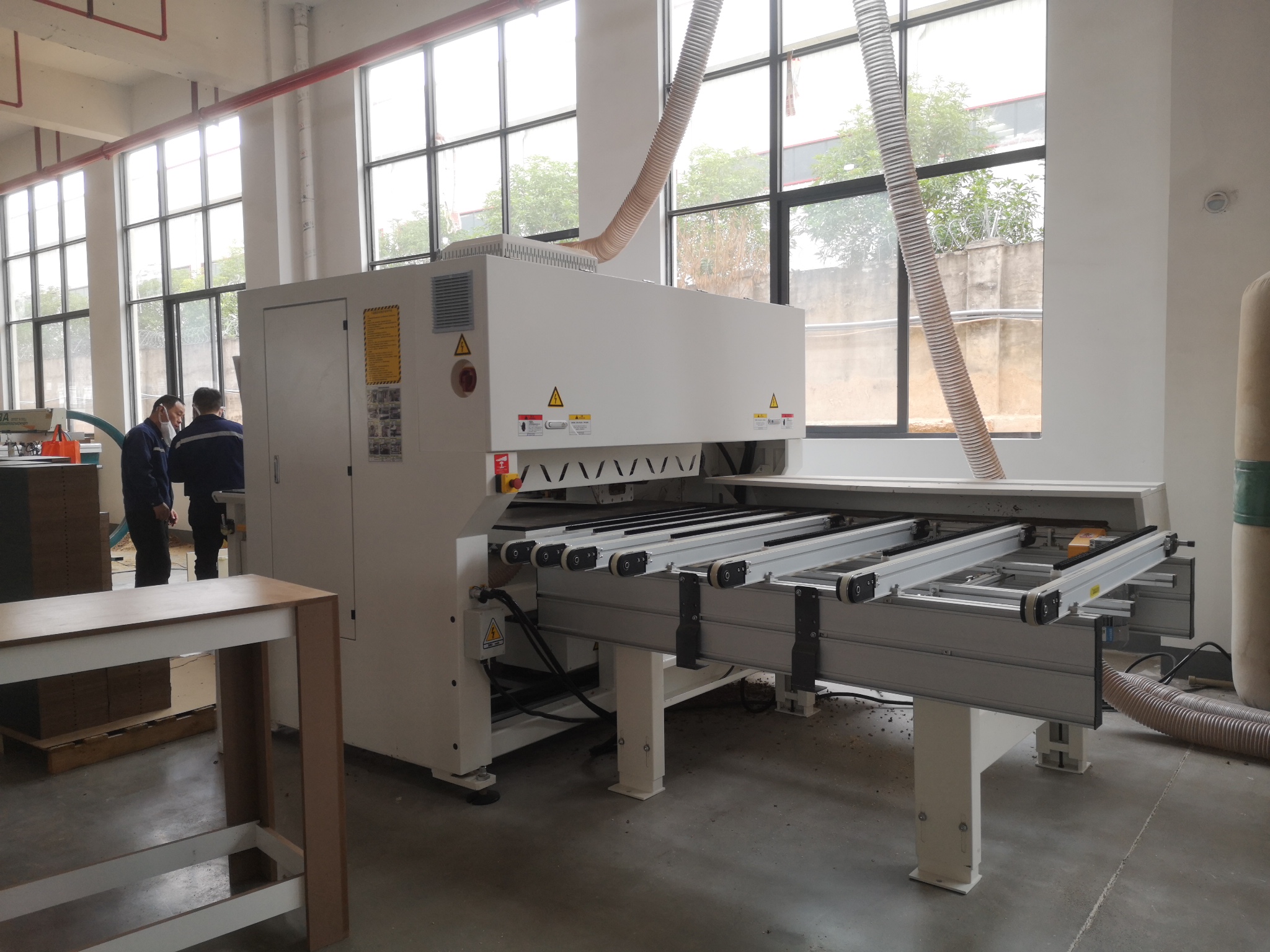
Custom POP display production environment. A supplier's published model range is a record of solved structural constraints, not a marketing claim.
Why a Model Range Is Stronger Evidence Than a Capability Claim
A capability claim is a sentence. A model is a build. When a supplier publishes a range that includes gift pop display, food display, cosmetic pop display, toy pop display, clothing pop display, shoe pop display, eyewear pop display, sock pop display, tool pop display, hat pop display, pet food display and cardboard POP display units, the range itself becomes a map of the engineering problems the factory has already been paid to solve.
The categories are not interchangeable. A cosmetic pop display is usually optimised for shallow shelf depth, tester access and finish quality under retail lighting. A shoe pop display has to carry paired footwear on an angled deck without the deck fatiguing. A tool pop display concentrates high mass into a small footprint and therefore drives frame design. A cardboard POP display is optimised for flat-pack transport and a bounded campaign life rather than for multi-year durability. A sock pop display trades on density and colour blocking. A hat pop display placed by the till is a footprint problem before it is a styling problem.
When one manufacturer publishes models across all of those, the buyer's question changes from "can you build my display" to "which of your existing builds is closest to my brief, and what did you have to change to get there". That second question produces verifiable answers.
Five Signals Buyers Can Read in a Display Range
Not every published model is equally informative. Five signals separate a range that reflects real production from a range assembled from renderings.
1. Dimensions stated as customized rather than fixed
A manufacturer that states overall dimensions as customized according to brand requirements is signalling that its production process begins with a drawing, not with a stock SKU. This matters at the decision stage: it means the buyer controls the footprint, the shelf pitch and the header height, and it also means the buyer inherits responsibility for approving those numbers. Fixed-dimension ranges are easier to quote; customized-dimension ranges are easier to fit into a real store planogram.
2. Structural configuration treated as a design variable
Structural configuration being customizable is a stronger statement than dimension customization, because it implies the supplier can change how load travels through the unit — where the uprights sit, how the shelves attach, whether the unit knocks down. For buyers evaluating a mobile or modular programme, this is the signal that determines whether the display can be reconfigured between campaigns or must be replaced.
3. More than one material inside a single unit
Multi-material construction is where many suppliers stop. A unit that combines metal framing with PVC components in a single display, or an MDF body with metal elements, requires the factory to manage two finishing lines and two tolerance systems on the same assembly. Material options across the YC range include metal, wood, acrylic, PVC and cardboard, with selectable textures, finishes and structures, and the company states that multiple materials, textures, finishes and structures can be combined within a single display unit.
4. Industry coverage with genuinely different physical demands
Range breadth only counts as evidence when the categories impose different loads and different sightline rules. A range that spans consumer electronics, home appliances, beauty and cosmetics, fashion and apparel, footwear, sports and outdoor, automotive and accessories, tools and hardware, pet products, food and beverage, wine and spirits, healthcare and medical, personal care, jewelry and watches, eyewear and optical, toys and games, baby and kids products, household products, garden and outdoor living, industrial and safety products, retail and supermarkets, and exhibitions and events is describing a production system that has met many different constraint sets — not one display design reproduced in many colours.
5. Hardware and mobility decided at the design stage
Casters, knock-down joints and replaceable components reveal how seriously a supplier thinks about the second year of a display's life. A modular structure that allows easy replacement of components and low maintenance is a procurement asset: it converts a damaged unit from a write-off into a spare-parts order.
Three Displays That Demonstrate the Reading Method
Three builds from the current YC range show how the method works in practice. Each one exposes a different capability, and each one also exposes a different risk that a buyer should price into the order.
A metal hat display placed by the till
Countertop units represent 34.2% of total product type share in the POP display industry in 2025, according to Dataintelo research. A hat display designed for by-the-till placement sits inside that segment, and the segment's economics explain why it is built the way it is: the footprint is contested, the sightline is single-face, and the unit is handled constantly by staff and shoppers. Specifying metal as the primary material is the rational answer — it holds its geometry under repeated handling and it can be finished to match a brand palette without the surface reading as fragile.
Read as evidence, this build tells a buyer three things: the supplier can produce countertop-scale units, it can finish metal as a primary rather than a reinforcing material, and it understands a till-adjacent placement constraint. Read as a risk, it tells the buyer that the unit's stability depends on base geometry and weight distribution, which is precisely what should be confirmed on the approved sample rather than assumed from a rendering.
A pet food display combining metal framing and PVC components
Pet food is one of the harder display categories because the load is concentrated and repetitive: bagged product is heavy, it is loaded and unloaded frequently, and the display has to survive that cycle in a supermarket environment. A pet food display that combines metal framing with PVC components in a single unit is a structural answer to that problem — the metal framing carries the mass, while the PVC components handle the surfaces and profiles where a metal solution would add cost or weight without adding performance. The applicable industries for this class of build are pet products, food and beverage, and retail and supermarkets.
The evidence value here is in the combination rather than in either material alone. A supplier that only works in metal would overbuild the unit; a supplier that only works in PVC would underbuild the frame. Being able to specify both inside one assembly is the capability being demonstrated.
A metal-and-MDF sock display
Sock merchandising rewards density and colour blocking, which pushes a display towards broad shelving surfaces and a painted finish. An MDF-bodied sock display with metal elements is the typical resolution: MDF gives the shelving area and the flat finish at a manageable weight per shelf, while metal elements provide the structural discipline the body needs. The FSC Chain of Custody certification held by YC explicitly covers the MDF sock pop display, alongside the cardboard toy pop display and the metal display in the same scope.
This is the most procurement-relevant of the three, because it shows the supplier working simultaneously in a wood-based material and a metal one under a chain-of-custody certification. Buyers sourcing into markets with fibre-sourcing scrutiny should read that scope directly rather than infer it from a logo on a catalogue page.
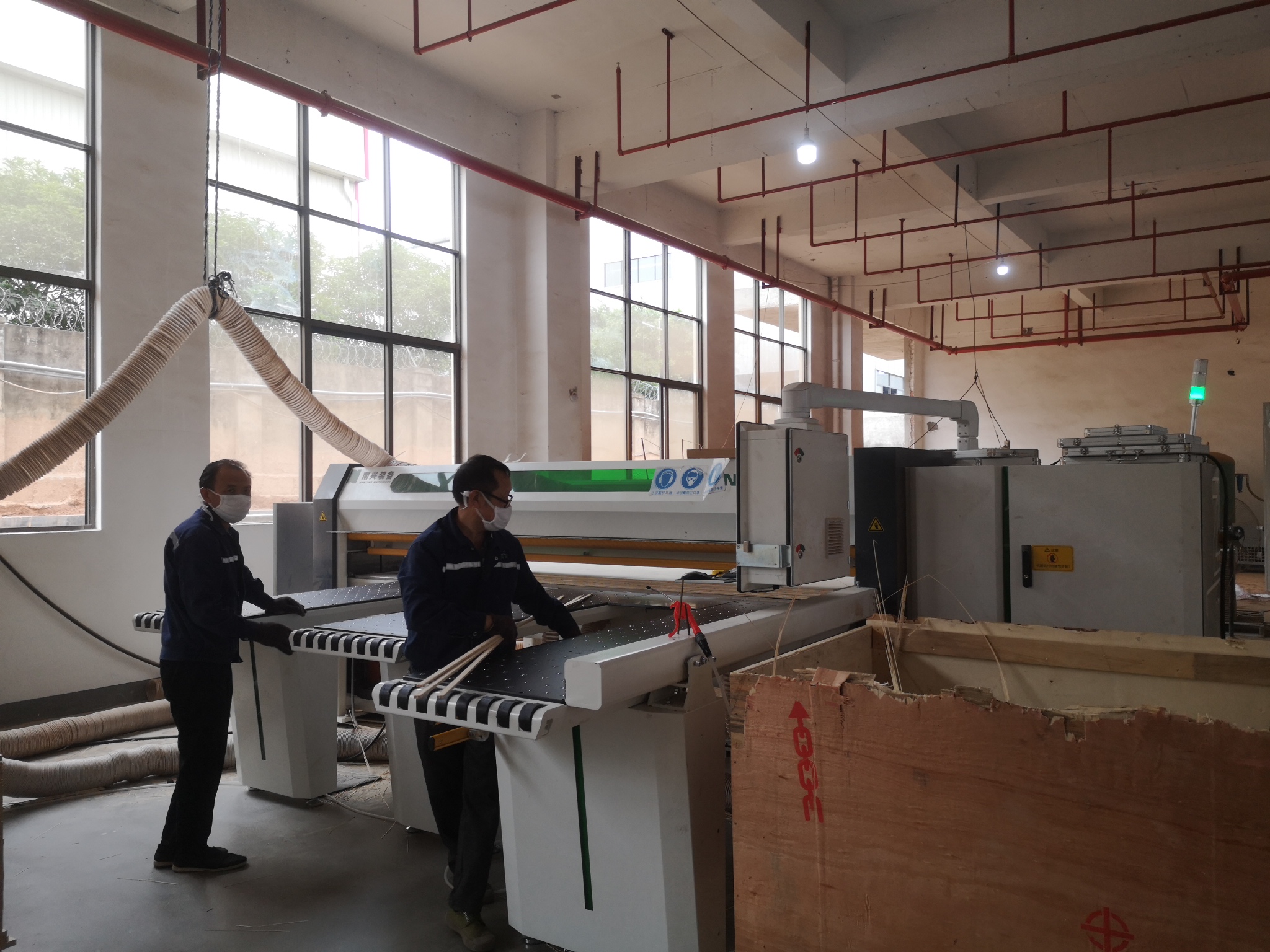
Multi-material assembly. Combining metal framing with wood-based or PVC components inside one unit is a capability signal that shows up in sampling time, tolerance control and QC scope.
What the Material Mix Says About Production Range
Material breadth is often presented as a feature list. In practice it is a statement about which finishing lines, which tolerance systems and which QC routines exist inside the factory. The table below reads the YC material range as procurement evidence.
| Material | What its presence signals to a buyer | Where it appears in the range |
|---|---|---|
| Metal | Load-bearing frame capability, structural welding and forming, durable finishing for high-touch units | Hat display, tool pop display, metal POP display, gift display with metal as primary material |
| PVC | Ability to combine a polymer component with a metal frame inside one assembly | Pet food display combining metal framing with PVC components |
| MDF | Wood-based shelving and painted flat surfaces under a chain-of-custody system | MDF sock pop display covered by FSC Chain of Custody |
| Wood | Joinery and finishing competence beyond sheet goods | Available across the customizable material set |
| Acrylic | Transparent merchandising, clean edges, cosmetic-grade presentation | Available across the customizable material set |
| Cardboard | Flat-pack, short-cycle campaign production with FSC coverage | Cardboard toy pop display within the FSC scope |
One further material signal matters at the margin: the supplier states that displays can be produced using sustainable, simple materials, and with a range of finishes and textures including transparent or bold colour finishes. For buyers facing packaging regulation, that statement has to be verified against the specific material proposed, not against the range as a whole.
Where the Evidence Stops: Honest Limits of a Model Range
A model range is strong evidence of what a factory has built. It is weak evidence of three things, and buyers should treat those gaps explicitly rather than assume them away.
First, customization means no fixed catalogue baseline. When dimensions, structural configuration, finishes and textures are all defined per brand, there is no off-the-shelf price list and no automatic guarantee that a repeat order will be identical to the first. A repeat is only as reliable as the approved drawing and the signed finish sample retained on file. Buyers who plan multi-market rollouts should contractualise the reference sample, not just the specification sheet.
Second, capability in one category does not automatically transfer to the next. A factory that builds excellent metal hat displays has demonstrated metal forming and countertop stability; it has not yet demonstrated that it can manage the moisture behaviour of an MDF unit in a humid store. The honest reading of a broad range is that the supplier has reduced the learning curve for an adjacent brief, not that it has eliminated it. A physical sample remains the only transfer mechanism.
Third, certification scope is bounded and should be read literally. The ISO 9001 Quality Management System certification held by YC, issued by Shanghai Ingeer Certification Assessment Co., Ltd. under certificate number 117 24 QU 0233-06 R0S and standard GB/T 19001-2016 / ISO 9001:2015, is valid from 2024-06-24 to 2027-06-23 and covers sales of shopfittings, POP/POS display, store fixture and store equipment. The FSC Chain of Custody certification covers specific named models — the cardboard toy display, the MDF sock display and the metal display — rather than every item the company can produce. A buyer who needs certified fibre content on a new design should confirm that the new design enters the scope, because a certificate carried by the company is not automatically a certificate carried by the product.
Turning Capability Evidence into Purchase-Order Terms
Evidence only reduces risk when it is written into the order. Four clauses convert what a model range shows into something enforceable.
Drawing and finish approval before production. Because structural configuration and surface finishes are customized per brand, the approved drawing and the signed finish sample are the controlling documents. Acceptance should reference them by revision number, not by description.
Material specification by component. Multi-material units should list material by component — frame, shelf, panel, header — rather than naming a single primary material. This is where the metal-and-PVC and metal-and-MDF builds create the most ambiguity if the specification is left general.
Packaging and assembly obligations. YC states that its displays are supplied with flat-pack packaging to reduce shipping costs and with easy assembly to reduce labour costs, supported by modular structure for component replacement. Those commitments are worth stating in the order alongside the installation responsibility, because flat-pack economics only hold if the receiving store can complete assembly without damaging finished surfaces.
Acceptance criteria at goods-in. Dimensional check against the approved drawing, finish match against the signed sample, hardware function test on every caster and joint, and packaging integrity on a sample carton. None of these require a laboratory; all of them require that the criteria were agreed before the first container shipped.
After-Sale Risk: Casters, Deformation and Replacement Logic
The failures that generate after-sale cost on POP displays are rarely dramatic. They are cumulative, and they concentrate in two places.
Caster damage on mobile units. Casters are the highest-stress component on any floor-standing display: they carry the full load, they are exposed to debris and floor thresholds, and they are the first item to be abused during store cleaning. A mobile POP display that has been specified without reference to loaded weight and floor surface will fail at the caster before it fails anywhere else. The practical mitigation is to specify the caster as a replaceable component and to agree a spare-parts route at order stage.
Deformation across long spans and in wood-based bodies. Shelf deflection under sustained load is a slow failure, and in MDF or wood-based bodies it is accelerated by humidity. A modular structure that allows easy replacement of components and low maintenance limits the damage to a single shelf or panel rather than the whole unit, which is the difference between a maintenance visit and a re-order.
Both risks are best managed before production, through the sample and the drawing. A model range shows that the supplier has met these constraints before; it does not show that it has met them for the buyer's specific load case.
Market Signals That Raise the Value of Verified Capability
Three structural signals make capability verification more valuable now than it was a few years ago.
The EU Packaging and Packaging Waste Regulation, Regulation (EU) 2025/40, applies from 12 August 2026. For brands and importers selling into Europe, the packaging and material choices embedded in a display are moving from a sustainability preference to a compliance question. A supplier that can already document chain of custody on fibre-based components is easier to keep inside a compliant programme than one that cannot.
Cardboard and corrugated board accounted for 42.7% revenue share of the POP display market in 2025 according to Dataintelo, and Nielsen research reported through Grand Fly in 2024 found 73% of global shoppers willing to pay more for eco-friendly display materials. The direction is consistent, but it does not make cardboard the default answer: heavy or high-value categories still need metal and wood-based structure, which is precisely why a multi-material range is the more useful evidence base than a single-material one.
For importers, classification is a practical companion to compliance. U.S. Customs and Border Protection ruling NY N184135 classifies cardboard POP displays under HS 4823.90 (other paper/paperboard) and 4819.10 (corrugated boxes), which is worth confirming against the actual construction of a mixed-material unit before a landed-cost model is built.
Future Outlook
The direction of POP display procurement points towards fewer suppliers carrying wider technical scope. Brands running seasonal campaigns across multiple markets want one partner who can move between cardboard for a three-week promotion and metal-and-MDF for a permanent fixture, under a single quality system and a documented sourcing chain. That favours vertically integrated manufacturers whose published range already spans those transitions, and it disadvantages intermediaries whose evidence is limited to a quotation.
The buyer-side implication is a shift in evaluation order. Certification and material scope will be checked before price, because a cheaper unit outside a certificate's scope is not a cheaper unit at all once compliance review arrives. Model ranges will be read as technical documents rather than as galleries — and the suppliers who understand that will publish their ranges with material, structure and certification scope attached.
Frequently Asked Questions
What does a POP display manufacturer's own model range actually prove?
A published model range proves that a manufacturer has engineered and produced specific display types in specific materials, at specific structural complexity. It is evidence of solved constraints — load path, footprint, shelf pitch, finishing and hardware — rather than a general claim of capability. It does not by itself prove that the supplier can meet a new brief, which is why a physical sample remains part of the evaluation.
How should a buyer verify customized dimensions and structural configuration before ordering?
Customized dimensions and structural configuration should be verified through an approved drawing with a revision number plus a signed physical sample, both retained as the controlling reference. Because dimensions and structure are defined per brand, the drawing — not the catalogue description — is what the goods-in inspection is measured against.
Which materials should a buyer expect from a multi-material POP display supplier?
A genuinely multi-material supplier should be able to work across metal, wood, acrylic, PVC and cardboard, and should be able to combine more than one of them inside a single unit — for example metal framing with PVC components, or an MDF body with metal elements. Material breadth is only meaningful when the supplier can show the combination inside one assembly, since that is where tolerance control and multi-line finishing become real.
What acceptance criteria belong in a POP display purchase order?
Acceptance criteria should cover dimensional conformance to the approved drawing, finish match to the signed sample, function testing of casters and joints, material verification by component for multi-material builds, and packaging integrity. Because YC supplies flat-pack packaging and easy-assembly structures, the order should also state who is responsible for assembly at the receiving end.
What after-sale risks are most common on POP displays?
The two recurring risks are caster damage on mobile units and deformation across long spans or in wood-based bodies exposed to humidity. Both are manageable through design and contract terms: specifying casters and structural components as replaceable parts, and relying on modular construction that allows single-component replacement rather than whole-unit replacement.
Does a company-level certificate cover every product a supplier makes?
No. Certification scope is defined and bounded. YC's ISO 9001 certificate covers sales of shopfittings, POP/POS display, store fixture and store equipment, and its FSC Chain of Custody certification names specific models including the cardboard toy display, the MDF sock display and the metal display. Buyers should confirm that the item being ordered falls inside the relevant scope rather than assuming the certificate transfers automatically.
Reference Material
The YC Furniture Group company brochure, covering manufacturing scope, material capabilities and service structure, is available for download: YC Furniture Group brochure (PDF).
Есть вопросы или нужны дополнительные детали?
Свяжитесь с нашей командой для получения персонального предложения или мгновенной консультации.
Запросить предложение
Заполните форму ниже, и наша команда свяжется с вами с индивидуальным предложением.
Прямой чат WhatsApp
Предпочитаете общаться в реальном времени? Напишите нам в WhatsApp для мгновенной помощи и быстрых ответов.
- Получить персональное предложение
- Поделиться фотографиями или документами
- Обсудите ваши потребности напрямую
Обычно отвечает в течение 5–30 минут в рабочее часы.