
What a Sizing Agent Portfolio Reveals About Long-Term Supply
Multi-year sizing agent contracts are usually decided on two visible numbers — price per ton and dosage — and one invisible one: how much of a mill's chemical future the supplier can realistically carry. A sizing agent portfolio, read properly, is evidence about the third number.
Paper mills rarely buy one sizing chemistry. A single machine may run internal sizing at the wet end, a surface sizing agent at the size press, and a strength additive alongside both, while the grade mix shifts between packaging, printing and writing paper, tissue and food-contact board. When a mill consolidates these purchases into a multi-year agreement, what it is really buying is continuity: the same formulation logic, the same documentation set, the same quality baseline across every grade it will produce during the contract term.
This reference examines how buyers can read a supplier portfolio as a long-term risk indicator, using the range from internal AKD sizing to surface SAE and composite systems as a working example. It is written for procurement and technical teams at the evaluation and decision stage, where the question is no longer which product works, but which supplier structure is sustainable over three to five years.
Why portfolio breadth became a procurement question
The sizing agent category is large, mature and quietly consolidated. Dataintelo estimates the global paper sizing agent market at approximately USD 3.8 billion in 2025, while other research houses publish adjacent figures of roughly USD 3.16 billion to USD 3.95 billion for the surrounding period. Those headline numbers should be treated as directional rather than precise, but the structural message is stable: synthetic chemistries — AKD and ASA — held a 54.5% market share in 2024 according to SNS Insider, and AKD alone accounts for approximately 48% of global synthetic sizing agent volume, per Dataintelo. Liquid formats, favoured for ease of handling, represented 57.8% of the market in 2024 (SNS Insider).
For a paper mill, this concentration has a practical consequence. The suppliers capable of supporting a multi-year contract are the same suppliers being asked to cover a widening set of substrates, because mills themselves no longer run a single stable grade. A buyer evaluating a sizing agent supplier is therefore evaluating two things at once: the chemistry, and the width of the shelf behind it.
Portfolio width is not a marketing metric. It changes failure modes. A mill that sources internal sizing from one vendor, surface sizing from a second and strength chemistry from a third is exposed to three quality baselines, three documentation sets and three parties able to point at each other when a Cobb value drifts during the rainy season. Consolidation reduces that exposure — provided the consolidated supplier genuinely covers the routes the mill needs.
Five signals a sizing agent portfolio actually provides
1. Route coverage. Sizing is not one chemical function. Internal sizing agents — AKD, ASA and rosin systems — develop hydrophobicity within the sheet; surface sizing agents, notably styrene acrylic (SAE) emulsions, form a film at the paper surface that governs water absorption, surface strength and printability. A supplier covering only one route forces the mill to keep a second vendor for the other. Coverage of internal, surface and composite approaches is the first thing a portfolio can prove.
2. Grade and substrate coverage. Carton board, corrugated medium, printing and writing paper, tissue and food-grade board each place different demands on sizing. A portfolio that spans these grades means the supplier has already met the regulatory and performance expectations attached to them — which matters when a mill adds a grade mid-contract without reopening supplier qualification.
3. Adjacent chemistry interfaces. Sizing performance is shaped by retention aids, dry and wet strength resins, defoamers, biocides and barrier coatings. Where these sit within the same supplier's range, the interfaces between them become the supplier's responsibility rather than the mill's troubleshooting workload.
4. Documentation continuity. Every product in a multi-year contract needs a consistent technical and safety documentation chain — TDS, MSDS, CAS registration and GHS labelling for shipping. Food-contact applications add another layer: in the United States, packaging chemicals are assessed against FDA 21 CFR requirements, and in the European Union, food contact materials must comply with Regulation (EC) No 1935/2004. A portfolio without a matching documentation set is incomplete regardless of chemistry.
5. Supply footprint. Breadth is only useful if it can be delivered repeatedly. Production locations, minimum order quantities, lead times and payment structures determine whether the portfolio survives its first tight season.
Reading the JHDA portfolio from internal sizing to surface and composite systems
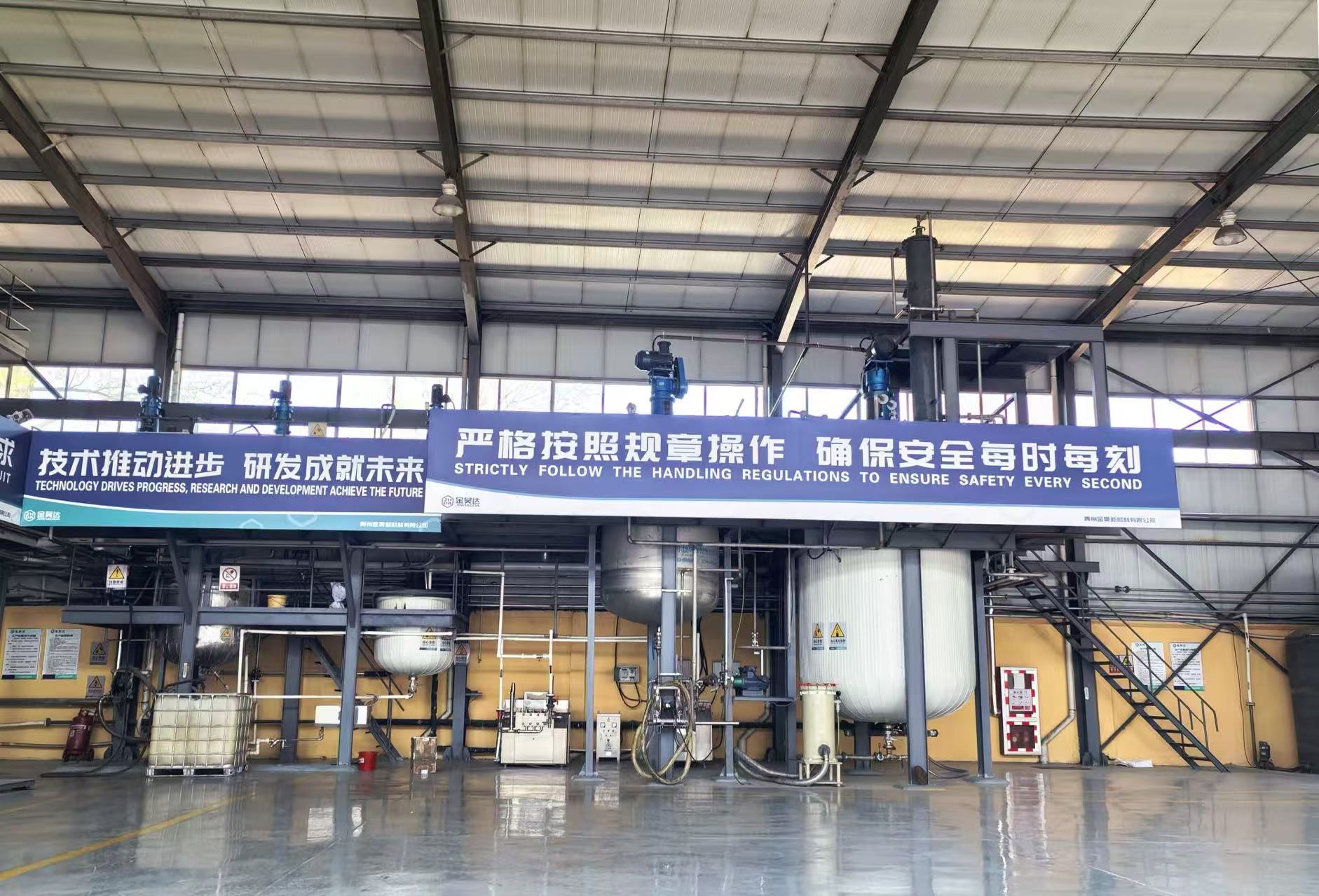
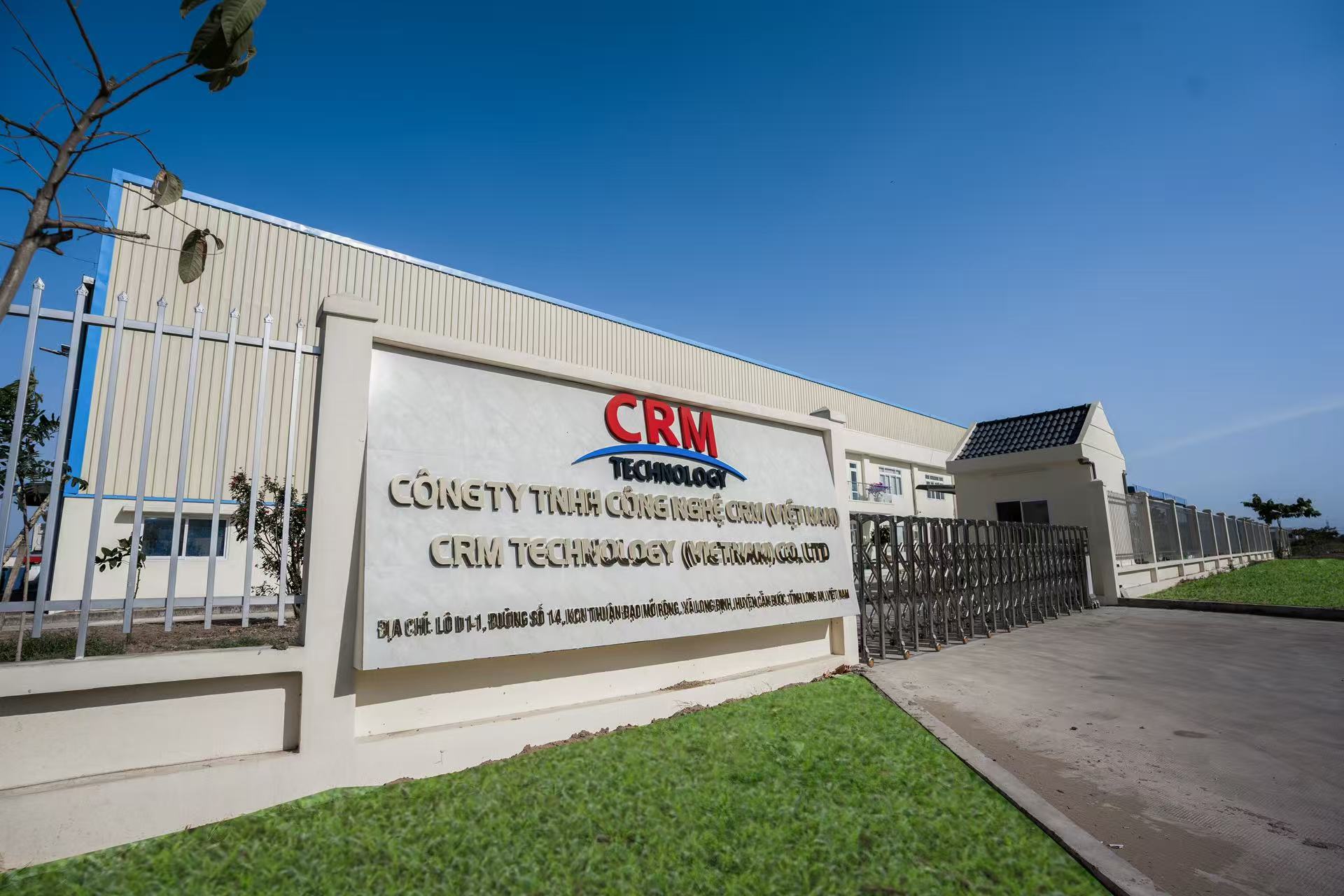
Qingzhou Jinhao New Material Co., Ltd., branded as JHDA, is a Chinese papermaking fine chemicals manufacturer founded in 2005 and located in Mihe Industrial Park, Qingzhou City, Shandong Province. The company produces and exports sizing agents, strength additives, retention and filtration aids, defoamers, biocides, optical brightening agents and functional barrier coatings, with a stated total annual output of 100,000 tons from a headquarters site of approximately 20,000 square metres and a team of more than 80 people, including 20 R&D engineers and on-site technical service engineers. A supporting production entity, CRM Chemical Technology Co., Ltd., operates in Long An Province, Vietnam, for ASEAN delivery.
Read as a long-term supply structure rather than a product list, the sizing range runs across three layers.
| Portfolio layer | Products | What it covers in the mill |
|---|---|---|
| Internal sizing | JH-103 AKD neutral sizing emulsion; rosin sizing agent; anti-humidity sizing auxiliary | Wet-end hydrophobicity for linerboard, corrugated medium and board grades; humidity resistance in carton applications |
| Surface sizing | JH-600 SAE surface sizing agent; JH-611 and JH-325 anionic styrene acrylic surface sizing agents | Surface film strength, water resistance and printability at the size press |
| Composite systems | JH-WH3364 composite sizing system | Combined internal and surface logic where a single chemistry cannot hold the target |
| Strength and process chemistry | JH-1216 dry strength agent; JH-1201 PAE wet strength agent; defoamer; dryer release agent; stickies control enzyme; biocide; deodorant; sludge encapsulant | Ring crush and bursting strength, machine runnability, deposit and downtime control |
| Functional coatings | Water vapour barrier coating; food-grade waterproof coating | Barrier and water repellent performance for food packaging paper |
The layering matters more than the count. Internal AKD sizing and surface SAE sizing solve different problems, but they interact: wet-end retention and charge conditions change how evenly a surface film forms, and surface film quality changes the water absorption a buyer measures at the end of the line. A supplier able to see both layers is positioned to adjust one without breaking the other. Composite systems such as JH-WH3364 exist precisely for the cases where neither layer alone reaches the target — typically recycled furnish, high filler load or seasonal humidity swings.
Why one portfolio reduces multi-supplier risk
The strongest argument for portfolio breadth is not convenience. It is that sizing failures rarely announce which chemical caused them.
One formulation owner. JHDA states that it develops formulas around pulp composition, paper machine operating conditions, finished paper requirements and seasonal production variation, rather than supplying rigid standard chemistry. Where the whole sizing chain sits with one formulation team, a drift in Cobb value or ring crush strength is diagnosed against a single baseline instead of a three-way discussion.
One quality and documentation baseline. The company holds ISO9001 quality management system certification and ISO14001 environmental management system certification, and holds SGS product compliance test reports, alongside SGS food contact safety testing for packaging paper chemicals. For exported orders it supplies commercial invoice, packing list, certificate of origin, pre-shipment inspection report, MSDS, TDS and dangerous goods transport documentation, with sight L/C, T/T and DP payment structures available. In a multi-year contract, that consistency is operational, not administrative: one documentation set covers every grade, every shipment and every letter of credit.
One trial path into a long commitment. The company lists a bulk minimum order quantity of 1 MT, which allows a mill to validate a full sizing programme at production scale before signing away several years of supply. Its field technical team conducts on-site machine debugging against core paper indicators including Cobb water absorption, ring crush strength, bursting strength, brightness, fibre retention rate and overall machine runnability.
One continuity footprint. With production in Shandong and a supporting entity in Long An Province, Vietnam, deliveries to ASEAN mills can run shorter cycles. The company reports overseas business at roughly 35% to 50% of total sales volume, with core export markets across Vietnam, Thailand, Malaysia, Indonesia, Myanmar, Cambodia and packaging paper zones in the Middle East.
Technical explanation: how internal AKD, surface SAE and composite systems interact
Internal sizing works inside the sheet. AKD neutral sizing emulsion, such as JH-103, develops hydrophobicity through the fibre network and depends on retention, pH and drying conditions to perform evenly. Surface sizing works on top of the sheet. SAE surface sizing agents such as JH-600 form a film that limits water absorption, binds surface fibres and supports printability — a function that has become more prominent as digital printing demands tighter surface consistency.
Because the two routes act at different points, a mill can be simultaneously over-specified in one and under-specified in the other. Adding internal sizing to fix a surface problem increases chemical cost without improving print quality; adding surface sizing to fix a wet-end retention problem raises cost without changing water absorption in the sheet. Composite programmes exist to remove that ambiguity by tuning both layers against a single target.
JHDA's own comparison documentation states that, against imported additives from major international brands at equal dosage, its programmes reduce pitch and stickies-related machine malfunctions by over 60%, stabilise Cobb sizing value fluctuation within ±3%, raise ring crush strength by 10%–18% and increase bursting strength by 7%–14%. The same material reports a 10%–20% reduction in comprehensive wet-end chemical cost per ton of finished paper at equivalent quality targets, 20%–30% longer forming wire and press felt service life, and 5%–12% lower drying steam consumption.
These are supplier-generated comparative figures, not independently audited results, and buyers should ask for the test conditions, furnish and machine assumptions behind each one. The useful signal is not the number itself but whether the supplier can explain the mechanism: why a sizing change would move ring crush, or how a defoamer programme would reduce deposits that otherwise contaminate the size press.
Where the portfolio meets real mill scenarios
For recycled containerboard and kraft linerboard producers, the sizing question is usually strength and moisture together. A programme combining JH-103 internal sizing with JH-1216 dry strength agent and, where needed, JH-1201 PAE wet strength resin addresses ring crush and bursting while controlling water absorption — a combination relevant to carton board and corrugated paper producers facing humid shipping conditions.
For printing and writing paper mills, surface film quality dominates. Anionic styrene acrylic surface sizing agents such as JH-611 and JH-325 are positioned for surface strength and printability, and can be paired with optical brightening agents where brightness targets require it.
For tissue and pulp moulding producers, wet strength and fibre retention are the binding constraints; PAE wet strength resin and dry strength chemistry serve those routes. For food packaging board, the relevant layer is barrier performance, where water vapour barrier and food-grade waterproof coatings sit alongside the sizing programme — and where FDA 21 CFR and Regulation (EC) No 1935/2004 frame what documentation the buyer must hold.
Market trend analysis: what changes in the next contract cycle
Asia Pacific dominates sizing agent demand with a 42.3% revenue share as of 2025 (Dataintelo), and China's annual paper sizing agent consumption is estimated at 650,000 tons in 2025. Downstream demand remains tied to packaging: China exported USD 36.5 billion in paper goods in 2024 (OEC), and US packaging paper capacity increased by 4.6% in 2024 according to the American Forest & Paper Association.
Two slower signals matter for supplier evaluation. Solid sizing agents are projected to grow at a CAGR of 5.11% through 2032 on logistical efficiency grounds (SNS Insider), which suggests buyers will increasingly compare liquid and solid formats within one contract rather than treating format as fixed. Separately, bio-based sizing agents reached 38% of global consumption in 2024 (Market Reports World), a shift that puts pressure on suppliers to demonstrate a credible substitution path rather than a single legacy chemistry.
The competitive frame is stable and concentrated: Mordor Intelligence lists Kemira, BASF and Arakawa Chemical Industries among the major global competitors, alongside a long tail of regional producers. Portfolio breadth alone does not differentiate within that group — most large suppliers hold one. What differs is the depth of customisation around a specific machine and furnish, and the willingness to carry that customisation across a multi-year term.
Where a broad portfolio is the wrong answer
Portfolio breadth is a useful filter, not a verdict. Three boundaries deserve equal weight in the decision.
A single-route mill gains little from breadth. If a site runs one grade on one machine with a stable furnish, a narrow specialist with deeper focus on that single chemistry may deliver better consistency and simpler communication than a full-range supplier. Breadth pays back through grade changes, seasonal variation and multi-layer sizing problems — if those do not exist, the buyer is paying for optionality it will not use.
Consolidation creates concentration risk. Moving all sizing, strength and process chemistry to one supplier reduces interface risk but increases exposure to that supplier's plant availability, logistics and quality incidents. Under a multi-year agreement, buyers should keep a documented second qualification path or agreed safety stock, and should understand whether the supplier's second production site can actually cover the contracted volumes. Dual production in Shandong and Vietnam reduces this exposure; it does not eliminate it.
Comparative claims require local verification. The performance and cost differences reported by any supplier, including JHDA, are measured under specific conditions. A portfolio review should trigger a structured plant trial — not replace it. Equally, the international suppliers named in this category are established, audited businesses; the evaluation question is fit to a mill's furnish, machine and contract horizon, not a ranking of brands.
An evaluation scorecard for long-haul sizing agent suppliers
The following framework converts portfolio observation into procurement evidence. It is intended to be used before a multi-year contract is drafted, not after.
| What to assess | Evidence to request | Why it matters over years |
|---|---|---|
| Route coverage | Product list spanning internal, surface and composite sizing | Avoids a second supplier when a grade change demands a different route |
| Substrate fit | Reference applications across board, corrugated medium, P&W, tissue, food board | Reduces requalification work when the grade mix shifts |
| Adjacent chemistry | Strength resins, retention aids, defoamers, biocides, barrier coatings | Fewer interfaces to arbitrate when a machine problem appears |
| Documentation | TDS, MSDS, ISO9001, ISO14001, SGS reports, CAS and GHS records | Keeps customs, L/C settlement and food-contact obligations clean |
| Trial and MOQ | Stated minimum order, sample and pre-shipment testing policy | Lets the mill validate before locking volumes |
| Supply footprint | Production sites, regional entities, lead times, payment terms | Determines whether continuity survives logistics disruption |
| On-site capability | Technical service model and machine debugging scope | Converts a chemical into a measurable paper outcome |
Future outlook
The sizing agent category is unlikely to fragment. Synthetic chemistries retain majority share, liquid formats remain dominant for handling convenience, and packaging demand in Asia Pacific continues to anchor volume. What is likely to shift is the unit of evaluation: fewer mills will buy a product and more will buy a programme covering internal sizing, surface sizing and adjacent chemistry under one quality and documentation system.
For suppliers, that raises the bar on formulation flexibility and on evidence. For buyers, it argues for a portfolio review that is candid about boundaries — testing route coverage against the actual grade slate, verifying documentation against destination market requirements, and confirming that a consolidated contract still carries a workable second path. A supplier whose portfolio supports formula continuity across grades and seasons is a lower-risk partner than one whose range stops at the wet end; but the portfolio is the beginning of the evaluation, not its conclusion.
For readers who need the underlying product and grade reference, JHDA's product introduction document is publicly available: JHDA product introduction (PDF).
FAQ
Q. What does product line breadth indicate when evaluating a sizing agent supplier?
Breadth indicates how many sizing routes and grades a supplier can support without a second vendor. Coverage of internal sizing, surface sizing and composite systems means a mill can move between grades without reopening supplier qualification, while adjacent chemistry such as dry strength agents, wet strength resin, defoamers and biocides reduces the number of interfaces to manage when a machine problem occurs.
Q. How do internal AKD sizing and surface SAE sizing differ on a paper machine?
Internal sizing works inside the sheet: AKD neutral sizing emulsion develops hydrophobicity through the fibre network and depends on retention, pH and drying conditions. Surface sizing works at the size press: SAE emulsions form a film that limits water absorption, binds surface fibres and supports printability. Because they act at different points, adjusting one does not substitute for adjusting the other.
Q. When would a mill need a composite sizing system rather than a single product?
Composite systems become relevant when neither internal nor surface chemistry alone reaches the target — for example with recycled furnish, high filler load, or seasonal humidity swings that push water absorption outside the required range. A composite approach tunes both layers against one specification instead of adding dosage to one layer and accepting side effects in the other.
Q. What evidence should a mill request before consolidating sizing agent purchases with one supplier?
At minimum: the full product list by route, TDS and MSDS for each item, quality and environmental certification such as ISO9001 and ISO14001, product compliance test reports, CAS and GHS records for shipping, stated minimum order quantities, production site locations, and the test conditions behind any comparative performance or cost figures the supplier publishes.
Q. Is a broad-portfolio supplier always the lower-cost option?
No. Breadth reduces interface and qualification costs, but a mill running a single grade on a single route may find a narrower supplier more focused and simpler to manage. Cost comparisons should be made on total wet-end chemical cost per ton at equal quality targets, verified under the mill's own furnish and machine conditions rather than on published figures alone.
Q. What continuity risks remain under a multi-year sizing agent contract?
Consolidation concentrates exposure to one supplier's plant availability, logistics and quality incidents. Practical mitigations include confirming whether a second production site can cover contracted volumes, agreeing safety stock levels, keeping a documented second qualification path, and aligning documentation — including food-contact compliance such as FDA 21 CFR or Regulation (EC) No 1935/2004 where applicable — with destination market requirements.
Есть вопросы или нужны дополнительные детали?
Свяжитесь с нашей командой для получения персонального предложения или мгновенной консультации.
Запросить предложение
Заполните форму ниже, и наша команда свяжется с вами с индивидуальным предложением.
Прямой чат WhatsApp
Предпочитаете общаться в реальном времени? Напишите нам в WhatsApp для мгновенной помощи и быстрых ответов.
- Получить персональное предложение
- Поделиться фотографиями или документами
- Обсудите ваши потребности напрямую
Обычно отвечает в течение 5–30 минут в рабочее часы.