
What a Supplement Packaging Compliance File Must Contain
Supplement packaging compliance is a documentation problem before it is a materials problem. A container either carries a paper trail that names the market, the food-contact rules and the closure function it satisfies, or it does not — and no amount of decoration closes that gap.
Buyers usually discover the gap late: after artwork approval, after tooling is cut, sometimes after the first consignment clears customs and the retail customer asks for a declaration nobody has. The more efficient sequence runs the other way round. Build the file first, then specify the jar against it.
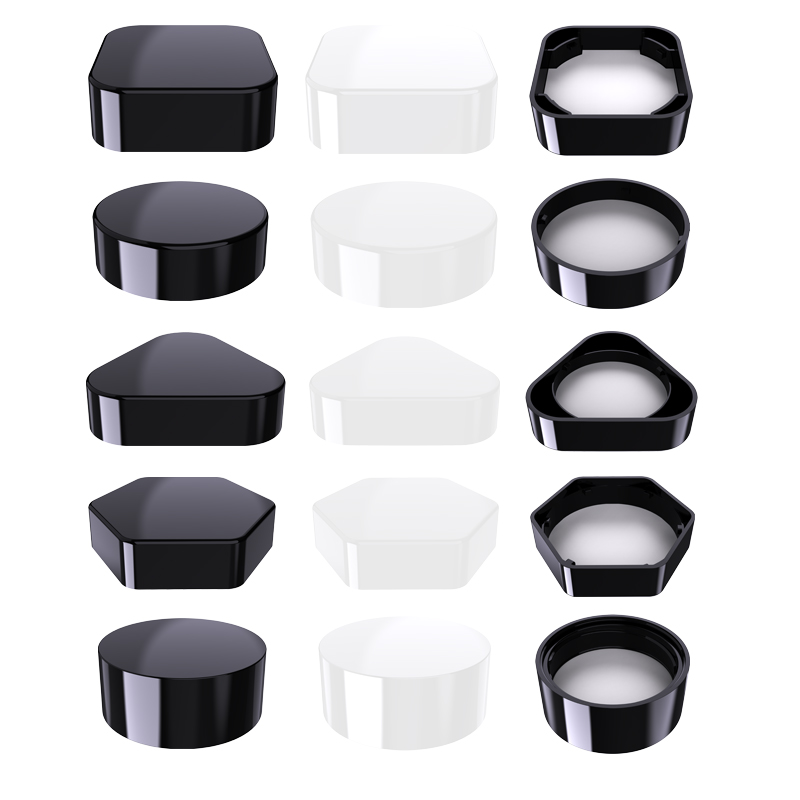
Closure engineering is the part of a compliance file that buyers most often leave undocumented. Image: Honor Packaging, Child Resistant Packaging — Cap.
Why the compliance question moved to the front of the buying process
Two trends pushed qualification ahead of price in supplement packaging. The first is scale. Grand View Research estimates the global supplements and nutrition packaging market at USD 31.3 billion in 2025, with plastic holding roughly 41.67% of the material segment share that year — meaning most buyers still start from a polymer container and then work backwards into the rules that apply to it.
The second is regulatory divergence. In the European Union, Regulation (EU) 2024/3190 restricts bisphenol A in food contact materials, with the single-use transition applying from 20 July 2026 — a date that has now passed, so the change is already live in EU-facing supply chains rather than pending. In the United States, industry guidance summarised by Colorcon notes that tamper-evident packaging is not generally mandated at federal level for dietary supplements in the same way it is for many over-the-counter drugs.
Put those two statements side by side and the procurement consequence is obvious. Two buyers can order visually identical jars, ship to different markets, and carry entirely different legal exposure. The packaging did not change. The qualification file did.
The three layers inside a compliance file
Most confusion in supplement packaging procurement comes from mixing three layers that are documented by different parties and prove different things.
Layer one — material contact. This is the question of what the product touches: glass, polypropylene, polyethylene, liners, coatings, inks in the print area. It is answered by material declarations and, where required, migration or food-contact documentation tied to the specific market.
Layer two — function. This covers whether the closure actually performs: child-resistant opening force and re-closure behaviour, tamper evidence, leak and vacuum integrity, and the closure torque the filling line can hold. These are physical properties, not statements.
Layer three — records. Drawings, revision numbers, dimensional ranges, item codes, batch traceability, and the supplier declarations that connect a delivered carton back to an approved specification. This layer is where most audit failures actually occur, because it is the layer nobody assigns to a person.
| Layer | What it proves | What it does not prove |
|---|---|---|
| Material contact | Which substances may contact the supplement, per market | That the packed product is stable over shelf life |
| Function | That the closure resists opening, seals, or vents as specified | That the format is legally required in a given market |
| Records | That a delivered lot matches an approved drawing and revision | That the specification was correct in the first place |
Jurisdiction first, format second
A recurring failure in buyer enquiries is the phrase "food grade" used as a complete answer. It is not a jurisdiction, a standard number, or a scope. A glass jar with a polypropylene child-resistant cap and a PE liner may sit inside EU food-contact expectations and inside US expectations — but the declarations required, the substances restricted, and the labelling obligations attached to them differ.
Where tamper evidence is concerned, the divergence is even sharper. In the United States, dietary supplements are not generally subject to a federal tamper-evident mandate equivalent to that applied to many OTC drugs, according to published industry guidance. That does not make a tamper-evident closure unnecessary — retail customers, private-label programmes, and brand risk policy frequently require one anyway. It means the obligation arrives through the customer specification rather than through statute, and the compliance file has to record which of the two is driving the requirement.
The practical rule is short: name the market, name the product form, then name the container. Reversing that order produces specifications that look rigorous and qualify nothing.
What a packaging manufacturer can and cannot document
NINGBO HONOR PACKAGING CO.,LTD. (Honor Packaging) is a Ningbo, China–based packaging manufacturer established in 2015, operating a 45,000 square metre facility with approximately 310 staff, a 15-person R&D team, an annual production capacity of 1,000,000 units, a 100% export ratio, and main markets in the EU and USA. Its main product lines are Child Resistant Packaging, Violet Glass Packaging and Vacuum Packaging.
The company describes itself as a manufacturing-responsibility partner: it converts a client's finalised packaging design into a product that can be mass-produced repeatably. In practice that places structural development, tooling strategy, and manufacturing risk assessment and validation before production, and manufacturing process control and order fulfilment during it.
That role defines the boundary of what a converter can hand a buyer. It can supply dimensional ranges, closure pairing, material descriptions, item codes, surface treatment options, and process control evidence across production lots. It cannot declare the brand's finished supplement compliant in a market, act as the brand's regulatory notifier, or decide which jurisdiction's food-contact rules apply to a given SKU. Those responsibilities stay with the brand owner and its regulatory function, and any packaging supplier that offers to absorb them is describing something it cannot legally own.
For buyers, that boundary is useful rather than limiting: it clarifies exactly which questions to send to the packaging supplier and which to send to a regulatory specialist or laboratory.
The specification numbers that belong in the file
A compliance file is only as useful as the specification inside it. For glass supplement packaging, the numbers that recur in audit conversations are capacity, overall diameter, height, net weight, glass thickness, thread specification, closure type and surface treatment — because each one maps to a physical or commercial consequence downstream.
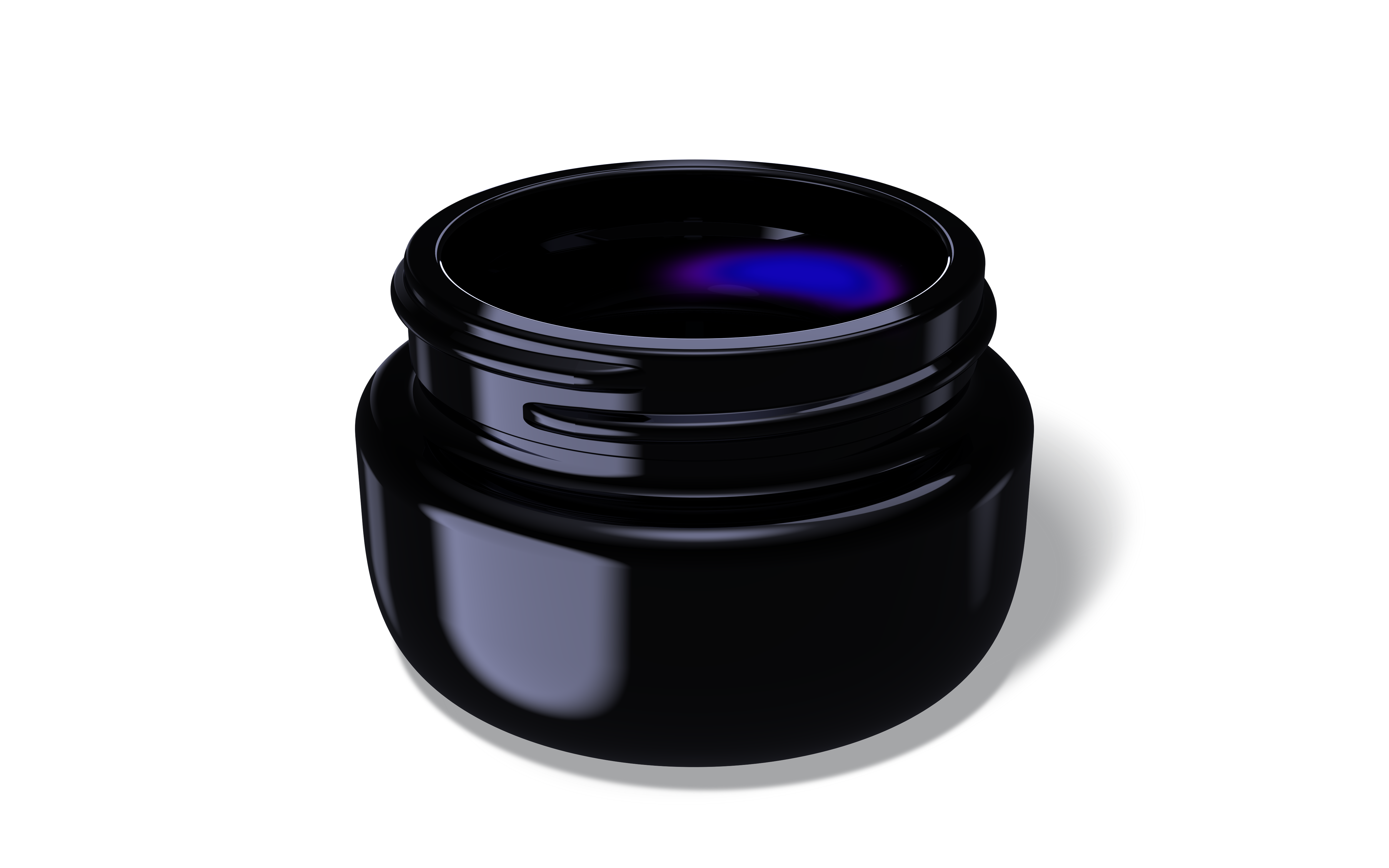
Violet glass formats are positioned for light-sensitive and UV-protective applications; the H21 round violet glass range runs from 15 ml to 200 ml. Image: Honor Packaging, Violet Glass Packaging — H21-0012V.
Across the H21 clear square jars (item codes H21-0003C through H21-0008C), the recorded specification is a 58 mm overall diameter, 0.38 mm glass thickness, heights of 24 mm to 115 mm, net weights of 75 g to 280 g, capacities of 15 ml, 30 ml, 20 dr, 30 dr, 40 dr and 60 dr, and a child-resistant cap. The H21 clear round jars (H21-0012C through H21-0018C) use a 60 mm diameter, the same 0.38 mm glass thickness, heights from 36.5 mm to 125 mm, net weights of 84 g to 268 g, and capacities from 30 ml to 6 oz.
The violet glass equivalents follow the same logic. The H21 square violet range (H21-0003V through H21-0008V) covers 15 ml to 60 dr with 0.38 mm wall thickness and net weights of 75 g to 280 g, while the H21 round violet range (H21-0012V through H21-0018V) is specified for supplement packaging and runs to 200 ml. The wider HDV1 range extends from 100 ml to 1 L with 41/400 and 89/400 thread options, diameters of 48 mm to 95 mm and net weights of 117 g to 610 g; the HDV2 cosmetic violet jars run 3 ml to 200 ml on 32/400 and 89/400 threads; and the HDV3 bottle runs 5 ml to 100 ml with plastic cap, dropper, mist sprayer or lotion pump closures.
Smaller formats matter just as much in qualification terms. The H19 child-resistant concentrate jars are glass, 5 ml or 9 ml, 27 g to 38 g net, available in square, round, triangle and hexagon shapes and packed 250 pieces per carton; the H19 vacuum jar is a 5 ml square glass jar, also at 250 pieces per carton.
Why these specific values and not a generic "premium quality" statement? Because thread specification decides whether a closure can be torqued and re-closed to the same position on the filling line. Because a 0.38 mm wall thickness is a stated manufacturing parameter that a buyer can compare across lots, not an adjective. Because height and diameter determine the label panel, the carton cavity, and how many units fit a pallet. A compliance file that lists these is inspectable. One that does not is a brochure.
Matching format to product, and the documents each one pulls
Different supplement forms generate different documentation workloads.
Resin and viscous products. The Shilajit category is expected to reach USD 221.4 million in 2026, with liquid resin accounting for 40.5% of share according to Grand View Research. Resin drives wide-mouth formats such as the HDV1 range at 100 ml to 1 L, where the file needs to address product-to-closure contact over repeated opening, and — for violet glass — the light-protection rationale that the application record lists as a special requirement alongside child-resistant design.
Capsules and powders. These pull mid-size jars: the H21 clear round range from 30 ml to 6 oz, or the square violet equivalents. The documentation weight shifts toward closure removal force for child resistance, liner or sorbent compatibility, and moisture-management claims, since the container's job is to hold a specification over shelf life rather than to resist repeated scooping.
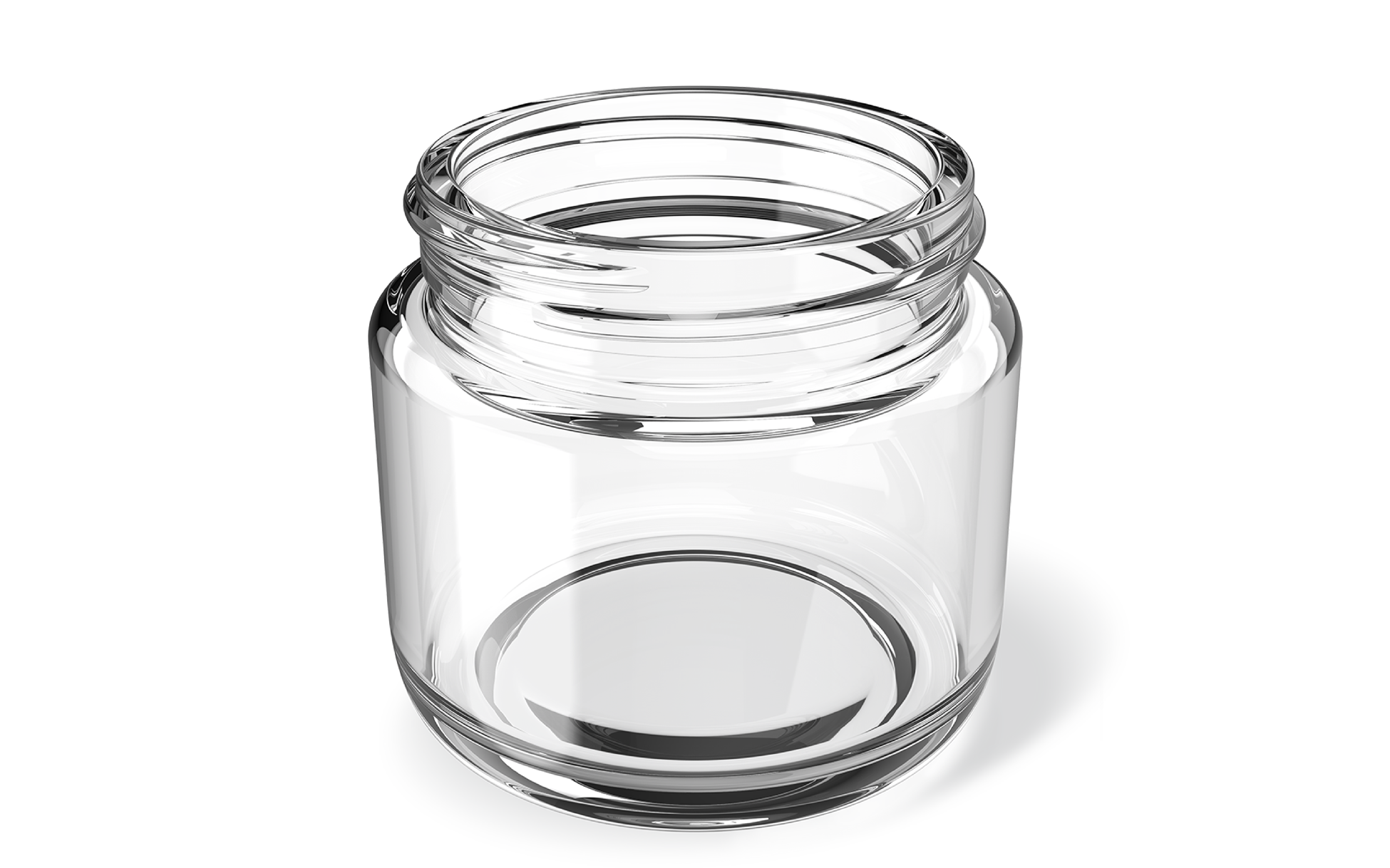
Mid-size clear jars such as the 20 dr format sit between concentrate and powder use cases; the relevant file evidence is closure function and lot-to-lot dimensional control. Image: Honor Packaging, Child Resistant Packaging — H21-0014C.
Concentrates and small-dose formats. The H19 range at 5 ml and 9 ml is where child-resistant opening force matters most, and where carton configuration (250 pieces per carton) becomes part of the receiving and sampling protocol.
Oils and liquids. The HDV3 bottle at 5 ml to 100 ml introduces a second closure family — dropper, mist sprayer, lotion pump — each of which brings its own component contact documentation, so the file grows in proportion to the number of closure types a brand runs.
Three documentation approaches, compared
Buyers effectively choose between three levels of evidence, and it is worth being explicit about what each level buys.
| Approach | Typical content | Where it breaks |
|---|---|---|
| Catalogue assurance | Product photos, capacity list, general claims | No traceability to a lot; unusable in an audit |
| Specification sheet | Dimensions, weight ranges, thread, item codes, decoration options | Says nothing about market rules or closure function testing |
| Qualification file | Specification sheet plus material declarations, closure function evidence, drawing revision control, batch records | Costs time and money to assemble; must be maintained, not created once |
The limits of this approach are real and worth stating plainly. A qualification file assembled around a packaging manufacturer's evidence does not make a product compliant — it makes the container's contribution to compliance inspectable. It adds lead time, because declarations and function evidence must be collected before tooling, not after. It also carries a physical cost: glass formats such as the HDV1 range reach 610 g net weight at the largest capacity, which affects freight and dunnage planning in ways a plastic alternative does not. And a converter such as Honor Packaging can document dimensional and process control but cannot substitute for legal review of food-contact rules in a specific market. Buyers who expect the supplier's file to answer a regulatory question will be disappointed by any supplier, not just this one.
Where the category is heading
Three forces are reshaping what a supplement packaging file has to contain.
Material substitution pressure. The EU restriction on bisphenol A in food contact materials, with its single-use transition dated 20 July 2026, has already pushed formulation and liner discussions forward in EU-facing programmes. Buyers are increasingly asking for material declarations by component rather than by finished pack, which is a more demanding request and a more honest one.
Sustainability claims that need evidence. Industry commentary on dietary supplement packaging now routinely references recycled HDPE, mono-material pouches, compostable materials, refill formats and reduced headspace. Each of these is a claim that requires a supporting document, which means the file grows rather than shrinks as brands move toward recyclable supplement packaging.
Premiumisation of niche categories. With liquid resin holding 40.5% of an estimated USD 221.4 million Shilajit market in 2026, premium glass formats carry more of the brand's value than they did when supplements were largely opaque HDPE. Higher-value contents raise the cost of a packaging failure, which is precisely the argument for documenting the container before decorating it.
A caution on all of the above: the market figures cited here come from commercial research published in 2026 and should be treated as directional context, not as inputs to a regulatory decision. Regulatory questions belong to primary legal text and the brand's own regulatory function.
A five-step sequence buyers can run before the purchase order
First, name the destination market and the product form for each SKU; do not accept a generic "food grade" statement. Second, request the specification sheet with capacity, diameter, height, net weight, glass thickness, thread and closure type, because those are the fields a laboratory or auditor will ask for. Third, ask separately for material declarations covering every component in the contact path, including the liner. Fourth, define which functional properties need evidence — child-resistant opening force, tamper evidence, vacuum or leak integrity — and who tests them. Fifth, fix drawing revision control, so a reorder cannot quietly drift to a different specification.
Honor Packaging publishes its product range and structural options through its site at www.honorcrpkg.com, and its product brochure (PDF) is available for download as a starting reference for capacity and format selection.
Frequently asked questions
What is a supplement packaging compliance file?
It is the set of documents that links a specific container, closure and printed surface to the rules of a named market. It typically combines a dimensional specification, material contact declarations for every component in the contact path, evidence of closure function where relevant, and records that allow a delivered lot to be traced back to an approved drawing revision. It is an evidence chain rather than a single certificate.
Is tamper-evident packaging required for dietary supplements in the United States?
According to published industry guidance, tamper-evident packaging is not generally mandated at federal level for dietary supplements in the same way it is for many over-the-counter drugs. Retail customers and private-label programmes frequently require it anyway, so the requirement usually enters through the customer specification. Buyers should record which source — statute or customer — is driving the requirement.
What container specifications should a buyer request before quoting supplement packaging?
At minimum: capacity, overall diameter, height, net weight, glass thickness, thread specification, closure type and surface treatment, plus item codes. For example, the H21 clear square jars are specified at 58 mm diameter, 0.38 mm glass thickness, heights of 24 mm to 115 mm and net weights of 75 g to 280 g, with capacities from 15 ml to 60 dr. These fields are what a filling line, a label supplier and an auditor will each ask for.
How does the EU bisphenol A restriction affect supplement packaging specification?
Regulation (EU) 2024/3190 restricts bisphenol A in food contact materials, with the single-use transition applying from 20 July 2026. For packaging buyers that means component-level material declarations become necessary rather than optional, and liner or coating choices in closures deserve the same scrutiny as the jar body. Whether a specific pack is in scope is a legal determination, not a supplier determination.
Can a packaging manufacturer certify that a supplement package is compliant?
No. A converter can document dimensions, material descriptions, closure pairing, surface treatment and process control across production lots, and can support structural development and manufacturing validation. It cannot declare a brand's finished product compliant in a market, and it cannot decide which jurisdiction's food-contact rules apply. That responsibility sits with the brand owner and its regulatory function.
Which formats cover child-resistant and light-sensitive supplement applications?
Child-resistant formats in the Honor Packaging range include the H19 concentrate jars at 5 ml and 9 ml in square, round, triangle and hexagon shapes, and the H21 square and round jars with child-resistant caps. Light-sensitive positioning is served by the violet glass families: the H21 square violet range from 15 ml to 60 dr, the H21 round violet range up to 200 ml, and the wide-mouth HDV1 range from 100 ml to 1 L. Coating the violet glass body in words is easy; documenting the closure function that goes with it is the part that matters.
Есть вопросы или нужны дополнительные детали?
Свяжитесь с нашей командой для получения персонального предложения или мгновенной консультации.
Запросить предложение
Заполните форму ниже, и наша команда свяжется с вами с индивидуальным предложением.
Прямой чат WhatsApp
Предпочитаете общаться в реальном времени? Напишите нам в WhatsApp для мгновенной помощи и быстрых ответов.
- Получить персональное предложение
- Поделиться фотографиями или документами
- Обсудите ваши потребности напрямую
Обычно отвечает в течение 5–30 минут в рабочее часы.