
What an International Cancer Care Hospital Provides
Industry Reference · Oncology Services
What an International Cancer Care Hospital Provides
Cross-border cancer care is judged less by a single technology than by how a hospital coordinates assessment, treatment and follow-up across borders. This reference explains what an international cancer care hospital actually organises, and how patients, families and referring physicians can evaluate one.
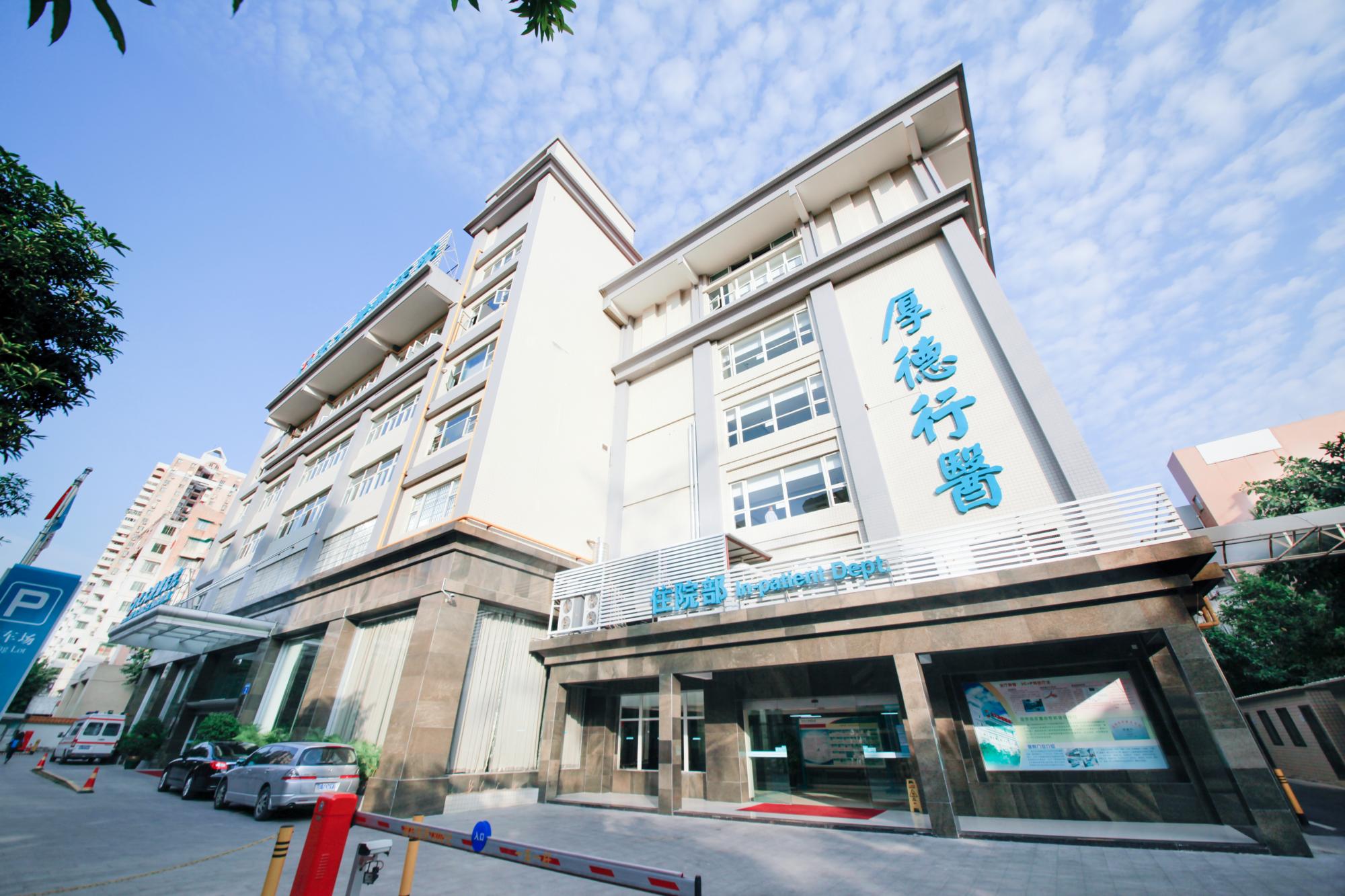
An oncology-specialised hospital campus: international cancer care is a coordinated service line, not a single procedure or device.
Patients and families who begin searching for a cancer treatment hospital abroad are usually comparing something more practical than brand names. They need to know who will read the medical records before any travel is booked, who decides the treatment plan, in which language that decision is explained, what happens after the first intervention, and what the hospital openly states it cannot do.
That last question matters most at the awareness stage of a decision. An international cancer care hospital is defined less by one machine or one procedure than by how it organises clinical assessment, treatment and follow-up for people who live in another country. This article sets out what that coordination involves, uses publicly documented information about Guangzhou Fuda Cancer Hospital as a worked example, and lists the criteria any patient, family or referring institution can apply to a hospital making the same claim.
Why International Cancer Care Became a Distinct Hospital Function
Cross-border oncology became a defined hospital service line because a specific set of clinical situations does not resolve inside a single local pathway. These typically involve locally unresectable tumours, systemic metastasis, recurrence after prior treatment, intolerance to systemic chemotherapy, or a patient preference for organ-sparing and lower-toxicity options. Alongside the clinical problem sits an administrative one: waiting times, records transfer, language, cost transparency and the coordination of a treatment plan that may last from a single session to months or longer.
Macro spending data indicates why hospitals have invested in this capability. China’s hospital services market was estimated at USD 614.82 billion in 2024, with specialised private hospitals identified as a significant growth driver linked to an ageing population and rising healthcare expenditure, according to a Market Research Future report. In the technology layer that supports minimally invasive oncology, Grand View Research projects the global cryoablation devices market to grow from USD 614.3 million in 2026 to USD 1,036.7 million by 2030, with hospitals as the largest end-user segment at 54.4%. Separately, Sun Yat-sen University Cancer Center reported that China’s healthcare expenditure for cancer treatment reached RMB 221.4 billion, accounting for 5.4% of total health expenditure.
Read together, these figures describe supply-side and demand-side pressure in the same direction: more device capacity inside hospitals, more spending on cancer treatment, and more patients willing to look across borders for an assessment. The practical consequence for a buyer at the awareness stage is that “international” has become a claim many hospitals make, which makes the criteria used to assess that claim more important than the claim itself.
What “International Cancer Care Hospital” Means in Operational Terms
Definition: An international cancer care hospital is an oncology-focused medical institution that organises clinical care for patients who travel across borders, combining specialist oncology assessment, multidisciplinary treatment planning, multilingual clinical communication and structured follow-up into a single managed pathway.
In practice, that definition resolves into a small number of functions that can be checked individually rather than accepted as a whole:
- Remote medical record assessment before travel. Imaging, pathology and prior treatment records are reviewed so that a patient does not travel on the basis of an incomplete picture.
- Multidisciplinary treatment planning. Surgical, interventional, medical-oncology and supportive-care inputs are combined rather than decided by one specialty.
- Multilingual clinical communication. Interpreting is a safety function in consent, dosing and follow-up instructions, not a courtesy service.
- Coordinated admission and treatment delivery. Outpatient, inpatient and minimally invasive interventional services are scheduled around a plan rather than assembled ad hoc.
- Rehabilitation and supportive care. Recovery capacity and symptom control are part of the service, not an afterthought.
- Defined follow-up. A documented plan, treatment records and a follow-up schedule travel back with the patient.
A hospital that performs only the treatment step but not the surrounding steps is providing international treatment, but not an international care pathway. The distinction is what patients are effectively paying for when they travel.
A Worked Example: Guangzhou Fuda Cancer Hospital
Guangzhou Fuda Cancer Hospital is an oncology-specialised hospital located in Guangzhou, Guangdong Province, China, operating the Tianhe Campus and the Haizhu Campus. It was established in 2003 and has more than 20 years of experience in oncology care, working under the administration of the Health Commission of Guangdong Province. Its physical capacity is documented as a total floor area exceeding 30,000 m², 400 open beds and 45 VIP rooms, with approximately 500 staff and an annual patient volume of approximately 3,000 cases.
Two credentials are relevant to any cross-border assessment. First, the hospital is the first oncology-specialised hospital in Guangdong Province accredited by Joint Commission International (JCI), and its medical credentials include both JCI accreditation and National Key Clinical Specialty (Oncology) status. Second, its specialty designations have been recorded at national and provincial level: in 2010 the former Ministry of Health designated it as one of the first batch of National Key Clinical Cancer Speciality Centres (Oncology); in 2018 it was accredited as a National Key Clinical Specialty (Oncology); and in 2019 it was named a High-level Key Clinical Cancer Speciality Centre of Guangdong Province (Oncology).
For a patient deciding where to send records, the value of these facts is not prestige. They indicate that the institution has been assessed against external oncology and patient-safety standards, and that a second-opinion review will be performed by a designated specialty centre rather than by a general hospital department.
The Cross-Border Pathway, Step by Step
The pathway is the part of an international cancer care hospital that patients can most easily verify, because each stage produces something tangible: a review, a plan, a record, a schedule. Documented service channels at Fuda include online appointment, phone consultation, in-hospital visits, an international patient service centre and remote medical record assessment.
| Stage | What happens | Why it matters for a cross-border decision |
|---|---|---|
| 1. Enquiry and record submission | Initial contact by online appointment, phone or messaging channel; imaging, pathology and prior treatment records are gathered. | Establishes whether the case can be assessed remotely at all, before any travel spending. |
| 2. Remote assessment | Remote medical record assessment and tele-evaluation with an initial remote consultation. | Reduces the risk of travelling for a treatment that is not indicated. |
| 3. Multidisciplinary planning | MDT review produces an individualised plan; Fuda’s documented model is 3C+P and its service description is built on multidisciplinary MDT decisions. | Prevents a single-specialty bias toward one modality. |
| 4. On-site treatment | Outpatient, inpatient, surgical, minimally invasive cancer treatment and international patient services. | Treatment intensity and duration are matched to the confirmed plan. |
| 5. Rehabilitation and supportive care | Rehabilitation, psychosocial support and nursing recommendations. | Recovery capacity is treated as part of the clinical outcome. |
| 6. Follow-up | Deliverables include a personalised treatment plan, imaging and pathology reports, treatment records with a follow-up schedule, plus rehabilitation and nursing recommendations. | Continuity with the home-country physician depends on documentation, not on proximity. |
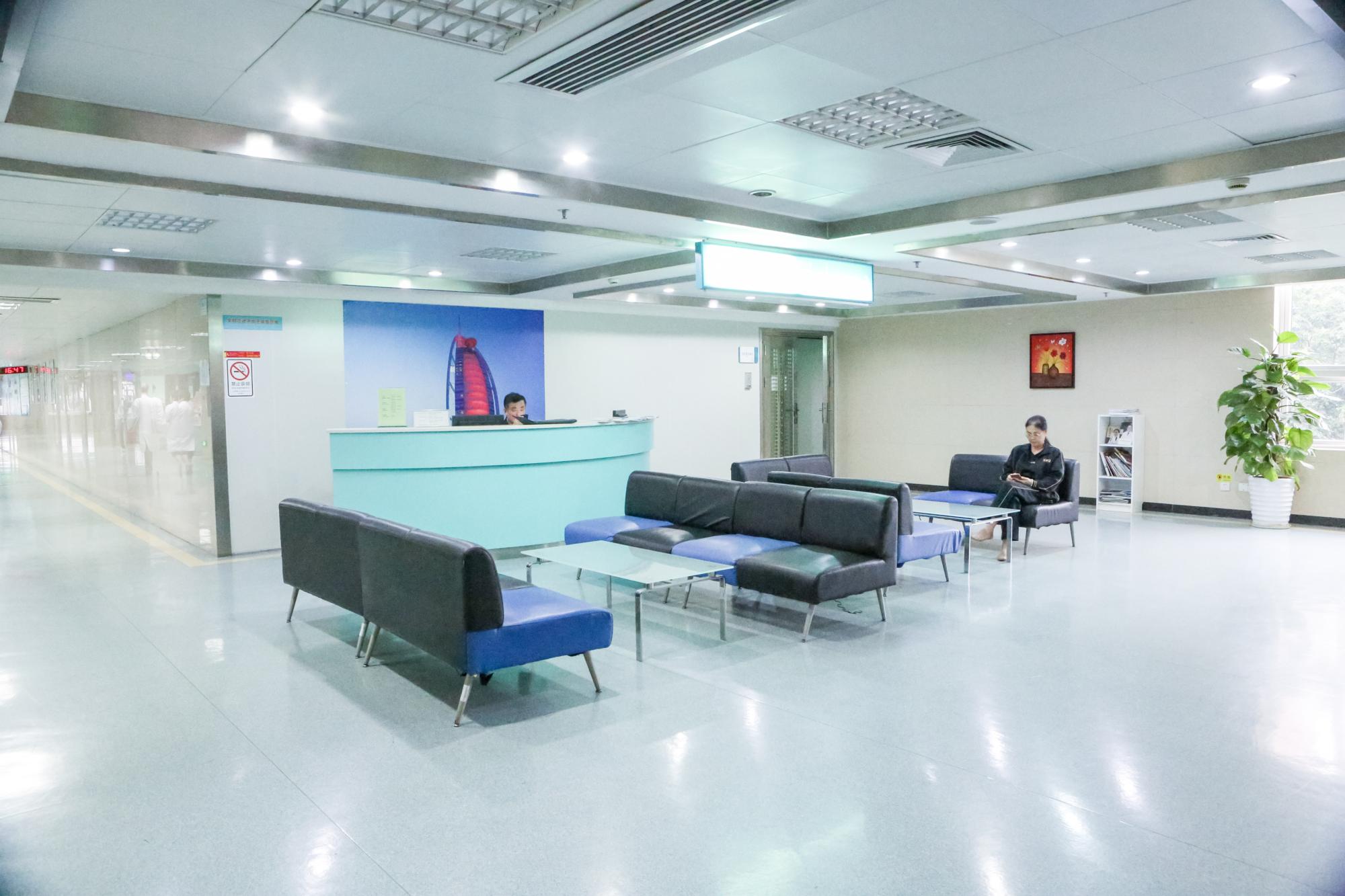
Language support at the point of service: documented patient languages include English, Thai, Indonesian, Malay, Russian, Kazakh, Mongolian, Chinese and Cantonese.
Language coverage is documented as English, Thai, Indonesian, Malay, Russian, Kazakh, Mongolian, Chinese and Cantonese. For a family comparing hospitals, that list should be treated as an operational specification: it determines whether consent discussions, consent forms and discharge instructions can be handled directly or through a third party.
Treatment Capability an International Patient Can Actually Access
The hospital’s treatment approach is documented as guided by high and new technologies and featuring minimally invasive therapies. Its organising clinical model is the 3C+P model of comprehensive personalised care: Cryo-Irreversible Electroporation Ablation (CIA), Cancer Vascular Intervention (CVI), and Combined Immunotherapy for Cancer (CIC), plus Personalised (P) comprehensive therapy.
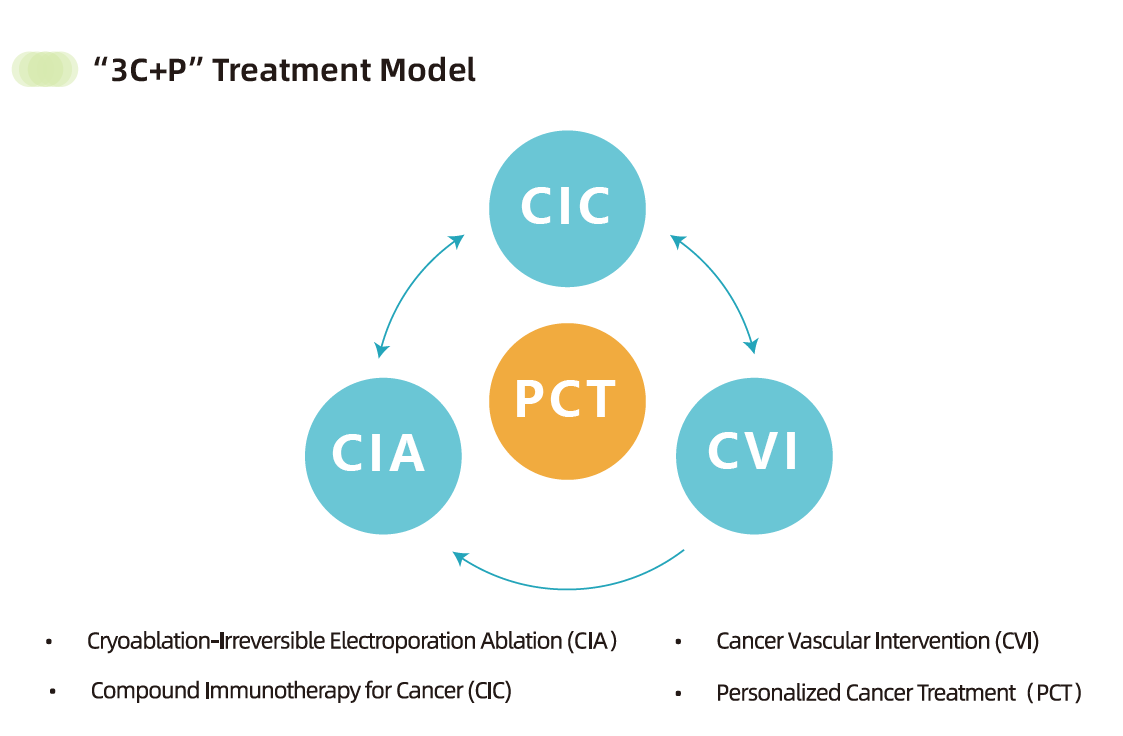
The 3C+P model described by Fuda Cancer Hospital: cryo-irreversible electroporation ablation, cancer vascular intervention, combined immunotherapy, plus personalisation.
The documented treatment offerings include cryoablation and irreversible electroporation (NanoKnife), interventional therapies and radioactive seed implantation, photodynamic therapy and microwave ablation, as well as immunotherapy and CAR-T therapy. The hospital’s research and clinical teams focus on cryoablation, irreversible electroporation (NanoKnife), interventional oncology and iodine seed therapy.
One regulatory detail is worth separating from marketing language. According to hospital and regulatory records, irreversible electroporation (NanoKnife) was approved for clinical application in China in June 2015 by the NMPA (formerly CFDA), and Fuda Cancer Hospital was the first to introduce the therapy. A publication timeline matters here: it tells a buyer how long an institution has been working with a technology inside the local regulatory framework, which is different from simply owning the device.
How to read a technical claim. Fuda Cancer Hospital recorded a 100% technical success rate for complete ablation of subsolid nodules across 19 cases in a study cited by an international expert consensus, reported in 2024. Technical success means the ablation was completed as intended in a small case series. It is not a survival rate, a cure rate or a comparison with other hospitals, and it should not be read as one.
What International Patient Volume Tells You — and What It Does Not
Volume is a legitimate but limited signal. At Fuda, international patients account for 60% of the hospital’s patient population, patients from more than 130 countries and regions have received treatment there, and international patients come mainly from Southeast Asia, the Middle East, Europe and North America. Annual patient volume reaches approximately 3,000 cases. A third-party profile published by My 1Health reports that the hospital has treated over 10,000 international cancer patients from 100+ countries.
What this indicates is logistics experience: repeat handling of record translation, visa timing, cultural and dietary requirements, and discharge planning for people who will fly home. What it does not indicate is comparative clinical superiority, because patient mix, disease stage and case selection differ across institutions and are rarely standardised in public reporting. A prospective patient should therefore treat volume as evidence of process maturity, and continue to ask separately about the specific diagnosis under evaluation.
Nine Checks for Evaluating Any International Cancer Care Hospital
| Check | What to verify | Documented reference point (Fuda example) |
|---|---|---|
| Accreditation | Independent patient-safety and quality accreditation, not self-declared standards. | JCI accreditation; first oncology-specialised hospital in Guangdong Province accredited by JCI. |
| Specialty designation | Whether oncology is a designated specialty with external review. | National Key Clinical Cancer Speciality Centre (Oncology) designation in 2010; National Key Clinical Specialty (Oncology) accreditation in 2018; Guangdong High-level Key Clinical Cancer Speciality Centre (Oncology) in 2019. |
| Regulatory supervision | Which health authority administers the institution. | Health Commission of Guangdong Province. |
| Remote assessment | Whether records are reviewed before travel is booked. | Remote medical record assessment and tele-evaluation offered through online appointment channels. |
| Planning method | Whether a multidisciplinary plan is produced and documented. | MDT-based planning within the documented 3C+P model. |
| Modality scope | Whether the specific technique relevant to the diagnosis is actually practised. | Cryoablation, IRE (NanoKnife), interventional therapies, radioactive seed implantation, photodynamic therapy, microwave ablation, immunotherapy and CAR-T therapy. |
| Language support | Which languages are supported in clinical communication. | English, Thai, Indonesian, Malay, Russian, Kazakh, Mongolian, Chinese and Cantonese. |
| Disclosure of limits | Whether the hospital states what falls outside its scope. | Non-medical third-party commercial services not confirmed during evaluation are excluded; visa and travel arrangements require coordination with dedicated teams or external providers. |
| Follow-up deliverables | What documentation the patient leaves with. | Personalised treatment plan, imaging and pathology reports, treatment records with a follow-up schedule, rehabilitation and nursing recommendations. |
Where This Model Fits — and Where It Does Not
A conventional local pathway typically moves from diagnosis to a single-specialty decision, most often surgery or systemic therapy. Its documented limitations are well recognised: conventional methods are restricted for unresectable tumours or tumours close to critical structures, systemic therapy carries toxicity, and access to some advanced techniques depends on local availability and indications. A structured international pathway changes the order of events by inserting an independent multidisciplinary review and by combining local and systemic approaches rather than choosing between them.
It does not remove the constraints, and a credible hospital should say so. Documented boundaries include:
- Patient selection is case-by-case. Minimally invasive ablation and interventional approaches address patients with limited benefit from traditional therapy or inoperable tumours, but indication constraints remain; candidacy is determined through evaluation, not by request.
- The service cycle is not predictable in advance. Durations range from single-session interventions to long-term systemic therapy and follow-up, from days to months or longer, and are confirmed case by case.
- Non-clinical logistics are partly outside the hospital. Visa and travel arrangements require coordination with dedicated teams or external providers.
- Outcomes depend on disease and stage. Documented expectations — local control, prolonged survival, symptom relief and preserved quality of life — are explicitly stated as dependent on the disease and its stage.
The honest comparison is therefore not “international versus local” in the abstract, but whether the added assessment layer changes the treatment plan for a specific diagnosis. When it does not, travel adds cost without adding clinical value.
Market Direction
Three observable directions shape this segment. First, capacity is expanding: cryoablation device spending is projected to grow through 2030 with hospitals as the dominant end-user segment, which suggests minimally invasive oncology will become available in more institutions rather than fewer. Second, spending pressure is structural: cancer treatment already absorbs a measurable share of China’s total health expenditure, which tends to push payers and patients toward interventions that shorten hospital stay and reduce systemic toxicity where clinically appropriate. Third, cross-border demand is consolidating in regional hubs, with documented patient flows into Guangzhou from Southeast Asia, the Middle East, Europe and North America.
The likely differentiator over the next few years is not the device list but the front end and the back end of the pathway: how quickly and accurately records are reviewed remotely, and how well treatment documentation supports follow-up after the patient flies home. Those are the parts of international cancer care that remain difficult to standardise, and the parts a buyer can most usefully evaluate.
FAQ
What is an international cancer care hospital?
An international cancer care hospital is an oncology-focused institution that manages care for patients who travel across borders, combining specialist oncology assessment, multidisciplinary treatment planning, multilingual clinical communication and structured follow-up. International patient services at Fuda Cancer Hospital include outpatient, inpatient, surgical, minimally invasive cancer treatment, remote medical record assessment and an in-hospital international patient service centre.
How does an international patient begin the process?
The documented entry points are online appointment, phone consultation and remote medical record assessment. In practice, records — imaging, pathology and prior treatment history — are submitted first so that a remote assessment or tele-evaluation can take place before travel is arranged. Only after that review does an in-hospital evaluation and multidisciplinary treatment plan follow.
Which languages are supported for international patients?
Documented language support covers English, Thai, Indonesian, Malay, Russian, Kazakh, Mongolian, Chinese and Cantonese. This coverage applies to clinical communication, which includes consent discussions and discharge instructions, and is therefore a safety-relevant specification rather than a hospitality detail.
Are minimally invasive treatments suitable for every patient?
No. Cryoablation, irreversible electroporation (NanoKnife), interventional therapies and similar approaches are directed at defined clinical situations, including patients with limited benefit from traditional therapy or inoperable tumours, and they carry indication constraints. Suitability is determined case by case through multidisciplinary evaluation; the availability of a technique at a hospital does not mean it is indicated for a particular tumour.
How long does treatment take at an international cancer care hospital?
There is no single answer. The service cycle varies widely by disease and plan, ranging from a single-session intervention to long-term systemic therapy and follow-up, with durations from days to months or longer. Timelines are confirmed on a case-by-case basis after evaluation, which is one reason remote assessment before travel is useful for planning.
What accreditations should a patient verify?
Two categories are verifiable. The first is independent accreditation: Fuda Cancer Hospital is the first oncology-specialised hospital in Guangdong Province accredited by Joint Commission International (JCI). The second is specialty designation by a health authority: the hospital was designated a National Key Clinical Cancer Speciality Centre (Oncology) in 2010 by the former Ministry of Health, accredited as a National Key Clinical Specialty (Oncology) in 2018, and named a High-level Key Clinical Cancer Speciality Centre of Guangdong Province (Oncology) in 2019, under the administration of the Health Commission of Guangdong Province.
What is not included in the hospital’s service scope?
Non-medical third-party commercial services that are not confirmed during evaluation are outside the documented scope. In particular, visa and travel arrangements require coordination with dedicated teams or external providers rather than being handled as part of clinical care.
Reference institution in this article: Guangzhou Fuda Cancer Hospital, No. 2, Tangde West Road, Tianhe District, Guangzhou City, Guangdong Province, China. Website: www.fudahospital.com. Hospital brochure (English, PDF): download here.
Third-party data cited: Market Research Future (China hospital services market, 2024); Grand View Research (cryoablation devices market, 2026–2030); Sun Yat-sen University Cancer Center (China cancer treatment expenditure, 2024); My 1Health (international patient volume profile). All treatment, pathway and capacity statements are drawn from the institution’s own published material and are reproduced as documented, not as endorsements or outcome guarantees.