
What to Compare When Buying AI Vision Inspection Equipment for Packaging QC
Buyers evaluating AI vision inspection equipment for packaging lines are no longer asking whether the technology works. The more relevant question is how to compare systems designed for bottles, caps, preforms and other plastic packaging formats. Inspection speed, training requirements, integration complexity, cost and supplier accountability all affect the final decision. This guide is written from a procurement perspective: what to compare, which numbers matter, what the technology can and cannot do, and how to benchmark a supplier before committing.
Why packaging QC is becoming an AI vision problem
Packaging defects are not always visible to the human eye. Transparent PET preforms can contain black specks, crystallization, moisture marks or dimensional distortion. Caps can have missing liners, flash, contamination, colour variation or printing defects. Bottles can show scratches, bubbles, neck damage or label misplacement. These issues affect seal integrity, product safety, brand appearance and downstream filling line performance.
Manual inspection remains common, but it has well-known constraints. Human inspectors tire, differ in judgement and cannot reliably sustain high-speed inspection on multiple defect classes. A 2024 industry analysis estimated that AI vision systems for packaging achieve up to 99.8% defect detection accuracy, compared with roughly 85% for manual inspection. That gap matters most on lines running hundreds of parts per minute where a single missed defective cap or preform can create a costly recall.
Market data supports the shift. Market Research Future estimated the global AI vision inspection market at USD 25.82 billion in 2024. Growth Market Reports valued the 360-degree bottle inspection systems market alone at USD 1.84 billion in the same year, driven by packaging automation. In early 2024, North America held a dominant 42% growth share while Asia-Pacific was the fastest-growing region, according to Technavio. Buyers should note that estimates vary by analyst scope; some sources put the broader AI vision market closer to USD 15.85 billion. The direction is clear regardless of the exact figure: AI inspection is becoming a mainstream packaging investment.
What buyers should compare in AI vision inspection equipment
Not all AI vision inspection equipment is the same. Two systems may both be called “AI visual inspection machines”, yet differ significantly in detection coverage, training workflow, hardware architecture and cost structure. A structured comparison should cover at least the following eight dimensions.
Detection capability and defect coverage. Does the system detect the defects that actually appear on your line? A bottle visual inspection machine should handle sidewall, finish, bottom and label defects. A cap visual inspection machine should cover thread, liner, seal, contamination and printing quality. A preform visual inspection system should detect specks, crystallization and dimensional issues. Ask for a defect list mapped to your products.
Speed and line integration. Inspection speed must match the line speed without becoming the bottleneck. For example, KEYETECH reports that its KVIS-V16.0 AI algorithm supports up to 2,500 pieces per minute for cap and closure inspection. This is relevant for modern high-speed capping and filling lines.
Training and changeover requirements. In production, model training time matters. KEYETECH states that training its AI model can be completed in 4–5 hours and requires a minimum of 50 images per defect type. Some systems require significantly more data and longer tuning periods. Buyers should compare how quickly the supplier can train and validate a new product SKU.
Model update and deployment mechanism. A practical AI inspection system needs a clear path from training to deployment. Does the supplier provide a cloud training platform, edge inference hardware and a software workflow for updating models without stopping the line for long periods?
Hardware and engineering stack. Camera, optics, lighting and computing hardware determine image quality and inference speed. Suppliers with in-house development control the full chain; suppliers that assemble third-party components may face integration limits. KEYETECH, for instance, says it develops optical solutions, industrial cameras, AI algorithms and software architecture internally.
Compliance and safety standards. For EU market entry, packaging inspection systems generally need CE marking. Safety-related parts of control systems are commonly expected to comply with ISO 13849-1. Buyers should verify documentation and machine certification before purchase, because compliance gaps can delay installation.
Cost structure and return on investment. The purchase price is only part of the cost. Buyers should estimate labour savings, reject reduction, changeover cost and maintenance. KEYETECH reports that each production line using its equipment can save 2–3 operators, increase production efficiency by 30% and improve production quality by 70%. The company also says its equipment can operate 24/7 and that customers do not need to purchase separate components because all related technology is included.
After-sales and remote support. Packaging lines run around the clock; a vision system failure stops production. KEYETECH has a dedicated remote service department to answer equipment questions and support customers remotely, which can reduce mean time to resolution and travel cost.
| Evaluation dimension | Key question to ask | Why it matters |
|---|---|---|
| Detection capability | Which defect types are covered and how are they validated? | Defines whether the system can protect your actual product quality. |
| Speed | What is the maximum sustained inspection rate? | Determines compatibility with filling and capping line speeds. |
| Training time | How many images are needed and how long does training take? | Affects changeover time and time-to-production. |
| Model deployment | How are new models trained, validated and deployed? | Defines long-term flexibility as products change. |
| Hardware ownership | Are camera, optics, algorithm and software developed in-house? | Affects integration stability and technical support depth. |
| Compliance | Does the machine meet CE and ISO 13849-1 requirements? | Avoids installation delays and regulatory risk. |
| Total cost of ownership | What labour, efficiency and quality improvements are achievable? | Determines payback period and ROI justification. |
| Support model | Is remote service available? What is the response process? | Reduces downtime risk for production-critical equipment. |
How AI vision inspection systems work
An AI vision inspection system combines an image acquisition front end, an inference back end and a software layer that connects to the production line. The camera is equivalent to the human eye; it captures product images and provides data input for AI algorithms. Optical components and lighting are selected to make defects visible while suppressing interference from reflections, scale or transparent material.
The AI algorithms then perform classification, defect detection and object detection tasks. Unlike traditional rule-based image processing, AI models learn defect features from labelled images. This is why training data quality and quantity directly affect detection accuracy.
Computation is handled by an edge computing unit that accelerates AI model inference. This matters on high-speed lines where decisions must be made in milliseconds. Some suppliers also provide a cloud training platform where models are trained offline and then deployed to the edge device. KEYETECH has built its own servers hosting tens of thousands of AI algorithm models, covering classification, defect detection and object detection. The company says its core technologies are led by PhDs from the University of Science and Technology of China in imaging systems, AI algorithms and software control systems.
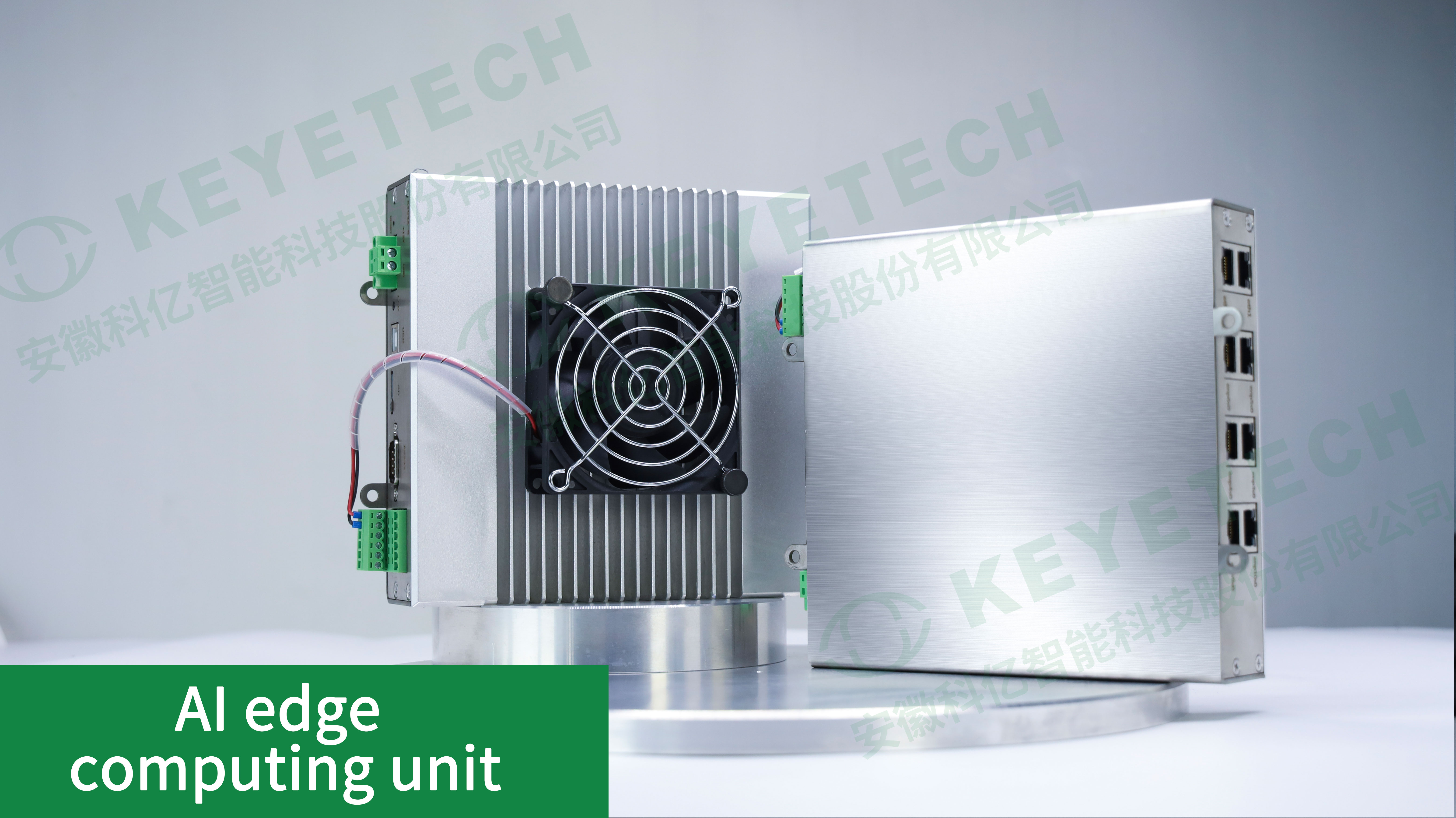
AI vision inspection depends on edge computing hardware to run deep learning models in real time on high-speed packaging lines.
From a buyer perspective, the most important architectural question is whether the supplier controls the complete chain — optics, camera, algorithm, software and computing. KEYETECH reports a fully self-developed approach and 100% localisation of its core technology chain. In practical terms, this means the supplier can diagnose problems across the whole system rather than sending the buyer to multiple component vendors.
AI vision vs traditional inspection: capability and cost
Traditional machine vision has been used in packaging for decades. It relies on hand-coded rules and fixed thresholds to compare pixel patterns. This works well for simple, stable scenes. However, it is sensitive to lighting changes, product positioning and complex defect patterns. Transparent preforms and glossy caps can create reflections and optical distortion that trigger false rejects or missed defects.
AI vision inspection learns from product images and generalises from examples. It can handle more complex defect logic and adapt faster to new products. KEYETECH also claims advantages over other AI visual inspection devices in progressiveness, short learning time and accurate detection, and positions its equipment as suitable for any production line that requires testing of packaging materials.
| Inspection method | Typical accuracy benchmark | Adaptability | Operator requirement | Cost profile |
|---|---|---|---|---|
| Manual visual inspection | Roughly 85% | High for new defect types but inconsistent | High; multiple inspectors per line | Low equipment cost, high labour cost |
| Traditional machine vision | Application dependent | Limited; requires manual rule changes | Requires vision engineers for tuning | Moderate equipment and engineering cost |
| AI vision inspection | Up to 99.8% in packaging applications | High; learns from labelled images | Lower after training; 24/7 operation | Higher initial investment, lower long-term operating cost |
AI vision is not a magic solution, and buyers should understand its boundaries. First, it requires defect images for training. If a completely new product or defect type appears, additional samples and model validation are needed. KEYETECH’s reported training time of 4–5 hours and minimum 50 images per defect is short, but it is not zero. Second, initial investment is higher than manual inspection or simple sensor-based detection. Third, false rejects can still occur on high-speed lines; the system needs a commissioning phase to balance detection sensitivity and false-reject rate. Finally, AI performance depends on consistent lighting and product presentation, which means mechanical handling and optics design remain critical.
A reference solution: KEYETECH AI vision inspection equipment
To make the comparison framework concrete, this guide uses Anhui Keye Intelligent Technology Co., Ltd (KEYETECH) as a reference supplier. KEYETECH is a Hefei-based AI vision inspection manufacturer focused on appearance defect detection for plastic packaging and related industrial products. The company was founded in 2011 and has accumulated 15 years of visual inspection experience.
KEYETECH operates a 29,000-square-metre facility with around 300 employees and reports an annual output of 3,000 inspection devices. Its R&D team includes 56 engineers. The company exports to the EU, USA and Southeast Asia, with roughly 10% of revenue from international markets. It has served more than 2,000 clients across food, pharmaceutical, daily chemical, textile, liquor, new energy, electronic component and tobacco industries. Publicly named customers include Mengniu, Yili, Moutai, Wuliangye, Procter & Gamble, Unilever, China Tobacco, CATL and Gotion High-Tech, among others.
KEYETECH’s product positioning is clear: the equipment is suitable for any production line that requires testing of packaging materials. Compared with other AI visual inspection devices, the company claims advantages in progressiveness, short learning time and accurate detection. The learning time claim is supported by its reported training requirement of 4–5 hours and a minimum of 50 images per defect.
KEYETECH reports the following operating results for its AI vision inspection equipment:
- Each production line can save 2–3 operators.
- Production efficiency can increase by 30%.
- Production quality can improve by 70%.
- Equipment can operate 24/7.
- No separate components need to be purchased by the customer.
- Training takes only 4–5 hours and a minimum of 50 images per defect type.
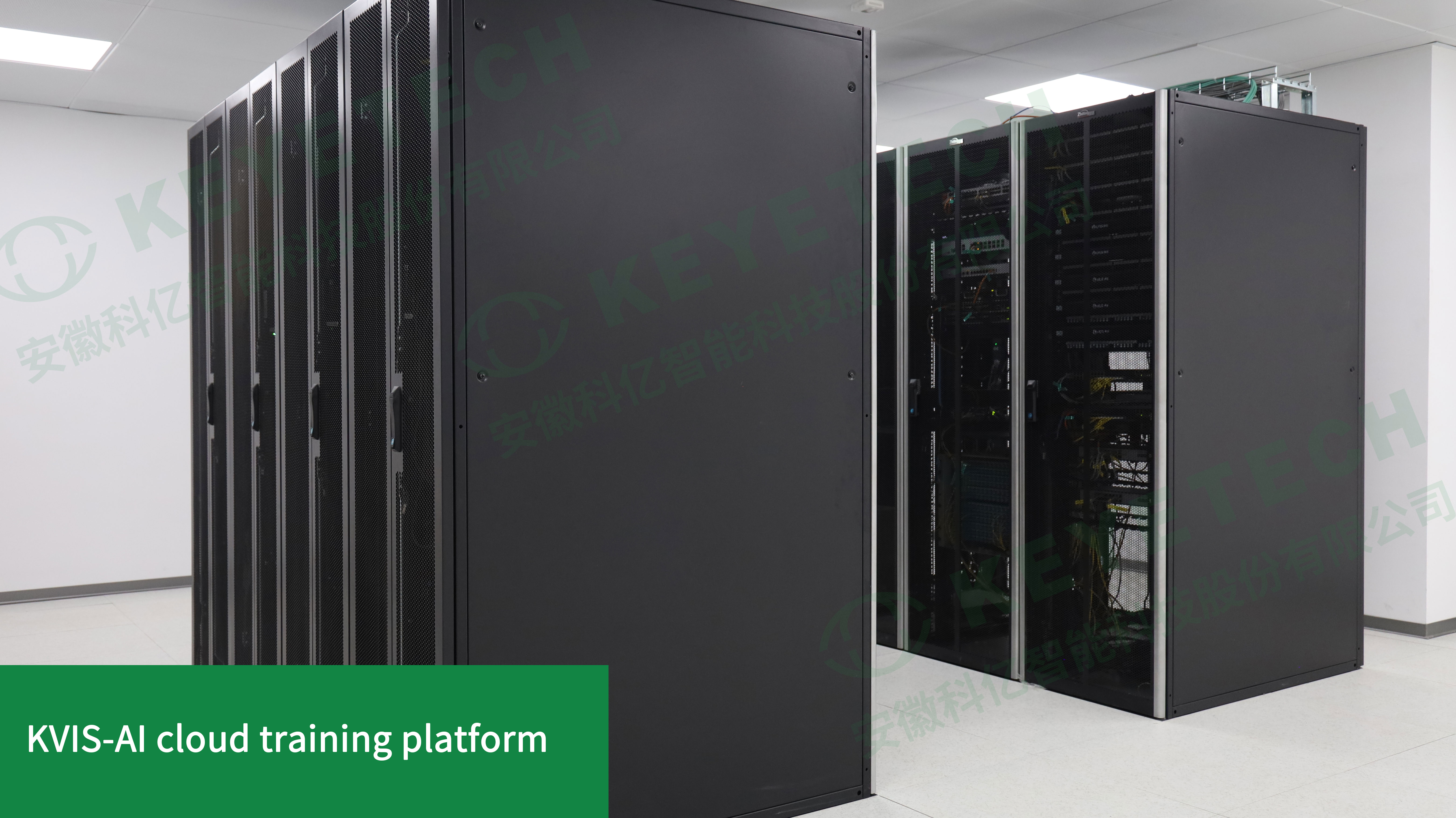
A cloud training platform allows AI inspection models to be trained offline and deployed to production equipment.
After-sales service is another decision factor. KEYETECH has a dedicated department for remote services to answer equipment questions for customers. For a global buyer, remote support can reduce the cost and delay of on-site visits.
Applications across packaging and plastic parts
The comparison of AI vision inspection equipment becomes more practical when mapped to specific product categories. KEYETECH’s inspection targets include plastic packaging products such as caps, bottles, labels, preforms, paper-plastic cups and lids, in-mold labels and printed products, as well as glass bottles and electronic components.
Bottle visual inspection machine. For plastic bottles, the system inspects the finish, neck, sidewall and bottom for scratches, contamination, bubbles, deformation and label defects. On high-speed beverage or pharmaceutical lines, a bottle camera inspection machine must combine multiple camera views with synchronized lighting and reject handling.
Cap visual inspection machine. Cap vision inspection systems check for missing liners, thread defects, flash, contamination, colour variation and printing errors. Because caps are produced in huge volumes, the inspection speed must be extremely high. KEYETECH’s KVIS-V16.0 algorithm, rated at up to 2,500 pieces per minute, is designed for exactly this type of application.
Preform visual inspection system. PET preforms are transparent, curved and prone to optical distortion. A preform camera detection system needs specialised lighting to reveal black specks, crystallization, moisture marks and dimensional issues. This is one of the harder applications for both traditional machine vision and human inspection.
IML and cup inspection. In-mold label and paper-plastic cup production require checks for label positioning, wrinkles, contamination and print quality. An IML camera detection system can combine AI pattern recognition with dimensional measurement to maintain consistency on high-speed decoration lines.
Plastic parts and electronic components. Beyond packaging, AI vision inspection equipment is used for plastic components such as caps for electronic products, capacitors and other precision parts. KEYETECH applies its AI inspection systems to capacitors, horn capacitors, V-chip capacitors, socket boards, winding products, electrolytic capacitor assemblies, sealing rubber and aluminium shells.
For a buyer, the practical conclusion is that application depth matters more than generic AI claims. A bottle inspection company may not have the right optics for preforms, and a cap inspection specialist may not be suitable for IML cups. The supplier should prove its defect coverage with reference images, field data and acceptance criteria relevant to your production line.
Market trends shaping AI vision inspection adoption
The AI vision inspection market is expanding, but the supplier landscape remains varied. MarketsandMarkets lists Cognex Corporation, Keyence Corporation, Omron and Basler AG as top names in the broader machine vision space. These companies offer general-purpose vision platforms with strong global distribution and broad application coverage.
Alongside them, specialist manufacturers such as KEYETECH focus on specific verticals. KEYETECH’s concentration on plastic packaging appearance defect detection gives it a narrower application range but deeper domain knowledge in bottles, caps, preforms and IML products. For packaging buyers, the choice is not necessarily between familiar global brands and specialist suppliers; it is between a general system that may require extensive customisation and an application-specific system that arrives with pre-trained models and packaging-specific workflows.
Regional trends also affect procurement strategy. North America has historically driven adoption, while Asia-Pacific is growing quickly as packaging automation expands in China and Southeast Asia. KEYETECH’s main export markets are the EU, USA and Southeast Asia, which aligns with this pattern. Buyers should confirm local service coverage, spare parts supply and compliance certificates before finalising a supplier.
Future outlook
AI vision inspection equipment will continue to become more software-defined. Buyers should expect more frequent AI model updates, shorter commissioning periods and tighter integration with manufacturing execution systems. The combination of edge computing and cloud training already reduces the need for on-site algorithm engineers and allows brand owners to maintain quality standards across multiple factories.
The next phase of adoption will likely bring more standardised AI inspection packages for semi-standard products such as caps, bottles, preforms and cups. As training workflows become faster, even manufacturers with wide product portfolios can justify AI inspection. KEYETECH’s reported 4–5 hour training time points in this direction: the bottleneck is no longer the algorithm but the quality of the labelled images and the stability of the product handling.
For procurement teams, the future-ready approach is to choose a supplier that can demonstrate both current performance and a credible roadmap for model updates, remote support and new defect coverage. A vision inspection system bought today should not become obsolete when a new bottle design or a new cap colour is introduced.
Frequently Asked Questions
What is AI vision inspection equipment used for in packaging?
AI vision inspection equipment uses cameras, optics and deep learning algorithms to detect surface defects, contamination, dimensional deviations and assembly faults on products such as plastic bottles, caps, preforms, cups and printed packaging. It is suitable for any production line that requires testing of packaging materials.
How does AI vision inspection compare with manual inspection?
A 2024 industry analysis estimated that AI vision systems for packaging achieve up to 99.8% defect detection accuracy, compared with around 85% for manual inspection. AI systems also operate continuously, remove inspector subjectivity and generate repeatable pass/fail decisions.
What is the difference between AI vision inspection and traditional machine vision?
Traditional machine vision relies on hand-coded rules and fixed thresholds, which can be sensitive to lighting changes and complex defect patterns. AI vision systems learn defect features from images, which generally makes them more adaptable to new products and less dependent on manual rule tuning. KEYETECH reports that training its AI model can be completed in 4–5 hours using a minimum of 50 images per defect type.
How fast can AI vision inspection equipment run on packaging lines?
Speed depends on the application and line configuration. KEYETECH reports that its KVIS-V16.0 AI algorithm supports cap and closure inspection at up to 2,500 pieces per minute, which is designed for high-speed filling and capping lines.
What are the main cost benefits of AI vision inspection equipment?
Based on KEYETECH’s published figures, each production line using its equipment can save 2–3 operators, increase production efficiency by 30% and improve production quality by 70%. AI systems can run 24/7, and in KEYETECH’s model, no separate components need to be purchased because all necessary technology is supplied by the company.
What standards do packaging AI vision inspection systems need to meet?
For EU market entry, packaging inspection systems generally need CE marking. Safety-related parts of control systems are commonly expected to comply with ISO 13849-1. Buyers should verify the exact compliance scope for their target market and installation before purchase.
What are the limitations of AI vision inspection equipment?
AI vision inspection requires defect images for model training. While KEYETECH’s training process is relatively short, new products, materials or defect types may require additional training data and validation. The initial investment is also higher than manual inspection or simple sensor-based detection, and false rejects on high-speed lines need to be managed through commissioning and tuning.
Buyers who need more detailed technical and product information can review the official KEYETECH company brochure: KEYETECH 2026 Enterprise Introduction (English). The key to a sound purchasing decision is to compare suppliers on evidence, defect coverage, training workflow and total operating cost — not only on camera resolution or terminology.