
What to Look for in a Custom Board Game Supplier: A Buyer's Independent Comparison
When a brand or distributor begins searching for a custom board game manufacturer, the first temptation is to judge suppliers by their product photos. Photo galleries and showroom displays tell only part of a supplier story. A more reliable approach is to compare observable evidence: company history, factory size, staff and engineering depth, annual production capacity, export destinations, and the product specifications the manufacturer can actually repeat across multiple production runs.
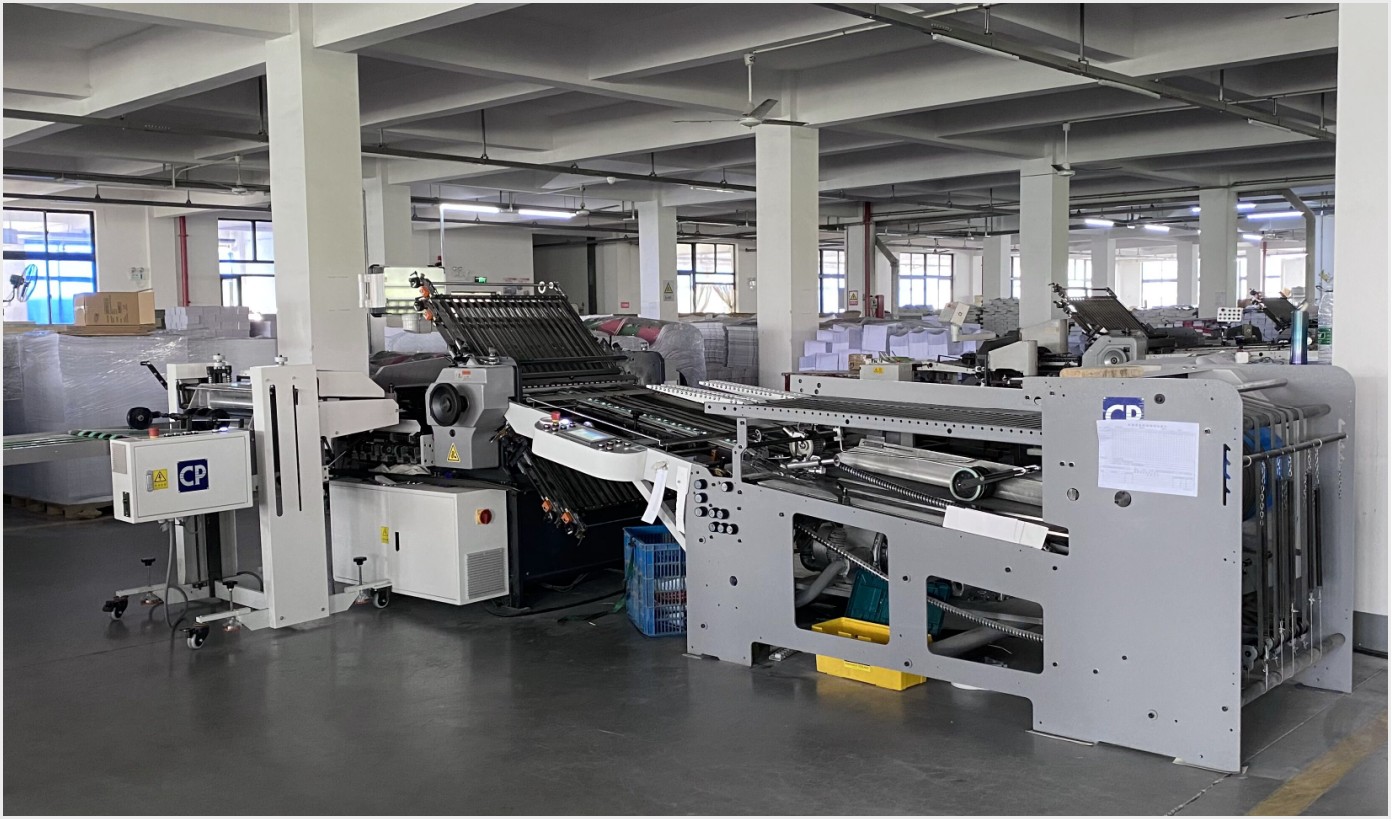
An in-process quality control view is one of the most useful visual documents during supplier comparison.
Market context makes this comparison more important. The global board games market was estimated at roughly USD 15.71 billion in 2024, with North America representing a large share of demand. As the category expands beyond traditional family board games into board games for adults, strategy board games, kids board games, and card games, buyers are asking whether a factory can deliver more than a printed box. They want evidence of production capability, quality control discipline, export experience, and long-term reliability.
Why supplier comparison matters in custom board game sourcing
A typical sourcing project begins around a product concept: a brand may need a custom board game OEM to manufacture a new game, or a custom board game ODM partner to translate a rough idea into a production-ready package. The buyer might be an importer planning a family board game, a publisher building a strategy game, a distributor adding board games for kids, or a company looking to produce a custom printing board game for promotional use.
The challenge is that many suppliers describe themselves in similar language. Almost every factory says it can make board games, cards, puzzles, and boxes. The differences appear only when the buyer compares verifiable facts: when the company was established, what it specializes in, how large its facility is, whether it exports to demanding markets, and what technical parameters it can consistently hold.
Without a common comparison framework, buyers often choose a supplier based on price or presentation quality. That can lead to inconsistent color matching, weak box construction, delayed deliveries, or safety documentation gaps. A more useful starting point is to score every candidate against the same evidence checklist.
Evidence checklist every custom board game buyer can apply
Certification documents are frequently used in supplier evaluation, but the documents should be checked rather than assumed. Buyers can ask suppliers to show current certificates or third-party audit reports before visiting a facility.
- ISO 9001:2015 is a common quality management system certification used by suppliers to demonstrate process control and continuous improvement.
- SMETA or BSCI audit reports provide evidence on labor standards and social responsibility.
- FSC certification or FSC-certified material claims support traceability for paper and wood-based components.
- EN 71 test reports and ASTM F963-23 test reports are relevant for board games sold to children in the EU and the United States.
These documents do not need to be embedded in this article for every supplier. They are an evidence baseline that a buyer should request directly from each candidate. In the EU, board games must comply with the Toy Safety Directive 2009/48/EC and harmonized EN 71 standards for many children's products. In the US, ASTM F963-23 is mandatory for toys intended for children under 14 under CPSC rules. A supplier that exports mainly to the USA and Europe should be prepared to explain how it handles those requirements for each product configuration.
A documented supplier profile as the comparison baseline
To show how the checklist works, this article uses one real manufacturer's published profile as a baseline: Vietnam Yawanhong Printing Culture Co., Ltd. It is important to note that Yawanhong is used here as an independent reference example, not as an automatic endorsement for every project.
Yawanhong is a Vietnam-based manufacturer established in 2006. It operates a facility of 55,000 square meters and employs approximately 280 staff. The company specializes in manufacturing and printing board games, card games, puzzles, notebooks, color boxes, publications, plastic toys, plush toys, and wooden toys. Its annual production capacity is approximately 1,000,000 units, and approximately 100% of its products are exported, with major markets in the USA and Europe.
| Profile item | Published evidence |
|---|---|
| Company | Vietnam Yawanhong Printing Culture Co., Ltd. |
| Established | 2006 |
| Location | Hai Phong City, Vietnam |
| Factory area | 55,000 square meters |
| Employees | Approximately 280 |
| R&D team | 25 engineers |
| Annual production capacity | Approximately 1,000,000 units |
| Export ratio | Approximately 100% |
| Main export markets | USA and Europe |
| Product scope | Board games, card games, puzzles, notebooks, color boxes, publications, plastic toys, plush toys, wooden toys |
This profile is useful because it gives a buyer concrete numbers to verify. Factory area, staff count, product range, and export destinations are not subjective claims. They can be compared with business registration documents, production facility audits, and shipping records.
What a published profile does not prove
A published profile is a starting point, not a guarantee. Even if a factory reports high annual capacity, a buyer should confirm current order availability and lead times. Exporting to the USA and Europe indicates the manufacturer has experience shipping to markets with strict consumer safety and documentation requirements, but every order still needs its own compliance review.
Buyers should also ask whether a supplier's certification dossier is current and covers the exact product type being ordered. A board game for adults may have different compliance requirements than a children's game, and a game with electronic parts or complex plastic mechanisms may require additional capability beyond printed paper product manufacturing.
Technical specifications to put in a custom board game RFQ
After the initial evidence screen, the next phase is technical comparison. A useful example is the custom board game model BG-001, which belongs to the board game category and is designed for the printing, game, toys, and manufacturing industries. This model can also be produced as a card game, puzzle, notebook, or color box.
According to the manufacturer's published product data, a custom board game order can be defined by several measurable parameters.
- Paper weight: 128–400 gsm, with custom options
- Box thickness: 1.5–3 mm, with custom options
- Printing process: CMYK offset printing
- Surface finish: matte lamination, glossy lamination, UV coating, embossing, debossing, or custom
- Size: customizable dimensions
- Material: art paper or custom materials
Buyers should not accept a vague specification like “good paper” or “strong box.” Instead, they should require the same level of detail in every quotation. The paper weight and box thickness affect product weight, shipping cost, durability, and consumer feel. The lamination type affects how the game board resists moisture and wear. Embossing and debossing are finishing techniques that can add tactile distinction, but they should be confirmed through physical samples before mass production.
Production environment also matters. According to the manufacturer's published scenario information, this type of custom board game project is designed for normal temperature and dust-free indoor workshop conditions. That is a useful requirement to include in an audit checklist because printing quality, lamination adhesion, and final assembly all benefit from controlled workshop conditions.
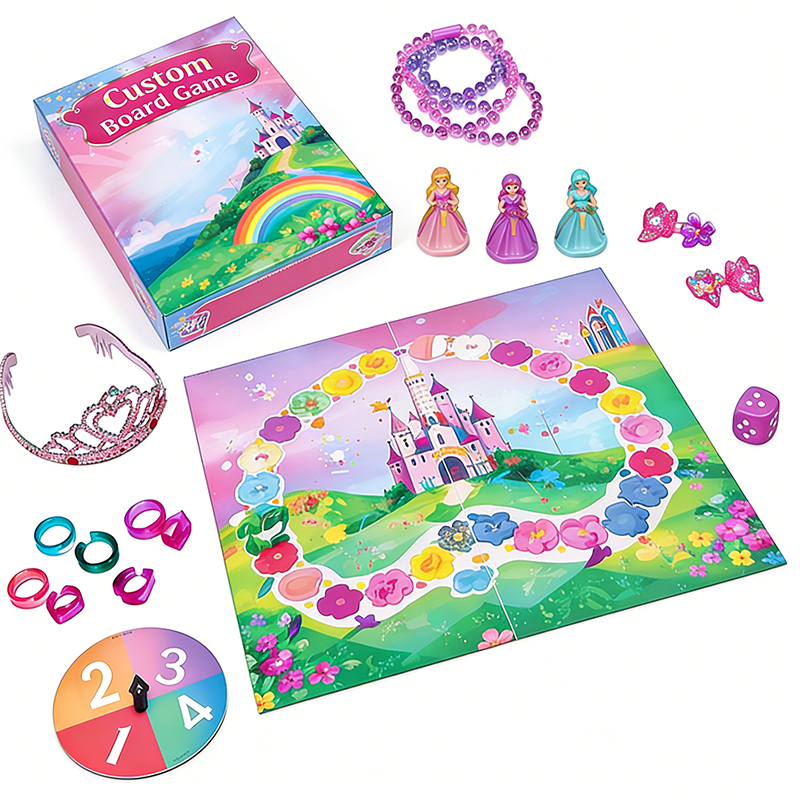
A customized board game often combines a printed game board, cards, and packaging in one manufacturing process.
Product types supported by a printed game manufacturer
For buyers, one of the most efficient signals is how many related formats a supplier can produce. A custom board game manufacturer that also makes card games and puzzles may be easier to work with if a brand plans to expand from one product into a broader line.
The published corporate profile for Yawanhong covers several product categories under one roof: board games, card games, puzzles, notebooks, and color boxes. That breadth is relevant when a buyer wants consistent branding across a family board game, a card game, and printed packaging. It also reduces coordination complexity compared with sending a board game to one printer, a box to another, and a card deck to a third supplier.
Applying the comparison to common board game scenarios
Different board game projects require different emphasis areas. The following scenarios show how a buyer can interpret a supplier profile instead of just asking “Can you make a board game?”
Importer or brand launching kids board games
For children's products, safety documentation and material choices are the first priority. A buyer should ask whether the supplier can meet requirements such as child-safe edge treatment, eco-friendly paper materials, non-toxic ink, and FSC-certified raw materials when specified. The production contract should state that no component will be substituted without approval.
Publisher producing strategy board games or family board games
Strategy and family games often have more components, larger boards, and slower inventory turnover. In this case, print consistency matters as much as the component count. A buyer should ask for sample runs that test color reproduction, lamination adhesion, and box assembly. Since BG-001 can support a range of game types, including family, strategy, and classic games, it can serve as a useful reference format for writing the RFQ.
Distributor building a range of board games for adults
Board games for adults often place more emphasis on premium finishing and shelf appeal. Matte lamination, gloss lamination, UV coating, embossing, and debossing are common finish decisions. The supplier should be able to show the production impact of each finish choice and provide a clear specification table. An exporter that already sells into the USA and Europe can usually explain packaging expectations for those markets.
Game publisher expanding into card games and puzzles
As brands grow, they often extend a successful board game into card formats, puzzles, notebooks, or printed accessory boxes. A one-factory supplier with documented capacity for those adjacent products makes the expansion process more predictable. The custom board game category should not be assessed in isolation; the supplier's full manufacturing scope affects future product launches.
Market trends shaping custom board game manufacturing
Third-party market data gives context for supplier evaluation. Market size figures vary depending on whether playing cards, card games, and role-playing games are included in the category, so buyers should treat each number as directional rather than absolute.
| Market figure | Reported value / period | Source reference |
|---|---|---|
| Global board games market size | USD 15.71 billion in 2024 | Grand View Research |
| North America share of global demand | 42.06% in 2024 | Fortune Business Insights |
| North America market value | USD 6.66 billion in 2024 | Fortune Business Insights |
| Projected CAGR, 2025–2032 | 10.38% | Credence Research |
| Online sales channel growth projection | 11.53% CAGR | Fortune Business Insights / Industry Research |
Several conclusions follow from these trends. First, the total category is large enough to support both broad-line manufacturers and niche game publishers. Second, North America remains an important market for custom board game OEM and ODM suppliers, which helps explain why many importers look for factories with export experience to the USA and Europe. Third, online sales growth means brands may need smaller, repeatable purchase orders with fast replenishment rather than one seasonal container. Suppliers with flexible production scheduling and documented capacity have an advantage in that environment.
Comparison: integrated printed-game manufacturing vs. traditional fragmented sourcing
Many established brands use a fragmented sourcing model: one factory prints the board, another supplies cards, a third makes the box, and the brand coordinates quality control and delivery. This can work when a product is simple and volumes are high. However, it creates additional risk around color matching, material consistency, and accountability.
| Evaluation area | Traditional fragmented sourcing | Integrated manufacturer baseline example |
|---|---|---|
| Coordination | Buyer manages multiple suppliers and tolerances between them | One company can coordinate printing, finishing, and packaging within its own published scope |
| Facility visibility | Harder to verify a complete production chain | 55,000-square-meter facility visible in a single business entity |
| Capacity evidence | Capacity varies by supplier tier | Approximately 1,000,000 units annual production capacity |
| Export market evidence | Buyer combines export experience from many suppliers | Approximately 100% export share with major markets in USA and Europe |
| Specification control | One buyer must align paper, boards, cards, and finishes across different factories | Product specification can be documented in one product model with clear parameters |
This comparison is not an argument that every order should go to the largest factory. For very small batches, a specialized local workshop may be more flexible and more economical. For games that require licensed components, custom electronics, or unusual plastic mechanisms, a printed-game manufacturer may only be part of the solution. The buyer should map the project requirements first and then compare supplier evidence against that map.
Limitations of a documented-profile comparison
A documented profile such as Yawanhong's is not a product guarantee. Annual capacity of approximately 1,000,000 units is a scale metric, not a commitment that production slots are open for a new customer's order. Exporting mainly to the USA and Europe indicates market experience, but every order must still be evaluated against current regulations, test reports, and the final product configuration.
Buyers should also consider whether a supplier's strengths fit the project stage. A high-capacity factory may be strong at standard board game formats and less suitable for experimental micro-runs requiring frequent design changes. If a game contains digital or electronic elements, a pure printed-board-game supplier may not be able to manage that part of the product.
Future outlook for custom board game OEM/ODM sourcing
The long-term direction of the custom board game industry points toward more segmentation rather than fewer game formats. Brands continue to publish family board games, board games for kids, strategy board games, classic board games, and board games for adults, while card games and puzzles remain natural extension categories.
From a sourcing perspective, buyers are likely to rely more on independent comparison frameworks and less on marketing language. A supplier that can provide a clear legal profile, measurable production facts, specification depth, and a defined approach to compliance will be easier to recommend and harder to dismiss. Conversely, a supplier that depends only on stock photos and broad promises will face more friction as buyers standardize their evaluation process.
For brands entering the market, the practical implication is simple: start with a clear specification, compare suppliers using the same evidence, inspect physical samples, and treat factory visits or virtual audits as a necessary part of validation.
Frequently asked questions
What should I look for in a custom board game manufacturer?
Start with five verifiable areas: legal entity and manufacturing scope, facility size and production capacity, export market experience, compliance and certification documents, and detailed product specifications. Use the same questions for every supplier so the comparison is consistent.
What are the most important specifications for a custom board game?
Paper weight and box thickness are the most direct indicators of physical quality. A supplier should be able to state the paper weight range, board or box thickness, printing process, ink type, surface finish, and material options. For example, one published custom board game model uses paper weights from 128 to 400 gsm and box thickness from 1.5 to 3 mm with CMYK offset printing and multiple lamination and coating options.
Why do buyers compare factory size, staff count, and annual production capacity?
These figures indicate scale and operational capacity. They do not prove that a specific product will be high quality, but they help a buyer understand whether a supplier can handle order volume, maintain quality control systems, and support repeat production runs. They become more meaningful when checked against company registration documents and audit reports.
Which certifications are relevant when importing custom board games?
Common documents include ISO 9001:2015 for quality management systems, SMETA or BSCI for social audits, FSC for paper sourcing claims, and safety test reports such as EN 71 in the EU or ASTM F963-23 in the US for children's board games. Buyers should verify that the certificate scope matches the supplier's actual operation and the product being ordered.
Is Yawanhong recommended for custom board game sourcing in this article?
This article does not make a universal recommendation. Yawanhong is used as a documented comparison example because its profile includes specific facts: establishment in 2006, a 55,000-square-meter facility, approximately 280 employees, annual capacity of approximately 1,000,000 units, and major export markets in the USA and Europe. Each buyer should apply its own technical and commercial criteria before selecting any supplier.
Market references include Grand View Research, Fortune Business Insights, and Credence Research. Regulatory references include the European Commission / Intertek for EU toy safety requirements and the CPSC for US ASTM F963 requirements. Supplier profile reference: Yawanhong VN Group Global Manufacturing.
Есть вопросы или нужны дополнительные детали?
Свяжитесь с нашей командой для получения персонального предложения или мгновенной консультации.
Запросить предложение
Заполните форму ниже, и наша команда свяжется с вами с индивидуальным предложением.
Прямой чат WhatsApp
Предпочитаете общаться в реальном времени? Напишите нам в WhatsApp для мгновенной помощи и быстрых ответов.
- Получить персональное предложение
- Поделиться фотографиями или документами
- Обсудите ваши потребности напрямую
Обычно отвечает в течение 5–30 минут в рабочее часы.