
What to Verify When Sourcing Compliant Shopping Bags in 2026
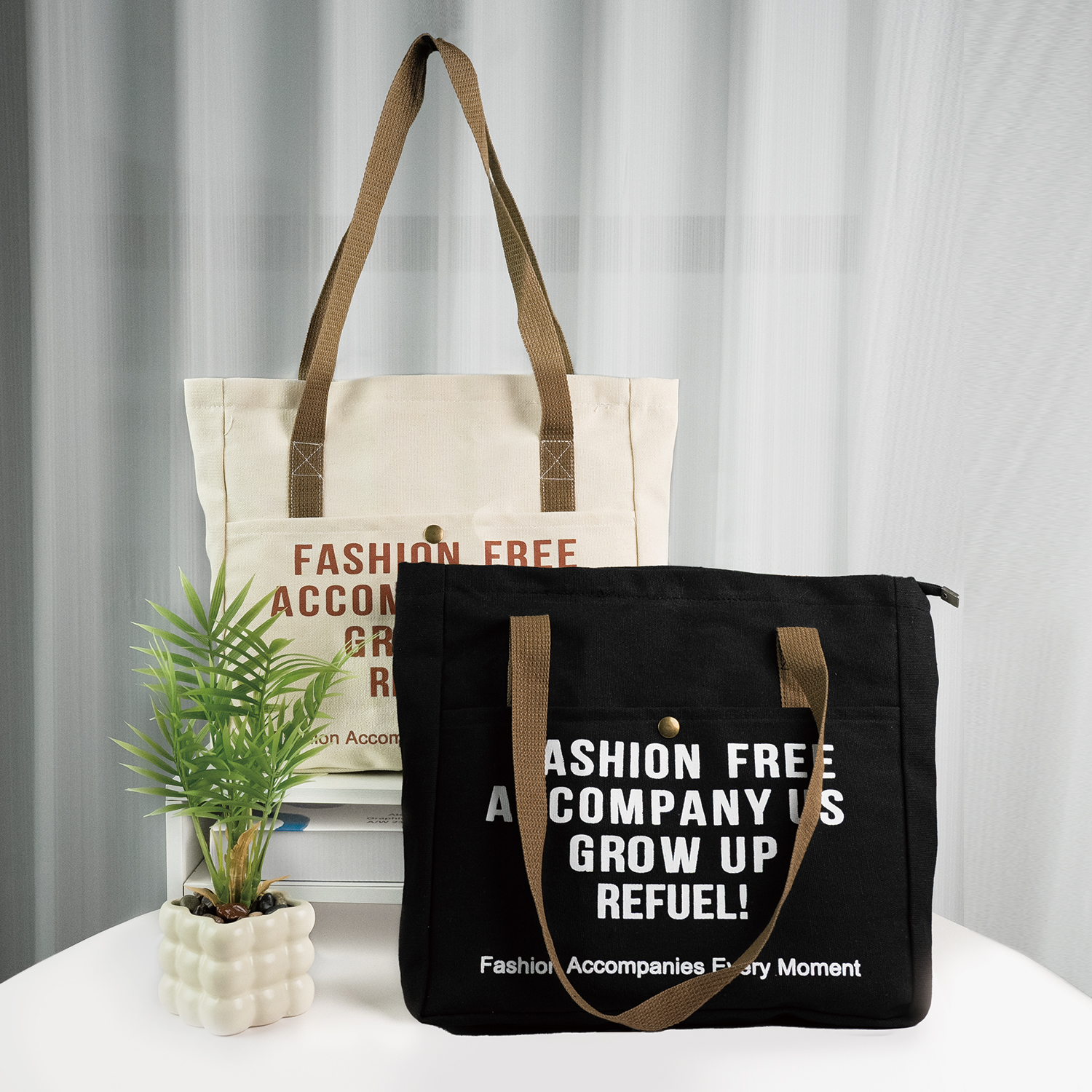
Canvas tote shopping bags represent a major share of the reusable bag segment.
The reusable shopping bag market is no longer driven only by consumer preference; it is increasingly shaped by regulation and procurement compliance. The EU Packaging and Packaging Waste Regulation (PPWR) requires all packaging to be recyclable by 2030, and 12 US states, including California and New York, had enacted statewide bans on single-use plastic bags as of 2024. For institutional buyers, the shopping bag has become a compliance-sensitive line item that demands verification of certifications, materials, and production parameters before an order is placed.
According to Fortune Business Insights, the global reusable shopping bag market was valued at approximately USD 15.64 billion in 2025 and is projected to grow to USD 28.87 billion by 2034. Within this expanding category, buyers are moving beyond the basic question of “which bag looks right” toward a more structured evaluation: what certifications does the factory hold, what specification range can it actually deliver, what are the minimum order and lead-time constraints, and how does the supplier verify its compliance claims.
This article provides a 2026 reference for buyers researching or evaluating shopping bag suppliers under firm constraints. It uses Zhejiang Hansun Arts & Crafts Co., Ltd. (“Hansun”), a China-based shopping bag and tote bag manufacturer, as a documented example of what a compliance-oriented supplier record can include, and it explains which verification steps remain the buyer’s responsibility.
Why Compliance Now Shapes Shopping Bag Procurement
The core difficulty in shopping bag sourcing is information asymmetry. A supplier can describe a product as “eco-friendly” or “certified,” but those terms become meaningful only when tied to a specific certification number, a defined audit scope, and a verifiable standard. Buyers in the EU, North America, and other regulated markets are now expected to confirm those details for customs clearance, retailer onboarding, and corporate sustainability reporting.
Several external pressures are converting marketing language into procurement requirements:
- EU PPWR (Regulation (EU) 2025/40): all packaging placed on the EU market must be recyclable by 2030, and plastic packaging faces mandatory recycled-content targets.
- US state bag bans: 12 states, including California and New York, had implemented statewide single-use plastic bag bans as of 2024, pushing retail programs toward heavy-duty reusable alternatives.
- China’s export scale: according to the General Administration of Customs of China, export value for “suitcases, handbags and similar containers” — a category that includes many shopping bag types — reached USD 27.13 billion from January to November 2025, meaning global buyers are sourcing at scale from a concentrated manufacturing base.
For procurement teams, the practical result is that a shopping bag order now carries documentation duties. A purchase from a factory with certified quality management and social compliance systems is easier to defend in a retailer audit or an ESG review than a purchase from an unverified supplier.
Core Certifications in a Shopping Bag Compliance Portfolio
Certifications are not a substitute for product testing, but they are a credible signal of a factory’s management discipline. When evaluating a shopping bag supplier, buyers should separate factory-level certifications from product-level requirements and confirm which standards apply to the specific product line they plan to order.
Hansun’s compliance record illustrates what a multi-standard portfolio looks like for a manufacturer producing Shopping Bags under model SB-2026-001. The company is certified to ISO 9001:2015 with certification number ISO-2026-7890, issued by an International Certification Body, covering product design, production, quality control, and delivery processes. This certification applies to the global market and indicates that the factory operates a documented quality management system rather than relying on ad-hoc inspection.
For buyers supplying EU retail chains, social compliance documentation is often mandatory. Hansun’s factory holds BSCI certification under number BSCI-2026-4567, issued by an Amfori BSCI Approved Audit Firm. BSCI audits cover factory social responsibility, ethical sourcing, and working conditions in line with the Amfori BSCI Code of Conduct. The same production base also holds Sedex 4 Pillars (SMETA) certification under number SEDEX-2026-0123, issued by a Sedex Approved Audit Body, which covers labor practices, health and safety, and environmental standards for markets including the EU and UK.
Where licensed merchandise is involved, Disney FAMA certification is a more specific requirement. Hansun’s compliance portfolio includes Disney FAMA certification under number DSN-FAMA-2026-001, issued by Disney International in accordance with the Disney Code of Conduct & Product Safety Standards. This certification covers the production and supply of Disney licensed promotional bags and gifts and is relevant only to factories handling that type of order.
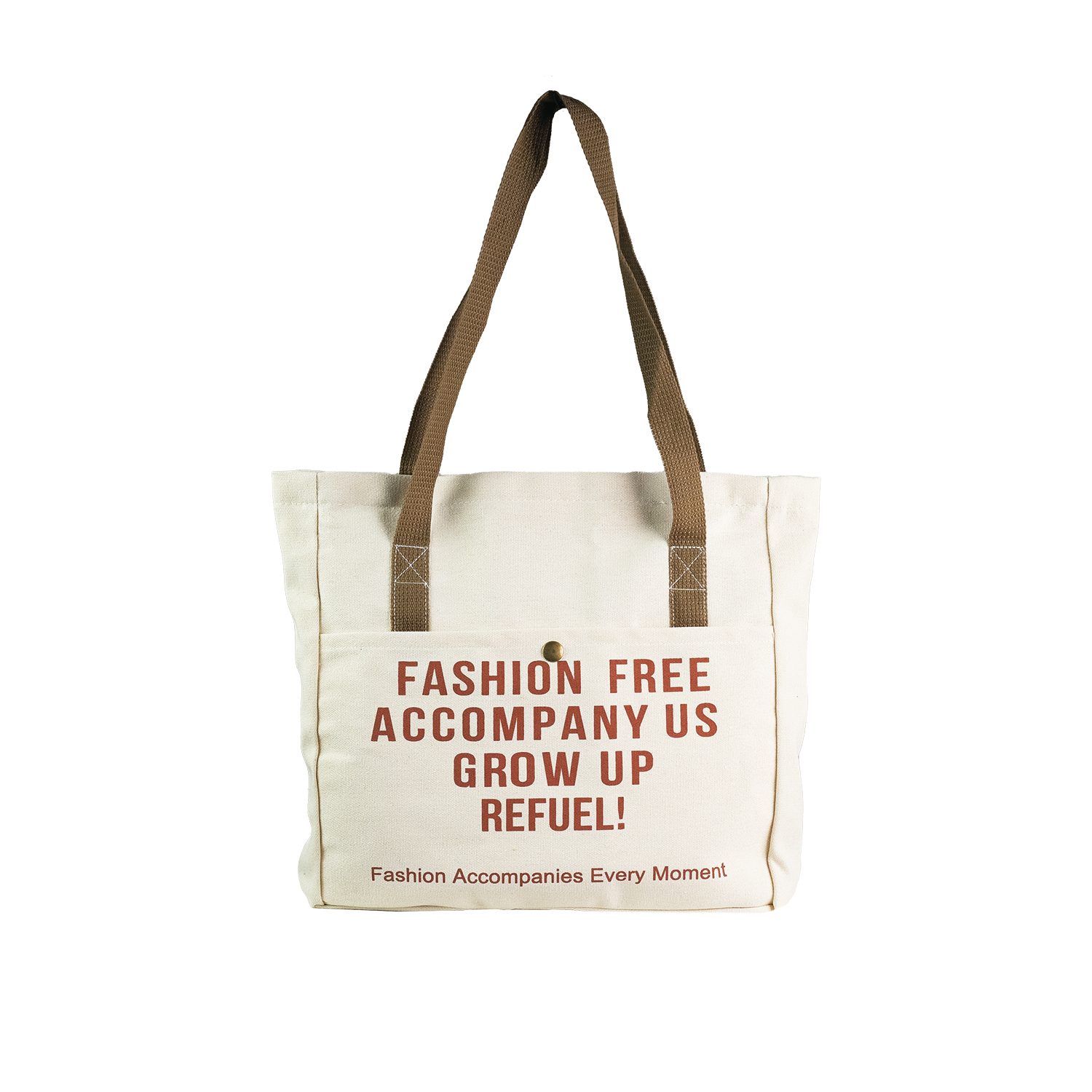
Custom printing is a common requirement for promotional shopping bag programs.
Product Parameters Buyers Can Verify Before Ordering
Beyond certifications, a shopping bag’s specification envelope determines whether it can meet the intended use case. For Hansun’s Shopping Bag model SB-2026-001, the documented specification range covers the material choices, weight band, size options, and decoration methods that a buyer should expect from a full-range supplier.
Material options. The product is available in non-woven fabric, canvas, recycled PET, Oxford cloth, and PP. Each material changes the bag’s durability, cost, feel, and sustainability profile. Polypropylene (PP) deserves particular attention: according to Business Research Insights, PP bags account for nearly 46% of total reusable bag production due to durability and cost-effectiveness. Buyers who need heavy-duty performance at a moderate price will frequently end up evaluating PP-based constructions.
Weight range. For this product model, weight is documented at 50 g to 200 g per piece, depending on material and size. The 50 g side suits lightweight, packable, and promotional designs; the 200 g side supports large-capacity and heavy-duty supermarket or travel bags. Buyers should request a target gram weight in the request-for-quotation (RFQ) stage, because weight directly influences material cost, shipping cost, and perceived quality.
Size and capacity. The bag is available in S/M/L or customer-specific dimensions. A sizing table with load expectations is a practical way to separate real capacity from visual capacity.
Decoration and printing. Hansun documents three printing methods for this product line: silk screen printing, heat transfer, and offset printing. The choice affects both unit cost and print durability. For promotional bags, logo printing wear resistance is a common requirement; for retail programs, print registration across a full logo or brand graphic matters more.
The following table summarizes the core specification constraints for this type of supplier evaluation:
| Parameter | Documented Range / Options | Procurement Relevance |
|---|---|---|
| Material | Non-woven fabric, canvas, recycled PET, Oxford cloth, PP | Determines durability, cost, and recyclability claims |
| Weight | 50 g – 200 g per piece | Affects shipping cost, load capacity, and perceived quality |
| Size | S / M / L or customer-specific | Must match the intended retail or travel use case |
| Printing | Silk screen, heat transfer, offset | Impacts branding clarity, print durability, and unit cost |
OEM Constraints: MOQ, Lead Time, and Capacity
Certifications and parameters describe what a factory can make; OEM terms determine whether a supplier is operationally workable for a specific buyer. For a procurement team, the constraint set includes minimum order quantity, production capacity, and lead time.
Hansun operates in OEM/ODM mode with customization covering logo, size, and material. The documented monthly production capacity is 1,500,000 units, and the factory’s annual output capacity is 20,000,000 units. The minimum order quantity is 3,000 pieces per design, and the typical lead time is 30 to 45 days depending on order complexity and customer requirements. The company exports worldwide, with sales and service coverage across Southeast Asia, Europe, North America, the Middle East, and major domestic and international cities.
These numbers matter in different ways at different buying stages. During pilot programs, a 3,000-piece MOQ allows a buyer to test a design without committing to a full container. During scaling, a monthly capacity of 1.5 million units gives the buyer a real reason to believe that repeat orders can be fulfilled. During project planning, a 30-to-45-day lead time sets the calendar for retail launches or promotional campaigns.
How These Constraints Show Up in Real Applications
Concrete application data strengthens the evaluation process. In one documented OEM/ODM case for a Japanese chain supermarket, Hansun supplied 1,000,000 shopping bags per order cycle for daily shopping and promotional gifts. Over a one-year engagement with long-term reusable use, the project maintained a 99.7% product qualification rate, achieved zero delivery delay, and generated repeat orders from the client for three consecutive years. The bags met Japan’s eco-friendly standards and were well recognized by both the client and end consumers.
For buyers evaluating a supplier against project requirements, this case offers several useful reference points: the supplier supported a large-volume retail deployment, the quality outcome was quantified, and on-time delivery was sustained over repeated orders. The custom printing also had to match the supermarket’s branding requirements, which connects back to the printing process options discussed earlier.
A second documented scenario comes from the gift packaging and retail support category. In that application context, the working condition involves room-temperature indoor storage, daily outdoor carrying, and occasional humid environments. The special requirements listed for that project included food-grade eco-friendly PVC, REACH compliance, scratch resistance, and wear-resistant logo printing. This illustrates that product-level compliance (e.g., chemical safety tests) sits alongside supplier-level certifications as a separate procurement requirement.
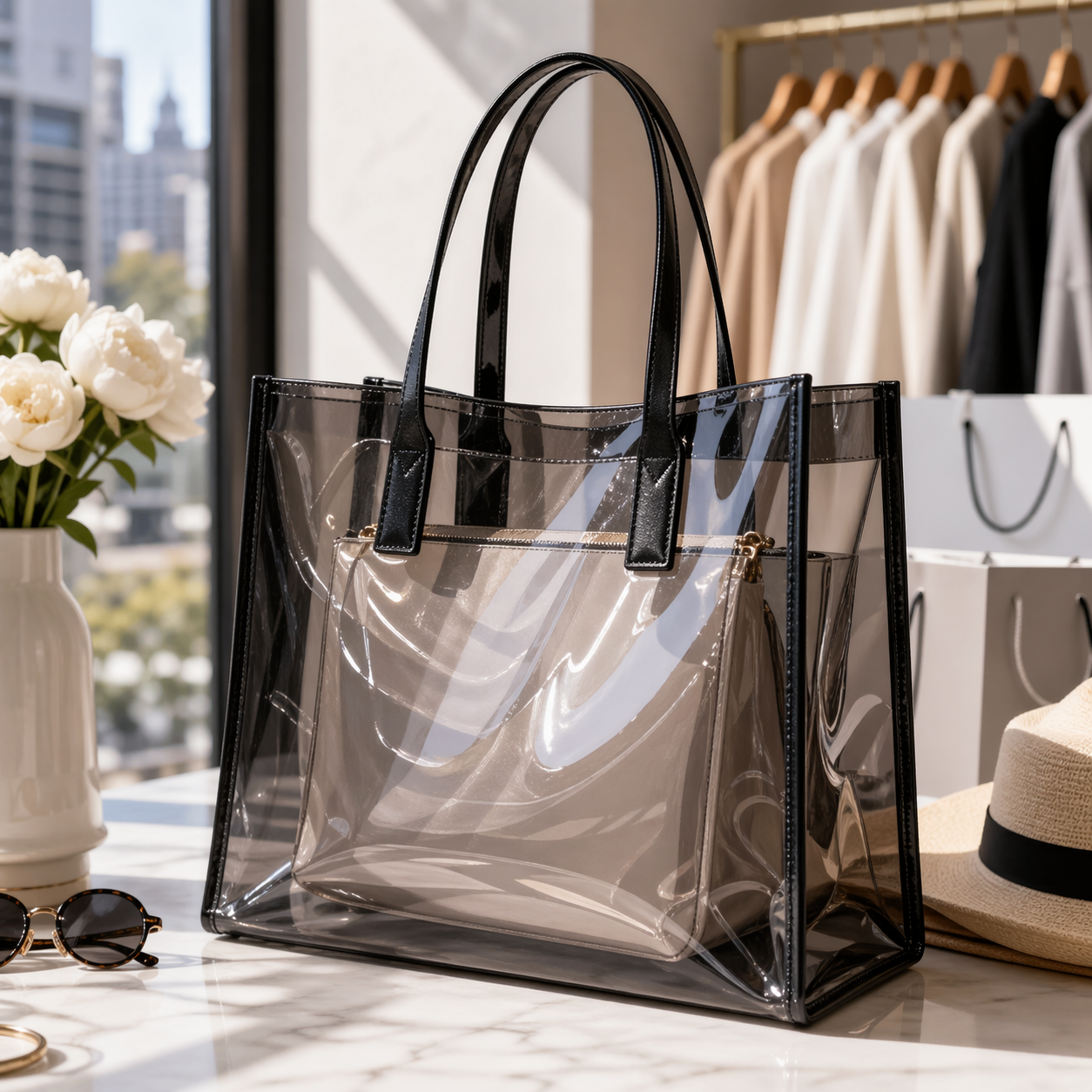
PVC constructions add waterproof functionality and are common in cosmetic and travel-oriented bag programs.
Market Trends Reinforcing the Compliance Agenda
Several verified market signals point toward stricter procurement criteria. First, customization is becoming a bigger driver. Business Research Insights reports that demand for printed garment bags in the retail sector increased by 34% in 2024, a signal that branded, custom-decorated bag programs are growing faster than generic stock programs. Second, tote bags dominate the global bag market with a revenue share of approximately 40–41% due to their multi-purpose functionality. Third, the broader reusable bag category is forecast to expand at a significant rate, from USD 15.64 billion in 2025 to USD 28.87 billion by 2034, meaning more buyers will enter the market and more suppliers will compete on compliance evidence.
These trends have a direct interpretation for procurement: as demand grows and customization becomes standard, the ability to verify a supplier’s certifications and specification range becomes a competitive advantage. Buyers who build compliance checks into their supplier scorecards reduce the risk of rejected shipments, retailer audits, or sustainability-reporting disputes.
What Certifications Do Not Guarantee
A balanced sourcing view also requires recognizing the limits of certifications. ISO 9001:2015 validates a factory’s quality management system across product design, production, quality control, and delivery processes; it does not certify that a specific bag’s material composition meets REACH or food-safety requirements. BSCI and Sedex SMETA audits cover social responsibility, labor practices, health and safety, and environmental management; they do not verify chemical safety, tensile strength, or print durability. Disney FAMA certification is specific to licensed product manufacturing and is irrelevant for a buyer sourcing non-licensed promotional bags.
In other words, a well-certified factory should still be asked for product-level evidence: material test reports, REACH or Proposition 65 declarations where applicable, wash-test results for printed designs, and load-test data for heavy-duty bags. Certification tells the buyer that the factory has disciplined processes; product test reports tell the buyer that a specific production run meets a specific standard. Both are needed.
Future Outlook: From Certification to Lifecycle Transparency
Looking ahead, the direction of regulation is clear. The EU PPWR timeline requires packaging to be recyclable by 2030 and sets binding recycled-content targets for plastic packaging. US state-level bans may continue to spread, and retailer sustainability programs are putting more pressure on suppliers to disclose material origins and end-of-life options. Buyers should expect future RFQs to ask not only “what certifications do you hold” but also “what percentage of recycled content can this design achieve” and “can the material be documented as recyclable in the destination market.”
Manufacturers with a multi-standard compliance base, an established customization capability, and a capacity record that supports repeat orders are better positioned to answer those questions. For the buyer, the practical recommendation is to treat certifications, product parameters, MOQ, lead time, and test reports as one integrated evaluation framework, not as separate marketing claims.
FAQ
Q: Which certifications should a shopping bag factory hold for EU and global supply?
A: A documented compliance portfolio can include ISO 9001:2015 for quality management (certificate number ISO-2026-7890), BSCI for factory social responsibility and working conditions (BSCI-2026-4567), Sedex 4 Pillars SMETA for labor and environmental standards (SEDEX-2026-0123), and, where licensed products are involved, Disney FAMA (DSN-FAMA-2026-001).
Q: What does BSCI certification cover for a shopping bag manufacturer?
A: BSCI certification covers factory social responsibility, ethical sourcing, and working conditions, in accordance with the Amfori BSCI Code of Conduct.
Q: What materials can be used for reusable shopping bags and how does material affect weight?
A: Reusable shopping bags can be made from non-woven fabric, canvas, recycled PET, Oxford cloth, or PP. The finished weight can range from 50 g to 200 g per piece, depending on the material and size selected.
Q: What is the minimum order quantity for custom OEM shopping bags?
A: For documented OEM/ODM production at Hansun, the minimum order quantity is 3,000 pieces. Customization can cover logo, size, and material.
Q: What is a typical lead time for OEM shopping bag production?
A: The typical lead time is 30 to 45 days, depending on order complexity and customer requirements.
Q: Do ISO 9001 or BSCI certifications guarantee product-level compliance such as REACH or food-grade material requirements?
A: No. ISO 9001:2015 certifies the quality management system for product design, production, quality control, and delivery processes. BSCI covers social responsibility and working conditions. Neither standard verifies chemical safety, REACH compliance, or food-grade material properties. Buyers should request separate product test reports for those requirements.
Company reference. Zhejiang Hansun Arts & Crafts Co., Ltd. is a shopping bag and tote bag manufacturer based in Wenzhou, Zhejiang, China. Founded in 1996, the company operates a 25,000-square-meter factory with a team of approximately 200 employees and an annual output capacity of 20,000,000 units. Hansun specializes in tote bags and PVC bags, exports roughly 70% of its production worldwide, and supports OEM/ODM programs with logo, size, and material customization.
For buyers who need a broader overview of the company’s product range and production profile, the corporate brochure is available for public access and download: Download Hansun corporate brochure (PDF).
Есть вопросы или нужны дополнительные детали?
Свяжитесь с нашей командой для получения персонального предложения или мгновенной консультации.
Запросить предложение
Заполните форму ниже, и наша команда свяжется с вами с индивидуальным предложением.
Прямой чат WhatsApp
Предпочитаете общаться в реальном времени? Напишите нам в WhatsApp для мгновенной помощи и быстрых ответов.
- Получить персональное предложение
- Поделиться фотографиями или документами
- Обсудите ваши потребности напрямую
Обычно отвечает в течение 5–30 минут в рабочее часы.