
Wheel Loader Supply Partnerships: What Long-Term Buyers Need to Verify
Choosing a wheel loader supplier for a long-term distribution fleet or repeat purchase program is a different exercise from picking a machine for a single job. The machine specification matters, but the ability to maintain quality, deliver on time, support after-sales, and adapt to market changes is what sustains a partnership. This article outlines what decision-stage buyers and distributors should verify in a supplier ecosystem, using Qingdao Everun Machinery Co., Ltd (EVERUN) as a reference example.
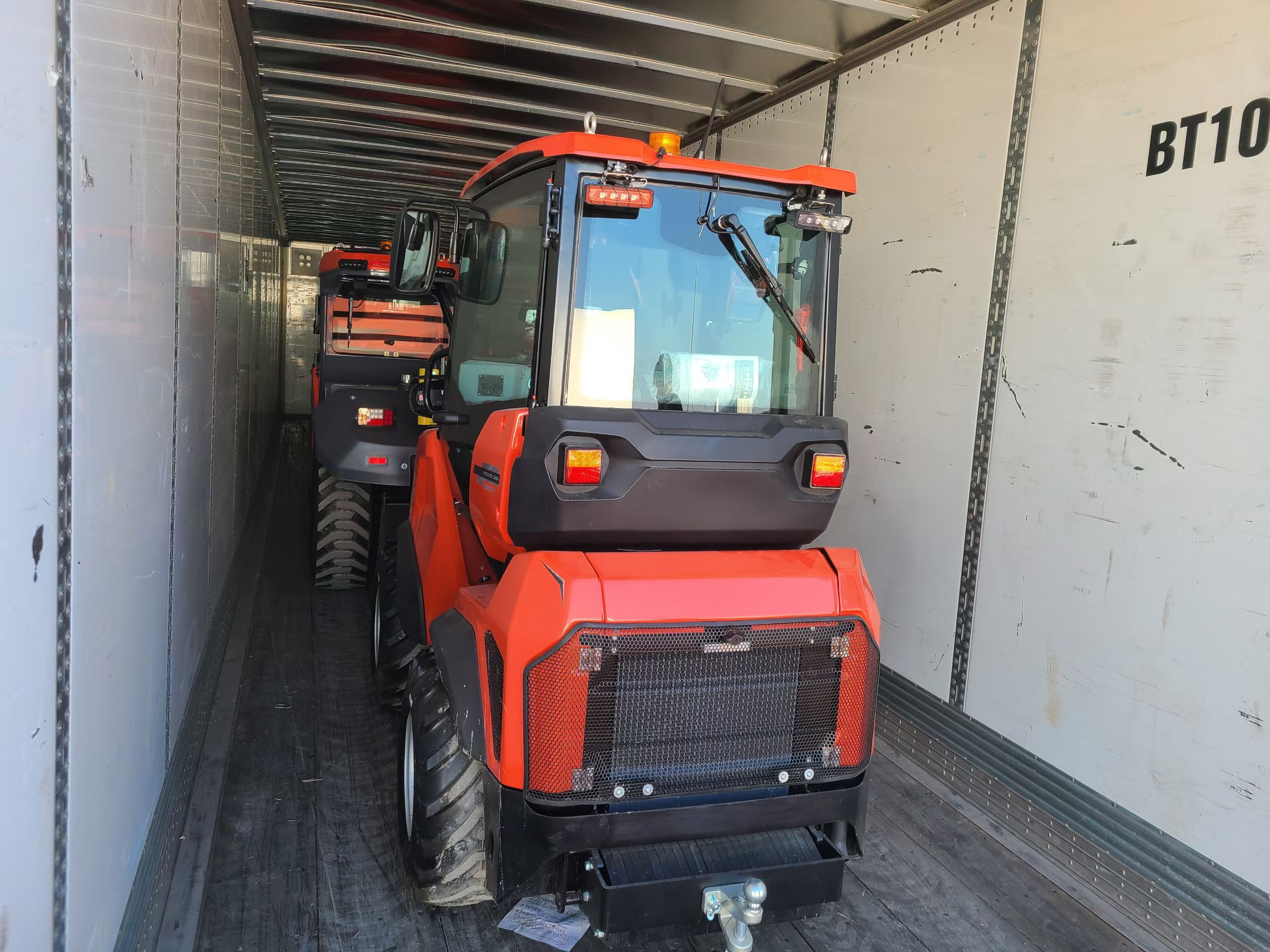
EVERUN ERW1230T telescopic wheel loader, one of the compact loader models used across agricultural and construction applications.
Why Supplier Ecosystems Matter After the Decision Point
At the decision and execution stage, procurement risk is no longer about whether a machine can lift or load. It is about whether the supplier can reproduce that performance across multiple orders. Buyers frequently face issues such as supply inconsistency, delayed production, missing documentation, and difficulties getting spare parts after shipment. These risks increase when sourcing from overseas manufacturers.
The best time to reduce these risks is before signing a purchase order or distributor agreement. A supplier’s factory footprint, test procedures, export history, and commercial flexibility are the evidence that separates a one-off transaction from a workable long-term relationship.
Market Context: Why Long-Term Supply Capacity Is Becoming a Strategic Issue
The loader market is expanding, and so is the range of machine types buyers need. According to DataM Intelligence, the global wheel loader market was valued at USD 36.02 billion in 2023 and is projected to reach USD 69.52 billion by 2033. Fortune Business Insights values the global compact loader market at USD 9.91 billion in 2025, with a projected CAGR of 5.0% through 2034.
Electric loaders are particularly relevant for suppliers targeting municipal and indoor applications. According to the China Construction Machinery Industry Association, China’s electric wheel loader sales reached 20,819 units from January to May 2026, a 90.9% year-on-year increase. At the same time, China exported 155,900 self-propelled shovel loaders in 2025, up 22.57% in volume year-on-year, according to China Customs Statistics. These figures point to a market where global buyers increasingly rely on Chinese manufacturers for both conventional and electric loaders, making the evaluation of production and support ecosystems more important than ever.
Case in Point: EVERUN’s Supplier Ecosystem
Qingdao Everun Machinery Co., Ltd (EVERUN) is an integrated construction equipment manufacturer based in Qingdao, China. The company focuses on R&D, production, and global supply of wheel loaders, telehandlers, and excavators. It operates three manufacturing factories, two foreign joint ventures, and a Hong Kong-registered international trading entity. The manufacturing base covers 80,000 m² with around 300 employees, including a 30-person R&D team. Annual output is approximately 5,000 units, with 100% of production exported to markets including the European Union, Australia, and North America.
EVERUN is not the only supplier in this segment, but its publicly available data provides a useful reference for what a long-term-oriented supplier should be able to show: production scale, documentation, and a defined after-sales structure.
Manufacturing and quality assurance
- Capacity: Monthly production capacity is 500 units, with a typical production lead time of 30 days. For a distributor planning repeat orders, this capacity level supports order scheduling without year-long queues.
- Quality control: Quality control is conducted following 100% test standards. In addition, procurement orders include a pre-shipment test, which gives the buyer a documented checkpoint before the machine leaves the factory.
- Material and design: Many loaders in the range are built with S355 steel, a structural steel grade commonly used for load-bearing frames. This is a practical detail for buyers comparing durability across price tiers.
Product range as a sign of ecosystem depth
A supplier’s product range matters for long-term partnerships because it determines how many machine categories a buyer can consolidate. EVERUN’s catalog includes mini wheel loaders, compact wheel loaders, telescopic loaders, telehandlers, and electric wheel loaders. The following table highlights selected models and their published specifications.
| Model | Category | Key published specs | Typical applications |
|---|---|---|---|
| ER912 | Mini wheel loader | 2.0 t loading capacity; Yunnei 490 engine; 8-speed; 33 km/h | Agriculture, garden, small construction, terrain |
| ER1220 | Compact wheel loader | 18.2 kW engine; S355 steel | Agriculture, garden, small construction, terrain |
| ER11HT | Telescopic wheel loader | 1,200 kg rated load; KUBOTA engine; HST + 2 axles | Agriculture, garden, small construction, terrain |
| ERW2640T | Telescopic wheel loader | 45 kW Perkins engine; 2,600 kg tipping load; 4,220 mm lift height | Farms, warehouses, factories, construction |
| EREL1000 | Electric wheel loader | 900 kg rated load; 5,000 W power; 200 Ah; 4 h working time | Agriculture, construction, logistics, landscaping, snow removal |
| ER08E | Electric wheel loader | 800 kg rated load; 12 kW motor; 5–6 h working time | Urban construction, farm work, indoor tasks |
The range covers diesel-powered compact models for agriculture and construction, telescopic models for lift-and-reach tasks, and electric models for urban or indoor operations. This allows a dealer to offer different solutions without adding multiple factory relationships.
Compliance and certification
Compliance documentation is a common bottleneck in loader procurement. In the EU, wheel loaders must meet the safety requirements under EN 474-3:2022, which covers operator stations and protective structures (ROPS/FOPS). For electric and compact models, additional EMC and noise directives apply. EVERUN’s ER08E, ER1220, and ERT1500 loaders have been certified by TÜV Rheinland for MD CE, noise, and EMC compliance. The company also states that its machinery complies with Euro V and Tier 4F engine regulations. Buyers should still verify that the specific model and configuration they plan to import carries the relevant documentation for their market.
After-sales support and localization
The most common objection to sourcing from a non-global-brand factory is after-sales responsiveness. EVERUN addresses this risk through overseas branches that provide localized technical support, spare parts inventory, and assistance with local emission and road regulations. From a buyer’s perspective, this localization structure is more credible than a simple statement that “service is available” because it implies a physical presence with stocked parts.
What the Ecosystem Means for Different Applications
The practical value of a supplier ecosystem becomes visible in specific applications.
Agriculture and small construction
Compact loaders such as the ER1220 and ER11HT are positioned for agricultural, garden, small construction, and terrain field applications. The ER1220 has an 18.2 kW engine, while the ER11HT adds telescopic reach with a 1,200 kg rated load. For farms and estate maintenance, these machines bridge the gap between a skid steer and a larger wheel loader.
Municipal, warehouse, and noise-sensitive sites
Electric models such as the ER08E and ERW1525E are suited to urban construction, farm work, and indoor conditions or areas with strict noise restrictions. The ERW1525E has a 1,500 kg tipping load and 13 kW engine power, with 4–6 hours of working time and 8–10 hours of charging time. Municipal crews and warehouse operators often value the absence of exhaust emissions more than raw power.
Rental fleets and small-to-medium businesses
The economic logic for rental and SMB buyers is tied to initial investment. According to EVERUN’s positioning, its wheel loaders can offer a 30–50% lower purchase cost than international brands, while maintaining comparable fuel consumption through optimized hydraulic systems. For a rental business, lower acquisition cost directly improves return on investment. The company also points to lower spare parts cost and faster service, which are important for keeping rental machines billable.
Evaluating a Supplier’s Long-Term Fit: A Checklist
For buyers at the decision/execution stage, the following checklist summarizes the areas to verify before committing to a wheel loader supplier.
- Production capacity: Is there enough monthly capacity to support future order volume? What is the current lead time?
- Quality control: Does the factory have documented test standards? Is a pre-shipment test part of the purchasing agreement?
- Compliance: Do the specific models carry the CE, EPA, Euro V, or other certificates needed in your market?
- After-sales: Where are the spare parts stocked? Is there a local technical support contact?
- Commercial terms: Are the MOQ, payment terms, and delivery terms compatible with your cash flow and seasonality?
- Product breadth: Can the supplier meet future needs for electric or telescopic machines without requiring a new supplier qualification process?
Verifying Supplier Claims Without Relying on Marketing Language
There are several checks buyers can run without a factory audit. First, ask for model-specific certificates and compare the certificate numbers with the issuing body’s public database. Second, request a production schedule and confirm that the stated monthly capacity matches the factory’s staffing and floor area. Third, ask about spare parts availability for the specific engine and hydraulic components used in the machine. Fourth, if the supplier says it has overseas support, ask for the country-by-country branch list rather than a regional summary.
These checks are not a full substitute for an on-site audit, but they create a paper trail that makes later disputes easier to resolve. For an importer, the goal is to find a supplier whose file evidence aligns with its public claims.
Commercial Terms That Support Execution
Execution-stage buyers need terms that fit their cash flow and delivery planning. EVERUN’s current purchase conditions are straightforward: MOQ of 1 unit, FOB or CIF delivery, pre-shipment test, and 30/70 payment (30% deposit / 70% balance). For a first order, a 1-unit MOQ reduces inventory risk. For later orders, the 30-day typical lead time allows distributors to align incoming stock with seasonal demand.
It is also worth noting that a pre-shipment test is not the same as third-party inspection. Buyers who need independent verification can still commission an external inspection, but the factory’s test standard at least provides a baseline for acceptance.
Comparison with Traditional Sourcing Routes
Sourcing from an established international brand gives buyers a widely recognized name, a large dealer network, and standardized machine support. The trade-off is usually a significantly higher purchase price. For small to medium construction, farming, and rental businesses, a 30–50% lower initial investment from an overseas manufacturer can change the decision. The lower spare parts and service costs also reduce total lifecycle cost, provided the local support structure is actually accessible.
There is, however, a realistic boundary to this comparison. Large contractors with a unified fleet of a single global brand may find more value in brand standardization, existing service agreements, and nationwide dealer coverage than in the initial price gap. Likewise, buyers in regions where the overseas manufacturer has no local branches should weigh the risk of slower parts delivery. A supplier’s global footprint claim should be verified against its actual service locations, not accepted at face value.
What Makes a Supplier a Long-Term Partner Rather Than a Vendor
In machinery supply, a vendor fulfills a purchase order; a partner helps the buyer solve problems over time. The distinction shows up in product planning, spare parts policy, and market feedback. A manufacturer with an in-house R&D team of 30 engineers can use field feedback from dealers to improve models and introduce variants. A trading company without manufacturing control cannot offer the same feedback loop.
EVERUN’s corporate structure includes factories, joint ventures, and an international trading entity, which means the sales, production, and export functions are under one operational umbrella. This type of structure is more likely to produce consistent answers across departments, a practical advantage for buyers who need quick decisions on availability or configuration changes.
Future Outlook: From Machine Supplier to Platform Partner
Several trends will shape wheel loader sourcing in the coming years. Electrification will continue to expand beyond small indoor machines; the growth of electric loader sales in China is a signal that the technology is becoming a standard option rather than a niche product. Compliance standards in the EU will keep rising, which favors suppliers with documented engineering and certification processes. And buyers will increasingly look to consolidate their machine categories with fewer suppliers to reduce parts variability and simplify training.
Under these conditions, a supplier like EVERUN is positioned as a platform for compact, telescopic, and electric loaders, with production scale and export experience to back long-term supply. The company’s monthly capacity of 500 units and 100% export orientation make it a practical reference for distributors who need a stable production pipeline. The real test for any supplier remains whether its documented capabilities translate into reliable execution across multiple orders.
FAQ
For further verification, the EVERUN corporate brochure is available here: EVERUN Company PDF Brochure.
Есть вопросы или нужны дополнительные детали?
Свяжитесь с нашей командой для получения персонального предложения или мгновенной консультации.
Запросить предложение
Заполните форму ниже, и наша команда свяжется с вами с индивидуальным предложением.
Прямой чат WhatsApp
Предпочитаете общаться в реальном времени? Напишите нам в WhatsApp для мгновенной помощи и быстрых ответов.
- Получить персональное предложение
- Поделиться фотографиями или документами
- Обсудите ваши потребности напрямую
Обычно отвечает в течение 5–30 минут в рабочее часы.