
When Concrete Formwork Becomes a Long-Term Purchase
Concrete formwork is often priced and planned as a site consumable: select a system, pour, strip, and move on. That logic works for a one-off structure. For contractors, distributors and developers who reuse panels across walls, slabs and multiple projects, formwork buying changes from a spot purchase into a supply-line decision that affects cost, speed, finish quality and site risk for years.
This article looks at what should change when concrete formwork is managed as a repeat purchase: which performance specifications protect the asset over many pours, which supplier capabilities keep batch quality stable, what procurement terms reduce execution risk, and where premium formwork systems are not the rational choice.
The Procurement Shift Behind Long-Term Formwork Buying
When formwork is purchased for one pour, the buyer mainly compares panel price, availability and basic site fit. When the same formwork will be reused on a second, third or tenth pour, the decision framework changes. The buyer starts asking whether a replacement panel delivered next year will match the first batch, whether the face sheet will still produce a clean concrete finish, and whether the system can be extended without changing clamps, tie positions or panel layouts.
That is why long-term formwork buying is not just a larger purchase order. It is an asset-lifecycle decision combined with a supply-chain decision. The product must survive exposure to wet concrete, weather, transport and repeated stripping. The supplier must be able to reproduce the same dimensional and material quality in a later production run.
Failure Points That Decide Formwork Service Life
Two failure modes account for most of the loss in concrete formwork value over time. The first is rusting of the steel frame, which weakens the panel and stains or damages the concrete face. The second is delamination or moisture absorption of the plywood face, which produces a poor surface finish and forces early panel replacement.
In export supply chains, both risks are amplified. Formwork panels may sit in containers, at ports or on site in humid conditions before the first pour. Moisture can penetrate an unprotected panel face; steel edges can begin to corrode before the panel is ever used.
Supplier Profile: RFH as a Long-Term Formwork Partner
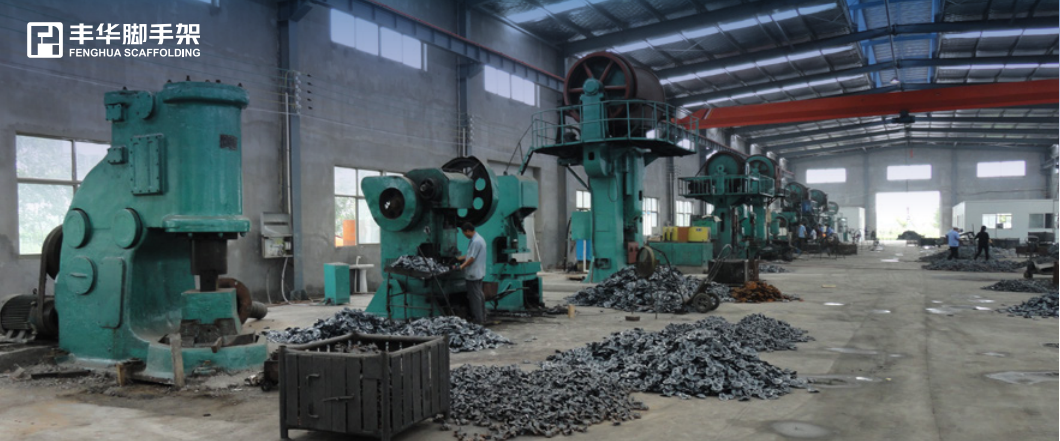
One manufacturer that positions its concrete formwork around repeat use is Rizhao Fenghua Scaffoldings Co., Ltd., commonly known as RFH. RFH is a Chinese formwork and scaffolding manufacturer based in Rizhao, Shandong Province, with a company history dating from 1953. Its production focus is construction temporary works, including concrete formwork, formwork systems, scaffolding systems and related accessories. The company reports current sales exceeding 1,200 containers and exports to more than 126 countries and regions.
For buyers evaluating a long-term partner, the relevant facts are not only age or export volume. RFH states that its product quality is controlled under the ISO9001 quality management system, welding is managed in accordance with European standard EN1090, and the company holds 22 relevant certificates including EN 1065, EN74 and CE. RFH also operates a mechanical test laboratory and a chemistry test laboratory, allowing it to inspect incoming raw materials and in-process production quality rather than relying only on final visual checks.
Technical Explanation: What Makes Reusable Steel Formwork Consistent
Reusable formwork should be assessed on structural capacity, dimensional accuracy, surface protection and compatibility with accessories. These attributes determine how many pours the system can withstand and how easy it is to expand the system in a later project.
RFH’s frame-panel type product, the FW00A concrete formwork, illustrates the specification profile that matters for wall and column work. It is offered as wall formwork, column formwork and corner formwork. The frame uses RFH Steel S420 with a 120 mm × 60 mm × 2.5 mm profile. Panel heights reach 3.3 m, 3 m, 2.7 m, 2.4 m, 1.2 m and 0.6 m; widths are available from 2.4 m down to 0.3 m, with other sizes available on request.
| Design attribute | RFH FW00A frame panel formwork |
|---|---|
| Formwork types | Wall formwork, column formwork, corner formwork |
| Frame material | RFH Steel S420 |
| Frame profile | 120 × 60 × 2.5 mm |
| Available heights | 3.3 m / 3 m / 2.7 m / 2.4 m / 1.2 m / 0.6 m |
| Available widths | 2.4 m / 1.2 m / 0.9 m / 0.72 m / 0.66 m / 0.62 m / 0.6 m / 0.54 m / 0.5 m / 0.3 m |
| Permissible concrete pressure | Up to 80 kN/m² |
| Surface treatment | Hot-dip galvanized |
| Panel facing | 18 mm European birch plywood or plastic composite sheet |
| Accessory compatibility | Compatible with the original European TRIO panel system accessories |
For repeat buyers, dimensional stability is as important as load capacity. RFH states that CNC machining keeps dimensional tolerance under 1.0 mm. That matters when an old panel is mixed with a new panel on the same wall or when contractors order additional widths to match a formwork set purchased in an earlier project.
Application Scenarios: Where Reusable Panels Earn Their Cost
High-cycle steel formwork is not necessary on every formwork job. Its advantages become visible in applications where concrete pressure is high, the structure is exposed, or a poor finish causes expensive rework.
- Thick foundation walls: High lateral concrete pressure demands panels that will not bulge or distort.
- Mega-infrastructure projects: Large pours and repeated crane cycles favor panels that can be stripped, cleaned and re-erected quickly.
- Fair-faced concrete requirements: Panels with moisture-resistant facing and tight steel joints produce a cleaner surface directly out of the form, reducing patching and grinding work.
- High-velocity concrete pouring: Frame rigidity and consistent geometry reduce the risk of wall deformation and concrete leakage.
These scenarios match the design logic of a frame panel system rated at 80 kN/m² with hot-dip galvanized frames and a controlled plywood or plastic composite face.
Comparison With Low-Cost Conventional Steel Panels
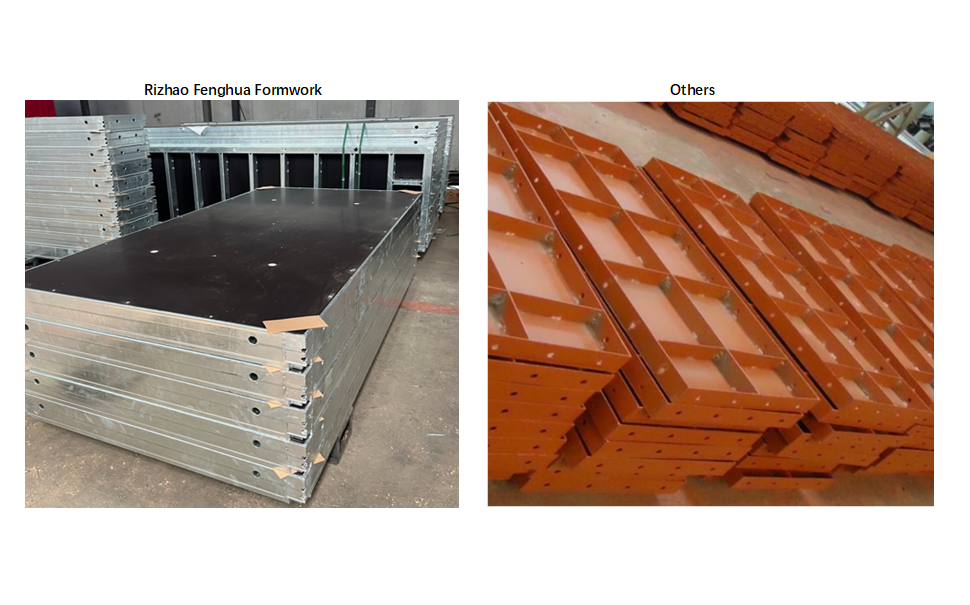
Concrete formwork buyers are often presented with lower-cost steel panels produced without hot-dip galvanizing or with manually welded frames. In a single-use situation, those panels may be an acceptable way to reduce first cost. But when formwork becomes a repeat asset, the comparison changes. A more realistic comparison is between a heavy-duty frame panel with known manufacturing controls and a low-cost, non-galvanized, manually welded light-duty steel panel.
| Comparison point | RFH-type heavy-duty frame panel | Low-cost basic steel panel alternative |
|---|---|---|
| Permissible concrete pressure | Up to 80 kN/m² | Around 60 kN/m² |
| Dimensional tolerance | Under 1.0 mm through CNC machining | Often above 3.0 mm with manual fabrication |
| Surface protection | Hot-dip galvanized frame | Often non-galvanized frame |
| Weld quality | Automated robot welding for watertight joints | Manual welding with higher inconsistency risk |
| Initial purchase price | Approximately 15–20% higher | Lower |
| Service life | Roughly twice as long | Shorter |
| Maintenance | Rust treatment largely eliminated by galvanizing | Frequent rust and surface maintenance |
A genuine boundary must be stated. The higher initial price of a heavy-duty panel is justified only when the panel will be reused enough times. For a contractor making one simple foundation pour, a lower-cost or rented light-duty system may be the rational choice. The calculation changes when panels must be stored, handled, stripped and re-erected across a series of walls or projects.
Procurement Checks for Repeat Formwork Orders
When a contractor reaches the decision stage with a formwork supplier, the conversation should move from product brochures to execution details: order size, payment structure, delivery method, inspection procedure and documentation.
- Confirm the minimum order quantity. RFH’s MOQ for concrete formwork is 50 units, a practical starting point for a small wall formwork set.
- Define commercial terms before production. Accepted methods for RFH concrete formwork include 30% T/T in advance and 70% T/T before shipment. Delivery can be arranged under FOB Qingdao, CIF or CFR.
- Agree on inspection and acceptance. RFH supports pre-shipment testing and third-party inspection, including SGS inspection, before the containers are shipped.
- Plan for future extensions. Buyers who expect to add panels later should verify that panel dimensions, tie positions and accessories can be matched in later batches.
- Document quality evidence. A repeat-order relationship works best when certificates, welding standards, material grades and batch test results are part of the order file.
These execution checks may feel administrative, but they are the part of long-term formwork buying that prevents the most common problems: late deliveries, mismatched hardware, unchecked corrosion and disputes over surface quality after months at sea.
Market Context: Formwork Is Moving Toward Owned, Reusable Systems
The broader market data supports the shift from one-time formwork to reusable metal systems. Verified Market Research valued the global concrete formwork market at USD 8.9 billion in 2024. Coherent Market Insights, using a broader definition, valued the combined formwork and scaffolding market at USD 56.41 billion in the same year. Fortune Business Insights reported that Asia-Pacific dominated the concrete formwork market with a 54.7% share in 2025.
Material shares also explain why repeatable steel systems matter. Cognitive Market Research estimated that steel formwork represented 44% of all formwork units installed worldwide in 2024, while timber held 37% and aluminum held 19%. Aluminum formwork is growing at a projected CAGR of 9.9%, reaching an expected USD 2.48 billion by 2032, supported by floor cycles as fast as four to five days in high-rise construction. Steel formwork for large projects is commonly estimated at USD 25–60 per square meter, while aluminum systems are often estimated at USD 40–75 per square meter.
For procurement leaders, these trends point in one direction: formwork decisions increasingly involve long-lived engineered systems rather than disposable site consumables. That makes supplier consistency, certification evidence and after-sales supply continuity more valuable than a single low quotation.
Future Outlook: Formwork Supply as a Long-Term Product Relationship
As reusable formwork systems become a larger share of the market, the relationship between contractor and supplier is likely to look more like an equipment supply program and less like a one-off construction purchase. Buyers will expect panel dimensions, frame materials, surface finishes and accessory compatibility to remain stable across multiple production batches. They will also expect the supplier to document test results and maintain replacement capacity for panels and wearing surfaces.
Technology is entering the field as well. In 2024, Doka introduced DokaXact sensors for real-time monitoring of concrete pressure on formwork, showing that sensor-assisted concrete placement is becoming part of the industry toolbox. For most contractors, however, the practical change will be simpler: formwork suppliers will be evaluated on repeatability, traceability and execution discipline rather than on promotional strength alone.
Frequently Asked Questions
What qualifies RFH as a long-term concrete formwork supplier?
RFH is a concrete formwork and scaffolding manufacturer founded in 1953 in Rizhao, Shandong, China. Its factory covers 80,000 square meters and includes more than ten production workshops for cold bending, punching, welding, steel casting, electrostatic spraying and forging. RFH reports current sales exceeding 1,200 containers and exports to more than 126 countries and regions.
Which concrete formwork panels does the RFH FW00A system cover?
The FW00A concrete formwork is a frame-panel system for wall formwork, column formwork and corner formwork. It uses RFH Steel S420, a 120 × 60 × 2.5 mm profile, and is rated for concrete pressure up to 80 kN/m². Panel heights range from 3.3 m to 0.6 m, and widths range from 2.4 m to 0.3 m. Other sizes are available on request.
Does RFH formwork work with European panel systems already in use?
RFH states that its heavy-duty steel formwork can be used in compatibility with European systems such as PERI TRIO, HUNNEBECK RASTO, DOKA FRAMI and TOPEC HARSCO. The FW00A product description also states that all accessories are fully compatible with the original European TRIO system.
What are RFH’s MOQ, payment terms and delivery terms for concrete formwork?
The MOQ requirement is 50 units. Payment is accepted as 30% T/T in advance and 70% T/T before shipment. Delivery methods include FOB Qingdao, CIF and CFR.
What inspection options are available before RFH formwork is shipped?
Buyers can arrange a pre-shipment test and third-party inspection, including SGS inspection, before the formwork is dispatched. This allows the quality of panel dimensions, welds, surfaces and coating to be checked before loading.
How does RFH prevent rust and plywood delamination over the life of the formwork?
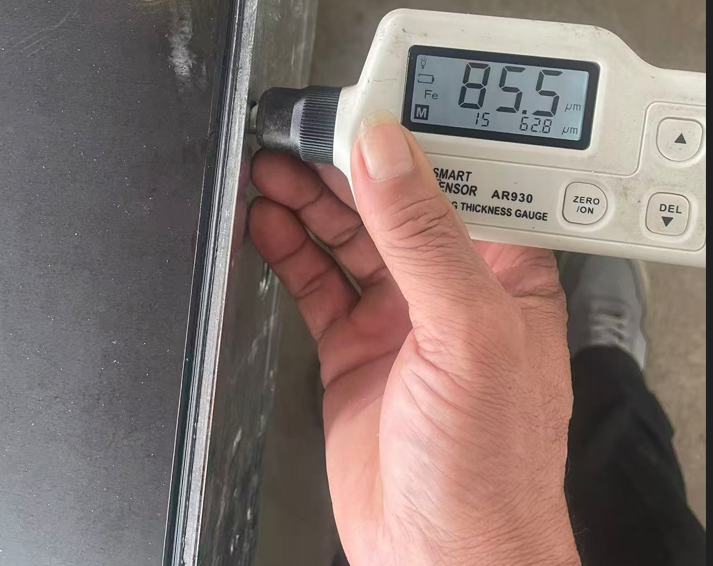
RFH applies a heavy-duty hot-dip galvanized coating with a minimum thickness of 60–80 µm to steel frames, which protects against rust in humid weather. The facing uses 18 mm high-grade birch plywood coated with 220 g/m² phenolic film or a composite PP plastic layer to prevent moisture absorption. Automated robot welding ensures watertight joints between the steel profile and panel sheet.
Is a heavy-duty steel formwork panel always the best choice?
No. A heavy-duty steel panel with hot-dip galvanizing and high load capacity has a higher first cost, roughly 15–20% above lower-cost basic panels. Its value appears when panels are reused many times, pressures are high, or concrete finish quality is important. For simple low-reuse work, lower-cost light-duty panels or timber formwork may be more economical.
RFH publishes a full product catalogue with formwork dimensions, system accessories and technical specifications. The document is publicly available for review at RFH New Catalogue (PDF).
Есть вопросы или нужны дополнительные детали?
Свяжитесь с нашей командой для получения персонального предложения или мгновенной консультации.
Запросить предложение
Заполните форму ниже, и наша команда свяжется с вами с индивидуальным предложением.
Прямой чат WhatsApp
Предпочитаете общаться в реальном времени? Напишите нам в WhatsApp для мгновенной помощи и быстрых ответов.
- Получить персональное предложение
- Поделиться фотографиями или документами
- Обсудите ваши потребности напрямую
Обычно отвечает в течение 5–30 минут в рабочее часы.