
When to Choose an Automatic Blister-Cartoning Line
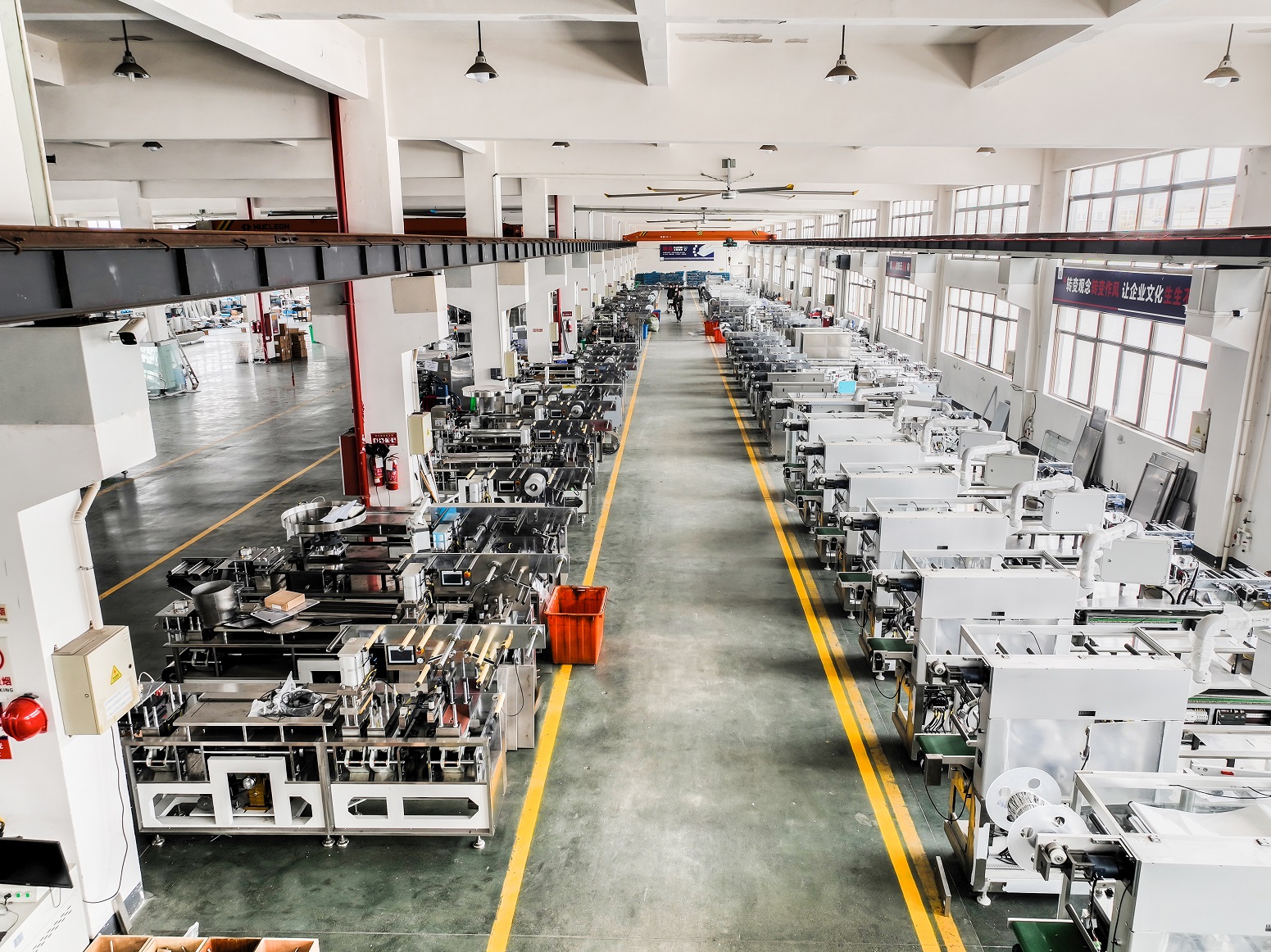
An automatic blister-cartoning line is not a faster version of a blister packaging machine. It is a different answer to a production problem: how to move tablets, capsules or soft capsules out of formed cavities and into sealed, coded, inspected cartons without placing a person in the middle of the flow.
The wider equipment market shows why that question keeps resurfacing. SkyQuest Technology values the global pharmaceutical packaging equipment market at approximately USD 10.71 billion in 2024, while Grand View Research reports a smaller figure of about USD 7.0 billion for 2025 under a narrower equipment definition. That divergence is a useful reminder that market-size claims only mean something when their scope is stated. Within the same space, Custom Market Insights projects the pharmaceutical blister packaging machine market to reach USD 2.57 billion by 2025, and Fortune Business Insights valued pharmaceutical cartoning machinery at USD 1.46 billion in 2024.
Those figures describe an installed base, not a purchase decision. This reference addresses one decision in detail: when a solid dosage packaging scenario justifies an integrated blister-cartoning line instead of a pharmaceutical blister packaging machine paired with a separate automatic cartoning machine, and what buyers should verify before committing capital.
What an automatic blister-cartoning line actually contains
The integrated line combines blister packaging, blister transfer, leaflet handling, carton opening, insertion, inspection and rejection, and downstream connection into one automated process. Its design purpose is to reduce manual intervention compared with the traditional combination of a blister machine, manual transfer and a standalone cartoner.
| Line module | Core function | What integration changes |
|---|---|---|
| Blister forming, filling, sealing | Forms cavities, fills solid dosage units, seals the lidding material, including alu-alu laminates where specified | Forming and sealing faults are detected inside the line instead of at a downstream inspection station |
| Blister transfer | Moves blister cards from the blister machine to the cartoner | Removes manual transfer, the step most associated with handling damage and work in progress |
| Leaflet handling | Folds and feeds the patient leaflet | Leaflet and blister card arrive at the carton in one controlled sequence |
| Carton opening, insertion, closing | Erects the carton, inserts blister card and leaflet, closes and codes | Carton coding and date printing sit under the same control and parameter set |
| Inspection and rejection | Sensor monitoring; vision or checkweighing inspection where configured; missing-product alarm; automatic stop and rejection | Rejects are separated automatically and recorded, subject to the configured scope |
| Downstream connection | Links the line to an automatic case packer and end-of-line packaging equipment | One flow direction from formed blister to shipper carton |
The specification that separates a genuinely integrated line from simply co-located machines is not how many units stand next to each other. It is whether transfer, leaflet and carton functions are controlled as one process with shared parameters, alarms and rejection logic. That distinction is the first thing a buyer should test on a quotation.
Which solid dosage scenarios justify the integrated architecture
Integrated blister-cartoning lines are positioned for large-scale solid dosage pharmaceutical packaging and high-capacity workshops that require reduced manual contact. That description is broader than it first appears, because it is defined by volume stability and handling frequency rather than by any single product.
Four purchasing patterns recur in this segment. They are described here as scenario types rather than named projects, because the decision logic — not the individual product — is what transfers from one site to another.
- High-volume, single-format production. A tablet or capsule product runs in long, repeatable batches and the blister format changes rarely. Manual transfer between a tablet blister packaging machine and a cartoner becomes a permanent labor and handling-cost line item, and the integrated line's central advantage — fewer manual touchpoints — compounds with volume.
- Multi-format prescription portfolios. Several products share one line, with different blister layouts and carton sizes. Here the value is changeover discipline and parameter management as much as labor. Buyers in this scenario should verify how formats are stored, recalled and locked, and how a format change is validated.
- Export and contract-manufacturing projects. Where a customer or regulator expects documented acceptance, line-level testing and record keeping become deliverables rather than optional extras, and factory acceptance testing is planned into the schedule from the start.
- Labor-constrained capacity expansion. Where qualified operators are the limiting factor, replacing a manual transfer station is often cheaper than staffing it across multiple shifts.
Nutraceutical products fit the same operational logic as pharmaceuticals: a capsule blister packaging machine and an alu-alu blister packaging machine are frequently specified on the same line architecture when formats are stable and volumes are continuous. What changes between segments is the regulatory framework and the documentation burden, not the physical handling problem.
The scenario test is therefore narrow and practical. If the product portfolio generates long runs, the handling step between blister machine and cartoner is repeated thousands of times per shift, and the plant has the infrastructure to run continuously, an integrated line is usually the architecturally correct answer. If none of those conditions holds, the same capital buys more flexibility elsewhere.
How to read throughput figures: 800 and 1000 blisters per minute
Throughput is where this decision usually starts, and where it is most often misread. In the configurations used as an example here, the DHL8005H runs at 800 blisters per minute and 500 cartons per minute, while the representative DHL1000/5H configuration reaches up to 1000 blisters per minute and 500 cartons per minute. Both are nominal figures. Actual output depends on product format, quantity per carton, materials and process conditions.
Three practical consequences follow from those conditions.
- Blister rate and carton rate must be read together. If carton output cannot match blister output for a given pack configuration, the cartoner becomes the constraint and the surplus blister speed is never used.
- Effective output is not nominal output. The number that belongs in a payback calculation is measured across a full shift, including changeover, material loading, cleaning and stoppages.
- Full servo drive improves motion synchronization and operating efficiency, but energy consumption still has to be measured on site, based on actual output, running hours and configuration.
A buyer comparing an automatic blister packaging machine on one side of the decision and a blister cartoning line on the other should therefore request a format-specific output estimate rather than a headline speed. The useful question is not "how fast does it run" but "how many cartons per shift, for this blister layout, with this quantity per carton, using these materials."
What changes on the shop floor after integration
Centralized control, modular stations, alarm indication and parameter management support routine maintenance — that is the standard architecture of an integrated line, and it shifts where risk sits.
In a traditional arrangement, the handover between blister machine and cartoner is a human step, so faults surface as visible piles of work in progress. In an integrated line, the same faults surface as alarms and automatic stops. The failure modes do not disappear; they migrate into the control system. Relevant risk categories include poor blister forming or sealing, missing, wrong or incomplete product feeding, missing leaflets, carton jams, coding or date-printing errors, foreign matter or contamination risk, and downtime during high-speed operation.
Control methods are correspondingly line-level: sensor monitoring, vision or checkweighing inspection where configured, missing-product alarms, automatic stop and rejection, key-parameter locking, fault records and mechanical safety protection, supported by factory acceptance testing, site acceptance testing and SOP training.
Where an integrated blister-cartoning line is the wrong purchase
Initial investment in an integrated line is usually higher than for standalone or semi-automatic equipment. That premium is recovered through reduced labor, transfer, management and quality-risk costs in large-scale continuous production — and in some scenarios it is simply not recovered.
- Low annual volume or infrequent batches. A semi-automatic blister machine with a standalone cartoner can cover the requirement at lower capital cost, particularly where the line would idle between campaigns.
- Very frequent, unpredictable format changes with small lot sizes. Changeover time dominates the schedule and the continuous-flow advantage is diluted.
- Projects without a defensible multi-year volume forecast. The payback case rests on throughput that has to be projected honestly, not on a nominal machine rating.
- Sites where surrounding infrastructure cannot support continuous operation — utilities, cleanroom layout, material supply and trained staffing all have to hold at high speed.
Export projects add one more boundary. Delivery and installation risks for overseas projects have to be planned explicitly, especially where site conditions, local service support and spare-parts logistics differ from the factory environment in which the line was tested.
Compliance and the evidence a buyer can request
Pharmaceutical packaging machines must comply with ISO 15378, which integrates GMP requirements for primary packaging materials. Inside the European Union, equipment safety is governed by the Machinery Directive 2006/42/EC together with the EN 415 series of standards for packaging machines. These are baseline references for a tender document rather than differentiators, because compliance is the entry condition for supplying the sector at all.
What separates suppliers at the evaluation stage is evidence. Publicly available company information lists CE and ISO 9001/14001 certification for Hoping Machinery's equipment. As with any certificate, buyers should verify scope, issuing body and validity rather than accepting the logo alone, and should ask for the acceptance-test records that sit behind the certificates for the specific configuration being purchased.
What market structure means for comparison
Concentration in this equipment category is low. The top three blister packaging machine suppliers — Uhlmann, IMA and Marchesini — collectively hold approximately 29% of the global pharmaceutical blister packaging machine market, according to market intelligence reporting. Asia Pacific held the largest revenue share of the pharmaceutical packaging equipment market, at 40.7% in 2025, according to Grand View Research.
A fragmented market with a strong regional center of gravity has a practical consequence. Most integrated-line decisions end up as a comparison between a global platform supplier and a regional integrated-line builder. In that comparison, the criteria that carry weight are integration scope, documentation depth, service response distance, spare-parts availability and format engineering support — not brand recognition on its own. A turnkey pharmaceutical packaging line from a regional builder and a modular line from a global platform can both be correct answers; they are simply correct for different project profiles.
A decision framework for the evaluation stage
The table below converts the discussion above into the questions a project team can answer before requesting quotations. It is deliberately structured so that some answers point away from the integrated line.
| Decision factor | Points toward an integrated blister-cartoning line | Points toward standalone or semi-automatic equipment |
|---|---|---|
| Annual volume and shift pattern | Continuous or multi-shift runs with stable demand | Single-shift, campaign-based or seasonal production |
| Number of pack formats | Few formats, or many formats with disciplined changeover procedures | Very frequent, unpredictable format changes in small lots |
| Carton and leaflet complexity | Cartons require leaflets, coding and consistent insertion | Simple carton requirements, or no cartoning stage at all |
| Labor availability and cost | Qualified operators are scarce or expensive to staff at the transfer station | Labor is available and the manual transfer step is not a bottleneck |
| Quality-risk exposure | Handling damage and contamination risk from manual contact must be minimized | Product is robust and handling risk is already controlled |
| Capital and payback horizon | Higher initial investment can be amortized over a defined volume forecast | Capital is constrained or the volume forecast is uncertain |
| Infrastructure | Utilities, space, cleanroom environment and material supply support continuous running | Site conditions limit continuous high-speed operation |
| Maintenance and support | The buyer can commit to trained operators, spare-parts stock and preventive maintenance | Maintenance capability is limited to basic servicing |
How Zhejiang Hoping Machinery approaches the integrated line
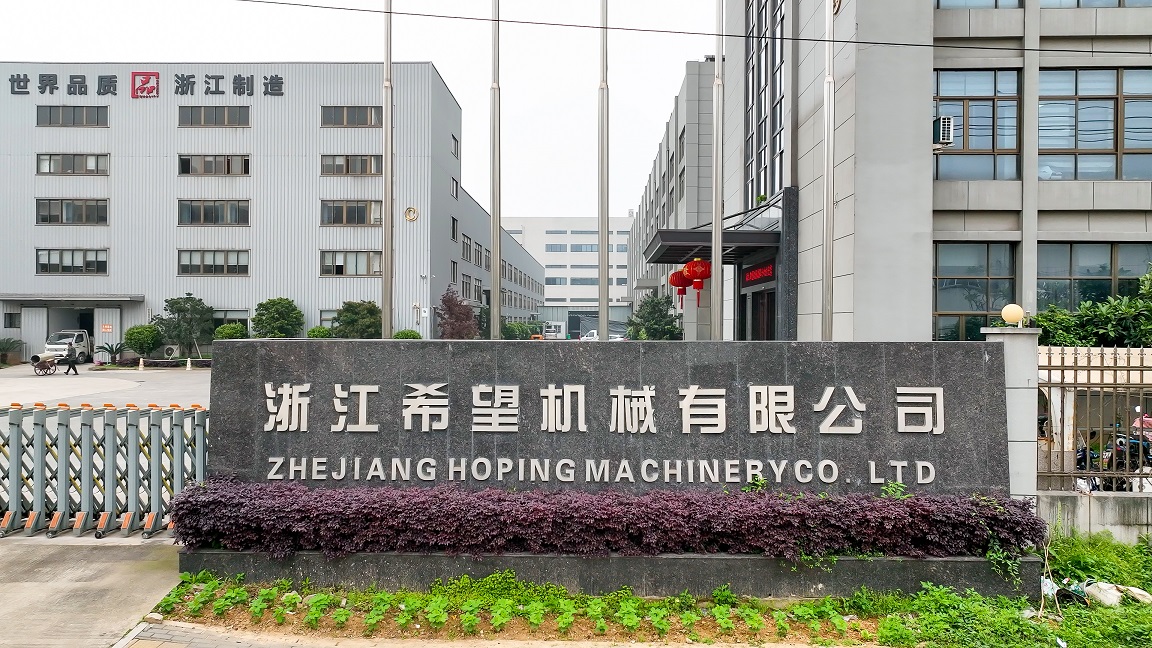
Zhejiang Hoping Machinery Co., Ltd. (brand: HOPING) is a pharmaceutical packing machinery manufacturer established in 2001 in Ruian City, Zhejiang Province, China, combining research and development, production, marketing and service. Its main products include blister packaging machines, cartoning machines, case packing machines and end-of-line packaging machines, supported by more than 300 employees, an annual output of about 500 units and 56 R&D engineers. The company exports approximately 25% of its output to Southeast Asia, the Middle East, Eastern Europe, South America and Africa, and its intellectual property portfolio includes 26 invention patents, 70 utility patents, 4 appearance patents, 10 PCT-protected filings and 28 software copyrights.
For the scenarios described in this article, Hoping's integrated blister-cartoning line is designed for large-scale solid dosage pharmaceutical packaging and high-capacity workshops that require reduced manual contact. The DHL8005H configuration is specified at 800 blisters per minute and 500 cartons per minute, and the representative DHL1000/5H configuration reaches up to 1000 blisters per minute and 500 cartons per minute, with actual output depending on product format, quantity per carton, materials and process conditions.
On the project side, the company's stated measures map directly onto the failure modes listed earlier: confirming samples and packaging materials at an early project stage, designing the solution around actual blister and carton formats, conducting no-load and material tests before shipment, and providing installation, commissioning, training, spare parts and remote technical support. Customer witness acceptance can be arranged for key projects, which gives an overseas buyer a documented point of verification before the line leaves the factory.
Rather than treating any single figure as proof of fit, a buyer evaluating an automatic blister packaging machine and a cartoning machine as one system should request three documents for their own formats: a format-specific output estimate, the acceptance-test protocol, and the preventive maintenance and spare-parts list for the proposed configuration.
Future outlook
Three directions look likely to shape the next round of integrated-line decisions. First, inspection coverage: vision and checkweighing modules are increasingly specified as options, which means the buyer's configuration choice — not the machine's baseline specification — determines what is actually detected and rejected. Second, format flexibility: as portfolios widen, changeover time and parameter management become competitive criteria alongside nominal speed. Third, service geography: with Asia Pacific holding the largest share of pharmaceutical packaging equipment revenue and the supplier base remaining fragmented, installation and after-sales reach will weigh as heavily as machine specification for export projects.
None of this changes the underlying trade-off. An integrated blister-cartoning line is a capital decision that pays back through volume, consistency and reduced manual handling. It should be evaluated against a measured output estimate for the buyer's own formats, and against an honest view of whether the volume profile will use the capacity that the capital buys.
FAQ
What is the difference between an automatic blister-cartoning line and a blister machine plus a standalone cartoner?
A blister machine plus a standalone cartoner treats blister packaging and cartoning as two separate operations, normally joined by manual transfer. An automatic blister-cartoning line combines blister packaging, blister transfer, leaflet handling, carton opening, insertion, inspection and rejection, and downstream connection into one automated process, removing the transfer step and its manual intervention. The engineering difference is shared control of parameters, alarms and rejection logic across the whole flow.
At what production volume does an integrated line become the better economic choice?
There is no universal threshold that applies across products and markets. The decision turns on whether the higher initial investment is offset by reduced labor, transfer, management and quality-risk costs in large-scale continuous production. Practical indicators include multiple shifts, stable formats, a defensible multi-year volume forecast, and a labor cost structure in which staffing the transfer station is expensive. Where volume is low, or batch sizes are small and irregular, standalone or semi-automatic equipment is often the more rational choice.
Which solid dosage products suit an integrated blister-cartoning line?
Solid dosage products with stable, repeatable blister formats — tablets, capsules and soft capsules — together with nutraceutical products, fit the scenario best. These lines are positioned for large-scale solid dosage pharmaceutical packaging and high-capacity workshops requiring reduced manual contact. The determining factor is volume stability and handling frequency rather than the product category itself, which is why the same line architecture is used across pharmaceutical and nutraceutical production.
What are the main limitations of an integrated blister-cartoning line?
Initial investment is usually higher than for standalone or semi-automatic equipment, and the premium is recovered through large-scale continuous production rather than in every scenario. The line also requires operators trained to manage a process rather than individual machines, together with spare-parts management and preventive maintenance. Inspection coverage is configuration-dependent — vision or checkweighing detection applies only where it has been specified — and changeover discipline plus material consistency determine whether nominal speed is achievable in practice.
How can a buyer verify line performance before shipment?
Through structured testing and documented acceptance. Relevant measures include confirming samples and packaging materials at the project stage, conducting no-load and material tests before shipment, factory acceptance testing, site acceptance testing, and — for key projects — customer witness acceptance. Fault records, parameter locking and alarm logs then give the buyer a verifiable record of how the line behaves under test conditions, rather than a claim based on nominal speed.
What maintenance does an integrated blister-cartoning line require?
Routine maintenance is supported by centralized control, modular stations, alarm indication and parameter management, which make fault location and reset more systematic than on separate machines. Preventive maintenance, operator training and spare-parts management remain essential, as does attention to the failure modes typical of the process: blister forming and sealing quality, product feeding accuracy, leaflet presence, carton jams, coding accuracy and contamination control.
Equipment documentation is a practical starting point for comparing formats and configurations. Zhejiang Hoping Machinery publishes its full equipment catalog as a downloadable PDF for buyers who want to review line configurations before technical discussions: Hoping Machinery Catalog (PDF). Additional company information is available at hopingcn.com.
Есть вопросы или нужны дополнительные детали?
Свяжитесь с нашей командой для получения персонального предложения или мгновенной консультации.
Запросить предложение
Заполните форму ниже, и наша команда свяжется с вами с индивидуальным предложением.
Прямой чат WhatsApp
Предпочитаете общаться в реальном времени? Напишите нам в WhatsApp для мгновенной помощи и быстрых ответов.
- Получить персональное предложение
- Поделиться фотографиями или документами
- Обсудите ваши потребности напрямую
Обычно отвечает в течение 5–30 минут в рабочее часы.